Exiled: Bashar Al Assad Wiles His Time in a Moscow Flat

Bashar Al Assad sometimes walks the streets of Moscow incognito. This was a prerequisite set by the Kremlin for his stay in Russia.

The Syrian president, who was forced into exile, exactly one year ago on 8 December, 2024, lives in one of Moscow’s top palatial flats in the capital’s business district with his wife and three children with 24-hour body guards who have been assigned to the family for their protection.

Since his stay Moscow, the message has been thrust forward that Moscow takes care of its friends even when they have fallen from grace and/or down in the dumps. Bashar Al Assad, and his father before and who held power since 1970 were always the strongest of allies and Damascus was always seen as Russia’s strategic gateway to the Middle East.

Friendship however doesn’t mean the end of political opportunism and interest. Whilst Assad is allowed to stay in Moscow under the rubric of humanitarian grounds, his asylum follows strict rules: he is not allowed to engage in any political activity nor is he allowed to talk to the press or the media. 

He is no longer treated as presidential but a private person. Russian president Vladimir Putin had never met him since he arrived in Moscow nor is he planning to despite  claiming otherwise. All Putin would say is he is planning to meet the ex-president ‘sometime’ in the future. Add insult to injury is the fact that Assad has been assigned a lowly figure in the Russian Foreign Ministry as a means of coordination whenever it’s necessary.

But this has long proved a sign of frustration. Today, Assad is alone despite his staff that either travelled with him when he was hastily bungled up last year on a military jet from a Russian airbase near Latakia last year or joined him latter in his residence to start his exile.

With little to do, he spends his days playing video games or going downstairs to the mall in his plush complex to wile his time away, doing it day after day after day. The strong man of Syria, at the top of the helm for the 24 years with ministers, officials, politicians and Ba’ath Party – for theoretically it was this pan-Arab institution that ruled Syria since the late 1960s – is no more.

In Moscow he is a guest with his brother, Maher Al Assad, a former strong man and previous head of the Republican Guard who is staying at the capital’s Four Seasons Hotel. Today they have little political sway with the Kremlin preferring they stay as low as possible and ‘out of sight out of mind’ because of Moscow’s new strategic plans with the new government of Syria lead by previous Al Qaeda extremist-turned-president Ahmad Al Sharaa. 

Putin wants to maintain a rapport with the new government because Syria is still seen as the new battleground of political rivalry vis-a-vis the United States, Turkey and Israel. Moscow wants to continue to be a part of the geo-political pie despite the fact that Al Shara has continually called on Moscow to handover Assad to be tried for criminal charges in Damascus, something that was always refused by the Kremlin and Putin. 

But politics reflects the interests of both sides for Sharaa wants to be a favorite with everyone, both the West and Russia as demonstrated by his last visit to Moscow last October who continues to have military, strategic, economic and aid ties to Syria from the past Baathist regime. 

Thus, although relegated to his luxurious apartments, Assad can still be a valuable political asset to Moscow, being put on hold for the right time as a political chip to be used with the new government of Syria who is desperate to create the needed stability of the country, keep outside powers at bay, check Israeli incursion into its territory and start a program of reconstruction and economic development.
Continue reading
Saudi Arabia Plays Host to Superpower Politics

By Maksym Skrypchenko 

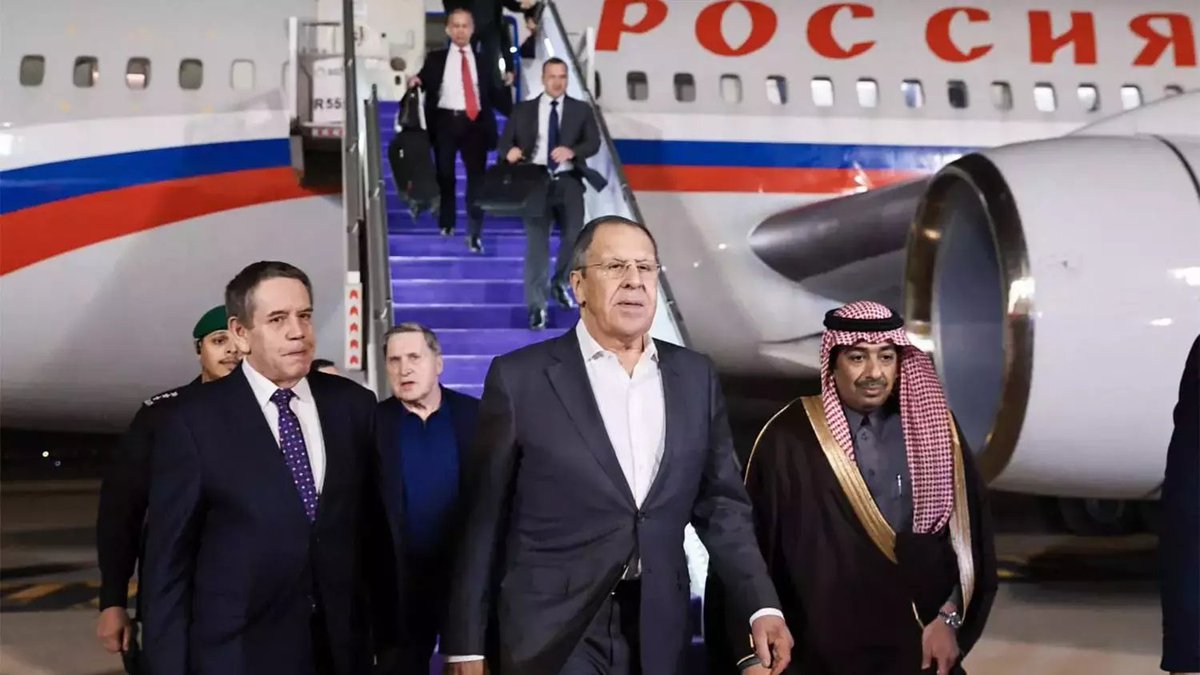
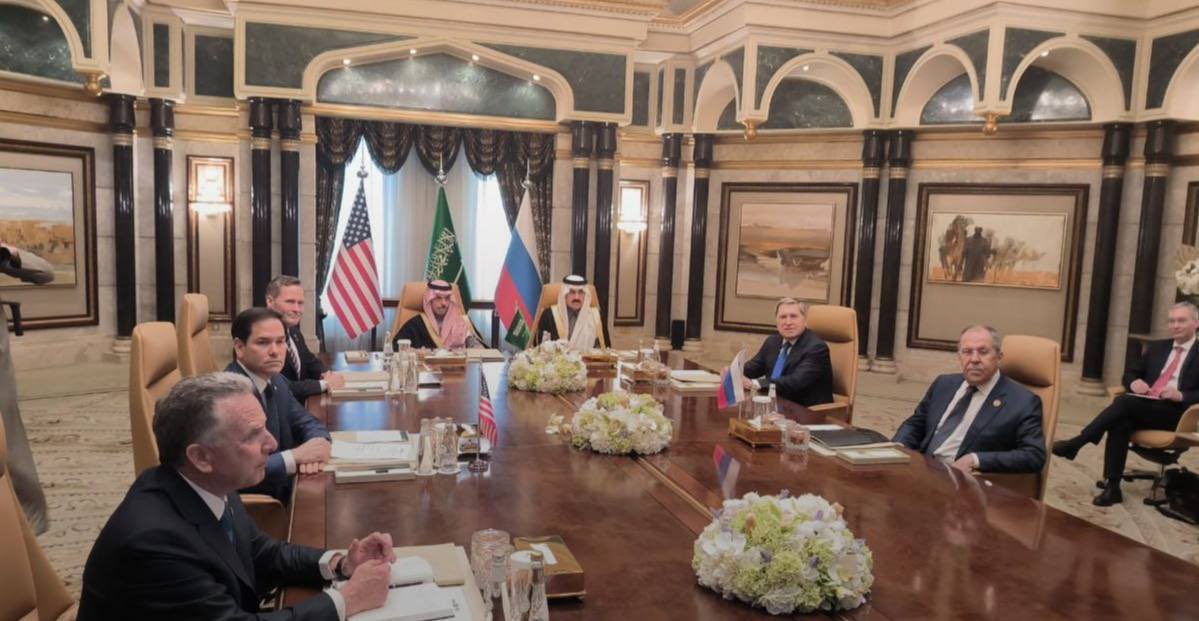
Diplomatic efforts to end the Russia-Ukraine War are once again in the spotlight, as US and Russian officials meet in Saudi Arabia on Tuesday. In a sharp contrast to the previous administration’s strictly defined red-line policy, representatives from the newly formed US President Donald Trump-aligned diplomatic team—Secretary of State Marco Rubio, National Security Advisor Mike Waltz, and Middle East envoy Steve Witkoff—are set to engage with their Russian counterparts in discussions that many fear may sideline Ukraine’s own interests.

The stakes in this conflict extend far beyond territorial disputes. For Ukraine, the war is an existential struggle against an enemy with centuries of imperial ambition. Every defensive maneuver is a stand for sovereignty and self-determination. Yet recent diplomatic moves suggest that Ukraine’s central role in negotiations may be diminished. Ukrainian President Volodymyr Zelenskyy’s absence from the Saudi meeting underscores the deep-seated concern in Kyiv that their security concerns might be marginalized in a process dominated by transactional interests.

https://twitter.com/canon75gaz81/status/1891836717696450562

Under the previous administration, Washington’s policy was driven by a clear set of red lines designed to deter any actions that could provoke a nuclear-armed adversary. That approach was predicated on a belief that excessive support for Ukraine might lead to a dangerous escalation. However, the new strategy, as signaled by Trump’s team, appears less encumbered by these constraints. Instead, the focus seems to have shifted toward a pragmatic resolution—a process that prioritizes ending the war at the expense of Ukraine’s moral imperatives underpinning their fight for survival. This shift represents not only a departure in tone but also in substance. While the previous policy imposed strict limitations to avoid provoking Moscow, the current approach appears more willing to concede Ukraine’s positions if it serves the broader goal of ending the fighting.

Trump’s affiliation with Saudis


The decision to hold talks in Saudi Arabia is far from arbitrary. The Saudi Kingdom provides a neutral venue and a longstanding trusted mediator especially for figures like Steve Witkoff and Donald Trump, whose longstanding business and diplomatic ties in the region are well known. This credibility is further reinforced by Saudi Arabia’s recent announcement of a $600 billion package with the US, comprising investments and procurement agreements from both public and private sectors.

Moreover, Saudi Arabia’s position outside NATO shields it from the obligations that compel Western allies to enforce international legal mandates, including the ICC arrest warrants issued against top Russian officials, notably Putin. In such an environment, Saudi Arabia offers a secure venue for direct negotiations with Moscow, free from the pressures of external legal mandates.

Meanwhile, high-ranking European officials express growing concern over their exclusion from the process. UK Prime Minister Keir Starmer has even suggested the possibility of deploying British troops to enforce any resulting peace deal, a move that underscores the importance European leaders give to Ukraine’s future. The concerns are not merely about the cessation of hostilities, but about the long-term security guarantees that Ukraine desperately needs. European officials argue that a peace process that excludes Kyiv from the initial stages could lead to an agreement lacking the robust assurances necessary to prevent future Russian aggression.

Russian approach

Russia, for its part, is approaching the negotiations with its signature long-game strategy. Recent reports suggest that Kremlin officials are assembling a team of seasoned negotiators well-versed in securing maximum advantage. Their method is well known—ask for a shopping mall when all they need is a cup of coffee. Just one day before the talks, Russian diplomats are already staging a narrative of victory, asserting that the EU and the UK are entirely non-negotiable parties to any future agreements on Ukraine. According to the Russian representative at the UN, Ukraine has irretrievably lost key territories, and any new arrangement should force Kyiv into accepting a demilitarized, neutral state determined by future elections. This approach is designed to create the illusion of strength while ultimately settling for concessions that heavily favor Russian interests.

Meanwhile, for Ukraine, the principle that “nothing about Ukraine without Ukraine” is more than just a slogan—it is a critical security principle. Ukrainian leaders are rightfully wary of any agreement negotiated without their active participation. With the current US strategy favoring swift and transactional outcomes rather than comprehensive negotiations, there is a real danger that Kyiv’s position could be compromised. The absence of Ukraine from these early discussions may result in a peace agreement that fails to address the existential risks the nation faces. Without strong security guarantees built into any deal, Ukraine remains vulnerable to renewed incursions and a potential destabilization of the entire region.

In this evolving diplomatic landscape, the contrast between the old and new approaches is stark. The previous risk-averse strategy sought to maintain clear boundaries to prevent escalation, whereas the current approach appears more willing to blur those lines in the hope of bringing an end to the bloodshed. Yet by doing so, there is an inherent risk: the very nation fighting for its survival might be reduced to a bargaining chip in a broader geopolitical deal.

It is imperative that Ukraine’s interests remain at the forefront of any negotiations. The war in Ukraine is not just a regional conflict—it is a struggle that speaks to the fundamental principles of sovereignty and self-determination. Any peace settlement that fails to incorporate Ukraine’s security concerns is likely to be unstable at best, and catastrophic at worst.

Maksym Skrypchenko is the president of the Transatlantic Dialogue Center

Continue reading
First Russia-US Talks Conclude in Saudi Arabia

Talks between Russia and the US on improving ties as well as the Ukraine war – the first such talks in years – concluded after 4 1/2 hours, Russian state media reported Tuesday.

Speaking at a press briefing on the sidelines of the meeting in the Saudi capital Riyadh, which was broadcast live on Russian television, Russian presidential aide Yury Ushakov said the negotiations were productive, with Moscow and Washington agreeing to consider each other’s interests.

However, the date for a meeting between Russian President Vladimir Putin and his US counterpart Donald Trump has yet to be determined, and it is unlikely to take place next week, Ushakov said.

“The delegations of Russia and the United States held a serious discussion on all key issues,” he stated.

The two sides also agreed to form working groups on the Ukraine issue. While the number of members and specific participants have yet to be decided, both parties aim to establish contacts quickly, he added.

Talks between Russia and the United States aimed at mending relations, addressing the conflict in Ukraine, and preparing a meeting between the Russian and US presidents marked the first meeting between diplomats of the two countries since the Ukraine war began on Feb. 24, 2022, nearly three years ago according to Anadolu.

Continue reading
What Next For Moscow After Fall of Damascus

Events are rapidly unfolding before after the fall of the Syrian capital, Damascus, into the hands of the armed opposition forces that entered it without resistance because the Syrian army, under orders from its supreme commander, decided not to resort to bloody confrontations to prevent bloodshed and accept defeat in the face of a tripartite aggression well-planned in the dark rooms of Washington, Ankara and Tel Aviv.

The Russian authorities’ announcement, Sunday, of the arrival of Syrian President Bashar al-Assad and his family to Moscow and granting them political asylum, confirms that the sudden developments currently taking place may be the tip of the iceberg.

There may be many surprises to come on all levels, as Syria is a jungle of weapons, and it is unlikely that the sudden surrender is just a maneuver, just like what happened in Iraq after the collapse of the Iraqi army in the face of the American invasion, and the goal now is to reposition, bow to the storm, and prepare to resist the occupation.

https://twitter.com/abdelbariatwan/status/1865843698195378221

The fall of Damascus is a fatal stab to Russia and its leadership, which the new authority in Syria has no affection for, and sees it as a strategic partner of the isolated Syrian regime. Its warplanes have not stopped bombing Idlib, Aleppo, Hama and Homs, and this Russian airstrike played a major role in the Syrian Arab Army regaining most of the cities and villages that were seized by the opposition forces supported by America, Europe and Turkey.

We do not know what President Bashar al-Assad’s plans are in the coming period. Will he resort to calm and withdraw from political work, in compliance with the conditions of political asylum, or will he make Moscow a base to manage a resistance that he will form and lead from his new exile.

News circulated in the past few days that countries supporting the deposed Syrian president, led by Russia, suggested he form a government in exile to confirm his non-recognition of the new government that may be formed in the coming few days to run the country, avoid a political vacuum, and prepare for holding general elections.

We do not know the extent of the accuracy of this news, and perhaps it is too early to try to extrapolate what events are coming in Syria, as only one day has passed since the fall of Damascus and President Assad’s flight to Moscow and his granting of political asylum.

However, what can be pointed out is that the picture seems blurry in Syria at the present time, as Damascus and the major Syrian cities have been exposed to a war led by armed Syrian opposition factions on behalf of America, Turkey and other Arab countries, unlike the direct American war in Iraq in 2003, in which more than 160,000 American soldiers participated, and Paul Bremer was installed as military governor of Iraq in a transitional phase.

Unfortunately, we can’t disagree with Benjamin Netanyahu when he said: “The fall of Damascus and the collapse of the ruling regime there is considered a historic day and a great victory for Israel.”

Damascus is the crown jewel of the axis of resistance, the main supporter of the Palestinian cause, and the stubborn opponent of normalization. The question remains: Will Netanyahu’s celebrations of this fall last long? We leave the answer to the coming days and months.

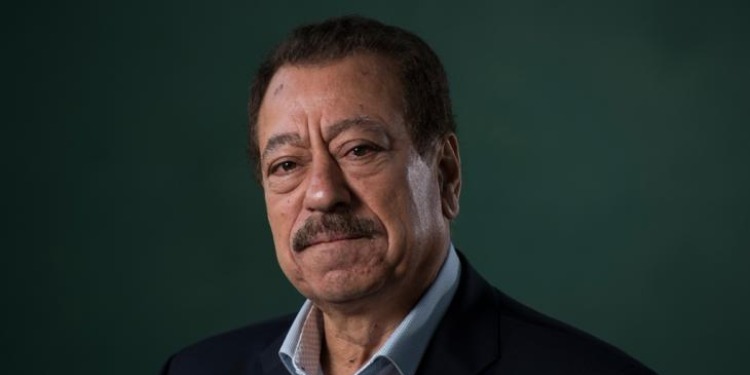
Abdel Bari Atwan is the Chief Editor of Al Rai Al Youm

Continue reading
‘New’ Syria: What Next For The Region

The swift fall of several Syrian cities, with little to no resistance from the Syrian regime or its allies, especially Russia, has drawn significant attention. Moscow’s inaction to prevent these rapid territorial advances underscores the shifting dynamics of the Syrian conflict.

Several factors must be considered to assess this new phase in Syria. The current developments are not merely a continuation of the initial Syrian conflict but reflect broader regional implications in the post-October 7 landscape. Israel’s strategy of “fragmenting fronts” as a counter to the concept of their unity has rendered Syria’s geographic arena an inevitable next focus. Although Syria has long been targeted by airstrikes, missile attacks, and assassinations, the current escalation coincides with the temporary pause in the conflict in Lebanon.

Syria’s geography serves as the logistical backbone for Iranian-aligned forces, including Hezbollah, making it a critical component in the regional equation. The ignition of the Syrian front aligns with Israel’s objective to disrupt the logistical corridor connecting Tehran and Beirut and secure its own strategic perimeter. 

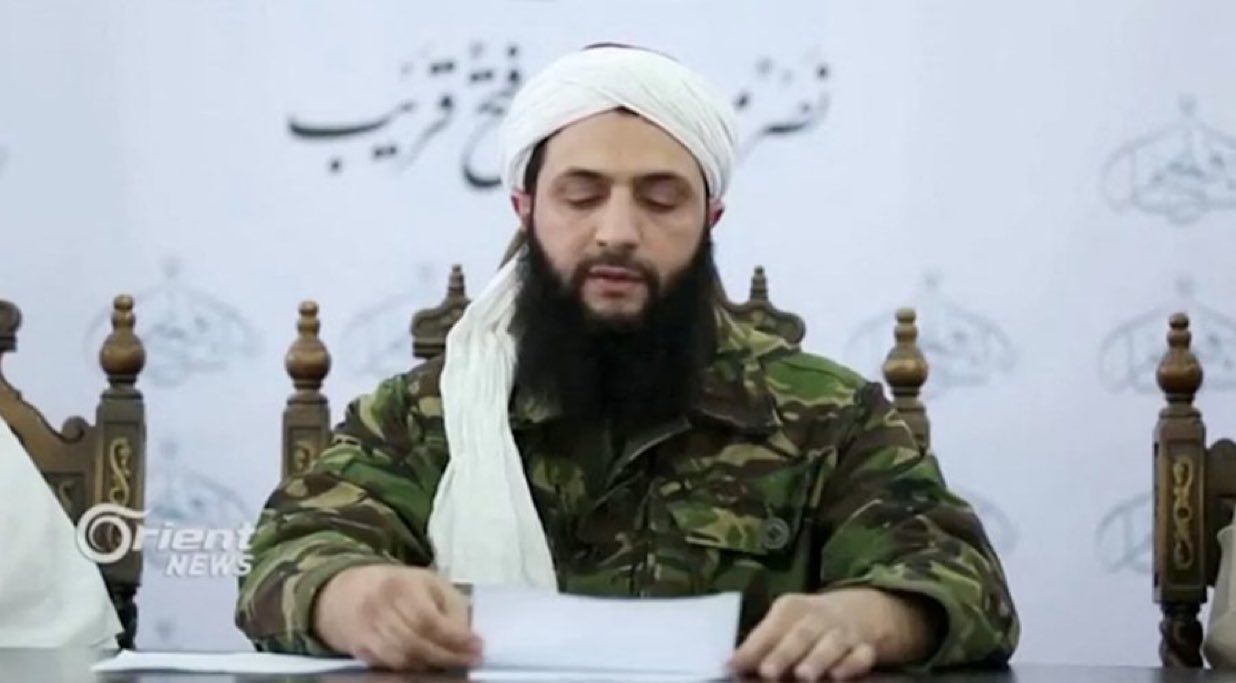
This latest shift on the ground in Syria complicates an already intricate situation. Multiple factions are mobilizing to defend their interests or expand their influence amid signs of a redrawn Syrian map. Notably, Abu Mohammad al-Jolani, former leader of Hay’at Tahrir al-Sham, has garnered attention by rebranding himself under his real name, Ahmad Hussein al-Sharaa. In interviews with CNN and The New York Times, Jolani emphasized the dissolution of HTS, presenting himself as a political figure capable of engaging with international stakeholders rather than as the leader of a proscribed militant group.

Militarily, the rapid advances of fighters from Aleppo to Hama signal a looming confrontation in Homs, a pivotal city in the Syrian conflict. Homs’ strategic location connects the Syrian coast with Damascus and borders Lebanon, serving as Hezbollah’s last operational lifeline. With the cessation of hostilities in Lebanon, Hezbollah faces the challenge of regrouping for what could be an existential battle. Losing this confrontation would strip Hezbollah of its regional power and relegate it to a vulnerable position within Lebanon.

The speed of these territorial shifts reflects not only the weakened state of the Syrian army but also the neutralization of its allies. Iran, once expected to be a key supporter of both Hezbollah and the Syrian regime, finds itself constrained by a U.S.-Israeli-led blockade encompassing land, sea, and air routes. Russia, on the other hand, has displayed a largely indifferent stance, underscoring its limited capacity or willingness to intervene. The sole remaining card for Iran is the deployment of Iraqi militias to Syria, though these forces are now targets of intensified American and Israeli strikes, further diminishing Tehran’s ability to influence the battlefield. 

Israel, meanwhile, continues its strategy of reshaping regional security dynamics. After Gaza and Lebanon, it is now turning its focus to Syria. By leveraging the current chaos, Tel Aviv is positioning itself to establish new buffer zones deep inside Syrian territory, using the ongoing conflict to justify pre-emptive strikes on perceived threats.

Amid these developments, Jordan faces significant challenges along its borders with Syria and Iraq. The prolonged instability and the emergence of new players in the Syrian theatre require Jordan to maintain heightened vigilance. To mitigate potential threats, Amman must strengthen its military alliances and adopt proactive security measures. These strategies are necessary for the unpredictability of this phase and the diverse range of threats encircling Jordan’s borders.

Dr Amer Al Sabaileh is a university lecturer and a columnist for The Jordan Times

Continue reading