Tehran is Ready For Nuclear Accord – Deputy FM

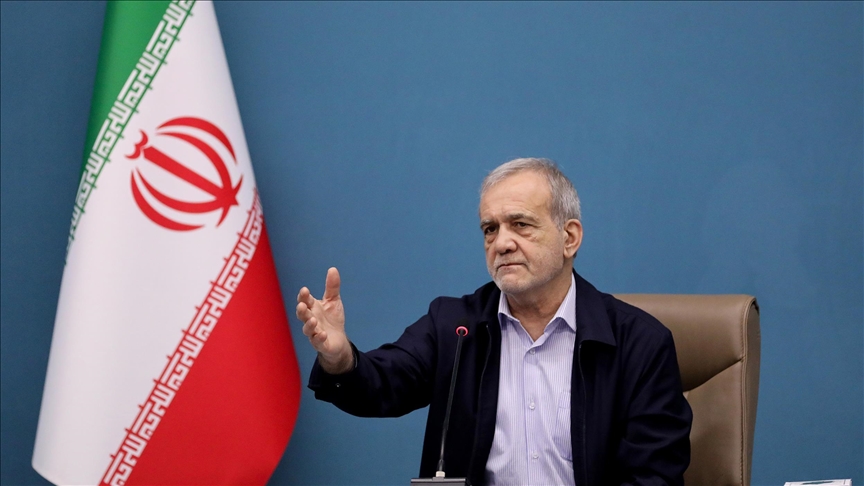
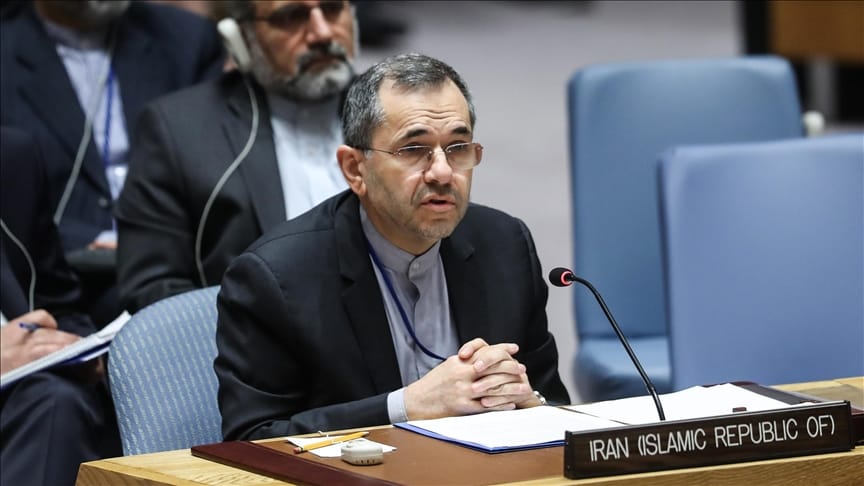
Iran’s Deputy Foreign Minister Majid Takht-Ravanchi said on Tuesday that Tehran is ready to reach a nuclear agreement with Washington “as soon as possible” as the two sides prepare for a new round of negotiations in Geneva.

Iran will do “whatever is necessary” to make that happen, Takht-Ravanchi, a member of Iran’s negotiating team, said in an interview with the US broadcaster NPR.

He said the Iranian delegation will enter the negotiating room in Geneva with “full sincerity and good faith,” while hoping the goodwill will be reciprocated by the Americans according to Anadolu.

“If there is political will on all sides, I believe an agreement can be reached very quickly,” he said.

A veteran diplomat and former Iranian ambassador to the United Nations, Takht-Ravanchi was also involved in the negotiations that led to the landmark nuclear deal in 2015.

Iran and the US have held two rounds of indirect nuclear negotiations under Omani mediation since last month, following efforts by regional countries, particularly Türkiye, to revive nuclear diplomacy that was suspended after the US-backed Israeli attack last June.

Following the last round of talks in Geneva, both sides expressed optimism and said they had agreed on “guiding principles” that could pave the way for a potential agreement.

The deputy foreign minister said they intend to continue indirect talks with the American side in Geneva “within the same framework” as in Muscat and Geneva.

On whether a draft proposal being prepared by Iran will include matters beyond the nuclear issue, Takht-Ravanchi said the subject of the negotiations will remain the nuclear issue, and that is “agreed upon by all parties.”

He further stressed that a war would be impossible to contain once it starts, describing it as a “real gamble” from Tehran’s perspective.

“Let us focus on diplomacy, because diplomacy will benefit everyone. There is no military solution to Iran’s nuclear file,” he said, warning that the entire region would suffer the consequences of war if it breaks out.

The senior diplomat also dismissed speculations that Iran would attack its neighbors, such as the United Arab Emirates or Saudi Arabia, in the event of war, saying Iran would instead target US assets in the region.

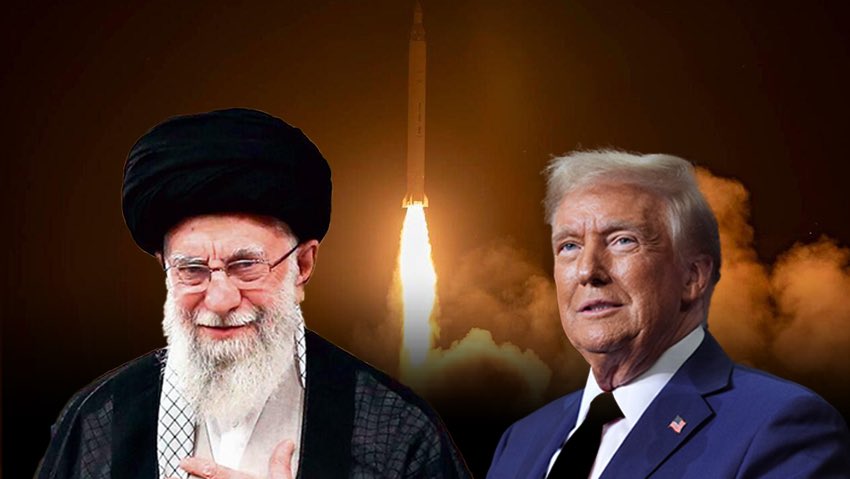
The ongoing talks between Tehran and Washington come amid a massive US military buildup in the Gulf region and President Donald Trump’s threat to take military action if the nuclear talks fail.

Iran’s Islamic Revolutionary Guard Corps (IRGC) has held several military drills as part of preparations for any potential war.

Continue reading
Finally: Oman For The Nuclear Talks

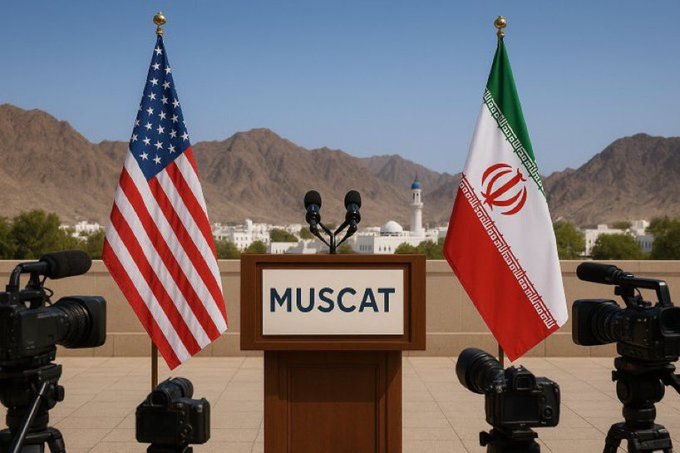
Iran said Wednesday evening that Friday’s nuclear talks with the US are scheduled to be held in the Gulf state of Oman, confirming the timing and location of the planned negotiations.

On US social media company X, Iranian Foreign Minister Abbas Araghchi said the talks would take place in the capital Muscat at around 10 am (0600GMT) local time.

“Nuclear talks with the United States are scheduled to be held in Muscat on about 10 a.m. Friday,” Araghchi wrote, expressing gratitude to Oman for facilitating the meeting.

“I’m grateful to our Omani brothers for making all necessary arrangements,” he added.

His comments come as a White House official also confirmed Wednesday to Anadolu that the talks would be held in Oman, despite earlier reporting by Axios that the US refused a change in the site of the talks, previously set to be held in Istanbul, Türkiye.

Prior to that, Iranian media reported that Iran and the US were slated to hold indirect negotiations in Muscat on Friday, with a focus on nuclear-related issues.

Before Muscat, Istanbul had been proposed as the venue, following Türkiye’s successful intervention to help ease tensions between the two countries.

Iran calls non-nuclear issues ‘non-negotiable’

As for what will be discussed, Iran’s semi-official Mehr News Agency cited a source saying that Washington seeks to “raise issues outside the nuclear framework, including defense matters.”

“These demands are not only unrelated to the nuclear issue but are directly tied to national security and the country’s deterrent capability and are fundamentally non-negotiable,” the unnamed source said.

He added that Iran is “ready to negotiate within a defined framework based on mutual respect on nuclear matters,” but that the “insistence on excessive demands and raising issues beyond the agreement is the main factor behind any potential deadlock.”

Oman has previously served as a mediator in indirect contacts between the two sides.

The planned talks come amid rising tensions between Washington and Tehran, fueled by an American military buildup in the Gulf and repeated threats of military action by US President Donald Trump.

In recent days, several countries have stepped in and offered to mediate between Tehran and Washington to ease tensions, with Türkiye playing a particularly active role.

The US and its ally Israel accuse Iran of seeking to produce nuclear weapons, while Tehran says its nuclear program is designed for peaceful purposes, including electricity generation.

Al Jazeera reported nine regional and Islamic countries pressured the Trump administration not to cancel and have the nuclear talks venue moved to Oman.

Continue reading
Nuclear Politics: US-Iran and The ‘Illusive Deal’

Dr Marwan Asmar

Despite the seeming sidedness and intransigence between Iran and the US, their fifth round of nuclear talks with Oman as mediator, is expected to be held in Rome on Friday.

Both US and Iranian delegates have been “public” in their approach. The Americans, led by US presidential envoy Steve Witkoff wants Iran to dismantle its nuclear weapons and end its uranium enrichment, a process that would allow it to develop an atom bomb.

The American delegates say this is a “redline” they will not budge away from. However, the Iranians led by the country’s Foreign Minister Abbas Araqchi insist that they must be allowed to enrich because this is part of their sovereignty and national interest.

On the face of it, both positions appear to be diametrically-opposed. The Americans insist on one thing while the Iranians on another with US president Donald Trump’s team believing it would be extremely dangerous for the world to allow Iran access to nuclear weapons.

However, the first round of US-Iran talks started on 12 April in the Omani capital of Muscat and since then three other round of talks were held, including one in the Oman Embassy in Rome. They were described as “positive” and with the exception of the fourth round, they were seen as introductory.

This time around the talks are in Muscat again, on 22 May, 2025 with the full teams taking part at the behest of the Omani Foreign Minister Badr bin Hamad Al Busaidi as mediating between the two sides who are in two separate rooms and not directly talking to each other.

Despite all difficulties and intractable positions, the new republican administration in the White House is determined to iron-out a new nuclear deal with Tehran after the Trump took out the US out of the deal, officially termed the Joint Comprehensive Plan of Action signed in 2015 under the auspices of the UN with the backing of Russia, China, Britain, France and Germany in 2015.

Trump forced the US to exit out of the deal in 2018 and many argue this move allowed Iran to continue to enrich its uranium at 60 percent, much shorter to the 90-percent-mark for a nuclear weapon. The 2015 deal, and for the first time, capped Iran’s enrichment facilities at 6.7 percent, and since 2018 it moved freely in its ability to obtain weapons-grade material whilst wasting months, years and even decades of negotiations.

Back to the present. Outwardly, the Trump administration wants “nuclear-dismantellment” and zero-enrichment. But the fact that the Americans held five meetings with Iranian delegates mean they recognize what Iran is saying about its nuclear program, that it is there for “peaceful” energy reasons and have consequently stressed that if Tehran wants enriched uranium for such purposes it can import from different world countries.

The US administration believes this would check Iranian nuclear capability and prevent them from obtaining the nuclear bomb. But one point stands out and is being downplayed and that is the fact Iran is well-advanced in its nuclear program with at least five nuclear facilities across the country that are well known and inspected by the International Atomic Energy Agency which is a UN watchdog.

The fact that the two sides are meeting on a regular basis sends positive signals despite the recent comments made by Iran’s top spiritual leader Ali Khamenei who is pessimistic about a deal being hammered out, if the United States doesn’t adopt a more flexible and less stringent approach on the Iranian nuclear file, enrichment issue and the removal of sanctions on the country reimposed by Trump when he got the US out of the deal in his first tenure as president in the White House.

These are the hurdles both sides are facing, points the make Iranian decision-makers not at all optimistic. But Trump has so far been using a “carrot-and-stick” approach. He has warned the Iranians that he would be prepared to attack Iran, if it doesn’t sign a deal soon and put the onus on  Israel for the attack that would probably be a joint one with the US.

Netanyahu unhappy!

This point made Israel Prime Minister Benjamin Netanyahu very happy in the month or so prior to 12 April. Then Netanyahu geared himself up for an impending attack on Iran’s nuclear facilities, and was therefore in great shock to hear that Iranian-US talks were in the pipeline and mediated by Oman.

He was in double-shock because the presumably US-Israeli strike was being pushed back in favor of international diplomacy. It is here as well, the cracks between Trump and Netanyahu begun to show still because the US president had already started to portray himself as a man of peace, not a warmonger and wanted to end the war in Ukraine and Gaza and was talking to Hamas, an arch-enemy of the Israeli prime minister with an eye on the Nobel peace prize.

To Netanyahu talking to the Iranians was just one more spike in the Israeli heart because it meant US-Israeli interests were diverging as underpinned by the current talks with Iran and its erstwhile allies like the Houthis which the US planes bombed to no success in a military campaign that started in March, April and stopped on 6 May because it achieved little success and was exorbitantly expensive.

Even if they don’t achieve immediate breakthroughs, the Iran-US talks are likely to continue for a while because it lies within the tenets of new American foreign policy as espoused by Trump. He is unlikely now to drop the diplomatic towel and go for a series of strikes because he knows of the military capabilities Iranian has. Also, Trump is likely to force Netanyhu’s hand and prevent him for striking that country because of the unforeseen consequences it would generate for the region and the US itself.

This analysis is written by Dr Marwan Asmar, chief editor of the crossfirearabia.com website. 

Continue reading
Iran-US Talks in Muscat: Winners and Losers

EDITOR’S NOTE: This editorial, written by Abdul Bari Atwan, chief editor of the Arabic Al Rai Al Youm website, on Saturday, 12 April, relates to the first talks of the Tehran-Washington negotiations that started in Muscat, Oman relating to the Iran nuclear file.

Iran succeeded in scoring a major goal against the United States in the clash of wills that began today, Saturday, in the Omani capital, Muscat, by insisting that the negotiations be “indirect,” contrary to what its American adversary wants: Namely “direct” negotiations as announced by US President Donald Trump at the White House in his meeting with Israeli Prime Minister Benjamin Netanyahu last week, who was surprised by this shocking announcement.

The US delegation, led by Trump’s Advisor Steve Witkoff, is participating in these talks from a weak and defeated position, especially after the failure of the US plan to impose tariffs on more than 200 countries worldwide. America has become friendless, and even turned its friends into enemies, especially in Europe and Southeast Asia like South Korea and Japan.

Strategies of negotiations

Iran, represented in the negotiations by veteran Foreign Minister Abbas Araqchi, the man who led the negotiations for the first nuclear agreement with the six major powers in 2015 and possesses extensive experience in the art and strategies of negotiation, did not submit to the “threats and intimidation” adopted by President Trump.

They imposed their conditions in full on their American opponents and insisted on limiting the negotiations to the nuclear issue, not addressing other issues such as missile and drone systems, and severing ties with the arms of the resistance in Gaza, Lebanon, Yemen, and Iraq. And they got what they wanted.

The one who called for a return to a diplomatic solution to the Iranian-American crisis and backed down from his threats of a devastating military strike was President Trump. This happened when he realized the threats of military strikes, coupled with the dispatch of three American aircraft carriers and squadrons of giant B-52 bombers, backfired.

These did not intimidate the Iranians, but prompted a response from Iran’s Supreme Leader Ali Khamenei, who declared a state of emergency in the Iranian military, placed giant missile platforms, advanced submarines, and ground and naval forces on high alert, and threatened to destroy all of the 10 military bases surrounding his country and housing 50,000 soldiers, close the Strait of Hormuz, and prevent Gulf oil exports to the entire world.

The Iranians do not trust President Trump, who tore up the nuclear agreement in 2018, and is well aware he has become an Israeli puppet. He also realizes that America, defeated in Ukraine, did not simply march to Moscow waving white flags, ready to sell Ukraine and its people to the Russians and surrender to all of its conditions, including the annexation of a fifth of Ukrainian territory to Russia, without consulting its European allies, whom it has become embroiled in this war.

When President Trump demands that the Muscat negotiations reach a quick agreement within two months, this is due to his bitter experience in the Vienna negotiations, which lasted a year-and-a-half and ended in failure due to Iran’s cunning use of the “yes, but” theory, without offering any concessions.

Globally hated…

We do not believe that this theory will be abandoned in the Muscat negotiations, especially since America, which is now globally hated and has lost all of its allies in the West and the East, has become weak, and is on the brink of bankruptcy due to the huge deficit in its annual general budget ($1.4 trillion) and its public debt that has reached more than $42 trillion.

What will encourage Iran to harden its position in these negotiations is China’s strong and defiant stance in the trade war against the United States. Its president, Xi Jinping, declared he will respond in kind to America and its president, and will fight this war to the end, no matter how costly the results.

He has decided to raise customs duties on American goods by a historic rate of more than 125 percent, and has given the green light to his allies in the BRICS group to declare war on the dollar and the global SWIFT financial system, through which America controls the global economy and financial movement.

Trump, wounded by the failure of his gamble to ignite a trade war, and the internal and global revolt against it, with the beginning of the decline in the value of the dollar and the escalation of the recession in the American economy as its first fruits, was forced to stop this war less than three days after its announcement under the cover of a three-month freeze on the application of customs duties.

Crushing military strike

Hence, his threats, i.e. Trump’s necessity of quickly to reach a nuclear agreement didn’t have any effect despite the threat of a crushing military strike. Iran’s respond to Trump forced him to make a major, unprecedented concessions to save face.

Iran, which has suffered significant losses in Lebanon, with the weakening of its powerful military arm in that country (Hezbollah), and in Syria with the fall of the President Assad’s regime, undertook rapid reviews internally and regionally, abandoning many of its policies pursued in recent years, after realizing that the knife is approaching its neck, and that the American-Israeli conspiracy does not only seek to destroy it and remove its military claws and fangs, but also to change the Islamic regime there.

The results of these reviews reflected in the transition from a phase of patience and long-suffering to a phase of confrontation in its military and political aspects, and the strengthening of its allied military arms, starting with the striking Yemen whose arm there is waging heroic wars not only against aircraft carriers and American warships in the Red and Arabian Seas, but also by intensifying ballistic missiles and drone bombardment of the occupied Palestinian interior in Jaffa, Haifa, and Eilat, accelerating the recovery process for Hezbollah in Lebanon, and finding other ways to deliver military supplies to it.

After the historic Syrian corridor was closed with the fall of the Assad regime, America became a farce in the first months of Trump’s rule. It’s no surprise that Iran and its allied proxies are among the biggest beneficiaries and gloaters. He who laughs last laughs loudest… and the days will tell!

Continue reading
Four Killed in Oman Shooting

Four people were killed in a shooting near a mosque in Oman, police stated according to Anadolu.

The incident that was reported on early Tuesday morning, is trending on the social media with much interest because Oman is described as a quite country with no security concerns.

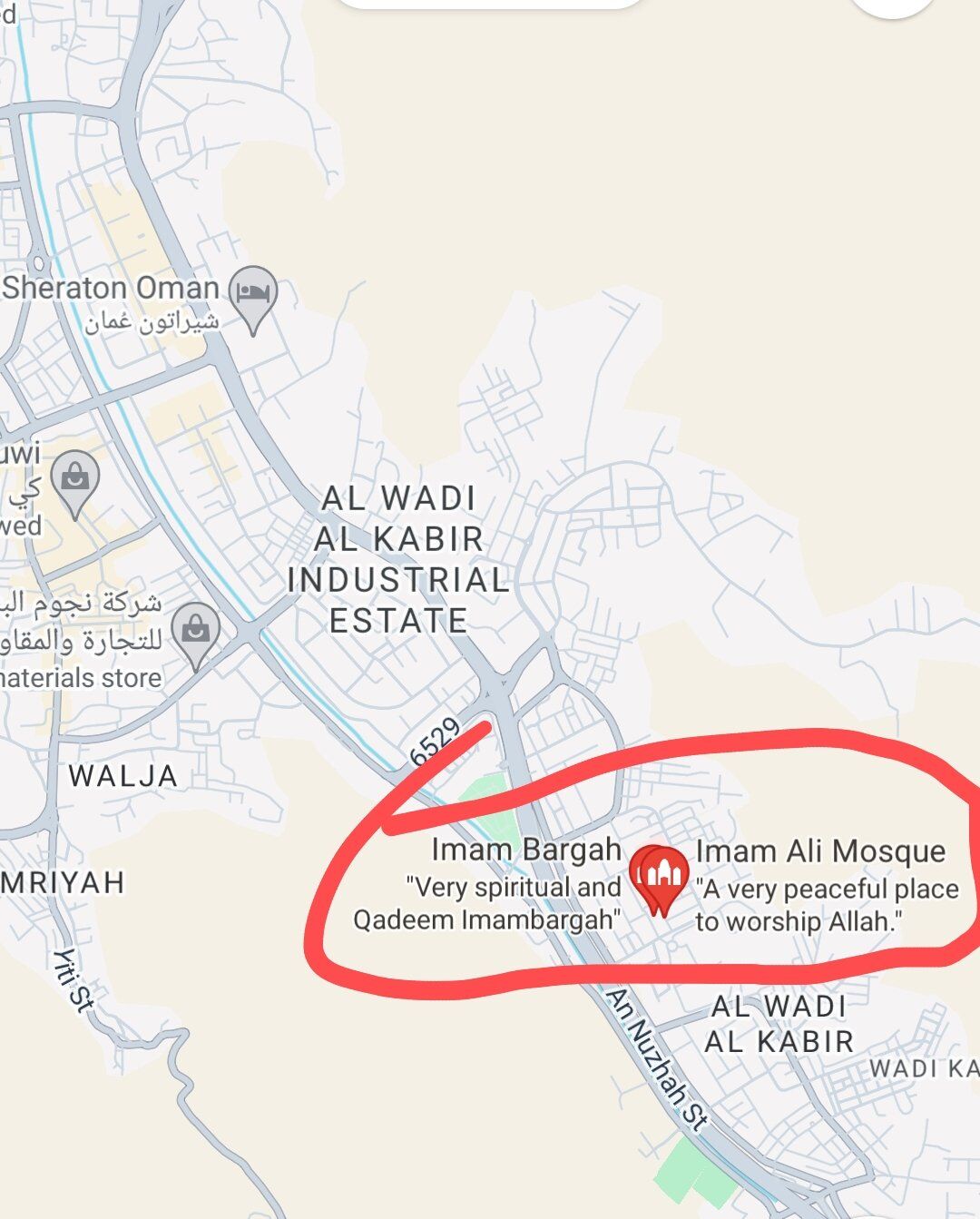
Police stated in a statement the shooting occurred in near a mosque in Wadi Al Kabir in the Omani capital of Muscat. The police further stated that several people were also wounded in the gunfire.

The Royal Omani Police said it has opened up an investigation into this serious incident.

Following the shooting, the US Embassy in Muscat issued a security alert saying: “U.S. citizens should remain vigilant, monitor local news and heed the directions of local authorities,” according to the Turkish news agency.

Continue reading