The Muslim World – An Obituary
 CrossFireArabia
- August 6, 2025
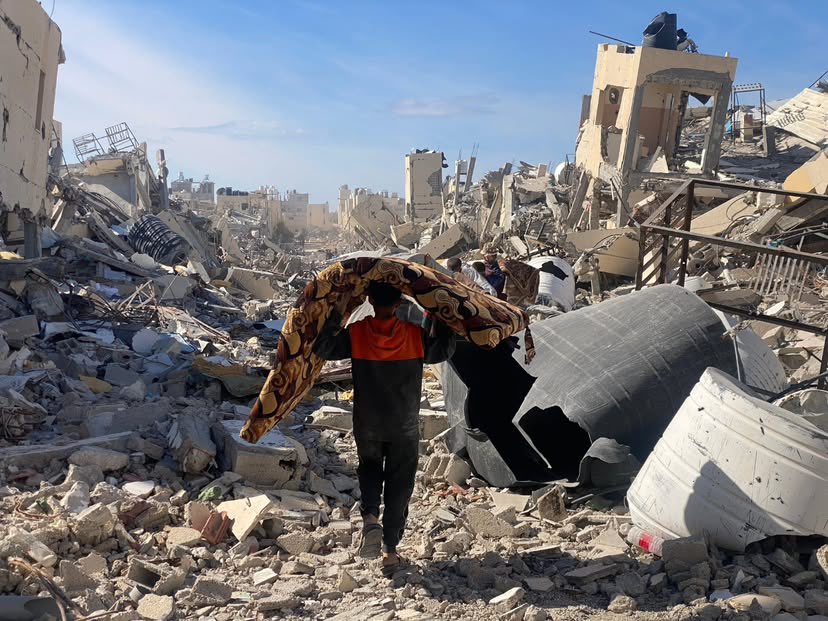
How does one speak of a “Muslim World” when the supposed collective is either silent, complicit, or supine in the face of genocide? When Muslims from Gaza to Kashmir, from Sudan to Syria, are being brutalized with impunity, and the so-called leaders of Muslim-majority states are either polishing boots in Washington or mumbling their dissent into the sand? Perhaps it’s time to recite the Fatiha over the concept of a unified “Muslim World.” If nothing else, a proper funeral might finally clear the air.
The phrase “Muslim World” once conjured images of a vast, vibrant ummah stretching from Jakarta to Casablanca, a spiritual and civilizational brotherhood united by faith and a shared moral vision. Today, that term feels like a cruel joke, the geopolitical equivalent of a sticker slapped onto a broken mirror. The nations that populate this imagined collective can barely agree on the date of Eid, let alone mount a coherent response to the systematic annihilation of their brethren. If this is the “Muslim World,” then it is one in hospice care, wheezing out platitudes as realpolitik pulls the plug.
Let us be honest: most Muslim-majority governments today are client states, marionettes in a puppet theatre directed by Western powers, primarily the United States. Iran is the notable exception, though even it often walks the tightrope between pragmatism and defiance. The rest? From Riyadh to Rabat, from Islamabad to Amman, their foreign policies are either written in Washington or blessed by it. One could argue that the only difference between the State Department and the foreign ministries of many Muslim states is the choice of drapes.
Take, for instance, the case of Pakistan. Its military—the true center of power—has for decades played the role of loyal valet to American interests, occasionally barking in protest, but always fetching the slippers when the master whistles. General Asim Munir, the current Chief of Army Staff, may feel compelled to issue a tepid statement condemning Israel’s rampage in Gaza, but no one is fooled. The servility runs so deep it has become muscle memory. If a U.S. diplomat sneezes, half the GHQ catches a cold.
But the problem runs deeper than cowardice or corruption. The real crisis is conceptual. The phrase “Muslim World” implies unity—political, moral, spiritual. But what unity can there be when Muslim regimes routinely trade in their principles for arms deals and IMF loans? When the defense of al-Aqsa becomes a photo-op and the plight of Muslim refugees is met with monastic silence? When loyalty to Washington counts for more than loyalty to the ummah? The term “Muslim World” no longer describes a coherent political bloc, let alone a moral one. It is an empty husk, a sentimental relic best abandoned.
And perhaps that abandonment is not a tragedy, but a liberation.
In fact, letting go of the mirage of the “Muslim World” may allow us to reorient our political compass. We can stop pretending that shared religious identity guarantees moral solidarity, and instead adopt a sharper, more principled political framework—one that distinguishes friends from enemies not by slogans, but by their actions. Here, the German political theorist Carl Schmitt might be unexpectedly useful. Schmitt famously argued that the essence of the political lies in the distinction between friend and enemy. In a world where Muslim rulers shake hands with tyrants while quoting the Qur’an at summits, such clarity is sorely needed.
In Schmittian terms, the real question is this: Who stands with Pharaoh, and who stands with Moses and the slaves?
Nearly every ruler today bows to Pharaoh. The gold-plated palaces of the Gulf, the military barracks of Islamabad, the ceremonial thrones of North Africa—all pay homage to power, not principle. They genuflect before the American imperium, whispering prayers for stability while Gaza burns. But the prophetic tradition—the real one, not the one trotted out for PR—stands with the oppressed, even when doing so is costly, unfashionable, or dangerous. It was Moses who stood against Pharaoh, not because it was strategic, but because it was right. The prophetic path doesn’t calculate risks; it obeys moral imperatives.
This is where a new politics must begin. A prophetic politics. One that refuses to be seduced by the theatrics of summitry and diplomatic fictions. One that understands that sometimes the friend is not the one who shares your name, your language, or even your religion, but the one who stands with the oppressed and speaks truth to power. Conversely, the enemy is not always the infidel; sometimes he wears a keffiyeh and speaks flawless Arabic but signs arms deals with Zion.
It is a bitter pill to swallow, but the truth often is. The idea of the “Muslim World” as a political community is dead. What survives is a scattered multitude of Muslims, some noble, many fearful, and a good number complicit. But therein lies the hope. Because when the fiction falls away, reality can begin. The ummah, in its truest sense, has never been about flags or borders, embassies or trade deals. It is a moral and spiritual community. And perhaps, in this age of disillusionment, it can finally reclaim that identity.
Let us stop appealing to kings and generals and start building solidarities from the ground up. Let us forge alliances not with “Muslim nations,” but with the oppressed, the truthful, the just—whoever they may be. The Palestinian teenager throwing a stone, the Sudanese doctor tending to wounds, the Syrian child clutching a torn schoolbook amid rubble—these are the citizens of the real ummah. Their resistance is not just political; it is sacred.
This kind of realignment also invites a rethinking of what leadership looks like. We must resist the temptation to look upward to palaces and parliaments and instead look laterally—at the poets, scholars, youth activists, and organizers who speak with prophetic moral clarity. We must build communities of resistance that transcend national boundaries and language barriers, and that unite under a banner not of nationalism, but of justice. We must build the ummah from the ashes, with no illusions, but with fierce hope. And we must cultivate a political imagination that allows us to see past failed institutions toward radical alternatives rooted in dignity and accountability.
Of course, the path forward is daunting. There are no oil revenues to fund this movement, no standing armies to defend it, no state institutions to give it legitimacy. But that is the point. The prophetic tradition has always begun on the margins—with a man in a cave, a voice in the wilderness, a staff in the hand of a fugitive. It has always been the path of those who would rather be right with God than comfortable with Pharaoh.
So let us bury the illusion of the “Muslim World” with dignity. Let us write its obituary, recite its funeral prayer, and move on. Not in despair, but in defiant hope. Because when the idols fall, even the golden ones shaped in our image, the possibility of true worship begins. We may not have presidents or prime ministers on our side, but we have the legacy of prophets. And that, in the end, may be enough.
We stand today at a political and moral crossroads. We can continue to genuflect before the thrones of compromised leaders, hoping for scraps of righteousness from tables drenched in blood. Or we can rise, like Moses, like Muhammad, like Malcolm, and say no. No to Pharaoh, no to injustice, no to complicity disguised as diplomacy.
The “Muslim World” is dead. Long live the ummah of the oppressed, the just, and the free.
Prof. Junaid S. Ahmad teaches Law, Religion, and Global Politics and is the Director of the Center for the Study of Islam and Decolonization (CSID), Islamabad, Pakistan. He is a member of the International Movement for a Just World (JUST – https://just–international.org/), Movement for Liberation from Nakba (MLN – https://nakbaliberation.com/), and Saving Humanity and Planet Earth (SHAPE – https://www.theshapeproject.com/).