‘They Don’t Know Iran’s Military Lexicon’: First Six Days of The Aggression
 CrossFireArabia
- March 5, 2026
By Abdul Bari Atwan
They truly don’t know Iran. By this, I mean the Israelis and the US, and even some Arab leaders, none of whom dared to condemn the aggression. But the aggression entered its sixth day without the regime falling, and/or the new interim leadership rushing to the nearest negotiating table to surrender. The following factors need to be considered.
The battlefields:
First: The downing of an advanced American fighter jet, the F-15, by Iranian missiles in the west of Iran, a firstever development. This suggests the Iranian military leadership may have developed new missiles capable of achieving this feat, or they acquired them from their Chinese and Russian allies, or both, particularly the Russian S-400 and S-500 missile systems.
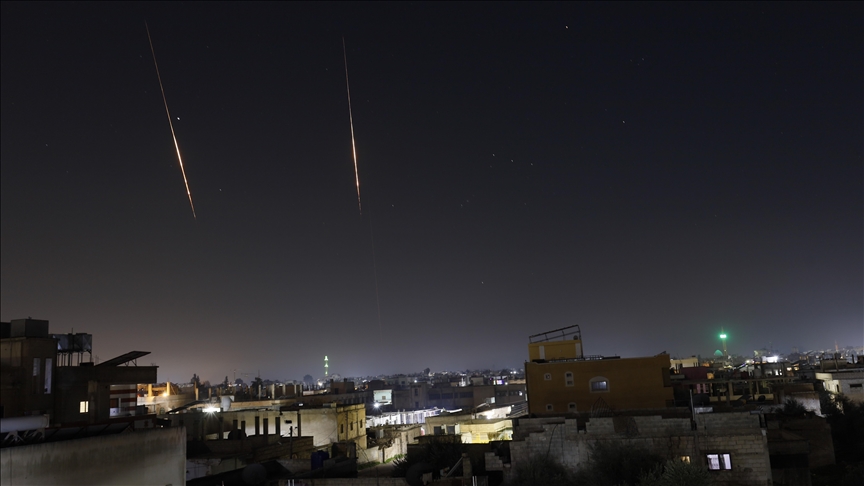
Second: The entry of Hezbollah’s ballistic missiles into the arena, striking deep inside Israel, specifically Tel Aviv and Haifa, for the first time after 15 months of restraint and the rebuilding of its military arsenal, and/or what was destroyed during the Israeli aggression. This means that no area in the Zionist entity will be safe.
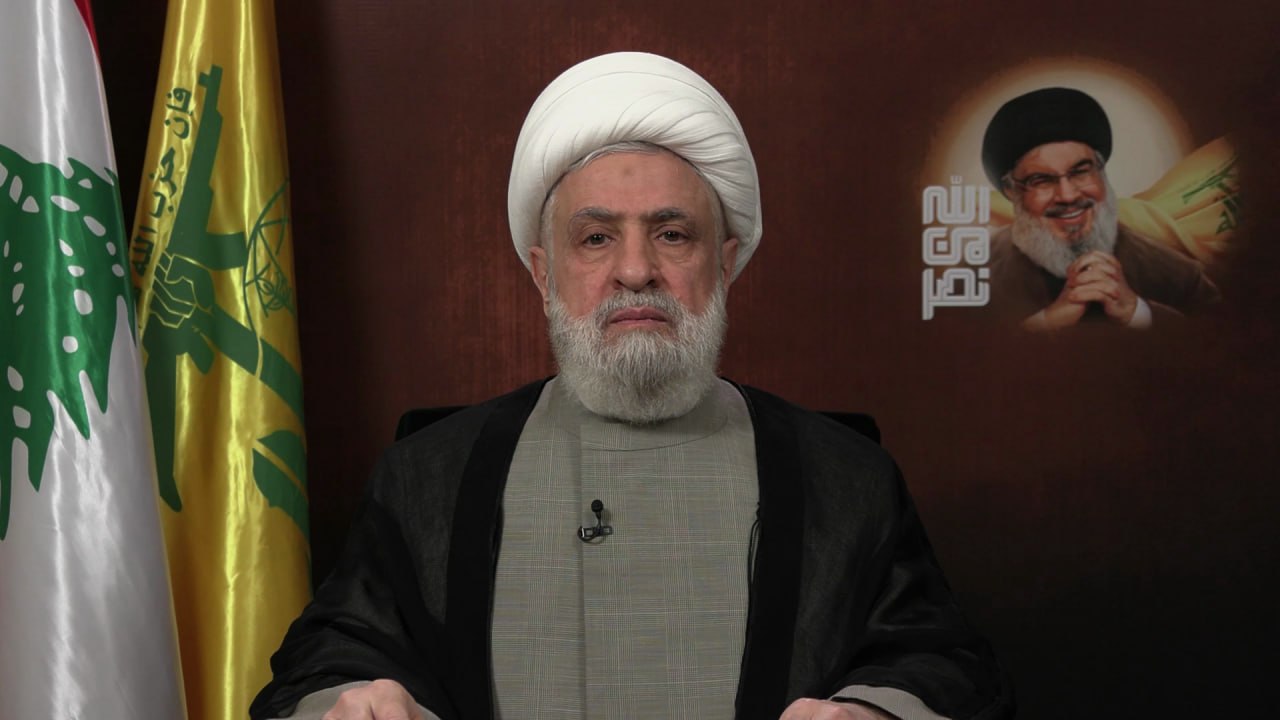
Third: The fiery speech delivered by Sheikh Naim Qassem, Secretary-General of Hezbollah, containing strong unprecedented tone statements most notably: “We will not surrender and we will defend our land, no matter the sacrifices and despite the disparity in capabilities. We will not surrender.”
Fourth: The introduction of the fastest “infiltrating” drone into the Iranian Air Force for the first time. Named “Hadid 110,” it has a speed of 517 km/h and, according to Western military experts, is considered more efficient than its sister drone, “Shahed,” which performed well deep inside Israel. Its production costs only $35,000, while shooting it down costs $4 million.
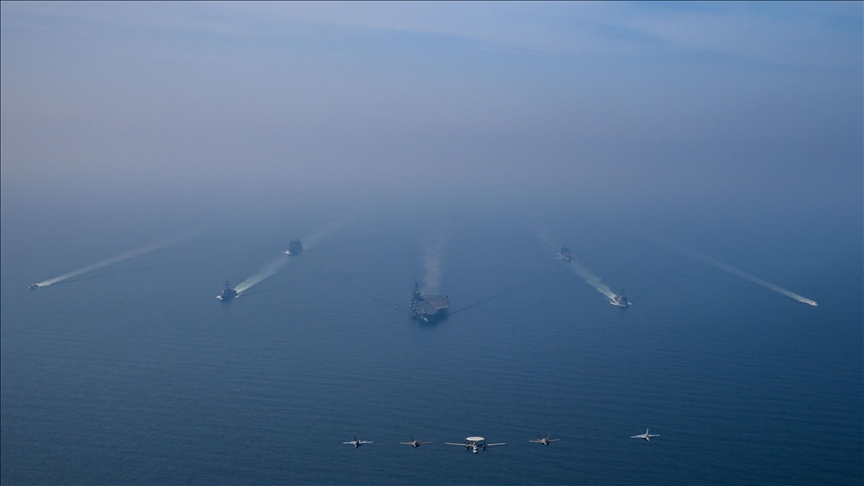
Fifth: Every day of resistance by the Iranian army and people costs the occupying state approximately $1 billion. As for America, the costs of the war has already nearly spiralled to $160 billion in the first six days. These preliminary estimates are likely to rise, especially after the bombing of aircraft carriers and the destruction of warships, the increasing number of dead and wounded, the largest military buildup since the Iraq War, and the rise in energy prices.
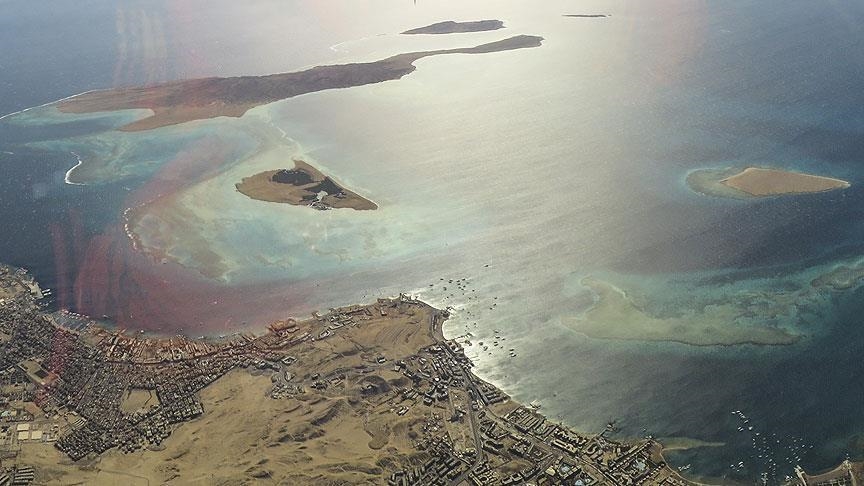
Sixth: The fulfillment of the promise to close the Strait of Hormuz, which means delivering two fatal blows. The first is to the Western economy because oil and gas prices would likely reach record-breaking figures, and the second, for the Arab states who host the US military bases. Closing the Strait means preventing their oil and gas exports from reaching global markets, and the losses will increase while oil and gas revenues decrease depending on the war’s duration and developments.
The Iranians wanted from the outset a regional war of attrition with no end in sight in direct opposite to the new American warefare military doctrine, which aims for short, swift, and clean wars (without American casualties). The Iranians resolved to bomb all those cooperating with the aggression in the region. This new Iranian theory was best and most clearly expressed by Sheikh Naim Qassem when he called on the Israeli army to prepare for many days of fighting with all available means.
Defeat, surrender, and raising the white flag, individually or collectively, have no place in the Iranian military and political lexicon. In the first six days, the Iranian army launched 500 hypersonic missiles with multiple cluster warheads and more than 2,000 drones, resulting in the displacement of more than 7 million settlers to shelters and tunnels, and the destruction of large parts of Tel Aviv and Haifa.
Neither the 47-year-long starvation siege, nor three Israeli-American aggressions within a few years, nor the incitement of popular protests and the planting of spies among the protesters, nor the deployment of aircraft carriers and warships, nor inflation and the collapse of the national currency, succeeded in defeating the mighty and unwavering Iranian will, and consequently, in toppling or changing the regime.
Our proof is they baffled the Americans in negotiations that lasted more than two years in Vienna and in several other Arab and European capitals, and they never conceded. They rejected all American conditions, starting with halting enrichment and handing over 460 kilograms of highly enriched uranium, and even refusing to allow the inclusion of the Iranian missile industry or severing ties with resistance factions on the negotiating table.
Yes, arrogance, conceit, and the unfortunate complicity of some Arabs blinded them to the true nature of Iran, and they will pay a very heavy price, the most prominent feature of which will be the destruction of all Israeli gas infrastructure. In the Mediterranean, water and electricity stations, and the lack of distinction between settler and soldier, many assumptions have changed after the massacre of the children’s school in southern Iran… and time will tell.
This opinion was written in Arabic by the chief editor of Alrai Al Youm Abdul Bari Atwan and translated for crossfirearabia.com