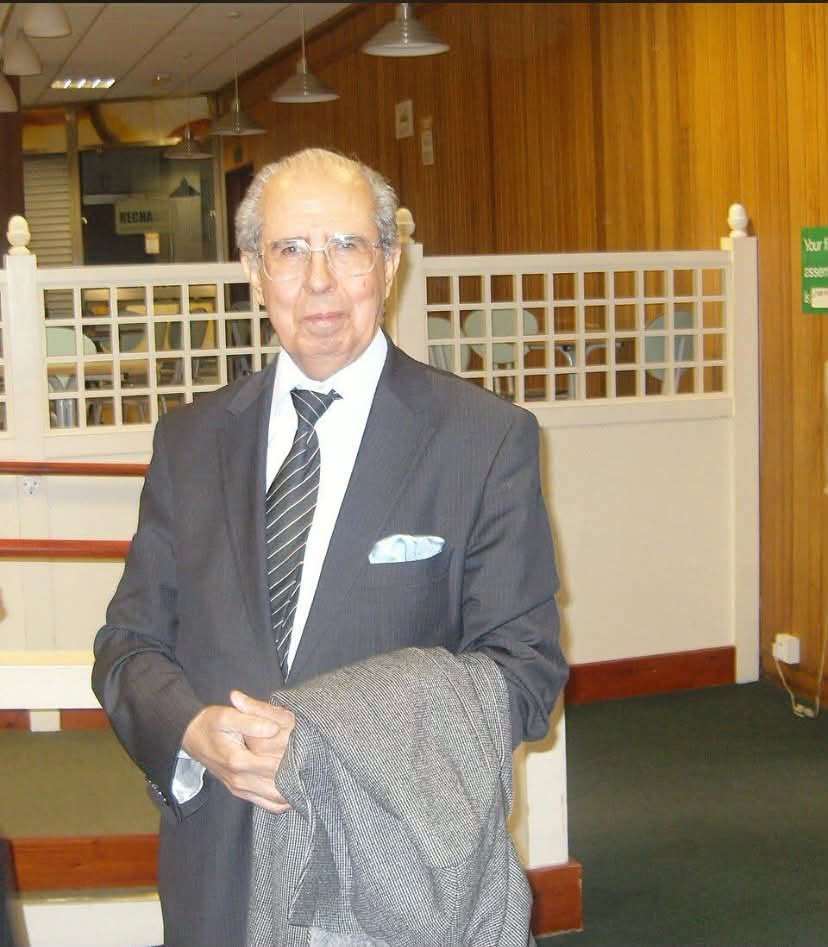
Salman Abu Sitta (b. 1937) is a Palestinian researcher born in the city of Beersheba; he is considered one of the researchers most deeply engaged with the issues of Palestinian refugees and the right of return.
Abu Sitta: A Note
Salman Abu Sitta was born in Beersheba, Palestine, in 1937. He earned a Bachelor’s degree in Civil Engineering from Cairo University in 1959 and a PhD in Civil Engineering from the University of London in 1964. He is a fellow of the Institution of Structural Engineers (UK), the Association of Professional Engineers of Ontario (Canada), and the American Society of Civil Engineers. He is also a former member of the Chartered Institute of Arbitrators (UK), the American committee for energy facility specifications, and the executive council for space structures. He has authored over 30 scientific papers and books on engineering and received multiple awards from the British engineering association.
He served as a professor at the University of Western Ontario in Canada and was an independent member of the Palestinian National Council from 1974 until the signing of the Oslo Accords in 1993. Additionally, he was a member of the Palestinian Cooperation body in Geneva, where he chaired the committee on refugees and UNRWA. He has authored more than 80 research papers and articles and published four books on the refugee issue in both Arabic and English. He also designed and illustrated a comprehensive map of all the villages and cities of Palestine, with three-quarters of a million copies distributed in both Arabic and English.
Documenting the Nakba
Abu Sitta spent over 40 years researching information regarding Palestine—both before and after the establishment of Israel. The mission he undertook went beyond merely chronicling the Nakba and documenting Palestine; he also strove to ensure that “the memories and identity of the homeland would never be lost.” Abu Sitta began his documentation work in his thirties after discovering the memoirs of the Turkish commander of Beersheba—which was under Ottoman rule at the time—a document dating back to the early 19th century. “That is where the research began, and it has never stopped since,” he says. “I have continued to gather every scrap of material regarding every inch of my homeland.”
Works Atlas of Palestine 1917–1966. The Right of Return: Sacred, Legal, and Feasible (2001), Arab Institute for Research and Publishing. The Road to Return: A Guide to Displaced and Existing Towns and Villages and Holy Sites in Palestine (2007), Palestine Culture Foundation. The Nakba Register 1948 (2000), Baheth Center for Studies. Sources Geographicus Rare Antique Maps biographical dictionary of cartographers | Salman Abu Sitta (in English), QID: Q133842860. The Palestinian Return Centre. “Third Return Week” (in English). Archived from the original on 2023-12-12. Retrieved 2023-11-23. Al Jazeera: Bila Hudood (Without Borders) – Dr. Salman Abu Sitta, October 10, 2007 [Broken link]; archived copy (March 4, 2016). Interview with Al-Ahram newspaper [Broken link]; archived copy (September 24, 2013).
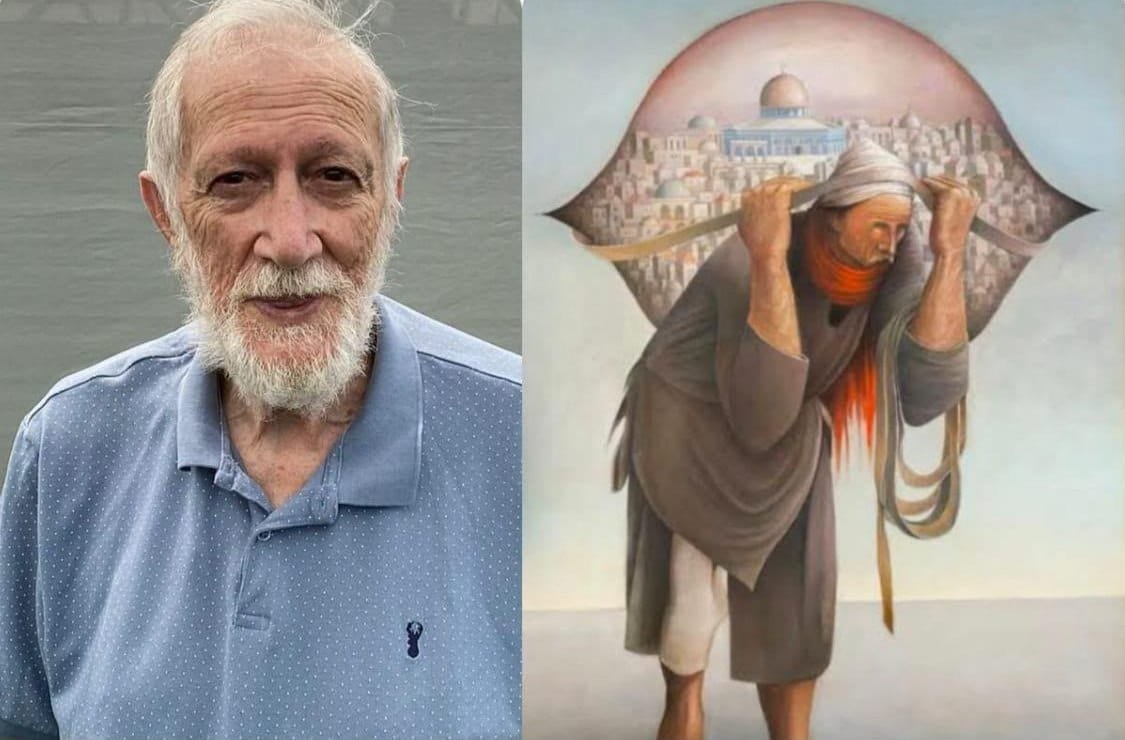
CROSSFIREARABIA – The old Palestinian bends forward beneath an almost impossible weight. His face is tired, his body appears exhausted and ropes cut across his shoulders. Yet what he carries is not an ordinary load.
On his back is Jerusalem.
For more than half a century, Palestinian artist Sliman Mansour painted variations of that same burden: A people carrying a homeland through occupation, dispossession, exile and war, yet refusing to put it down.
Mansour, one of the towering figures of Palestinian art, died on Monday, 24 August, at the age of 79. He leaves behind hundreds of works and an artistic language so deeply woven into Palestinian identity that some of his images long ago escaped the confines of galleries and became part of popular culture.
His best-known painting, Jamal al-Mahamel — “Camel of Hardships” or “Camel of Burdens” — became perhaps the defining image of his career.
Created in the early 1970s, it depicts an elderly Palestinian porter struggling forward with Jerusalem strapped to his back. The Dome of the Rock rises from the city he carries.
The image became enormously popular. It was reproduced as posters, cards and prints and appeared in Palestinian homes and refugee camps and far beyond Palestine. Its significance was immediately understandable: Palestinians might be separated from their homeland, but they continued to carry it with them.
It was an extraordinary achievement for a painter.
Mansour had transformed a political argument into an image.
Painting Palestine Into Existence
Born in Birzeit in 1947, Mansour belonged to the generation whose lives unfolded alongside the great ruptures of modern Palestinian history.
He studied art in Jerusalem and emerged as a significant artist after the 1967 war, when questions of land, identity, occupation and displacement increasingly dominated Palestinian cultural life. From the 1970s onward, his paintings helped establish what became a recognisable visual language of Palestinian resistance and identity.
Look closely at Mansour’s paintings and the same symbols repeatedly emerge.
There are olive trees.
There are orange trees.
There are Palestinian women wearing elaborately embroidered traditional dresses.
There are peasants, villages, stone terraces and agricultural landscapes.
And there is Jerusalem.
None of these elements were accidental.
The orange tree could evoke the Palestinian lands and communities lost during the Nakba of 1948. The olive tree represented rootedness and attachment to land and became associated in Mansour’s visual vocabulary with the territories occupied in 1967. Traditional embroidery carried memory, place and identity. Palestinian women frequently appeared as almost maternal representations of Palestine itself according to the Routledge Encyclopaedia of Modernism.
Mansour therefore rarely needed to paint politicians.
He painted Palestine instead.
And that was political enough.
When Paint Itself Became Political
Perhaps the clearest example of how completely Mansour intertwined politics and art came during the First Intifada.
Palestinians were being encouraged to boycott Israeli products. Mansour and fellow artists Vera Tamari, Tayseer Barakat and Nabil Anani developed the artistic movement known as New Visions.
Their response was remarkable.
Why, they asked in effect, should Palestinian artists resisting occupation paint their resistance using materials purchased from the occupying economy?
They began rejecting imported and Israeli art supplies and experimenting instead with materials taken from the Palestinian environment — mud, clay, coffee, henna, straw and other locally available substances.
The politics had moved beyond the subject of the painting.
Now it was inside the painting itself.
Palestinian earth was no longer merely something Mansour depicted.
Palestinian earth became the material with which he made art.
The Palestinian Museum has described the New Visions artists as responding directly to the Intifada’s boycott campaign by using natural Palestinian materials. The movement became an important episode in the development of contemporary Palestinian art as highlighted in The Palestinian Museum.
For Mansour, this was not simply artistic experimentation. It represented an extraordinary merging of culture, economics, resistance and national identity.
A painting made from Palestinian soil carried a meaning that imported paint could not.
Art Under Occupation
There was another reason Mansour understood art politically: Palestinian artists themselves encountered the mechanisms of occupation.
Mansour recalled that exhibitions were censored, artworks confiscated and artists imprisoned. He said Israeli authorities even prohibited Palestinian artists from using the four colours associated with the Palestinian flag — red, green, black and white as per the Jerusalem Story.
That experience helped transform art into another contested Palestinian space.
A painting could be seized.
A poster could be forbidden.
Colours could become political.
An olive tree could represent resistance.
Jerusalem could be carried on an old man’s shoulders.
And a traditional Palestinian dress could become an assertion that a culture threatened by displacement remained alive.
That is where Mansour’s importance extends beyond painting.
He helped make memory itself a form of resistance.
The Art of Sumud
One word repeatedly associated with Mansour’s work is sumud — steadfastness.
It is difficult to find a better description.
His Palestinians are not usually superheroes. They are villagers, mothers, labourers and elderly people. They can appear tired, contemplative or burdened.
But they remain.
The olive tree remains.
The village remains.
The embroidered dress remains.
Jerusalem remains.
And even when Palestinians themselves have been displaced, Mansour’s paintings insist that their relationship with the land has not disappeared.
That explains why Jamal al-Mahamel became so powerful.
The elderly man is visibly exhausted. Jerusalem is almost impossibly heavy.
Yet he does not drop it.
The United Nations has described Mansour’s work as providing a visual translation of sumud, while his imagery became part of Palestinian collective identity and a cornerstone of the country’s visual culture as per United Nations Digital Library.
More Than One Famous Painting
The enormous popularity of Jamal al-Mahamel sometimes obscured the breadth of Mansour’s work.
His paintings repeatedly returned to Palestinian women, rural communities, Jerusalem, dispossession and the landscape.
In Jerusalem in the Heart, the city is held close to the body of a Palestinian woman, with the golden Dome of the Rock forming the visual centre of the composition.
Elsewhere, olive trees stand almost like human witnesses.
His women wear Palestinian embroidery not merely because it is beautiful but because embroidery itself carries geography and memory. Patterns traditionally associated with particular towns and villages become declarations of origin.
The land, meanwhile, is rarely simply background scenery.
Terraces, hills, villages and trees demonstrate human attachment to place.
For a population repeatedly confronted with displacement, Mansour’s landscapes effectively say:
We were here. We worked this land. We remember it. We belong to it.
An Artist Who Helped Build an Art Movement
Mansour’s contribution was also institutional.
He helped establish and develop organisations that gave Palestinian artists spaces in which to work, exhibit and teach. He was associated with the League of Palestinian Artists, later helped establish the Al-Wasiti Art Center in East Jerusalem, taught generations of younger artists and participated in the development of Palestinian artistic institutions. His work was exhibited internationally and received major Arab and international recognition.
His importance, therefore, cannot be measured by Jamal al-Mahamel alone.
He belonged to a generation that helped establish modern Palestinian visual culture under extraordinarily difficult political circumstances.
There was another dimension to this achievement.
Palestinian art was doing something that politics alone could not always accomplish.
It could cross borders.
A painting required no passport.
A poster could travel where its creator could not.
An image of an old man carrying Jerusalem could be understood in Ramallah, Amman, Beirut, Cairo, London or New York.
Mansour helped turn Palestinian art into a vehicle through which Palestinians could tell their own story.
Palestine Without a Speech
Perhaps that is the secret of Sliman Mansour’s longevity.
His paintings are unmistakably political, yet many do not resemble conventional political art.
There are no lengthy manifestos written across his canvases.
Instead there is an old man.
A woman.
A tree.
A village.
A dress.
A handful of Palestinian soil.
And Jerusalem.
The politics comes from what these things have been forced to mean.
When a people fear losing their land, painting an olive tree becomes political.
When villages have disappeared, painting the old landscape becomes political.
When displacement threatens memory, painting traditional Palestinian dress becomes political.
And when sovereignty over Jerusalem remains at the centre of one of the world’s longest conflicts, painting an elderly Palestinian carrying the entire city upon his shoulders becomes intensely political.
That was Mansour’s particular genius.
He did not merely paint Palestinian politics.
He painted the human weight of being Palestinian.
The Palestinian Ministry of Culture, announcing his death, said Mansour’s work had become part of the Palestinian people’s visual and national memory and described his paintings as witnesses to Palestinian history and guardians of identity.
It is difficult to imagine a more appropriate description.
Sliman Mansour spent more than half a century painting a people determined not to disappear.
Now Palestine says goodbye to the painter.
But the old man in Jamal al-Mahamel continues walking.
Bent beneath the weight, exhausted perhaps, but still carrying Jerusalem.
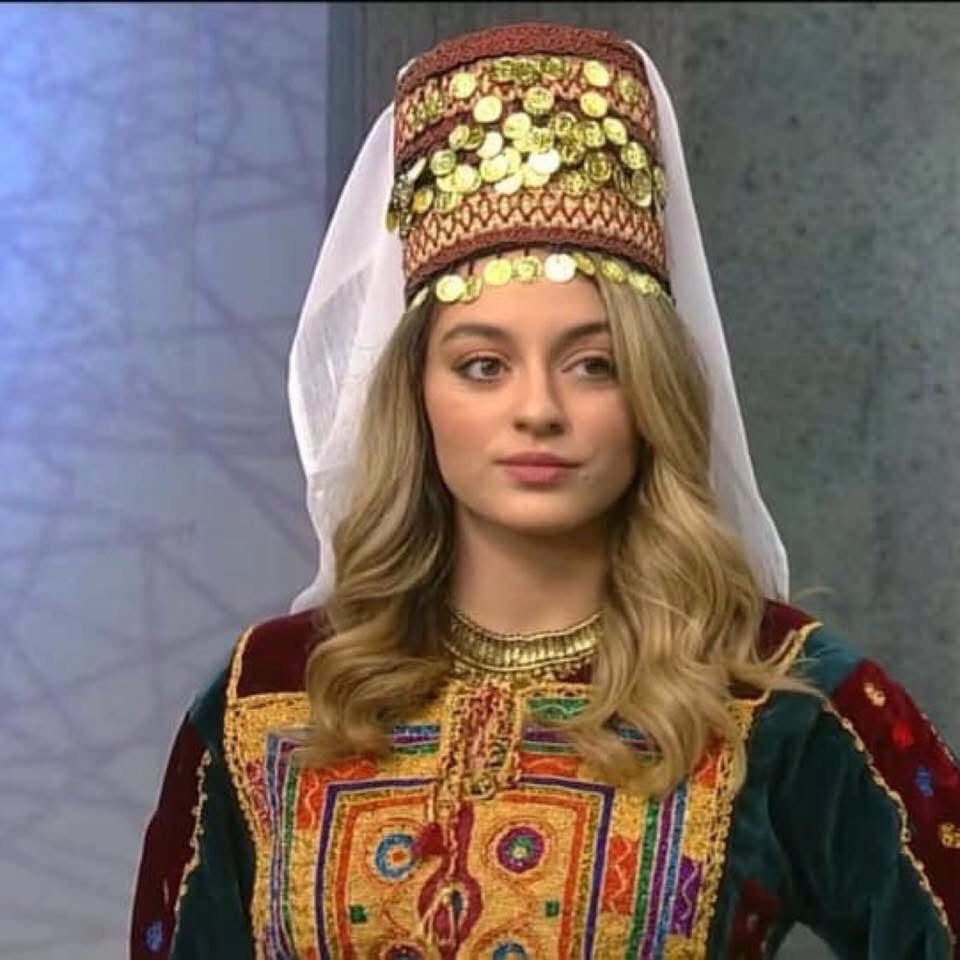
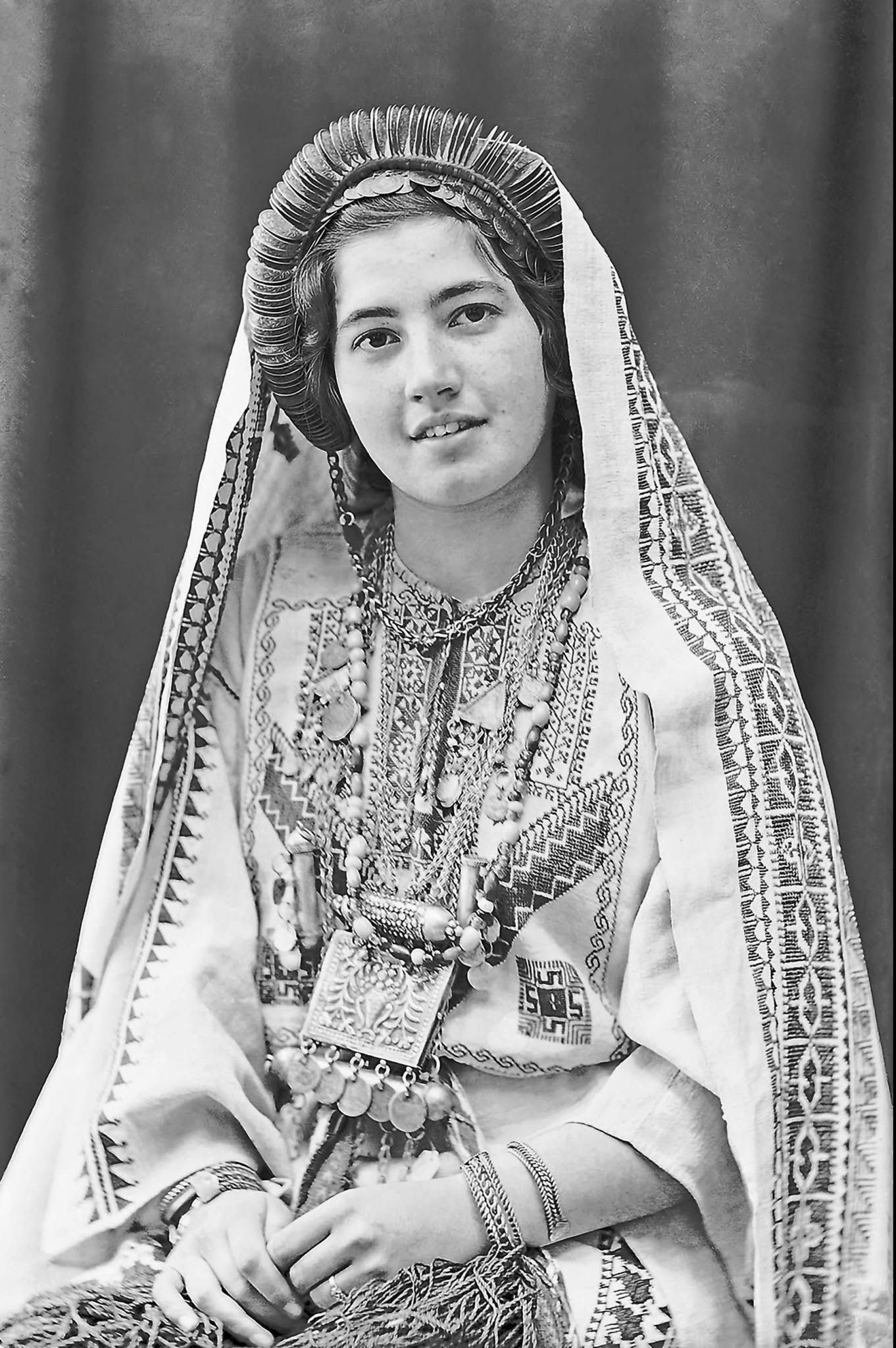
On Palestinian Dress Day, we renew our commitment to preserving the traditional Palestinian dress and write a story about it every day, a story connected to a homeland we cherish.
The dress of Bethlehem, Palestine.
The headdress, called “al-Shatwa,” is made of red felt fabric and decorated with Syrian silk, coral beads, and Ottoman silver coins. The bride adorns herself with a silver necklace and bracelets, and her beauty is enhanced by an inked fish necklace, symbolizing blessing.
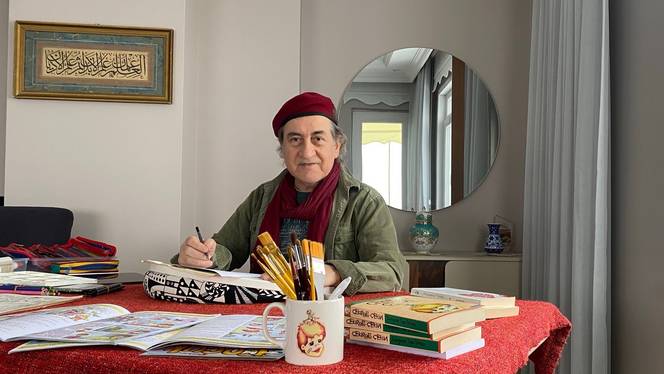
Erkul’s illustrations blend satire with activism, highlighting injustice of the Palestinians. Whether addressing war, disaster, or political hypocrisy, Erkul’s art amplifies the voices of the silenced.
By Yusuf Kamadan
A slice of watermelon pierced by knives. A faceless figure in a suit, draped in the American flag, steering a cart off a cliff and into the flames. A set of scales, balancing Hitler on one side, Netanyahu on the other. A shapeless globe, caught in the grip of a monstrous, many-limbed octopus.
These are the unmistakable images of Muammer Erkul, the Turkish illustrator and journalist whose work—at once bold, unflinching, and darkly satirical—has spread widely across the social media. His drawings do not whisper; they speak loudly.
The satire is biting, but the implications are serious. At a time when many artists sidestep controversy, wary of political consequences, Erkul embraces it.
“I have an idea and I want to convey it to the other party. I want to pass on my feelings. One of the most effective ways to do this is to draw a cartoon,” he says.
His illustrations have become a kind of visual journalism, a counter-narrative to the political abstractions that often obscure the human cost of war.
With sharp lines and unflinching commentary, Erkul captures the resilience of Palestinians amid oppression.
Since the 1970s, Erkul has carved out a space for himself in Turkish newspapers and magazines, his work known for its wit, precision, and unrelenting social critique.
His drawings do not merely document suffering; they bear witness.
Scenes of bombed-out homes, grieving mothers, children clutching stones — his work captures the devastating realities of occupation while also portraying the quiet, stubborn resilience of a people who refuse to be erased.
“Millions of Palestinians have lost everything — their homes, their families, their lives,” Erkul says. “More than 150,000 bodies have been destroyed, and 50,000 of them have been martyred—most of them children and women.”
His words, much like his art, do not flinch from the brutal arithmetic of war. Beyond his artistic talent, Erkul has always used his work as a platform to address important issues.
Erkul’s art merges satire with activism, amplifying the voices of the oppressed through powerful imagery.
Why cartoons?
For Erkul, caricature is more than just a humorous art form; it is a means of resistance.
“Caricature is the easiest and most effective way to explain some things,” Erkul says. “A cartoon is drawn in a day and understood in an instant. It’s like the longest-range missile, and it sticks to its target.”
In an age of social media, where information moves at a breakneck pace, this immediacy is crucial. A single drawing, shared widely, can cut through the noise in ways that editorials and essays often cannot.
“I have an idea, and I want to convey it,” he says simply. “One of the most effective ways to do this is to draw a cartoon.”
Erkul has long been engaged in magazine publishing, serving as the editor-in-chief of Divanyolu, a cultural and literary magazine, until 2018.
Following the devastating 2023 earthquake, he shared his artwork on social media and made it freely available to magazines, believing that art can serve as a powerful tool for remembrance.
Reflecting on the disaster, Erkul described it as one of the most catastrophic earthquakes in history, emphasising its unprecedented scale and impact.
He recalled the initial shock and fear that gripped him, along with the overwhelming sense of helplessness. Wanting to contribute in a meaningful way, he turned to his art, realizing that while the disaster would eventually fade from public memory, visual documentation could ensure that future generations would not forget.
Early in his career, his cartoons blended humor with cultural commentary, but over time, his focus sharpened, his pen increasingly turned toward the struggles of the Palestinian people.
A single cartoon can convey what words cannot — Erkul’s work strikes at the heart of injustice with visual precision.
“Art is not neutral; it must take a side”
Erkul is not just chronicling injustice, he is building solidarity.
His illustrations are not just critiques; they are rallying cries. Erkul’s work does more than capture the suffering of Palestinians — it interrogates the machinery that sustains it.
His cartoons often expose the uneasy entanglements between Western nations and Israeli aggression.
“Everyone knows the closeness of the US and Israel,” he says. “But never in any period of history has this secret game been played so openly. It’s a chicken-and-egg story — an Israeli egg hatches from an American chicken, an American chick hatches from an Israeli egg, grows up, and lays Israeli eggs again.”
He believes artists have a responsibility to engage, to use their platforms to amplify the struggles of the voiceless. In his view, art is not neutral. It must take a side.
For Erkul, that side has always been clear: art is not just a means of entertainment; it is an act of defiance against injustice.
Art is not neutral; Erkul uses his pen as a tool of defiance against global injustice.
In his view, every artist has a responsibility to stand for justice and use their craft to fight against oppression.
His work is particularly significant in an era where digital media spreads messages rapidly, ensuring that his depictions of Palestinian suffering and resilience reach a global audience.
His legacy is not just one of artistic achievement, but of moral conviction.
His pen, like the voices of Palestinian poets, filmmakers, and musicians, is a tool for preserving memory, for fighting erasure. He firmly believes that the more artists engage with these issues, the stronger the message becomes.
“The more cartoonists and artists we have, the stronger our ideas will be,” he says.
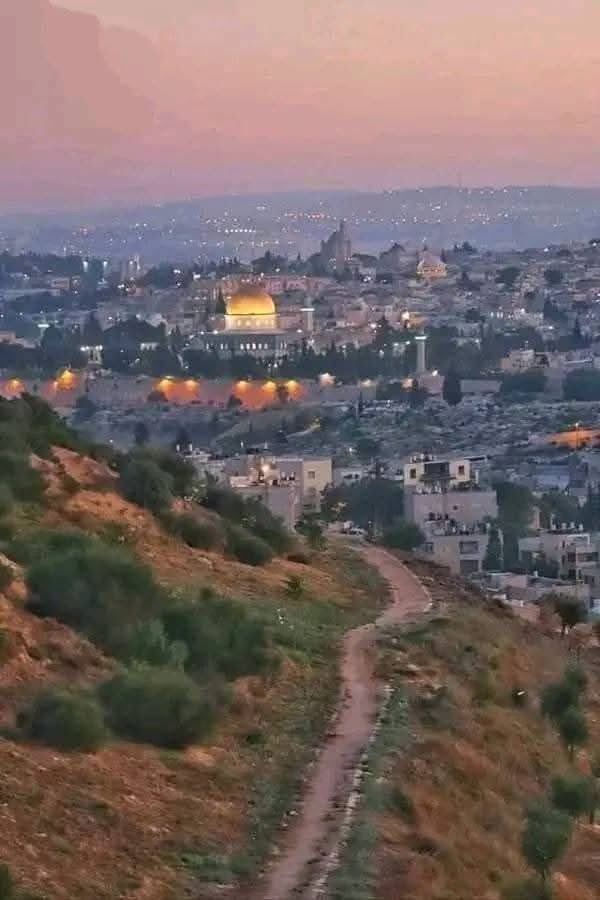
Palestine has strongly condemned the recent decision of the Fijian Prime Minister Sitiveni Rabuka to open a Fiji Embassy in occupied Jerusalem.
The Palestinian Foreign Ministry and Hamas has called such a move as a violation of international law and other relevant UN resolutions.
In separate statements, Tuesday, they urged the Fijian government to reverse its decision.
The Fijian decision is “an act of aggression against the Palestinian people and their inalienable rights,” and it impedes “prospects for peace based on the principle of the two-state solution,” the Palestinian Foreign Ministry according to Anadolu.
Hamas called the decision as “a blatant assault on the rights of our Palestinian people to their land and a clear violation of international law and UN resolutions, which recognize Jerusalem as occupied Palestinian territory.”
On Tuesday, the Fijian Foreign Ministry announced on its official website that the country’s Cabinet has approved the establishment of an embassy to Israel in Jerusalem.
If the decision is not reversed which it seems likely judging from close relationship between Rabuka and Israel, Fiji will become the seventh country to have an embassy in Jerusalem after the US, Guatemala, Honduras, Kosovo, Papua New Guinea, and Paraguay.
The Palestinian Foreign Ministry also affirmed it would take the necessary diplomatic, legal, and political steps to prosecute the countries that opened or relocated their embassies to Jerusalem according to the Wafa news agency.

 CrossFireArabia