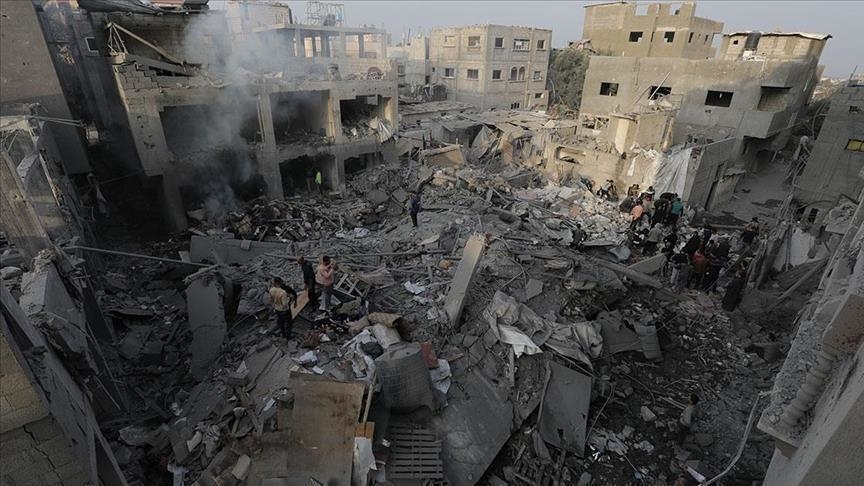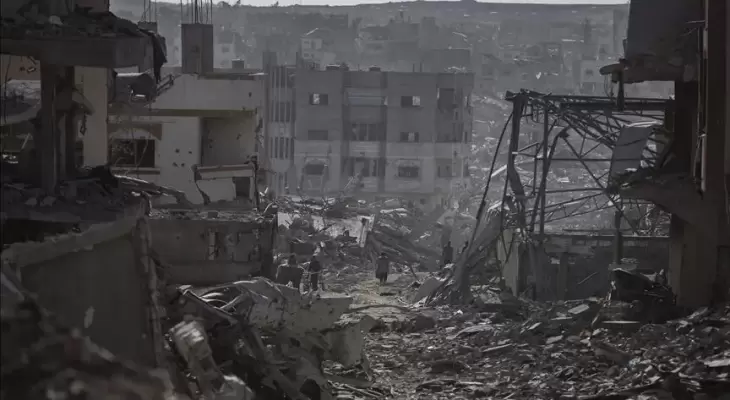
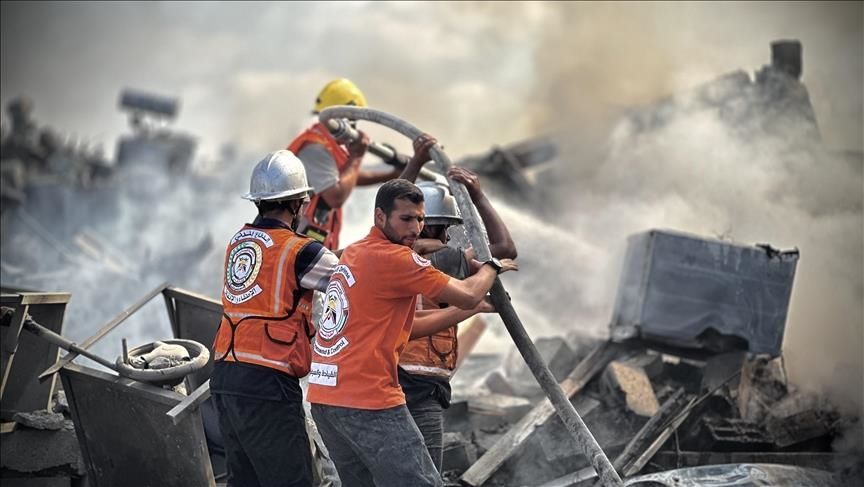
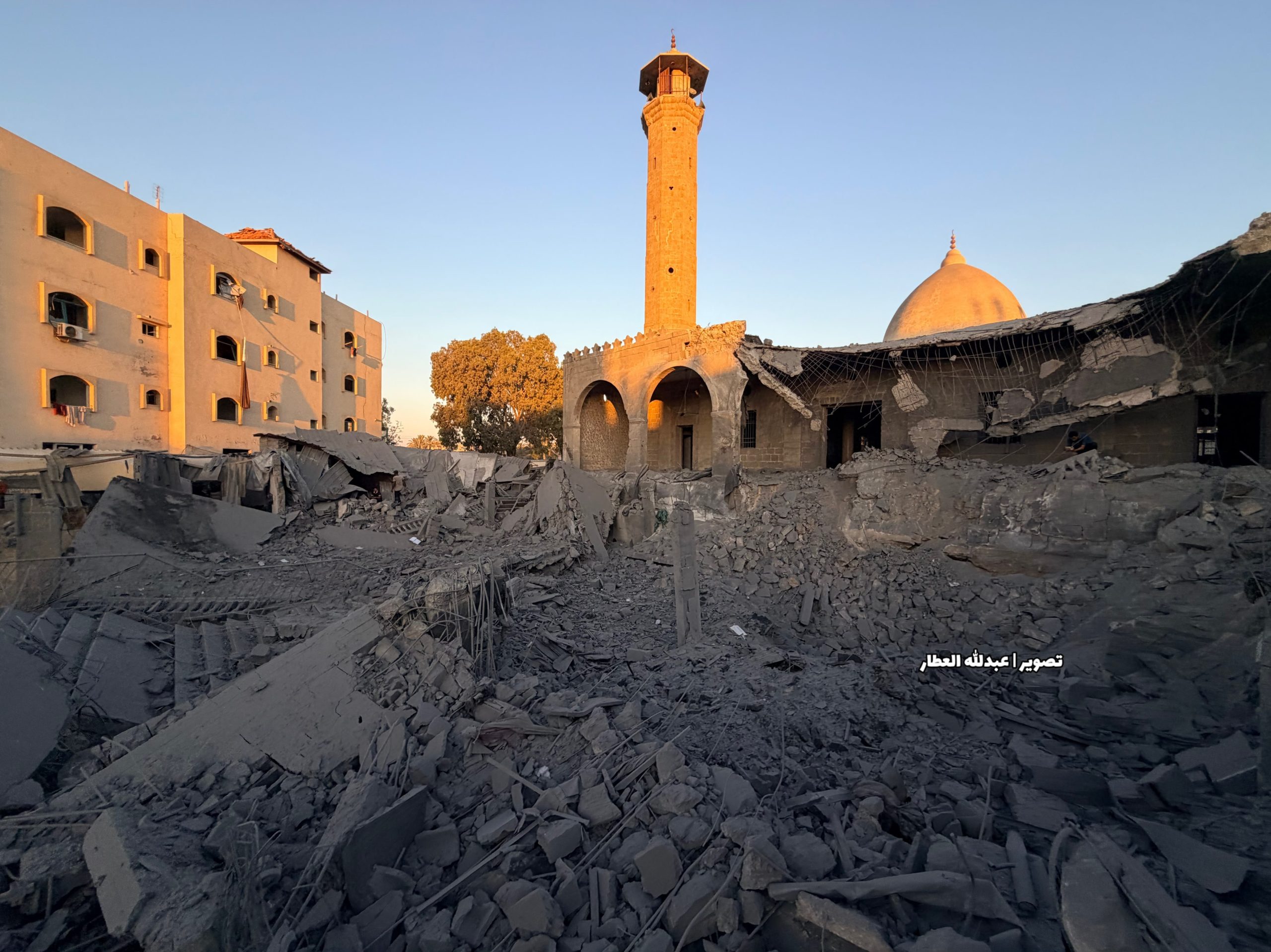
Gaza: 85% of Civil Defense Equipment Bombed by Israel
The Civil Defense in Gaza reports losing 85% of its facilities and equipment during the Israeli genocide, calling on mediators to pressure the Israeli occupation to allow the entry of essential supplies.
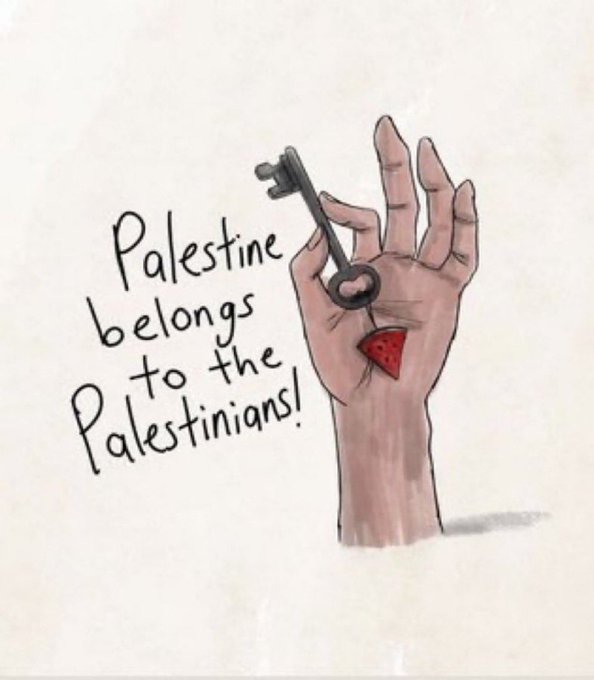
‘Not Displacement But a Two-State Solution’
By Khaled Shaqran
Jordan’s posture on the Palestinian question has always been firm and clear: Jordan is not, and will never be, an alternative homeland for Palestinians.
This position is not merely a political statement but a historical commitment rooted in the principle of justice and the legitimate rights of the Palestinian people. Jordan rejects any attempt to liquidate the Palestinian cause or deny the rights of Palestinians under whatsoever pretext.
In reality, Jordan, which has historically served as a safe haven for those fleeing wars and persecution, is already under immense pressure on its resources and infrastructure due to the accumulated influx of refugees from successive waves of migration. It cannot bear the burden of accommodating more refugees or the multifaceted challenges their presence would bring.
The Palestinian people cannot abandon their homeland, no matter the pressures or threats they face. For Palestinians, their land is not merely territory but identity, history, and shared destiny. They will continue to hold onto it until their legitimate rights are realized. Palestinians will not relinquish an inch of their land, neither through enticement nor intimidation, and will persist in their struggle to achieve their dream of freedom and justice.
No short-term solutions would resolve the issue and end the long-running conflict, as some believe.
While the United States, as a global power, can propose initiatives and exert political pressure, it can never erase an entire people and their just cause. Despite the systematic killing, repression, destruction, and unprecedented exclusionary practices supported by some influential international powers, the Palestinian people have never stopped and will never stop fighting for their legitimate rights, paramount of which is the end of the occupation and the establishment of an independent state of their own.
It is also crucial for the international community to understand that the Palestinian issue is not merely a regional conflict that can be resolved through short-lived settlements. It is a human rights issue tied to the lives of an entire people and their ongoing struggle for freedom and independence. Therefore, any solution that does not rest on the foundation of comprehensive justice will fail and will not bring lasting peace. The only solution to this conflict is a just and comprehensive peace that guarantees the establishment of an independent Palestinian state.
The two-state solution is the only viable formula that enjoys international consensus and reflects the will of the region’s peoples for coexistence in peace and security. Palestine, as both land and cause, is not negotiable or to be ever terminated, and Palestinian rights are historical and legitimate, beyond the power of any force to erase or deny.
It is historically inevitable all occupations eventually end, and it is time for the international community to recognize that this conflict cannot be resolved through displacement, killing, or destruction, but by achieving justice for the Palestinian people. Any solution that does not rely on the two-state framework will remain unattainable. The Palestinian cause will persist as a struggle for rights and freedom, and the region will not enjoy security, stability, or peace until the Palestinian people obtain their legitimate rights and establish their independent state with East Jerusalem as its capital.
Khaled Shaqran is a columnist in the Jordan Times
ESCWA: War on Gaza Sets Backs Development by 69 Years
The impact of the year-long war in Gaza and escalations in the West Bank has set development in the State of Palestine back by about 69 years, according to a new UN report released on Tuesday.
“Without lifting economic restrictions, enabling recovery, and investing in development, the Palestinian economy may not be able to restore pre-war levels and advance forward by relying on humanitarian aid alone,” Gaza war: Expected socioeconomic impacts on the State of Palestine, concludes, produced by the UN Development Programme (UNDP) and the UN Economic and Social Commission for Western Asia (ESCWA).
The analysis suggests three recovery scenarios for Palestine. Given that the recovery will be a long-term process, the report assessed both the immediate impact projected for 2025 and the long-term impact anticipated by 2034, a decade after the start of the conflict.
“Our assessments serve to sound the alarm over the millions of lives that are being shattered and the decades of development efforts that are being wiped out,” said ESCWA Executive Secretary Rola Dashti.
“It is high time to end the suffering and bloodshed that have engulfed our region. We must unite to find a lasting solution where all peoples can live in peace, dignity and reap the benefit of sustainable development and where international law and justice are finally upheld.”
Projections estimate that the gross domestic product (GDP) will contract by 35.1 per cent in 2024 compared with a no-war scenario, with unemployment potentially rising to 49.9 per cent.
Three recovery scenarios
Building on findings published in November and May, the report estimates that poverty in Palestine will rise to 74.3 per cent in 2024, affecting 4.1 million people, including 2.61 million people who are newly impoverished.
The assessment also examines the extent and depth of deprivation, employing multidimensional poverty indicators and includes recovery prospects for Palestine after a ceasefire is reached as well as three early recovery scenarios.
The non-restricted early recovery scenario sees restrictions on Palestinian workers lifted and withheld clearance revenues restored to the Palestinian Authority.
In addition to $280 million in humanitarian aid, $290 million is allocated annually for recovery efforts, resulting in an increase in productivity by one per cent annually, enabling the economy to recover and putting Palestinian development back on track.
Unrestricted aid can help
The assessment suggests that a comprehensive recovery and reconstruction plan, combining humanitarian aid with strategic investments in recovery and reconstruction along with lifting economic restrictions, could help put the Palestinian economy back on track to realign with Palestinian development plans by 2034.
But, this scenario can only play out if recovery efforts are unrestricted, said UNDP Administrator Achim Steiner.
“Projections in this new assessment confirm that amidst the immediate suffering and horrific loss of life, a serious development crisis is also unfolding – one that jeopardises the future of Palestinians for generations to come,” he said.
“The assessment indicates that, even if humanitarian aid is provided each year, the economy may not regain its pre-crisis level for a decade or more.”
As conditions on the ground allow, he said, the Palestinian people need a robust early recovery strategy embedded in the humanitarian assistance phase, laying foundations for a sustainable recovery.
Humanitarian situation deteriorating
The humanitarian situation is catastrophic and deteriorating daily, said UNDP’s Chitose Noguchi, briefing reporters in Geneva from Deir Al-Balah, Gaza, where many displaced people are currently living.
“The State of Palestine is experiencing an unprecedented setback in development to the year 1955,” she said.
“Restrictions that are currently stifling the economy must be lifted,” she stressed, underlining the new assessment conclusion’s importance for the region. Currently, assessments are being conducted in Lebanon and Syria.
Read the full report here.