Is Israel Re-occupying The West Bank?

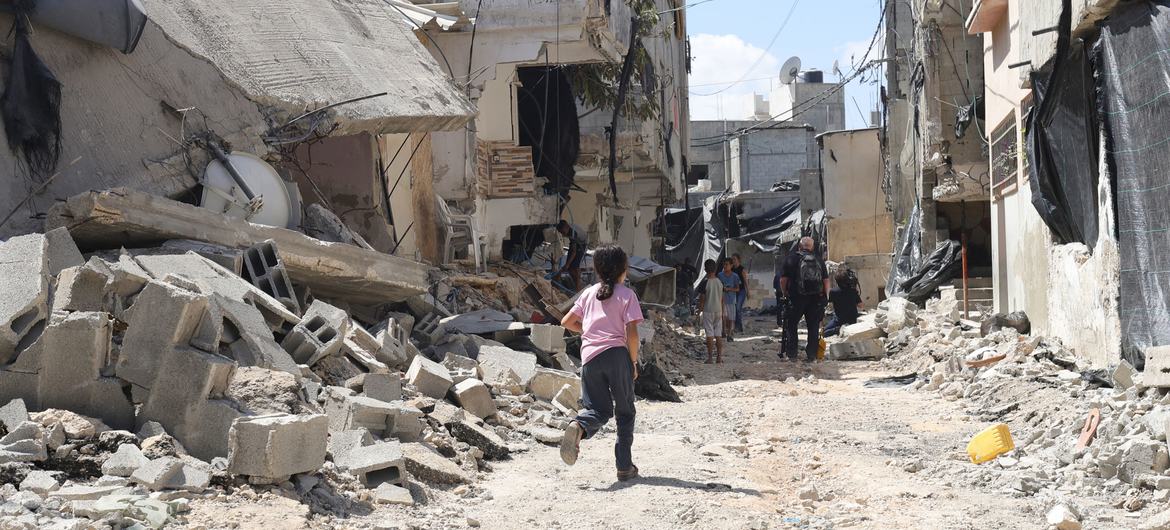
Weeks of deadly Israeli military raids in the occupied West Bank have turned Palestinian communities into “battlefields” and left 40,000 people homeless, UN humanitarians warned on Wednesday.

The violence has seen exchanges of fire between Israeli troops and Palestinian militants – and the use of bulldozers in refugee camps for the first time in 20 years which have destroyed public services, including vital electricity and water networks.

Israel’s defence minister said on Sunday forces could remain in the camps for the “coming year”. 

Philippe Lazzarini, head of the UN’s Palestine refugee agency, UNRWA, said that “fear, uncertainty, and grief once again prevail. Affected camps lie in ruins…Destruction of public infrastructure, bulldozing roads and access restrictions are common place.” 

More than 50 people including children have been killed since Israeli military raids started five weeks ago, the UN agency said, warning that the West Bank “is becoming a battlefield” where ordinary Palestinians are the first and worst to suffer.

Lethal force

Meanwhile, UN aid coordinating office, OCHA, also condemned the “lethal, war-like tactics” being employed by the Israeli military against Palestinian communities in the occupied West Bank.

OCHA confirmed further civilian casualties and mass displacement after a two-day Israeli military raid in the northern town of Qabatiya in Jenin governorate that ended on Monday.

Palestinians were detained in the operation, OCHA noted, before reiterating deep concerns about the use of excessive force against civilians and the additional humanitarian needs among people left homeless.

Responding to needs

UN partners on the ground are doing their utmost to help people uprooted by the violence despite growing “physical and administrative” challenges, OCHA said.

According to the UN World Food Programme (WFP), it reached 190,000 people in January with cash assistance and has provided one-off cash assistance to more than 5,000 displaced people from the Jenin refugee camp.

Gaza cold kills six children

In neighbouring Gaza, UN and its humanitarian partners have continued to scale up food security and livelihood support, while six children reportedly died from the cold.

Needs remain enormous amid desperate humanitarian conditions caused by 15 months of constant Israeli bombardment sparked by Hamas-led terror attacks on Israel that left 1,200 dead and some 250 people captured as hostages.

Citing the Gazan health authorities, OCHA said that six children from the Gaza Strip have died in recent days because to the severe cold, bringing to 15 the total number of youngsters killed by the winter conditions.

Meanwhile, more than 800 trucks entered the Gaza Strip on Tuesday alone, OCHA said. Since the start of the ceasefire on 19 January, WFP has brought more than 30,000 tonnes of food into Gaza. More than 60 kitchens supported by the UN agency across the Strip have handed out nearly 10 million meals, including in North Gaza and Rafah in the south.

The biggest aid provider in Gaza, UNRWA, has reached nearly 1.3 million people with flour and reached about two million people with food parcels since the start of the ceasefire.

The UN Food and Agriculture Organization (FAO) also reported that it has delivered animal feed to northern Gaza for the first time since the escalation of hostilities.

The aid delivery last week has helped 146 families with livestock in Gaza City alongside another 980 in Deir al Balah.

Between the start of the ceasefire and 21 February, FAO distributed more than 570 metric tonnes of animal feed across the Gaza Strip to some 2,300 families with livestock.

OCHA noted in addition that aid partners working in education have identified additional schools in Rafah, Khan Younis and Deir al Balah that were used as shelters for displaced people. “These schools will be assessed and repaired to prepare for their reopening,” it said. 
UN News

Continue reading
‘We Will Rebuild’

In front of my destroyed home in Gaza

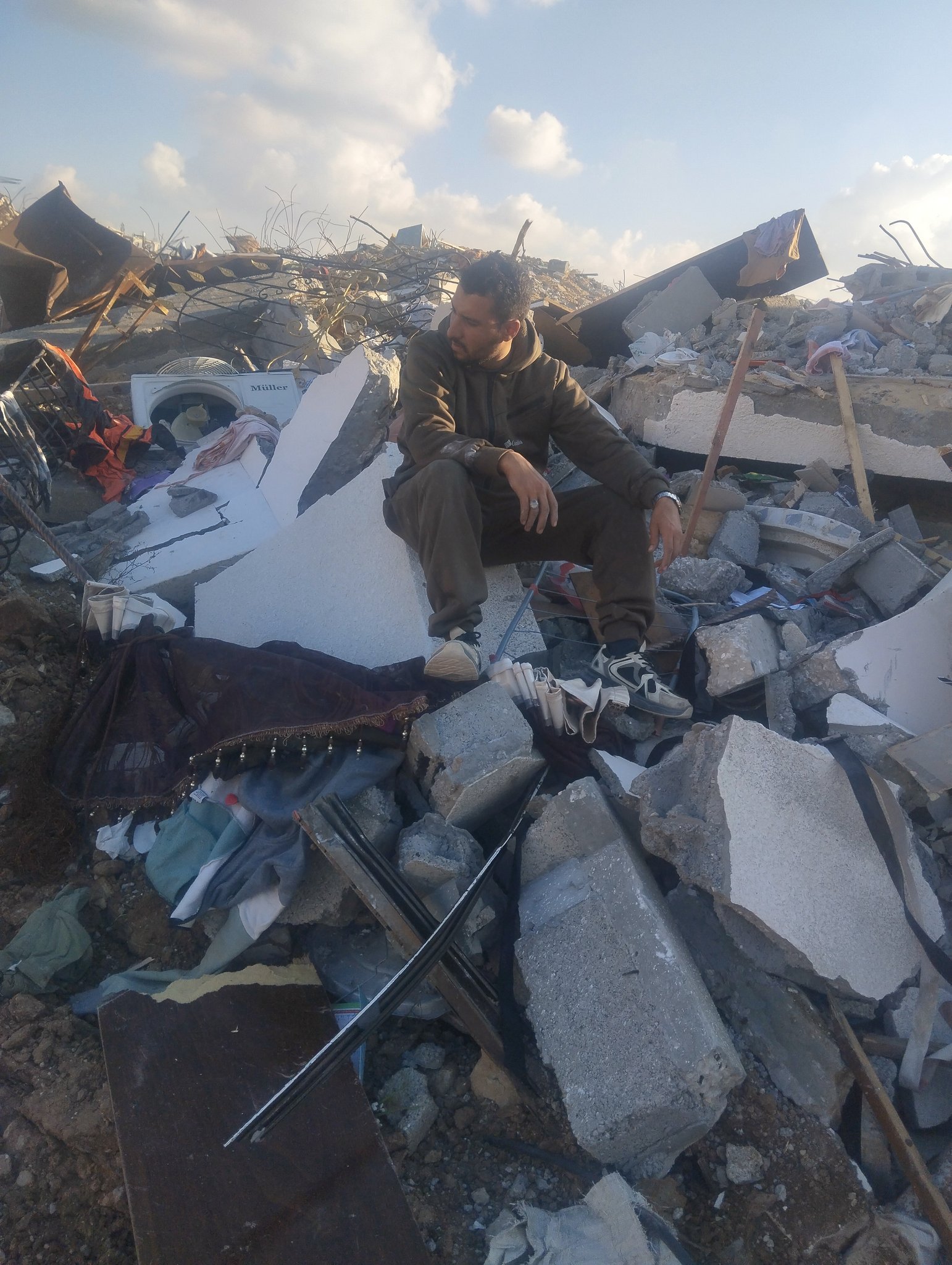
This bright morning, filled with hope, I stood before my ruined house and shouted with all my heart: I swear to you, we will rebuild it stronger than ever. I swear to you, our homeland will bloom again. I swear to you, the sun of freedom is on its way.

.

Continue reading
Al Jazeera Cameraman Leaves Gaza For Treatment

Breaking | QNN correspondent reports that the injured Al Jazeera journalist Fadi Al-Wahidi will leave the Gaza Strip for treatment abroad after months of being prevented from receiving treatment by the Israeli occupation.

Al-Wahidi, who was working as a cameraman, was shot and injured by Israeli occupation forces while covering Israeli attacks in the Jabalia refugee camp during the annihilation plan that lasted for more than three months.

He will be transferred via the Rafah crossing to an Egyptian hospital to begin his treatment journey.

Over 200 journalist have been killed in Gaza by the Israeli war machine and over 400 have been injured.

Continue reading
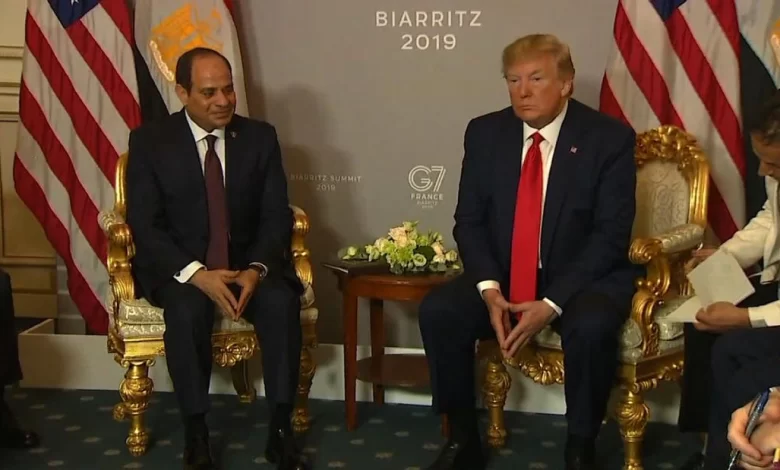
Cairo Says No To Trump!

Egypt refuses to accept displaced Palestinians from Gaza, despite pressure from US President Donald Trump, US officials told the White House in recent days, according to Middle East Eye (MEE). Cairo has made it clear that it will not bow to financial incentives or political coercion.

Trump has also claimed that Jordan would take in Palestinians ahead of King Abdullah II’s visit to Washington next week. His administration’s push for forced displacement has sparked tensions with US diplomats in the region, who warned that the plan could destabilize Egypt, a key American ally.

A senior US diplomat told MEE that the White House remains “tone-deaf” to regional assessments and continues to push for the mass expulsion of Palestinians. Last week, US Secretary of State Marco Rubio discussed the issue with Egyptian Foreign Minister Badr Abdelatty, but Egypt remains firm in its refusal.

Trump reiterated his stance before a meeting with Israeli Prime Minister Benjamin Netanyahu, calling Gaza a “pure demolition site.” He suggested relocating Palestinians to other countries, saying, “If we could find the right piece of land and build them some really nice places, that would be a lot better than going back to Gaza.”

Trump initially suggested that Egypt could take in refugees temporarily, but Witkoff later dismissed the idea, calling it “preposterous” to suggest that Palestinians could return after five years.

Israel has openly pushed for Egypt to accept Palestinian refugees since its genocide in Gaza began. Egyptian officials previously called this a “red line,” but the Trump administration’s support for the plan has emboldened Israeli leaders.

Egyptian President Abdel Fattah el-Sisi condemned the proposal, calling it “an injustice that we cannot take part in.” Egyptian diplomats fear Trump may use military aid as leverage. Cairo receives $1.3 billion annually in US security assistance and is preparing for potential cuts.

Egypt’s security services organized rare protests at the Rafah border crossing last week, signaling strong opposition to Trump’s demands. An Egyptian official told MEE that the government may also allow protests outside the US embassy in Cairo.

Despite Sisi’s iron-fisted rule, he claimed last week that “if I were to ask this of the Egyptian people, all of them would take to the streets to say ‘no,’” according to the Quds News Network.

Continue reading
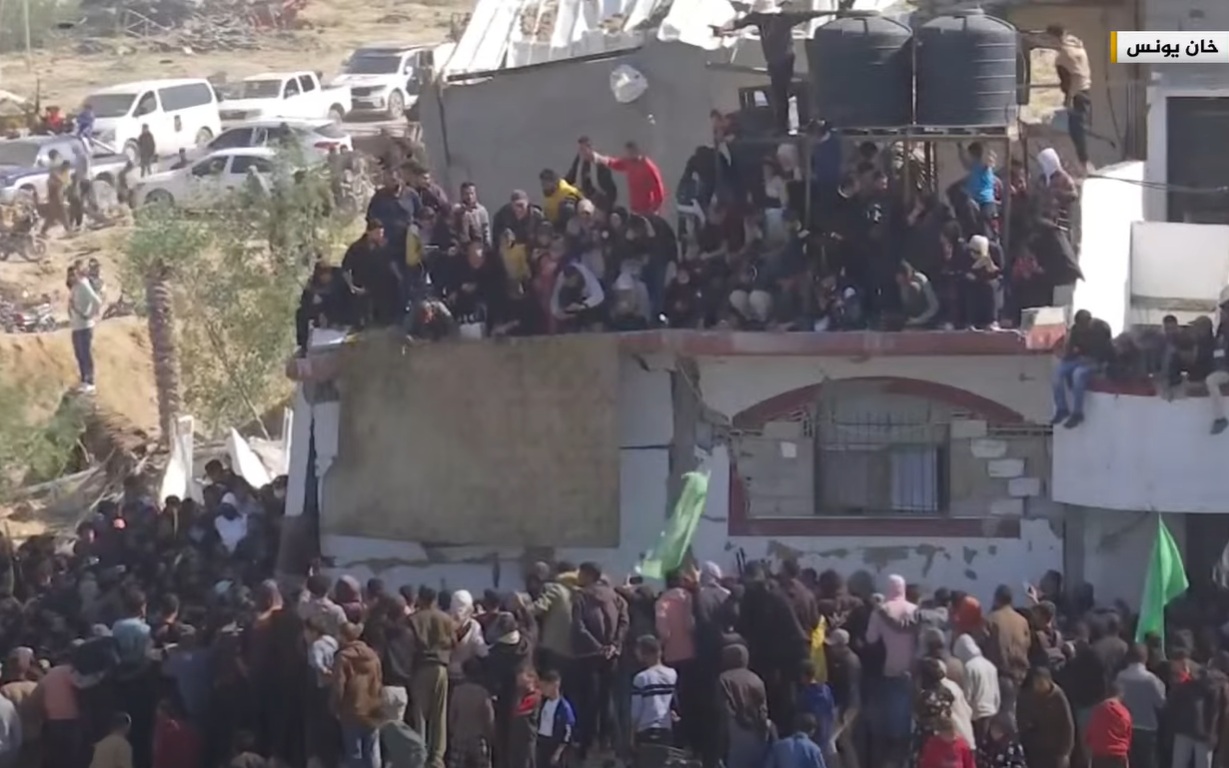
Hamas Hands Over 3 Israeli Prisoners Amidst Flurry of People

The Qassam Brigades handed over to the Red Cross, Thursday, the captive soldier Agam Berger, from the rubble of Jabalia camp in the northern Gaza Strip, as part of the third batch of prisoner exchange according to the ceasefire agreement. Meanwhile, the Al-Quds Brigades handed over the two prisoners it is holding, Arbel Yehud and Gadi Moses, to the Red Cross with their handover from in front of destroyed house of the late Yahya Sinwar’s in Khan Yunis.

The Qassam Brigades released the captive soldier Berger from Al-Razan Square in Jabalia camp, which witnessed major Israeli bombing and destruction as part of the bloody military operation launched by the occupation army, during which a large number of Israeli soldiers were killed and wounded.

The Israeli army announced it received soldier Agam Berger, saying she had arrived at the initial reception point in the so-called Gaza envelope and met with her family members.

The Al-Quds Brigades fighters were deployed in Khan Yunis, south of the Gaza Strip, where the ceremony for the release of Yehud and Moses took place, while the Israeli occupation army radio said the Jihad movement was trying to “exploit the release of the two prisoners to show its strength in Khan Yunis.”

Hamas confirmed that “the large gathering of the masses of our Palestinian people in the two prisoner handover operations in the city of Khan Yunis and the Jabalia camp, amidst the rubble left by the Zionist fascism in the two areas, is a message of determination, strength and defiance that it raises in the face of this barbaric occupier, meaning that our people will remain on their land, and are determined to achieve their project of liberation, return and self-determination.”

The movement said in a press statement received by Quds Press, Thursday: “The Qassam Brigades and the Palestinian resistance prove once again their high ability to control the scene through organized handover operations that have dazzled the world, and after humiliating the criminal enemy army in the sands of Gaza.”

It pointed out “what happened today confirms the unity of the Qassam Brigades, the Al-Quds Brigades and the resistance forces in the field and in managing the exchange operation that took place in front of the house of the martyr leader Abu Ibrahim.”

It stressed “the diversity of the implementation of the release operations of Israeli prisoners from different areas of the Strip, in the steadfast Jabalia, in Khan Yunis and in front of the house of the martyr leader Yahya Sinwar, is a message to the world that our people will remain on their land, will continue the resistance, and are determined to liberate and return.”

Continue reading