The Woman in Two Colours

From Women in Art

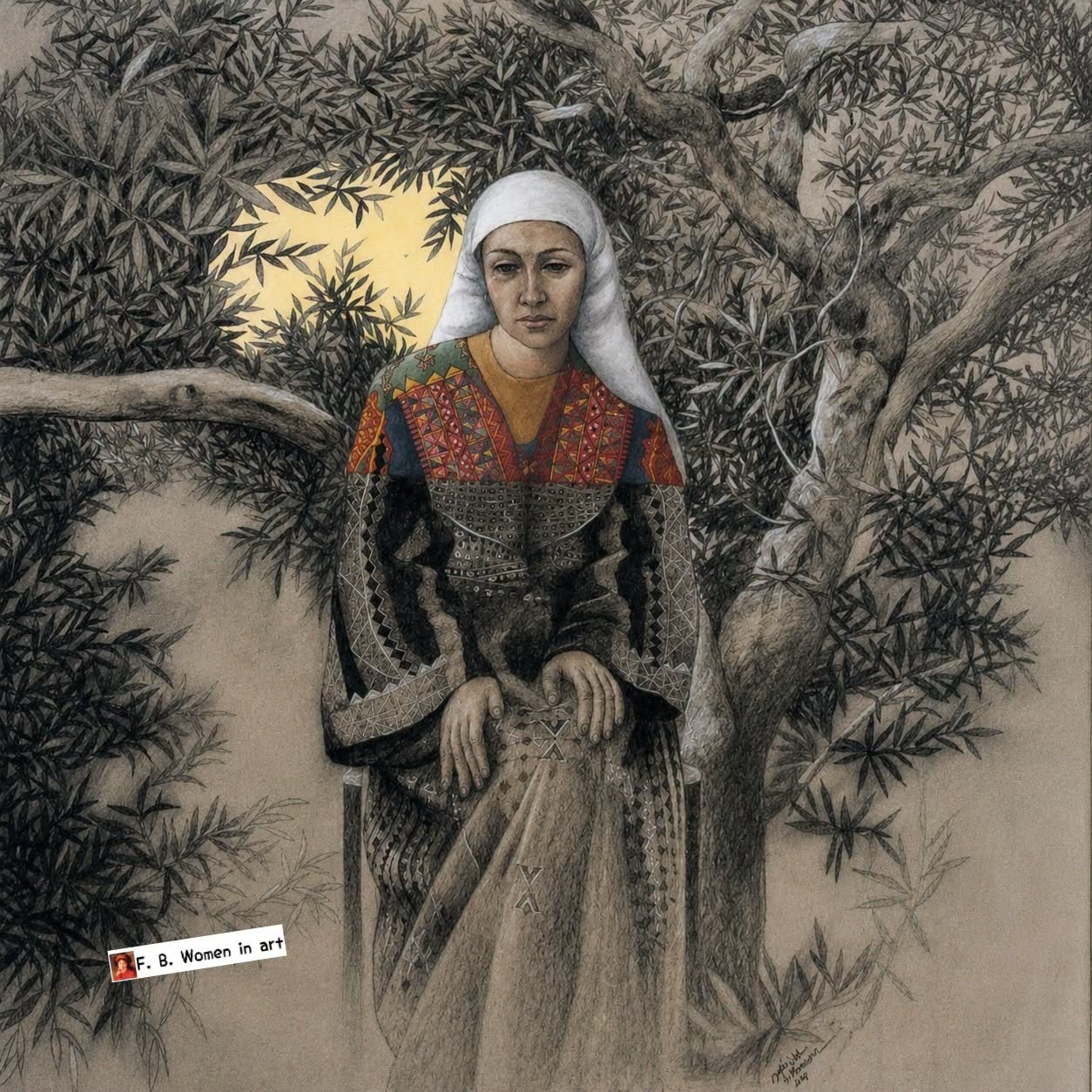
In his “October Afternoon,” painting late artist Sulieman Mansour shows us a Palestinian woman sitting beneath an olive tree, wearing traditional Palestinian dress.

But what immediately catches the eye is the woman herself—half of her is in color, while the other half is almost completely without color.

This division can be read as a reflection of Palestine: One part still present and holding firmly to its land and identity, while another carries the traces of war and displacement.

Behind her, the olive tree stands as a symbol of land, roots, and belonging.

Palestine is not painted here as a map… but as a woman carrying a homeland in her features. 

Suleiman Mansour is gone, but his paintings remain to tell the story of Palestine.
Continue reading
Suleiman Mansour: A Painter For Palestine

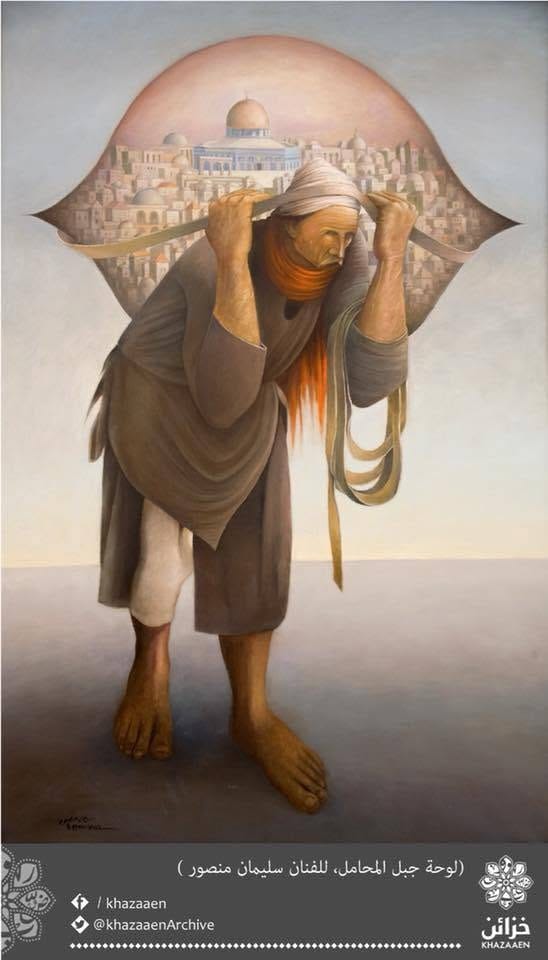
In a distinguished cultural and artistic evening held in Jaffa, the “Bride of the Mediterranean,” the pioneering Palestinian visual artist Suleiman Mansour, creator of the famous painting “The Camel of Burdens,” was honored at an event organized by the Arab Culture Association in cooperation with Al-Saraya Theater and Al-Mat’hana Gallery.

The evening included speeches praising Suleiman Mansour’s decades-long career, and an open dialogue that addressed his rich artistic experience, his cultural and national contributions, and his prominent role in documenting the Palestinian scene and conveying the suffering and resilience of the Palestinian people to the world through his artwork, which has become part of the Palestinian national memory.

Participants emphasized that Suleiman Mansour’s works, most notably “The Camel of Burdens,” constituted a landmark in Palestinian visual art and contributed to consolidating national identity and preserving the Palestinian narrative through the language of art and creativity, making him one of the most prominent figures of the contemporary Palestinian artistic and cultural movement.

Continue reading