Gaza Radio Station Returns to The Airwaves

Broadcaster Rami Al-Sharafi works on a laptop inside the damaged Zaman FM radio station building in Gaza, marking what may seem an unlikely return to the airwaves amid the rubble of the deadly two-year Israel-Hamas war.

While 23 local radio stations were operating in Gaza before the conflict erupted, they were all destroyed and ceased broadcasting, he told UN News.

“Today, we are the only radio station broadcasting on FM from within Gaza after this widespread destruction,” he said. “We hope that other local radio stations will resume broadcasting, thus allowing competition in providing media services to the people of the Gaza Strip.”

Ahead of World Radio Day, observed on 13 February, the resumption of broadcasting comes at a time when Gaza’s media infrastructure still faces significant challenges amid local and international calls to support journalism as part of broader recovery and reconstruction efforts in the sector.

A journalist works at a desk in a damaged office in Gaza, viewed through broken pillars. Another person uses a laptop in the background.

UN News

A journalist works in the damaged office of Zaman 90.60 FM radio station in Gaza City.

Digging through the rubble

After a hiatus of nearly two years due to the war, some local radio stations in the Gaza Strip are transmitting again, in a move showing gradual efforts to revive the media landscape in the war-ravaged Strip – much of which has suffered widespread destruction of infrastructure and civilian institutions from Israeli attacks.

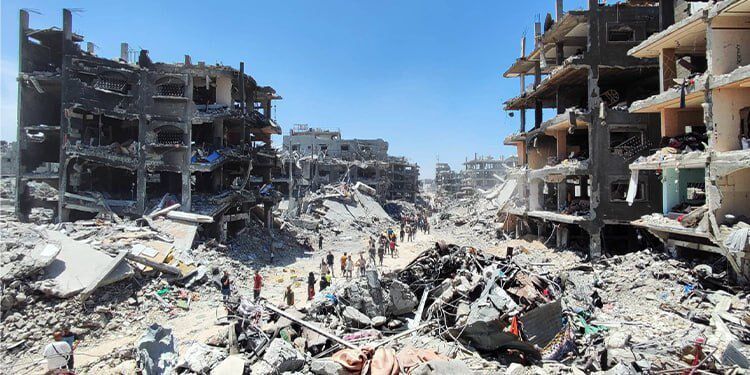
Zaman FM operates in the Tel al-Hawa neighbourhood of Gaza City, where Israeli attacks triggered a famine and left mountains of debris in the streets.

The cracked walls of the station’s building tell a story of immense destruction and the scene inside is unlike any other radio studio in the world. 

Employees dig through the rubble to keep the station broadcasting, working with minimal technical resources while behind them, awareness posters warn people of the dangers of dilapidated buildings.

On-air messages of hope

Local radio remains vital in Gaza as humanitarian crises persist, power outages continue and access to other media remains limited. This makes radio one of the most effective ways of getting key messages out to the public, along with health guidance and information about other services.

Gaza is in dire need of professional local radio stations capable of broadcasting awareness messages and guidance bulletins in light of the spread of diseases, the deterioration of the education system and the disruption of many basic services, said Mr. Al-Sharafi, director of the radio station and host of the morning programme, An Hour of Time.

“We need to deliver information to the population and guide them to the services that have stopped and are gradually being resumed,” he said, “especially in light of the difficult health conditions and the spread of epidemics.”

Amid the destruction all around, Mr. Al-Sharafi sits behind his dust-covered microphone and does just that. 

He sends morning greetings to Gaza residents and provides them with important information and updates, bringing some much-needed hope to the airwaves across a devastated landscape that has only just begun to recover – UN News
Continue reading
Who Has the Upper Hand in Gaza?

Strategic expert Dr. Nidal Abu Zeid said the ongoing operations in the Gaza Strip indicate two opposing scenes: The first to manage the defensive battle of the resistance and the second the offensive battle of the occupation army.

But he added the first scene can be described as escalating and the second as descending.

Abu Zeid added to Jordan24 the resistance has succeeded in managing an escalating defensive battle in a more professional manner and contributed to increasing the daily losses on the part of the occupation forces.

He explained that the resistance’s ability to adapt to the geography of the region has been great as witnessed in the battles of Tal al-Hawa and al-Zeitoun neighborhood. He noted that the mercurial movements of the resistance has confused the occupation forces after inflicting heavy losses on them.

Abu Zeid pointed out that the occupation is conducting an offensive battle in which there is a kind of confusion and hesitation, as the occupation army is unable to determine the directions of the attack and is unable to resolve the war despite the passage of 324 days of fighting.

He said this is due to the state of clear exhaustion in the Israeli combat units, as the 98th Paratroopers Division which has been fighting since the beginning of the military operation without stopping, and the 162nd Armored Division fighting in Rafah and has also fought in the north without stopping.

Continue reading
The Bombs Under Gaza’s Rubble Wait to Explode

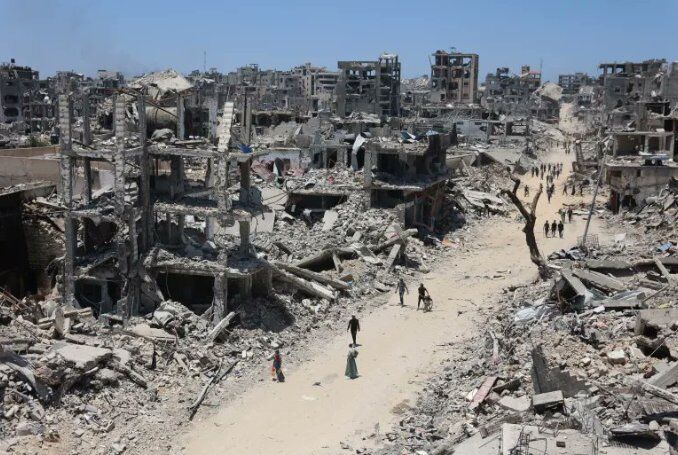
On top of the mass destruction that Gaza has suffered for the past 10 months, today many local and international organizations are asking what will happen to the unexploded bombs dropped by Israeli warplanes and which now lie under the mass rubble and wreckage of Gaza.

They are deeply worried that another disaster is about to happen because of the large quantity of unexploded bombs and missiles deeply buried under the rubble womb of Gaza.

French newspaper ‘Libération’ reported the Israeli assaults on over 40,000 estimated targets in the Strip created about 39 million tons of rubble in the tiny area of Gaza that spans only 41 kilometers.

According to the report, typically, one in 10 conventional bombs do not detonate. With the ongoing genocide on Gaza and the repeated displacements of 100s of thousands of Palestinians, the risk of accidents and explosions from these unexploded ordnance increases.

Experts warn that each layer of debris could conceal unseen, unexploded ordnance, as reported in the Quds News Network.

The problem becomes riskier because the Israeli army – tanks and warplanes –  is bombing different areas countless times. Jabalia, Tal Al Hawa, Sheikh Radwan, Shujaiya, Nuseirat and many others are being bombed twice, thrice and a fourth time which means the likehood of these “dormant” bombs exploding becomes much higher.

Comstant, bombings, explosion, TNT powder is like to have a health and environmental impacts on the area because of the derivatives this Israeli war is having on localities and spaces: 800,000 tons of asbestos, thousands of bodies, and toxic, organic, and the chemical materials that now lie deeply buried under the rubble.

This is not to say anthing about the hospitals – 36 of them – that have also been subject to endless bombings and military encroachment. Some of these hospitals like Al Shifa Complex in Gaza City is completely destroyed by the Israeli army and now lie in ruin and houses radioactive equipment and biological materials. These now lie beneath the debris like ticking time-bombs.

Expert were always worried about the thousands of unexploded shells and missiles dropped, stating these pose a long-term dangers to the population of Gaza. The UN has estimated that 10% of the ordnance dropped by the Israeli military on the Strip have not  exploded. This means they lie under the scattered streets, lands and homes that have been turned into rubble and debris.

The Government Media Office has warned about recurring incidents of explosions in homes, particularly from canisters made to deceive and harm civilians, especially children. There have been numerous injuries from such devices.

Expert voices inside Gaza and the international community have been made to send specialized engineering teams and explosive experts, and equip and provide local authorities with the necessary technical resources to deal with bomb removal and other hazards safely. But these have been ignored by the Israelis.

Danish newspaper ‘Information’ reported in the first three months of the war on Gaza, around 45,000 bombs were dropped, averaging 500 bombs per day or 21 bombs per hour. This extensive bombing has damaged/or destroyed 50-62% of all buildings in Gaza, according to a study by New York University in collaboration with the University of Oregon. The newspaper warned of severe long-term consequences due to the thousands of unexploded bombs, impacting Palestinians’ recovery efforts after the war according to the Quds News Network.

Unexploded bombs are dangerous to the future of Gaza and would remain apparent after the war ends when the removal of the debris and reconstruction starts. Thus, the demining process is likely to be long-term and of hindrance to the development of Gaza especially in densely-populated areas.

The report noted over 14% of bombs dropped in Gaza remain unexploded, far exceeding earlier estimates of about 6,300 bombs and missiles in the first three months of the conflict.

The presence of numerous unexploded bombs are forcing residents to live in a perpetual war-situation. This is even when the bombs stop raining down, tanks cease fire and the trauma subsides. We are still at stage one of the war; the second stage is who is going to clear these ticking time bombs.

Continue reading
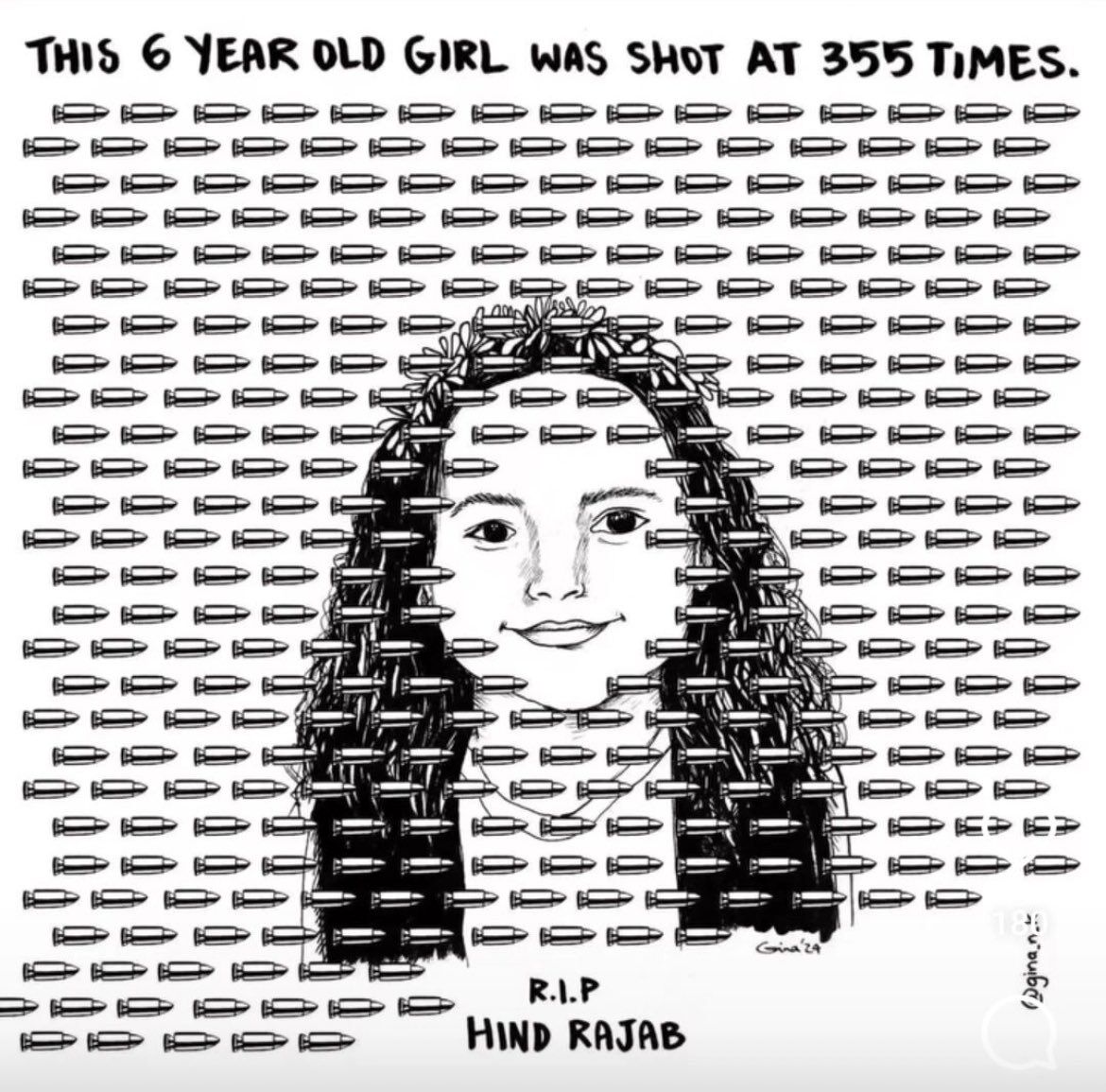
Shot 355 Times! Israel Fears Little Hind

Her name is Hind Rajab, a six-year-old girl who was killed by the Israelis while hiding in a car.

Unbelievable is the fact car was riddled with 355 bullets from an Israeli tank that kept pounding at the car with no mercy.

She was finally shot while surrounded by her unarmed dead relatives, an uncle, an aunt, three cousins who were fleeing Gaza city’s Tal Al Hawa at the end of January 2024.

The bodies of Hind and two paramedics who were sent to rescue her were found on 10 February, 2024. The story of the Killing of Hind Rajab is recounted at length on Wikipedia and many others have investigated the terrible incident in the following months.

Her name and images have continued to make headlines on the social media with a #HindRajab  tag since then, and because of the horrific nature of the killing as her body was found 12 days after she was killed with shocking audiotapes recalling her final moments, all alone, as she was killed with Israeli bullets.

Imagined: While the Israeli tank was shooting at them, one-cousin remained with her, 15-year-old Layan Hamdeh. When she was killed by more bullets, she was talking to officers in the Palestine Red Crescent Society. Then Hind picked up the phone and was told to keep hiding in the car.

Israel denied responsibility but all the evidence suggest it was their bullets. Today the “shot 355 times” continues to dominate the social media with the “6-year-old hiding in a car annihilated by an Israeli tank”.

Continue reading
Despite Ruins, Palestinian Resistance in Top Shape

Jordanian military and strategic expert Nidal Abu Zeid said the videoclips broadcast by the Palestinian resistance groups on the methods of managing operations, ambushes, and targeting the occupation forces, prove they are still cohesive and their command and control system is capable of continuing and inflicting losses on the Israeli occupation forces.

Abu Zeid added the resistance operations are managed by an integrated system. He said the videoclips show there is a commander for the operation who directs, then there is the target reconnaissance based on intelligence gathering with another team videoing and photographing the operations.

These elements confirm such a system in the works  is still fine, stressing the Israeli occupation forces were forced to retreat and not withdraw from Al-Sinaa Street in Tal Al-Hawa after the ambush that caused much losses in reference to the latest Israeli military actions.

Abu Zeid said this prompted the occupation forces to withdraw not just from Tal Al Hawa but from the entire northern Gaza Strip according to Jordan 24.

Abu Zaid pointed out most of the destructive vehicles that appeared in the circulated clips are M113 troop carriers, maintaining that this reinforces the theory that the occupation resorted to using this type of old carriers that were discontinued in 2006 due to the significant losses of modern Tiger troop carriers in the Israeli army.

He indicated the M113 carriers are not as efficient, effective and armored which also explains the high losses among the Israeli soldiers as the Israeli army announced.

That the means the loss curve is still rising between 10 to 20 soldiers per day, which imposes challenges on the occupation army in terms of manpower resources.

Abu Zeid stated the statements of Israeli Chief of Staff Herzi Halevi about the urgent need to recruit new elements into the army and Defense Minister Yoav Gallant statements about the necessity of recruiting ultra-Orthodox Jews who are exempt from military service confirm the magnitude of the losses the army is suffering daily.

Abu Zeid continued the Israeli combat doctrine is based on three pillars: Deterrence, early warning, and rapid resolution) pointing out the Palestinian resistance groups have succeeded in stripping the enemy of these and which explains the clear imbalance in the military operations and the occupation’s inability to take the upper hand.

Regarding the ongoing negotiations in Doha, Abu Zeid said Netanyahu is trying to booby-trap these talks and obstruct their progress by imposing conditions related to guarantees for the resumption of military action at any time.

These aim at preventing the return of the displaced to northern Gaza, and evade the issue of negotiating with the Egyptian side on the status of the Philadelphia axis, which will create further conflict between the government and the military generals and leaders of the security services.

Continue reading