Despite UN Appeals Israel Maintains Hardline Approach on Gaza

Civilian casualties and injuries continue to be reported across Gaza due to the ongoing hostilities, with most families unable to afford basic food as the humanitarian situation deteriorates, a UN spokesperson reported, Thursday. In Lebanon, the UN peacekeeping mission in the south of the country urged both Israel and Lebanon to prevent any actions that could threaten the fragile ceasefire.

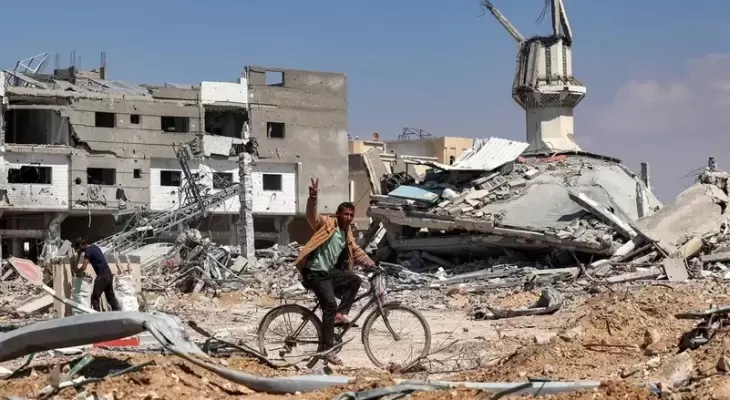
The relentless fighting in the Gaza Strip, which began last October, continues to cause widespread destruction and drive displacement, according to a note issued by the UN Spokesperson’s Office.

“The Office for the Coordination of Humanitarian Affairs (OCHA) stresses once again that civilians and civilian infrastructure, including hospitals, must be protected and spared from attacks,” the note stated.

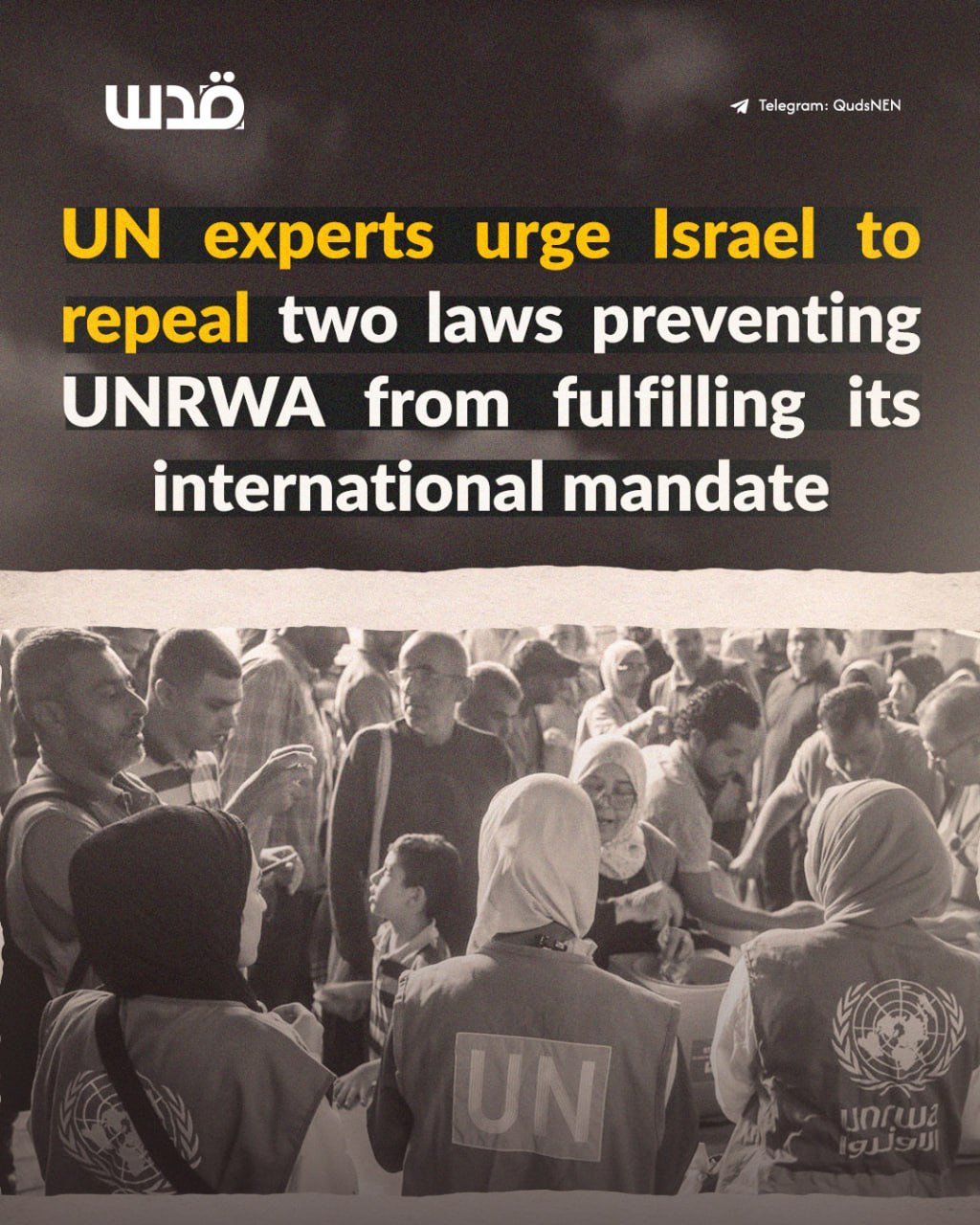
The note also cited reports that Israeli authorities continue to deny and impede aid missions across the war-ravaged enclave.

“Out of 12 UN requests for coordinated humanitarian movements yesterday, six requests were denied outright, three were cancelled by the organizers due to security or logistical challenges, one was approved but faced impediments, and two others were facilitated and accomplished,” the note stated.

“One attempt to reach besieged parts of North Gaza governorate was denied yesterday and another one today,” it added.

Despite access restrictions and insecurity, aid organizations are working tirelessly to assist the most vulnerable as the humanitarian crisis in Gaza worsens.

With most families unable to afford basic food, prices have skyrocketed. Reports indicate that a 25-kilogram bag of wheat flour is now priced between $160 and $190.

“Humanitarian partners working to address hunger in Gaza estimate that as of mid-December, 10,000 metric tonnes of wheat flour are needed to distribute one bag of flour to all families in Deir al Balah, Khan Younis and Rafah,” the note said.

“Without this, food insecurity in central and southern areas of the Strip will only worsen.”

UN Mission urges protection of ceasefire in Lebanon

Meanwhile, the UN Interim Force in Lebanon (UNIFIL) stressed that any actions threatening the fragile cessation of hostilities, agreed last month between Israel and Lebanon, must cease.

“Israel and Lebanon have recommitted to full implementation of Security Council resolution 1701,” UNIFIL in a statement, calling on both parties to use the newly established Mechanism as agreed to address outstanding issues.

UNIFIL also called for the timely withdrawal of the Israel Defense Forces (IDF) and the deployment of the Lebanese Armed Forces (LAF) in southern Lebanon as part of the full implementation of the resolution as a comprehensive path toward peace.

It also noted concern over destruction caused by the IDF in residential areas, agricultural land and road networks in southern Lebanon, adding that such actions violate resolution 1701.

“UNIFIL stands ready to play its role in supporting both countries meet their obligations and monitoring progress,” the Mission said.

“This includes ensuring the area south of the Litani River is free of any armed personnel, assets or weapons other than those of the Government of Lebanon and UNIFIL as well as respect for the Blue Line.”

It added that UN peacekeepers will continue their mandated tasks, including monitoring and reporting all violations of resolution 1701 to the Security Council.

UN News

Continue reading
‘Everyday 4 Kids Die in Gaza’

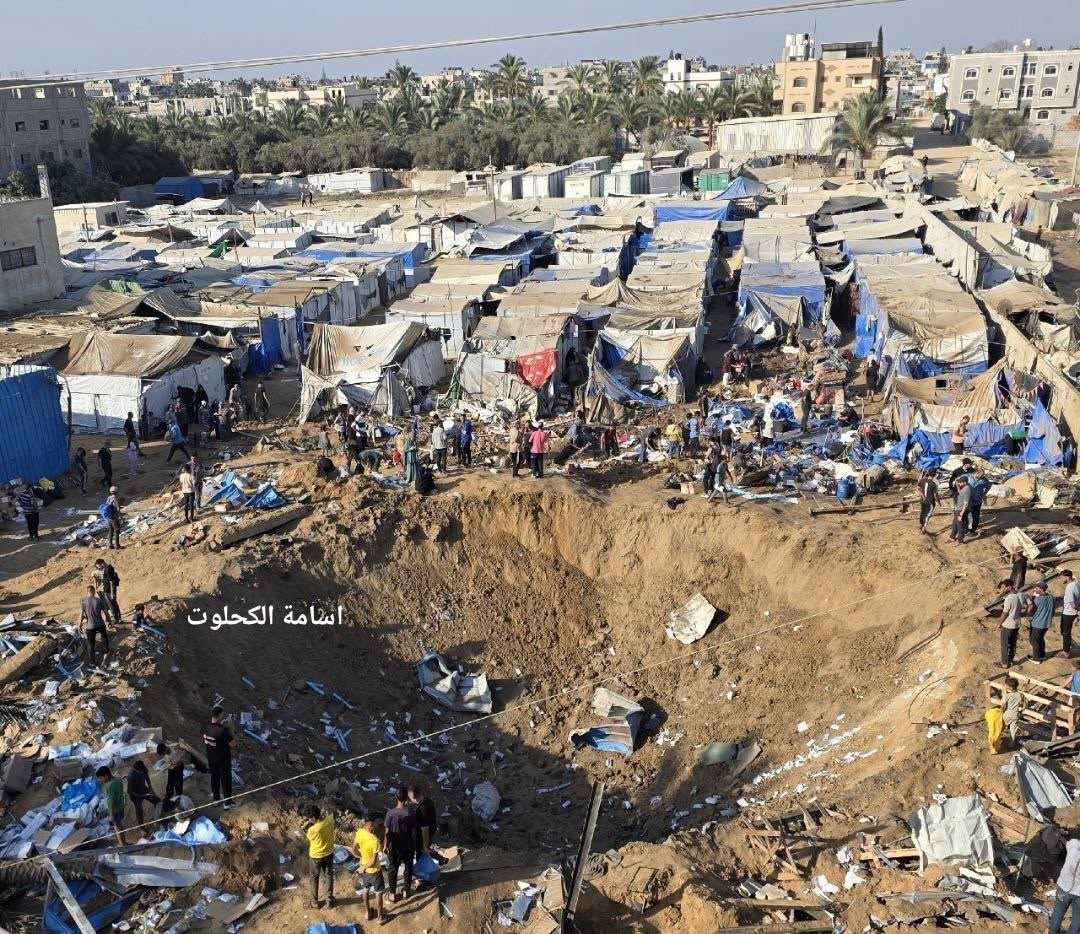
Yesterday, in yet another devastating attack on Nuseirat camp, in central Gaza, 33 people were reportedly killed – including at least eight children – and 50 wounded by airstrikes. The latest violence adds to a staggering figure of more than 160 children reportedly killed in Gaza in a little over a month. That is an average of four children every day since the beginning of November.

“Children didn’t start this conflict and they have no power to stop it, yet they are paying the highest price with their lives and futures. In the last 14 months, more than 14,500 children have reportedly been killed, and virtually all 1.1 million children in Gaza are in urgent need of protection and mental health support. Famine continues to loom in the north and humanitarian access remains severely restricted.

“Children and families throughout Gaza face constant displacement, which has pushed 1.9 million people away from their homes, including hundreds of thousands of children. There is no safe space in Gaza, nor any sense of stability for children, who lack essentials such as food, safe water, medical supplies, and warm clothes as winter temperatures drop. Preventable diseases continue to rapidly spread, including more than 800 cases of hepatitis, and more than 300 cases of chickenpox. Thousands of children are suffering from skin rashes and acute respiratory infections. Winter weather is adding to children’s suffering.

“The world cannot look away when so many children are exposed to daily bloodshed, hunger, disease, and cold. We urgently call on all parties to the conflict, and on those with influence over them, to take decisive action to end the suffering of children, to release all hostages, to ensure children’s rights are upheld, and to adhere to obligations under international humanitarian law.”

This is a statement by UNICEF Executive Director Catherine Russell on children and the continued bloodshed in the Gaza Strip

Reliefweb

Continue reading
Time to Condemn Israel

On December 9, 1948, the UN has adopted the Convention on the Prevention and Punishment of the Crime of Genocide. After 76 years, the Palestinian people have been facing the real genocide, that the world witnesses for the first time, as the Israeli occupation has been killing, forced displacing, and starving them for over a year. Would Israel be held accountable over all of its crimes?

Continue reading
Disaster Looms in Syria as Terror Groups Battle

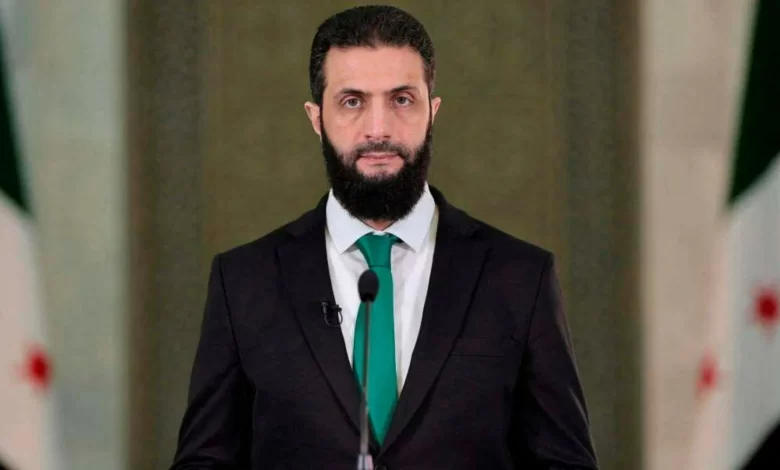
More than 280,000 people have been uprooted in northwest Syria in a matter of days following the sudden and massive offensive into Government-controlled areas led by Hayat Tahrir al-Sham (HTS), which is sanctioned by the Security Council as a terrorist group. 

Aid has continued to flow from Türkiye across three border crossings into the embattled northwest and the UN World Food Programme (WFP) said that it had opened community kitchens in Aleppo and Hama – cities now reportedly occupied by HTS fighters.

In neighbouring Lebanon, meanwhile, senior UN aid official Edem Wosornu expressed deep concerns for the safety of more than 600,000 people who have begun to return to their devastated homes, after a ceasefire between Israel and Hezbollah kicked in on 27 November. “I’m sure they are settling back, the problem is what they would find when they go back home,” she told journalists in Geneva, highlighting the potential dangers from unexploded ordnance.

Syrians’ hunger misery

Speaking in Geneva after a joint UN and NGO Emergency Directors assessment mission to the Middle East from 25 November to 1 December, the UN World Food Programme (WFP’s) Samer Abdel Jaber described Syria’s new unfolding emergency as “a crisis on top of another” – a reference to the war that began in 2011, sparked by a civil uprising against the Government. 

Since then, it has drawn in regional and international powers and defied the efforts of the Security Council and wider global community to bring it to an end. It’s estimated that hundreds of thousands have been killed and many more are believed to remain in the Government’s prisons.

Mr. Abdel Jaber, who heads WFP’s Emergency Coordination, Strategic Analysis and Humanitarian Diplomacy arm, warned that around 1.5 million people are likely to be displaced by this latest escalation “and will be requiring our support. Of course, the humanitarian partners are working on both sides of the front lines we’re trying to reach the communities wherever their needs are.”

The WFP official noted that the sudden escalation had not shut down three humanitarian border crossings with Türkiye and that aid continues to flow into Aleppo, Syria’s second city. 

The UN agency “has opened and supported two community kitchens that are providing hot meals in both Aleppo as well as in Hama,” he said, adding that “the aid partners are on the ground and doing everything they can to basically provide the assistance to the people”.

Millions of Syrians are already in crisis because of the war which has destroyed the economy and people’s livelihoods, threatening their survival. “It’s at a breaking point at the moment in Syria, after 13 or 14 years of a conflict, over three million Syrians are severely food insecure and cannot afford enough food,” Mr. Abdel Jaber said, adding that a total of 12.9 million people in Syria needed food assistance before the latest crisis.

Despite the clear need for more support, international funding for Syria’s $4.1 billion humanitarian response plan “faces its largest shortfall ever”, the WFP official warned, with less than one-third needed for 2024 received to date.

Lebanon returnees in danger

In neighbouring Lebanon, senior UN humanitarian official Edem Wosornu, Director, Operations and Advocacy Division at the UN aid coordination office, OCHA, said that people affected by the war between Israel and Hezbollah fighters “have returned faster than they even left the conflict; more than 600,000 people have begun to go back home, and as we speak, I’m sure they are settling back. The problem is what they would find when they go back home and the need for our response to pivot very quickly.”

Among those in need today are many Syrian refugees who fled the war in their country, only to be displaced several times since their arrival, explained Isabel Gomes, Global Lead of Disaster Management at NGO World Vision International: “There was this particular girl that we spoke with; she told us the story that at the time of the conflict, when she had to move, she was pregnant, close to nine months, and she had to walk kilometres and kilometres and kilometres. 

“Then she asked us if she could show us her baby, and we saw her baby was two months. But when we asked if the baby had received vaccines, she said the baby had never received vaccines.”

Returning farming communities also face deadly dangers from the fighting in southern Lebanon’s wartorn zones, OCHA’s Ms. Wosornu explained: “We also are concerned about the impact of mines and unexploded ordnance in the some of these locations.

“We are really asking our mine action colleagues and others to support the Government in demining activities because when people who want to go back home, who’ve gone back home, the farmers who are trying to salvage the rest of the olive harvest, there’s fears that this…could be impacted there.”

UN News

Continue reading