Gaza Fishermen Dream of Life Prior to 7 Oct

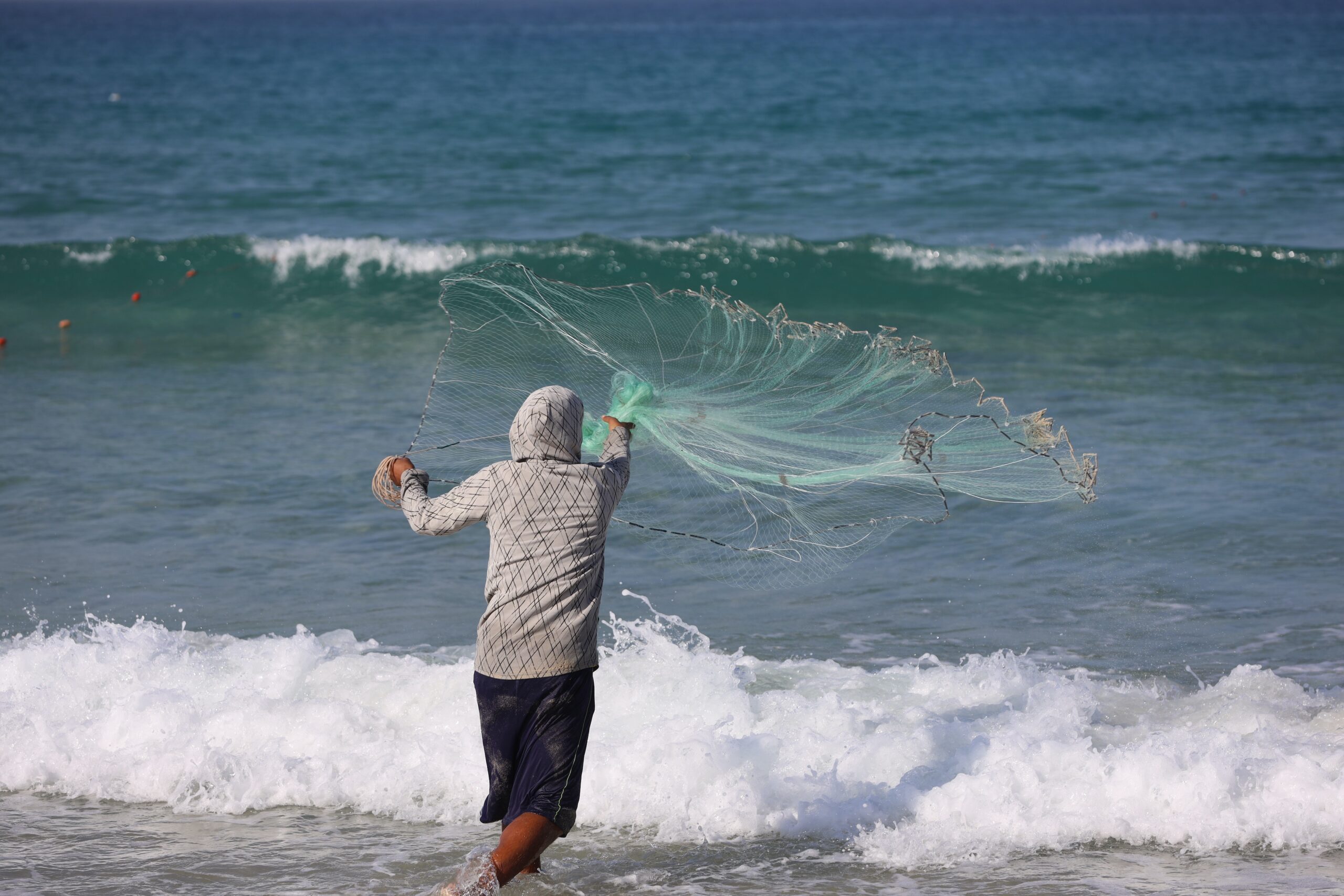
CROSSFIREARABIA – The fishing industry, once a pillar of the Gaza economy, now stands in total devastation due to Israel’s continuing war on the 364-kilometer Strip that doesn’t seem to stop despite the fact that a ceasefire was signed on 10 October, 2025.

Zakaria Bakr, General-Secretary of the General Union of Workers in Fishing and Marine Production affirmed that the Gaza fishing sector — which for decades has been a primary source of income for thousands of families and a key pillar of food security — is now in ruins because of the more than two and a half years of Israeli bombing on the Gaza Strip, including on its beaches and coastal areas. Its a narrative of devastation. 

Bakr said the systematic targeting of the fishing industry by Israeli occupation forces has lead to its near-total collapse.

Speaking to Quds Press, Bakr said that this targeting has included an almost complete ban on fishermen and preventing them from going a few hundred meters after the shoreline; a situation  made with vehemence soon after 7 October, 2023 when Israel launched a destructive war on the Strip and with no let up.  

Bakr added that lethal force started to be used against fishermen not to step even meters into the Gaza blue shorelines.  They still take the risk because of the miserable economic situation they have been reduced to. But this has proved costly for more than 230 of them have been shot dead at point  blank range.

The union chief says hundreds have been arrested as well, explaining the fishing sector has been subjected to mass destruction affecting up to 95 percent of its infrastructure, with fishing boats ruined and warehouses struck either by Israeli gunboats and/or missiles from the air.

UN figures as well testify to this fact, stating the fishing infrastructure include ice factories, storage facilities, maintenance workshops and wholesale fish markets which have been destroyed over the past two-and-a-half years of slaughter.

This has led to the near-total collapse of the fishing industry, depriving thousands of families of their only source of income. Today, it’s a stark contrast. Prior to October 2023, there were 4200 registered fishermen with 6000 support workers on the boats and the fishing sector sustained around 100,000 people in Gaza but no more.

The destruction of the sector has created an additional food security crisis. Before October 2023, the fish total annual tonnage production stood at 5,410 according to the UN Food and Agriculture Organization. Today, its less than 7.3 percent.

It is indeed a hard life for fishermen.  Before October 2023 Gaza fishermen used to catch between them, 15,000 to 20,000 kilos, daily. Now, it is down to a trickle with UN feeds reporting a mere 2 to 5 kilograms of fish daily, and I dare say, if they can pass the Israeli gunboats and snipers who are waiting near the coast.

Bakr added that what Gaza’s fishermen are going through from the Israeli gunboat harassment is a blatant violation of the Universal Declaration of Human Rights, particularly the rights to work, life, and dignified living. It directly contradicts the core principles established by the International Labour Organization regarding safe working conditions and the protection of workers, he pointed out.

Bakr said despite the hopelessness of the sector, his union continues to be active, recently sending letters to several international organizations to present them with the grim reality facing the fishing sector in Gaza. These organizations included the United Nations, the International Labour Organization, the UN Food and Agriculture Organization (FAO), International Committee of the Red Cross, as well as other international and human rights institutions.

 “We informed these institutions, on behalf of the fishermen of the Gaza Strip, of the scale of the catastrophe facing this labor-intensive sector, which represents one of the oldest and most important economic, social, and cultural components of Palestinian life and society, and which today, is facing one of the harshest humanitarian and professional crises of modern times,” he added.

He noted that the union has called on international institutions to take a number of urgent measures, most notably providing immediate international protection for fishermen while working at sea, pressuring for the lifting of restrictions on access to fishing areas in a safe and unrestricted manner, and halting all forms of targeting against fishermen and their equipment.

He also called for support in rehabilitating the fishing sector, including boats and related infrastructure, providing urgent assistance programs for affected families, and dispatching fact-finding missions to document violations against fishermen and issue official reports on them.

Bakr stressed that what Gaza’s fishermen are enduring today represents “a stain on the conscience of the international community,” which remains powerless in the face of depriving civilian workers of their most basic rights to work and life.

He called on international institutions to assume their legal and humanitarian responsibilities and to take urgent action to put an end to this tragedy, ensuring that Gaza’s fishermen can safely return to the sea and restore their legitimate right to work and live with dignity.

A once proud fishing industry, today, it is not, thanks to the Israeli bombardment that topped over 100,000 tons of explosives and dynamite. Fishermen and their families will never forgive the hateful and vengeful Israelis who today reduced their sector to 50 small boats for the entire 40-kilometer coastline that stretches from Rafah in the south to Israel in the north.  

The Gaza fishing industry once used to have 2000 fishing vessels with more than a 1000 motorized boats and 900 rowboats generating $10-15 million to Gaza’s local economy, 3 percent of the entire Palestinian GDP.

“All my money is gone. Out of my big 17-meter boat and 10 smaller boats, nothing remains but metal sticking out of the water. The sea was an integral part of the Gazan economy; fishermen would feed their families with their catch and could make a good living. Now, everything is in ruins,” says Jamal Al Moodi, a once proud Gaza fisherman.

Dr Asmar is a writer based in Amman and is the editor of www.crossfirearabia.com
Continue reading
Giant Phillippines Volcano Shows no Rest!

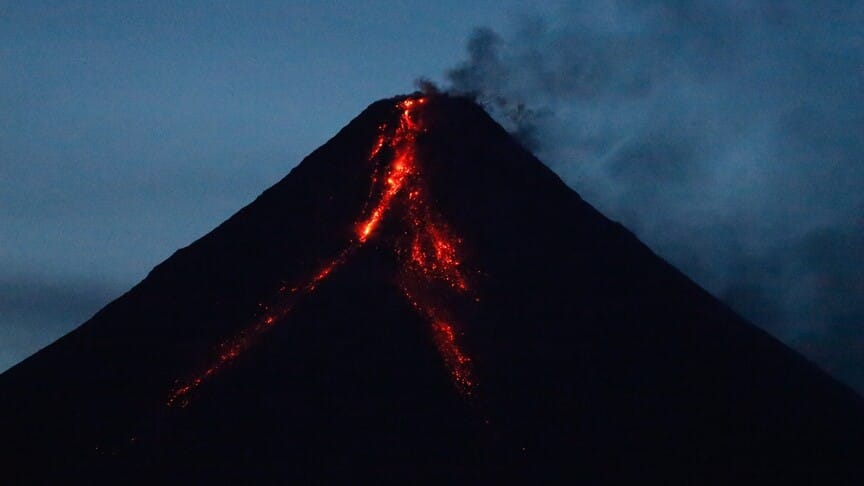
Mayon Volcano in the Philippines continued to show signs of intensified unrest, with authorities reporting dozens of volcanic earthquakes and tremors over the past 24 hours while maintaining Alert Level 3, local media reported on Saturday.

The Philippine Institute of Volcanology and Seismology (Phivolcs) said that from the volcano, they recorded 51 volcanic earthquakes, 30 volcanic tremors lasting between two and 45 minutes, as well as hundreds of rockfall events and six pyroclastic density current signals, according to local media outlet the Inquirer.

The institute also reported ongoing lava effusion from the crater, with lava flows extending several kilometers along the Basud, Bonga, and Mi-isi gullies.

Short-lived lava fountaining was also observed.

The volcano emitted 1,482 tons of sulfur dioxide on Friday, higher than the previous day’s level, while a volcanic plume drifted southwestward.

Authorities continued to prohibit entry within the 6-kilometer (3.72-mile) permanent danger zone and warned against flying aircraft near the volcano.

The institute warned nearby communities of potential hazards including lava flows, rockfalls, pyroclastic density currents, moderate explosions, and lahars (mud or debris flow) triggered by heavy rainfall. Anadolu

Continue reading
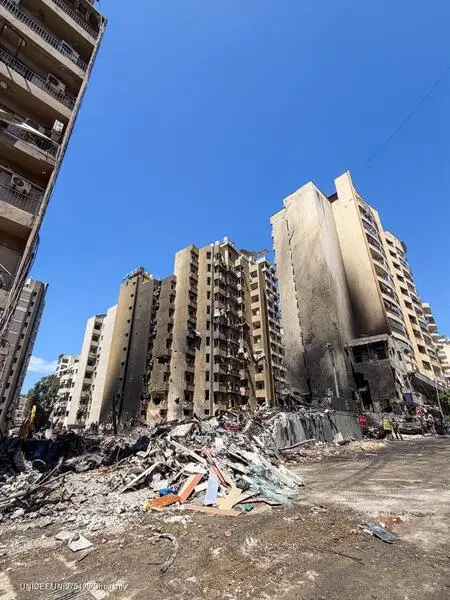
Israel Kills 200 Lebanese Children – UNICEF

More than four children have been killed or injured every day on average in Lebanon in the first 25 days of a temporary ceasefire with families still unable to return to their homes, said Save the Children.

New data from Lebanon’s Ministry of Health on Tuesday showed that 22 children have been killed and 89 injured since the temporary ceasefire started on 17 April. This brings the number of children killed in Israeli strikes since renewed escalation in hostilities in Lebanon on 2 March to almost 200 with about 2,900 people killed.

The violence and renewed displacement orders have forced more than one million people – or one in six of the population – from their homes with many now living with relatives, in host communities or in collective shelters.

The number of families living in collective shelters has increased 5% since the conditional ceasefire due to renewed displacement orders by Israeli forces and as families return home to find destroyed houses and damaged farmland so move back the collective shelters. There are now 44,800 children among about 125,000 people in collective shelters.

Thousands of children have been living in collective shelters for over two months in overcrowded conditions with inadequate water, sanitation and hygiene facilities leading to reports of scabies and growing health concerns.

Parents are reporting widespread behavioural changes among children living in collective shelters due to a lack of routine and reduced school engagement including loss of appetite and trouble sleeping. Many children are struggling to continue learning with some schools used as collective shelters and also difficulties accessing online learning due to limited electricity, and poor connectivity.

Tala*, 10, has been living in a collective shelter after being displaced from southern Lebanon, said:

“I just want the war to end so I can go home to my village and sleep in my own bed. I really miss school, I want to see my teachers and be with my friends, and study and play again.”

Nora Ingdal, Save the Children’s Lebanon Country Director, said:

“This ‘so called’ ceasefire that still sees more than four children killed or injured every day is not a ceasefire for children. Attacks on civilians have not stopped – it has simply continued under another name. Colleagues have told me that the airstrikes feel more intense in some areas than they ever did before. Children are not safe until there is a permanent and definitive ceasefire with no violations.”

With further peace talks set to take place on Thursday to determine next steps between Lebanon and Israel, Save the Children is calling on the international community to urgently work toward a permanent and definitive ceasefire and ensure flexible and sustained funding to protect children and allow families to return home to resume their lives.

Save the Children has worked in Lebanon since 1953. In collaboration with partners and local authorities, we are distributing essential items in hard-to-reach areas in the south, provide psychosocial support for children, educate families and children about the risks of unexploded ordnance, ensure access to safe water and sanitation facilities, and distribute essential items for those displaced.

ENDS:

Sources:

Lebanon Ministry of Health

Israeli strikes have killed 380 in Lebanon since truce: Health ministry

Lebanon Ministry of Health

Lebanon-Emergency-Sitrep-23-2026.pdf

Continue reading
Palestinians Remember The Eveil Nakba

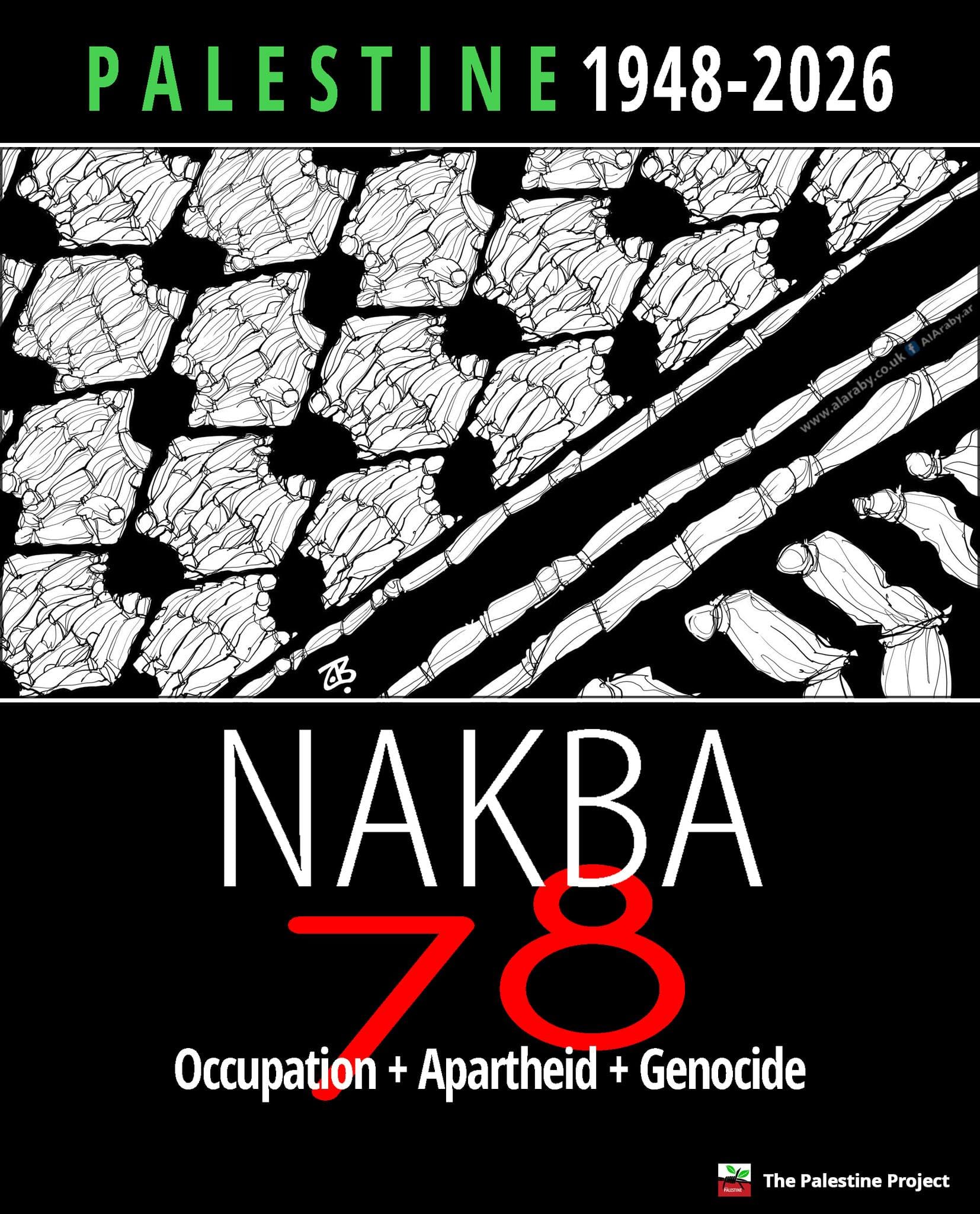
Dozens of Palestinian women at a displacement camp in central Gaza marked the 78th anniversary of the Nakba (Catastrophe) on Thursday, reliving scenes of displacement and loss they said continue to define Palestinian life decades after 1948.

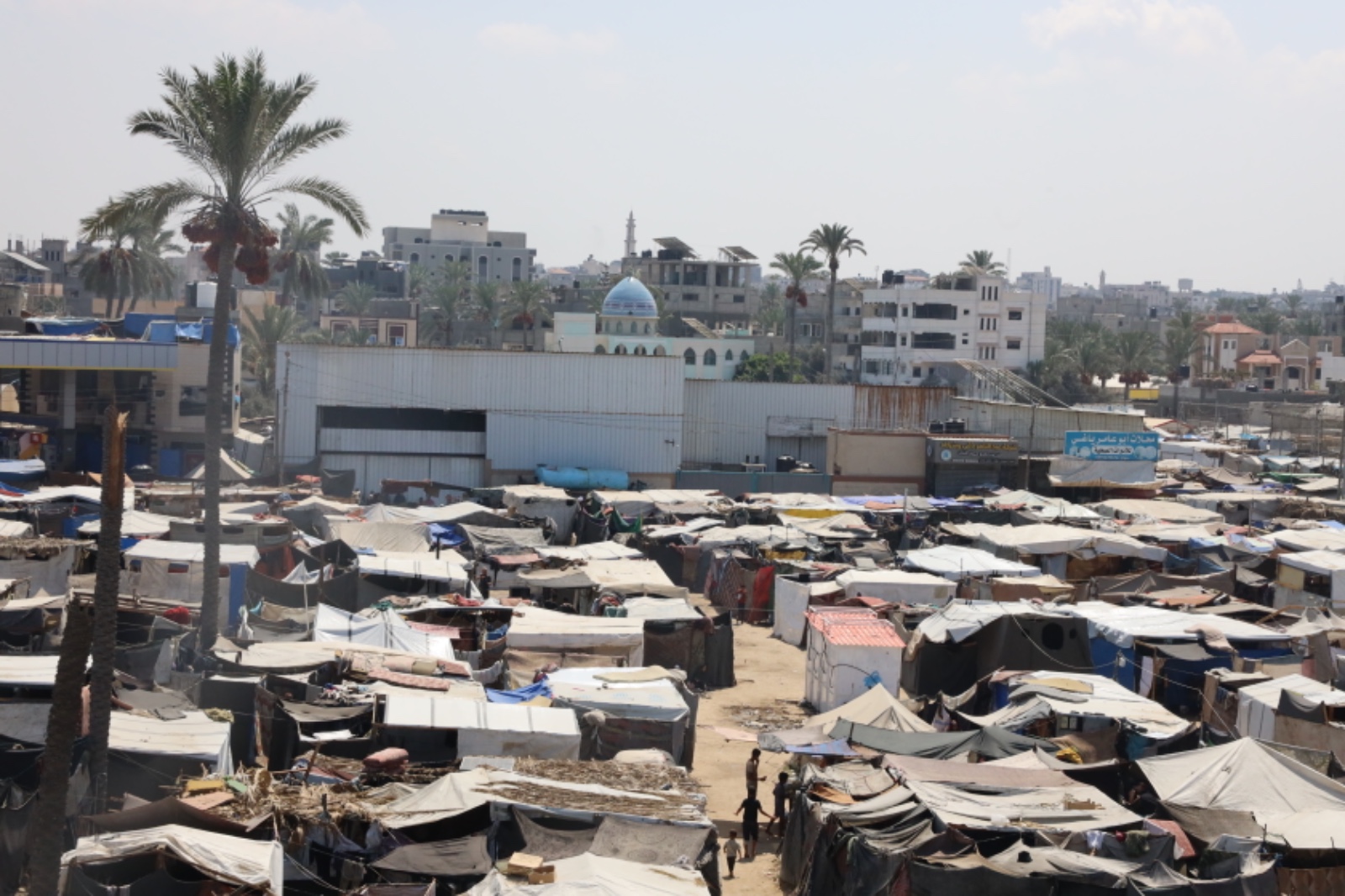
Held at the Refaat Alareer camp in the Al-Zawaida area, the event linked memories of the historic Palestinian displacement with the reality of the ongoing Israeli war on Gaza, as participants said the suffering of exile and forced displacement had never truly ended.

The event was organized by the Sameer Project, a relief initiative led by Palestinians in the diaspora, and featured heritage performances, traditional dabke dancing and symbolic scenes highlighting Palestinian identity and the right of return.

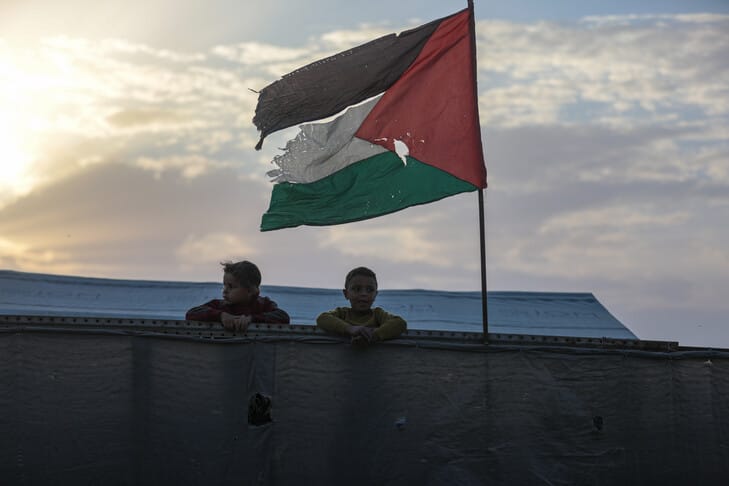
Women and children raised Palestinian flags, symbolic keys, and images reflecting displacement and attachment to the land. Several participants wore traditional Palestinian dresses and chanted songs and national hymns invoking Palestinian memory and what they described as an ongoing Nakba.

Palestinians commemorate the Nakba every year on May 15 through marches, exhibitions and public events in the Palestinian territories and around the world, calling for rights, including the return of millions of refugees.

The Nakba refers to the mass displacement of Palestinians in 1948 during the events surrounding the creation of Israel, when hundreds of Palestinian towns and villages were emptied and their residents forced to flee.​​​​​​​

Reliving displacement

Ibtisam Abu Muailiq, a displaced Palestinian now living in Al-Zawaida, said Palestinians are still living through the Nakba today.

The current war, she told Anadolu, had brought back scenes of displacement and tent life that previous generations described after the events of 1948.

“Our home was destroyed, and we lost loved ones, some killed and others still missing, but we remain steadfast on the land of Palestine,” she said.

She called on people around the world to show compassion toward Palestinians and support them amid their suffering.

For Umm Mohammed Abdullah, the Nakba never ended.

Palestinians, she said, have endured repeated cycles of hunger, thirst, displacement and loss but continue to hold on to their land.

“No matter how severe the suffering becomes, we will not leave our homeland,” she added.

Steadfast despite war

Event coordinator Iman Al-Khatib said holding the event inside a displacement camp carried a message that Palestinians remain steadfast despite wars and catastrophes.

“We wanted to tell the world that Palestinians remain resilient and that the right of return will continue to live in the conscience of future generations,” she told Anadolu.

The Israeli army has killed more than 72,000 people, mostly women and children, and injured over 172,000 in a two-year war on the Gaza Strip since October 2023.

Despite a ceasefire that took effect on Oct. 10, 2025, the Israeli army has continued its attacks, killing at least 856 people and injuring 2,463 others, according to Gaza’s Health Ministry.

Continue reading