Gaza City, Israeli Lies

By Dr Marwan Asmar

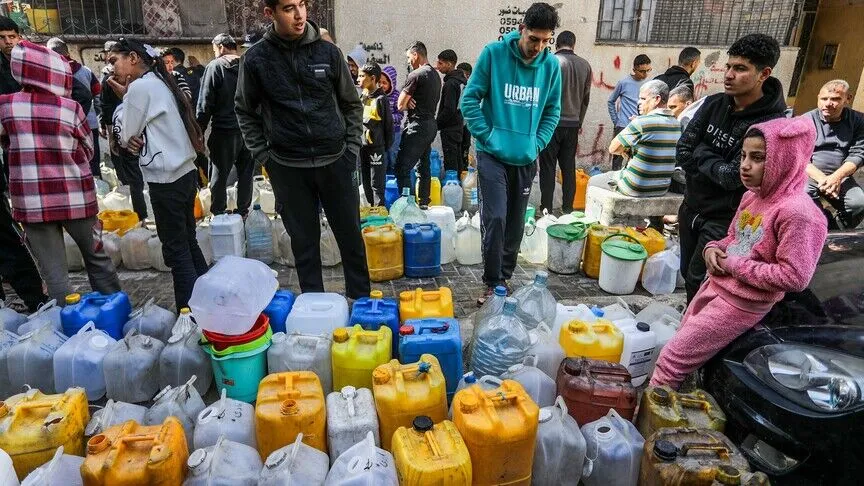
The current Israeli military onslaught on Gaza is so fierce that hundreds of thousands of Palestinian have already left the downtrodden city. It is a ramshackle place that is once again becoming a ghost town of debris as once-plush residential towers are now beaten down by Israeli bombs with the stench of gun-powder and sick human flesh that lies hidden below the rubble.

Israel’s latest attempt to invade Gaza City started on 16 September, 2025 and since then it has been bombing the once-dazzling urban conurbation from the air, land, and sea, causing widespread destruction and significant civilian casualties, whilst creating yet another mad wave of displacement to the south of the Strip.

Figures of forced displacement are not precise but the city a, conglomerate of 1.3 million people, has been reduced by much less. The Israeli army likes to boost of its handiwork. After the first week of ariel bombardment, it said 40 percent of the population has left, and today it says that 450,000 people have gone. The Gaza Media Office puts the number at only 270,000.

Despite the Israeli leaflets dropped from the air telling people to leave Palestinian sources still say that around 900,000 are staying put. Many say they are not going anywhere because of the limited space down in the south, and the fact it costs $3000 dollars to get down there, something which they don’t have.

One put it bluntly and callously, accepting fate as it comes. “Since, we are going to die anyway through Israeli bombs, it’s better to die here,” he added. The acceptance of fate however may be related to the fact that some of the people may have moved up to 20 times since the war started on Gaza soon after 7 October, 2023.  

Last Thursday, World Health Organization (WHO) chief Tedros Adhanom Ghebreyesus said that the Israeli assault, currently centred on Gaza City, is “driving new waves of displacement, forcing traumatised families into an ever-shrinking area unfit for human dignity”.

“The injured and people with disabilities cannot move to safety, which puts their lives in grave danger,” Tedros said. “We call for an immediate end to these inhumane conditions. “We call for an immediate end to these inhumane conditions. We call for a ceasefire.”

Case stories of thick swarves of displaced people speak of hellish conditions as they can be seen on the Al Rasheed Road connecting the north of the Gaza Strip to its southern side. If people can afford they can use transport but many, including whole families of men, women and children  are moving on foot, hungry, with no water and many collapsing on the road as some have been moving for hours on end. For night rest, they make do with resting their limbs, again with no food on the sides of the road.

The social media have been rife with stories about forcibly displaced Palestinians on the road. Many of them say they don’t know where they are going, although the end of the road is to Al Mowasi, an area to the southwest of Khan Younis and which the Israeli has designated as a “safe” place but which it keeps bombing from the air whenever it feels like it.

One elderly man called Abu Nader Siam, walks slowly holding a cane in his right hand with his wife, Zakia Siam, at his left.  He is exhausted as reported in the UN News.

“I come from the Tal al-Hawa neighborhood in Gaza City. They [Israelis] have left no house or neighbourhood except to bomb it,” he said. “The shelling continues, and they have dropped leaflets ordering us to evacuate. We walked for six hours because we couldn’t find a car or any transportation.”

Zakia Siam spoke about their non-stop journey after the shelling reduced their house to rubble. “We went to the Shujaiya neighbourhood, and then we were displaced to the Sha’af neighbourhood in Gaza City before it was bombed,” his wife said. 

“Afterwards, we went to the seashore west of Gaza City and my husband and I stayed there for two nights without a tent. We sat on the sidewalk next to the tents and hid next to one of them, then continued walking.”

Another civilian, Mrs. Um Shadi al-Ashkar, carried a bag of belongings as she headed for southern Gaza.  “There is death, shelling, bombing and destruction of houses (in Gaza City),” she said.

“Even if they had dropped leaflets, if there had been no shelling, no one would have left Gaza City, they would have stayed in their homes. But there is death and devastation.”

The fight for Gaza city is in full-swing. The Israeli army knows what its up against, adding it could take months, or even up to a year to completely take over the city from Palestinian resistance groups. Meanwhile, they know the city is a Hamas stronghold which they can’t railroad through their tanks. That is why for the time being they put the ground invasion on hold and bombing the city from the air and sea.

Continue reading
Netanyahu, Sparta and Israeli Isolation

By Ali Saadeh

In a rare contrast to his arrogant, narcissistic personality, Prime Minister Benjamin Netanyahu admitted that Israel is being increasingly isolated in the international community, as more and more countries either suspend military cooperation, are reviewing arms deals with it, and/or in the process of imposing diplomatic, political, and economic relations with Tel Aviv.

Netanyahu has already acknowledged that “a diplomatic tsunami is on the way, [plainly speaking] isolation, and we will be forced to adapt, more and more, to an economy that, in certain aspects, has the characteristics of self-sufficiency.” He added: “We are Athens and Sparta,” in reference to the two ancient Greek cities.

Netanyahu chose Sparta, meaning isolation and self-absorption. “He chose Sparta specifically from among all the places in the world as it lived in ruins and under a harsh dictatorship, and finally was swallowed by its neighbors,” according to Yoav Limor, a military affairs analyst for Channel 12.

Benjamin Netanyahu was “successful” in his choice of Sparta, because today it has become clear to the world that he is leading the occupying state towards a fate similar to that of ancient Sparta, which built its existence on perpetual violence before eventually collapsing.

The Hebrew media focuses on the danger of the Israeli occupying state transforming itself into a society that thrives on violence and perpetual war, much like Sparta, which ultimately collapsed.

Of course, this comparison is not merely a historical image; it reflects a deep-seated fear that this occupying entity is in a state of true collapse and has entered a dangerous path that threatens its existence and long-term stability.

Some in Israel are even beginning to talk about the fact that Netanyahu may even possibly be the last prime minister of this occupation state.

Sparta turned to military rule after being forced to wage long wars with its neighbors, most notably Athens, fighting with it a devastating war that lasted a quarter of a century, known as the Peloponnesian War. Its influence, both real and moral, expanded over the neighboring Greek cities.

The occupying state appears to be on the verge of collapse under the leadership of Netanyahu and his government, which resembles a group of mentally ill people who have secretly escaped from a mental hospital under cover of darkness.

This opinion by Ali Saadeh was translated from the Arabic Al Sabeel website.

Continue reading
Who is The ‘True’ Terrorist Here?!

By Mohammad Abu Rumman

“This is not a geopolitical battle; it is a spiritual battle. A battle of the ages. It is not horizontal. It is not left or right, liberal or conservative. It is a vertical battle… a battle of heaven against hell, good against evil. People must see it in this context, or they will completely fail to understand it.”

With these words, Mike Huckabee, the U.S. ambassador to Israel, described the ongoing war of extermination in Gaza during an interview with NBC. He criticized the move by several European states to recognize Palestine at the United Nations this month, adding: “You do not stand with Israel merely because you agree with its government… but because it defends the traditions of Abraham, Isaac, and Jacob.”

This rhetoric aligns seamlessly with statements made by members of Netanyahu’s government. Finance Minister Bezalel Smotrich, for example, openly called for the “complete destruction of Gaza” and the forced displacement of its residents to other countries, invoking biblical injunctions about “erasing the memory of Israel’s enemies.” What is striking is that such discourse is no longer viewed as fringe or shocking in Western and global media and political circles. It has become commonplace—voiced by ministers, politicians, and even Netanyahu himself—steeped in extremism and religious absolutism toward “the other.” In this case, the “other” is the Palestinians as a whole, along with anyone who dares oppose the Israeli far right.

Here, the urgent question arises: how should terrorism and extremism be redefined today? Who is the true terrorist? And what form of terrorism most threatens regional security and societal peace?

Following the September 11 attacks in 2001, the United States declared its “war on terror,” rallying dozens of states against al-Qaeda and later ISIS. ISIS was undeniably a brutal extremist group that committed massacres, established a so-called caliphate, and tore down borders between Syria and Iraq. Yet it remained an isolated, besieged organization—globally reviled, stripped of legitimacy, and unsupported by institutions or states. What we witness today, by contrast, is state terrorism practiced openly, backed by major powers, and legitimized through religious rhetoric presented as divine will. The irony is palpable: Israel engages in territorial expansion, rejects recognized borders, launches cross-border military strikes, and has a prime minister who frames his mission in explicitly spiritual and historic terms—the realization of Greater Israel.

Skeptics may argue that labeling Israel a terrorist state changes nothing; it clashes with power dynamics and U.S. strategic interests. Perhaps. Yet it remains essential to reshape Arab, Islamic—and indeed universal—awareness of these realities, and to recalibrate the very language and definitions we use. These should form part of today’s Arab political, media, and diplomatic discourse. If an international coalition against terrorism is to exist, the actor most deserving of that designation is Israel’s government—not transient groups like ISIS or al-Qaeda. Huckabee’s words and the declarations of Netanyahu’s ministers are not aberrations; they are clear manifestations of this reality: state terrorism, sanctified by religion and legitimized internationally. If there is a rogue state whose leaders should stand before the International Criminal Court for genocide and mass killings, it is Israel.

This framing is of enormous significance for international, regional, and even domestic debates. Otherwise, Arab political and intellectual circles will continue to be dragged along by narratives that consistently place the blame on extremist movements emerging here or there—movements that are, in truth, the predictable outcomes of political dysfunction. Whether born of Israeli aggression or Arab authoritarianism, such groups are less causes than consequences. To blame them alone is to misread the sequence of cause and effect.

Today, amid the genocidal war on Gaza, a new political generation is coming of age. It witnesses, daily and directly, the starvation, slaughter, and devastation visited upon children, women, and civilians. It also sees the deafening global silence, alongside Arab paralysis and strategic impotence. What reactions can we reasonably expect from such a generation? This is not an attempt at justification, but rather an explanation of what is taking shape: a coming wave of anger among youth, or a wave that others may channel into particular political or religious agendas. That wave is already being born—out of the crucible of Gaza.

The writer is a columnist in The Jordan Times

Continue reading
Cobwebs and Impotence! 

By Dr Khairi Janbek

A few personal reflections which certainly don’t resolve the Middle East puzzle, and one hopes don’t add to the already existing puzzle.

In any case, the Arabs tend to be a vocal people of tradition, consequently, all that can be done, is limited to the terms of providing the best description to circumstances rather than providing practicable and working solutions.

One can’t say that at times there are in fact idealistic solutions which can work only in the imagination, and indeed there is plenty of that, but to face other nations’ aggression; specifically Israel’s self-proclaimed defense of its national security, Arabs tend to counter that with competition between themselves as who is the most eloquent electronically.

Essentially and apparently, the Rabs are currently in a weak state, and weakness does corrupt, and if the current circumstances persist, will lead to absolute impotence. 

For generations the Arabs have followed the so-called western path to development, while some, in order to spite the West, followed the socialist path to development, the mirage was the same, and failure no different, and with international relations, the policy has been habitually leaning on the Americans to fend off Iranian threat, leaning on Russia to fend off American threat, and leaning on Israel to fend of the threat coming from each other, which prompts the logical question: Why don’t they lean on each other?

Well, part of the answer comes from an incident from my pre-retirement days, as one was looking out of the window of the airplane passing over an area in Turkey full of dams, the VIP I had the honor of accompanying said the prophetic words which stayed with me “good luck to them, all what we did, we conspired against each other.” 

The fact remains, that a form of catharsis is needed in inter-Arab relations, which probably requires more of psychological analysis than political, because the phenomenon of seeking allies from the presumed enemy lines, as opposed to allies from the so called brethren camp, requires plenty of reflection. The ethos of common culture, religion, geography are nothing but folklore the doesn’t have the idea of common interest in its composition.

Alas, a folkloric nation that derives its strength from rhetoric can only remain a reactive nation, and in order to become an active nation, it has to clean up from its mind, the cobwebs of memory and start acting to the basis of common Arab interests.

Dr Janbek is a Jordanian writer based in Paris, France

Continue reading
How Should Arabs Influence The US?

By Hamed Kasasbeh

The United States faces a sensitive equation in the Middle East. On one side, a strong strategic alliance with Israel, built on military and intelligence superiority. On the other, a deep economic and security partnership with Arab states, which control oil, gas, key waterways, and sovereign wealth funds. Yet Washington still treats Arabs as financial and energy suppliers, while granting Israel unconditional superiority. The question is: How long can this continue before America pays a strategic price?

Since the 1970s, oil has been tied to the U.S. dollar through the petrodollar system. This made the dollar the backbone of the global financial order and allowed Washington to finance deficits while keeping global dominance. But the landscape is shifting. BRICS seeks to reduce reliance on the dollar. With Saudi Arabia and the UAE joining, Arabs now have direct influence on the future of global finance. Any move to price oil in other currencies could shake the foundations of U.S. power.

Meanwhile, Israel—backed by open U.S. support—pushes Netanyahu’s vision of a “New Middle East.” The plan is clear: destroy Gaza, swallow the West Bank, fund the displacement of Palestinians, and strike Lebanon, Syria, Qatar, and Yemen. Even Gulf states are no longer outside the danger zone, as Israeli threats expand across the region.

Israel has little economic weight compared to the Arabs, but it enjoys political and military privileges that make it a forward base for Washington. Arabs, by contrast, hold powerful cards: oil and gas, the Suez Canal, Bab al-Mandab, the Strait of Hormuz, and sovereign funds with hundreds of billions in U.S. markets. Used together within a united stance, these cards can rebalance U.S. policy toward Israel.

The pressure is not only economic. The U.S. operates dozens of military bases in the Gulf, Jordan, and Turkey. If Arabs link these facilities to Washington’s position on the conflict, the cost of bias will rise. At the same time, Arabs are no longer just oil producers. They are key players in renewable energy and green hydrogen, shaping the future of global energy markets.

Inside the U.S., the Israeli narrative no longer dominates unchallenged. A growing movement among youth, universities, and independent media rejects blind support for Israel, especially after the humanitarian disaster in Gaza. This has fueled mass protests, political pressure, and divisions inside the Democratic Party between the old guard and a younger generation more critical of Israel. Arabs can build on this by engaging think tanks, universities, and Arab-American communities.

In Europe, the EU cannot ignore its vital interests with the Arab world in energy, trade, and investment. Public anger over Gaza is rising. Arabs have an opportunity to unify their message and push Europe toward greater independence from Washington. Linking access to Arab markets with balanced political positions could turn sympathy into official pressure on Israel from within its Western allies.

At the international level, Israeli actions no longer pass without scrutiny. The UN Security Council has issued repeated condemnations, despite Washington’s vetoes. The latest vote reaffirmed the two-state solution as the only path to peace, highlighting Israel’s growing isolation. A united Arab stance could transform this consensus into real leverage, combining international legitimacy with Arab economic power.

In the end, the ball is in the Arabs’ court. They hold the tools to impose a new balance and secure a fair solution for Palestine. If they act with unity and resolve, they can curb Israeli arrogance and reshape the region. If not, the cost will fall on Arab citizens—through weaker economies, shrinking wages, and eroded sovereignty—while the future of the Middle East is written without them.

The writer is a columnist in the Jordan Times

Continue reading