Boycott V. Starvation

By Dr Usman Masood 

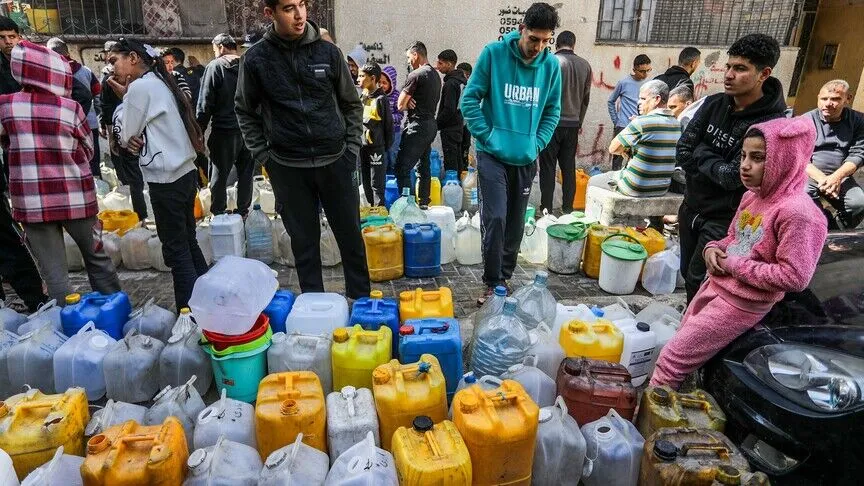
As we debate the sanity and economics of boycotting products during our tea breaks, many in Gaza are going through one of the slowest and most painful transitions imaginable – agonizing starvation. The aroma of my favorite coffee may be one-of-a-kind, but if the same brand operates in Israeli-occupied apartheid territories it’s time to rethink my choices.

Sometimes we call our favorite brands irreplaceable, being so attached to them so as to identify ourselves with their trademarks. Sometimes the economists within us argue that if we don’t buy from a certain company, our people are going to lose jobs. And sometimes, the cleverest among us spell out a simple calculus: boycotts are a sentimental overreaction that is not actually actionable or sustainable.

Arguably, a person should not be defined by a brand. In a world ever more sensitive to businesses’ social responsibility, it is the brand which should be defined by the kind of people it serves – its responsibility to society in the neatest sense.

Humanitarian-washing

If a company thinks it is legitimate to set up its businesses in illegitimately occupied lands, serve an army carrying out massacres, and then offer them “deals” on goods ranging from demolition machinery to feel-good grocery packs, then allowing such brands to represent us is profoundly troubling.

Sprinkling a few giveaways to the poor here and there in the name of social responsibility, after making fortunes from genocide, is the kind of “humanitarian-washing” some companies are heavily relying on these days. As responsible consumers, we need to be wary of giving them a free pass. Draped in philanthropic robes, beneath you’ll find the same Faustian bargain on offer – pleasure, products, and plenty in exchange for “looking the other way,” assuming convenient apoliticism.

Even if you set aside these moral considerations, the arguments in favor of “business-as-usual,” on the pragmatic basis of “it’s the economy, stupid,” are fundamentally flawed.

Economics beyond slogans

Yes, standing up to Israel – and the complicit companies – may cost jobs and investment to the boycotting country, but this considers only the static, one-time costs, ignoring the potential for dynamic, long-run gains. If a boycott causes momentary unemployment, an economist should tell you that capital flows, divestment in one company means investors warming up to another, and hence substitute job creation.

Moreover, a local company picking up steam at the expense of its foreign competitor ensures that the profits and jobs stay at home, rather than being repatriated to the countries of origin. Many economies that saw unprecedented growth in history used the recipe of replacing goods previously imported with local production, which vitalized the domestic industry. While import-substituting policies have had their demerits, the formula proved transformational in the case of economies like Japan, China, and South Korea, where the local production which had initially kicked off in an effort to replace imports flourished with time, making these countries the leaders in global exports.

In his book, Bad Samaritans: The Myth of Free Trade and the Secret History of Capitalism, Ha-Joon Chang notes that the drive for consuming domestically produced goods came down to the grassroots level, to something as frivolous as cigarettes. Such was the emphasis on consuming local products in South Korea that a stigma was attached to smoking foreign brands.

The state encouraged people to report such “treasonous” acts that wasted foreign exchange – foreign currency being a scarce resource, which represented the “blood and sweat” of “industrial soldiers” (p. xiv). Through this lens, boycott metamorphoses into an opportunity. The reluctance to buy Israeli – or occupation-aligning companies’ – products has already been instrumental in carving out a market for local products in countries like Türkiye, Pakistan, and Saudi Arabia.

Transformative power of consumer choice

There are still some who contend that a comprehensive boycott is simply not practical, and therefore, futile. But what’s the point of such an all-or-none approach? To be clear, boycotting does not have to be extreme – not everything, everywhere, forever. One may start with a few products that are easily substitutable, as soon as they may be substituted, for as long as necessary. Small, incremental changes to our consumption patterns may feel insignificant but they can affect retailers’ buying decisions, wholesalers’ stocking decisions, and ultimately, a company’s production decisions. The effect of consumer decisions is such that the impact is heavier each step up the supply chain, a phenomenon referred to as the bullwhip effect.

A small jolt to one consumer’s whip may feel unimportant, but collectively, it may unsettle the machinery of complicit capitalism. It’s time to opt out of the genocide, one product at a time.

The author is an assistant professor in SZABIST University in Islamabad, Pakistan and contributed this article to Anadolu.

Continue reading
Chessboard Middle East

By Dr Khairi Janbek

When the British conquered the territory, they didn’t exactly know where to draw the borders of Palestine. British Prime Minister Lloyd George conferred with his French counterpart Clemenceau and suggested that the borders of Palestine be defined on biblical basis; in accordance with its ancient boundaries from “Dan to Beersheba”.

But what about the sparsely populated territory east of the River Jordan? Although in 1915 the British promised the territory to the Sharif of Mecca in the McMahon correspondence, in the early years of the British control, it remained part of Palestine, and not until 1922 did the British separate it from the rest of Palestine and named Emir Abdullah of the Hashemite dynasty as the ruler of the new country Transjordan.

Even when the borders of Palestine became clear to the British, the borders of the future Jewish National home remained open to dispute. Lord Balfour’s letter, spoke vaguely of the establishment ‘ in Palestine of a National home for the Jewish people’ he did not refer to the whole of Palestine or any specific part of it.

Among the Zionists, the borders of Palestine were just as blurred. The ideal borders, as mapped by the Zionist delegation at the Paris Peace Negotiations, included south Lebanon (Northern Galilee) and a stretch of land east of the River Jordan as far as the line of the Hijaz Railway.

Chaim Weizmann continued to believe that the land east of the River Jordan should be part of the Jewish National Home. Thus reiterated in his Congress speech in 1921: “The questions of borders will be answered when Cis-Jordan will be so full of Jews that we will have to expand to Transjordan.”

The right-wing Israeli revisionists continued to claim until the 1950s, the whole of Palestine on both sides of the Jordan River.

However, there was a brief glimmer of hope that an Arab-Jewish understanding might in fact be possible when Emir Faisal, later King of Iraq, and Chaim Weizemann signed an agreement in 1919, recognizing the right of the Jews to immigrate to Israel, but reality on the ground created a different set factors, when Faisal’s condition of far reaching Arab independence in the region was not fulfilled, he declared the agreement no longer valid, in any case, the agreement did not include representatives of the Palestinian Arabs.

Also in the post-World War I, another claim on Palestine was made in March 1920, when the General National Syrian Congress, declared that Palestine was nothing but the southern part of the Greater Syria State.

Dr Janbek is a Jordanian writer based in Paris, France

Continue reading
Israel’s War on The Truth

By Najla M. Shahwan

Israel’s military operation in Gaza, in the aftermath of the October 7 attack by Hamas, has become the deadliest, most dangerous conflict for journalists.

Reporting on the Gaza war has become increasingly perilous, with large numbers of journalists and other media personnel killed or deliberately targeted by Israeli armed forces.

Moreover, the Israeli Authorities have since the war began banned the entry of international journalists to Gaza, an unprecedented move in any other conflict in modern history.

It is a ban on the truth and a ban on reporting the facts.

It is the perfect recipe to fuel misinformation, deepening polarisation and dehumanisation.

While the foreign press has been banned from entering Gaza, Palestinian journalists there have been treated by Israel as legitimate military targets.

Palestinian journalists, whether classical “war correspondents” or, more dangerously, operate with varying degrees of independence have been among a precious few remaining actors capable of exposing illegality.

Over the past 22 months, the world has watched the war in Gaza unfold.

The Israeli military onslaught on the Strip continues nonstop, resulting in the killing of more than 65,000 Palestinians, mostly women and children and almost all of the 2.3 million residents displaced multiple times, struggling to survive the dual threats of targeted attacks and starvation.

Palestinian journalists killed, international reporters banned and members of press and influencers covering devastation in Gaza being silenced despite protection under international law.

In its war on the Gaza strip Israel has been running a special campaign for narrative control of how the world understands what was happening.

The vast majority of Palestinian journalists and social media influencers documenting, mass killing, starvation and other Israeli war crimes in Gaza have been killed since then in the deadliest conflict for journalists ever documented, according to the Committee to Protect Journalists (CPJ).

Even though it is illegal to target journalists, the “Palestinian journalists are being threatened, directly targeted and murdered by Israeli forces, and are arbitrarily detained and tortured in retaliation for their work.

By silencing the press – those who document and bear witness – Israel is silencing the war,” the CPJ said.

In Israel’s latest attacks, two more journalists, Rasmi Salem of Al Manara and Eman Al Zamli, were killed, bringing the total number of journalists killed since the war on the Palestinian enclave began to more than 270.

Earlier, on September 31, Islam Abed, a correspondent for Al Quds Today TV, was also killed in an Israeli air strike on Gaza City.

On August 25, five journalists were killedin a “double -tap” Israeli strike targeting Naser hospital in southern Gaza, which killed at least 21 people.

The journalists killed, all worked or freelanced for international media outlets, including Hossam Al Masri, a cameraman with Reuters, Mariam Abu Daqa, a freelance photojournalist with the Associated Press, and Mohammed Salama, a photographer for Al Jazeera.

Freelance journalists Ahmad Abu Aziz and Moas Abu Taha were also killed, while several other journalists were injured in the attack.

Earlier on August 10, another four Al Jazeera journalists and two freelancers were killed by a targeted Israeli strike on their tent outside Al Shifa hospital in Gaza City.

The Israeli army said it deliberately targeted the Al Jazeera crew – the correspondent Anas Al Sharif, who had reported on the war since its outset, the reporter Mohammed Qreiqeh, the cameraman Ibrahim Zaher, and Mohammed Noufal, a crew driver and cameraman.

The Israeli army claimed it had evidence that Sharif was a Hamas terrorist.

The CPJ and other organisations said that this claim is part of a pattern of misinformation, along with other cases where slain journalists have been labelled as Hamas fighters or operatives, and is without credibility.

Press freedom groups and journalists said that those killings are part of a campaign of intimidation to shut down vital reporting, which Israel has justified internationally with smears and false claims that the targets were undercover Hamas fighters.

To many people outside Gaza, the war flashes by as a doom scroll of headlines and casualty tolls and photos of screaming children, the bloody shreds of somebody else’s anguish but the true unimaginable scale of death and destruction is impossible to grasp, the details hazy and shrouded by internet and cell phone blackouts that obstruct communication, restrictions barring international journalists, extreme, often life-threatening challenges local journalist reporting from Gaza are facing.

Besides, local journalists inside Gaza face displacement, starvation, and extreme violence.

On August 21, 29 member states of the Media Freedom Coalition issued a statement calling for access to the Strip by foreign press and for Israel to ensure the safety of local journalists working inside Gaza.

French President Emmanuel Macron called on Israel to respect international law, emphasising the important role of independent media in covering “the reality of the conflict.”

Germany’s ambassador to Israel Steffen Seibert demanded an investigation and access for international media to Gaza, while United Kingdom’s Foreign Secretary David Lammy also condemned the attacks, calling for the protection of journalists.

“We are appalled and shocked to see Israel continue to kill journalists with no accountability, as the world watches. It is critical for the international community to step up and take concrete action to ensure the safety of Gaza’s remaining journalists,” International Press Institute (IPI) Executive Director Scott Griffen said.

“As more journalists in Gaza are killed, fewer remain to carry on their work, which means we know less about what is actually happening on the ground.”

“The unabated killing of journalists during the course of this conflict has grave implications for journalists not only in Gaza, who have sacrificed so much and endured such unimaginable violence to cover this war – but also for journalists’ safety all over the world,” Griffen added.

Despite growing global condemnation and concerns over breaches of international law, Israel is continuing its military assault on Gaza and it is likely that more journalists will die as a result.

International journalists must independently report from Gaza and support their Palestinian colleagues who continue to do a heroic job at a heavy price.

The international community must act fast to ensure that journalists are kept safe and hold Israel to account for the deaths of all journalists whose killings may have been targeted. Journalists are civilians, and it is illegal to attack them in a war zone.

Reliable information about wars and conflicts is essential for the wellbeing of local populations and is necessary to enlighten the world on the forces behind wars and the toll on civilians.

The author writes for The Jordan Times.

Continue reading
So What if Abu Obaida Was Killed?

By Ali Saadeh

News websites and the social media are today concerned whether the official spokesman of the Izz ad-Din al Qassam Brigades Abu Obaida was killed or not by the Israeli war machine.

The most frequent question that is being asked: “Has he been martyred (killed) or not?” But really what does it matter if he was martyred or not?

Before this supposedly deadly incident there was Mohammed Deif, Yahya Sinwar, and Marwan Issa. They were martyred and killed during this genocide on Gaza.

Senior military leaders have long preceded them and in this war that started soon after 7th October, 2023. However the Brigades did not falter for one minute, continuing to fight more fiercely than before after significantly developing their organizational and tactical military capabilities.


Hamas leader Ismail Haniyeh himself was martyred, preceded by Hamas leaders Sheikh Ahmed Yassin and Dr. Abdel Aziz al-Rantisi. The caravan of martyrs will not stop. Anyone who chooses to join the ranks of the resistance, whether militarily, politically, or in the media, knows full-well they are either a potential martyr deferred, or an eternal prisoner in the enemy’s fascist and brutal prisons.


Since the start of the war of extermination on Gaza on 7th October, the Israeli army composed of scums and mercenaries has killed a number of Hamas leaders, most notably Saleh al-Arouri, deputy head of the movement’s political bureau, who was martyred in an attack in his office in Beirut’s southern suburbs.

Ayman Nofal, a member of the Qassam Brigades’ military council and commander of the Central Region Brigade, Ahmed al-Ghandour, a member of the military council and commander of the Northern Brigade in Gaza, and Ahmed Bahar, acting head of the Legislative Council and former head of the movement’s Shura Council were also the object of Israeli targeting.

Jamila al-Shanti, the first woman to serve as a member of the Hamas Political Bureau and a member of the Palestinian Legislative Council, was also killed. So were Osama al-Muzaini, a leader in the movement and former head of its Shura Council, and Zakaria Abu Muammar and Jawad Abu Shamala were also members of the Political Bureau.

The convoy continues on its path, and the lies and deception of the ruling gang in Tel Aviv, which seeks any victory to present to the Israelis, who know they are marching toward the unknown under the leadership of the reckless, arrogant, and psychopathic Benjamin Netanyahu, will not stop them.

The assassinations are nothing more than an official announcement of the Israeli military failure in the Gaza Strip. They are cowardly acts befitting a bloodthirsty man and a war criminal who has escaped justice.

The Palestinian people have sacrificed throughout their history hundreds of leaders who were martyred on the path of liberation and struggle, and no vacuum was created anywhere. On the contrary, whoever assumed the position outdid themselves to prove to us and to themselves that they were worthy of the trust and responsibility they carried.


Palestine, the birthplace of Palestine, will continue to produce heroes and will never cease to produce heroism, courage, and dignity.


“Abu Obaida” is not a person in the abstract or moral sense, but rather an idea, and ideas never die; they continue to blossom and grow until they strangle the occupier with their ropes.

Ali Saadeh is a columnist in the Arabic Al Sabeel electronic newspaper in Amman.

Continue reading
Palestinian State and The Poker Game

By Dr Khairi Janbek

Israeli Prime Minister Benjamin Netanyahu is a politician above all else. He is dogmatist in rejecting a Palestinian state, and a pragmatist when he talks about it, but all that depends on the position taken by the United States. 

Ever since one can remember from the days of the Oslo Agreements, a Palestinian state, as a term swung between two conceptions: A future project on the ground, and a slogan up-in-the-air to pander on, and as many from my generation remember the rather acerbic comment: Gaza-Jericho First of 1993 which came to be the first and the last.

The Israeli government of that time, believed that it would bring the Palestinians to independenance as interlocutors in determining the occupied West Bank of Jordan that came about by discussing the issue through a joint Jordanian-Palestinian delegation.

However, the little that was agreed upon started to be eroded by the first Netanyahu government, which at times implicitly and at times explicitly acted in the way so as to negate the Oslo agreements with impunity.

One would like to say that since then plenty of water has passed under the bridge, but when it comes to the Palestinian issue, it’s always the same water and the same bridge.

At this point one must say that everywhere in the media there are supposedly leaks and plans about the day after with regards to the Gaza Strip. However, the only consensus between the international community at large and officialdom of the Arab world, is that Hamas should surrender its weapons. But really what happens next?

Silence in the Arab world rules the scene which is in a way saying what cannot be said, which is in other words don’t involve us directly but we shall try to do what we can. This is habitually the Arab position in always being reactive rather than active.

And now on the international scene is the big drive to recognize a Palestinian state, which is for the time being affirming a point of principle, and towards which Israel is actually debating the annexation of the West Bank, as if to say, if the West Bank is reoccupied by Israel, where is this Palestine you want to recognize?

And adding insult to injury, the Washington administration has refused entry to Palestinian President Mahmoud Abbas and the PNA leadership to attend the UN General Assembly meetings. This indicates that it does not recognize that there is a leadership of the Palestinians.

However, and despite saying this, one wishes to be able to say that we might be jumping the proverbial gun, in the sense that, the issue is just a matter of tit-for-tat telling states: You recognize Palestine we take measures to counter that, but alas the Israeli annexation was contemplated long before the international recognition of a Palestinian state.

Now, what will it mean if Israel does go ahead and annexes the West Bank and cancels the Palestinian authority? Well, once again the international community, to the exclusion of the USA, will have to consider the West Bank as and Israeli occupied territory, and once again, the world will have to go back to the Security Council for an attempt to resolve the issue.

Dr Khairi Janbek is a Jordanian columnist living in Paris, France.

Continue reading