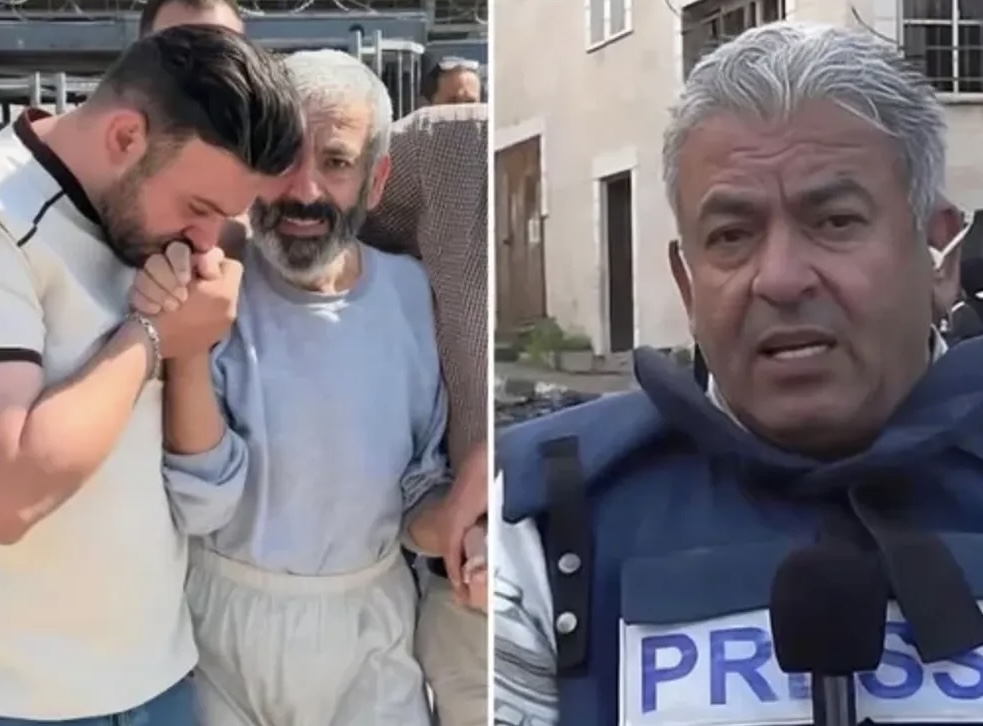
Veteran Palestinian journalist Ali Samoudi described Israeli prisons as “living graves” after his release on Thursday, appearing in severely deteriorated physical condition following his arrest by Israeli forces last year.
Samoudi, who worked for the Palestinian newspaper Al-Quds and international media outlets, said he lost 60 kilograms (about 132 pounds) while in Israeli prison. “My weight was 120 kilograms (about 264 pounds); now my weight is 60 kilograms,” Samoudi said.
According to Samoudi, prison conditions were harsh and cruel, and prisoners suffered. “The food is very bad. Even a cat would not eat what they eat,” he said. “Prisoners have nothing. No notebook, no pen, nothing,” he added, calling on the families of detainees to take care of their well-being.
He was arrested in April 2025 on false claims of transferring funds to the Palestinian Islamic Jihad. Samoudi and his family strongly denied the allegations.
In a statement issued in January, the Palestinian Journalists Syndicate said al-Samoudi has not been granted a fair trial and that his arrest is “a blatant violation of international law and press freedom”.
The syndicate also warned “that his life is now at risk” due to the harsh and inhumane treatment he has been experiencing in prison.
Samoudi’s son, Mohammed, said his father was an “independent journalist who isn’t affiliated with any party,” adding he was “surprised to hear him being accused of ties with Islamic Jihad. I was in shock.”
Mohammed said the forces raided their home at around 5 A.M., searched the premises and destroyed some of the family’s belongings before taking his father away. He said he didn’t know where his father is being held, but said the family is particularly worried because he is diabetic and suffers from high blood pressure, and therefore needs a special diet and medications.
On May 8, 2025, Wafa reported that an Israeli court had issued an administrative detention order against him for a period of six months.
This was because the Israeli army said it did not have “sufficient evidence” to formally charge him and had hence issued an administrative detention order.
In a statement issued to the United States news group CNN, the Israeli army said: “As sufficient evidence was not found against him, and in light of the accumulated intelligence material, security authorities requested to consider issuing an administrative detention order.”
The military claimed the order was justified as Samoudi’s “presence” posed “a danger to the security of the region”.
Since then, Samoudi has been held in administrative detention and his detention order has been repeatedly renewed.
Samoudi also witnessed the Israeli killing of Al Jazeera journalist Shireen Abu Akleh in Jenin in 2022 and was himself injured that day.
“I was there personally and witnessed the whole thing,” he said about the killing of his colleague. “There was no one there apart from the Israeli force, and they were the ones who shot at us.”
The Palestinian Prisoners’ Society said Samoudi is among more than 3,530 Palestinians held under administrative detention, in addition to over 40 journalists still held in Israeli prisons, including four women.
The group renewed calls for the release of all detained journalists and urged the international community to take responsibility for ongoing violations against prisoners.
More than 9,600 Palestinians remain in Israeli prisons, including women and children, facing torture, starvation and medical neglect, which have led to the deaths of dozens, according to Palestinian and Israeli rights groups. – Quds News Network
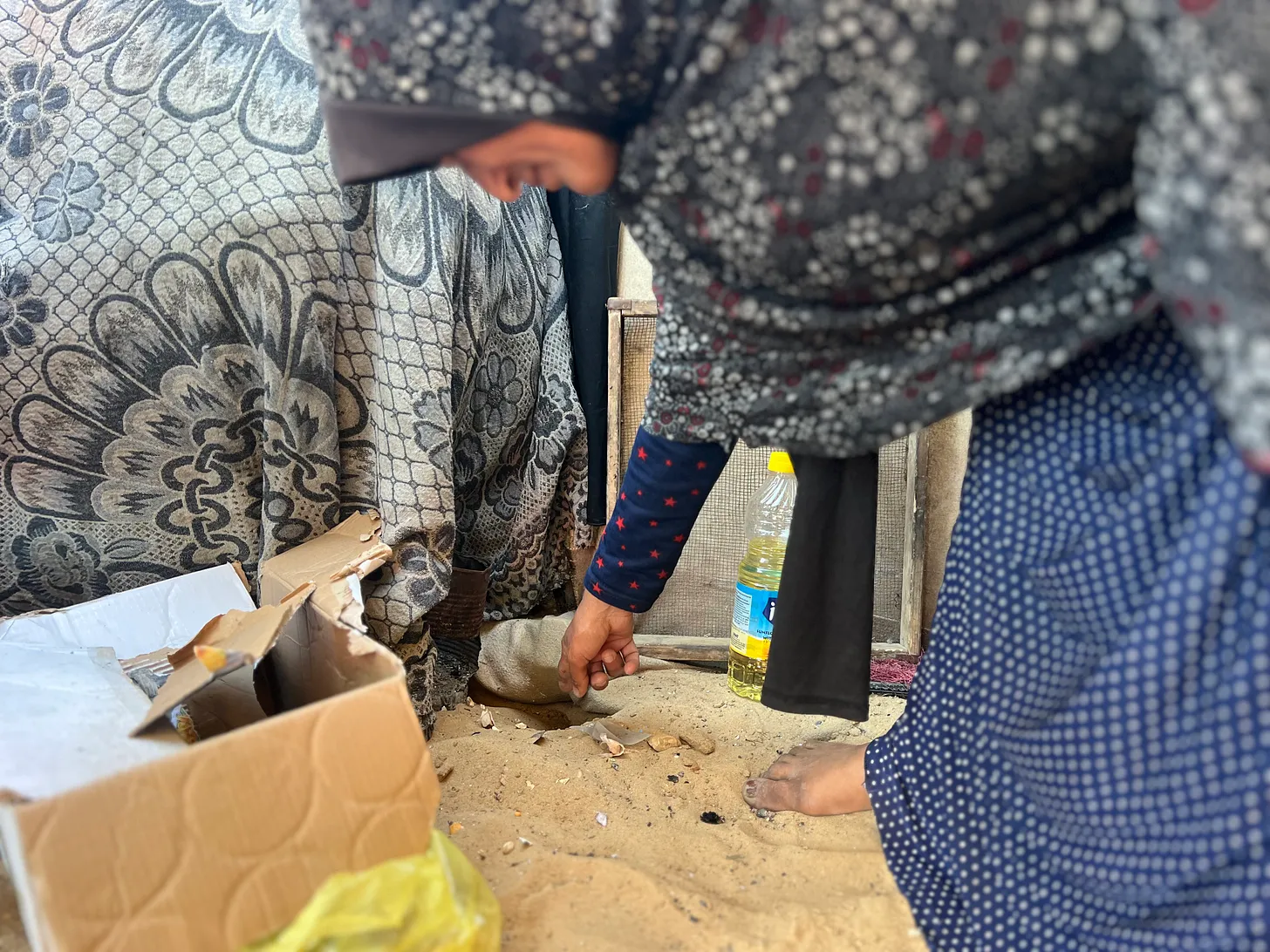
GAZA CITY, Gaza—Nahla Al-Majdob woke up in the middle of the night last week to her seven-year-old daughter, Aya, screaming in their tent. “I turned on my phone light but I didn’t see anything at first,” Al-Majdob told Drop Site News. “Then I noticed bite marks on Aya’s toe.” It was not the first time. “I’ve woken up many nights to find rats around our mattresses,” she said. “Sometimes they’re right next to us, sniffing.”
Like nearly all Palestinians in Gaza, Al-Majdob and her family were forced from their home by the war and have been living in a flimsy tent near what used to be the port on the shoreline of Gaza City. Compounding the hardships of displacement is a growing population of rodents menacing families across the enclave.
“The rats come out from the rubble and the garbage,” Al-Majdob said. “They crawl over our clothes and gather where we store food. If we leave anything out, it will be contaminated.”
Al-Majdob, her husband, and her daughter, are all diabetic, making them particularly vulnerable to infection from rat bites. Her family has come to fear the night, when the rats forage in the dark, chewing through tents, clothes, and flesh.
“Before the war, I would never eat anything touched by rodents, but now, if I find them in the white flour, I sift it and use it anyway,” she said. “If I throw everything away, we will starve.”
She added that the rodents also appear to have become bolder as their numbers have grown. “They’re not afraid of us anymore,” she said. “I push them away with a stick or anything I can find, but they keep coming back after a few minutes.”
Nahla Al-Majdob with her daughter, Aya, in their tent in Gaza City on April 22, 2026. Photos by Ahmed Dremly.
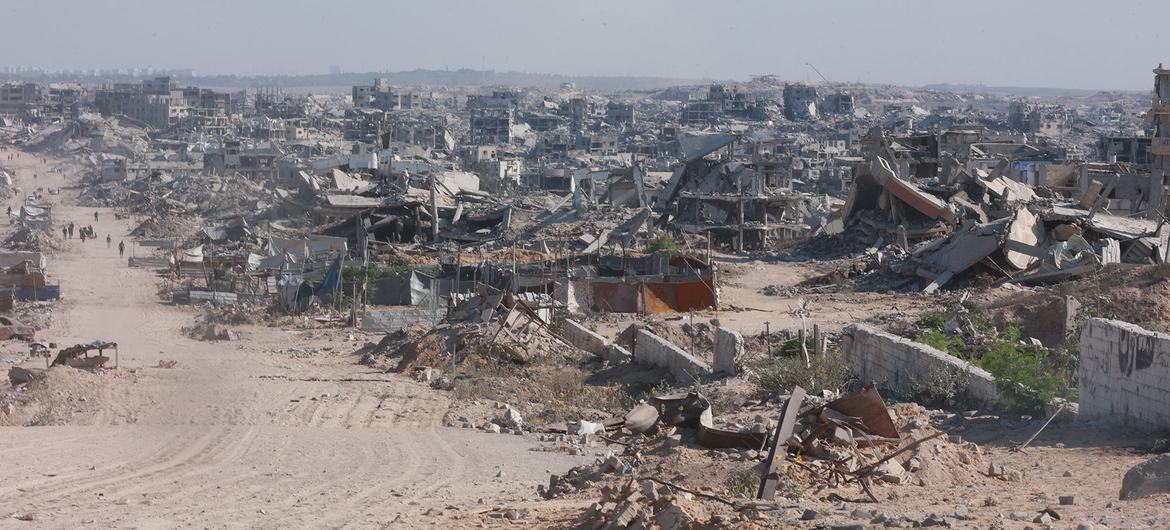
Palestinian families in Gaza are living in overcrowded tents and makeshift shelters, surrounded by waste and debris, with limited access to safe water and sanitation services. Among the widespread and severe environmental health hazards that result from the conditions, the United Nations reported this month, is a proliferation of rodents as well as cockroaches, flies, and other pests, contributing to disease transmission.
In a rapid assessment of more than 1,600 displacement sites across Gaza this month, the UN found that, in over 80% of them, rodents and pests were frequently visible, affecting 1.45 million people. Practically all of the affected families reported skin infections, including scabies, lice and bedbugs, with more than 70,000 cases recorded so far in 2026.
On April 12, Amani Abu Selmi was absorbed in preparation for her upcoming wedding, which was just one week away. She has lived with her family of five in a makeshift tent near Nasser Hospital since 2024 after their home in Khan Younis was destroyed in an Israeli airstrike. She went through the traditional rituals of a bride-to-be, checking and showing each piece of clothing to friends and relatives who stopped by. The next morning, her joy was shattered. Rats had chewed their way inside and shredded her belongings.
Abu Selmi’s mother, Ghalia, was returning from the market when she found her younger daughter, 13-year-old Samar, running toward her screaming that something terrible had happened. Inside the tent, Ghalia found Amani standing in shock, holding up pieces of her torn bridal dresses.
“The mice and rats spared nothing,” Ghalia told Drop Site. “These were new clothes for her, and now they were riddled with holes. I started crying because I knew how hard it had been for us to afford them in the first place.”
Amani had tried to protect her clothes from rodents, covering them with a wooden board weighed down by stones. But the rats and mice had burrowed underneath.
“She was especially heartbroken over her hand-embroidered Palestinian thobe,” Ghalia said. “She had dreamed of wearing it the morning of her wedding. It’s part of our tradition.” Rodents, fleas, and insects have long been an issue in their tent but Ghalia said the situation has deteriorated dramatically over the past three months.
Several days ago, Ghalia said she found her 19-year-old son’s eye had swollen shut. “There were small bite marks near his eye. He didn’t even realize what had happened until I asked him. He said he felt something on his face while sleeping,” she said. She took her son, Raef, to the nearest Red Crescent clinic, where doctors confirmed that the wound had become infected and prescribed him a course of antibiotics.
“They move all day inside the tent freely,” Ghalia said. “Even when it’s full of people, they dig tunnels underneath us.” She said she caught 20 mice in a single day using sticky traps, but it did little to contain the problem. “I tried to block their holes with mud again and again, but they always come back,” she said. “It’s terrifying. I can’t live like this anymore.”
Majd Sukar, the head of the Preventive Health Department for the Gaza Municipality, told Drop Site that complaints about rodents have significantly increased since the so-called ceasefire in October 2025, when the Israeli military halted its scorched earth bombing campaign even though it continues smaller scale attacks on an almost daily basis.
“The scale of destruction in Gaza has created ideal breeding grounds,” Sukar said. “The Israeli blockade on rodenticides, the mountains of uncollected waste, and untreated sewage are the primary drivers of this crisis.”
The municipality’s efforts to tackle the situation have also been severely limited by Israel. “We’ve lost most of our municipal vehicles in Israeli attacks,” Sukar said. “We simply don’t have the capacity to remove waste or respond effectively.”
Israeli restrictions on aid into Gaza have hampered efforts to deal with the growing rodent infestation. According to Doctors Without Borders, Israel has repeatedly denied the entry of multiple items needed for basic health sanitation, including rodenticide and insecticide.
“We’ve tried to find alternatives,” Sukar said. “We worked with Gaza’s university experts and tested different alternatives, but none were effective. Even many local initiatives have failed. Many people have brought us homemade poisons, but they don’t work either.”
The municipality has launched awareness campaigns, advising families to store food securely, clean their surroundings, and seek medical care immediately after bites, especially for children and those with chronic illnesses. Yet Sukar said they are fighting a losing battle.
“Rats are now everywhere in Gaza, in destroyed homes, shelters, hospitals, everywhere.” Reports have also grown of a large, particularly aggressive and adaptable rat known as the Norway rat. “We urgently appeal to the UN Secretary-General that we need waste removal equipment and pest control supplies. This is not a secondary issue, it’s a public health catastrophe,” Sukar said.
“We are suffering from two wars,” he added. “The war of bombs, and the war of rats.”
Saber Dawas in his tent inside Al-Yarmouk stadium in Gaza City on April 19, 2026. Photos by Ahmed Dremly.
Saber Dawas, a 38-year-old father of six, has tried desperately to keep the rats at bay inside their tent in a displacement camp in Al-Yarmouk stadium in central Gaza City.
He tried storing food in plastic containers, sealed bags, and even a cleaned drum for storing flour. “It didn’t matter,” Dawas said. “A rat chewed straight through the drum.”
Even though food is expensive and scarce, he ends up throwing away whatever he suspects was contaminated. He now suspends most of his food supplies in plastic bags from a wooden stick wedged into the tent’s frame, hoping to keep it out of the reach of rodents.
He said he sleeps lightly, constantly on alert. “Sometimes I feel like I’m guarding my family all night,” he added. “We’re at the beginning of summer. This will only get worse.”
Ahmad Dremly is the Gaza-based project coordinator for We Are Not Numbers. He is a journalist, translator, and educator and contributed this article to Drop Site
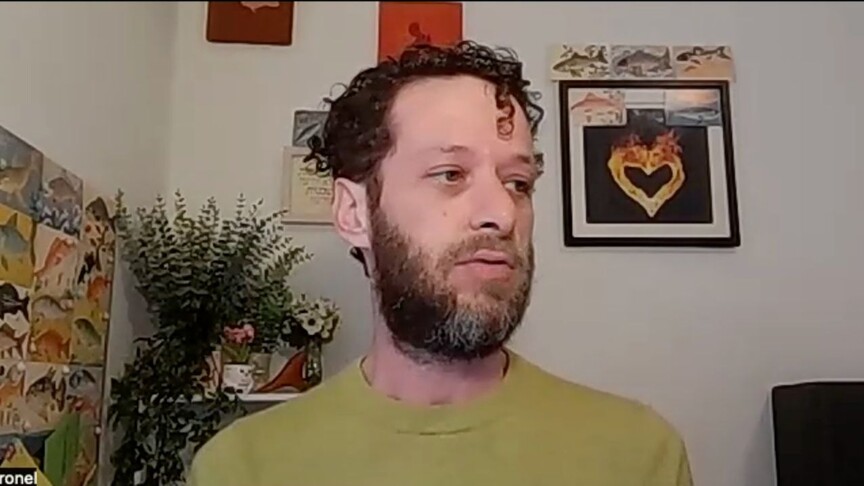
Tel Aviv’s escalation with Iran has made the risks of daily life in Israel more immediate and visible, according to an Israeli journalist who previously worked for Haaretz and left the country after Oct. 7, 2023.
“It was never safe,” Asaf Ronel told Anadolu in an interview. “But when you live inside it, you don’t notice.”
He said it was only after leaving Israel for Berlin that he became aware of the constant underlying stress.
“It took me months to understand why I’m so relaxed here,” he said. “I suddenly had hobbies. Because this layer of fear for your life is gone.”
But, he added, that sense of fear builds gradually over time.
“It accumulates. You keep denying it. You keep trying to maintain a facade of normalcy in your life,” he said. “Like everybody does until they’re broken.”
According to Ronel, the situation has deteriorated sharply in recent years.
He described the Oct. 7 attacks as a turning point that exposed deep vulnerabilities in Israel’s security system.
“The level of collapse of the military establishment on Oct. 7 was obvious,” he said.
At the same time, he argued that Israel’s military response has intensified insecurity.
“The more violence they’re using, it’s only creating more danger to them,” he said.
Ronel also criticized the role of the army more broadly, describing it as “functioning as a machine for oppression and violence against Palestinians and surrounding populations.”
Frequent trips to shelters have become routine, he added, though he stressed that Israeli civilians’ experience differs significantly from that of Palestinians.
“Israelis never dealt with anything similar to the daily life of Palestinians around us,” he said.
‘Israeli media is 99% propaganda’
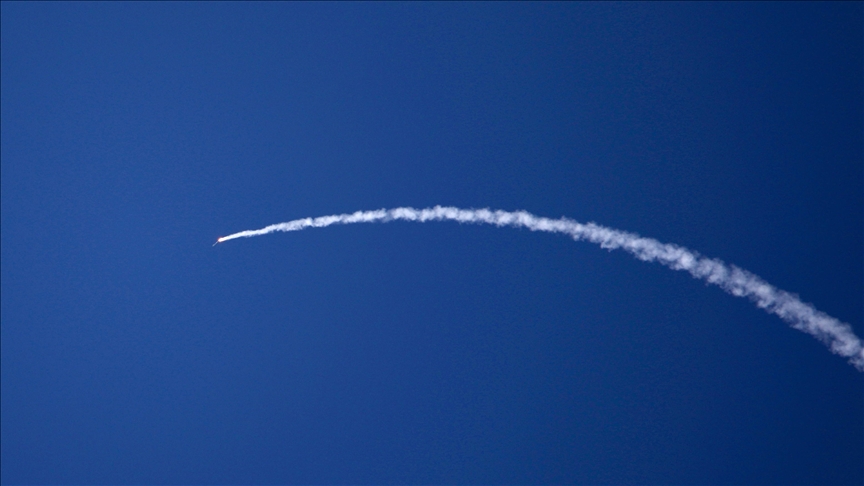
From Feb. 28 until the current ceasefire, Iranian retaliatory strikes hit multiple locations across Israel, targeting military sites, energy infrastructure and other areas, exposing what analysts describe as mounting pressure on the country’s interception systems.
Strikes penetrated Israel’s multi-layered defenses in multiple districts, including Tel Aviv, Petah Tikva, Bnei Brak, Holon, Arad, Dimona, Nahariya and Haifa.
Ronel said the scale of these developments is not fully reflected in domestic media coverage.
“Maybe the media should tell them that … there’s also the other side that’s quite sophisticated and capable of hurting them directly,” he said.
According to Ronel, Israeli media has failed to convey these realities, focusing instead on military achievements.
“Israeli media is 99% propaganda, self-propaganda,” Ronel said.
“They’re not even aware that they’re doing it,” he added, describing what he called a “level of denial of reality” that has become institutionalized.
He pointed to reports of a growing shortage of the most sophisticated missile interception systems and the military adjusting its defense priorities accordingly.
“The media is not reporting it,” he said.
‘Broken state and society’
Ronel said the current crisis reflects deeper structural problems within Israel that predate the latest escalation.
“It was clear that the country is broken,” he said, pointing to widening gaps in public services, infrastructure and governance.
He also pointed to broader institutional failures, saying basic systems were no longer functioning effectively.
“It didn’t seem like there was anyone who knows how to fix it, at least not in charge,” he said.
He said the events following Oct. 7 reinforced that view.
“And then, a few days later, when the genocide started, it was clear that not only the state is broken, but the society,” he said.
While he said Prime Minister Benjamin Netanyahu should not be seen as the sole cause, he argued that both the government and wider society have moved in the same direction, turning what he described as the “constant state of emergency of the Zionist life” into a condition that has become “much, much more severe.”
Unsafe at home and abroad
Ronel said insecurity is not limited to Israel’s borders, arguing that perceptions of Israeli identity have also shifted internationally.
Saying he had never lived outside Israel for more than a month before Oct. 7, Ronel said he still does not feel safe abroad.
“Because I’m an Israeli, and Israeli identity carries meaning – this meaning now is the meaning of genocide and attempts to destabilize the world economy.”
He predicts that more Israelis will move abroad to “look for ways to live.”
According to recent research conducted by professors at Tel Aviv University, there has been a notable rise in emigration from Israel in recent years.
The research suggests that around 99,000 Israelis left the country in 2023 and 2024, while fewer than 20,000 returned in 2024. More than three-quarters of those who left were under 40.
For Ronel, too, the chances of his family returning are “getting lower and lower.”
CROSSFIREARABIA – Ahmed Nahed Azzam had no idea that going to buy some grapes for his family to help them through the famine of summer 2025 would save his life. He didn’t then realize it would make him also, a witness to a horrific massacre that claimed the lives of 21 members of his family, including his elderly 65-year-old father and most of his children.
The 31-year-old Azzam recounted to Quds Press what happened on the tragic Monday day of 14 July, 2025, when famine and starvation had been ravaging northern Gaza for the best part of two years.
“I was sitting with my father, my seven-month pregnant wife, my son Karim, my brother’s wife Shahd, and her children, Osama and Rateb, in the garden of our house in the Tel al-Hawa neighborhood, southwest of Gaza City. It was the height of the famine. I decided to buy a kilogram of grapes and quickly left to get on my bicycle before the vendor leaves,” he recounted.
“As soon as I arrived at the grape vendor and was buying, I heard a huge explosion that shook the area. I had a terrible foreboding and sensed then my house must have been targeted, so I rushed back quickly,” he added.
“I arrived at the house to find it was up in smoke from the missile that landed on it, the smell of death and gunpowder was distinct, filling the air, a profound silence enveloped the place,” he sighed.
It was a four-story house, that sheltered about 50 people, “it had been completely leveled, burying nearly all my family members inside,” he said in a reverie, as if still fathomining what had happened.
He was overcome with grief and shock. The house had been reduced to rubble. At first, he felt completely paralyzed, unable to move his limbs. He began calling out for his father, his wife, his son Karim, and his brothers, but he received no answer, his voice hollow and echoing.
After a while Azzam gazed around and saw pieces of torn flesh, his family members scattered around the destroyed building. “Some had been thrown a considerable distance by the force of the blast,” he added, recounting neighbors soon rushed to the scene and were everywhere, retrieving the bodies of the martyrs and the wounded, one by one.
He confirmed most of the people in the house were killed, becoming martyrs in an instant. “They were soon pulled out from under the rubble and taken to the nearby Al-Quds Hospital, except for my cousin Alaa, who remained buried under layers of concrete because the building came tumbling down.
“My nine-year-old niece Judy was also pulled from the rubble but she was in a critical condition. She suffered fractures in both arms and legs, a fractured skull and forehead, damage to her left eye, and burns across much of her body.
“Initially the doctors thought Judy would soon die due to the severity of her injuries, fractures, and burns, especially on her head and eye, but she survived after being in a coma for two days,” he said.
Azzam explained Judy was the only surviving member of her family after her father, mother, and siblings were killed, and when she learned of this she was devastated.
Ten days ago, he finally arrived in Egypt, after the Israeli authorities granted him permission to leave so that Judy could be treated there since the medical system in Gaza was in complete collapse. “I hope Judy can recover here,” he continued.
Her injuries have left her with no sense of smell, her left eye is blinded and requires reconstructive surgery due to the extensive burns covering her body.
“I hardly believed that I am still alive,” Judy simply said. It is still the beginning of the road to recovery. She is in shock and still can’t get to terms with the fact that her father, mother, brothers, grandfather, uncles, aunts, and their children have gone forever.
“After my treatment in Egypt I hope to recover to return to Gaza to continue my school and help in my uncle Ahmed’s kindergarten,” she concludes as if in a determined fate.
This article written by Dr Marwan Asmar is republished her from the Hackwriters.com website
BEIRUT—On March 28, George Saeed, 62, and his 24-year-old son Elie were driving back to their home in Debel, a village in southern Lebanon close to the border with Israel. It was a route Saeed knew well. He ran a small laundromat beneath his house, where he washed uniforms for a Polish unit in the United Nations peacekeeping force stationed in the nearby village of Tiri. The trip from Tiri used to take a few minutes, but after the main road was bombed by the invading Israeli military he had begun taking a longer route through the neighboring village of Rmeich.
That afternoon, villagers saw George’s car pass through Rmeich and enter Debel, disappearing along the village’s steep, winding roads. When they were roughly 60 meters from their house, the crackle of gunfire rang out, followed by the blare of a stuck car horn.
Elie Louqa, Saeed’s nephew and the former mayor of Debel, was in Beirut when he got a call from his brother describing what had happened. He began contacting UN peacekeepers (UNIFIL), the Lebanese Army, and the Red Cross, asking them to reach the car. Both the Red Cross unit in Rmeich and the nearby UNIFIL contingent told Louqa they could not secure permission from their superiors to move.
After about 90 minutes, a group of young men from the village decided to go themselves. Carrying white blankets and mattresses to signal they were civilians, they reached the site of the attack and found the father and son dead inside their bullet-ridden car. They pulled the bodies out and carried them to the village cemetery for burial.“You won’t find a man with cleaner hands. He was generous to a fault,” Louqa told Drop Site News. “Go and ask the people of our villages who George Saeed was.
”The killings were just one in a series of attacks on residents of several villages along the southern border who have chosen to remain in their homes despite repeated sweeping displacement orders by the Israeli military covering all of southern Lebanon.
Earlier this week, the Lebanese army announced its forces had withdrawn from southern border villages, leaving residents without even the semblance of protection. At least six Lebanese soldiers have been killed by Israel over the past month. The army said its troops had to “reposition” as they were being encircled and cut off from their supply lines but claimed it continued to “stand by residents” by “maintaining a group of military personnel” in the villages. What this meant in practice, according to residents, was that soldiers from the area could stay in their homes provided they did not wear army uniforms or carry arms.
“We don’t know why the army made this decision,” said Boutros al-Rai, a local farmer and civilian administrator. “For us, its presence made us feel protected.”Drop Site News is reader-supported. Consider becoming a free or paid subscriber.
Lebanon is being ravaged as Israel’s escalated assault enters its second month. More than 1,300 people have been killed, including over 120 children, and over 4,000 injured in a relentless onslaught. Israel has issued displacement orders covering around 15% of Lebanese territory and more than 1.1 million people—about a fifth of the country’s population—have been forced from their homes. Emergency workers have also been increasingly targeted, with over 50 killed over the past four weeks.
Despite a ceasefire agreement in November 2024, Israel continued to carry out near daily attacks and occupied five hilltop positions on Lebanese territory. When Hezbollah fired rockets into Israel on March 2 in solidarity with Iran after the U.S. and Israel launched a war on Tehran, Israel launched a full scale aerial assault and ground invasion on Lebanon.
Israeli Defense Minister Israel Katz announced on Tuesday that the Israeli military plans to occupy the entire area south of the Litani River and will not allow hundreds of thousands of residents to return to their homes, making a reference to areas in Gaza that have been completely razed in the genocide. “The return of over 600,000 residents of the area south of the Litani River will be completely prohibited until the safety and security of residents of the north is ensured, similar to the model of Rafah and Beit Hanoun in the Gaza Strip,” Katz said.
The Israeli military also appears to be engaged in a campaign to ethnically cleanse southern Lebanon of its Shia residents. Around three weeks ago, Israeli military officials called the heads of a cluster of majority Christian villages in southeastern Lebanon and ordered them to force out any “displaced people” that had taken refuge there, according to a municipal official in one of the villages, who spoke to Drop Site on condition of anonymity. “Displaced people” was a thinly-veiled reference to Shia residents who had been forced to flee nearby towns like Khiam.
U.S. Ambassador to Lebanon Michel Issa used explicitly sectarian language two weeks ago in referencing Israel’s military campaign in the south. “We asked the Israelis to leave the Christian villages in southern Lebanon and requested that the army keep a unit stationed there,” Issa said in a meeting with Maronite Patriarch Cardinal Mar Bechara Boutros Rah.
Over the past week, the Israeli military made a new round of phone calls to leaders in majority Sunni villages Chebaa and Kfarchouba, warning them to not accept any non-locals into their village. Mohammad Hammoud, a spokesperson for the town of Chebaa, confirmed the authenticity of a video circulating online showing a call received on Tuesday by local leader Ibrahim Nabaa. Over the phone, an Israeli soldier warned that the village would be targeted if officials failed to keep resistance fighters out. Hammoud said that the municipality had organized a small police force to conduct patrols at night and make sure no outsiders entered—measures that, he hoped, would spare residents their homes and land.
As part of its invasion of southern Lebanon, the Israeli military is in the midst of a scorched earth campaign, systematically destroying homes and civilian infrastructure in border villages. Louqa, the former mayor of Debel, said he fielded frantic calls on Wednesday from village residents who told him that occupation forces had begun to blow up homes on the village periphery. The homes were empty, he explained, because in times of war, residents often move closer to the village center for safety.
“These homes are in Debel—not on the outskirts, not kilometers away,” Boutros al-Rai, a local official told Drop Site, adding that at least 10 houses had been demolished on Wednesday alone. “They’re blowing them up one by one. We don’t know why or how.”Around 1,700 people remain in Debel, according to al-Rai, down from 2,500 before the war. Once the escalation began on March 2, residents started making trips to the nearby village of Rmeich to buy essential goods. But after the killing of George and Elie Saeed last week, and without any support from UNIFIL or the withdrawn Lebanese army, that route was no longer considered safe.
“People have supplies for a week or two,” al-Rai said. “They rely on each other. But it’s not enough for much longer.”
Access to medical care is also severely limited. In Rmeich, where about 6,000 people remain, there is no hospital. Residents depend on coordinated evacuations, typically requiring approval from the Lebanese Army as well as UNIFIL, which then communicates with Israeli occupation forces.
Elie Shoufani, a local official and Red Cross volunteer, said the process is inconsistent. “Sometimes we get permission quickly, sometimes we don’t.”Earlier this week, a 48-year-old man, Paul Mu’awwad, went into cardiac arrest and died before he could get treatment. “We didn’t get permission to take him for emergency care,” Shoufani said, adding that Mu’awwad had left behind a wife and six children. “If we had been able to reach a hospital, he might have lived.
”Over the past month, residents in Debel, Rmeich, and nearby Ein Ebl have relied largely on aid convoys from the International Committee of the Red Cross, which in the past have been accompanied by the Lebanese army.
“Now that the army has left, we don’t know what will happen,” Shoufani said.UNIFIL troops have also limited their movement after Israeli airstrikes killed three Indonesian peacekeepers in southern Lebanon over a 24 hour period last week. Residents say this has further reduced their options.
“All we ask is for a way to move the injured or reach medical care,” Louqa said. “A mechanism to respond when we call. God will take care of the rest.”Al-Rai described the difficulty and humiliation of displacement in a state with overburdened shelters and skyrocketing rents. More than anything, he worried that if he abandoned his home, it would be destroyed by Israeli occupation forces. He, like the others in his village, was determined to stay put.
“These are our homes, our livelihoods, our villages, the homes of our parents and grandparents,” he said. “These are not places that can be left behind.” Drop Site

 CrossFireArabia