UN: $70 Billion Needed For Gaza Rebuild

Around $70 billion will be needed to reconstruct Gaza and make it safe after two years of war, UN development experts said on Tuesday, while aid agencies reported that far too little aid is getting in to meet the needs of desperate Palestinians.

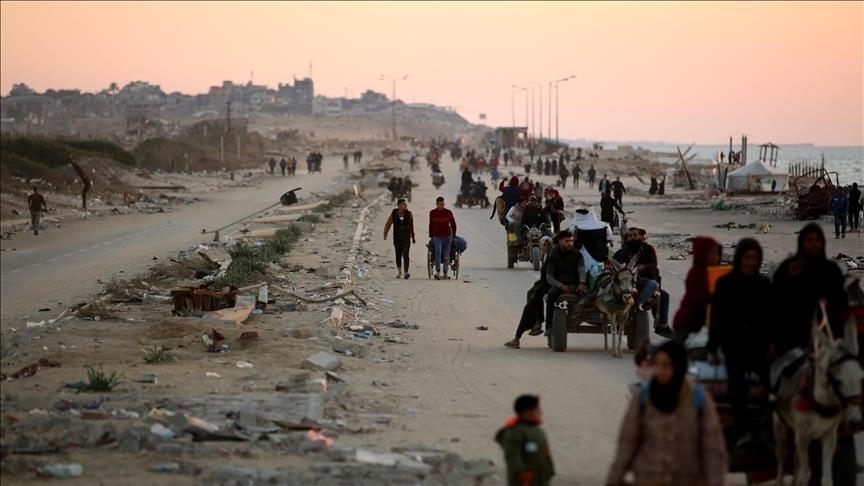
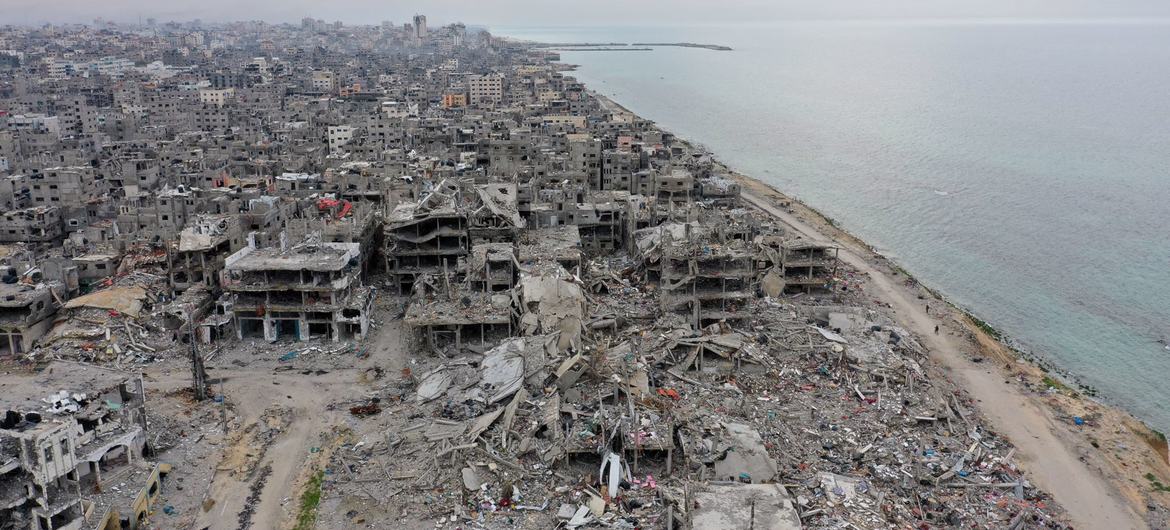
At just 41 kilometres long (25.4 miles) and two to five kilometres wide (1.2 to 3.1 miles), few places in the Gaza Strip had been left unscathed by the constant Israeli bombardment before the latest ceasefire came into effect haltingly last Friday.

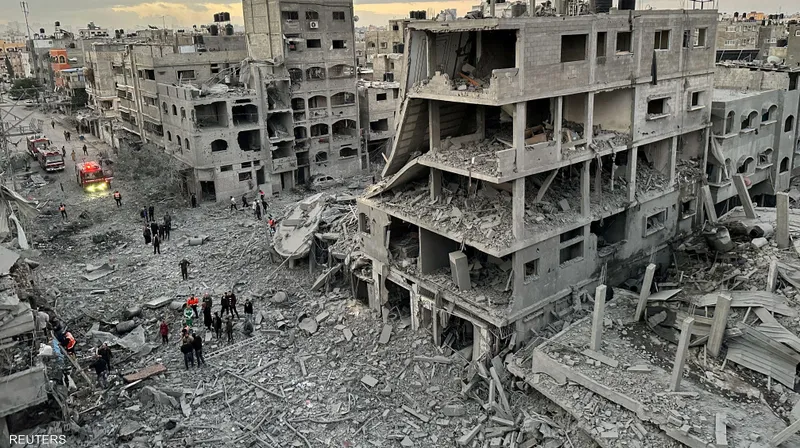
According to the UN Development Programme Special Representative for the Palestinians, Jaco Cilliers, destruction across the enclave “is now in the region of 84 per cent. In certain parts of Gaza, like in Gaza City, it’s even up to 92 per cent.”

$20 billion needed now

Speaking from Jerusalem, the UNDP’s Mr. Cilliers highlighted the findings of the latest Interim Rapid Damage and Needs Assessment (IRDNA) on Gaza by the UN, the European Union and the World Bank, which estimated the damage at $70 billion.

To kickstart the massive operation, some $20 billion will be required in the next three years alone, he told journalists in Geneva.

The UN development agency is present in Gaza alongside humanitarian partners to provide immediate support to the enclave’s 2.1 million people.

This includes providing clean water, emergency employment, medical supplies, solid waste removal and making homes and public spaces safe by clearing rubble potentially hiding unexploded ordnance or the many thousands of missing Palestinians.

“We’ve already removed about 81,000 tonnes. That is about…3,100 truckloads,” Mr. Cilliers explained. “The majority of the debris removal is to provide access to humanitarian actors so that they can provide the much-needed aid and support to the people in Gaza. But we also help with hospitals and other social services that need to be cleared of debris.”

The UNDP official pointed to “very good indications” from potential donors in support of reconstruction from Arab States, but also from European nations and the United States “which has also indicated that they are going to be coming in supporting some of the early recovery efforts”.

Immediate aid essential

Important as reconstruction is for Gaza’s long-term future, UN humanitarians once again clamoured for the Israeli authorities to open all access points into Gaza, after the remaining 20 living Israeli hostages were freed on Monday and Palestinian prisoners were released from Israel.

The development followed the signing of a ceasefire deal between Hamas and Israel signed on Monday evening in Sharm El-Sheikh by US President Donald Trump, and the leaders of Egypt, Qatar and Turkïye.

Earlier on Monday, UN Secretary-General António Guterres welcomed the release of all living hostages from Gaza, two years since they were among some 250 taken during Hamas-led terror attacks in Israel on 7 October 2023.

Gaza City testimony

Speaking to UN News from Gaza, UN Children’s Fund (UNICEF) aid worker Tess Ingram described the story of one family displaced five times by the war:

“I met a family today, Mustafa and Syeda and their children, and they told me that they were among the lucky ones because while Mustafa was pulling rubble out from the building, that is their home, at least he said, we have a home.”

The family was relieved on Monday at the appearance of a water truck, Ms. Imgram told us: “But they live in fear that truck might not turn up today or tomorrow. She also can’t get the medicine she needs and her sons had to walk a really long way today just to buy the basics that she needed to make some bread.

“Families need absolutely everything right now. We need the hundreds of trucks a day that were promised to get into the Gaza Strip.”

Families return home amidst the destruction in Gaza. (file)

© UNICEF/Eyad El Baba

Hostage remains

On Tuesday, the focus shifted to the transfer from Gaza of all deceased hostages, an extremely difficult process overseen by the International Committee of the Red Cross (ICRC). It remains unclear how many deceased hostages will be transferred by Hamas.

“When it comes to the living hostages or Palestinian detainees – and believe me that’s a big issue for us – we actually don’t know, we know that we have to be ready,” said ICRC spokesperson Christian Cardon, adding that the complex search is getting underway today.

In the meantime, needs in Gaza remain enormous and “fluid”, aid teams report, with more than 300,000 Palestinians heading north to Gaza City since Friday, as the ceasefire agreement seemed to hold.

“The enthusiasm that came from the international community, from people on the ground that this was the beginning of the end of all the suffering and things would change rapidly, is just not being reflected on the ground, day in and day out. We are not getting enough aid in,” said UN Children’s Fund (UNICEF) spokesperson Ricardo Pires.

The Israeli authorities have agreed to allow 190,000 tonnes of relief supplies into Gaza and UN agencies and their partners are scaling up operations rapidly, but a far greater amount is needed overall, humanitarian agencies including the UN aid office, OCHA, have said repeatedly.

“Of course, we are advocating with everyone, and we were there in Sharm El- Sheikh yesterday as well, with 22 heads of state of government, who we are asking to help us push all buttons you can to get this up and running as soon as possible,” said OCHA spokesperson Jens Laerke.

Aid hub carnage

Aid teams continue to insist that there needs to be a move away from handing out lifesaving supplies from remote areas including non-UN aid hubs that are difficult to reach and where hundreds of Palestinians have been shot or injured.

“Most of the actors – ICRC included – were not able to organize sufficient distribution of aid inside Gaza,” said Mr. Cardon. “And what we’ve seen instead, it’s people coming back from distribution sites being wounded, if not killed, in many instances…It’s about aid coming to the people and not any more people going to the aid,” as reported by UN News.
Continue reading
Trump, Witkoff Need To Stop The Netanyahu Tune

By Michael Jansen

Israeli Prime Minister Benyamin Netanyahu has said, “There is no policy of starvation in Gaza, and there is no starvation in Gaza.” Israel has enabled “humanitarian aid throughout the duration of the war to enter Gaza – otherwise, there would be no Gazans.”

However, Gaza’s government media office told Al-Jazeera that only 674 aid trucks have entered Gaza since Israel eased restrictions on July 27, averaging just 84 laden trucks per day. This is only 14 per cent of needs as humanitarian organisations say at least 600 trucks of water, food, medicine and fuel are required at a minimum.

Echoing Netanyahu, US regional envoy Steve Wikoff proclaimed there is “no starvation” in Gaza after a brief visit to one of the aid delivery hubs in the Strip. “There is hardship but no starvation,” he said. His assessment appeared to contradict his boss Donald Trump who had said there is “real starvation.”

“Once we refute this Hamas claim, we can continue new actions to end the war and bring back all the hostages” held by Hamas, Witkoff said. He added that Trump believes piecemeal deals do not work and so a new arrangement is needed that would free the hostages all at once.

However, Witkoff argued that only Hamas “total surrender” and disarmament would be accepted. Writing in Haaretz daily on 2 August, Amir Tibon decries Netanyahu’s decision to carry on with the war, despite opposition from most Israelis and Israel’s foreign friends. “Israel’s military leadership admits today that the last five months have been a wasted effort, and that it would have been preferable for Israel to continue the January 2025 ceasefire, get the rest of the hostages out of Gaza in an agreement, and conclude the war.”

He is sharply critical of the Trump administration which “gave Netanyahu total backing for this disastrous policy, including his decision to block all aid from coming into Gaza, which caused the humanitarian crisis there. “Consequently, Witkoff’s latest visit has been met with popular Israeli “disappointment over the Trump administration’s failure to rein in Netanyahu and bring the Gaza war to an end.”

This means that there will be no quick fix under pressure from starvation even though Israelis held captive by Hamas are suffering the same lack of nourishment as their captors. The International Committee of the Red Cross has been asked to provide food for the captives but not the 2.3 million hungry Palestinians in Gaza.

Witkoff has been contradicted by the UN-supported Integrated Food Security Phase Classification” (IPC) which has warned that “the worse-case scenario of famine” is unfolding as 60,000 Palestinians died from bombs and bullets and an untold toll, especially among children, is being gripped by hunger and malnourishment. IPC called for a ceasefire to avert further “catastrophic human suffering.” The total number of people who have died from hunger-related causes since the start of the war in October 2023 has risen to more than 181, including 94 children. This does not include the 1,400 who have been killed by Israeli army fire when trying to secure aid at the highly controversial US-Israel Gaza Humanitarian Foundation which has not alleviated starvation but given a false image of US and Israeli efforts to deliver food.

UN Secretary-General Antonio Guterres said the IPC alert “confirms what we have heard. The facts are in and they are undeniable. Palestinians in Gaza are enduring a humanitarian catastrophe of epic proportions. This is not a warning. It is a reality unfolding before our eyes.”

Australian Prime Minister Anthony Albanese declared it was “beyond comprehension” for Israel to claim starvation was not an issue in Gaza and accused Israel of breaching international law by blocking aid.

Netanyahu is personally responsible for torpedoing January’s ceasefire agreement which would have led to the release of Israeli captives in exchange for Palestinian prisoners, Israel military withdrawal from Gaza, and an end to the war. Instead on 2 March, he imposed the blockade and on 18 March, he resumed the war. Tibon summed up, “Netanyahu, for political reasons, chose to blow up the deal, restart the war, and bring us to where we are today: Our hostages are being starved and tortured, our soldiers are dying, and the entire world is turning against us due to the broader humanitarian catastrophe in Gaza.”

As the 15 August 20th anniversary approaches of the beginning of Israel’s withdrawal of settlers and soldiers from Gaza, 600 retired Israeli security officials have written to Trump to ask him to pressure Netanyahu to end the war. This group included former Mossad chief Tamir Pardo, former Shin Bet chief Ami Ayalon, former Prime Minister Ehud Barak, and former Defence Minister Moshe Yaalon.

Ayalon argued: “At first this war was a just war, a defensive war, but when we achieved all military objectives, this war ceased to be a just war…It is our professional judgement that Hamas no longer poses a strategic threat to Israel,” the officials stated. “Your credibility with the vast majority of Israelis augments your ability to steer [Netanyahu] and his government in the right direction: End the war, return the hostages, stop the suffering.”

On the political front, this policy has contributed to decisions by Britain, France, Canada and half a dozen other countries to recognize the state of Palestine during next month’s opening of the 80th UN General Assembly session. Although recognized by 147 of the 193 UN members, many Western countries have delayed recognition. The addition of Britain and France will mean four of the five permanent members of the UN Security Council (which includes China and Russia) will recognize Palestine while the US will remain the outlier as it is on any effort to criticize or rein in Israel.

Michael Jansen is a columnist for The Jordan Times

Continue reading
What Does Trump Want to do About Gaza?

US President Donald Trump said Wednesday that there will likely be an announcement concerning the situation in the besieged Gaza Strip within the next 24 hours.

“We’re going to see what’s happening. A lot of talk going on about Gaza right now. You know that, right? So you’ll be knowing probably in the next 24 hours,” Trump said, one day after teasing a “very big announcement.”

Trump declined to specify what the announcement would concern when asked Tuesday, but said it would be “as big as it gets.”

He maintained, however, that it would be “very positive,” and could happen as soon as Thursday, the same time frame as the Gaza announcement he previewed.

It is not clear if Trump was addressing the same matter when he vaguely referred to the Gaza announcement, but his special envoy for the Middle East, Steve Witkoff, is reportedly slated to brief members of the UN Security Council on a US and Israeli proposal to facilitate aid deliveries in Gaza.

Earlier reports stated Israel’s Security Cabinet recently approved an aid delivery plan for Palestinians in the enclave via private US security contractors based on handing over aid boxes to individuals.

The UN and all aid groups working in Gaza, however, have rejected the plan, arguing it violates international humanitarian principles.

UN Secretary-General Antonio Guterres last month opposed the plan.

The Trump administration is reportedly seeking support from other countries while urging the UN to cooperate according to Anadolu.

“To the best of our knowledge, this is an unofficial briefing done in the US mission,” Greece’s UN mission told Anadolu, as it holds the Council presidency for May.

The closed-door meeting comes days before Trump’s Middle East tour, which includes a summit with Gulf leaders on Iran and Gaza.

Continue reading
Guterres: ‘Resumption of War Must be Avoided at All Costs’

UN Secretary-General Antonio Guterres on Tuesday called for avoiding the resumption of hostilities in the Gaza Strip, urging all parties to uphold the ceasefire agreement and engage in further negotiations.

“We must avoid at all costs the resumption of hostilities in Gaza that would lead to an immense tragedy,” Guterres said.

He also called on Hamas to follow through with the scheduled release of hostages next Saturday.


Guterres emphasized the need for “both sides” to uphold the ceasefire and resume “serious negotiations in Doha for the second phase.”

The UN chief’s remarks came amid heightened concerns over the fragile truce, as international mediators work to secure lasting peace in the region.

A three-phase ceasefire has been in effect in Gaza since January 19, pausing Israel’s assault that has killed over 48,000 people and devastated the region.

In the first phase, lasting until early March, 33 Israeli hostages are set to be exchanged for Palestinian prisoners, with the sixth swap planned this week.

In November, the International Criminal Court issued arrest warrants for Israeli Prime Minister Benjamin Netanyahu and former Defense Minister Yoav Gallant over war crimes in Gaza.

Continue reading
Arab States Say No to Trump On Gaza

Arab nations and organizations continued to express their firm rejection of US President Donald Trump’s plan to seize Gaza and displace Palestinians.

Egypt, Algeria, Iraq, Libya and the Palestinian group Hamas released statements Thursday.

It followed earlier rejections from Saudi Arabia, the United Arab Emirates, Jordan and Oman, along with several regional and international organizations including the Arab League and the Gulf Cooperation Council.

On Thursday, Trump claimed that Palestinians would have “better lives” under his plan, suggesting they would settle in “safer and more beautiful communities with modern homes.” He said the US would collaborate with development teams to build “one of the greatest projects of its kind.”

Earlier in the day, he claimed that Palestinians would have “a chance to be happy, safe, and free” due to the relocation scheme he proposed.

He added that they “would have already been resettled in far safer and more beautiful communities, with new and modern homes, in the region.”

On Tuesday, Trump told a press conference with Israeli Prime Minister Benjamin Netanyahu that the US will “take over” Gaza and resettle Palestinians elsewhere under an extraordinary redevelopment plan that he said could turn the enclave into “the Riviera of the Middle East.”

Commenting on Trump’s plan, Egypt said it rejects any proposal “that aims to liquidate the Palestinian cause by uprooting the Palestinian people or displacing them from their historical land and seizing it, whether temporarily or permanently.”

King Abdullah II of Jordan reiterated in a call with UN Secretary-General Antonio Guterres that Jordan opposes any attempts to annex land or displace Palestinians from Gaza and the West Bank.

Kuwait’s Ministry of Foreign Affairs reaffirmed its steadfast support for Palestine’s right to establish an independent state, condemning Israeli settlement policies and the displacement of Palestinians.

Algeria condemned any plan to expel Gaza’s residents, warning that such schemes “undermine the core of the Palestinian national project.”

Both Iraq and Libya expressed their strong opposition to any proposals or attempts to forcibly displace Palestinians, calling on the international community to take a firm stand against these actions.

Palestinian President Mahmoud Abbas called Trump’s plan a violation of international law, asserting that Gaza is an integral part of Palestine and rejecting foreign decisions about the future of Palestinians.

Hamas also denounced Trump’s statements, with spokesperson Hazem Qassem calling for an urgent Arab summit to oppose the displacement project, warning that the US is essentially seeking to occupy Gaza.

Saudi Arabia reiterated its unwavering support for Palestinian statehood, while the United Arab Emirates also condemned the displacement efforts, calling for a just solution to the Israeli-Palestinian conflict.

The Arab League and Gulf Cooperation Council both reaffirmed their commitment to the Palestinian cause, rejecting any plans for the forced relocation of Palestinians.

The Houthi movement in Yemen also condemned Trump’s statements as a blatant attack on Palestinian rights and an insult to the Arab and Muslim world.

A ceasefire agreement took effect in Gaza on Jan. 19, halting Israel’s genocidal war, which has killed nearly 47,600 Palestinians, most of them women and children, and left the enclave in ruins, according to Anadolu.

The International Criminal Court issued arrest warrants in November last year for Israeli Prime Minister Benjamin Netanyahu and his former Defense Minister Yoav Gallant for war crimes and crimes against humanity in Gaza.

Israel also faces a genocide case at the International Court of Justice for its war on the enclave.

Continue reading