Israel: Killing North Gaza Slowly

Nearly 70,000 Palestinians have been trapped for two months without access to food or medicine, as Israeli occupation forces continue to pursue them throughout the northern Gaza Strip. This ongoing situation has resulted in numerous deaths and forced displacements in what many consider one of the most horrific campaigns of genocide in modern history.

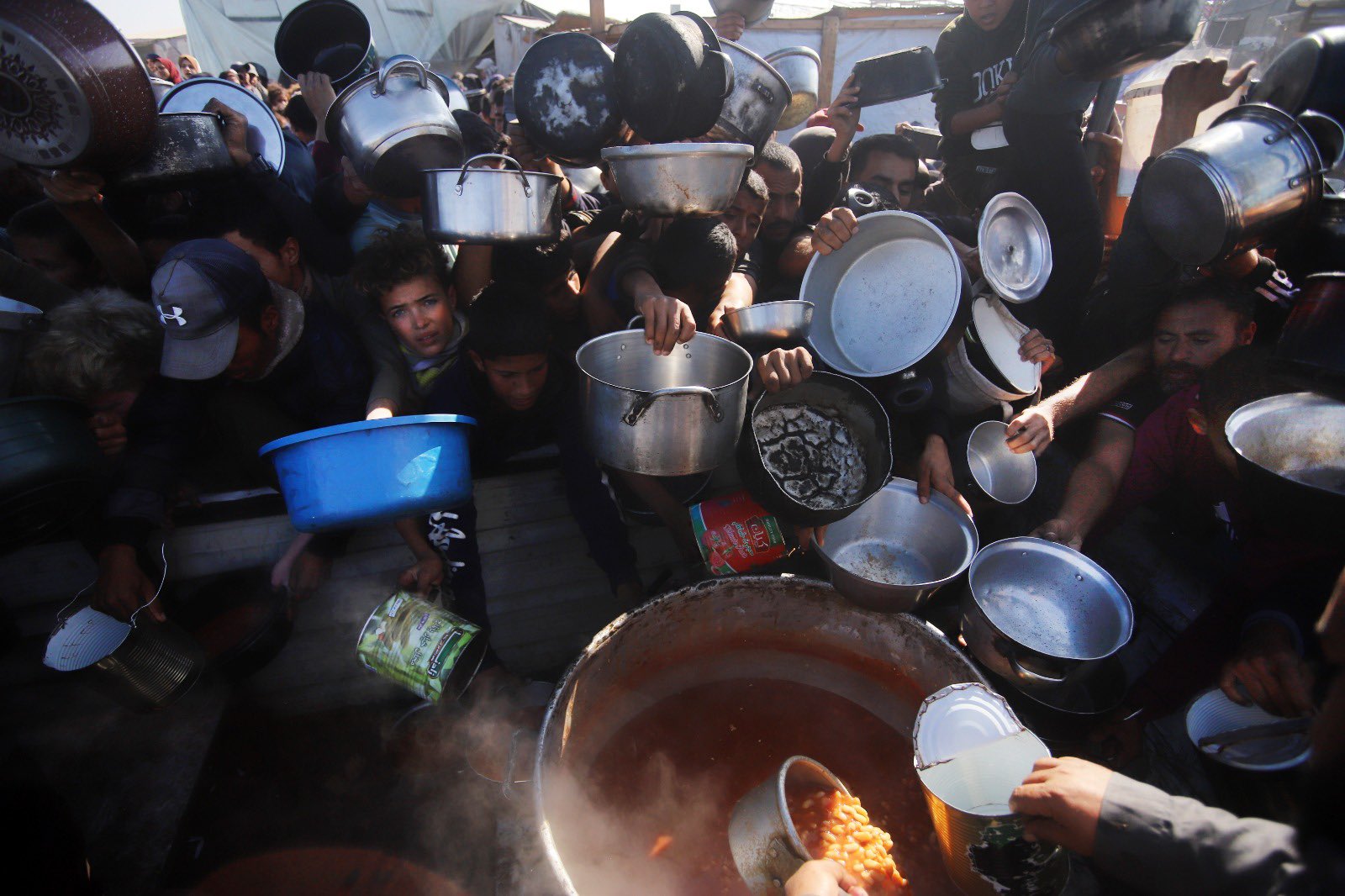
Euro-Med Human Rights Monitor has received alarming reports about the dire situation facing the nearly 70,000 Palestinians who are trapped in the northern Strip. This follows the displacement of more than 150,000 people by the Israeli army since the onset of its most recent military operation in the north on 5 October 2024.  Euro-Med Monitor notes that those who remain besieged are experiencing severe famine, as they have run out of all types of food and lack access to clean water. Many have gone days without eating or drinking anything. Meanwhile, Israeli bombings and other military operations continue, targeting shelters as well as what remains of previously destroyed homes. 

    No one can rescue those stuck under the rubble due to the Israeli bombings, as Israel has been blocking civil defense teams from operating   

Deliberate bombing

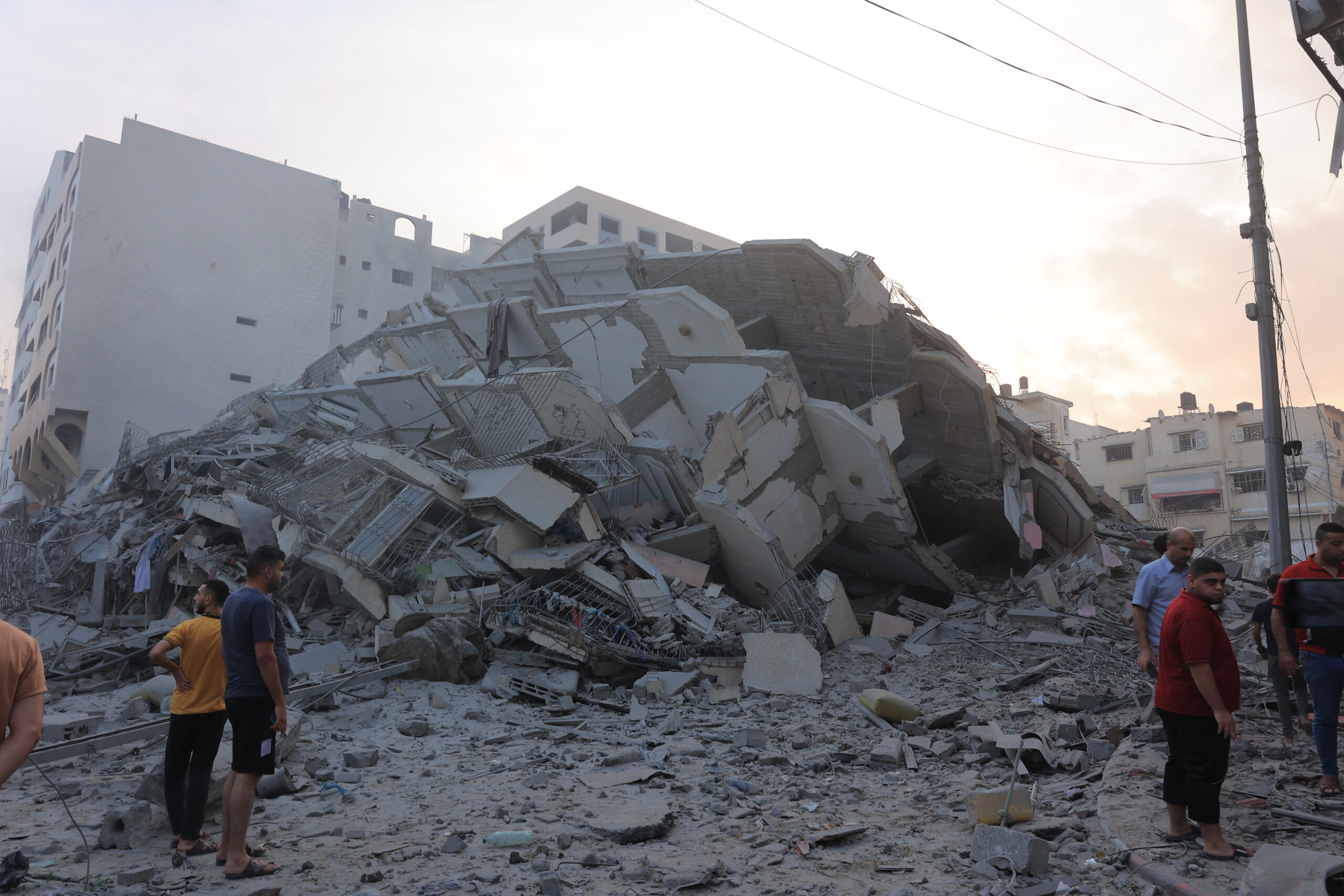
 The Israeli army has deliberately bombed homes where civilians sought refuge. The most recent incident occurred on Sunday, when the occupation army targeted the Labad family home in Beit Lahia, resulting in the killings of 25 family members. Just two days earlier, Israeli forces also bombed three residential buildings in Jabalia and Beit Lahia, which belonged to the Baba, Al-Araj, and Ahmad families. This attack killed more than 120 residents, leaving an unknown number of victims still trapped under the rubble.

No one can rescue those stuck under the rubble due to the Israeli bombings, as Israel has been blocking civil defense teams in the northern section of the Strip from operating for 41 days now. Consequently, the injured are slowly dying without medical assistance, as they cannot be transported to hospitals, which are unable to function properly under such dire conditions and are frequently subjected to bombings. Furthermore, those who manage to survive their injuries and reach partially operational hospitals face the risk of being targeted by Israeli drones. Even if they do make it to a hospital, they may still die due to a lack of adequate treatment and insufficient medical personnel.

Numerous incidents have occurred in which Israel has used drones, including quadcopters, to target Palestinian civilians who were compelled to leave their homes or shelters in search of food or water.

The Israeli occupation army is committing severe crimes against civilians. Its attempts to completely eliminate the residents of the Jabalia refugee camp have included destroying homes using robots and booby-trapped barrels, in addition to dropping powerful American bombs. Despite Israeli forces’ awareness of the presence of residents in many of the homes and residential blocks, these sites are still being targeted.

The Israeli army has turned Jabalia Camp, the city of Jabalia, Beit Hanoun, and Beit Lahia into piles of rubble, devastation, and total destruction, by wrecking, demolishing, and burning homes and shelters, and targeting all aspects of Palestinian life. As a result, even if the Israeli army withdraws from these areas, it will be nearly impossible for Palestinian civilians to return and live there safely.

The world witnesses these horrific crimes, yet no serious action has been taken to stop what is now considered to be one of the largest genocidal campaigns and humanitarian tragedies in modern times.

This international disregard for the victims constitutes an indelible stain on the forehead of the international community, which continues to exclude Palestinians from the protection of international law and its executive mechanisms. These mechanisms have failed to be applied effectively, due to political biases and international pressure. This situation reflects a global hypocrisy regarding the principles that the international legal system is built upon, demonstrating shameful double standards and a blatant violation of justice and humanity.

The international community’s hesitation to take decisive action in response to Israel’s violations in the Gaza Strip, particularly in the Strip’s northern regions, makes it complicit in these crimes. This inaction serves as a tacit approval for Israel’s actions, allowing it to continue escalating its campaign of genocide, and demonstrates a shocking disregard for the lives and dignity of Palestinians.

It is imperative that the United Nations and the international community intervene immediately to protect 10s of thousands of residents of northern Gaza who are in imminent danger, plus stop the ongoing genocide being perpetrated by Israel across the entire Gaza Strip for the second consecutive year. Actions should include imposing sanctions on Israel, implementing a comprehensive arms embargo, holding the country accountable for its actions, and taking all necessary measures to safeguard Palestinian civilians. Additionally, the enforcement of the arrest warrants issued by the International Criminal Court against the Israeli Prime Minister and Minister of Defense must be prompt, ensuring their surrender to international justice.
EuroMed Human Rights Monitor

Continue reading
Bodies in Streets of Jabalia as Israeli Army Maintain Siege

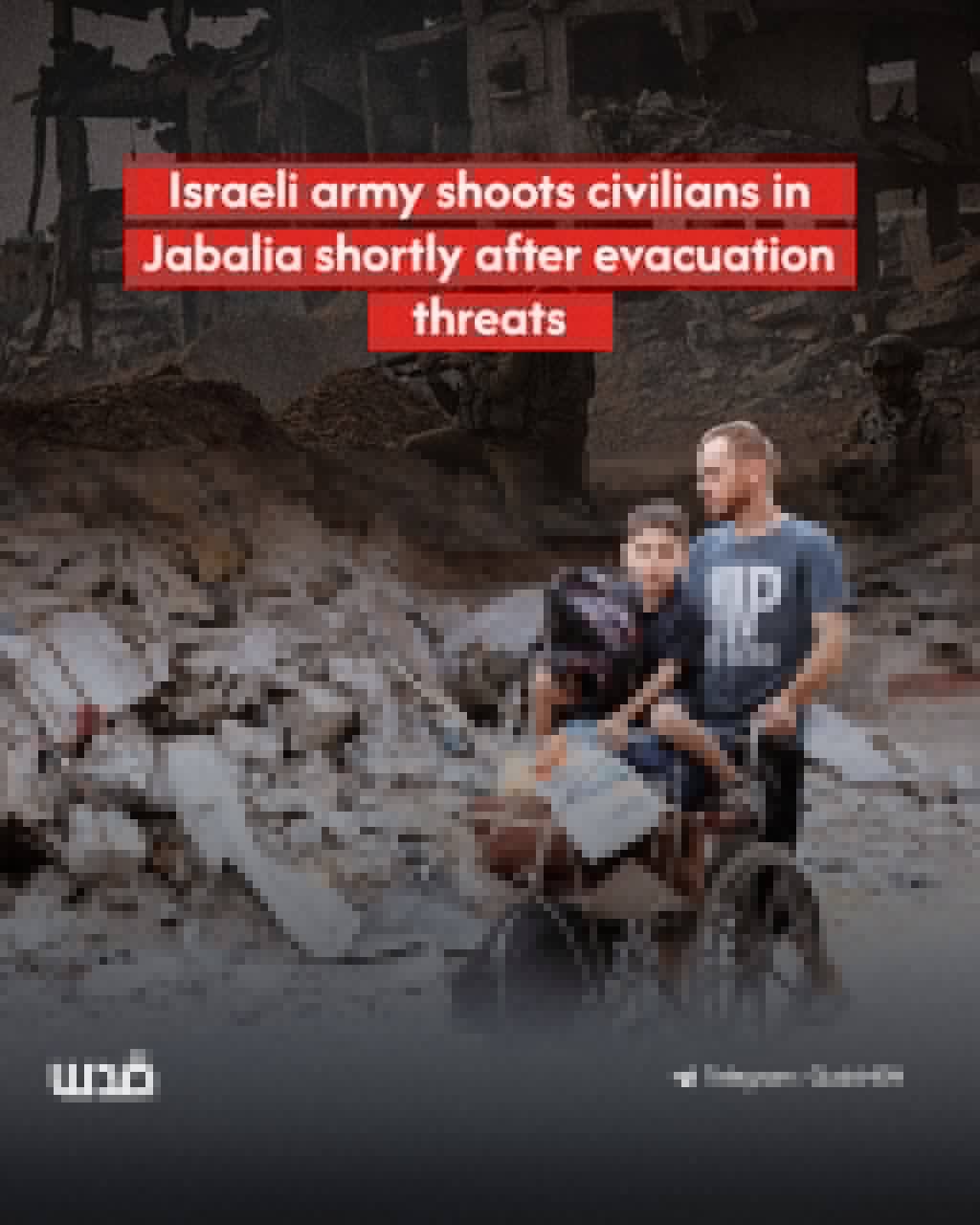
Today, Tuesday, there are media reports of dozens of Palestinian bodies lying in the streets of Jabalia refugee camp, with civil defense unable to reach them due to the Israeli forces besieging the area.

Israeli forces have entered Jabalia four days ago with the aim of forcing its residents to move to Al Mawasi and clear the area in a bid to start implementing the Generals’ Plan of evacuating the population of north Gaza in preparation of declaring it a security zone.

However, they are reports like as in previous incursions of the town and its camp the Israeli army is having a tough time with reports of at least one soldier being killed and a tank blown up from the Palestinian resistance groups who have regrouped in north Gaza.

The Israeli army had already reduced Jabalia into a pile of rubble and debris in early June, 2024, yet they couldn’t get rid of the stiff resistance there. In the first six days when Israeli soldiers started to enter Jabalia and the areas of northern Gaza that included Biet Lahia, Biet Hanoon and Al Zaitoun in Gaza City, the Israeli army reported it lost 95 soldiers between those killed and injured and with tanks, armed carriers and few bulldozers put out of action. The cost of one bulldozer is earmarked at $1 million.

Continue reading
What is The ‘Generals’ Plan’ For North Gaza?

Two military experts said the military operation launched by the Israeli occupation army in the northern Gaza Strip is different from previous onslaughts and is aimed at implementing the so-called “Generals’ Plan” that has been adopted at the political level in Israel.

Military expert Maj-Gen Fayez Al-Duwairi, explained that the latest military operation is different from previous invasions, which were within a time frame that sought to gather information about fighters and leaders of the political and military resistance and searching for tunnels and detained prisoners.

He explained the new military operation is related to the “Generals’ Plan” that aims to gain absolute control over the northern Gaza Strip and empty it of its population up to the Netzarim axis, where the numbers range between 350,000 and 700,000.

He added the operation also comes within the framework of what Israeli Prime Minister Benjamin Netanyahu spoke regarding his aim to redraw the Middle East and with the ongoing Israeli reports about re-establishing settlements in the northern Gaza Strip.

Late last month, Israeli Army Radio reported that Netanyahu and Defense Minister Yoav Galant approved a study of possible operations in Gaza based on the “Generals’ Plan,” which calls for  blockading the northern Gaza Strip, halting  humanitarian aid and evacuating its residents.

CNN quoted a former Israeli military official as saying the plan aims to turn the northern Gaza Strip into a closed military zone, besiege Hamas fighters and “force them to surrender or starve.”

Al-Duwairi said that implementing the “Generals’ Plan” requires military action on the ground to evacuate civilians who are concentrated in the Jabalia, Shujaiya, Zeitoun, and Sheikh Radwan neighborhoods according to Al Jazeera.

Continue reading
‘When Do We Get to Bury Our Dead?’

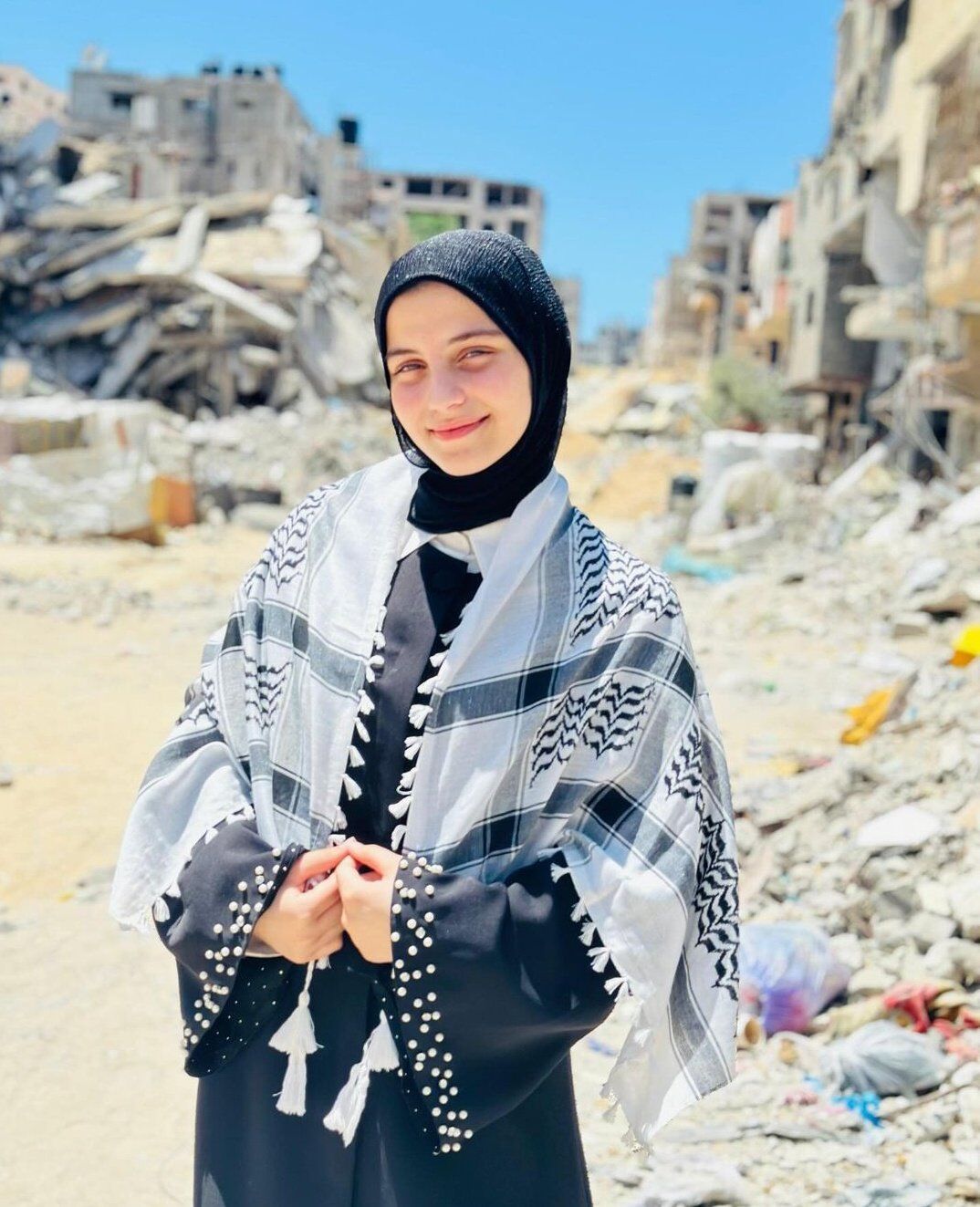
By Shireen Al Akka

Amid the scenes of widespread destruction caused by the Israeli extermination war, there is a deep wound in the heart of Gazans who passe by destroyed houses, and still feel the souls that made their last breaths from under the rubble, and did not find anyone to rescue them alive or even honor them with burial.

These are souls that were not given a farewell and whose names were not mentioned in the records of martyrs. No one knows about their attempts to cling to life, and how much they tried to call for help before their final breaths were quashed by the dust and stones.

Since November 2023, my young brother Tamer Al-Akka has been trapped under tons of rubble, along with his wife Hind Hassouna and their children Tala (8), Zainab (6), and Khalil (3), as well as 18 others from his wife’s family.

My 60-year-old father, Khalil Al-Akka, searched for them with both hands for three consecutive days before he was forced to flee south. He was unable to dig them up due to the lack of fuel and the occupation’s prevention of rescue operations.

He repeatedly appealed to Civil Defense to bring in equipment to remove the rubble and rescue the survivors whose cries for help could be heard, but to no avail. Meanwhile, giant trucks were brought in from the Israeli side to transport tons of rubble mixed with the blood of martyrs to the Gaza beach, to build a sea pier said for bringing in humanitarian aid to the Strip.

Their presence under the rubble overwhelmed us.

My father wanted to honor his son and grandchildren with a burial. Perhaps the tombstone would have read “Martyrdom at the age of roses”, while my mother wanted to embrace his strong, healthy body to make sure that he had passed away, but she did not have the chance to see him and could not believe that she had lost him forever with her daughter-in-law and grandchildren.

None of us believed the news of his passing, and we were satisfied with saying that “my brother is under the rubble”. We procrastinated a lot until we mourned him, and we kept betting on his release. Perhaps because his personality was characterized by stubbornness and always searching for a way out and solutions!

In a phone call with my brother, Moamen, who lives abroad, he told me: “I do not accept condolences… perhaps he was able to save himself and will contact us soon”. At that time, I was silent for a long time and adopted his opinion that we are all waiting!

A comforting friend told me that “it is better for him -my brother – to remain under the rubble, because the bodies of the martyrs scattered in the streets are being devoured by dogs”. I was upset by her expression, but these tragic scenes were actually published by the media. I felt a kind of relief about their fate.

The Euro-Mediterranean Human Rights Monitor documented, in early January, the occupation army’s attacks on at least 12 cemeteries in the Gaza Strip, deliberately vandalizing them and stealing dozens of bodies. The Observatory’s field team inspected the (Al-Batsh) cemetery east of Gaza – established in October 2023 to bury dozens of unidentified martyrs after they were crowded into Al-Shifa Hospital – and their exposure to bulldozing and military vehicles trampling on the bodies. “Israel” does not stop at killing people, but goes so far as to deprive their families of even visiting their graves.

This act was repeated from Beit Hanoun in northern Gaza to Rafah in the south, and one father expressed his concern on his Facebook page for his child buried in a cemetery in Rafah, after he was forced to flee it. People still fear for the fate of their children, whether they are dead or alive.

At the time, I felt my brother might have been luckier than the others, and it seemed these feelings were nothing more than a temporary anesthetic, before the volcano ignited inside me again, and I wondered: “What are their bodies like now? Have they turned into bones? How will we recognize them? Well, my family cannot mistake their son. We will recognize him by looking at his teeth! When he was 15 years old, he lost one of his front teeth and had another artificial one installed, but what about his wife and children? How will we recognize them? Especially since the house was full of displaced women and children?”

No one knows how many martyrs remained under the rubble, but a report by the British organization “Save the Children” indicates that about 21,000 children in Gaza were lost as a result of the war. They were either trapped under the rubble, detained in occupation prisons, buried in unknown graves, or lost to their families.

Thus, after eight months, I was once again curious to know the number and names of the people who were with my brother. My sister Shaimaa, who is now living its the seventh displacement in Deir al-Balah and is taking shelter with her two children, Mira and Abdullah, in a palm frond roofed hut with no walls, spoke to me.

She was surprised by my question and answered me with a more bizarre and deadly question: “Why are you asking? Did you find him? Did you find Tamer alive?” My body trembled. I couldn’t find anything to say to her, but I adopted her question, and it has now become my obsession. A decent burial is one of the most basic human rights.

The family of the deceased does not give up this right even in the darkest and most difficult times. The 70-year-old woman, Laila al-Qulaq, who is my relative on my father’s side, did not give up burying her son, Mohammed (35 years old), a person with disabilities. When the Israeli occupation “army” penetrated Tel al-Hawa in Gaza and ordered the residents to flee, while she was busy with her other children, Mohammed caught her off guard by looking out the window and was immediately sniped.

The “fighter” – that’s what those who knew her called her, because she was widowed at a young age and raised 7 orphans, 4 of whom were disabled, whom she took care of alone, watching them from behind the sewing machine that stitched together me the most beautiful dresses of my childhood – wanted to bury her son’s body, but the occupation “army” forced her to leave.

Burial with honor

The next morning, Laila Al-Qulaq returned with her stubbornness that made her forget her fear. She insisted on removing her son’s body from the house and burying him with honor. Laila also lost her sick little granddaughter who passed away due to lack of treatment. I don’t know where she is now because of the incessant displacements, her situation is like that of two million people in Gaza struggling for survival or immortality.

The Israeli aggression on Khan Yunis has been ongoing for more than two months. With the frequent news of the genocide, the number of martyrs, and my pursuit of my family who are living in perdition in displacement, I forgot to check on my childhood friend Fidaa Ayyad, who is also displaced to Khan Yunis, until she called me recently, and her voice was very weak, “I am not well.”

I felt terrified and prepared myself for something great that I did not imagine would be this heavy, “Badr is gone, Shireen, Badr Badr,” and her voice disappeared. I lost contact with Fidaa.

Badr (14 years old) was his mother’s right hand in completing the tent work. He makes the bed, cleans the dishes, and collects firewood to light the fire in the oven. That day, he left his mother alone to bake loaves of bread. She turned around to look for him, thinking that he had gone away to play with his peers, especially since he insisted that day on taking an early shower and wearing his older brother’s shirt.

Badr moved away from the hard work next to the oven in the hottest month of the year… July! He went to the corner of the street. His father saw him and asked him to accompany him on a quick walk, but he also hesitated to accompany him. He stayed in his place on the corner of Al-Attar Street and was soon bombed, killing more than 28 martyrs and twice that number of wounded. His mother got up immediately and left the loaves of bread burning behind her. She went to look for Badr specifically, without his four brothers.

I learned these details later after many attempts to contact her. I hesitated a lot before asking her the question that had become my obsession: “Did you get to say goodbye to him? Did he get a grave?” She quickly answered me: “Yes, they brought him to me and I said goodbye to him, and yes, we buried him. My son has a grave and we buried him in Khan Younis, next to many martyrs.” She continued: “He who is not buried will be lost!” I felt the sting of her words, but I cannot blame her. We were silent, then she added anxiously: “When we go to Gaza, will we leave him here?” I stopped at that moment and I had been pacing the room back and forth throughout the call. I stopped and asked her to explain: “What do you mean?”

Shireen Al-Akka is a writer from Gaza and this article was originally printed from Arabic in the Al Mayadeen website.

Continue reading