Gaza, Surrealism and Empty Stomachs
 CrossFireArabia
- July 31, 2025
By Michael Jansen
“Let them eat cake” is a careless remark traditionally but falsely attributed to France’s Queen Marie Antoinette at a time peasants had no bread and were starving. She and her husband King Louis the 16th were beheaded in 1793 during the French Revolution which overthrew the monarchy.
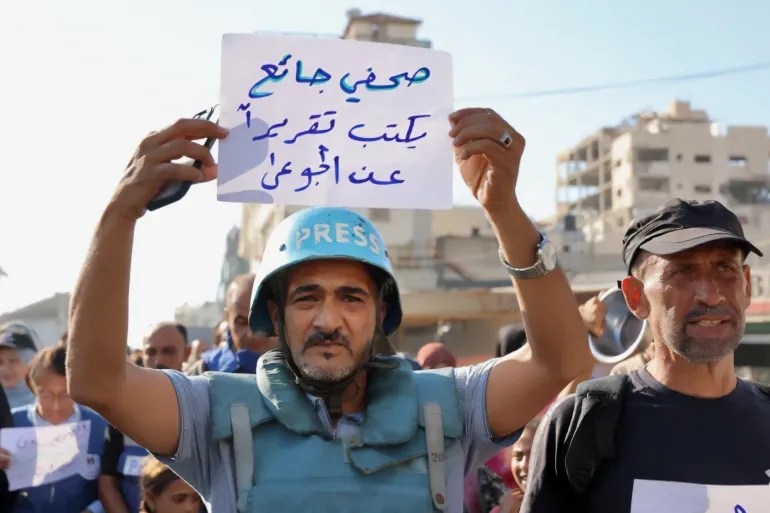
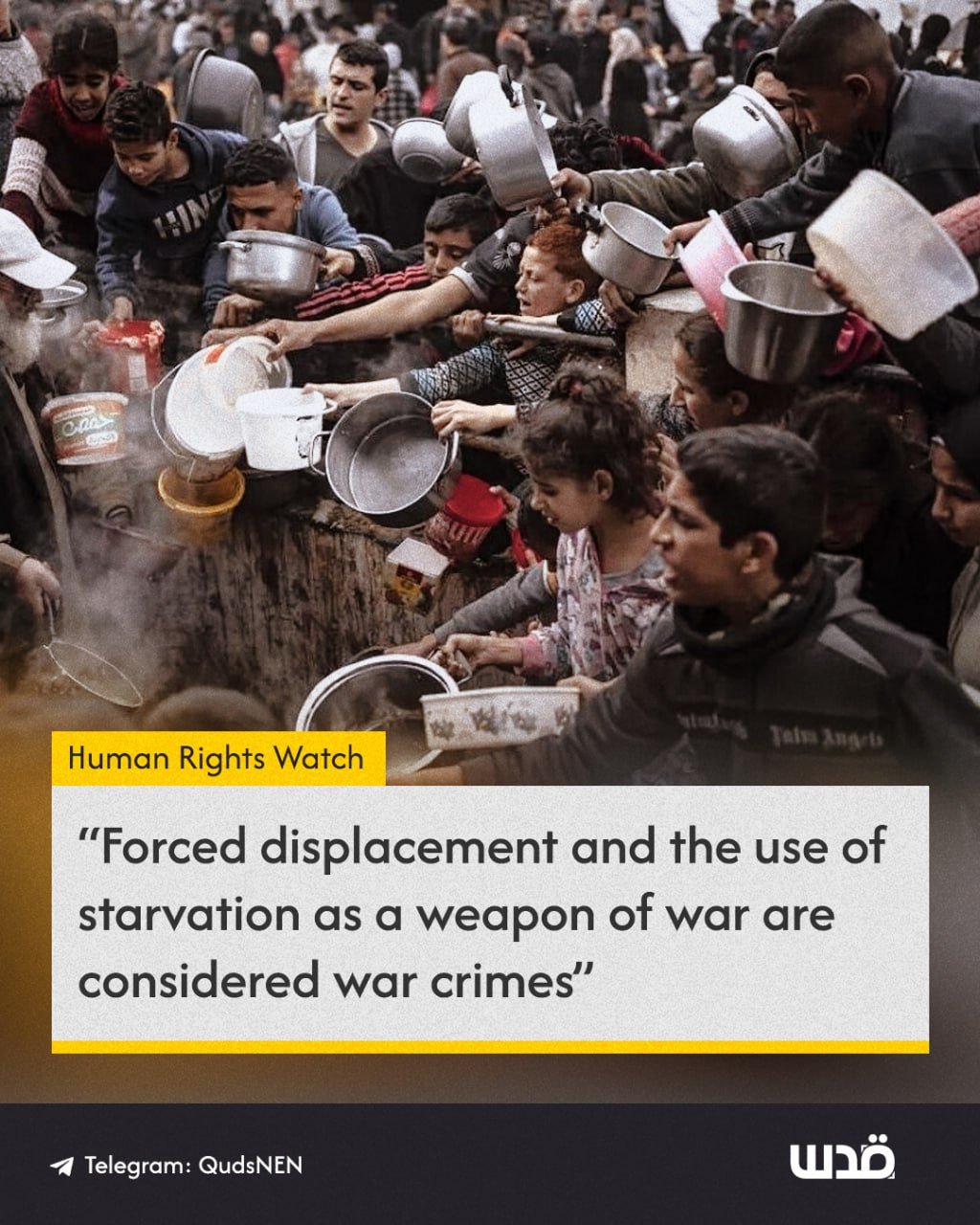
This past week Donald Trump spent five days in Scotland playing golf at two courses which he owns while 2.3 million Palestinians faced famine and starvation due to a four-and-a-half-month Israeli blockade of Gaza. During a press conference with British Prime Minister Keir Starmer, Trump finally acknowledged there is “real starvation” in Gaza. Later in the day, he claimed he had “told Israel maybe they have to do it a different way.” This suggested by adopting a new, less punitive policy. He was speaking after Egyptian and Qatari-mediated negotiations on a 60-day ceasefire had broken down, the US and Israel blamed Hamas and left Doha, delaying a full resumption of aid.
Hamas had demanded a return to UN and international agency deliveries of water, food, medicine, and fuel which have been blocked by Israel since March 2nd, Israeli withdrawal from areas of Gaza occupied since Israel broke the ceasefire on March 18th, and an end to Israel’s war on Gaza once the ceasefire expired.
Israeli Prime Minister Binyamin Netanyahu had refused all these demands and was backed up by his good friend Donald Trump. Instead of thinking of starving Gazans, Trump stated, “Hamas didn’t really want to make a deal. I think they want to die, and it’s very bad. It got to the point where you [Israel] have to finish the job.” He did at that time admit that images of starving children in Gaza were “terrible” but added, “They’re stealing the food,” echoing the Israeli accusation that Hamas is guilty of depriving Gazans of food. This has been denied by the World Food Programme and the UN agency looking after Palestinian refugees, UNRWA.
Israel has been fighting Hamas since October 7th, 2023, when it killed 1,200 and abducted 250, but Israel’s armed forces have failed to “finish the job.” Trump has given Israel permission to fight on indefinitely without totatally ending the blockade.
Alarmed by the “humanitarian catastrophe” in Gaza, Germany, France and Britian have called on Israel to end the conflict, “immediately lift restrictions on the flow of aid and urgently allow UN and humanitarian NGOs to resume operations. “Israel must uphold its obligations under international humanitarian law.”
Pressure from these three countries, the UN, and international humanitarian agencies has compelled Israel to declare 10-hour tactical pauses in the fighting in three areas of Gaza. During these pauses which could last a week or so, Israel is to allow air drops of supplies by Jordan, the Emirates and Israel, permit scores of lorries laden with aid to enter the strip, and create “humanitarian corridors” for aid deliveries. These “concessions” are far from a ceasefire and the reopening of all crossings into Gaza for between 500-600 lorries a day. Furthermore, this number must be greatly increased to compensate for Israel’s blockade which has deprived Gazans of sustenance as well as water, electricity and fuel.
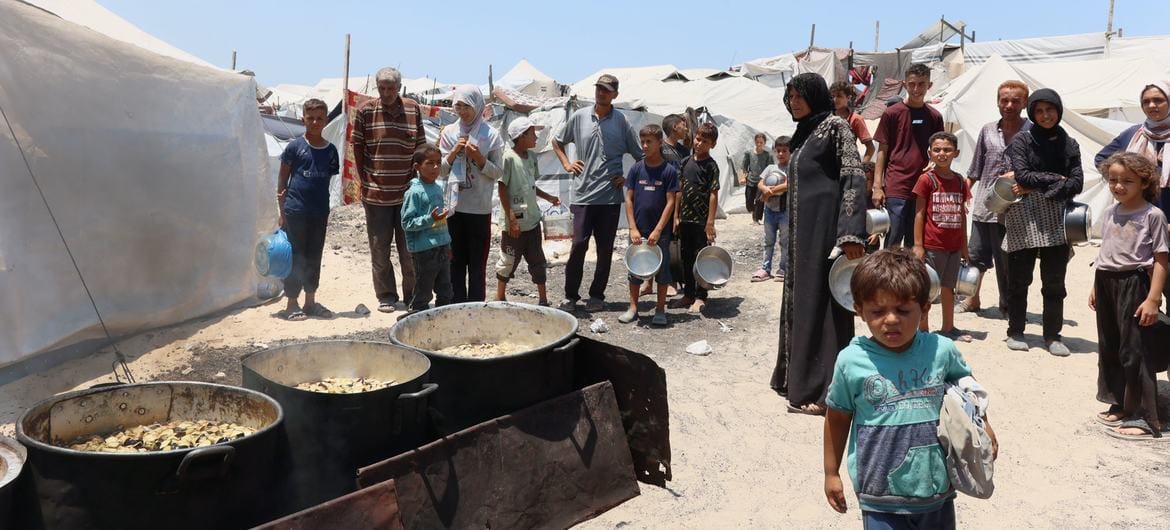
Specialised food to treat malnutrition must be included as starving people cannot absorb normal food. Parcels being delivered contain rice, lentils, and beans which cannot be cooked by many of the 90 per cent of Palestinians who have been displaced from their homes and live in tents in crowded camps. There is no wood in Gaza for fires and Palestinians rely on rubbish and plastic which pollute the environment. Palestinians cannot survive on the other items the parcels: sugar, salt, and flour. The latter they can exchange at bakeries for bread.
If ever the previous flow of humanitarian aid is restored, Gazans will need fresh vegetables, fruit, meat and chicken to revert to a nutritious diet. They used to be raised on Gaza’s farms or brought into Gaza by commercial firms from Egypt, Israel, and the West Bank.
In Sunday’s New York Times, World Central Kitchen (WCK) founder Jose Andres proposed a programme which could help resolve Gaza’s hunger crisis. He called for the reopening by Israel of humanitarian corridors to all aid groups working in Gaza and permission to operate multiple communal kitchens. While WCK has been providing hot meals in Gaza since the war began in 2023, he proposed an increase in the production from thousands to one million hot meals a day and to feed families where they dwell. He said five large cooking facilities would have to be built in safe zones “where bulk supplies can be delivered, prepared and distributed without risk of violence.” These kitchens “would supply hundreds of smaller community kitchens “at the neighbourhood level throughout Gaza, empowering communities as essential partners.”
This project depends on obtaining the agreement of Israel and equipment, raw food and fuel supplies which could be provided by aid agencies and concerned governments.
The author is a columnist for the Jordan Times