For Israel The ‘Yellow Line’ is Occupation

By Ismail Al Sharif

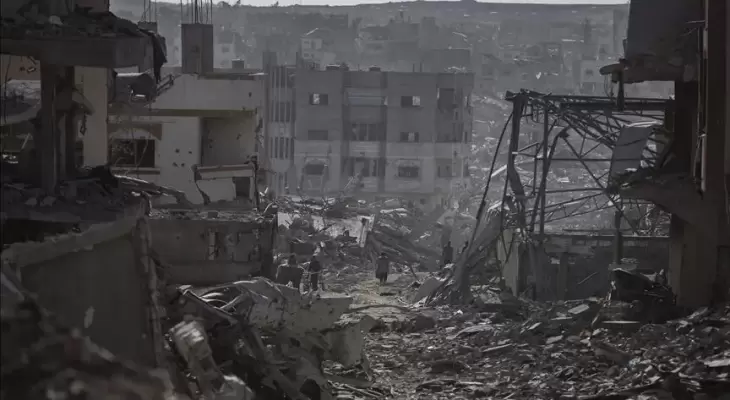
Two months after the signing of the ceasefire, that remains merely ink on paper, the region is yet to witness a fundamental shift to the second phase: A transition from a strategy of destruction to a withdrawal mechanism, and from the logic of military operations to a framework of international administration, paving the way for a political process to ultimately lead to the establishment of a sovereign Palestinian state.

However, the realities on the ground today proves this path is nothing more than a theoretical assumption quickly crumbling in the face of a complex reality.

Two months after the supposed ceasefire, a completely different truth emerges; Israel continues its ethnic cleansing of the Gaza Strip. Palestinian civilians are dying from the bitter cold, just as they previously perished from the bombardment, while unilateral decisions are being made whilst deepening the chasm of mistrust between the parties supposedly partnering in ending this humanitarian tragedy and implementing the Donald Trump plan, who claims to have ended a three-thousand-year-old war.

What was supposed to be a temporary withdrawal line for the Israeli army has, according to its generals, become a new de facto border called the “Yellow Line,” swallowing up more than half of the Gaza Strip.

Early this month, the army’s chief of staff Eyal Zamir addressed his troops, asserting Israel “now exercises effective control over vast areas of the Strip” and its military units “will maintain their positions on these defensive lines.” He explicitly declared “the Yellow Line represents a new border of an advanced line of defense to protect Israeli society, and serves as a framework for the ongoing military operational activity.”

From these comments it can be understood the ceasefire line is no longer a temporary, transitional measure, but has effectively become a forcibly-imposed border, a permanent defensive zone, and a legal framework that legitimizes a long-term Israeli military presence within territories that, until recently, were an integral part of the Palestinian territories.

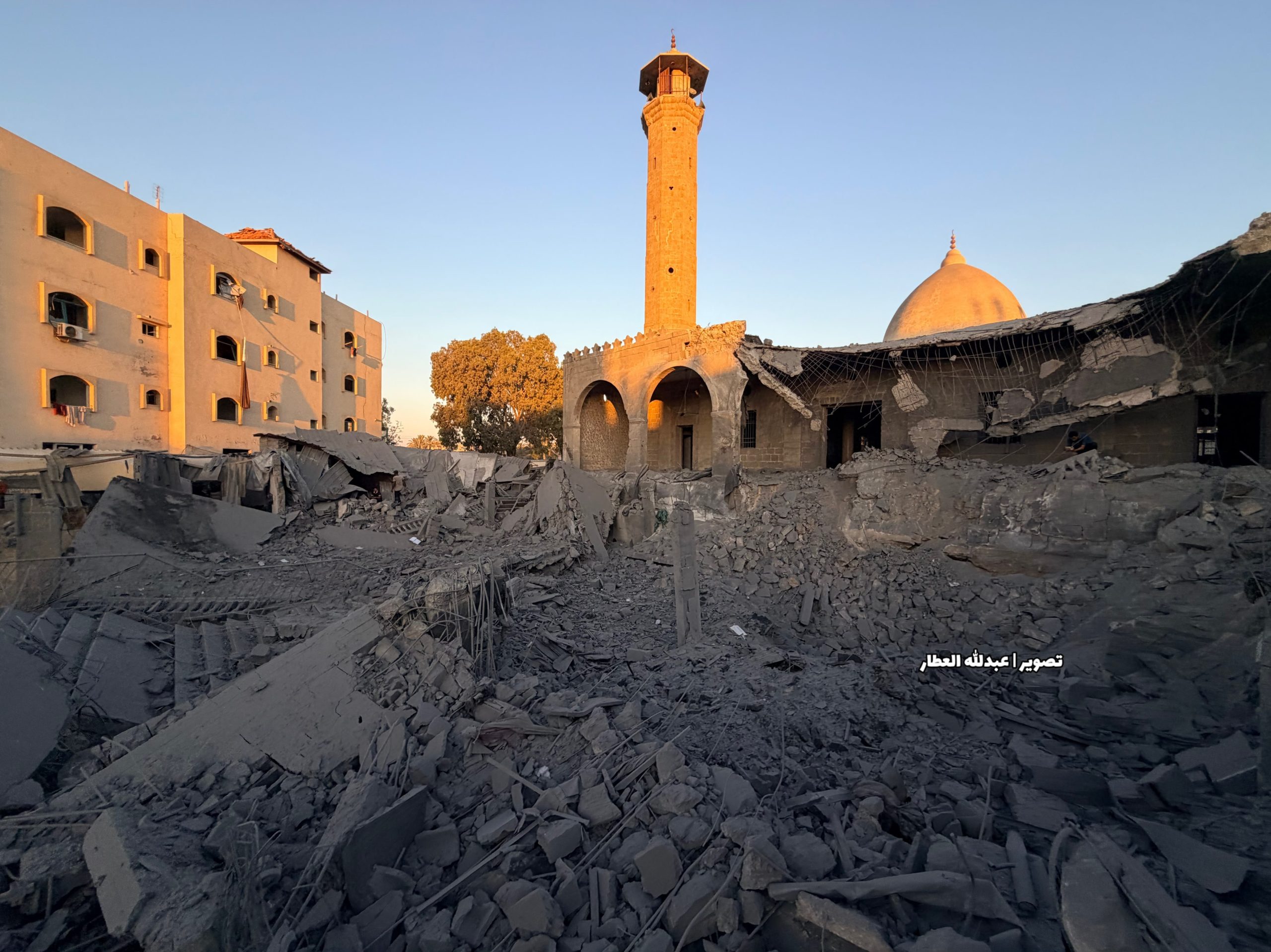
These pronouncements are not merely political rhetoric. The “Yellow Line” is now embodied on the ground by massive, yellow-painted concrete blocks that bisect the Gaza Strip to a depth of between 1.5 and 6.5 kilometers. Before the recent escalation, the Strip extended about 41 kilometers in length and between 6 and 12 kilometers in width. As it stands however, Israel has tightened its grip on more than half of this area in one of the world’s most densely-populated regions. This has exacerbated overcrowding, drastically reduced usable land, and devastated the agricultural sector, thus intensifying the humanitarian catastrophe, entrenching mass forced displacement, deepening the destruction, and contributing to the complete collapse of the institutional infrastructure.

The Zamir statements cannot be separated from the context of the pronouncements of war criminal Benjamin Netanyahu, who, from northern occupied Palestine, spoke of the expansion of his northern and northeastern borders by establishing a demilitarized buffer zone from the Syrian capital, Damascus, to the occupied Golan Heights. This is being made with the advance of his military forces into the UN-monitored buffer zone and the occupation of the Syrian side of Mount Hermon (Jabal al-Sheikh). Also, Israel is presently establishing establishing a “buffer zone” in the territory of southern Lebanon, destroying border villages and/or leaving them completely depopulated and deploying military reinforcements at strategic border points to impose a new security and geopolitical reality by force.

According to the Trump’s plan the second phase was supposed to begin after Hamas fulfilled its commitment to release all Israeli captives, both alive and deceased, and after Netanyahu announced his readiness to move to this phase.

However, this transition was contingent on two fundamental conditions: The deployment of international peacekeeping forces and the complete disarmament of Hamas. Herein lies the complexity of the issue; Netanyahu has publicly expressed skepticism about the ability of any international force to carry out the disarmament mission and has categorically stated that Hamas’s disarmament will be achieved through coercive military means and under the direct supervision of Israeli forces.

In contrast, Hamas maintains its categorical refusal to disarm except within a comprehensive framework that includes the formation of a unified Palestinian ‘technocratic” government and a complete withdrawal of Israeli occupation forces. At a minimum, Hamas has expressed its willingness to store its weapons within an agreed-upon mechanism as part of a comprehensive political process, as confirmed by Bassem Naim, a member of the movement’s political bureau, in recent statements.

The current situation reveals that Israel is treating the existing circumstances as a strategic opportunity to expand its geographical borders and exert maximum pressure on the Palestinian people, paving the way for what it calls “voluntary displacement” under a humanitarian pretext—a pretext it itself created.

Simultaneously, it is deliberately and systematically obstructing the transition to the second phase of the Trump agreement by continuing its policies of occupation, killing, and destruction under the guise of a ceasefire.

It is clear this arrangement serves its strategic interests and intersects with broader Western interests, with the ultimate result being the aborting of any chance of establishing a sovereign Palestinian state, and keeping the Gaza Strip – as it has always been – a besieged enclave, which Israel exploits to achieve its political agenda and strengthen its internal cohesion, and turning it into a field laboratory in which various military weapons, biological tools and advanced technological techniques are tested, but with a reduction in the population, which allows it to continue what is strategically known as “managing the conflict” in the long term.

This article by Ismail Al Sharif was originally written in Arabic for the Addustour daily and published in Crossfirearabia.com.

Continue reading
German Press Council Slams BILD Over Bias

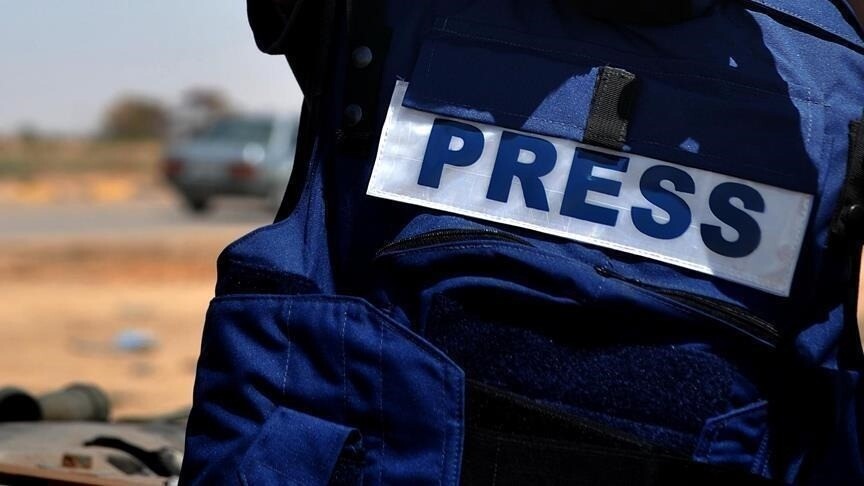
The German Press Council has issued a formal reprimand to BILD.DE over its pro-Israel coverage of the killing of Palestinian journalist Anas Al-Sharif in Gaza.

The council said the report violated core journalistic ethics. It cited a serious breach of accuracy and a grave attack on the journalist’s personal dignity.

The decision followed 328 collective complaints. All targeted an August article on BILD.DE about Al-Sharif, an Al Jazeera correspondent in Gaza.

The article echoed claims by the Israeli army. It claimed that Al-Sharif led a Hamas cell. The headline presented this claim as fact. It read: “Terrorist disguised as journalist killed in Gaza.”

Editors provided no sufficient objective evidence. The report triggered wide criticism. BILD later changed the headline.

The Press Council’s complaints committee ruled unanimously. It said the coverage showed gross disregard for due diligence under Article 2 of the Press Code. It also found a severe violation of personal honor under Article 9.

Because of the seriousness, the council issued a formal reprimand. This is its strongest disciplinary measure.

The committee reached a different conclusion on other reports. Two articles with a total of 15 complaints did not violate ethics. One used the headline: “Army: Killed Al Jazeera reporter received salary from Hamas.” Another asked a question: “Israel kills Gaza reporter: Journalist or terrorist?”

In both cases, the outlets reported the allegation without adopting it. The council rejected the complaints as “unfounded.”

The German Press Council stressed its independence. It said decisions rely only on ethical standards in the Press Code. Politics and personal views play no role according to the Quds News Network.

Anas Al-Sharif was born in 1996 in Jabalia refugee camp in Gaza. He worked as an Al Jazeera correspondent during Israel’s genocide in the enclave.

He became known for documenting massacres and the humanitarian catastrophe, despite threats. He was killed on August 10, 2025, in a direct Israeli strike on a journalists’ tent near Al-Shifa Hospital in Gaza City.

The killing sparked international condemnation. Al Jazeera denounced the act as a deliberate attack on press freedom.

Since October 7, 2023, the Press Council has received more than 650 complaints linked to Middle East coverage. In 2025 alone, it recorded 429 complaints. They targeted more than 200 articles across German media.

Continue reading
At 61: One More Israeli Soldier Kills Himself

An Israeli soldier killed himself in a military base in northern Israel, taking the suicide-related death toll to 61 since the beginning of the Gaza war in October 2023, local media said.

According to the Haaretz newspaper, a soldier serving compulsory military service sustained critical injuries after shooting himself inside a base and was pronounced dead Tuesday evening in a hospital.

A military statement earlier said that a soldier was seriously injured in a shooting at a military base in northern Israel and was taken to the hospital, where he later died, noting that the military police had opened an investigation into the incident.

A total of 279 Israeli soldiers have attempted to commit suicide from the beginning of 2024 until July 2025, amounting to roughly one completed suicide for every seven attempts, according to a report by the Knesset Research and Information Center.

The Israeli army earlier confirmed that 48 soldiers had taken their own lives during military service since the start of the war in Gaza in October 2023.

At least 13 soldiers also died of suicide outside military service due to psychological problems, including six since the beginning of this year; raising the total number of suicides since the start of the war to 61, Haaretz said.

Twenty Israeli soldiers died by suicide in 2024, and 16 others since the beginning of this year until July, Haaretz reported, noting that since then at least four additional soldiers have taken their own lives.

In October, Israeli Chief of Staff Eyal Zamir acknowledged a worsening mental health crisis within the army, saying thousands of soldiers were receiving psychological treatment. He urged commanders to stay alert, detect mental health problems within their units, and ensure that soldiers seek immediate treatment.

Nearly 10,000 Israeli soldiers out of 19,000 injured in Gaza are suffering from psychological disorders such as post-traumatic stress disorder and are being treated at the Defense Ministry’s Rehabilitation Department, according to a previous report by the public broadcaster KAN published in late July.

Israel has killed nearly 70,700 victims, mostly women and children, and injured more than 171,000 in Gaza since October 2023 and reduced the enclave to rubble according to Anadolu.

Continue reading
Destroying The Ceasefire

Dr Marwan Asmar

Since the signing of the ceasefire on 10th October 2025 Israel killed at least 347 Palestinians in the Gaza Strip. 

Although the Donald Trump team officials in the White House keeps saying how they satisfied are about the maintenance of the Gaza ceasefire, the truce is in a precarious mode. Many expect the ceasefire to be broken any day because of the bloody Israeli military actions and fire on the whole of the Gaza Strip.

Since it took effect last October, Israel violated the truce over 500 times. Israel begun attacking the Gaza Strip at the end of the first week of the ceasefire, and continued thereafter with the average daily killed standing at seven at least.

However, the highest number of those killed was on 29 October, 2025, when 109 people were slaughtered and a reminder of the carnage days of the war. But after that, the number went down significantly. On 19 October the number of those killed went down to 45, 33 on 19 November and at least 21 people on 23 November. Here as well, and although figures may vary, UN experts say at least 70 of those killed were children. Did they pose a threat to the mighty military machine?

This is not to say anything about the number of those injured, a figure conservatively put at 889 and likely to increase as the days go by especially since there is nobody to stop the Israelis.

While the number of those murdered may have gone down drastically, the Israeli war machine continues to bomb different areas of Gaza, from its north, center and south of the Strip, neighborhoods, communities, cities, towns and refugee camps that exist only in names but already lie in debris, heaps of rubbles and destruction.

Biet Hanoon, Jabalia, Biet Lahia, Gaza City, Al Maghazi, Khan Younis and Rafah and more, once thriving population centers have become mounts of rubble and wreckage unfit for human habitations, gorges stumped into the earth with nothing but skewed bricks and mortar.

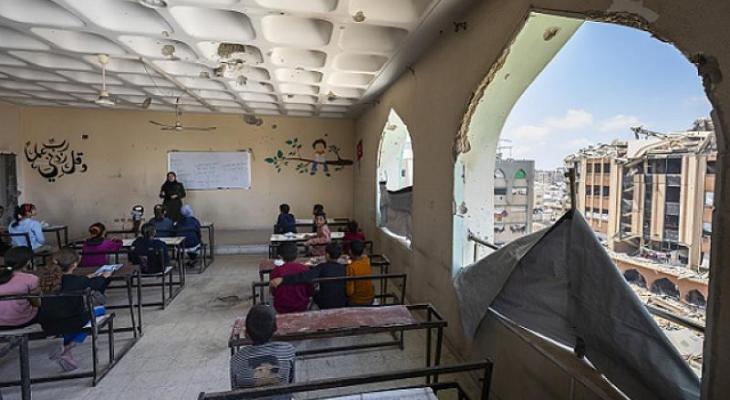
The Israeli army, and through its air force, has continued to re-bomb schools, mosques, residential building and tattered infrastructures and/or what remained of them. Israeli pilots and/or quite often through drones, are flying over sorrow horizons of destroyed mounts and bombing what is left of a past society, all in search of illusive Palestinian groups they were unable to “flush out” in the last two years of their genocide of Gaza.

The genocide has created a sence of acceptable madness among the Israeli populace that “you bomb as much as you can” twice, thrice, four times and more so the vicious cycle of violence is indelibly printed on helpless civilians who nevertheless, refuse to be expunged.  

Today, Gaza is a horror story with its new cold, calculated and unforegiven Israeli masters refusing to accept their new stalemate. They continue to occupy 53 percent of the enclave with them unwilling to quench their thirst for blood but leap into the misery they have created. Just after 10 October, they have demolished 1500 buildings in the areas they control and this is just the beginning for Israel is planning for a long occupation despite the US plan outlined by president Donald Trump on 29 September to end the war on Gaza and start to redevelop the enclave. This is certainly a pipedream.

The killings continue as Israel pays lip service to a US plan outlined at the heart of which is dismantling Hamas and the rest of the Palestinian resistance groups. But the story as plotted by the new political masters of Trump et el., begins here. With the ending of Hamas, the redevelopment of Gaza is supposed to start.

However, everyone is still stuck at stage of one of the plan. Hamas has already set free the 20 remaining Israeli hostages and is yet to handover the final two of the 28 dead hostages it already delivered to the Israeli hostages. God only knows when they will be delivered.

The movement says it has been finding it extremely difficult to search for the remains of the hostages and finding the final two would be a grueling task because of the mass bombing of the enclave whose geography has been drastically altered with people no longer knowing where former places, houses and roads no longer are. They have become alien to a society they lived in all their lives.

Of course, this has become music to the ears of Israeli Prime Minister Benjamin Netanyahu and his extremist government who feel they can continue to bomb Gaza under the eyes of the Americans in a pretext that the final remains of the hostages are still to be delivered and that Israel continues to fight Hamas.

Within this context many observers are saying Israel wants to “lock” the Trump 30-point plan in phase I and doesn’t want to move to stage II because that would mean it’s war objectives was for nothing apart from destroying Gaza: No Palestinian transfer, No end to Hamas and the calls for a Palestinian state growing by the majority of countries of the world. 

Despite the close alliance between the United States and Israel, the ultimate aim of the Trump plan – being its end result – is the call for a Palestinian state. Netanyahu has long realized this and this is why he wants to lock Gaza into an initial ceasefire phase in which he will continue to call the violent shots on Gaza.

Continue reading
The Olive Tree Defies Israel

By Ali Osman Karaoglu  

A lesser-known dimension of Israel’s ongoing occupation of Palestine since 1967 is the systematic destruction of the Palestinian people’s economic resources and means of livelihood. One of the most important sources of income for Palestinians is olive cultivation – so much so that the olive tree is regarded as one of Palestine’s national symbols. Palestinian poet Mahmoud Darwish captured this symbolism in his famous words: “Here we remain, as long as thyme and olives remain.”

Beyond its symbolic value, the olive tree is the main source of income for nearly 80,000 Palestinian families. According to UN data, about 48% of the agricultural land in the West Bank and Gaza is covered with olive trees. Olive production contributes around 14% to the Palestinian economy. About 93% of harvested olives are used for olive oil production, while the remainder is used to make soap, table olives, and pickles.  

Usurpation of olive trees: Israel’s assault on nature and identity

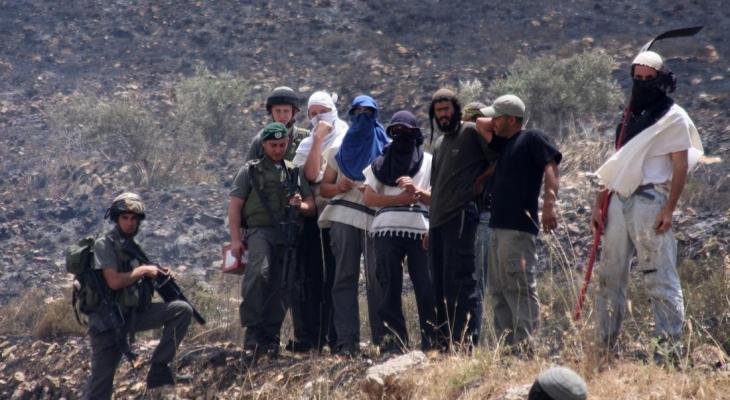
Recently, Israeli settlers in the West Bank prevented Palestinians from harvesting olives, an essential source of livelihood, and destroyed 13,000 olive trees. Such actions, either directly committed or condoned by Israeli authorities, are known and documented as systematic practices.   

According to various international reports, Israel has destroyed around 800,000 olive trees over the past 20 years, and more than 2.5 million trees since 1967.

Palestinians face great difficulty in harvesting and protecting their olive trees. Since the Oslo Accords, Israel has exercised full control over 60% of the West Bank and requires Palestinians entering these areas to obtain a “permit issued by Israeli authorities.”

Farmers are therefore forced to secure permission to access their own land, but this permit system is largely arbitrary. There are no clear criteria specifying what conditions Palestinian applicants must meet to obtain a permit.

Even when they provide ownership documents and pass “security” checks, permits are often issued only to the person named on the deed, excluding other family members from entering the land. The permits are typically short-term, and each time they expire, farmers must reapply without any guarantee of renewal.

According to UN data, nearly half of permit applications are rejected on arbitrary grounds, turning the system into a policy of harassment and attrition. The same restrictive policy applies to bringing in agricultural necessities such as tractors, equipment, and fertilizers.

Over time, many Palestinians who once cultivated other crops have converted their land into olive groves, since olive trees can survive even without intensive care.  

How Israel’s seizure of olive trees violates international law

The destruction of olive trees in the occupied Palestinian territories occurs almost every year. Thousands of trees are destroyed annually during Israeli military operations or through attacks by settlers. Such incidents are rarely taken seriously or investigated by police or other public authorities.

Israeli soldiers frequently fail to protect Palestinians from settler attacks and, in many cases, act against the Palestinians themselves when they try to defend their land and trees.

In fact, the destruction of Palestinian farmlands and olive trees violates international law. Even Israel’s own Supreme Court has recognized the illegality of arbitrary practices in the “Morar v. IDF Commander” case.

In that case, Palestinian farmers appealed to the Israeli Supreme Court after a military commander denied them access to their farmland. The commander claimed the closure was intended to “protect Palestinian farmers from settler harassment.” The plaintiffs argued, however, that Israeli settlers systematically harass, assault, and damage the property of Palestinian villagers, while the Israeli army fails to intervene to stop this violence or take necessary measures to protect Palestinians and their agricultural products.

The court ruled that the army must take steps to prevent settler violence, stating that the proper way to protect Palestinian farmers from harassment is for Israeli military authorities to implement necessary security measures and impose restrictions on the settlers responsible for unlawful actions. Nevertheless, Israeli authorities continue to disregard their own court’s ruling and persist with arbitrary practices.

Under international humanitarian law, causing environmental damage as a military tactic is prohibited. The law stipulates that “care shall be taken to protect the natural environment against widespread, long-term, and severe damage during armed conflict.” This protection includes prohibiting methods or means of warfare that are intended – or expected – to cause such damage, as these may endanger the health or survival of the population.

Palestinian territories have been under Israeli occupation since 1967. This ongoing occupation constitutes a “continuing act of aggression,” and under the provisions of the 1949 Fourth Geneva Convention, imposes obligations on the occupying power.

The occupying power is responsible for ensuring a secure environment that allows the local population to meet its daily needs, and must protect civilians against looting and destruction of property.

Moreover, the damages caused by Israel – an apartheid regime – to the environment and to olive trees are considered war crimes under Article 8 of the Rome Statute.

UN Security Council resolutions also emphasize that Israel must refrain from harming the environment and is obligated to prevent settler provocations. Israel has repeatedly violated these obligations and continues to act in breach of international law.

It is known that Israel’s policy of destroying olive trees aims both to make its occupation permanent and to clear land for the establishment of future settlements. Therefore, Israel’s environmental crimes should be added to the cases currently being pursued against it at the International Court of Justice (ICJ) and the International Criminal Court (ICC).  

The author who contributed this piece to Anadolu, is a faculty member in the Department of International Law at Yalova University’s Faculty of Law. 

Continue reading