‘We Are Dying’: Cancer Patients Plead For Treatment

As World Cancer Day is marked on Wednesday, thousands of patients in Gaza face worsening illness, untreated pain and closed crossings – despite the limited opening of the vital route through Rafah this week.

“We are dying. Every day, between two and three patients die inside this hospital,” says Munther Abu Foul, a cancer patient lying on his bed in Gaza’s largest hospital. “I can’t get out of bed because of the pain. We want a solution – open the crossings.”

His words capture the reality facing thousands of cancer patients across the Strip, where access to specialist care has collapsed and evacuation for treatment abroad remains out of reach for many.

Local health organisations warn that around 11,000 patients are currently deprived of specialised or diagnostic cancer treatment inside Gaza. 

Some 4,000 patients who received medical referrals to hospitals outside the Strip have been waiting for more than two years to travel.

UN News visited Al-Shifa Hospital in Gaza City, documenting the dire conditions inside its oncology department. Patients crowd corridors and wards, waiting for consultations or treatments that are no longer available. 

Essential medicines and equipment are in short supply, while many patients endure chronic pain that leaves them barely able to move.

Raed Abu Warda, a man in a green jacket, comforts his brother Hamid Abu Warda, a cancer patient, at Al-Shifa Hospital in Gaza City.

UN News

A man takes care of his brother, a cancer patient at Al-Shifa hospital in Gaza City.

‘Every day, two or three patients die’

Mr. Abu Foul flips through his medical transfer papers, issued long ago for treatment outside Gaza. He has not been able to travel for more than two years.

“The health situation in the Gaza Strip is dilapidated,” he says. “There is no treatment or medicines, and we are dying. Every day, two to three patients die here inside this hospital. I can’t get out of bed because of the pain.”

He appeals directly for help. “We want a solution. Open the crossings properly so that God will release us from this suffering. Everyone will be held accountable.”

Nearby, Mohamed Hammou tends to his elderly mother, who is also battling cancer. He says families are forced to watch loved ones deteriorate without care.

We want a solution. Open the crossings properly so that God will release us from this suffering – Abu Foul

“This is how we stand in front of a patient who is dying, without treatment or any medical facilities that help them recover,” he says. “This does not please God and it does not satisfy people. We call on Islamic, Arab and international nations to look at the sick with mercy.”

A brother in pain

In another ward, Raed Abu Warda cares for his brother Hamid, whose cancer has worsened after long delays in treatment. What began as a small, benign illness has become a life-threatening condition.

“He has been suffering from cancer for two years,” Raed explains. “He waited all this time for the crossing to open so he could be treated outside. His pain has increased, as you can see.”

He gestures towards a wound that has opened beneath his brother’s chin. “The disease has created this wound, and his condition is getting worse every day. I stand watching my brother and mourning his condition because of the pain.”

Mundhir Abu Foul, a cancer patient in Gaza, sits on a hospital bed with his hands open, appearing to speak or gesture.

UN News

The health situation in the Gaza Strip is deteriorating for those suffering from life-threatening cancers, despite the limited opening of the Rafah crossing.

The number of patients seeking care at Gaza’s oncology departments continues to rise, even as hospitals face severe shortages of medicines, equipment and specialised staff. For newly diagnosed patients, the future is increasingly uncertain.

Evacuations far short of needs

With the limited reopening of the Rafah crossing, the World Health Organization (WHO) is supporting the evacuation of patients and their companions from Gaza, focusing on ensuring safe transport. Yet the scale of need far outstrips what is currently possible.

All we ask for is a way to live

More than 18,000 patients – including around 4,000 children – are waiting to be evacuated abroad for medical treatment, according to WHO.

The UN Office for the Coordination of Humanitarian Affairs (OCHA) reported last week that Gaza’s Ministry of Health had recorded more than 1,200 patient deaths while people were waiting for medical evacuation. Around 4,000 cancer patients remain on critical waiting lists, trapped between closed crossings and a health system pushed beyond its limits.

For patients like Munther Abu Foul, time is running out. “We are dying,” he repeats. “All we ask for is a way to live.” – UN News

Continue reading
Rafah Crossing: 1st Gaza Returnese Speak of Humiliation, Insults and Blindfolding

The woman described her journey through the Israeli checkpoints as “like death”. She said this while fighting back tears as her sojourn was filled with fear and suffering.

She and her mother, along with another lady, faced humiliation and insults, and subjected to arbitrary arrest, blindfolding, and the confiscation of her personal belongings and threatened and intimidated during their detention, she added.

Ordeal at Israeli Checkpoints

In other shocking testimonies from women returning through the Rafah Crossing, one lady said the Israeli army tried to arrest her and detained her for about an hour-and-a-half, then released her with difficulty. She said what she experienced in her detention was among the harshest moments she had ever endured.

Another elderly woman recounted her suffering with anguish and pain, saying about 50 people were preparing to enter Gaza, but the Israeli army allowed only 12 to cross and turned the rest back. She added: “They humiliated us terribly, and there was a long wait.”

She added the bus they were traveling on was escorted by two jeeps, one in front and one behind, before being taken to an area where the army was deployed. There, they were subjected to an interrogation that lasted two to three hours.

The returnees arrived on a bus carrying only 12 passengers, including three children and the rest women, at the Nasser Medical Complex, which had been prepared to receive those returning from outside the Gaza Strip. Their harrowing journey lasted approximately 20 hours, during which they were subjected to thorough searches and lengthy interrogations by the Israeli army.

These testimonies come amidst a limited return of travelers through the Rafah Crossing, under tight security measures and, according to the returnees, severe humanitarian hardship.

Anger and Resentment on Social Media

Their testimonies sparked widespread anger among Gaza residents on the social media who expressed their dismay at the suffering endured by the returnees. They emphasized their journey epitomized the ordeal and suffering experienced by residents of the Gaza Strip.

Social media users described the humanitarian situation at the crossing as extremely harsh, citing harrowing accounts from those who returned during its partial opening. These accounts detailed the abuse and violations they suffered at the hands of the Israeli occupation forces.

Others described the limited number of travelers as a microcosm of the entire situation, emphasizing that the partial opening of the crossing was merely symbolic, while the suffering was far greater than the number of people allowed to cross.

They pointed out the phrase “No one is allowed to leave Gaza” encapsulates all the forms of death and suffering endured by Palestinians simply for being Palestinian.

They also described what happened on the first day the crossing was opened as a complete farce, with only about 10 people crossing, compared to the hundreds or thousands who crossed before or at the beginning of the war.

Social media users pointed out that the Israeli-established crossing in the center of Gaza has become a point of interrogation, extortion, arrest, and recruitment. Returnees are subjected to lengthy searches and threats of detention for hours, in addition to strict restrictions on their belongings. This will deprive hundreds of thousands of people of their right to leave or return, jeopardizing their future.

Several users added that these measures are leading to widespread fear and constant anxiety among Gaza residents. They noted that families now dread any attempt to cross, and that opening the crossing in such a symbolic manner has not alleviated their suffering but rather exacerbated their sense of injustice and humiliation.

Last Monday, the Rafah land crossing was officially opened in both directions for the first time since May 2014, following a trial period on Sunday. This comes as part of the implementation of the second phase of the ceasefire agreement between Israel and Hamas. – Al Jazeera

Continue reading
Israel Kills 31 Palestinians in One Day

Israeli forces killed at least 31 Palestinians in Gaza on Saturday as airstrikes and shelling continued across the besieged enclave, despite a Trump-brokered ceasefire.

The Ministry of Health said dozens of civilians were killed or wounded in new attacks by the Israeli army, while Hamas stated that Israel is deliberately undermining the ceasefire agreement and committing fresh massacres across the strip.

Hospital sources said Israeli fire killed 31 Palestinians outside Israeli deployment zones in Gaza City and Khan Younis, in central and southern Gaza, since dawn on Saturday. At least 24 of the victims were reported in Gaza City and northern areas of the enclave.

Al-Shifa Hospital said the death toll rose after Israel attacked a police headquarters in Sheikh Radwan neighborhood of Gaza City. Emergency and ambulance services also confirmed that two Palestinians were killed in an Israeli strike on Al-Nasr neighborhood in western Gaza City.

Field reports showed that Israeli attacks focused on residential neighborhoods and areas sheltering displaced families. These areas included Al-Tuffah and Sheikh Radwan in Gaza City, as well as displacement camps and tents in Al-Mawasi area west of Khan Younis.

The latest strikes triggered large fires in displacement tents at “Ghaith” camp west of Khan Younis, according to Gaza Civil Defense. Rescue teams said the fires added a heavy burden as they responded to bombardment and widespread blazes at the same time.

Gaza’s Interior Ministry said the Israeli attack on Sheikh Radwan police headquarters showed clear disregard for the ceasefire and the international mediators backing it. The ministry said the strike killed five police officers and injured 15 others, in addition to civilians and displaced people who were near the site.

The ministry urged mediators to take responsibility and pressure Israel to stop its violations and spare civilians and civilian facilities from continued attacks.

Earlier on Saturday, hospital sources said Israeli fire killed 12 Palestinians, including six children, in Gaza City and Khan Younis.

In southern Gaza, an Israeli airstrike on “Ghaith” displacement camp in Al-Mawasi killed seven members of one family after their tent was hit in a densely populated area for displaced civilians. The Civil Defense said several others were wounded in separate strikes that targeted tents sheltering displaced families.

Israeli artillery shelling in areas inside Israeli troop deployment zones in Al-Tuffah neighborhood, northeast of Gaza City. Ambulance services also said Israeli strikes hit a residential apartment in Gaza City, killing and injuring several Palestinians.

Gaza Civil Defense spokesperson Mahmoud Basal said most of Saturday’s victims were children. He said Israeli strikes do not distinguish between civilians and fighters and described the situation as a systematic humanitarian catastrophe. He added that Israeli forces used high-explosive missiles, causing widespread destruction and fires.

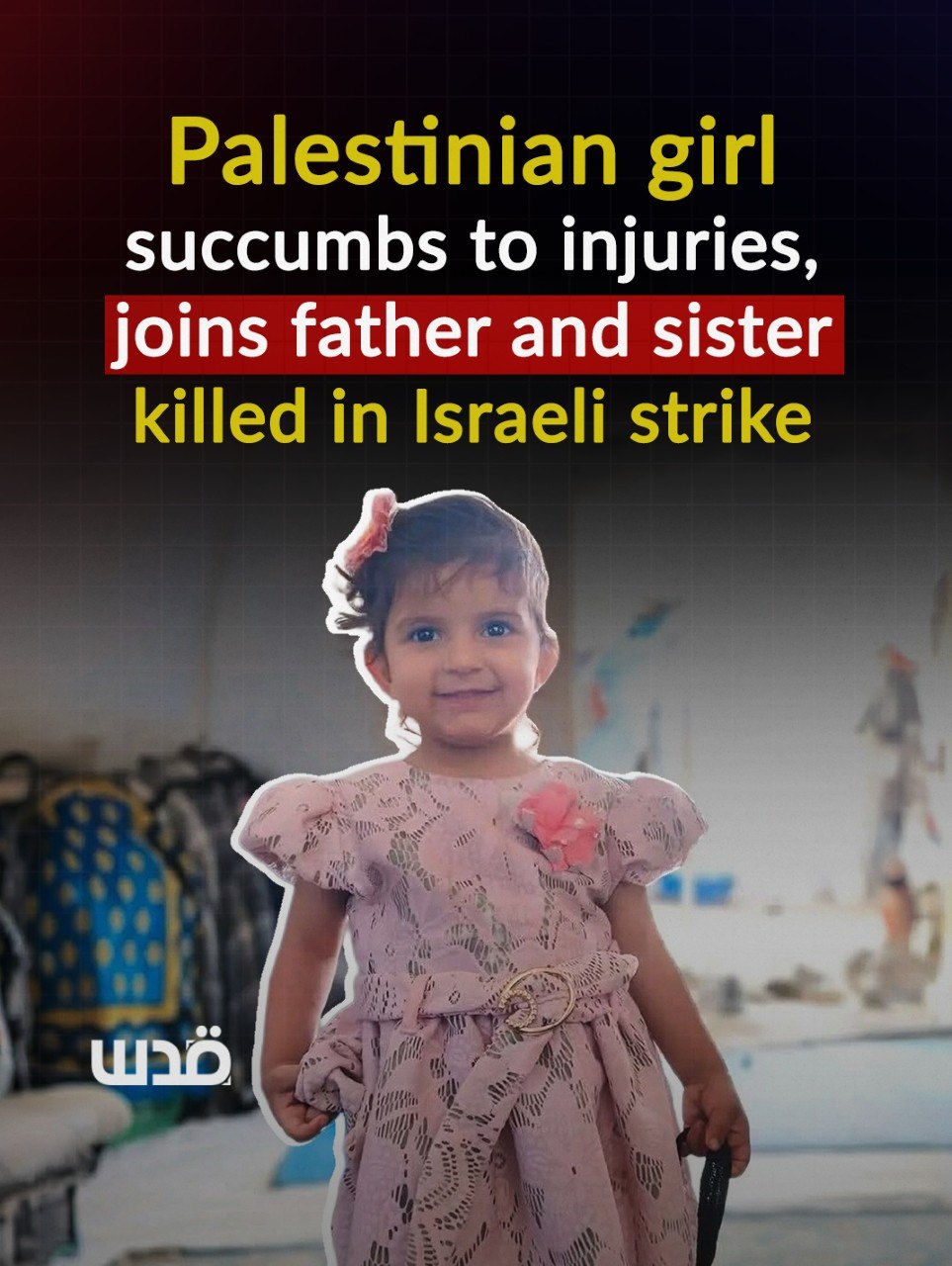
Palestinian Red Crescent spokesperson Raed Al-Nims said ambulance crews face unprecedented challenges as Israeli attacks continue to hit homes and displacement camps, while most medical facilities remain damaged. He called on the international community to pressure Israel to halt its violations and allow medical teams to work without obstruction according to the Quds News Network.

Israeli Claims and Palestinian Response

The Israeli newspaper Maariv quoted the Israeli army as claiming that its air assaults in Gaza would continue, claiming it responds to alleged “serious incidents” that allegedly violated the ceasefire. The army claimed that it targeted Hamas and Islamic Jihad commanders, weapons depots, and military infrastructure.

Hamas rejected the Israeli claims and said the continued targeting of displaced people’s tents marks a dangerous escalation and a deliberate collapse of the ceasefire. The resistance movement described the attacks as a new massacre and a blatant violation of the agreement.

Hamas said Israeli actions confirm the continuation of a war of destruction against Gaza and a disregard for mediation efforts. It called on guarantor states and the US administration to intervene and stop policies that undermine the ceasefire.

The movement also demanded an immediate transition to the second phase of the agreement, including opening the Rafah crossing in both directions and enabling the national committee to operate freely in Gaza.

Since the ceasefire took effect in October, Israeli forces have killed 524 Palestinians and wounded 1,360 others.

The International Committee of the Red Cross said continued Israeli bombardment places extreme pressure on Gaza’s collapsed health system. Egypt’s Foreign Ministry also condemned repeated Israeli violations of the ceasefire, warning they pose a direct threat to the political process.

Continue reading
Trump’s Authortarianism

By Michael Jansen

Amnesty International-USA has issued an unprecedented 46-page report on the state of that country’s domestic affairs a year after Donald Trump began his second term on January 20th. The report, “Ringing Alarm Bells,” has traced how the Trump administration’s adoption of authoritarianism is violating human rights in the US and abroad and blocking accountability. The administration’s practices increase “the risk for journalists and people who speak out or dissent, including protestors, lawyers, students, and human rights defenders,” Amnesty said.

The report describes 12 areas in which the Trump administration is undermining the “pillars” supporting the US edifice. Trump is curbing “freedom of the press and access to information, freedom of expression and peaceful assembly, civil society organisations and universities, political opponents and critics, judges, lawyers, and the legal system,” and due process. The report “documents attacks on refugee and migrant rights, the scapegoating of [entire] communities and the rollback of non-discrimination protections, the use of the military for domestic purposes…[and] the expansion of surveillance without meaningful oversight.” The adoption of such practices domestically extends to external affairs where international laws meant to protect human rights are being undermined.

Amnesty gave examples of abuses, several are included below. “Students are arrested and detained for protesting on college campuses” and communities are invaded and terrorized” by masked federal agents who are not held accountable. Such activities are “being normalised” across the country. Palestinians who are legal US residents and take part in anti-Israeli protests over Gaza have been targeted, arrested, detained and threatened with deportation.

To exact vengeance against critics, Trump has used the levers of power to “retaliate against, threaten, and coerce elected officials, federal employees and prosecutors, and universities and media outlets.” Trump has used job dismissal, suspension, investigations, withdrawal of security clearances, and denial of federal funding and contracts to attain his objectives in this campaign.

Trump has used state and federal military forces to police protests and support unlawful immigration enforcement. Black and brown demonstrations and restive localities have been disproportionately targeted. After trying to leave the area where there was an anti-deportation protest, Renee Good was shot to death in her car by a federal agent in Minneapolis, Minnesota. Department of Homeland Security Secretary Kristi Noem called her a “domestic terrorist” before any investigation had begun. The local authorities waited for a federal investigation to take over the probe into this incident which has been widely publicised and politicised.

Trump has threatened to invoke the 19th Insurrection Act, a law authorising military deployment to quell Minneapolis protests against his aggressive campaign to identify and deport “illegal” migrants although US citizens have been mistakenly swept up and detained in this effort.

Trump’s Justice Department opened a criminal probe into Minnesota state Governor Tim Walz and Minneapolis Mayor Jacob Frey, both Democrats, accusing them of impeding federal immigration operations. Walz charged the Republican administration of “weaponizing the justice system against your opponents.”

Meanwhile, on the international level, Trump has demanded that Denmark hand over to the US Greenland, an integral part of the Danish Kingdom, and threatened European countries backing Denmark with 10-25 per cent tariff punishments. Greenland is not only a strategic island, but it has deposits of precious metals. Denmark and 85 per cent of Greenlanders and 75 per cent of US citizens reject Trump’s bid although he has continued to voice his demand and issue threats against opponents and critics.

He has called for Canada to become the 51t US state despite rejection by the government and citizens. Trump argues that the US must re-acquire the Panama Canal, a choke point in the East-West trade route which connects the Atlantic and Pacific oceans. The canal was built by US engineers between 1903-1914 and was held by the US until handed over to Panama on December 31st, 1999. He falsely claims Russia and China menace both Greenland and the Panama Canal. Trump uses imagined threats to forge new global realities. However, other leaders, countries and populations prefer not to undermine and fracture the status quo which has maintained peace over and in Greenland and Panama as well as between global actors.

The writer is a columnist for the Jordan Times

Continue reading