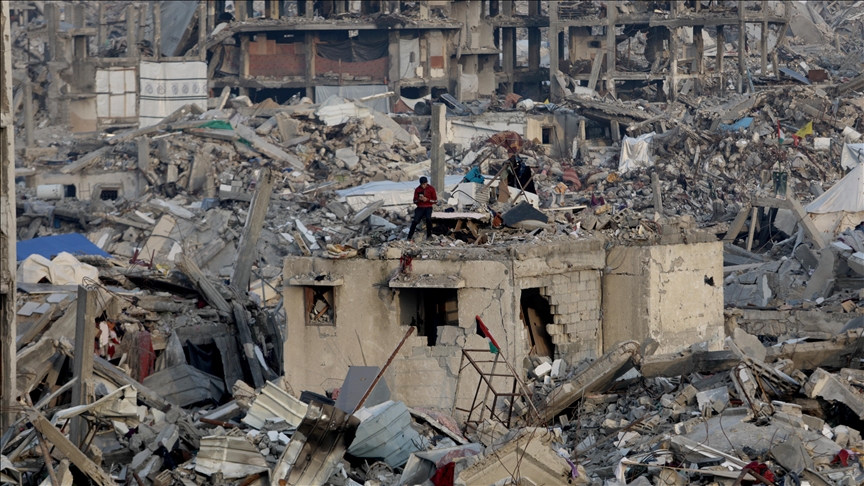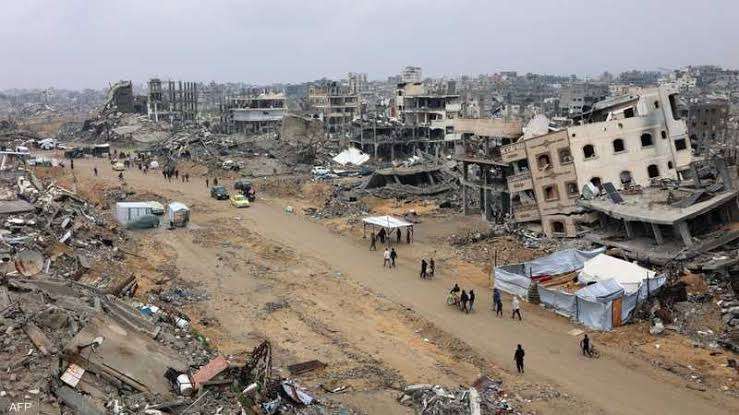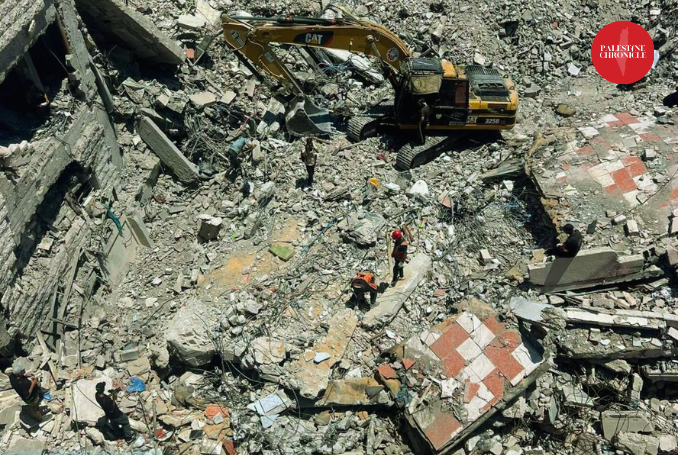
Who is Going to Rebuild Gaza?

No official announcement was made following the Riyadh Summit, which was considered fraternal, friendly, and consultative rather than formal. The summit, held a few days ago, was attended by the Gulf states, along with Jordan and Egypt, in anticipation of the Cairo Summit scheduled for March 4. The Cairo Summit is expected to approve and announce a new Arab plan for rebuilding Gaza as an alternative to Trump’s plan. However, more importantly, the Arab plan presents a comprehensive political approach linking the Gaza issue to the establishment of a Palestinian state and a peaceful resolution in the region. This approach counters Israel’s new policies, which are based on political hegemony—not only in Palestine by eliminating the two-state solution but also by expanding Israel’s security boundaries to include parts of Syria and Lebanon and inciting the U.S. into a confrontation with Iran.

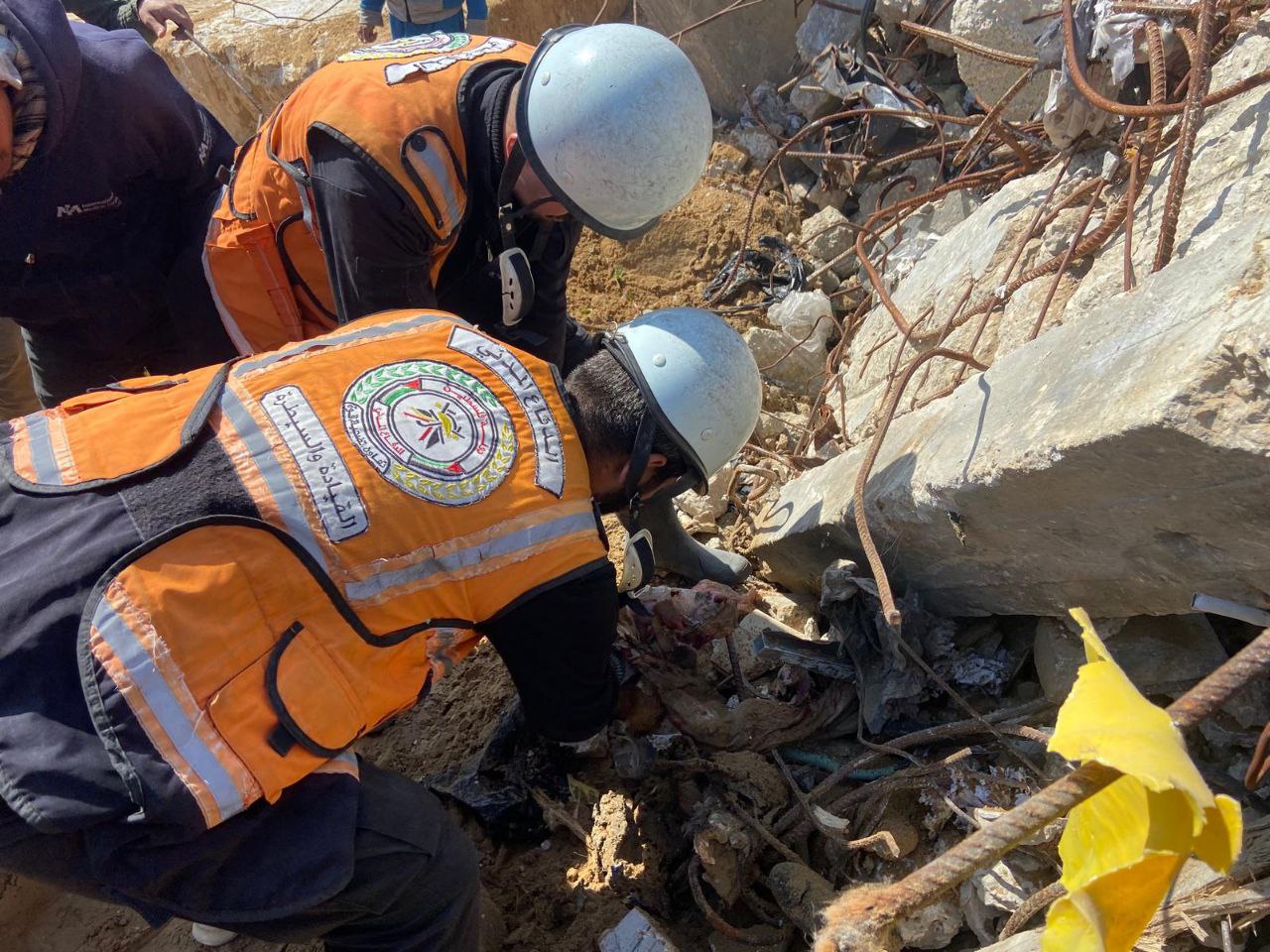
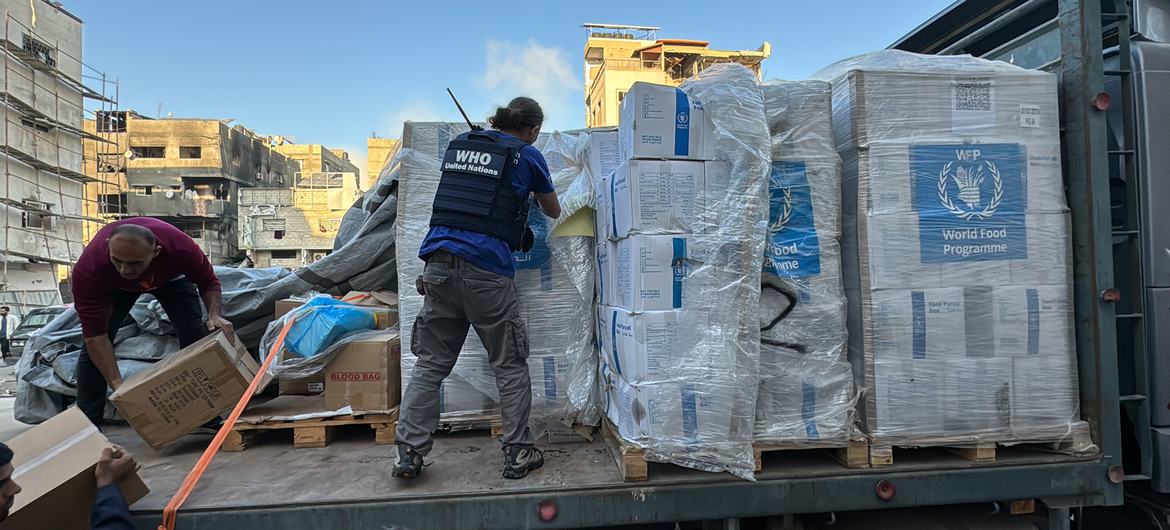
The Egyptian-Arab approach is still in its final stages of preparation. It takes into account a combination of financial, technical, political, and security aspects concerning Gaza. Palestinian Prime Minister Mohammad Mustafa has proposed modifications to the plan originally put forward by the World Bank, the United Nations, and the European Union, which estimated the cost of rebuilding Gaza at over $50 billion in a rapid and preliminary needs and damage assessment report (IRDNA). Instead, Mustafa proposed a more realistic and feasible plan costing no more than $20 billion, to be implemented in three phases. The Egyptians have incorporated this into their reconstruction plan, which includes dividing Gaza into three safe zones, using temporary housing (caravans) and tents, and developing a technical vision for redesigning the sector’s infrastructure through specialized Egyptian companies.

The Arab approach links the reconstruction plan to several key elements. The first is the technical, logistical, and financial aspect of rebuilding. The second is reforming the Palestinian Authority (PA) to counter Israeli claims of its incompetence, with reform measures covering political and security aspects. The third element concerns the administration of Gaza in the post-occupation phase. A significant development has occurred with the Palestinians agreeing on a temporary administrative committee responsible for technocratic affairs. Hamas has accepted this arrangement, and President Mahmoud Abbas has reluctantly agreed to it, as it implicitly means that the PA will not return to Gaza.

The most challenging aspect of the Arab plan lies in the security arrangements during the reconstruction phase. Arab states refuse to deploy security forces or enter Gaza without a clear vision for ending the Israeli occupation and establishing a Palestinian state. As Arab diplomats emphasize, what is needed is not just a roadmap for resolving the Palestinian issue, but rather an agreement on final-status issues and recognition of a Palestinian state—followed by a roadmap for implementation, not the other way around.

The most contentious issue in the Arab approach is Hamas’s weapons. Israel, along with the United States, will not accept Hamas retaining its weapons in Gaza. Israel has made it clear that it links the second phase of the process to this condition, and the U.S. has accepted this demand. On the other hand, the Arab side ties the issue of disarming non-state actors to the establishment of a Palestinian state that would have the exclusive right to possess weapons. The key question remains: Who would disarm Hamas? The only legitimate entity that could do so is a recognized Palestinian state, which remains the missing piece in U.S. policies that align with Benjamin Netanyahu’s vision.

The Arabs hope that this approach will establish a new framework for relations with the United States and offer alternative strategic options. They even believe it could persuade President Donald Trump to secure several achievements—perhaps even earning him a Nobel Peace Prize in the end.

This is undoubtedly a highly optimistic approach, but it represents a new Arab attempt to present a united position and alternative strategic options. However, the biggest challenge this vision overlooks lies in the details. As the saying goes, “the devil is in the details.” What kind of Palestinian state is actually possible under the current circumstances? What was previously proposed by Trump himself? Is there a single Palestinian—any Palestinian—who could accept a state comprising only 30% of the West Bank, without East Jerusalem, and without control over borders? How could Hamas and its supporters—or even the majority of Palestinian refugees—be convinced of such a proposal, even if there were Israeli and American acceptance of the new Arab approach?

Mohammad Abu Rumman is a columnist in The Jordan Times.

Continue reading
Hamas: ‘Release Prisoners and We Will Talk’

Hamas official Basem Naim told Reuters on Sunday that negotiation talks with Israel through mediators on further steps in a ceasefire agreement are conditional on Palestinian detainees being released as agreed.

Israel claimed its delay of the release of hundreds of Palestinian detainees as planned because Hamas didn’t meet the conditions.

Netanyahu’s office added that Israel won’t deliver the 620 Palestinian detainees until the release of the next captives has been assured, and without any handover ceremonies.

Continue reading
Palestinians Condemn Fiji’s Decision to Open Embassy in Occupied Jerusalem

Palestine has strongly condemned the recent decision of the Fijian Prime Minister Sitiveni Rabuka to open a Fiji Embassy in occupied Jerusalem.  

The Palestinian Foreign Ministry and Hamas has called such a move as a violation of international law and other relevant UN resolutions.

In separate statements, Tuesday, they urged the Fijian government to reverse its decision.

The Fijian decision is “an act of aggression against the Palestinian people and their inalienable rights,” and it impedes “prospects for peace based on the principle of the two-state solution,” the Palestinian Foreign Ministry according to Anadolu.

Hamas called the decision as “a blatant assault on the rights of our Palestinian people to their land and a clear violation of international law and UN resolutions, which recognize Jerusalem as occupied Palestinian territory.”

On Tuesday, the Fijian Foreign Ministry announced on its official website that the country’s Cabinet has approved the establishment of an embassy to Israel in Jerusalem.

If the decision is not reversed which it seems likely judging from close relationship between Rabuka and Israel, Fiji will become the seventh country to have an embassy in Jerusalem after the US, Guatemala, Honduras, Kosovo, Papua New Guinea, and Paraguay.

The Palestinian Foreign Ministry also affirmed it would take the necessary diplomatic, legal, and political steps to prosecute the countries that opened or relocated their embassies to Jerusalem according to the Wafa news agency.

Continue reading
Hebrew Media: Israel Fails to Achieve Goals of Gaza Onslaught

Israeli media outlets discussed Tel Aviv’s failure to achieve the goals of the war now ongoing for more than a year on the Gaza Strip. Hebrew newspapers stressed that the army is unable to eliminate Hamas, while disagreements are increasing regarding the future of military operations and the ceasefire agreement.

Yitzhak Brik, former commander of the Southern Corps said Israel has not been able to eliminate Hamas despite the war, now in its 15th month. He asked, “If we have failed throughout this period, how can we achieve it now?”

Brik pointed out that Hamas possesses a huge arsenal of weapons, and has developed its combat methods with its fighters exiting the underground tunnels and returning to them easily, making it difficult for the Israeli army to eliminate them.

He added Hamas has regained its strength, and that the Israeli army has destroyed no more than 10% of the tunnels of the Islamist organization, according to Israeli military sources. He also acknowledged that the military operations have not achieved their goals, and that the war has drained the army more so than at the beginning.

The army is a tool of an extremist government


For her part, Yifat Gadot, from the “Families of Soldiers Cry Enough” organization said the Israeli army has become a tool in the hands of an extremist government that is working to prolong the war to achieve its political and ideological interests.

Gadot added that there is a growing conviction among the families of soldiers that the war has become a means of maintaining the government coalition, not achieving security.

As for attorney Yair Nahorai, an expert in religious Zionist movements, he confirmed that the ongoing conflict is not just a war against Hamas, but part of an extremist religious vision that seeks to occupy Gaza, noting that some parties in the Israeli government consider the “sanctity of the land” more important than human life, which complicates the Israeli position even more.

In the same context, political analyst Ben Caspit considered that the real reason behind the slowdown in implementing the second phase of military operations is the political considerations of Prime Minister Benjamin Netanyahu.

He explained that the pressure exerted by right-wing ministers, such as Bezalel Smotrich and Itamar Ben Gvir, is obstructing the making of decisive decisions regarding the war, as Netanyahu seeks to maintain the stability of his government coalition instead of focusing on recovering the prisoners.

A Joke in the Middle East


For his part, Ben Gvir attacked the government, describing it as lacking courage, and missing a historic opportunity to impose its conditions on Hamas, adding that Israel has become a “joke in the Middle East” due to what he described as weak and hesitant decisions in managing the war and negotiations.

In contrast, Gil Dickman (a relative of one of the Israeli female prisoners killed in Gaza) responded to Ben Gvir’s statements, accusing him of politicizing the issue of prisoners, and called on him to support Netanyahu in his efforts to return the kidnapped, criticizing his withdrawal from the government due to recent agreements.

In another context, political analyst Dana Weiss stated that the Israeli political crisis escalated after statements by US President Donald Trump, who pressured the government to expedite the release of prisoners, threatening decisive responses if Israel did not respond to his demands.

Weiss confirmed that the Israeli government found itself between internal pressures from the extreme right and American and international pressures pushing towards diplomatic solutions, which further complicates the internal Israeli scene in light of the ongoing military operations in Gaza.

Continue reading
Ben-Gvir Blasts Netanyahu For…

Former Israeli National Security Minister Itamar Ben-Gvir launched a scathing attack on Prime Minister Benjamin Netanyahu on Sunday, calling a Gaza ceasefire deal a “historic mistake.”

Speaking to the local radio 103FM, the far-right politician said that Netanyahu’s actions were undermining Israel’s military achievements in the war on Gaza.

The continuation of this deal is “a historic mistake that will set us back,” said Ben-Gvir, who leads the far-right Otzma Yehudit Party.

“The deal prevents Israel from achieving a total victory, and every passing day proves that my opposition to the agreement was justified,” he claimed.

Ben-Gvir, who resigned from Netanyahu’s government last month in opposition to the ceasefire deal, claimed that Hamas fighters had regained power and control in Gaza.

“The amount of aid we give them…it enables them to rule,” he said. “Hamas regained control (in the Gaza Strip) because of this reckless deal.”

The extremist minister also took aim at far-right Finance Minister Bezalel Smotrich, dismissing his claim that Israel had dismantled Hamas.

“I heard him say that we have taken Hamas apart, but unfortunately, the reality on the ground says otherwise,” Ben-Gvir said.

A ceasefire agreement took effect in Gaza on Jan. 19, halting Israel’s genocidal war, which has killed more than 48,200 Palestinians, most of them women and children, and left the enclave in ruins.

The International Criminal Court issued arrest warrants in November for Netanyahu and his former Defense Minister Yoav Gallant for war crimes and crimes against humanity in Gaza.

Israel also faces a genocide case at the International Court of Justice for its war on the enclave according to Anadolu.

Continue reading