Gaza City: At What Cost Occupation?

Israeli Chief of Staff Eyal Zamir officially approved a plan on Sunday to occupy Gaza City, local media reported.

Defense Minister Israel Katz is scheduled to formally approve the plan next Tuesday, according to Israel’s official broadcaster, Kan.

The Security and Political Cabinet will meet later this week to approve the plan, Kan said, adding that Nitzan Alon, the army’s official in charge of prisoners and hostages, took part in the discussions that led to the decision.

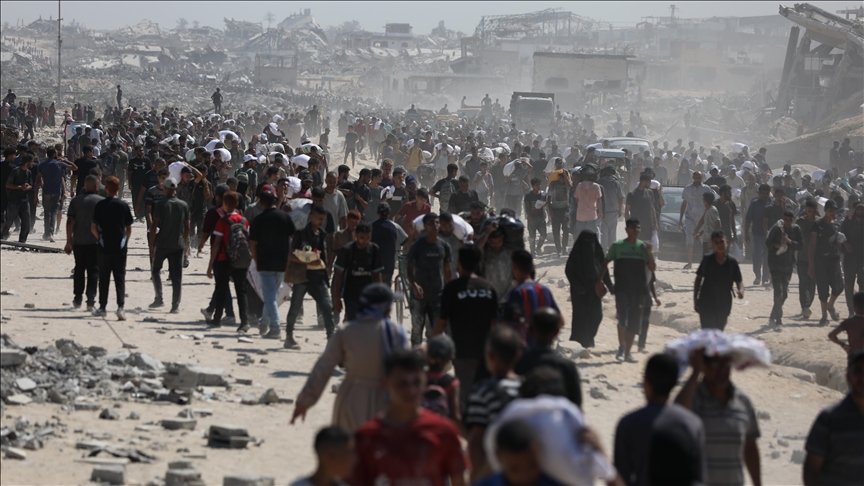
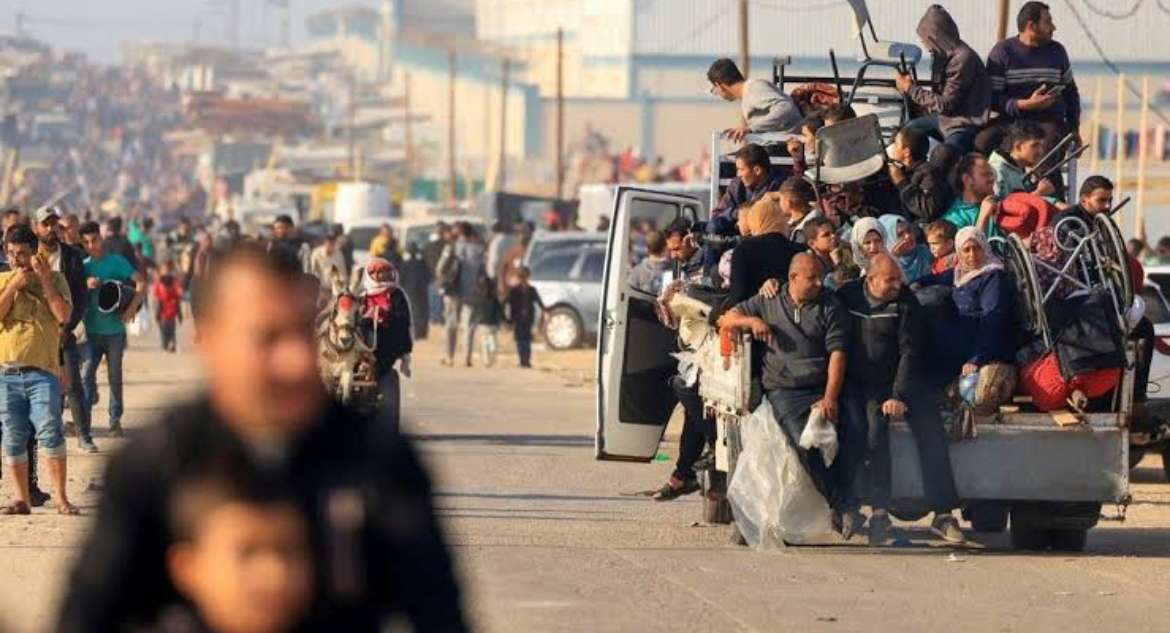
The plan includes a broad forced evacuation of Palestinians over at least two weeks, beginning with a military operation followed by a gradual entry into the city. Israeli authorities will present the evacuation plan to US officials at their request.

Channel 12 reported that the plan will be ratified by the government before the end of the week.

On Aug. 8, the Israeli Cabinet approved Prime Minister Benjamin Netanyahu’s proposal to gradually occupy the Gaza Strip, beginning with Gaza City.

As part of the plan, on Aug. 11, Israeli forces launched a major attack on the al-Zaytoun neighborhood, including house demolitions using explosive-laden robots, artillery strikes, random gunfire, and forced displacement, witnesses told Anadolu.

Israel has killed more than 61,900 Palestinians in Gaza since October 2023. The military campaign has devastated the enclave and brought it to the verge of famine.

Last November, the International Criminal Court issued arrest warrants for Netanyahu and Gallant for war crimes and crimes against humanity in Gaza.

Israel also faces a genocide case at the International Court of Justice for its war on the enclave.

Continue reading
Israel’s Top General Fears Reoccupation of Gaza

Israeli Chief of Staff Eyal Zamir described Prime Minister Benjamin Netanyahu’s plan to reoccupy the Gaza Strip as a “strategic trap”. Speaking on Wednesday, he stressed that it will exhaust the army for years to come and endanger the lives of prisoners.

Israel’s Channel 13 reported that a heated discussion took place between Zamir and Netanyahu in a meeting, Tuesday evening, which it described as “difficult and direct,” in light of the latter’s decision to proceed with the occupation of Gaza.

Zamir described the decision as a “strategic trap,” stressing it will exhaust the Israeli army for years later and endanger the lives of the Israeli prisoners in Gaza who are believed to be down to 20.

On Tuesday evening, Netanyahu held a closed-door meeting that lasted three hours, including a limited number of ministers and senior security officials, during which he discussed the plan to encircle Gaza City and the central military bases as the first stage of the occupation of the Strip, according to what the Broadcasting Authority quoted from an unnamed Israeli official.

Channel 13 reported that Zamir “proposed an alternative to the occupation operation, which is to isolate the Gaza Strip and impose a tight siege on Gaza City, along with airstrikes on Hamas positions. However, Netanyahu rejected the proposal and insisted on proceeding with the plan to occupy the Strip.”

Senior military officials, who were not named, quoted Zamir as hinting during the meeting at a threat to resign, saying: “I only have one bullet in my mouth.”

The security cabinet is scheduled to meet tomorrow, Thursday, to discuss the plan to occupy Gaza City and the central Gaza Strip, which Chief of Staff Zamir opposes.

On Tuesday, Netanyahu’s son, Yair, launched a sharp attack on Zamir, accusing him of “leading a rebellion and a military coup.”

On Wednesday, Israeli Defense Minister Yisrael Katz announced his support for Zamir in the face of criticism from Netanyahu’s son, Yair.

Katz said in a post on the X platform that “Major General Zamir is leading the army and adopting a strong and aggressive policy.”

He continued: “It is the right and duty of the Chief of Staff to express his position, and after the political leadership makes decisions, the army will implement them firmly.”

Israel previously occupied the Gaza Strip for 38 years, between 1967 and 2005.

Tel Aviv estimates that there are 50 Israeli prisoners in Gaza, 20 of whom are still alive, while more than 10,800 Palestinians are languishing in its prisons, suffering from torture, starvation, and medical neglect, many of whom have died, according to Palestinian and Israeli human rights and media reports.

On July 24, Israel withdrew from indirect negotiations with Hamas in Doha, following Tel Aviv’s intransigence regarding the withdrawal from Gaza, the end of the war, Palestinian prisoners, and the mechanism for distributing humanitarian aid.

According to a poll published Sunday by the Israeli Institute for National Security Studies, 52 percent of Israelis hold their government fully or partially responsible for the failure to reach an agreement with Hamas.

Hamas has repeatedly declared its willingness to release Israeli prisoners “in one go” in exchange for an end to the war of extermination, the withdrawal of the Israeli army from Gaza, and the release of Palestinian prisoners.

The opposition and the prisoners’ families assert that Netanyahu is seeking partial deals that would allow the continuation of the war while ensuring his continued rule. He fears the collapse of his government if the most extremist faction, which refuses to end the war, withdraws from it.

Domestically, Netanyahu is being tried on corruption charges that would result in his imprisonment if convicted. The International Criminal Court is seeking his arrest on charges of war crimes and crimes against humanity against Palestinians in Gaza.

Since October 7, 2023, Israel has been committing genocide in the Gaza Strip and starving Palestinians. On March 2, it tightened its measures by closing the crossings to humanitarian, relief, and medical aid, causing a famine that has reached “catastrophic” levels.

The US-backed genocide left more than 211,000 Palestinians dead or wounded, most of them children and women, and more than 9,000 missing, in addition to hundreds of thousands of displaced persons and a famine that claimed the lives of many according to Anadolu.

Continue reading
Deflecting Netanyahu’s Problems

By Jonathan Fenton-Harvey 

Just a day before launching airstrikes on Iran, Israeli Prime Minister Benjamin Netanyahu, facing bribery and fraud charges, narrowly survived a Knesset vote that could have collapsed his government. Alongside the legal charges, Netanyahu’s domestic popularity has plummeted over corruption, economic woes and failures to return Israeli hostages from Gaza. But for Netanyahu, the war offered more than military momentum: It has given him a temporary reprieve.

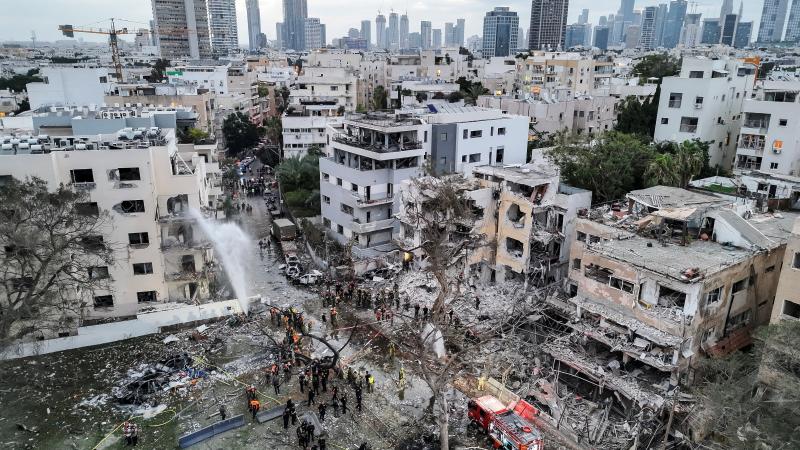
Within days, Israeli airstrikes reportedly weakened Iranian nuclear and military infrastructure, eliminated senior military figures, and killed hundreds of civilians. On X, Israeli Defense Minister Israel Katz claimed “civilians in Tehran will pay a collective price,” signaling a destructive intent. As Iran has hit back, firing missiles at Israeli infrastructure and cities, diplomacy over Iran’s nuclear program has all but collapsed.

Even if a ceasefire occurs, Israeli-Iranian tensions have escalated to near irreversibility as long as both the current Israeli and Iranian governments remain in power. Israel presents the assault on Iran as a necessary move to neutralize its nuclear ambitions, a claim repeated over the years, despite the lack of convincing evidence that Tehran was close to building a nuclear bomb. In reality, the war is driven more by Netanyahu’s personal survival than just Israel’s.

As with Israel’s prolonged onslaught on Gaza, this conflict appears designed to consolidate domestic support – attempting to rally the population around the image of an existential enemy – just as it did with Hamas and the Palestinians in Gaza. That same logic extended into Lebanon, where Israel’s assault weakened Tehran’s ally Hezbollah and coincided with a jump in public approval for Netanyahu’s Likud party. But with neither Gaza nor Lebanon yielding lasting political dividends, Iran has become the next catalyst in Netanyahu’s survival strategy.  

A fragile government

For Netanyahu, projecting external threats has not only been a means of consolidating power, but also unity. His government, already fragile, is also caught between deeply divergent factions – secular versus ultra-Orthodox, nationalist versus technocratic. This internal fragmentation of Israeli civil society raised the specter of a looming civil war, warned of even before the Gaza war. But Israel’s wars and the projection of external enemies aim to unify Israeli society, at least for now.

There is also the international dimension. Netanyahu and other officials are wanted by the International Criminal Court over war crimes in Gaza, while Western backers face domestic pressure to end arms sales to Israel. The Israeli initiated Iran conflict has provided Netanyahu with yet another political lifeline as Western governments have clearly aligned with Israel. The G7 and the EU have expressed support for Israel, while the US, UK, Germany and France had pledged to uphold Israel’s security.

Even though Western public opinion on Israel has shifted recently – including legal cases and political pressure – arms sales are still expected to continue, or even increase. Moreover, the focus on Iran has also taken away spotlight from Israel’s actions in Gaza, which continues to endure Israeli airstrikes and blockade-induced starvation.  

Shielded internationally

Before the escalation, US President Donald Trump, however, had taken an unexpected turn. His truce with Yemen’s Houthis and openness to renewed nuclear talks with Iran suggest a willingness to pursue diplomacy – even if it angers Israel. Trump appears caught between appeasing his pro-Israel support base and his America First-driven MAGA base – the latter of which prompted him to override Israeli objections in favor of US interests, namely economic engagement with Iran. Netanyahu is certainly banking on Trump siding with Israel in the event of a deeper escalation with Iran. Trump’s own “urging” of Iranians to leave Tehran signals an alignment with Tel Aviv, even if he may seek to continue keeping the door open for future diplomacy with Iran. Ultimately, the cost of Netanyahu’s bid to maintain his own grip on power is regional instability.

The war has bought Netanyahu time. Less ideologically hardline voices have resigned from his coalition government over failures in Gaza, allowing him to consolidate power around extremist figures like Bezalel Smotrich, Itamar Ben Gvir and Israel Katz. Yet this hardline government, which Netanyahu has fostered to maintain his own position, is further contributing to Israel’s diplomatic and economic isolation. That’ll undoubtedly add to the economic costs of the war on Gaza, which has cost around 10% of its GDP and scared foreign investors off, creating future fiscal instability in Israel.

However, the Netanyahu-led multi-front offensives in Syria, Lebanon, Yemen and now Iran also reflect a notable historic pattern: regimes tend to lash out when they feel increasingly threatened or cornered. Netanyahu’s calculus, partly driven by a sense that Israel is facing compounding global scrutiny for its military operations, may further harm its global image – even if Western governments continue to support Israel’s actions for the time being.

For his own political survival, Netanyahu will resist efforts to halt the violence, unless sustained international pressure forces Israel to halt its operations. Because he knows that, if he ends the wars, he’ll almost certainly face renewed calls for his indictment in Israel, or be unseated in the next Israeli elections, due by October 2026. As such, he has every incentive to prolong the violence unless international pressure forces a change in course. If Trump or other key powers push for de-escalation and accountability, it could shift the trajectory toward regional stability, especially as Iran weighs withdrawing from the Nuclear Non-Proliferation Treaty. Otherwise, Netanyahu’s own instincts risk plunging the region – and inadvertently Israel – into deeper regional instability that could ultimately harm Israel itself.  

The author is a researcher and journalist focusing on conflict and geopolitics in the Middle East and North Africa, primarily related to the Gulf region. He has contributed this article to Anadolu

Continue reading
How Will Israel Stop The Houthi Missiles!

By Dr Marwan Asmar

Houthis missiles continue to rain down on Israel and that’s not an understatement. Only in this past month of May Israel was subject to 16 ballistic missiles. That’s almost one every two days. Sometimes two missiles were fired in one day.

On Thursday another ballistic missile was fired on Tel Aviv that stopped a football match for at least 10 minutes in a packed stadium of 30,000 people. Among the spectators, who were ordered to lie down, was Israeli president Isaac Herzog who was scurried to safety. 

The incoming missile for Ben Gurion Airport set sirens in over 300 major cities, towns, villages and settlements between Tel Aviv and Jerusalem.

In addition to that, and something that has become normal for Israelis since 7 October, 2023, 3 to 4 million hurried to underground shelters disrupting their lives and work processes.

This is not to say anything about the continuing psychological blows inflicted on them, and on a daily basis. This is the first time they have been subjected to what has become a set of nightmare occurrences first from Hezbollah and now the Houthi missiles travelling over 2000 kilometers north diagonally over the Red Sea to hit Israeli targets.

Thursday’s attack was in response to Wednesday’s Israeli bombing – the second time since 6 May – of the Sanaa International airport. Israeli bombs already destroyed the airport and the last attack made through 10 Israeli warplanes finished off the only aircraft left that belonged to the Yemeni airlines. The plane had just arrived in Sanaa from the Jordan capital of Amman.

And a day before that the Houthis had fired another missile on Tel Aviv. While most of the missiles are fired down by the Israeli forces before they reach their targets they have created tremendous confusion in the Israeli airwaves. Today tens of airlines have stopped flying to Tel Aviv despite the pleadings of the Israeli government that Israeli airports are safe. 

Since January 2025, 35 ballistic missiles have been launched on Israel from different locations in Yemen. Also, since early this year, 14 so-called attack drones were launched from Yemen to strike targets in Israel. 

As well, and only since March 29 missiles and 9 drones were fired from Yemen because Israeli Prime Minister Benjamin Netanyahu relaunched the war on Gaza on 19th March. Despite the Israeli precautions and ground batteries that shot down these missiles, they have created much debris on the ground when they came down to earth.

With the 16 ballistic missiles launched in May, four drones were also fired on different Israeli cities, statistics provided and confirmed by the Israeli army. It further states that  since 7 October 2023 the Houthis launched 70 missiles on Israeli sites, including ports, airports,  the Mossad headquarters in Tel Aviv and many more.

The Israeli army state these exclude the 330 drones that were fired on Israel over the past 19 months of the Israel genocide on Gaza taking the number of Palestinian deaths to 54,321 with the number of injuries at 123,770.

As a result, the Houthis succeeded in imposing an air embargo on Israel in May as their leadership insists. Their projectiles have stopped 10s of international airlines from flying to the Ben Gurion Airport with British Airways and the low-cost Ryanair being the latest to suspend flights.

These are the latest to follow the Lufthansa group which include SWISS, Austrian Airlines, Brussels Airlines and Eurowings. They have already stopped going to Tel Aviv and are watching the situation carefully before they take the step of resetablishing air connections.

Since 4 May other planes that suspended flights to Israel include  Latvian airline, AirBaltic, easyJet, United Airlines, Iberia and Transavia.

However, among the few foreign airlines that recently resumed flight services to Israel are Air France, Delta, Wizz Air, Ethiopian Airlines, Etihad Airways and Greece’s Aegean Airlines states The Times of Israel.

Unprecedented

The Thursday ballistic missile was unprecedented because the Israeli president was watching. The match had to stop while he was rushed away to safety. The Israeli media says the match was stopped twice when the missiles were launched from Yemen and when tens of thousands of people were told to lie on the ground for 20 minutes and a second time when spectators booed Herzog.

The Houthi leadership already warned the Israelis to do “what it will” because it will not stop firing the ballistic missiles on Israel until the latter stops its war on Gaza.

They say that Israel can bomb Yemen as much as it wants but it will not stop the missiles on Tel Aviv and different areas like Eilat.  Despite putting on a strong face Israel is in a quandary. About 30 Israeli warplanes took part in destroying the Sanaa Airport on 5 May but the Yemenis have not flinched.

Now, the Israeli Minister Israel Katz is in a vehement mood and is warning that Israel will continue to bomb and re-bomb existing sites till the end if need be. Truth be told however, the Israelis are bombing indiscriminately as they don’t know and figure out where the Houthis missiles are being fired from in Yemen.

Netanyahu is convinced that Iran is supplying the Houthis with the missiles and that’s why he wants to hit the country but the problem with that is the Trump administration at present is  talking to Tehran about reaching an agreement on its nuclear file and is sending direct messages to Netanyahu to lay off that country and not attempt any foolish act like striking its nuclear facilities.

Thus only time will tell how international relations will unravel especially since Trump reached a deal with the Houthis at the beginning of May that they would stop bombing them if they desist from attacking American ships and planes. The previous months or so the US waged a military campaign on the Houthis that led to nowhere but a costly war of $1 billion.

With the US out of the way, it can be said the Houthis are having a field day on continuing their strikes on Israel. Their message is simple: Stop bombing Gaza and we will stop striking Israel.

Continue reading
Israel Starts Forced Displacement Under World Silence

The Israeli project in the Gaza Strip has reached its most revealing and dangerous stage yet. Israel is no longer concealing its intention to forcibly displace Palestinians from their homeland—it now announces this plan more openly than ever before, through official rhetoric at the highest levels. Through actions on the ground and institutional measures designed to reframe the crime as “voluntary migration”, Israel has attempted to implement its displacement campaign by exploiting the international community’s near-total silence, which has enabled the continuation of the crime and Israeli impunity despite the unprecedented nature of humanity’s first livestreamed genocide.

Israel is now attempting to carry out the final phase of its crime, and its original goal: the mass expulsion of Palestinians from Palestine, specifically from the Gaza Strip. For a year and a half, Israel has carried out acts of genocide, killing and injuring hundreds of thousands of people, erasing entire cities, dismantling the Strip’s infrastructure, and systematically displacing its population within the enclave. These actions aim to eliminate the Palestinian people as a community and as a collective presence.

The current plans for forced displacement are a direct extension of Israel’s long-standing settler-colonial project, aimed at erasing Palestinian existence and seizing land. What distinguishes this stage is its unprecedented scale and brutality—Israel is targeting over two million people who have endured a full-scale genocide and have been stripped of even the most basic human rights, under coercive, inhumane conditions that make living any sort of a normal life impossible. Israel’s deliberate objective is to pressure Palestinians into leaving by making it their only means of survival.

Having succeeded in revealing the weak principles of international law, such as protections for civilians based on their perceived racial superiority or lack thereof, Israel is now reshaping the narrative once again. Armed with overwhelming force and emboldened by the international community’s abandonment of legal and moral responsibilities, Israel seeks to portray the mass expulsion of Palestinians as “voluntary migration”. This is a blatant attempt to rebrand ethnic cleansing and forced displacement using dishonest language—like “humanitarian considerations” and “individual choice”—and is a direct contradiction of legal facts and the reality on the ground.

Euro-Med Monitor emphasises that forced displacement is a standalone crime under international law. It involves the removal of individuals from areas where they legally reside, using force, threats, or other forms of coercion, without valid legal justification. Coercion, in the context of Israel’s genocide in the Gaza Strip, goes beyond military force. It includes the creation of unbearable conditions that render remaining in one’s home practically impossible or life-threatening. A coercive environment includes fear of violence, persecution, arrest, intimidation, starvation, or other forms of hardship that strip individuals of free will and force them to flee.

“Israel has already committed the crime of forced displacement against Gaza’s population,” stated Lima Bustami, Director of Euro-Med Monitor’s Legal Department, “having driven them into internal displacement without legal grounds and in conditions that violate international legal exceptions, which only permit evacuation temporarily and under imperative military necessity, while ensuring safe areas with minimum standards of human dignity. None of these standards have been met. In fact, Israel has used this widespread and repeated pattern of displacement as a tool of genocide—aimed at destroying and subjecting the population to deadly living conditions.”

She added: “Although the legal elements of the crime are already fulfilled, Israel is further escalating it to a more lethal level against the Palestinian people—manifesting its settler-colonial vision of expulsion and replacement. Now it is attempting to market the second phase of forced displacement, i.e. beyond Gaza’s borders, as ‘voluntary migration’: a transparent deception that only a complicit international community—one that chooses silence over accountability—would accept.”

Today, the people of the Gaza Strip endure catastrophic conditions that are unprecedented in recent history. Israel has obliterated all forms of normal life; there is no electricity or infrastructure, and there are no homes, no essential services, no functioning healthcare or education systems, and no clean water services. Around 2.3 million Palestinians are confined to less than 34% of the Strip’s 365 square kilometres. Approximately 66% of the territory has been turned into so-called “buffer zones”, or areas that are completely off-limits to Palestinians and/or that have been forcibly depopulated through Israeli bombings and displacement orders.

Most of the population is now living in tattered tents amid the spread of famine, disease, and epidemics and an accumulation of waste—conditions symptomatic of the near-complete collapse of the humanitarian system. Israel continues to systematically block the entry of food, medicine, and fuel; destroy all remaining means of survival; and obstruct any efforts aimed at reconstruction or restoring even the minimum conditions for a healthy life.

These conditions in place are not the result of a natural disaster; rather, they have been deliberately engineered by Israel as a coercive tool to pressure the population into leaving the Gaza Strip. The absence of any genuine, voluntary alternative for Palestinians in the enclave renders this situation a textbook case of forcible transfer, as defined under international law and affirmed by relevant jurisprudence.

“While population transfers may be permitted in certain humanitarian contexts under international law, any such justification collapses if the humanitarian crisis is the direct consequence of unlawful acts committed by the same party enforcing the transfer,” according to Bustami. “It is impermissible to use forced displacement as a response to a disaster one has created—a principle clearly upheld by international tribunals, particularly the International Criminal Tribunal for the former Yugoslavia.”

Framing this imposed reality as a “voluntary” migration and an option not only constitutes a gross distortion of truth, but undermines the legal foundations of the international system, erodes the principle of accountability, and transforms impunity from a failure of justice into a deliberate mechanism for perpetuating grave crimes and entrenching the outcomes of such crimes.

Repeated public statements from the highest levels of Israel’s political and security leadership have escalated in intensity over the past year and a half, and expose a clear, coordinated intent to displace the population of the Gaza Strip. In a blatant bid to enforce a demographic transformation serving Israel’s colonial-settler agenda, senior Israeli officials—including Prime Minister Benjamin Netanyahu, former Defence Minister Yoav Gallant, Finance Minister Bezalel Smotrich, and National Security Minister Itamar Ben-Gvir—have publicly called for the expulsion of Palestinians from the Strip and for the settlement of Jewish Israelis in their place.

Netanyahu expressed full support in February 2025 for United States President Donald Trump’s plan to resettle Palestinians outside of the Gaza Strip, describing it as “the only viable solution for enabling a different future” for the region. Likewise, Smotrich announced in March that the Israeli government would back the establishment of a new “migration authority” to coordinate what he termed a “massive logistical operation” to remove Palestinians from the Strip. Ben-Gvir, meanwhile, has openly advocated for the encouragement of “voluntary migration” coupled with calls to resettle Jewish Israelis in the territory.

The 23 March decision of the Israeli Security Cabinet to establish a dedicated directorate within the Ministry of Defence, to manage what it calls the “voluntary relocation” of the Gaza Strip’s residents to third countries, is evidence that this displacement is not a by-product of destruction or political rhetoric, but an official policy. This policy is being implemented through institutional mechanisms, directed from within Israel’s own security apparatus, with full operational powers, executive structures, and strategic goals.

Current Defence Minister Israel Katz’s statement on the new directorate confirmed that it would “prepare for and enable safe and controlled passage of Gaza residents for their voluntary departure to third countries, including securing movement, establishing movement routes, checking pedestrians at designated crossings in the Gaza Strip, as well as coordinating the provision of infrastructure that will enable passage by land, sea and air to the destination countries”.

The true danger of establishing such a directorate lies not only in its institutionalisation of forced transfer, but in the new legal and political reality it seeks to impose. It rebrands displacement as an “optional” administrative service while stripping civilians of their ability to make free, informed decisions, therefore cloaking a war crime in a veneer of bureaucratic legitimacy.

Any departure from the Gaza Strip under current circumstances cannot be considered “voluntary”, but rather constitutes, in legal terms, forcible transfer, which is strictly prohibited under international law. All individuals compelled to leave the Strip retain their inalienable right to return to their land and property immediately and unconditionally. They also have the full right to seek compensation for all damages and losses incurred as a result of Israeli crimes and rights violations, including the destruction of homes and property, physical and psychological harm, the assault on human dignity, and the denial of livelihood and basic rights.

Under its obligations as an occupying power responsible for the protection of the civilian population, Israel is prohibited from forcibly transferring Palestinians and bears full legal responsibility to ensure their protection from this crime. The rules of international law, particularly customary international law and the Geneva Conventions, require all states not to recognise any situation arising from the crime of forcible transfer and to treat it as null and void. States are also obligated to withhold all material, political, and diplomatic support that would contribute to the entrenchment of such a situation.

International responsibility goes beyond mere non-recognition. It includes a legal duty for states to take urgent effective steps to halt the crime, hold perpetrators accountable, and provide redress to victims. This includes ensuring the safe, voluntary return of all displaced persons from the Gaza Strip, and providing full reparations for the harm and violations they have suffered. Any failure to act in this regard constitutes a direct breach of international law and complicity that could subject states to legal accountability.

The international community must move beyond deafening silence and abandon paltry rhetorical condemnations, which have come to represent the maximum response it dares to make in the face of the livestreamed genocide unfolding before its eyes. It must act swiftly and effectively to halt Israel’s ongoing project of mass displacement in the Gaza Strip and prevent it from becoming an entrenched reality. This action must be based on international legal norms, a commitment to justice and accountability, and an honest reckoning with the root structural cause of the crimes: Israel’s unlawful presence in the Occupied Palestinian Territory since 1967.

Endorsing or remaining silent about Israeli plans to forcibly transfer Palestinians out of the Gaza Strip not only exonerates Israel but rewards it for its illegal conduct by granting it gains secured through mass killing, destruction, blockade, and starvation. This is not just a series of war crimes or crimes against humanity—it embodies the legal definition of genocide, as established by the 1948 Genocide Convention and the Rome Statute of the International Criminal Court.

All states, individually and collectively, must uphold their legal obligations and take all necessary measures to halt Israel’s genocide in the Gaza Strip. This includes taking immediate, effective steps to protect Palestinian civilians and to prevent the implementation of the US-Israeli crime of forcible transfer that is openly threatening the Strip’s population.

The international community must impose economic, diplomatic, and military sanctions on Israel for its systematic and grave violations of international law. This includes halting arms imports and exports; ending all forms of political, financial, and military support; freezing the financial assets of officials involved in crimes against Palestinians; imposing travel bans; and suspending trade privileges and bilateral agreements that offer Israel economic advantages that sustain its capacity to commit further crimes.

States must also hold complicit governments accountable—chief among them the United States—for their role in enabling Israeli crimes through various forms of support, including military and intelligence cooperation, financial aid, and political or legal backing.

The ethnic cleansing and genocide taking place right now in the Gaza Strip would not be possible without Israel’s decades-long unlawful colonial presence in the Occupied Palestinian Territory. This is the root structural cause of the violence, oppression, and destruction in the besieged enclave. Any meaningful response to the escalating crisis in the Strip must begin with dismantling this colonial reality, recognising the Palestinian people’s right to self-determination, and securing their freedom and sovereignty over their national territory. As Israel and its allies must be compelled to abide by the law, international intervention is the only path to ending the genocide, halting all forms of individual and collective forcible transfer, dismantling the apartheid regime, and establishing a credible framework for justice, accountability, and the preservation of human dignity.

EuroMed Human Rights Monitor

Continue reading