US-Israeli Conspiracy on Iran?
 CrossFireArabia
- June 16, 2025
By Jamal Kanj
Israel’s latest strike on Iran had nothing to do with dismantling the Iranian (civilian) nuclear program. Despite Prime Minister Benjamin Netanyahu’s assertion that “the timing was fixed back in November 2024,” the real zero hour was designated only to undercut possible diplomatic framework that could have legitimized Iran’s nuclear development under international, verifiable, supervision.
This war is not a preemptive blow against Iran —it is a preemptive strike against diplomacy itself. The Trump administration made a grave error by keeping Israeli officials closely informed of the sensitive progress in the secret negotiations. This privileged access allowed Israel to strategically time its military strike to sabotage diplomatic efforts at a critical juncture—undermining further progress just as it was beginning to take shape, and before any agreement could fully mature.
Multiple independent leaks had pointed to progress in the Oman brokered negotiation between the U.S. and Iran, inclusive of intrusive International Atomic Energy Agency (IAEA) inspections, capped enrichment, and restart of oil exports under strict monitoring. An agreement of that sort would have undercut Israel’s decades-long doctrine that only isolation and coercion can keep Iran “in its box.”
Rather than accepting a rules-based diplomatic framework that Netanyahu could not control or veto, he chose to hinder the potential agreement—with F-35s and cruise missiles.
This war is also part of Israel’s long-standing obsession with maintaining its monopoly on nuclear technology in the Middle East. Far from a purely defensive measure, Israel’s broader strategy has consistently aimed at preventing any regional power from acquiring—not only the infrastructure required to develop nuclear capabilities—but even the scientific expertise and human capital necessary to pursue such knowledge.
Hours after the first explosions, U.S. officials solemnly declared, “America did not take part.” But the denial was tactical, not principled. By remaining officially aloof, the Trump White House hoped to keep a seat at any revived negotiating table while still wielding the Israeli strike as leverage. Donald Trump’s own split-screen rhetoric—calling the raid “excellent,” threatening Iran with “more to come,” yet urging Tehran to “make a deal”—spelled out the gambit: let Israel be the cudgel while the United States courts concessions.
On the other hand, and in response to American Secretary of State, Marco Rubio, claim that the U.S. is “not involved in strikes against Iran,” Israel declared that every phase of the attack had been “closely coordinated” with the Pentagon and that that US provided “exquisite intelligence” to attack Iran.
The yawning gap between the two narratives served both capitals. In Washington, it allowed officials to reassure anxious allies that the U.S. was not actively escalating another Middle East war. In Tel Aviv, Netanyahu exploited the ambiguity to provoke Iran into retaliating against U.S. forces—potentially drawing Washington deeper into Israel’s war. At the same time, he sent a calculated message to domestic hawks and regional adversaries: that Israel still enjoys unwavering American backing.
Netanyahu’s sinister calculus was familiar and transparent from Israel’s book to drag the US into its endless wars: derail the diplomatic channel, then dare Washington to pick up the pieces while Israel enjoys another round of strategic impunity.
Even in a region where Israel uses starvation as a weapon of war and genocide in Gaza, Israel’s choice to strike residential neighborhoods—ostensibly targeting senior officers, civilian leaders, and nuclear scientists—crosses a perilous line. The laws of armed conflict draw a bright red distinction between combatants and civilians; by erasing it, Israel has handed Iran moral and legal grounds to retaliate in kind. If Tehran targets the private homes of Israeli leaders and commanders, Tel Aviv cannot plausibly cry victim after setting that precedent.
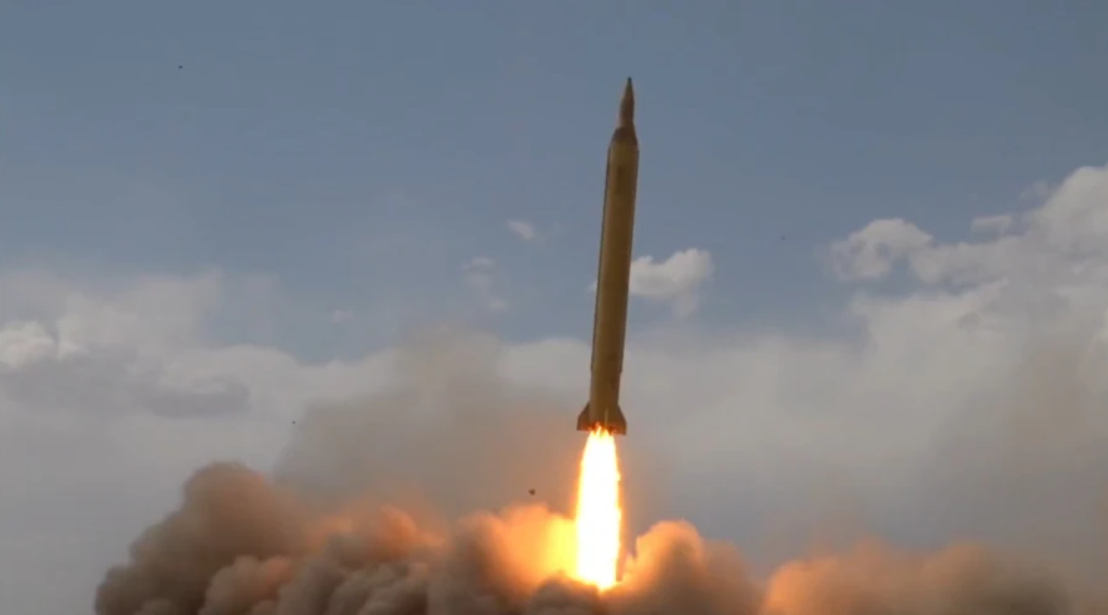
The first wave of Iranian retaliation—targeting the Israeli Ministry of Defense headquarters in Tel Aviv, among other sites—marks the beginning of a new kind of war, one unlike anything Israelis have faced in previous conflicts. For the first time, a state with advanced missile capabilities has shown both the resilience to absorb the initial strike and the capacity to hit back ] deep inside Israel—an experience unprecedented in Israel’s 77 years of existence.
Unlike the sporadic and largely asymmetrical conflicts with non-state actors like the Resistance in Lebanon and occupied Gaza, this confrontation introduces a level of state-to-state warfare that challenges Israel’s long-held military superiority and assumptions of deterrence. What has unfolded so far with the Iranian retaliation is a harbinger of a more symmetrical and likely prolonged confrontation—one in which Israel’s own centers of power may be within range, and where the frontlines are no longer confined to Gaza, the West Bank, or southern Lebanon, but centered into the very core of Tel Aviv.
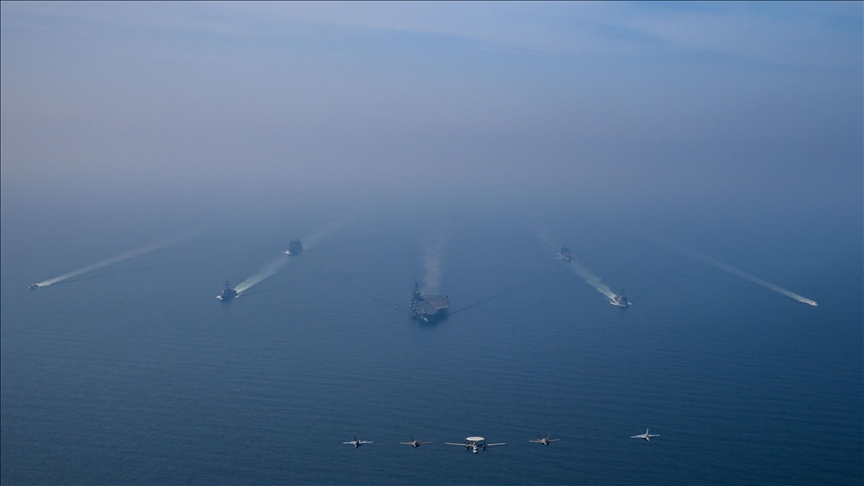
In the coming days, Washington’s true measure will be taken after the smoke clears. If U.S. Aegis destroyers in the Gulf or antimissile batteries in the region are activated to shoot down Iranian missiles and drones, America will cease to be an observer and become a co-belligerent.
Such presumably “defensive” steps quickly metastasize: one intercept invites another, and each exchange digs the United States deeper into a conflict created by a foreign country. History offers bleak guidance. Once American troops engage, momentum overrides strategy and the dynamics of war supplant planning. Political leaders feel compelled to “finish the job,” costs spiral, U.S. interests go unsecured, and the chief beneficiary is almost always the Israeli security establishment that triggered the crisis.
At the end of the day, Netanyahu’s success will not be measured by how many centrifuges he cripples or how many Iranian scientists he murders. It will be measured by whether he can lock the United States into yet another made-for-Israel Middle East war, paid for—strategically, financially, life, and morally—by Americans.
If Washington truly opposes escalation, it must say no—publicly and unequivocally—to any role in shielding Israel from the blowback it just invited. Anything less is complicity disguised as caution, and it will once again confirm that Israeli impunity is underwritten in Washington, even when it torpedoes America’s own diplomacy and ignites yet another Israeli-engineered war.

– Jamal Kanj is the author of “Children of Catastrophe,” Journey from a Palestinian Refugee Camp to America, and other books. He writes frequently on Arab world issues for various national and international commentaries. He contributed this article to The Palestine Chronicle