Arab States Seeks Gaza Rebuild Without Displacement

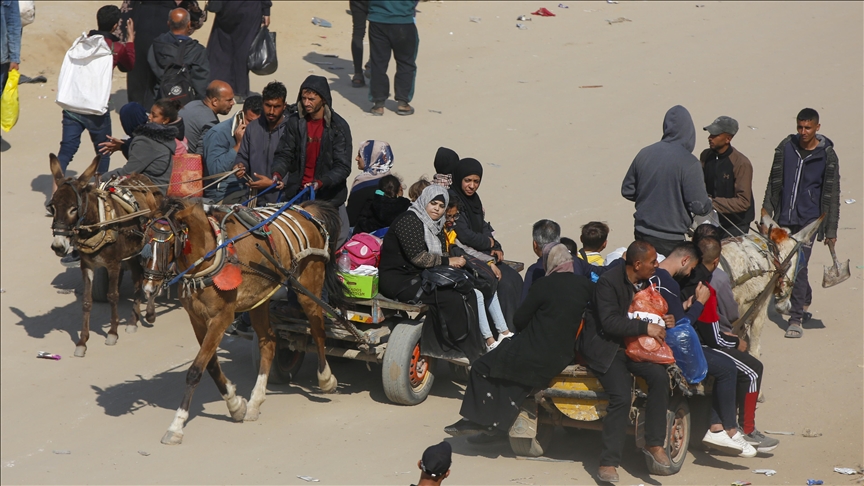
Egypt and Palestine held talks Wednesday to discuss recovery plans for the war-torn Gaza Strip without displacing Palestinians from the territory.

This came during a meeting held in Cairo between Egyptian Foreign Minister Badr Abdelatty and Palestinian Prime Minister and Foreign Minister Mohamed Mustafa.

A statement released after the meeting reiterated Egypt’s support for the Palestinian government and its reform plans.

The statement underlined the importance of “empowering the Palestinian Authority politically and economically to assume its duties in the Gaza Strip as part of the occupied Palestinian territories.”

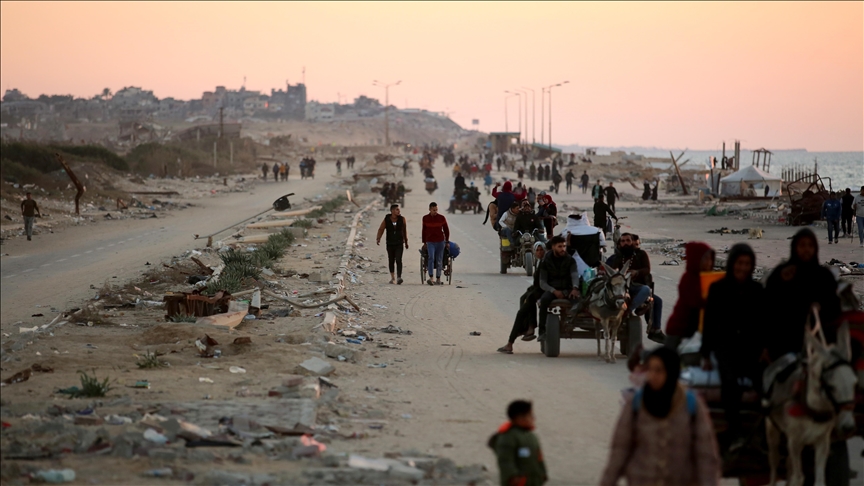
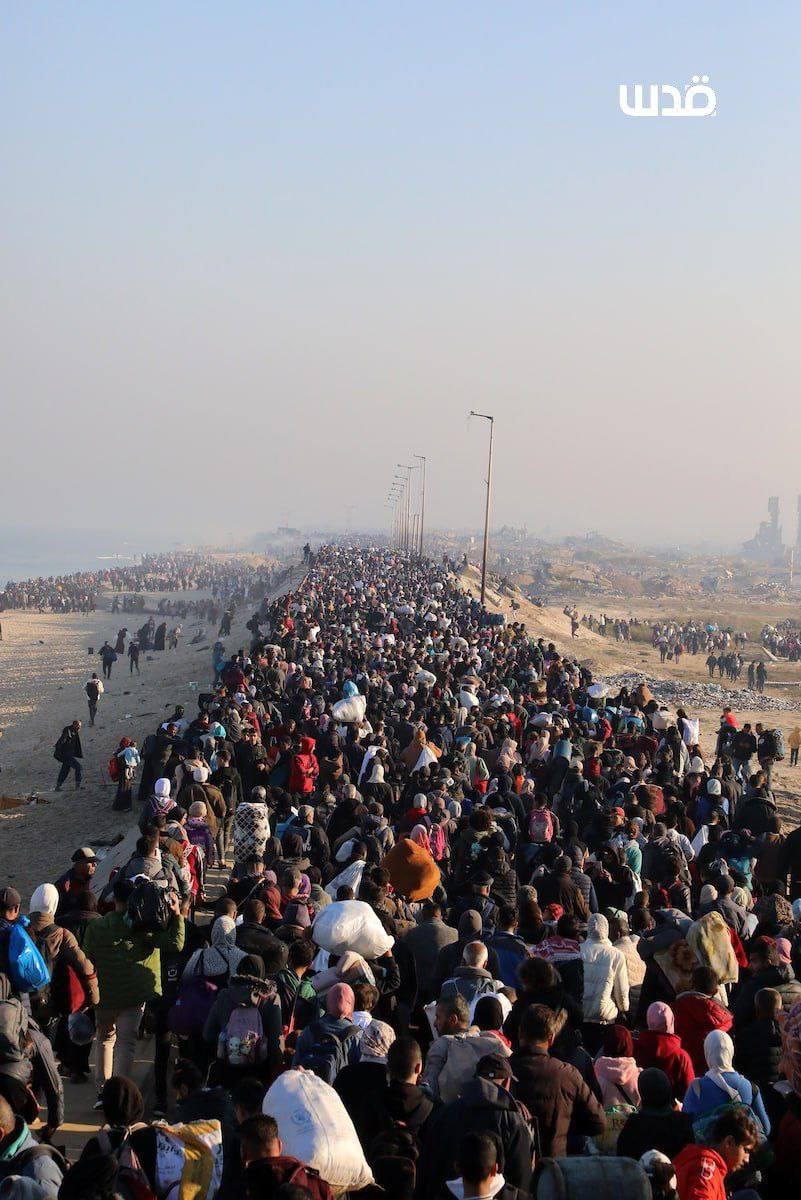
It highlighted the urgent need for advancing recovery projects in Gaza, ensuring aid delivery and clearing rubble without displacing Palestinians from the enclave.

Abdelatty also reviewed Egypt’s efforts to maintain the Gaza ceasefire deal, and implement all its terms.

Trump said during a news conference in Washington with Israeli Prime Minister Benjamin Netanyahu late Tuesday that the US “will take over” Gaza after relocating Palestinians elsewhere under an extraordinary redevelopment plan that he claimed could turn the enclave into “the Riviera of the Middle East.”

The US president first triggered uproar on Jan. 25 by suggesting that Palestinians in Gaza should be relocated to Jordan and Egypt, calling the enclave a “demolition site” after Israel’s war. His proposal, however, was vehemently rejected by Amman and Cairo.

A six-nation Arab ministerial meeting in Cairo on Saturday firmly rejected Palestinian displacement from Gaza and renewed calls for implementing a two-state solution to the Israeli-Palestinian conflict.

Trump’s proposal came after a ceasefire agreement took effect in Gaza on Jan. 19, suspending Israel’s genocidal war that has killed more than 47,500 Palestinians and left the enclave in ruins.

The International Criminal Court (ICC) issued arrest warrants in November last year for Netanyahu and his former Defense Minister Yoav Gallant for war crimes and crimes against humanity in Gaza.

Israel also faces a genocide case at the International Court of Justice for its war on the enclave.
Continue reading
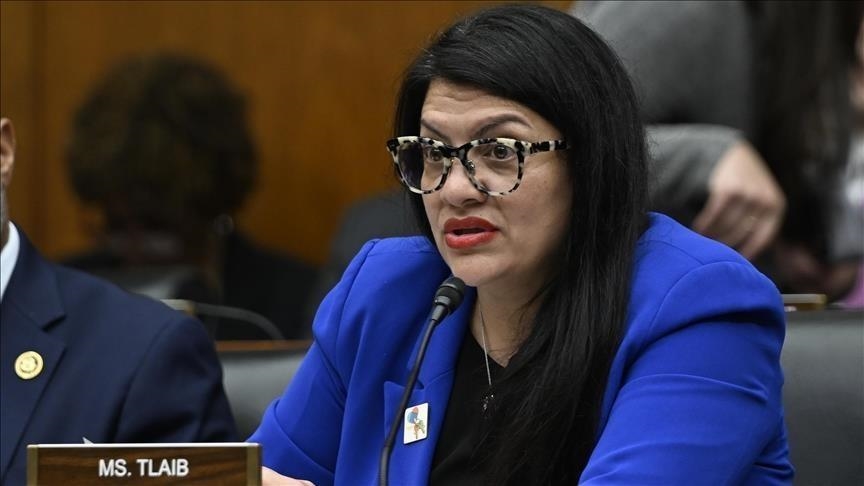
Stop Spewing ‘Fanatical Bulls…’ Rashida Tlaib Tells Trump

US Congresswoman Rashida Tlaib on Tuesday denounced President Donald Trump’s recent controversial proposal for Palestinians to leave the Gaza Strip, saying: “Palestinians aren’t going anywhere.”

“This president can only spew this fanatical bulls because of bipartisan support in Congress for funding genocide and ethnic cleansing. It’s time for my two-state solution colleagues to speak up,” Tlaib, the first Palestinian American woman to serve in Congress, wrote on X.

Earlier, rebuffing Trump’s comments on Gaza during a Monday White House meeting with Israeli Prime Minister Benjamin Netanyahu, Tlaib said the president is “openly calling for ethnic cleansing while sitting next to a genocidal war criminal.”

“He’s perfectly fine cutting off working Americans from federal funds while the funding to the Israeli government continues flowing,” she added, referring to Trump’s federal funding freeze ordered last week.

During his meeting with Netanyahu, Trump suggested that Jordan and Egypt should take in Palestinians from Gaza, calling the enclave a demolition site and uninhabitable.

He later doubled down on his proposal at a press conference with Netanyahu, saying the US “will take over the Gaza Strip, and we will do a job with it too,” according to Anadolu.

“We’ll own it and be responsible for dismantling all of the dangerous unexploded bombs and other weapons on the site, level the site and get rid of the destroyed buildings, level it out, (and) create an economic development that will supply unlimited numbers of jobs and housing for the people of the area,” Trump said as reported in the Turkish Anadolu news website.

Jordan, Egypt, and other regional players strongly rejected the proposal, while both the Palestinian Authority and Hamas condemned Trump’s remarks and rejected any attempt to displace Palestinians from their homeland.

Hamas called Trump’s proposal “a recipe for generating chaos and tension,” adding: “Our people in the Gaza Strip will not allow these plans to pass.”

Forcibly displacing a population without justification under international law constitutes a war crime under the Rome Statute of the International Criminal Court.

Continue reading
Jordan, Trump and The High Stakes of Politics

The recent remarks by US President Donald Trump suggesting the displacement of Gaza’s residents to Egypt and Jordan as a “practical solution” for Gaza’s reconstruction carries significant risks. This proposal not only overlooks the fundamental complexities of the issue, from the acceptance of displacement by Gaza’s residents to the logistical feasibility of relocating populations and securing the consent of all involved parties, but also reveals that forced displacement appears to be Trump’s primary solution, one that the region may have to contend with for years to come.

It is essential to remember that we are observing Trump in the early phases of his political return. He is eager to present himself as a strong and decisive leader capable of imposing solutions, even if they appear coercive. However, as with many theoretical ideas that seem simple at first glance, the real challenge lies in their practical implementation.

We are living through an unprecedented era. The events following October 7 have fundamentally altered the region. Gaza is witnessing destruction on a scale it has never seen before. Amid this devastation, Israel appears to be betting on worsening the humanitarian crisis, hoping to make life in Gaza unbearable for its residents. This coincides with difficulties in finding realistic reconstruction solutions or even implementing humanitarian relief efforts that adequately respond to the scale of the disaster. 

Israel’s strategic vision is focused on achieving demographic displacement in Gaza and redrawing its geographic landscape. These goals might seem attainable if the crisis continues, and the humanitarian catastrophe deepens. What is alarming, however, is that proposing Jordan as an option in this context may implicitly lay the groundwork for considering it a destination for displaced Palestinians from the West Bank as well, should this theory of forced displacement extend beyond Gaza. 

Indeed, Israel is actively pursuing this scenario by seeking to reshape the geography of the West Bank through dismantling densely populated areas, such as the refugee camps in Jenin, Nablus and Tulkarm. This objective aligns with the vision of the Trump administration, which supports Israel’s ambitions under the framework of “Judea and Samaria.” Neither Egypt nor Jordan has had sufficient opportunity to directly engage with the US administration to present alternatives or explain the security, economic, and political risks associated with these proposals. 

Jordan’s strategic response should focus on warning against these scenarios while presenting viable alternatives. Highlighting the potential shocks these steps could inflict on a key ally like the United States is crucial. Additionally, Jordan has several cards to play, particularly in the economic domain. These include regional energy projects, development initiatives, and the reconstruction of Syria. Such endeavours could offer the US tangible benefits across multiple fronts, forming the foundation for alternative approaches. 

In short, navigating Trump’s looming flood of proposals requires a nuanced understanding of American perspectives and avoiding direct confrontation whenever possible. At the same time, Jordan must strengthen its position with robust Arab support. Elevating strategic relations with Saudi Arabia is particularly crucial, given its dominant role in the current and upcoming phases and its centrality to Trump’s economic and political ambitions, including regional peace efforts. 

Nevertheless, Israeli Prime Minister Netanyahu’s visit to Washington may signal a new escalation in the region. The Gaza conflict remains unresolved, and tensions in the West Bank and Lebanon persist. If the conflict extends further to Iran, a broader escalation could stretch from Iraq to Iran, potentially resulting in the imposition of forced displacement as a grim humanitarian reality, especially if violence escalates once again in Gaza and intensifies in the West Bank.

Dr Amer Al Sabaileh is a professor and a columnist at the Jordan Times

Continue reading
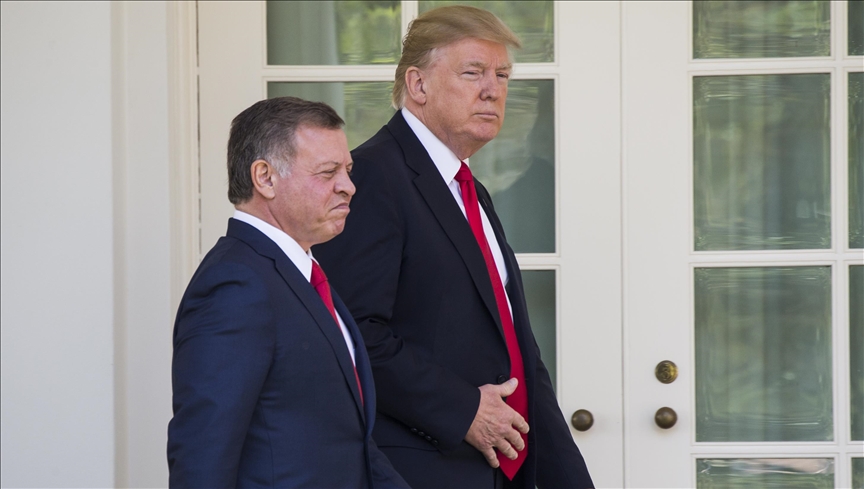
King Abdullah Meets Trump on 11 Feb.

Jordan’s King Abdullah II will meet with US President Donald Trump at the White House on Feb. 11, the royal court said on Sunday.

The visit comes upon an invitation from the US president, it said in a brief statement.

Trump suggested last weekend that Palestinians in Gaza should be relocated to Jordan and Egypt, calling the enclave a “demolition site” after Israel’s war. His proposal, however, was vehemently rejected by Amman and Cairo.

A six-nation Arab ministerial meeting in Cairo on Saturday firmly rejected Palestinian displacement from Gaza and renewed calls for implementing a two-state solution to the Israeli-Palestinian conflict.

Last week, Abdullah had a phone call with Trump, during which he underlined the importance of the US role in achieving peace and stability in the Middle East region according to Anadolu.

Continue reading
Hamas Calls Trump ‘Displacement Statement’ as ‘Absurd, Meaningless’

The Palestinian Hamas, Saturday, slammed the repeated US statements on displacing Palestinians from Gaza as “absurd and meaningless.”

In a statement, Sami Abu Zuhri, a senior Hamas leader, said the “plans to displace Palestinians from Gaza are absurd and meaningless,” stressing: “What the Israeli occupation failed to achieve by force, will not be accomplished through political maneuvers.”

“The repeated US announcements on displacing Palestinians from the Gaza Strip under the pretext of its reconstruction reflect a persistent complicity in the crime,” Abu Zuhri said according to Anadolu.

The Hamas leader considered the US administration’s insistence on the displacement plans for Gaza’s Palestinians as “a recipe for further chaos and tension in the region.”

On Friday, US President Donald Trump said he is “confident” Egypt and Jordan would take Palestinians from the Gaza Strip, stressing and affirming previous statements on the issue.

“I heard somebody said they’re not going to, but I think they will. I feel confident they will,” Trump said from the Oval Office.

Trump doubled down Thursday on his controversial proposal to relocate Palestinians from Gaza, insisting that Egypt and Jordan would comply, despite their repeated rejections.

“They will do it. They will do it. They’re going to do it, okay? We do a lot for them, and they’re going to do it,” Trump told reporters when asked if he would consider measures to pressure Cairo and Amman to accept his plan.

Trump suggested over the weekend to “clean out” Gaza and resettle Palestinians to Egypt and Jordan, describing the enclave as a “demolition site” after Israel’s genocidal war.

The two countries, however, vehemently rejected any call for the displacement or relocation of Palestinians from their land.

Trump’s proposal came after a ceasefire agreement took effect in Gaza on Jan. 19, suspending the Israeli war, that has killed more than 47,400 Palestinians, most of them women and children, since Oct. 7, 2023, according to Gaza’s health authorities. 

Trump’s proposal has received widespread condemnation, with critics calling it “ethnic cleansing” and a “war crime.” Many countries in the Muslim and Arab world as well as European nations such as France have firmly rejected the idea.

Continue reading