Is The West Turning Against Israel?

By Dr Ramzi Baroud

Is it finally happening? Is the West turning against Israel? Or are we, whether motivated by hope or driven by despair, simply engaging in wishful thinking? The matter is not so simple.

Last July, a significant number of countries and organizations signed the ‘New York Declaration,’ a strong statement that followed a high-level meeting titled, “Conference on the Peaceful Settlement of the Question of Palestine.”

The conference itself and its bold conclusion warrant a deeper conversation. What matters for now, however, is the identity of the countries involved. Aside from states that have traditionally advocated for international justice and law in Palestine, many of the signatories were countries that had previously supported Israel regardless of context or circumstance.

These mostly Western countries included Australia, Canada, and the United Kingdom, among others. Some of these nations are also expected to formally recognize the state of Palestine in September.

Of course, one has no illusions about the hypocrisy of supporting peace in Palestine while still arming the Israeli war machine that is carrying out a genocide in Gaza. That notwithstanding, the political change is too significant to ignore.

In the case of Ireland, Norway, Spain, Luxembourg, Malta, and Portugal, among others, one can explain the growing rift with Israel and the championing of Palestinian rights based on historical evidence. Indeed, most of these countries have historically teetered on the edge between the Western common denominator and a more humanistic approach to the Palestinian struggle. This shift had already begun years prior to the ongoing Israeli genocide.

But what is one to make of the positions of Australia and the Netherlands, two of the most adamantly pro-Israel governments anywhere?

In Australia’s case, media accounts argue that the friction began when the federal government denied an Israeli extremist lawmaker, Simcha Rothman, a visa for a speaking tour.

Israel quickly retaliated by ending visas for three Australian diplomats in occupied Palestine. This Israeli step was not just a mere tit-for-tat response but the start of a virulent campaign by Israeli Prime Minister Benjamin Netanyahu to wage a diplomatic war against Australia.

“History will remember Albanese for what he is: a weak politician who betrayed Israel and abandoned Australia’s Jews,” Netanyahu said, again infusing the same logic of lies and manipulation tactics.

Israel’s anger was not directly related to Rothman’s visa. The latter was a mere opportunity for Netanyahu to respond to Australia’s signature on the New York Declaration, its decision to recognize Palestine, and its growing criticism of Israel’s genocide in Gaza.

Though Albanese did not engage Netanyahu directly, his Home Affairs Minister, Tony Burke, did. He answered the accusations of weakness by boldly arguing that “strength is not measured by how many people you can blow up.”

This statement is both true and self-indicting, not only for Australia but for other Western governments. For years, and numerous times during the genocide, Australian leaders have argued that “Israel has the right to defend itself.” Since blowing people up hardly qualifies as self-defense, it follows that Canberra had known all along that Israel’s war is but an ongoing episode of war crimes. So, why the sudden, though still unconvincing, shift in position?

The answer to this question is directly related to the mass mobilization in Australia. On a single Sunday in August, hundreds of thousands of Australians took to the streets in what organizers described as the largest pro-Palestinian demonstrations in the country’s history. Marches were held in more than 40 cities and towns, including a massive rally in Sydney that drew a crowd of up to 300,000 people and brought the city’s Harbour Bridge to a standstill. These protests, which called for sanctions and an end to Australia’s arms trade with Israel, demonstrated the immense public pressure on the government.

In other words, it is the Australian people who have truly spoken, courageously standing up to Netanyahu and to their own government’s refusal to take any meaningful step to hold Israel accountable. If anyone should be congratulated on their strength and resolve, it would be the millions of Australians who relentlessly continue to rally for peace, justice, and an end to the genocide in Gaza.

Similarly, the political crisis in the Netherlands, starting with the resignation of Foreign Minister Caspar Veldkamp on August 22, 2025, is indicative of the unusually significant change in European politics toward Israel and Palestine.

“The Israeli government’s actions violate international treaties. A line must be drawn,” said Eddy van Hijum, the leader of the country’s New Social Contract Party and deputy prime minister.

The “line” was indeed drawn, and quickly so when Veldkamp resigned, ushering in mass resignations by other key ministers in the government. The idea of a major political crisis in the Netherlands sparked by Israeli war crimes in Palestine would have been unthinkable in the past.

The political shift in the Netherlands, much like in Australia, would not have happened without the massive public mobilization around the Gaza genocide that continues to grow worldwide. While pro-Palestine protests have occurred in the past, they have never before achieved the critical mass needed to compel governments to act.

Though these governmental actions remain timid and reluctant, the momentum is undeniable. People’s power is proving more than capable of swaying some governments to impose sanctions and sever diplomatic ties with Israel, not only through pressure in the streets but also through pressure at the ballot box.

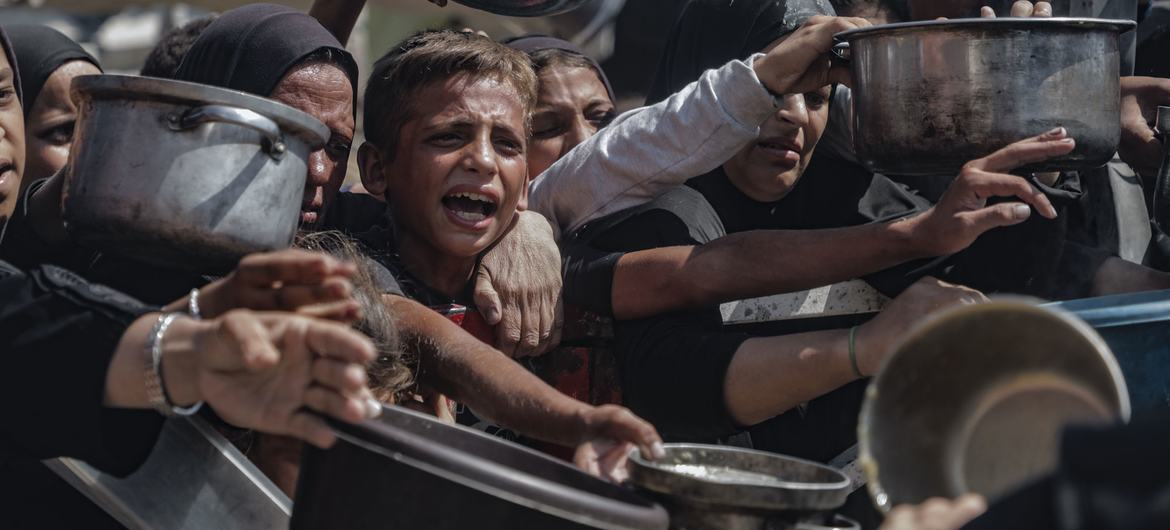
While the West has not yet fully turned against Israel, it may only be a matter of time. The precious blood of hundreds of thousands of innocent Palestinians in Gaza deserves for history to be finally altered. The children of Palestine deserve this global awakening of conscience.

Ramzy Baroud is a journalist, author and the Editor of The Palestine Chronicle. He is the author of six books. His forthcoming book, ‘Before the Flood,’ will be published by Seven Stories Press. His other books include ‘Our Vision for Liberation’, ‘My Father was a Freedom Fighter’ and ‘The Last Earth’. Baroud is a Non-resident Senior Research Fellow at the Center for Islam and Global Affairs (CIGA). He contributed this article to the Jordan Times.
Continue reading
7 States to UNSC: We ‘Deeply Deplore’ Israel’s Decision on UNRWA

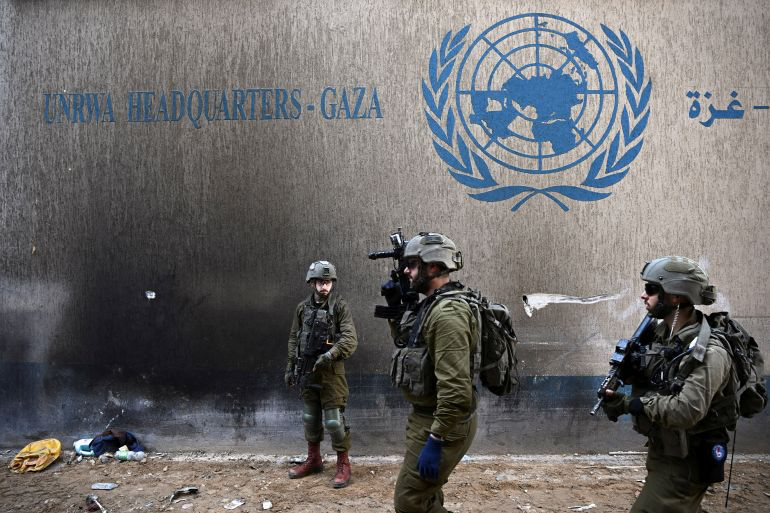
Belgium, Ireland, Luxembourg, Malta, Norway, Slovenia and Spain told the UN Security Council (UNSC) they “deeply deplore” the Israeli parliament’s decision to “abolish” UNRWA’s operations in the occupied West Bank and East Jerusalem.

“We condemn Israel’s withdrawal from the 1967 agreement between Israel and UNRWA and any attempt to obstruct its capacity to operate and carry out its UNGA mandate,” the group said in a joint statement to the UNSC.

The bloc also demanded the “suspension of the entry into force” of the Israeli laws banning UNRWA, which they said did not comply with international law and the UN Charter.

“We support UNRWA as part of our humanitarian commitment and our firm defence and respect of international law, including international humanitarian law,” they said.

UNRWA plays a critical role in providing healthcare and education in the occupied Palestinian territories. Since the outbreak of the genocide in Gaza on October 7, 2023, the agency has supplied 60% of the food entering the besieged strip.

Israel had told the UNSC on Tuesday that within 48 hours it would cut all contact with UNRWA, ban Israeli officials dealing with the agency, and require the closure of the organisation’s offices in areas under Israeli control.

“UNRWA must cease its operations and evacuate all premises it operates in Jerusalem, including the properties located in Maalot Dafna and Kafr Aqab,” Israel’s UN Ambassador Danny Danon told the council.

“The law prohibits UNRWA from operating within Israel’s sovereign borders and bans any communication between Israeli officials and the agency,” Danon said.

“Israel will terminate all collaboration, communication and contact with UNRWA or anyone acting on its behalf,” he said.

Philippe Lazzarini, commissioner-general of the UNRWA, told the UN Security Council on Tuesday that the ban, takes effect on January 30, would “heighten instability and deepen despair in the occupied Palestinian territory at a critical moment.”

“Since October 2023, we have delivered two-thirds of all food assistance, provided shelter to over a million displaced persons and vaccinated a quarter of a million children against polio,” Lazzarini told the Security Council.

“Since the ceasefire began, UNRWA has brought in 60 percent of the food entering Gaza, reaching more than half a million people. We conduct some 17,000 medical consultations every day,” he said according to the Quds News Network.

Continue reading
Which European States Are Arming Israel?

Many of the European countries continue to supply Israel with arms and weapons as it continues its military offensive on the Gaza Strip and in spite of the world accusation that Tel Aviv is committing genocide against the Palestinians.

Some European countries are top military suppliers, others are at the tail end but it is interesting to know that the great majority of European states sell weapons to Israel, its called the arms trade of Europe.

Anadolu compiled details of the European military sales to Israel since the outbreak of the war on Gaza after 7 October, 2023.

France, Italy and Germany, along with the United States have  accounted for 81% of the Middle East’s arms imports between 2019 and 2023, according to the Stockholm International Peace Research Institute (SIPRI).

Israel’s military spending spiked by 24% to $27.5 billion following its attacks on Gaza. It became the second-largest arms spender in the Middle East.

From 2014 to 2022, the European Union granted export licenses to Israel worth about €6.3 billion ($6.8 billion).

These weapons are suspected to have contributed to the deaths of more than 38,000 civilians in Gaza, including 10,000 women and more than 15,000 children, the Turkish news agency states.

Although some EU countries, including Belgium, Italy, the Netherlands and Spain, decided to halt arms sales to Israel, press reports maintain this trade has somehow continued.

Key European arms suppliers

Germany remains Israel’s largest European arms supplier, providing about 30% of Israel’s imports between 2019 and 2023. In 2023. This is whilst German arms deliveries to Israel increased tenfold to €326.5 million and peaking after 7 October.

Most of France’s arms exports in 2019-2023 went to Middle East states accounting for 34% of the total French exports. Paris is known to provide parts for Israel’s missile defense system, known as the Iron Dome.

Despite laws restricting arms sales to human rights violators, Italy sold €2.1 million worth of weapons to Israel in the last quarter of 2023. Italian Defense Minister Guido Crosetto claimed there have been no new arms transfers to Israel since 7 October, although there are reports of ongoing sales by companies such as Leonardo. Italy’s export licenses to Israel between 2014 and 2022, including for warships, small arms, artillery, aircraft and ammunition, worth €114 million.

The UK issued more than £448 million ($576 million) in arms licenses to Israel since 2015. In addition, 15% of the materials used in the production of the F-35 fighter jets purchased by Israel since 2016 are supplied by British companies, according to the London-based charity Action on Armed Violence.

Spain has not reported any arms sales to Israel since 7 October, but data from November 2023 shows a transfer of ammunition worth €987,000. Between 2014 and 2022, Spain issued export licenses worth €99 million, including for ammunition and military vehicles.

Other European suppliers

The Netherlands issued €19 million in export licenses to Israel between 2014-2022, peaking at €10 million in 2022 alone. A court ruling in the country in 2024 halted exports of F-35 parts to Israel, citing the risk of violations of humanitarian law.

Despite halting arms sales, Belgium transferred €46 million in arms to Israel between 2014 and 2022, including explosives and aircraft parts.

Portugal issued more than €12.5 million in export licenses to Israel, most of it for aircraft-related materials.

Austria’s arms licenses to Israel totaled €33 million, Slovakia’s €117 million, and the Czech Republic’s arms exports totaled €127 million from 2014-2022, with recent deliveries of ballistic vests and military equipment.

Hungary’s sales exceeded €15 million, with notable contracts for the production of drones involving Israeli and German companies.

Poland’s €4.9 million in arms exports to Israel, Slovenia’s €6.1 million and Romania’s €427 million included aircraft, military vehicles and ammunition transfers.

Bulgaria’s €49 million in arms included explosives and light weapons.

Serbia’s state-owned Yugoimport-SDPR reported €14 million in arms exports to Israel in early 2024.

The total value of the 21 export licenses between Greece and Israel was recorded at €7.6 million.

Nordic, Baltic countries

Sweden issued licenses worth less than €1.3 million for weapon sights and control systems, with a significant contract with Israel’s Elbit Systems worth $170 million in late 2023.

Norwegian companies have reportedly circumvented restrictions prohibiting arms sales to conflict zones through foreign subsidiaries.

Licenses issued from Denmark to Israel are worth more than €1 million, while the issuance of licenses worth €403,000 in 2022 was the largest sale ever between the two countries. The country is facing a lawsuit from a group of non-governmental organizations over arms exports to Israel.

Finland’s €2.4 million in licenses covered electronic equipment, armor and weapon sights.

Latvia’s €5.9 million in licenses peaked at €4.1 million in 2022. Estonia and Lithuania had minimal exports of around €300,000 each, mostly small arms.

Croatia, Luxembourg, Malta, Southern Cyprus

Croatia’s €681,000 in licenses covered armaments and ammunition. Export licenses between Luxembourg and Israel amounted to approximately €671,000, while the total value of Malta’s export licenses to Israel exceeded €17.5 million.

Southern Cyprus’ licenses were worth €97,000, with alleged support for Western military logistics to Israel, the Turkish news agency pointed out.

Israel, flouting a UN Security Council resolution demanding an immediate cease-fire, has faced international condemnation amid its continued brutal offensive on Gaza since an Oct. 7, 2023 attack by the Palestinian group Hamas.

Continue reading