‘Stalingrad of Palestine’ – Jabalia, Steadfast in The Face of Genocide

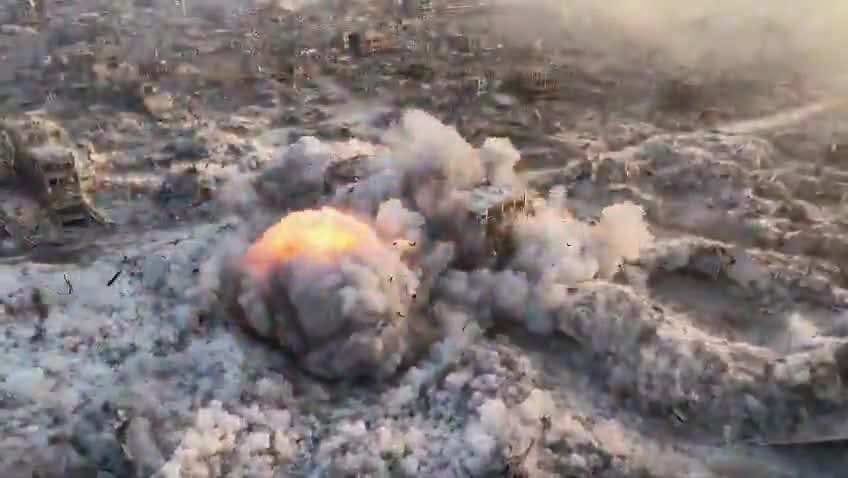
The recent Palestinian resistance operation in Jabalia, north Gaza Strip, which resulted in the killing of 3 Israeli soldiers and the wounding of 18 others, including two seriously, is a message of steadfastness and determination, written by the camp, 431 days after the genocidal war on the Strip.

The Israeli occupation army admitted in a statement that “the incident that occurred in Jabalia resulted from Palestinian gunmen firing an anti-tank missile at the soldiers.”

Israel’s Channel 14 said “10 gunmen attacked an army force using missiles and automatic weapons while it was on leave.”

‘Stalingrad of Palestine

The qualitative operation comes 66 days after the current Israeli occupation army’s attack on the northern Gaza Strip, armed with its military arsenal, amidst bombing, destruction, siege and starvation.

And so Arab activists and bloggers on the social media are now calling the steadfast Jabalia as the “Stalingrad of Palestine”.

“Stalingrad” is one of the major battles in history and a pivotal turning point in World War II, which took place between Germany (and its allies from the Axis powers) and the Soviet Union to control the Soviet city of Stalingrad (today called Volgograd) between the summer of 1942 and February 1943.

The battle ended with the surrender of the German Sixth Army, and marked the beginning of the end of Germany’s advance in this war.

Political researcher Saeed Ziad was an example of those who praised the heroism of the Jabalia Camp and its resistance that came out to break the back of the occupation, and wrote on his page on the X platform “Stalingrad, Jabalia”.

Under the hashtag “Jabalia, the Stalingrad of Palestine”, activist Baraa Rayyan wrote: “The steadfastness of Stalingrad was the beginning of the defeat of the Nazi invasion of Russia, and then the defeat of Nazism. Perhaps Jabalia’s steadfastness and fighting for 15 months, the last 3 of which were under a tight siege, will be the beginning of the defeat of the enemy and the expulsion of the aggression from beloved Gaza.”

Activist Anwar Qassem praised the Palestinian resistance operation in Jabalia, saying that “after 429 days of war and 66 days of a tight siege in the third battle (the occupation army’s attack on the northern Gaza Strip), Jabalia deserves the title of the Stalingrad of Palestine.”

Under the same hashtag, activist Muhammad al-Najjar praised Jabalia camp, “whose youth inherit the banner of fighting generation after generation and do not know the word surrender in their dictionary.”

He added in a tweet on his account: “Jabalia, 37 years after the outbreak of the first intifada from its alleys, and after 429 days with the Battle of the Flood of Al-Aqsa, and after 65 days of its siege in its third battle, a qualitative operation is being carried out.”

Another opinion refused to compare Jabalia to any other spot in the world, and considered that what is happening in the camp and the Gaza Strip is unlike any other spot in the world.

‘Jabalia is Jabalia’

In this regard, activist Ghazi Al-Majdalawi wrote: “I refuse to call Jabalia the Stalingrad of Palestine or any other name, Jabalia is Jabalia. Neither Stalingrad nor any spot in the world has what is happening in Jabalia happened in it, and no one in the world is more heroic than the people of Jabalia for us to emulate them.”

Activists considered that “Jabalia is unlike anyone”, and that “no force on earth, no matter how arrogant and tyrannical, can break the faith, will and belief of the people of the land,” stressing that “Jabalia and Gaza are two unique cases of steadfastness and faith.”

On 6 October, the Israeli occupation army launched a new and third military operation in the northern Gaza Strip under the pretext of “preventing the Islamic Resistance Movement Hamas from regaining its strength in the area.”

Late last month, Israeli Channel 13 described the fighting in the Jabalia and Beit Lahia camps, north of the Strip, as “harmful and difficult,” and estimated that there were about 200 Hamas fighters in Jabalia “fighting till death.”

According to Israeli army data, 816 officers and soldiers have been killed since the beginning of the war, including 384 since the large-scale ground operation in the Gaza Strip on 27 October, 2023, while resistance factions say that the occupation’s losses far exceed that in terms of soldiers and vehicles.

According to the same data, 33 Israeli officers and soldiers have been killed since the beginning of the current military operation in the northern Gaza Strip according to Al Jazeera.
Continue reading
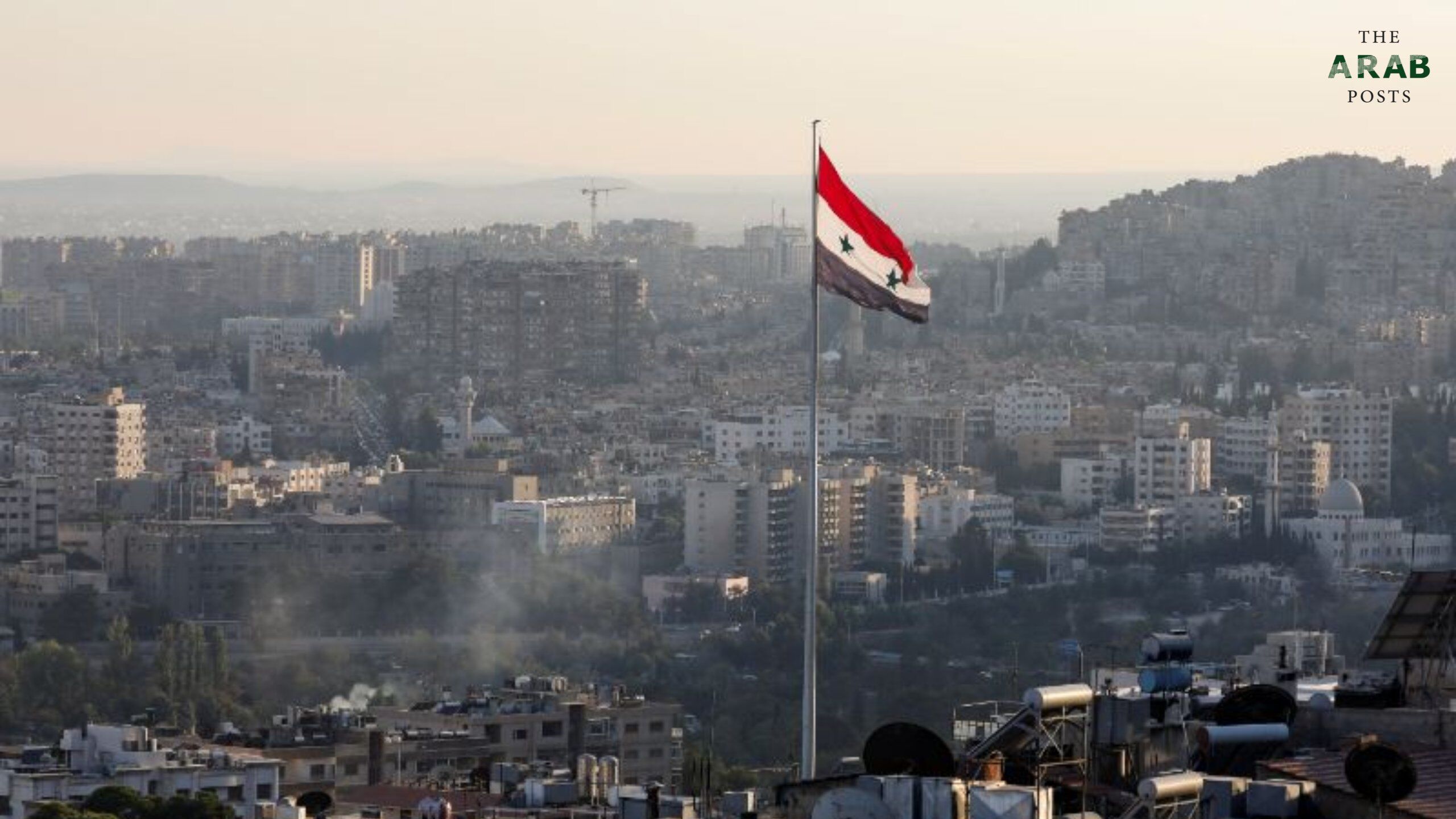
Syria: 10 Days That Shook The World

Dr Khairi Janbek

Without much ado, the western media is currently preoccupied with this question: Are the Syrian rebels Jihadis? This is while the Arab media appears to be in a state of euphoria about the Syrian rebels seen as liberators. The issue however is about two perspectives, the first being cautious about the next phase for the country, and this is for understandable reasons, while the second reflects optimism for the next stage and also for understandable reasons.

Now, the fear of dividing Syria on ethnic and sectarian grounds has its blueprint in the colonial history of Syria and certainly not a product of today and/or creative chaos utterances.

Looking back

In fact, on 1 July, 1922, the French colonial authorities divided Syria into federal statelets: statelet of Damascus, statelet of Aleppo, statelet of the Alawites, and the statelet of the Druze. Of course, the idea was that the country would be easier to rule and a regional and a sectarian balance would guarantee political stability. Of course, the Kurds were outside this formula as they were struggling to create an independent state of their own.

But what about Syria now, to paraphrase John Reed, after the 10 days that shook the world. Indeed, the two regional police stations in the region, Turkey and Israel seems to be gaining major influence in the current affairs, while the third police station, Iran, has lost out in this formula.

Rivalry

For all intents and purposes, no one is naive enough to think that the march towards Damascus could have occurred without Turkish support, and the Israeli foreign minister has confirmed that talks were held between his government and the Druze as well as the Kurds of Syria, whom he described as having good relations with them.

But what about the Russians? One would venture to say that they are like to stay in Syria as most probably, paying guests of the new Syrian government, renting their military installations from them.

Undoubtedly, no matter how much we can be optimistic about the future of all-inclusive democratic Syria, we will always reluctantly fall back on our cognitive dissonance regarding the case of Iraq, and make the mistake of comparison with the post-Saddam era of terrorism, sectarianism an ethnic strife.

This is simply because, we forget that in Iraq there was superpower which brought down the regime and destroyed all the functioning institutions of the country favoring when religious Islamic sect over another, and supporting one ethnicity against others. While in Syria, its the Syrians themselves brought down the Ba’ath regime.

On the face of it, the rebels don’t seem to want to be the new masters of Syria and they are working very hard to protect and preserve the functioning institutions of the country, and claim their adherence to pluralism and for an all inclusive new regime.

But two important questions remain outstanding, and only time will tell how these will unfold: To what extent will there be Turkish and Israeli influence on the emerging regime, and more importantly, what would be the share of those two police stations of the country?

In other words, how will Turkey perceive the future of the Kurds in Syria, and where does Israel see its border posts with the “new” Syria?

In all likelihood, the rebels will keep their word of wanting a stable pluralist Syria, but let us not forget also, that a future spark of ethnic, regional or sectarian conflict, will very likely turn all into extremists in the country.

Dr Khairi Janbek is Jordanian commentator based in Paris.

Continue reading
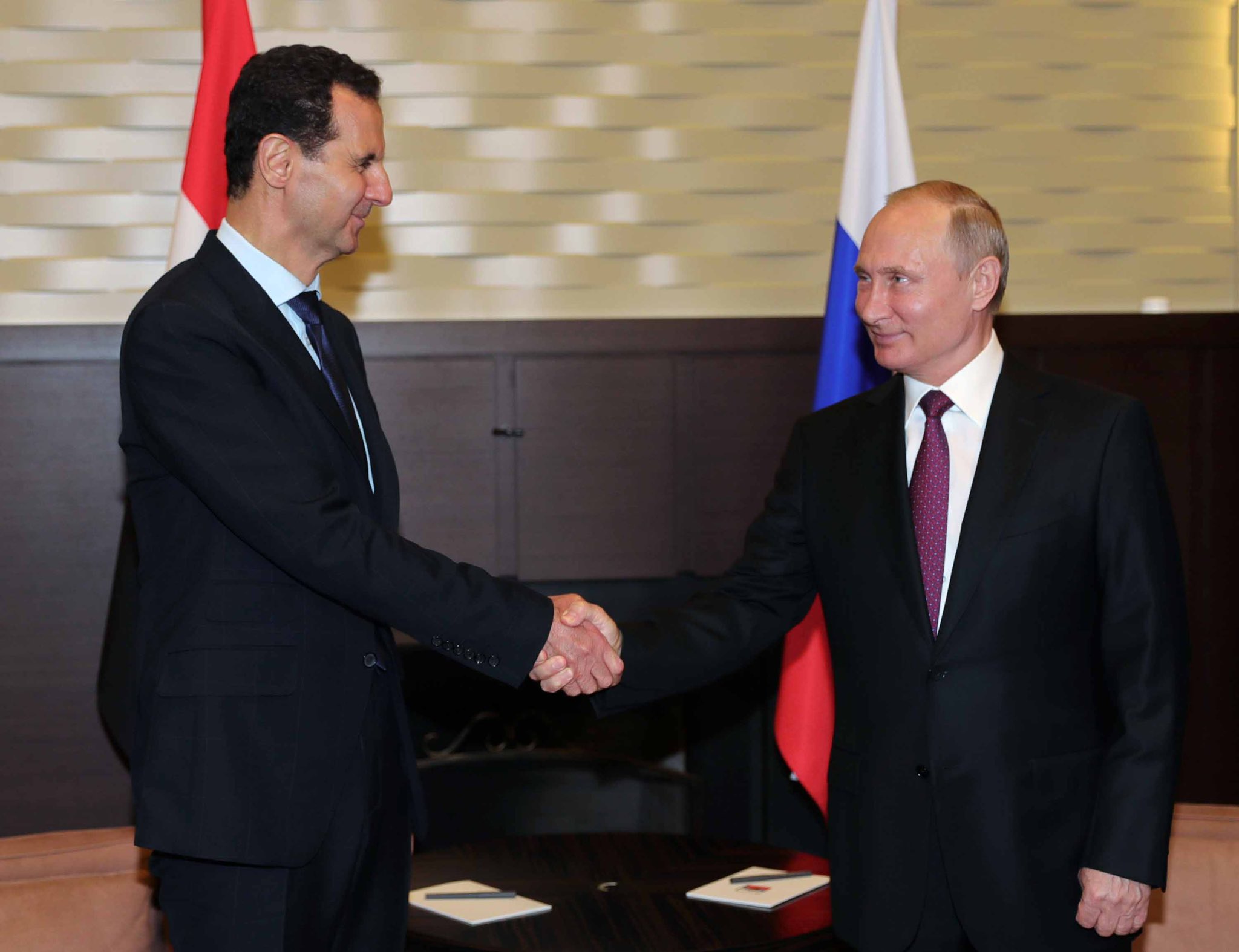
Al Assad in Moscow, Granted Asylum With Family

Former President of Syria Bashar Al Assad is now a Moscow resident and ends much speculation to his whereabouts.

After at least 10 hours of media rumors, Sunday, a Kremlin source confirmed to TASS, the state-owned news agency that Al Assad has arrived in Russia with his family and has been granted political asylum.

The news confirmed on Sunday night is trending on the social media with photos and images of him and his family.  

The source said that “President Assad of Syria has arrived in Moscow. Russia has granted them (him and his family) asylum on humanitarian grounds”.

The confirmation puts an end to the mystery of his whereabouts. News reports suggested earlier a plane took him early Sunday morning over Homs, took an eastern turn and disappeared off the radar screen.

It added fuel to the theory that it may have been shot by rebel groups who where taking over the country.

Continue reading
Domination Space For Common Space

By Dr Khairi Janbek

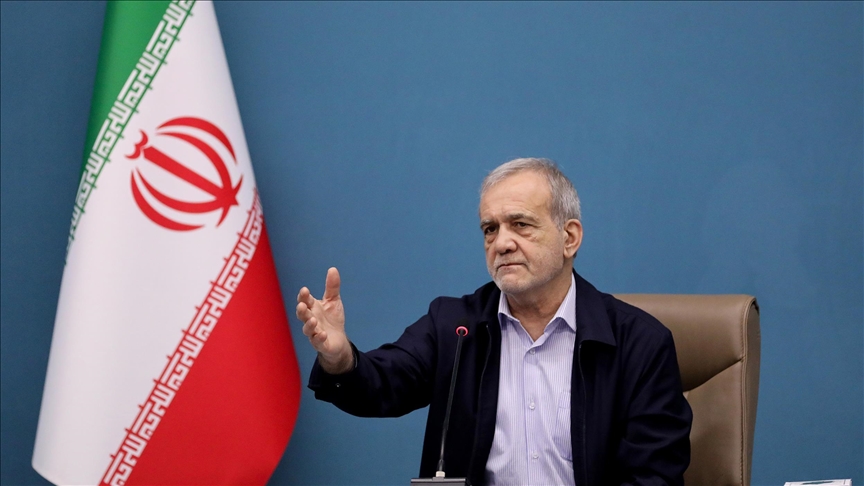
When we think of contemporary Iran, one always believes that the Arab Middle East had always been dominated by the three Non-Arab American allies; Iran under of the Shah, Turkey and Israel.

One thinks that those “neighborhood police stations’ were the guarantors of stability through their convergence, and at times contradictions, in the age of Cold War and oil. However, the Shah of Iran was deposed and the Anti-communist Cold War ended, but that didn’t mean that oil stopped becoming important nor that Russia and China were no longer threats.

One would say, that the rehabilitation of Iran and possibly turning it into a negotiations partner aims at keeping the third angle of the police stations triangle going, because non of the Arab countries, no matter how much they tried, could never replace Iran, because no Arab police station is permitted to emerge as a third angle.

Having said that, it would be beyond naive to think that the expansion of Iran’s power and influence happened by stealth or escaped the notice of the US and NATO.

After after all Iran grew to become a Red Sea country through its influence on the Houthis in Yemen, a Mediterranean country through its influence in Syria as well Lebanon through Hezbullah and the major Gulf country through its supporters in Iraq. 

In fact this Iranian domination of space is what has created a common space between all its long-arm organisations in the region.

Essentially, if we compare Iran to an octopus, all those various groups are its tentacles, and they all serve the purpose of Iran’s strategic interests, albeit not through a push-button approach, but through not taking any action which would not please their Persian master.  

Of course, this puts Iran in a strong position to be a major player in the region and an inescapable negotiations partner for the US, which is also convenient for the Americans, in order to remind their Arab allies who is their protector in a region policed by Turkey, Israel and Iran.

Of course this takes us to the point of saying that, for all intents and purposes, for the Americans a trusted adversary is more important than distrusted friends, and that it would be absurd to think that all those long arms of Iran in the Arab world can be amputated by military means; they certainly can be weakened, but without the consent of Iran and without the right price, so long as it remains behind them, nothing much can change.

At this point, from what one can only see, is that no one in their right mind or otherwise, will permit a war to emerge in which Israel is pitted against Iran and the US as well as NATO putting all their weight behind Israel and forcing the Arabs to choose their camp.  

That would be the scenario of the end of the world as we know it, or with major civil wars in the Arab countries controlled by the tentacles of Iran, and which no one wants.

Dr Khairi Janbek is a Jordanian writer based in ParisFrance

Continue reading
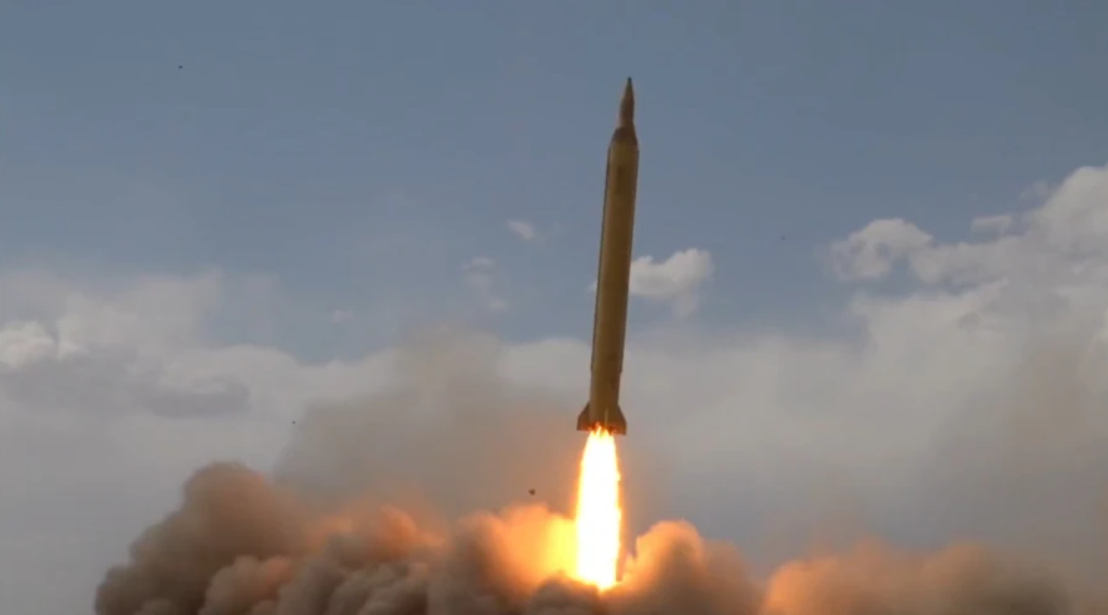
Israeli Strikes North Syrian Coast

An Israeli strike was launched from the Mediterranean Sea that targeted Baniyas in Syria.

“At approximately 00:20 a.m, the Israeli enemy launched an aerial aggression from the direction of the Mediterranean Sea west of Baniyas, targeting one of the points in the vicinity of Baniyas city.” a Syrian military source said in a statement.

The strike action which is trending on the social media caused manjor material damage according to SANA, the Syrian news aggency.

One report stated several massive explosions were heard in the northwest coast of Syria 30 kilometers north of the port of Tartus that is controlled by the Russians.

Continue reading