UN Begins Clearing 60 M. Tons of Debris in Gaza

The UN on Monday said it was encouraged by renewed Gaza ceasefire commitments, warning that recent violence risked undermining fragile progress, as recovery efforts – including a large-scale rubble removal project – slowly gain momentum across the war-ravaged enclave.

“We are encouraged that the parties have reaffirmed their commitments to implementing the ceasefire in Gaza and commend the steadfast efforts of the mediators,” said UN Spokesperson Stéphane Dujarric at the regular news briefing in New York.

“We do, however, remain concerned by all acts of violence in Gaza and the reported attacks and strikes that took place yesterday.”

Mr. Dujarric urged all sides to honour their obligations and avoid any action that could lead to renewed hostilities, reiterating the Secretary-General’s call for the release of the remains of all deceased hostages.

Over the weekend, Humanitarian Affairs chief Tom Fletcher wrapped up a visit to Gaza, where he met aid workers and inspected UN-supported projects, including a child nutrition centre, a hospital and a road clearance operation.

Debris removal underway

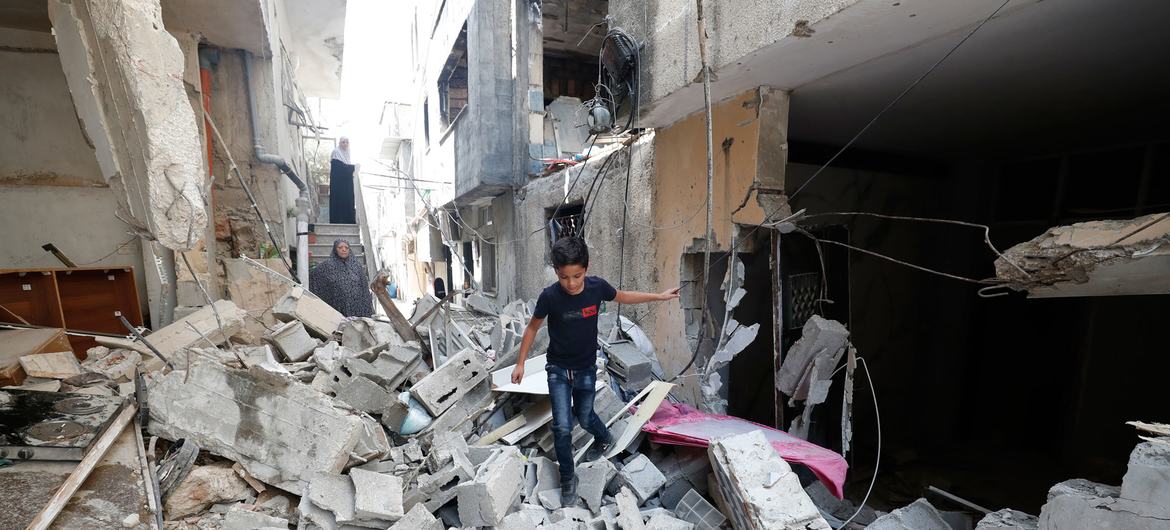
In Gaza City, the UN Development Programme (UNDP) has begun a major debris removal operation – the first phase of a comprehensive debris management plan aimed at restoring access to essential services such as hospitals and schools.

“Rubble represents a major challenge in Gaza, where the estimated amount is between 55 and 60 million tonnes,” said Jaco Cilliers, UNDP Representative in Palestine.

The UN agency taking the vital first step by clearing roads and recycling materials to pave new access routes and temporary facilities.

Dozens of diggers and other vehicles have been deployed along Al-Jalaa Street, where UNDP says it is working around the clock to open roads that have been blocked for months.

“This is a very arduous process and will take many years to complete,” Mr. Cilliers cautioned.

Aid crossings open

UN humanitarians also reported progress in aid delivery under the ceasefire, with the UN agency assisting Palestine refugees (UNRWA) expanding temporary learning spaces and partners resuming food parcel distributions in Deir al-Balah and Khan Younis.

“Over the weekend, we along with our partners continued to collect aid from the Kerem Shalom/Karem Abu Salem and Kissufim crossings. This included post-partum and hygiene kits, medical supplies, fuel, water and food,” Mr. Dujarric said.

He added that on Sunday, for the first time, Israeli authorities allowed the UN to deploy monitors at the Kissufim crossing.

“This is of course a welcome development, as it provides us with much-needed visibility into that segment of the pipeline,” Mr. Dujarric added according to UN News.

Continue reading
UN Condemns Israeli Onslaught on Gaza City

The United Nations has condemned the deadly Israeli military offensive in Gaza City that occurred this past weekend, Spokesperson Stéphane Dujarric said on Monday.

The situation “is having an appalling impact on civilians enduring suffering and starvation,” he told journalists in New York.

“The United Nations condemns the deadly escalation of the Israeli military offensive which took place over the weekend across Gaza City, with scores of people reportedly killed or injured,” he said.

“We reiterate our call for the protection of civilians and humanitarian personnel and full respect for international law.” 

70,000 more uprooted

In a post on X on Sunday, the head of the UN agency for Palestine refugees, UNRWA, said that 10 of its buildings in Gaza City had been hit in the past four days alone, including seven schools and two clinics which were being used as shelters.

Almost 70,000 displaced people have headed south in the past few days, while UN partners counted 150,000 movements from north to south this past month.

Partners further reported that one third of malnutrition treatment facilities in Gaza City have shut down due to forced displacement orders, while the Ministry of Health today reported 425 deaths overall due to malnutrition and starvation in Gaza, about a third of which were children.

A call for ‘unimpeded humanitarian access’

Over the past few days, UN partners have managed to distribute 40,000 additional meals each day. As of Saturday, 558,000 daily meals were prepared and distributed by 20 UN partners to 116 kitchens.

“However, health services continue to be heavily constrained, since clinics have suspended their services due to insecurity and displacement orders,” warned Mr. Dujarric, adding that in Deir Al-Balah, only a few ambulances remain in order and are able to serve the thousands of people in need.

Additionally, 77 per cent of the road networks in Gaza have been damaged and according to UN aid coordination office OCHA, humanitarian aid continues to be obstructed.

On Sunday, only four of the 17 missions that the UN coordinated with the Israeli authorities were facilitated. Seven missions were denied, one of which was meant to deliver water tanks to the north, while another four were impeded in the field, and two were cancelled by the organisers.

Nevertheless, three humanitarian missions were accomplished, including the collection of fuel and food cargo from the Kerem Shalom/Karem Abu Salem crossing.

“Our humanitarian colleagues continue to call for unimpeded humanitarian access,” stressed Mr. Dujarric. “Aid should flow at scale through multiple crossings into and within Gaza, including the north,” accoeding to UN News.

Continue reading
UN: Gaza Aid is ‘Drop in The Bucket’

The UN humanitarian affairs chief has welcomed Israel’s decision to allow limited aid to cross into Gaza after 11 weeks of complete blockade – but significantly more is needed “starting tomorrow morning”.

Tom Fletcher said in a statement on Monday that nine UN trucks were cleared to enter the southern Kerem Shalom crossing earlier in the day.

“But it is a drop in the ocean of what is urgently needed…We have been reassured that our work will be facilitated through existing, proven mechanisms. I am grateful for that reassurance, and Israel’s agreement to humanitarian notification measures that reduce the immense security threats of the operation.”

Alarm over Israeli bombardment: UN chief

The UN Secretary-General on Monday expressed his alarm over the intensifying air strikes and ground operations in Gaza “which have resulted in the killing of hundreds of Palestinian civilians in recent days, including many women and children, and, of course, large-scale evacuation orders.”

António Guterres reiterated his call for the rapid, safe, and unimpeded delivery of humanitarian assistance at scale directly to civilians, in order to avert famine, alleviate widespread suffering, and prevent further loss of life.

Briefing reporters on Monday, UN Spokesperson Stéphane Dujarric said Mr. Guterres “welcomes the ongoing efforts by the mediators to reach a deal in Gaza. He has repeatedly warned that the continued violence and the destruction will only compound civilian suffering and heighten the risk of a broader regional conflict.”

He added that the Secretary-General “firmly rejects any forced displacement of the Palestinian population.”

Minimise risk of aid theft

Relief chief Fletcher said in his statement that he was determined to ensure UN aid reaches those in greatest need and make sure that any risk of theft by Hamas or other militants battling Israeli forces in the Strip amid a new offensive, would be minimised.

He said the UN aid coordination office, OCHA, had realistic expectations: “Given ongoing bombardment and acute hunger levels, the risks of looting and insecurity are significant.”

UN aid workers are committed to doing their jobs, “even against these odds,” he said, thanking humanitarian colleagues for their courage and determination.

Practical plan

“The limited quantities of aid now being allowed into Gaza are of course no substitute for unimpeded access to civilians in such dire need,” Mr. Fletcher continued.

The UN has a clear, principled and practical plan to save lives at scaleas I set out last week.”

He called on Israeli authorities to:

  • Open at least two crossings into Gaza, in the north and south
  • Simplify and expedite procedures together with removing quotas limiting aid
  • Lift access impediments and cease military operations when and where aid is being delivered
  • Allow UN teams to cover the whole range of needs – food, water, hygiene, shelter, health, fuel and gas for cooking

Ready to respond

Mr. Fletcher said to reduce looting, there must be a regular flow of aid, and humanitarians must be permitted to use multiple routes.

“We are ready and determined to scale up our life-saving operation Gaza and respond to the needs of people, wherever they are,” he stressed – calling again for the protection of civilians, a resumption of the ceasefire and the immediate and unconditional release of all hostages.

He concluded saying the operation would be tough – “but the humanitarian community will take any opening we have.”

UN News

Continue reading
Israel Starves Gaza For Politics

Israel’s move to prevent all aid from entering the Gaza Strip after Hamas reportedly refused to accept a plan to continue with phase one of the fragile ceasefire has had an immediate impact, including a 100-fold increase in the price of flour and vegetables.

That’s according to the UN aid coordination office, OCHA, which said on Monday that the Kerem Shalom, Erez and Zikim crossing closures means that vital humanitarian assistance, including thousands of tents, can’t be delivered to civilians in need.

Phase one of the ceasefire mediated by Egypt, Qatar and the US expired on Saturday, with Hamas calling on Israel to move on to the next agreed phase – but Israel is calling instead for a continuation of phase one through the end of the Holy Month of Ramadan in line with a proposal from the top US envoy to the region.

January’s ceasefire deal has seen the release of 33 Israeli hostages who’ve been held captive since the 7 October terror attacks, with around 1,900 Palestinian prisoners exchanged.

“The ceasefire has provided the opportunity to distribute food, to distribute water, as well as shelter assistance and medical aid, allowing nearly everyone in Gaza to receive food parcels,” said UN Spokesperson Stéphane Dujarric, briefing reporters in New York.

“Our humanitarian partners tell us that following the closure of the crossings into Gaza yesterday, flour and vegetable prices increased more than 100-fold. Partners are currently assessing the stocks that are currently available,” he added.

Ceasefire, ‘a critical lifeline’: UNICEF    

The UN children’s agency, UNICEFwarned that the stoppage of aid deliveries into Gaza will quickly lead to devastating consequences for children and families who are simply struggling to survive.

“The aid restrictions announced yesterday will severely compromise lifesaving operations for civilians,” said Edouard Beigbeder, UNICEF Regional Director for the Middle East. “It is imperative that the ceasefire – a critical lifeline for children – remains in place, and that aid is allowed to flow freely so we can continue to scale up the humanitarian response.”

The agency said that between 19 January and last Friday, almost 1,000 UNICEF trucks had crossed into the enclave carrying clean water, medical supplies, vaccines, therapeutic food and other materials.

Since the start of the ceasefire on 19 January, UNICEF and partners have provided warm clothing to 150,000 children in Gaza and increased daily water distribution for nearly half a million people living in more remote areas, Mr. Dujarric said.

Nearly 250,000 children and thousands of pregnant and breast-feeding mothers have received nutritional supplements since the ceasefire took effect.

Over the past two weeks, in Rafah, Khan Younis and Deir al Balah, aid partners have distributed vegetable seed kits for gardening to try and encourage more diverse diets.

Around 1,500 water distribution points are now operating across Gaza – double the number operational at the start of the ceasefire. “However, partners tell us that pipes and spare parts for maintenance are urgently needed,” said Mr. Dujarric.

Classrooms open

Across Gaza, more than 100 public schools have reopened, allowing around 100,000 students back into the classroom.

In Gaza City and North Gaza, UN partners will use tents to ensure children can continue learning, with some wood pallets recycled into school furniture.

OCHA teams visited a displacement site in Khan Younis on Monday where around 1,200 people are staying. These communities have not been allowed to return to their homes, which are located in the buffer zone.

OCHA is working to mobilise assistance to meet their needs.

Meanwhile in the occupied West Bank, OCHA reports that ongoing operation by Israeli forces continues to drive humanitarian needs in northern areas. Humanitarian partners continue to face movement restrictions.

UN News

Continue reading
UN Slams Israel’s ‘Unprecedented Displacement’ on The West Bank

The UN human rights office, OHCHR, on Friday condemned the intensifying Israeli military operation in the northern West Bank, warning that nearly 40,000 Palestinians have been displaced already amid an “alarming wave” of violence and destruction.

Since the start of the offensive on 21 January, Israeli forces have killed at least 44 Palestinians, including five children and two women, in Jenin, Tulkarem and Tubas governorates, and four refugee camps in those areas, according to OHCHR.

Many of those killed were unarmed and posed no imminent threat, said the UN rights office, calling the killings “part of an expanding pattern of Israel’s unlawful use of force in the West Bank where there are no active hostilities.”

‘Unprecedented’ displacement

OHCHR also highlighted an unprecedented scale of mass displacement not seen in decades in the occupied West Bank.

It cited reports from displaced residents of a pattern where they were led out of their homes by Israeli security forces and drones under the threat of violence.

They are then forced out of their towns with snipers positioned on rooftops around them and houses in their neighbourhoods used as posts by Israeli security forces,” the office said.

Testimonies collected by OHCHR describe Israeli forces threatening residents who were told they would never be allowed to return. One woman, who fled barefoot carrying her two young children, said she was denied permission to retrieve heart medication for her baby.

In Jenin refugee camp, bulldozed roads were photographed with new street signs reportedly now written in Hebrew.

“In this regard, we reiterate that any forcible transfer in or deportation of people from occupied territory is strictly prohibited and amounts to a crime under international law,” OHCHR stated.

Legal obligations

The office stressed that displaced Palestinians must be allowed to return to their homes and called for immediate, transparent investigations into the killings.

“Military commanders and other superiors may be held responsible for the crimes committed by their subordinates if they fail to take all necessary and reasonable measures to prevent or punish unlawful killings,” it stated.

OHCHR also reiterated Israel’s obligations under international law, including ending its unlawful presence in the Occupied Palestinian Territory as rapidly as possible and evacuating all West Bank settlements immediately.

“In the meantime, as the occupying power, Israel must ensure the protection of Palestinians, the provision of basic services and needs, and the respect of Palestinians’ full range of human rights,” the office said.

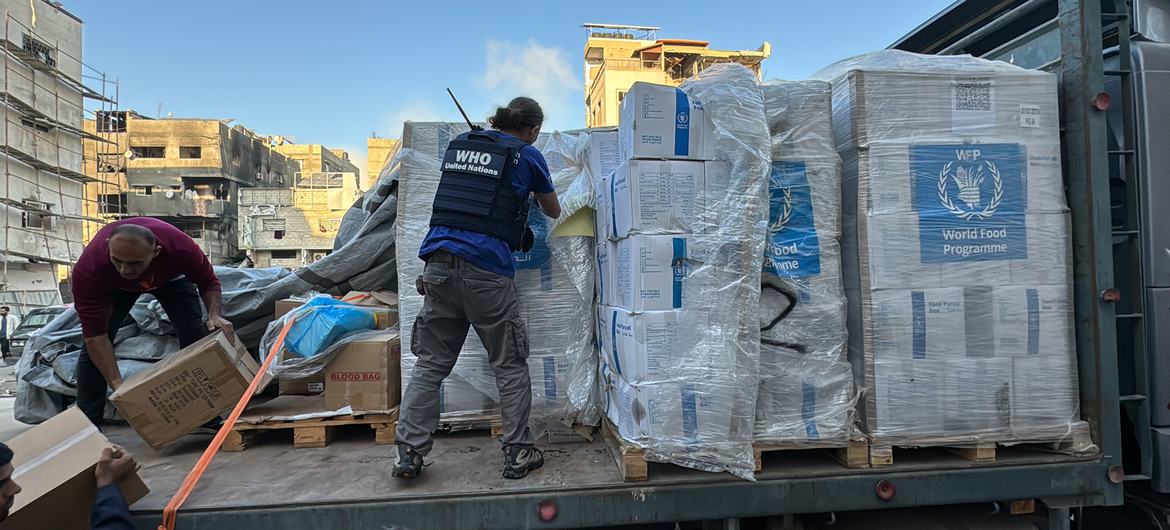
WFP aid trucks cross into Gaza via the Zikim and Kerem Shalom border crossings.

© WFP

WFP aid trucks cross into Gaza via the Zikim and Kerem Shalom border crossings.

Humanitarian update

Meanwhile in Gaza, the UN World Food Programme (WFP) reported on Friday it had reached more than 860,000 men, women and children with food parcels, hot meals, bread and cash assistance since the start of the fragile ceasefire.

UN Spokesperson Stéphane Dujarric told journalists at a regular news briefing in New York that over 19,000 metric tonnes of WFP food have entered Gaza.

The agency has also distributed nutrition packs to some 85,000 people, including children under five, and pregnant and breastfeeding women, and provided more than 90,000 people with cash assistance in the past two weeks.

Efforts are also underway to establish more food distribution points, especially in North Gaza, to reduce travel distances, transport costs and protection risks for families,” Mr. Dujarric said.

Fuel deliveries, schools reopening

In addition, the World Health Organization (WHO) distributed 100,000 litres of fuel to hospitals in Gaza City on Friday, having delivered about 5,000 litres of fuel to Al Awda Hospital, in North Gaza governorate the day before.

In southern Gaza, education partners in Rafah are preparing for the reopening of at least a dozen schools as displaced families return to their home areas, Mr. Dujarric said.

“As you know, schools across the Strip had been used as shelters for Palestinians displaced during 15 months of hostilities. In Khan Younis and Deir al Balah, partners are providing cleaning materials to restart learning activities,” he added.

UN News

Continue reading