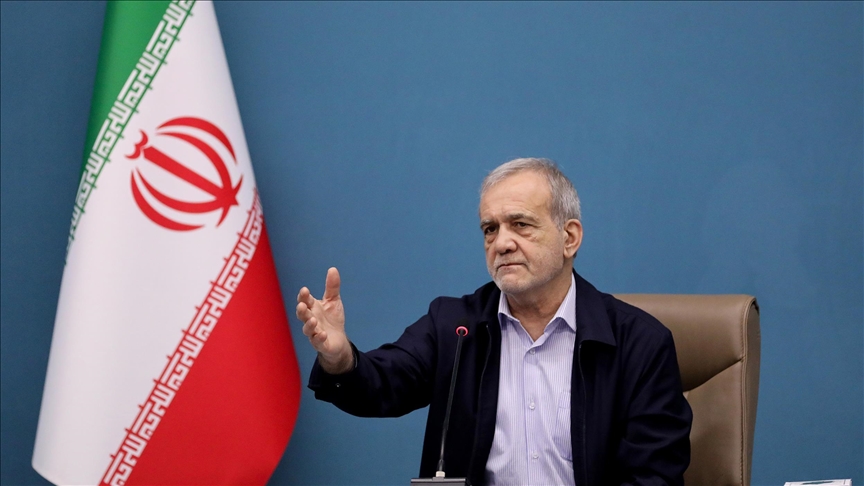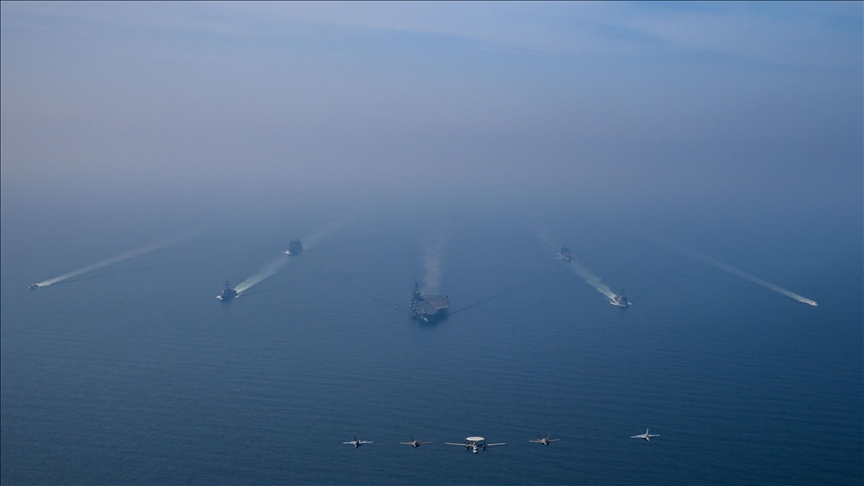
Al Duwairi: Attack Shows Strong Iran, Israel’s Intelligence Failure

Military expert Major-General Fayez Al-Duwairi said the latest Iranian attack reflects a new intelligence failure for Israel, stressing it was different from its True Promise attack that took place last April, and reflects seriousness in its response.

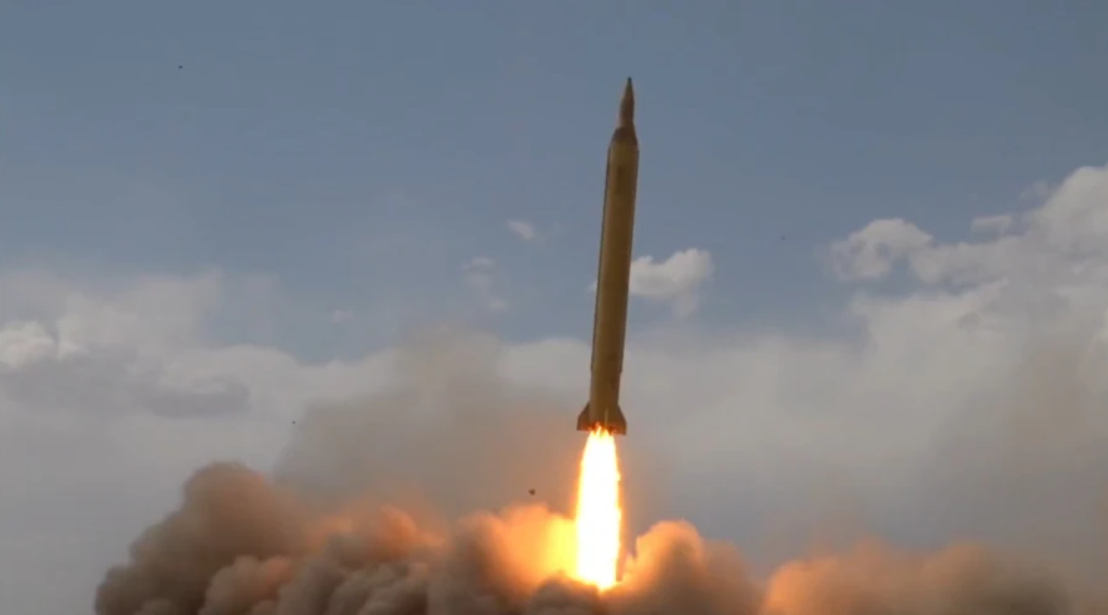
The recent attack was carried out from several areas in Iran which reflects good preparation, especially since each batch of the trajectories headed towards specific targets. He noted the missiles used were hypersonic, which reflects Tehran’s seriousness in its response, Al-Duwairi said on Al Jazeera.

The military expert stressed the call by Israeli army spokesman Daniel Hagari for people to leave the underground shelters a few minutes before the Iranian Revolutionary Guard announced the launch of another wave of missiles represents a major intelligence failure on the part of Israel.

Al-Duwairi added this latest attack reflects great coordination for Iran, adding the great silence that preceded the launch is a credit to Tehran as it was different from the attack last April.

Although the results of the strike and its losses are not yet known, Al-Duwairi said the at least 250 missiles cannot but cause losses.

Possibilities of others entering

Israel said it will respond to this attack regardless of the repercussions, while Iran’s UN mission warned any Israeli response to this attack will be met with a devastating response.

The strategic expert pointed out Iran is still committed not to strike any US military bases in Middle East region, and that the Ain al-Assad base was targeted by the Islamic Resistance in Iraq. He said this puts us in a state of great confusion.

He said this latest attack on Israel will lead to the erosion of the strategic gains Prime Minister Benjamin Netanyahu keeps boasting about and in saying he will change the shape of the Middle East.

He pointed out Iran has already sent a clear message that any counterattack to this one will be met with a devastating response, indicating Israel may be subjected to strikes from the Houthi Ansar Allah group in Yemen and from the Lebanese Hezbollah.
Continue reading
Dialectic of Converging Interests

By Dr Khairi Janbek

One’s experience has always been in peace building and not war mongering, therefore try to understand that to make a paradigm shift can make one fall into the transition gap.  

From the start I can say I have been wondering about the daily carnage, murder and destruction in the Middle East. Point one, how come a country like Israel, well-endowed with superior technology, can pinpoint the time and space accurately of the Hezbollah leaderships, same with Hamas, and assassinates them with impunity, fails to see the coming of 7 October from merely across the border? 

Some said that Israel has been fighting Hezbollah for a long time which enabled it to organize infiltrations and plans for assassinations, but isn’t its war against Hamas has been just for the same length of time?

So can Israelis accuse their own state with negligence, or is this so-called negligence carries notions that are more than meets the eye?

Now, what about Israel carrying out land operations across the border into Lebanon, for all intents and purposes, this would be the ideal time with the Hezbollah command in disarray? Or is it really that fact that Israel has no intention of doing so a priori?

To explain what I mean bluntly, after all the expected new leader of Hezbollah is Hashem Safi el Deen; he is through and through Iran’s man, his brother is also the bureau chief of Hezbollah in Tehran, all the top ranking commanders of the Iran allied groups in Syria and Iraq will be also through and through Tehran’s men and strictly under its direct command.

Therefore, the most logical conclusion is that Iran neither sold out Hezbollah nor any other its allies, but rather sold out the leaderships of those allied organizations in order to end their autonomy.

Which could mean also, Israel’s intentions are not actually the elimination of the allied organisations of Iran, but rather the elimination of their leaders in a dialectical formula of convergence with its Iranian enemy

Dr Khairi Janbek is a Jordanian writer based in Paris and the above opinion is that of the author and doesn’t reflect crossfirearabia.com.

Continue reading
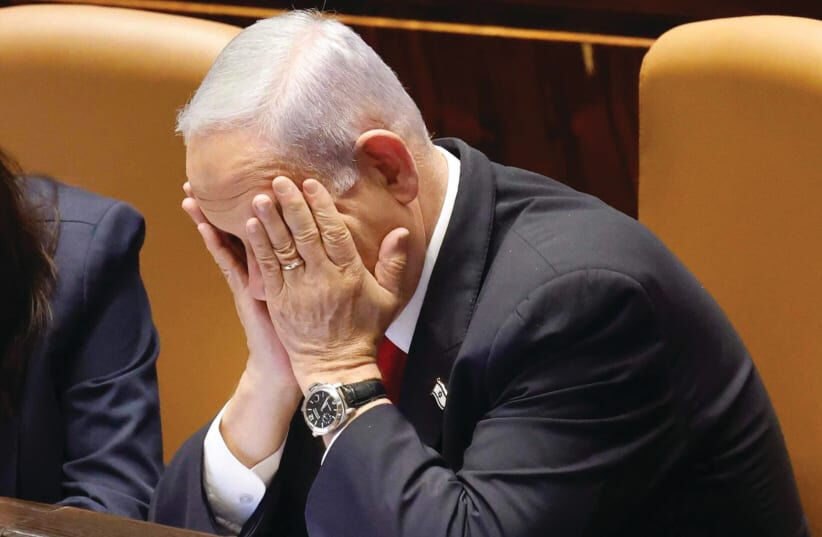
Netanyahu is ‘Enslaving The National Interest’ – Ex-Security Chief

Prime Minister Benjamin Netanyahu is “enslaving Israel’s national interest in the service of his own political, personal and criminal interests,” according to a former member of Israel’s National Security Council.

Most Israelis believe Netanyahu is “operating for his own political interests and not for the national interest,” Eran Etzion, former deputy head of the council, told Anadolu.

“I’m one of those in the majority who believe that this is the case.”

This is evident in how the Netanyahu government has “deliberately” failed in achieving its war goals, he said, adding that Israel has made some progress but remains far from eliminating all of Hamas’ military capabilities and governmental abilities in Gaza.

“I, as an analyst, cannot say that Israel achieved its goals, and I can say that the fact that Israel did not achieve its goals is by design,” said Etzion, a non-resident scholar at the Middle East Institute in Washington.

This government “deliberately did not want to achieve all those goals because they want to extend the war for the political reasons,” he asserted.

On Israel’s recent assassinations of Hamas and Hezbollah leaders, Etzion emphasized that “targeted killings are not an alternative for a real political strategy.”

Hamas’ political chief Ismail Haniyeh was killed on 3 August while visiting the Iranian capital Tehran for the inauguration of President Masoud Pezeshkian, a day after Hezbollah commander Fuad Shukr was targeted in an Israeli airstrike in a southern suburb of Lebanon’s capital Beirut.

While Hamas and Iran have blamed Israel for Haniyeh’s killing, Tel Aviv has not confirmed or denied its responsibility.

A day later, the Israeli military claimed it had intelligence that Hamas military commander Mohammad Deif was killed in a July 13 airstrike in Gaza’s Khan Younis area.

The Palestinian group, however, has not confirmed Deif’s death, while it announced Yahya Sinwar as Haniyeh’s successor on Tuesday.

“Personally, I don’t think they (the assassinations) were strategically effective. They might have been effective tactically … but they’ve proven that they can recuperate pretty quickly,” said Etzion, who also served as the head of policy planning at the Israeli Foreign Ministry.

“This is certainly not a strategy,” he added.

‘Acting for the instigation of a wider regional war’

Regarding the future course of Israel’s war on Gaza, Etzion pointed out that there is a split within the country and its leadership.

The public and the “wider defense establishment” are in favor of signing a deal for a cease-fire and the release of hostages, he said.

However, Netanyahu and some of his ministers, notably the far-right extremist ministers, are openly advocating for and “acting for the instigation of a wider regional war,” he added.

“Most Israelis are ready to sign the deal as it is. The negotiators themselves are ready to sign. The minister of defense, head of the IDF, head of the Shin Bet, they’re all saying let’s sign,” Etzion said.

This position, according to the former government official, reflects “both the genuine Israeli national interest and the will of the majority of Israelis.”

“But Netanyahu is putting up new obstacles because his personal interest … is to prevent the deal, rather than to sign it.”

He pointed out that public opinion regarding the war on Gaza has changed over the past 10 months “as the actual situation on the ground turned out to be not as favorable as they hoped.”

Most Israelis, around 60% or 70%, now want to end the war, although they are still divided over the long-term solution, he said.

“I share the conclusion that the national interest dictates ending the war, releasing the hostages, going for elections, replacing our political leadership and our military leadership that failed catastrophically on Oct. 7 … going for a national reconstruction on multiple levels. That’s what we need in the coming years,” Etzion added according to the Turkish news agency.

Continue reading
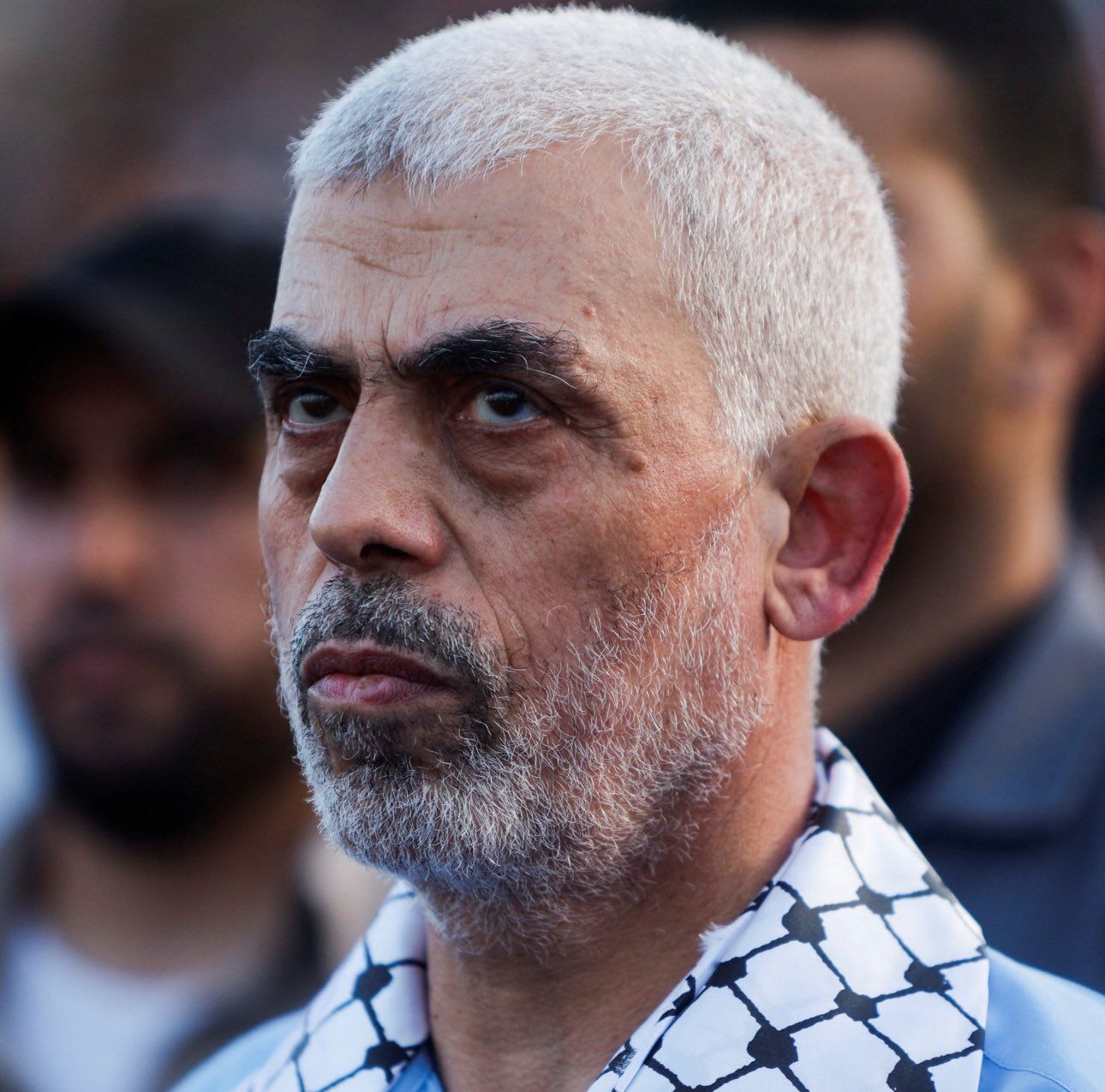
Yahya Sinwar: ‘Israel’s Most Dangerous Man’

The Islamic Resistance Movement, Hamas, has officially announced Yahya Sinwar as the new head of its political bureau. Sinwar succeeds the late Ismail Haniyeh, who served as the leader of the Islamic movement up until Israel assassinated him in Tehran last week.

The social media is buzzing about the news of the selection of Sinwar as the next chief of the political bureau.

Many say the selection of Yahiya Sinwar to lead Hamas is being described as “Israel’s worst nightmare now unfolding.”

Israeli analyst Avi Issachharoff says Hamas has chosen the most dangerous person to lead it while one Israeli officer tweeted “we [Israel] made a mistake in assassinating Haniyeh so Sinwar becomes the head of Hamas.”

Hamas’s quick and unanimous selection of Sinwar as president demonstrates the movement’s vitality, said Osama Hamadan, head of Hamas in Beirut.

Hamas’s message is that it has chosen someone who has been entrusted with the fight on the ground in Gaza for more than 300 days, he added.

The Israeli Walla website stated that sirens went off in Ashkelon and Sderot after Sinwar’s appointment was announced.

Sinwar, a prominent leader within Hamas, is deemed to be the architect of the Al-Aqsa Flood operation on 7 October, 2023, which inflicted significant human and military losses and shook the image of Israel’s intelligence and security agencies before the world, the Quds News Network reported.

And as a result, Israel announced that Sinwar’s elimination is one of the objectives of its offensive in the Gaza Strip.

Sinwar is considered one of Hamas’s most knowledgeable leader about the Israeli mindset. He is also regarded as one of ‘the hawks’ within the movement, which can influence the course of negotiations on a prisoner exchange deal. This comes after Hamas, under Haniyeh, had shown significant flexibility the Quds website reported.

Continue reading
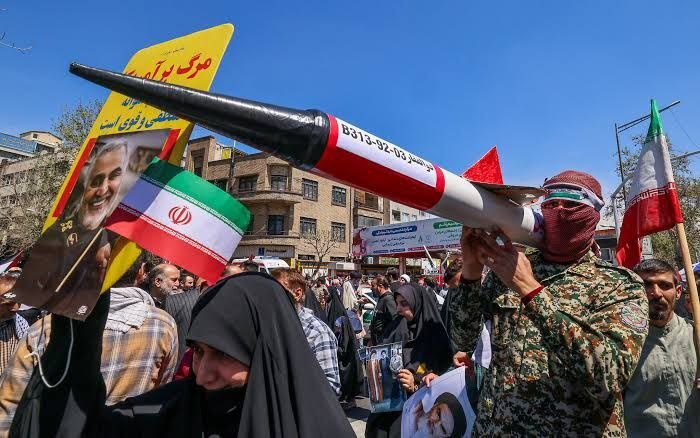
Expert: Iran to Launch Strike on Israel Soon

Military expert Dr Nidal Abu Zeid said the resistance is provening it still has the ability to continue confronting the Israel occupation forces after 301 days. As evidence of that it launched a rockets barrage towards the Jewish settlements sorrounding Gaza from the southern region.

He added this is an area witnessing one of the largest military operations these days.

Abu Zeid added to Jo24 Israeli forces introduced a new brigade to fight in Gaza – so-called the Jerusalem Brigade affiliated to the Central Military Region – and not from the brigades of the Southern Military Region responsible for operations in Gaza.

Its confirms the extent of the attrition affecting the Israeli combat units from the Palestinian resistance groups in Gaza, the military expert said.

Abu Zeid pointed out the Israeli occupation army withdrew its Seventh Brigade in east of Khan Yunis recently due to the heavy losses they incurred amongst their ranks and has instead deployed the Jerusalem Brigade.

The continuing media statements about Hezbollah and Iran’s response to the assassination of martyrs Ismail Haniyeh and Fouad Shukr confirms that its coming military action on Israel will not be delayed, he said.

Waiting for the hit

This is especially in light of the repositioning of the Hezbollah units in southern Lebanon, withdrawal of Iranian militias from Deir Ezzor, Syria and the fact that most airlines stopped their flights to Ben Gurion Airport in Tel Aviv.

Abu Zeid explained the clip circulating about the explosion in the building where Ismail Haniyeh was in Tehran is not true. He noted this clip is an old one, published on the occupation army’s website targeting a house in Attara, north Ramallah.

He added the coincidence of its publication now with the New York Times item comes within Israel’s attempt to show the explosion was caused by a device placed inside the building where Haniyeh was staying.

Abu Zeid this is being stressed to shatter the image of Iranian intelligence and show its been compromised. He added however, all indications show the area targeted was by an advanced missile launched from outside Iran, specifically from a base in Azerbaijan.

Continue reading