Israel Must Not Be Allowed to End UNRWA

As Israel shuts down UNRWA in Gaza and the occupied West Bank, the move serves a strategic purpose: Undermining Palestinian national liberation and the right of return.

Sara Troian

By Sara Troian

This week, Israel’s ban on the United Nations Relief and Works Agency (UNRWA) takes effect, cutting off its services in its two main areas of operation in Palestine; namely, Gaza and, the occupied West Bank, including east Jerusalem.

Established in 1949 in response to the Nakba, UNRWA was meant to provide humanitarian aid and protect Palestinian rights until a just resolution to the refugee crisis was achieved. Central to this is the Palestinians’ inalienable right of return, which Israel has consistently denied.

Beyond the 5.4 million UNRWA-registered refugees, at least five million more Palestinians have been forcibly displaced by Zionist colonisation. The right of return belongs to them all.

Calculated attack on Palestine

In October, the Israeli parliament passed two bills targeting UNRWA. The first prohibits the agency from operating within the 1948 borders. The second bars Israeli officials from engaging with UNRWA in any capacity.

These laws are designed to remove Palestinian rights to a homeland and further weaken the agency that serves them. They also mark the culmination of decades of attacks by Israel and its allies seeking to dismantle UNRWA as part of the broader Zionist settler-colonial project.

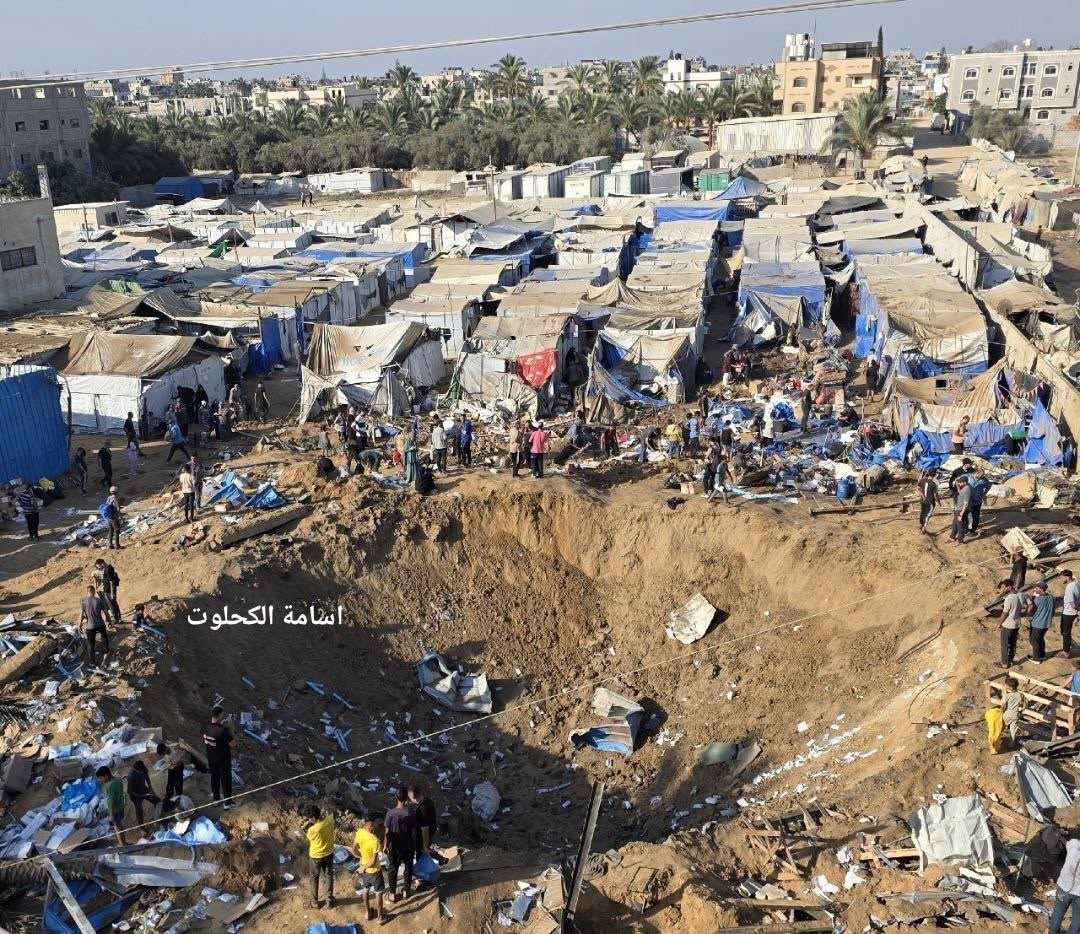
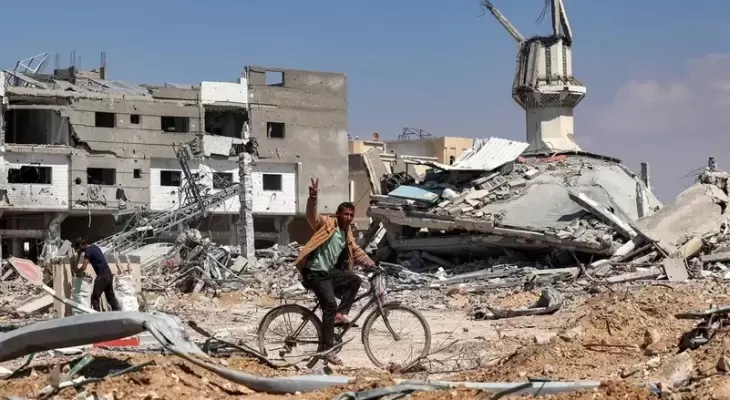
For the 2.1 million Palestinians in Gaza, this will cripple efforts to rebuild the warmth of their homes and the safety of life-sustaining infrastructure vaporised by Israel’s annihilatory violence. This will further obstruct the restoration of life and the healing from nights spent beneath skies ablaze with fire and days suspended between slow and quick death in dwindling food rations.

In the West Bank and east Jerusalem, 49,000 students will be forced out of UNRWA schools, and will be left either without education or, in Jerusalem, to the whims of Israeli curricula that distort, dehumanise and erase their history and culture.

Nearly a million Palestinians will be denied medical care. The loss of thousands of jobs will further drive Palestinians into economic precarity, deepening the cycle of engineered de-development.

Political goals and neoimperial strategies

The dismantling of UNRWA is not just a humanitarian crisis; it is a political manoeuvre. Zionism has slated Palestine for erasure as part of a broader regional strategy. In this imperialist framework, the US and EU finance oppression, Israel enforces it, the local bourgeoisie complies, and the UN provides a thin veil of legitimacy.

The timing of the ban aligns with Israel’s shifting tactics. While the intensity of genocide in Gaza has momentarily slowed, violence in the West Bank—particularly in Jenin and Tulkarem refugee camps—has escalated. Zionist forces use airstrikes to destroy life-sustaining infrastructure, obstruct healthcare, and drive mass evacuations, all while continuing the daily expansion of settlements and mass arrests.

Palestinians today face the same oppressive forces as during the 1936-39 revolt: self-serving leadership, Arab regime complicity, and Zionist-imperialist domination.

At the core of these dynamics is Palestinian refugeehood—a fundamental consequence of Zionist colonisation. Since 1948, Israel has displaced over 10 million Palestinians, most, descendants from the Nakba, severing them from their homeland.

The right of return threatens Zionism’s foundation because it challenges Israel’s colonial reality, built on destruction and displacement.

The Zionist-Western axis‘ attacks on UNRWA aim to depoliticise its mandate, while crystallising Palestinian refugeehood into a permanent humanitarian crisis to be managed.

While the status of Palestinian refugees and their right of return cannot be solely determined by UNRWA or any international agency–as it is a condition that stems from the implementation of Zionist settler-colonialism– these attacks weaken the agency’s ability to advance Palestinian political claims within the UN.

Moreover, heavy reliance on donor-driven funding has transformed the agency into a semi-corporate entity, dependent on fluctuating foreign funding, further undermining its capacity to support Palestinian political aspirations. This, however, is a symptom of the neoliberal exploitation that, disguised as humanitarianism, treats Palestinians as disposable and expendable subjects to Western imperial expansion.

Palestinians are therefore held hostage by a global structure designed to rob them of their autonomy. This is reflected, for example, in the fact that all senior UNRWA officials are non-Palestinian, making decisions for 5.4 million refugees, yet often against their quest for national liberation.

Integration?

Meanwhile, US imperialism has dealt another blow by freezing all USAID projects–except for those in Israel and Egypt– and halting military aid to all countries except Israel, Egypt and Jordan.

The suspension of USAID serves as a coercive tool to absorb the thousands of Palestinians whom Israel’s brutal campaign aims to expel in the coming months. For example, in Jordan, where USAID plays a critical role in supporting public services like healthcare, justice, and water supply, the freeze pressures the Kingdom to participate in this plan, which has been in the works for years, but only recently the US has openly encouraged Egypt and Jordan to endorse a new wave of forced Palestinian exile.

In recent years, experts and international bodies have proposed integration into host countries or resettlement in third countries as pathways to securing a modicum of rights and emancipation for Palestinians who have been forcefully encamped for over seven decades.

While access to civil and political rights in places of exile is crucial, these proposals must not be weaponised to suppress the central struggle for return. At this moment, such narratives risk legitimising forced expulsions, under the guise of legal solutions, erasing Palestinian claims from the global agenda.

Access to rights must never serve as a strategy to downplay or marginalise the central struggle for return and efforts to secure it. At this moment, it is crucial to recognise how such narratives and solutions can be exploited—either to hinder Palestinian survival amid genocide or to suppress resistance against forced displacement.

Read More

Türkiye condemns Israel’s ban on UNRWA in occupied Palestinian territories

Many Palestinians in the West Bank already hold Jordanian citizenship—remnants of the Nakba and Oslo. If Palestinians will be forced to relocate to Jordan or third states under the pretense of naturalisation and resettlement, this strategy, framed as a legal solution, will ultimately legitimise further forced expulsions and erase their right of return from the international agenda.

This will facilitate the elimination of 10 million Palestinians as a political force challenging Western imperial expansion.

The time for return

A just solution cannot emerge from the very institutions and structures that have perpetuated Palestinians’ plight and the plundering of their land for decades. Such alternatives merely rebrand subjugation of the people.

The answer lies in the steadfastness of Palestinians themselves. Over the past 16 months, in defiance of over a century of disenfranchisement and exile, including 480 days of settler-colonial erasure, Palestinians alone have transformed return from a distant dream, into a tangible reality.

As displaced Palestinian in Gaza flood back towards their destroyed homes in Gaza City, Beit Lahiya, Jabaliya, and Beit Hanoun, this marks only the beginning of their Great March of Return. Eighty percent of Gaza’s population descends from those expelled from 247 villages in central-southern Palestine through waves of Zionist massacres.

This must be the guiding principle for any just and lasting solution—one that restores Palestinians to their homes, land, and dignity from which they have been forcibly expelled for far too long.

SOURCE: TRT World


Sara Troian

Sara Troian

Sara Troian is a Hume PhD Scholar in the Department of Law and Criminology at Maynooth University. Her PhD research examines the tension between international law and settler-colonialism in Palestine.
Continue reading
7 States to UNSC: We ‘Deeply Deplore’ Israel’s Decision on UNRWA

Belgium, Ireland, Luxembourg, Malta, Norway, Slovenia and Spain told the UN Security Council (UNSC) they “deeply deplore” the Israeli parliament’s decision to “abolish” UNRWA’s operations in the occupied West Bank and East Jerusalem.

“We condemn Israel’s withdrawal from the 1967 agreement between Israel and UNRWA and any attempt to obstruct its capacity to operate and carry out its UNGA mandate,” the group said in a joint statement to the UNSC.

The bloc also demanded the “suspension of the entry into force” of the Israeli laws banning UNRWA, which they said did not comply with international law and the UN Charter.

“We support UNRWA as part of our humanitarian commitment and our firm defence and respect of international law, including international humanitarian law,” they said.

UNRWA plays a critical role in providing healthcare and education in the occupied Palestinian territories. Since the outbreak of the genocide in Gaza on October 7, 2023, the agency has supplied 60% of the food entering the besieged strip.

Israel had told the UNSC on Tuesday that within 48 hours it would cut all contact with UNRWA, ban Israeli officials dealing with the agency, and require the closure of the organisation’s offices in areas under Israeli control.

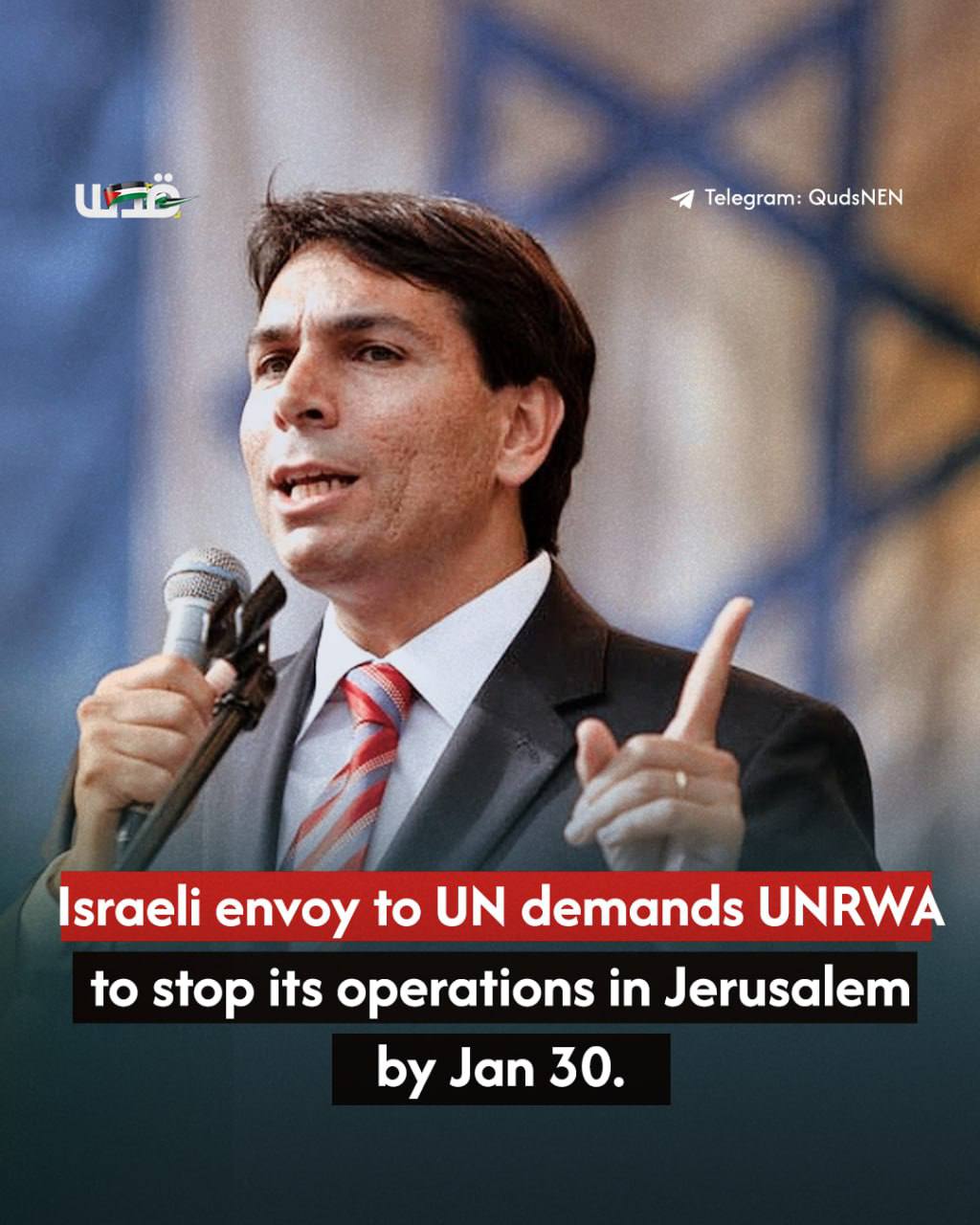
“UNRWA must cease its operations and evacuate all premises it operates in Jerusalem, including the properties located in Maalot Dafna and Kafr Aqab,” Israel’s UN Ambassador Danny Danon told the council.

“The law prohibits UNRWA from operating within Israel’s sovereign borders and bans any communication between Israeli officials and the agency,” Danon said.

“Israel will terminate all collaboration, communication and contact with UNRWA or anyone acting on its behalf,” he said.

Philippe Lazzarini, commissioner-general of the UNRWA, told the UN Security Council on Tuesday that the ban, takes effect on January 30, would “heighten instability and deepen despair in the occupied Palestinian territory at a critical moment.”

“Since October 2023, we have delivered two-thirds of all food assistance, provided shelter to over a million displaced persons and vaccinated a quarter of a million children against polio,” Lazzarini told the Security Council.

“Since the ceasefire began, UNRWA has brought in 60 percent of the food entering Gaza, reaching more than half a million people. We conduct some 17,000 medical consultations every day,” he said according to the Quds News Network.

Continue reading
Israel Orders UNRWA Shutdown in Jerusalem

Israel’s UN ambassador, Danny Danon, announced on Tuesday that the Israeli government will sever all ties with the United Nations Relief and Works Agency for Palestine Refugees (UNRWA). Danon demanded the agency cease operations and vacate all its facilities in Jerusalem within 48 hours.

UNRWA plays a critical role in providing healthcare and education in the occupied Palestinian territories. Since the outbreak of the genocide in Gaza on October 7, 2023, the agency has supplied 60% of the food entering the besieged strip.

Danon’s statement came ahead of a UN Security Council meeting discussing Israel’s recent legislation to end UNRWA’s legal presence in Palestine. The law, passed by the Knesset, takes effect on January 30.

“The law prohibits UNRWA from operating within Israel’s sovereign borders and bans any communication between Israeli officials and the agency,” Danon said. He emphasized that Israel will terminate all cooperation and communication with UNRWA or any entity representing it.

Danon also informed Security Council members that Israel will stop collaborating with UNRWA within 48 hours. He insisted the agency must halt its activities and evacuate its facilities in occupied Jerusalem.

UNRWA Commissioner-General Philippe Lazzarini addressed the Security Council, warning that the ongoing attacks on the agency harm the lives and futures of Palestinians across the occupied territories. “This undermines their trust in the international community and jeopardizes any prospects for peace and security,” he said.

Lazzarini highlighted that 650,000 Palestinian students in Gaza have been out of school for nearly two years. He stressed the urgent need for UNRWA to continue supporting them.

Ahead of the law taking effect, Danon told reporters, “Israel will halt all ties with UNRWA and anyone acting on its behalf as of January 30.” He clarified that the decision was not made lightly or hastily, calling it a “necessary” move rather than a political one according to the Quds News Network.

Continue reading
Israel Tell Us UNRWA to ‘Pack Up And Leave’

The Israeli envoy to the UN, Danny Danon, sent a letter to UN Secretary-General Antonio Guterres, demanding that UNRWA cease its operations in the Israeli-occupied territories, including Jerusalem, by the end of January 2025.

“UNRWA is required to cease its operations in Jerusalem, and evacuate all premises in which it operates in the city, no later than 30 January 2025,” Danny Danon stated in the letter.

Continue reading
1 Million Kids Need Mental Health Support in Gaza

Meeting a week after a ceasefire paused the war in Gaza, after it raged for almost 470 days, the Security Council discussed the plight of children, with speakers calling for their needs to be prioritized, through the rebuilding of educational infrastructure, the provision of psychosocial support and ensuring a surge of humanitarian aid to the Strip.

“A generation has been traumatized,” Tom Fletcher, Under-Secretary-General for Humanitarian Affairs and Emergency Relief Coordinator, told the Council, pointing to the United Nations Children’s Fund (UNICEF) finding that 1 million children need mental health and psychosocial support for depression, anxiety and suicidal thoughts.

Nonetheless, today’s briefing marks “one of the rare times we are able to highlight positive developments”, he said, with the ceasefire providing a reprieve from relentless hostilities for Palestinians; allowing Israeli hostages and imprisoned Palestinians to be reunited with their families; and allowing a surge in life-saving humanitarian aid into Gaza. “Children have been killed, starved and frozen to death,” he said, adding:

“Some died before their first breath — perishing with their mothers in childbirth.” Citing conservative estimates indicating that over 17,000 children are without their families in Gaza, he stated that an estimated 150,000 pregnant women and new mothers are now in desperate need of health services.

Outlining the UN and its partners’ stepped-up response across the Gaza Strip in recent days to meet the needs of 2 million people across Gaza, he said they were enabled by improved operating conditions, including safe, unobstructed humanitarian access, the absence of hostilities and the almost complete cessation of criminal looting.

Such operations included the provision of life-saving services; delivering food parcels and flour and working to reopen bakeries; and distributing fuel to ensure that critical services, such as healthcare and water pumping, can run on back-up generators, he said, underscoring: “At the centre of this, as always, is United Nations Relief and Works Agency for Palestine Refugees in the Near East (UNRWA).”

He went on to express alarm over the situation in the West Bank, where record-high levels of casualties, displacement and access restrictions witnessed since October 2023 have intensified since the announcement of the ceasefire. Voicing alarm over attacks by Israeli settlers on Palestinian villages and an ongoing military operation in Jenin causing death and displacement, he urged the Council to ensure the ceasefire is maintained and to ensure that international law is respected across the Occupied Palestinian Territory of Gaza and the West Bank, including East Jerusalem.

Restrictions on critical humanitarian items must be lifted, including items considered to be “dual use”, and there must be accountability for atrocities. Underscoring the need to ensure humanitarian operations are well-funded, with the 2025 Flash Appeal in need of $4.07 billion to meet the needs of 3 million people in Gaza and the West Bank, he stressed: “The children of Gaza are not collateral damage”, but deserving of security, education and hope. “They tell us that the world was not there for them through this war. We must be there for them now.”

The Council also heard from Bisan Nateel, from Tamer Institute for Community Education, an organization that helps Palestinian children express themselves through artistic activities, who recounted the “very simple dreams” expressed in drawings by the children she worked with, who “dreamed of going back to school, of playing with friends, and of not hearing constant shelling”.

Instead, she said, they were told to go to the safe place in south Gaza, through a “so-called safe corridor” where their lives were under threat, forced to see bodies along the road, forced to walk as snipers targeted them.

“They arrived unable to say a word about the horrific sights seen in their displacement journey, to a safe area that was targeted,” she said. Displaying a drawing by a child named Gazi when he was in al-Mawasi refugee camp, in which he drew himself feeling well-fed, at home with his father, she said: “But Gazi lost his life, along with his father, when their tent was attacked.”

Also citing the case of a 12-year-old girl in north Gaza, who saw the remains of relatives “torn to pieces” outside her tent, she said that amidst the horror and violence, the children of the Strip forgot “what it means to live, to be human”.

Throughout the conflict, she recalled awaiting news of Security Council meetings on the radio, hoping for a ceasefire that would end the massacres. “Every day we lost our friends, loved ones, our homes and lives,” she said, recalling the death of her friend Mohammed, alongside the children he was drawing and playing with at Al-Maamadani Hospital.

“We used to walk down the streets, not knowing if we would live or die, always waiting for the moment the Council would announce a ceasefire, and end the violations against the Palestinian people, including their right to life, violated during 470 days of continuous attack against Gaza,” she stressed. She voiced hope that Gazans’ “right to life” will he restored, and that children can go back to school, to play, to draw and to sing; to being “normal children in a normal environment, not surrounded by soldiers, and hearing weapons”. In Gaza, “we do not know how life looks like in the outside world,” she said, adding: “We have lost a lot in this war and I hope we will not lose more.”

Reliefweb

Continue reading