Britain’s Palestine Recognition is Too Little Too Late

By Avi Shlaim

In a historic shift, Britain has officially recognised the state of Palestine, a century after the Balfour Declaration set the course for its dispossession.

Prime Minister Sir Keir Starmer first announced in July that the UK would take this step at the UN General Assembly’s annual meeting in September unless Israel met certain conditions, including agreeing to a ceasefire in Gaza, lifting the ban on humanitarian aid, and reviving the prospect of a two-state solution.

Prime Minister Benjamin Netanyahu reacted furiously to the announcement, saying the decision rewarded “Hamas’s monstrous terrorism”. His Foreign Minister, Gideon Saar, threatened “a unilateral decision”, like formally annexing the occupied West Bank, if British and European recognition of Palestine were to go ahead.

At this historical juncture, Britain’s recognition of Palestine as a state is pathetically little, and a century too late.

In 1917, Britain, in the infamous Balfour Declaration, pledged its support for the establishment of a “national home” – that is, a state – for the Jewish people in Palestine.

At the time, the Jews made up just 10 percent of the population of Palestine, and they owned only two percent of the land. Yet, in British eyes, the 10 percent merited the right to self-determination, whereas the 90 percent did not.

To add insult to injury, the Balfour Declaration referred to the Palestinian majority as “the non-Jewish communities in Palestine”, thereby negating their existence by defining them in terms of what they were not.

As Edward Said pointed out, it was a classic colonial document. From 1922 until 1948, Britain ruled Palestine under a League of Nations Mandate, said to be a “sacred trust of civilisation”, to prepare the country for self-government as per their duty under the Mandate. 

Instead, Britain betrayed this trust by preparing the country to be taken over by European Jews.

Jewish refugees land at Haifa, Palestine, May 19, 1946; a reminder of the early waves of Jewish immigration that Britain’s policies facilitated while sidelining the Palestinian majority (AP/File).

Jewish refugees land at Haifa, Palestine, May 19, 1946; a reminder of the early waves of Jewish immigration that Britain’s policies facilitated while sidelining the Palestinian majority (AP/File).

The history of the British Mandate in Palestine is essentially the story of how Britain stole Palestine from the Palestinians and handed it over to the Zionists. 

The cornerstone of the Mandate was to prevent elections until the Jews became the majority. 

Britain enabled the tiny Jewish population to embark on the systematic takeover of the whole country, a process that continues to this day. It also thwarted the peaceful coexistence of Jews, Muslims, and Christians that prevailed in Palestine before the imposition of British colonial rule.

Britain abused the Mandate to sponsor and promote Zionist settler-colonialism on the one hand while suppressing Palestinian nationalism on the other. 

In this sense, the current Israeli incursion into Gaza is a direct consequence of the Balfour Declaration, which mandated unbridled Zionist takeover of the whole land of Palestine.

This is why Britain’s decision to recognise Palestine today, while carrying historical weight, rings hollow unless it is matched by meaningful action to undo the damage of a century of complicity.

From hollow gestures to present-day complicity

Since 1948, under both Conservative and Labour governments, British policy has been marked by conspicuous support for Israel and total indifference to Palestinian rights, most notably the natural right of the majority to national self-determination.

In 2014, the House of Commons passed a motion for recognising Palestine as a state, supported by 274 MPs with 12 voting against. The vote was a clear reflection of the views and sentiments of Britain as a whole. 

Then-prime minister David Cameron, however, dismissed the result as just a symbolic and non-binding gesture that would not affect in any way the foreign policy of his government.

In 2017, on the centenary of the Balfour Declaration, 13,500 people signed a petition calling on the British government to issue an apology for the Balfour Declaration. 

Then-premier Theresa May replied that the government had nothing to apologise for; on the contrary, it was proud of the vital role that Britain had played in creating a state for the Jewish people in their ancestral homeland. There was no mention of the Palestinians or of their right to their homeland.

After 1967, a deep contradiction marked British policy on Israel/Palestine. Britain ostensibly supported a two-state solution to the conflict, that is to say, an independent Palestinian state alongside Israel, consisting of Gaza and the occupied West Bank, with a capital city in East Jerusalem.

But while advocating a two-state solution, Britain recognised only one state – Israel –ignoring Israel’s consistent rejection of a Palestinian state. 

The prospect of a hazy two-state solution remains a convenient but hypocritical cloak for failing to act against creeping Israeli annexation of the occupied territories.

The prospect of a hazy two-state solution remains a convenient but hypocritical cloak for failing to act against creeping Israeli annexation of the occupied territories.

Avi Shlaim

The debate about recognising Palestine was reignited by Israel’s genocidal war on Gaza following the Hamas cross-border blitz of October 7, 2023.

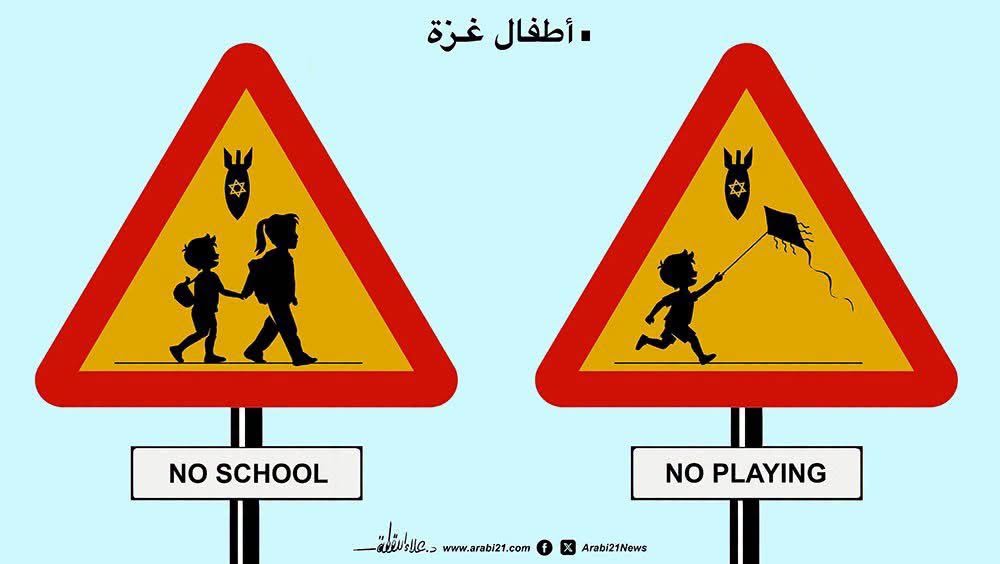
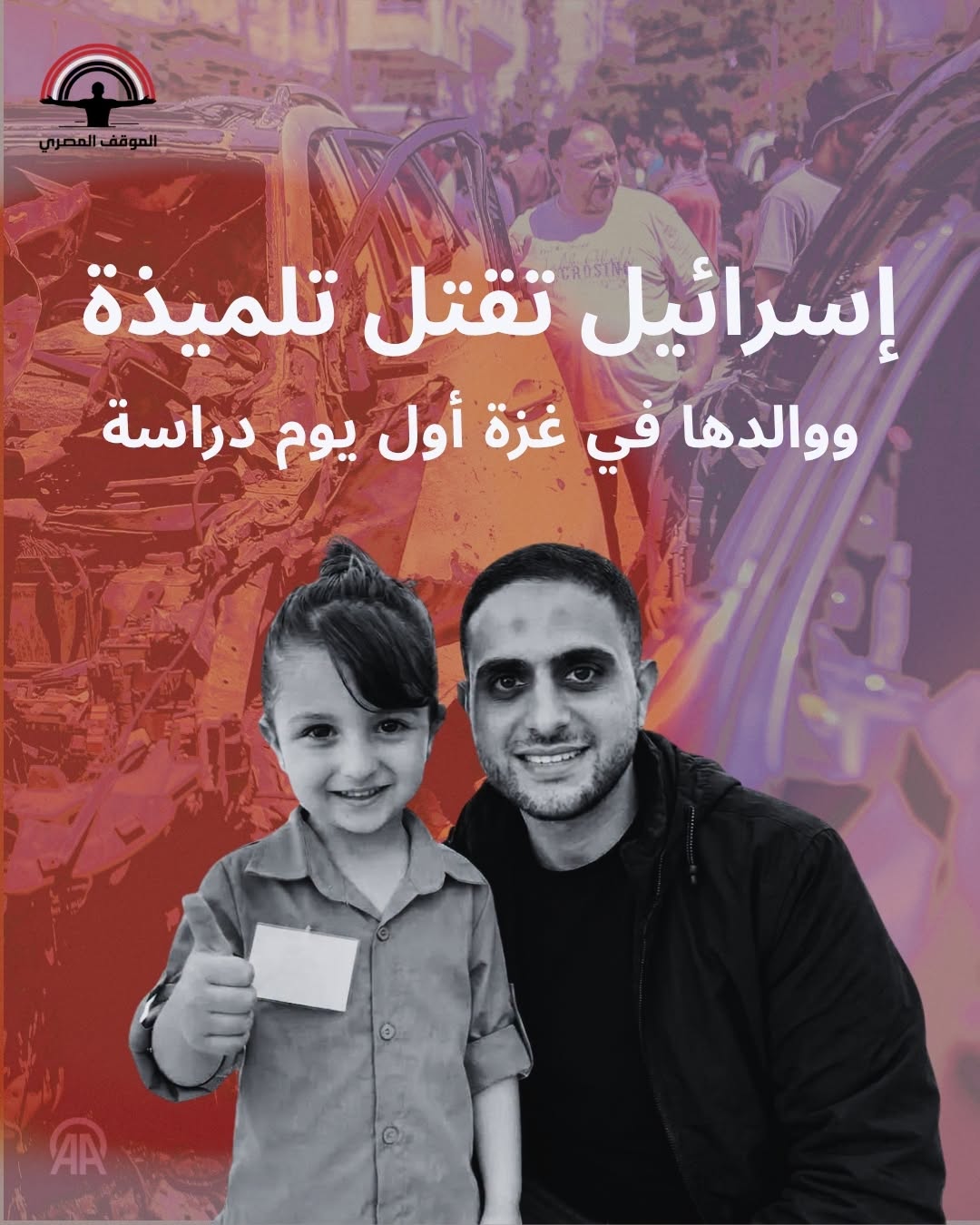
Since that day, the Israeli military have rained death and destruction on the tiny enclave: killing over 64,000 people (mostly women and children); bombing 89 percent of the houses and civilian infrastructure; seriously damaging the healthcare facilities; targeting schools and universities and UN facilities; forcibly displacing 90 percent of the civilian population, in some cases upward of ten times; and using starvation as a weapon of war. 

In the course of waging this savage war – ‘Operation A Thousand Swords’, to give it its official name – Israel is also committing the crime of all crimes: genocide.

The Israeli genocide in Gaza is the darkest chapter in the history of the twenty-first century. Despite the horrors that are unfolding daily in front of our eyes, British policy continues to lean strongly in favour of Israel, providing the offender with diplomatic, logistical, intelligence, and military support.

Britain abused its position as a permanent member of the Security Council by vetoing resolutions for a ceasefire in Gaza. The Royal Air Force continues to fly surveillance missions over Gaza and to supply the Israeli forces with valuable intelligence. 

The RAF base in Akrotiri, Cyprus, is placed at the service of the Israeli military. Israeli transport planes can stop in RAF bases in Scotland on their way to pick up arms and ammunition from the US. 

These same bases are used as a logistics hub for US special forces flights to and from Israel. Yet, British complicity in Israeli war crimes does not stop there.

Even more disturbing is the fact that  Britain is Israel’s third biggest arms supplier, after the US and Germany. In September 2024, the UK suspended some licences for arms sales to Israel, but these amounted to less than 10 percent of the total. 

So this move amounted to little more than a token gesture to placate the angry public.

Britain’s most egregious moral failure in relation to the war in Gaza lies in shirking its responsibility under the 1948 Convention for the Prevention and Punishment of the Crime of Genocide. 

“Genocide” is defined in the convention as the “intent to destroy, in whole or in part, a national, ethnic, racial or religious group”. Most Israeli experts in Holocaust studies, notably Omer Bartov, believe that what Israel is doing in Gaza is a classic case of genocide.

The International Court of Justice in The Hague ruled that the charge of genocide is plausible and ordered Israel to take a series of steps to prevent genocidal rhetoric and actions. 

And just last week, a UN investigation confirmed what was known all along: that Israel is committing genocide in Palestine.

Israel defiantly ignored these orders. The British government maintains that there is no conclusive evidence that Israel is perpetrating genocide in Gaza, so it is business as usual. 

But under the convention, signatories do not have the luxury of waiting until genocide has taken place before bemoaning it. They have a duty to act to prevent genocide; in Gaza, the British government has singularly and lamentably failed.

Recognition without action

It is against this horrifying backdrop that the British government has decided to recognise the state of Palestine. This recognition is long overdue, but it is still welcome. 

It means that four out of the five permanent members of the Security Council now support Palestinian statehood − the other three being Russia, China, and France. The odd one out is the United States, Israel’s closest and most powerful ally.

Although British recognition by itself will change nothing on the ground, it represents a strong political statement, and it removes the contradiction in advocating a two-state solution while recognising only one.

What it will not do is to stop the carnage and destruction, the humanitarian disaster, the genocide in Gaza, and the ethnic cleansing of the occupied West Bank. Diplomatic recognition is, in fact, being used by British policy-makers as a cloak for inaction.

What Britain should do is sanction Israel, suspend all military and intelligence cooperation, and end all arms sales to Israel, as well as the purchase of military hardware and technology from Israel.

RelatedTRT World – British MPs push Starmer to expel Israeli envoy, impose arms ban over Gaza war

Israel’s genocidal campaign in Gaza is the most burning issue facing Britain and the rest of the international community today. Failure to act only contributes to Israel’s impunity. It also undermines the rule-based international order, which was put in place after World War II to prevent another Holocaust.

Britain’s half-hearted recognition of Palestine as a state, whilst aiding and abetting the monstrous Israeli war machine, brings to mind the apocryphal tale of Emperor Nero, who played his lyre while the Great Fire of Rome (AD 64) ravaged the city.

Will the British Government continue to play its fiddle whilst Gaza is razed to the ground, or will it finally listen to the masses whom it claims to represent, and acknowledge its own legal and moral obligation to act?

TRTWorld

Continue reading
Gaza City, Israeli Lies

By Dr Marwan Asmar

The current Israeli military onslaught on Gaza is so fierce that hundreds of thousands of Palestinian have already left the downtrodden city. It is a ramshackle place that is once again becoming a ghost town of debris as once-plush residential towers are now beaten down by Israeli bombs with the stench of gun-powder and sick human flesh that lies hidden below the rubble.

Israel’s latest attempt to invade Gaza City started on 16 September, 2025 and since then it has been bombing the once-dazzling urban conurbation from the air, land, and sea, causing widespread destruction and significant civilian casualties, whilst creating yet another mad wave of displacement to the south of the Strip.

Figures of forced displacement are not precise but the city a, conglomerate of 1.3 million people, has been reduced by much less. The Israeli army likes to boost of its handiwork. After the first week of ariel bombardment, it said 40 percent of the population has left, and today it says that 450,000 people have gone. The Gaza Media Office puts the number at only 270,000.

Despite the Israeli leaflets dropped from the air telling people to leave Palestinian sources still say that around 900,000 are staying put. Many say they are not going anywhere because of the limited space down in the south, and the fact it costs $3000 dollars to get down there, something which they don’t have.

One put it bluntly and callously, accepting fate as it comes. “Since, we are going to die anyway through Israeli bombs, it’s better to die here,” he added. The acceptance of fate however may be related to the fact that some of the people may have moved up to 20 times since the war started on Gaza soon after 7 October, 2023.  

Last Thursday, World Health Organization (WHO) chief Tedros Adhanom Ghebreyesus said that the Israeli assault, currently centred on Gaza City, is “driving new waves of displacement, forcing traumatised families into an ever-shrinking area unfit for human dignity”.

“The injured and people with disabilities cannot move to safety, which puts their lives in grave danger,” Tedros said. “We call for an immediate end to these inhumane conditions. “We call for an immediate end to these inhumane conditions. We call for a ceasefire.”

Case stories of thick swarves of displaced people speak of hellish conditions as they can be seen on the Al Rasheed Road connecting the north of the Gaza Strip to its southern side. If people can afford they can use transport but many, including whole families of men, women and children  are moving on foot, hungry, with no water and many collapsing on the road as some have been moving for hours on end. For night rest, they make do with resting their limbs, again with no food on the sides of the road.

The social media have been rife with stories about forcibly displaced Palestinians on the road. Many of them say they don’t know where they are going, although the end of the road is to Al Mowasi, an area to the southwest of Khan Younis and which the Israeli has designated as a “safe” place but which it keeps bombing from the air whenever it feels like it.

One elderly man called Abu Nader Siam, walks slowly holding a cane in his right hand with his wife, Zakia Siam, at his left.  He is exhausted as reported in the UN News.

“I come from the Tal al-Hawa neighborhood in Gaza City. They [Israelis] have left no house or neighbourhood except to bomb it,” he said. “The shelling continues, and they have dropped leaflets ordering us to evacuate. We walked for six hours because we couldn’t find a car or any transportation.”

Zakia Siam spoke about their non-stop journey after the shelling reduced their house to rubble. “We went to the Shujaiya neighbourhood, and then we were displaced to the Sha’af neighbourhood in Gaza City before it was bombed,” his wife said. 

“Afterwards, we went to the seashore west of Gaza City and my husband and I stayed there for two nights without a tent. We sat on the sidewalk next to the tents and hid next to one of them, then continued walking.”

Another civilian, Mrs. Um Shadi al-Ashkar, carried a bag of belongings as she headed for southern Gaza.  “There is death, shelling, bombing and destruction of houses (in Gaza City),” she said.

“Even if they had dropped leaflets, if there had been no shelling, no one would have left Gaza City, they would have stayed in their homes. But there is death and devastation.”

The fight for Gaza city is in full-swing. The Israeli army knows what its up against, adding it could take months, or even up to a year to completely take over the city from Palestinian resistance groups. Meanwhile, they know the city is a Hamas stronghold which they can’t railroad through their tanks. That is why for the time being they put the ground invasion on hold and bombing the city from the air and sea.

Continue reading
World Media: ‘Beating Hamas is an Illusion’

International newspapers and research centers are openly warning that “the belief in the possibility of quickly eliminating the Islamic Resistance Movement (Hamas) is an illusion and a political and military naiveté. This is coming at a time when the international boycott of Israel is expanding and the humanitarian situation in the Gaza Strip is worsening.

Impossibility

The New York Times quotes Israeli military officers and experts as saying “the complete elimination of Hamas is unrealistic in the near term.” They note that “the movement still possesses a strong presence and combat capabilities that allow it to continue the confrontation for years.”

They maintain: “Betting on eliminating Hamas within a short period reflects an oversimplification of a complex equation.”

Great Civilian Losses

The British newspaper The Guardian states that field reports revealed that Israeli airstrikes are causing large numbers of civilian casualties in Gaza, while Hamas losses remain limited compared to what Israel officially announces.

The newspaper also notes: “The movement is resorting to unconventional tactics such as mines and ambushes, which increases the difficulty of the Israeli mission.”

International Boycott


The British newspaper The Financial Times confirms: “Boycott campaigns against Israel are growing at an unprecedented rate, encompassing the fields of sports, culture, and academia.”

The newspaper highlights a massive advertising campaign in Times Square in New York City, explicitly calling for a boycott of Israel and accusing it of committing “genocide” in Gaza.

In the same context, the Hebrew newspaper Israel Hayom reveals that the Italian authorities have decided to exclude Israel from participating in a tourism exhibition in Rimini, on the grounds that its presence would be “inappropriate” given the ongoing war and humanitarian crisis.

Worsening Humanitarian Tragedy


On the humanitarian front, the Hebrew newspaper Haaretz devotes extensive space to documenting the suffering of women and the most vulnerable groups in Gaza.

It notes the rise in miscarriages, the prevalence of malnutrition among mothers and infants, and a severe shortage of basic health services whilst warning that repeated displacement and poor living conditions are exacerbating the humanitarian catastrophe.

Future Scenarios


International analysts believe Hamas is still capable of reorganizing its ranks and relying on guerrilla warfare and unconventional methods, making it difficult for Israel to resolve the confrontation militarily.

It also predicted the conflict over Gaza would continue for a long time, with the increasing humanitarian and political costs for Israel and the increasing diplomatic and legal pressure on it in international forums.

Since October 7, 2023, the occupying forces, with direct support from the United States and Western countries, have continued to wage a devastating war in Gaza, resulting in the death and injury of more than 231,000 Palestinians to date, according to the Palestinian Ministry of Health in the Strip according to JO24.

Continue reading
Released Captive Edan Alexander Rejoins Israeli Army

Edan Alexander, an Israeli-American soldier released from imprisonment, announced he will return to Israel next month to rejoin the Israeli military as it continues its genocide in Gaza.

Alexander spent 584 days in inprisonment, which he called “the hardest period of my life.” At a press conference, he said, “My story does not end with survival, it continues in service until victory!”

He added, “Next month, God willing, I will return to Israel and once again wear the IDF uniform, and I will proudly serve alongside my brothers.”

Alexander’s release came as part of mediation efforts to reach a ceasefire, open Gaza’s crossings, and allow humanitarian aid into the besieged territory. Hamas resistance movement had described the release as a gesture of “positivity and high flexibility” and urged international actors, including the US, to build on it to secure a full agreement.

Alexander grew up in the United States and joined the Israeli military at 18. He volunteered as a colonizer and served in the Golani Brigade out of ideological commitment according to the Quds News Network.

Continue reading