Angelina Jolie Condemns Israel
 CrossFireArabia
- April 21, 2025
Famous Hollywood actress Angelina Jolie writes Israel has turned Gaza into a mass grave.
 CrossFireArabia
Famous Hollywood actress Angelina Jolie writes Israel has turned Gaza into a mass grave.
CrossFireArabia
Pope Francis died on Easter Monday, 21 April, 2025, at the age of 88 at his residence in the Vatican’s Casa Santa Marta according to Vatican News.
His death is trending on the social media.
Howard Beckett tweeted: Pope Francis told the world that it is not war in Gaza
It is slaughter. It is terror. It is a cruelty: “Yesterday, children were bombed. This is cruelty. This is not war.” Humanity has lost a friend in the passing of Pope Francis. Rest in Peace.
CrossFireArabia
More than 9,500 Israeli academics, teachers and medical professionals, as well as approximately 1,000 parents, signed petitions Monday urging the government in Tel Aviv to secure the release of hostages held in the Gaza Strip, even if it meant ending the war in the enclave.
According to the Haaretz newspaper, approximately 3,500 academics signed a petition supporting a previous letter from Israeli Air Force reservists demanding the return of the hostages and the end of the war.
“We, members of the academic staff in higher education institutions, join the call of the Air Force soldiers and demand the immediate return of the hostages, even if it requires halting the war at once,” the petition stated.
The academics argued that “the war primarily serves political and personal interests. Its continuation will lead to the deaths of hostages, soldiers, and innocent civilians and will drain the reserve forces.”
They added that “as shown in the past, only a negotiated agreement can ensure the safe return of the abducted to Israel.”
In a similar petition, over 3,000 teachers emphasized that “this is not a call to refuse military service, but a plea to save lives,” the daily added.
About 1,000 parents also signed a separate letter, stating: “For the sake of our children’s future, we refuse to raise them in an endless war, and we will not turn a blind eye to the killing of children.”
“We reject the dangerous idea that there are no innocents in Gaza. We refuse to abandon the hostages or dehumanize others,” the parents wrote.
Meanwhile, nearly 3,000 Israeli medical professionals, alongside three Nobel laureates, signed another petition calling on the government to free hostages held in Gaza by halting the ongoing war, Yedioth Ahronoth reported.
About 150 former Israeli soldiers who served in the Golani Brigade, an elite infantry unit, signed a petition Monday for the government to secure the release of the hostages by ending the war, Israel Army Radio said.
Earlier Monday, former Israeli Prime Minister Ehud Barak and former Chief of Staff Dan Halutz signed a petition signed by 1,525 Armored Corps soldiers urging the release of hostages, even if it meant ending the war.
The same day, the Yedioth Ahronoth newspaper said in another report that more than 1,600 veterans from the Paratroopers and Infantry Brigades also signed a letter urging the government to bring back all hostages, even if it meant stopping the war.
About 170 graduates of the elite “Talpiot” military intelligence program signed a letter demanding the hostages’ release through the end of the war, while emphasizing that they were not calling on reservists to refuse service.
In their letter, the graduates of the army’s Talpiot Academy voiced support for several calls by soldiers and veterans denouncing the government’s war policy as serving “political and personal interest” rather than security needs, according to the Army Radio.
“The continuation of the war does not contribute to any of its stated goals,” said the letter, warning that continuing the war would only lead to more deaths, including captives, army soldiers, and innocent civilians according to Anadolu.
The petitions are part of a wider wave of public appeals from current and former Israeli military personnel, all demanding the return of hostages and an end to the war.
Since Thursday, soldiers have signed nearly 10 petitions demanding an end to the Gaza war, according to an Anadolu count.
Prime Minister Benjamin Netanyahu has threatened to dismiss active-duty soldiers who signed the petitions.
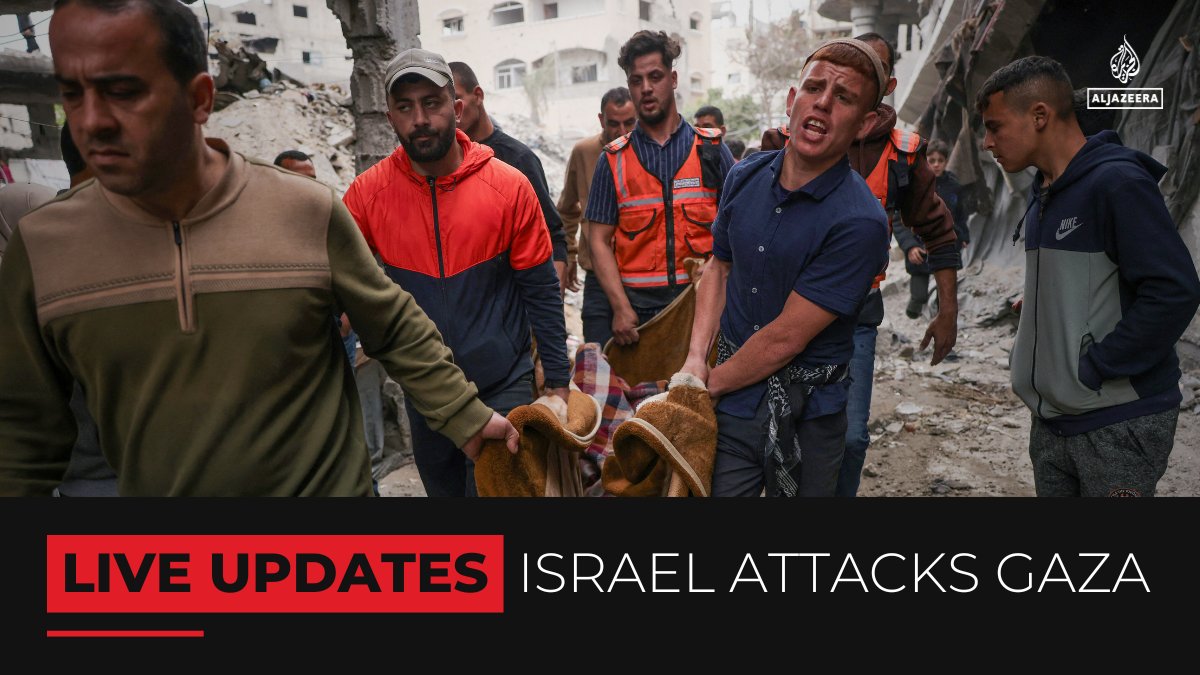
The Israeli army renewed its assault on Gaza on March 18, shattering a Jan. 19 ceasefire and prisoner exchange agreement.
Nearly 51,000 Palestinians, most of them women and children, have been killed in Gaza in a brutal Israeli onslaught since October 2023.
The International Criminal Court issued arrest warrants last November for Netanyahu and his former Defense Minister Yoav Gallant for war crimes and crimes against humanity in Gaza.
Israel also faces a genocide case at the International Court of Justice for its war on the enclave.
CrossFireArabia
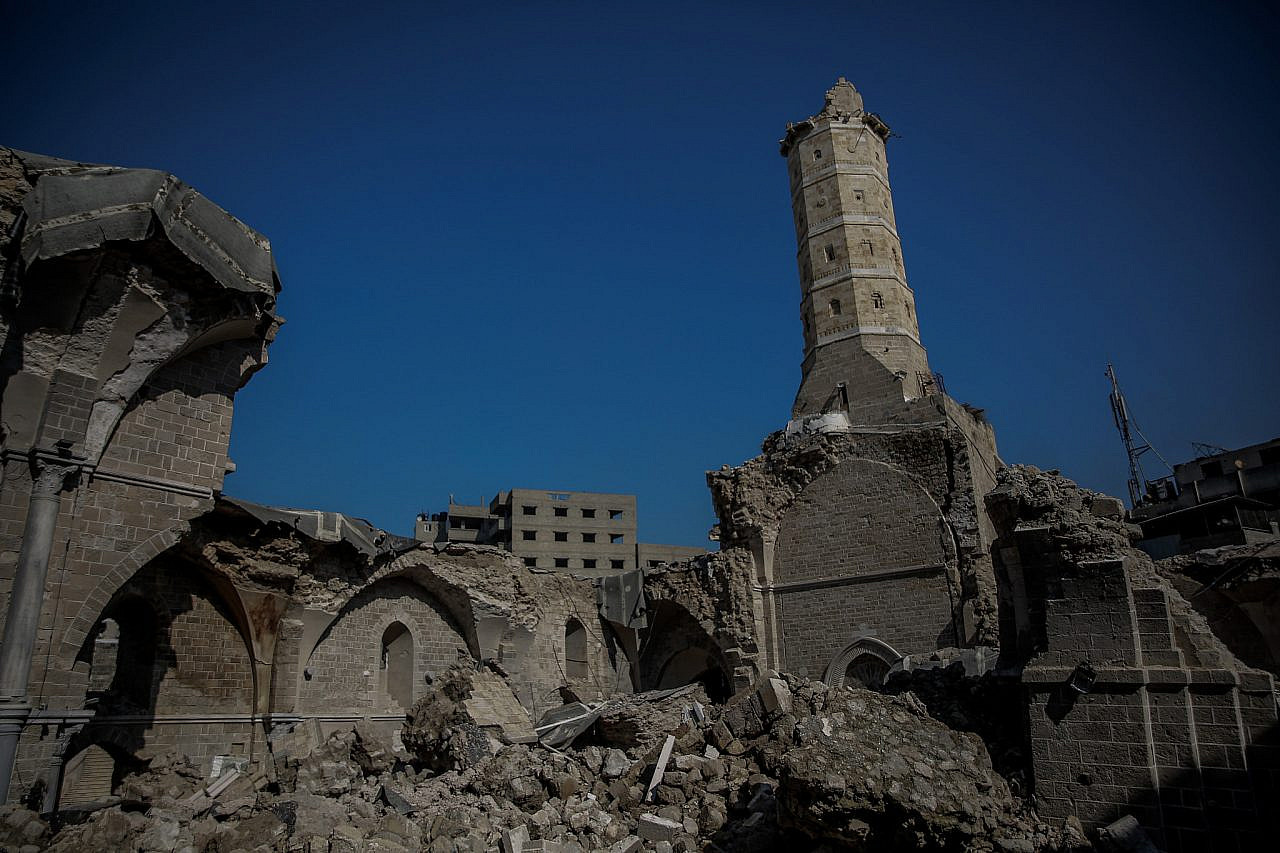
The ongoing war in Gaza, which started in October 2023, is the last phase of a long process of “eradicating Palestinian physical presence” in the Gaza Strip as well as erasing the Arab historical monuments, archaeological sites and sacral architecture.
Gaza has been populated since the Bronze Age and it was an important commercial hub on a trade route that went from the southern tip of the Arabian Peninsula to the Mediterranean. The Gaza Port connected southern Europe and the Greco-Roman world with the incense trade from Hijaz.
Meanwhile, an exhibition opened last week at Paris’s Institut du Monde Arabe (IMA) that showcases a glimpse of Gaza’s archaeological heritage against the relentless warfare and destruction in the region.
The event titled, “Rescued Treasures of Gaza: 5,000 Years of History,” will conclude on 2 November and it features over 130 objects that attest to the rich and complex history of Gaza as a crossroads of culture and commerce between Asia, Africa and Europe.
The density and distribution of its archaeological sites surveyed in 1944 at the end of the British Mandate and updated by the Palestinian Department of Antiquities in 2019 is eloquent.
A total of 130 sites to which should be added the remains of ancient cities and towns within the cities of Gaza, Khan Yunis, Dair Al Balah, Rafah and Bait Hanun, in tens of villages and in eight Palestinian refugee camps, noted a British-affiliated archaeologist Claudine Dauphin.
Bronze and Iron ages
Near the Wadi Gaza ford on the ancient coastal road linking Palestine and Egypt since the Bronze Age, the Way of Horus ancestor of the Roman Via Maris, lie two major Bronze Age sites.
“Rescued from developers in 1997 and excavated by Pierre de Miroschedji on behalf of the French Centre National de la Recherche Scientifique [CNRS], Tel as-Sakan [3,400-2,350 BC] offered a 10 meter high stratigraphic section covering 1000 years of the Early Bronze Age and urban development under Ancient Egyptian impetus,” Dauphin explained.
The archaeologist added that excavated by the British Egyptologist Sir Flinders Petrie (1925-1942) in 1930-1934, Tel El Ajlun (1,900-1,200 BC) yielded in several Bronze Age buildings, including the “Palace”, five large deposits of gold jewelery (1,750-1,550 BC) ranking amongst the greatest Bronze Age finds in the Levant, now in the British Museum and the Rockefeller Museum in Jerusalem.
In 1990 Professor Louise Steel of the University of Wales, Trinity St David’s, Lampeter sifted through the previously excavated soil, unearthing dozens of foundation cones stamped with the cartouche of Pharaoh Thutmosis III (1,481-1,425 BC).
Excavations were resumed by a University of Gothenburg Swedish Mission directed by Peter Fisher in collaboration with Moain Sadeq of the Palestine Department of Antiquities in 1999 and 2000 focusing on Late Bronze Age levels, Dauphin underlined.
“Thus, from the 4th millenium BC ties were established with Egypt before it took Southern Palestine in the Early Bronze Age and ruled over the Egyptian Province of Canaan in the Late Bronze Age. Mentioned as ‘Hazattu’ in an Egyptian text dated to the reign of Pharaoh Thutmosis III [1,484-1,421 BC], Gaza itself was probably founded in the 3rd millennium BC,” Dauphin elaborated.
The archaeologist noted that its region was overseen by a pharaonic Egyptian agent, but the city itself was a kingdom whose ruler pledged allegiance to the pharaoh.
Spectacular and also the earliest (Late Bronze to Early Iron Age, 13th-11th centuries BC) of that particular category of ancient coffins, were 50 anthropoid clay coffins found in 1973 in the excavations of a cemetery south of Dair Al Balah under Israeli occupation (1967-2005).
Coil-built in local clay, the naturalistic face lids were moulded in relief displaying large Egyptian features- almond-shaped-eyes, arched eyebrows, straight noses and full lips, Dauphin said, noting that arms are often thin and stick like, crossed or holding objects such as lotus blossoms.
Grotesque style coffins have eyes, eyebrows, nose, mouth, ears and beard that have been applied separately to the leather-hard clay, this being associated with the construction practices of the Philistines, the scholar underlined, adding that from the dates associated with the finds, it appears that the coffins originated with Egyptian influences in Canaan and were subsequently adopted by the Philistines.
“These burials were typically associated with a large variety of expensive grave offerings: Cypriot, Cananite, Egyptian, Mycenaean and Philistine pottery storage jars, pithoi and cooking pots outside the coffin and smaller, higher quality Cypriot milk bowls, Egyptian alabaster cups, pilgrim flasks and juglets. flasks and juglets inside,” Dauphin highlighted.
Endangering Gaza’s cultural heritage
The cultural heritage of the Gaza Strip has been endangered both indirectly and directly continuously since the creation of Israel in 1948.
It increased significantly during the Israeli occupation of the Gaza Strip (1967-2005) ; the June 2006 Israeli air raids and incursions in retaliations from 2008 until now. A danger to the cultural heritage of Gaza has been both indirect and direct.
Indirect danger
Demographic growth in the Gaza Strip has led to the destruction of archaeological sites by bulldozers preparing the ground for building new homes for the growing population, widening main thoroughfares and providing sports ground for children and youths to evacuate stress, Dauphin said.
The archaeologist noted that, the damage inflicted from the air by Israeli bombs on a sports field at Mukheitin in the Northern Gaza Strip damaged a Byzantine ecclesiastical complex under the surface revealed revealed a small church.
“In the course of three excavation seasons [1998-2002], a three-aisled church, an offertory chapel, and a four-room building with a baptistery were uncovered. A 450 m2 mosaic pavement was restored by the Musée de l’Arles Antique [Museum of the Antique city of Arles in Provence],” the scholar said.
The archaeologist added that 17 Greek inscriptions from the 5th to the mid-8th century AD enabled the identification of this site with a funerary complex for a wealthy Christian family of Gaza. At Abu Baraqeh, the widening in 1999 of the coastal road in Dair Al Balaq revealed a small church on the shore.
Its pavement was lifted by mosaic-restoration experts of the Museum of Arles in Provence and restored in France, the archaeologist added.
Direct Danger
Direct danger is posed both by carpet-bombing and targeting. It is clear from the successive lists of destroyed cultural sites produced by UNESCO that IDF pilots have a predilection for targeting and deliberately target, which is more effective in radically destroying, as emphasized by Hamdan Taha, the founder of the Palestinian Department of Antiquities.
“Since the start of the 2023-24 war on Gaza, Palestinian cultural heritage has undergone widespread destruction from Israeli targeting of ancient sites, historical and religious buildings, museums, cultural and academic buildings, public buildings, and infrastructure,” Taha said.
“More than 100 archaeological sites, 256 historical buildings, many museums, hospitals, libraries, cemeteries, and over 100,000 archaeological objects, were destroyed” [“Destruction of Cultural Heritage in Gaza”, Jerusalem Quarterly 97, Spring 2024, 45-70],” Taha elaborated.
Further damage leading to total eradication is caused by demolition, the movements of military vehicles and the installation of pumps, as at Anthedon (Tel Blakhiyyah) which had been listed on 2 April 2012 as a tentative World Heritage Site, Dauphin concluded.
CrossFireArabia
The Israeli forces’ deliberate destruction of Gaza City’s Al-Ahli Arab Hospital reflects a broader intent to systematically dismantle essential aspects of life in the Gaza Strip. This attack is part of a clear strategy to erode all means of survival by disregarding international legal protections for civilians in order to deliberately deprive them of basic living conditions and strike vital infrastructure; it demonstrates a calculated Israeli policy designed to induce a slow collapse and push the people in the Strip towards a total breakdown.
The Euro-Med Monitor emphasises that this escalation marks a dangerous phase in a systematic strategy meant to eliminate Palestinian civilians in the besieged enclave. The targeting of Al-Ahli Arab Hospital is the targeting of Gaza City’s last refuge for the sick and wounded, who should always be protected, and of medical personnel working under catastrophic conditions to save lives. Bombing a hospital sheltering critically ill patients is a direct violation of the right to life and, in a broader context, is part of Israel’s ongoing genocide against the Palestinian people in the Gaza Strip.
Israeli aircraft struck the emergency building of Al-Ahli Arab Hospital in central Gaza City with two bombs at around 2:10 a.m. on Sunday 13 April 2025. The attack occurred less than 30 minutes after the hospital received an Israeli call demanding evacuation. The strike destroyed the building and caused particularly extensive damage to the reception area and emergency department, laboratory, and pharmacy, which all caught fire.
According to eyewitnesses, people sheltering inside the hospital and medical staff were forced to evacuate dozens of patients and wounded people—some in critical condition—from the hospital to the surrounding streets. Patients were left lying on sidewalks, exposed to the risk of death and denied access to medical care, highlighting the severity of the escalating humanitarian crisis. Following the evacuation process, an injured child, Hatem al-Nabih, died outside the hospital.
As international law mandates the protection of medical facilities, the Israeli army’s order to evacuate the entire hospital within less than 30 minutes falls far short of the minimum standards required for a safe and effective evacuation. The order reflects a deliberate failure to provide genuine safeguards for civilians, including patients, the wounded, and medical staff. Given the Israeli pattern of issuing formal warnings to justify actions that still result in egregious harm due to the lack of time allotted for evacuation, Israel is not absolved of its legal responsibility.
Furthermore, the issuing of evacuation orders does not revoke a hospital’s protected status under international law, nor justify targeting and destroying it, especially when the facility plays such a vital role in the survival of civilians, as was the case with Al-Ahli Arab Hospital. An operating hospital remains a site of humanitarian use, and under no circumstances may civilians be deprived of its services, even after evacuation.
Demanding the immediate evacuation of a hospital overcrowded with critically ill patients, many of them on life support, amid a total blockade and absence of safe zones, cannot be seen as a humanitarian measure. Instead, it is an impossible demand—one that turns the so-called warning itself into a tool of coercive pressure aimed at the destruction of the population, both physically and psychologically. With no escape, refuge, or international intervention, this strategy deliberately drives individuals into a further state of absolute despair, as they see themselves being pushed towards a fate in which their people’s existence has been eliminated.
Israel’s claim of Hamas’ “military use” of the hospital is a familiar and well-worn justification that is often invoked to legitimise its systematic killings and destruction after the fact. This claim lacks credibility in the absence of concrete evidence, especially when considered within the broader context of the deliberate Israeli policy of targeting civilian infrastructure—most notably hospitals. Israel’s bombardment of these facilities has been central to its attacks, despite there being no legal basis for this type of targeting, as such buildings are protected under international humanitarian law.
The principle of proportionality prohibits civilian harm that is excessive in relation to the anticipated military advantage. Therefore, the destruction caused by Israel’s bombing of Al-Ahli Arab Hospital and the consequent severe physical and psychological suffering inflicted on patients, medical staff, and displaced civilians who were seeking shelter there outweigh any claimed military benefit. There is no question, then, that the attack flagrantly violates international humanitarian law and constitutes an international crime warranting legal prosecution and accountability.
Euro-Med Monitor stresses that this attack is not the first to target Al-Ahli Arab Hospital since Israel began its genocide against the Palestinians in the Gaza Strip in October 2023. It is also part of a broader, systematic campaign to completely disable all health facilities in the besieged enclave. Following the destruction and shutdown of most other hospitals by Israeli forces over the past 18 months, Al-Ahli Arab Hospital was the last relatively functional hospital, serving over one million people in Gaza City and the northern part of the Strip.
Prior to the attack on Al-Ahli Arab Hospital, media outlets close to the Israeli army published a video on March 21 showing Israel’s bombing and destruction of the Turkish-Palestinian Friendship Hospital in southern Gaza City. As one of the largest specialised hospitals, it served over 12,000 cancer patients. Israel had already targeted this hospital in November 2023 and again in mid-2024, after which Israeli forces turned it into military barracks. This action deprived thousands of patients of vital care, and led to the deaths of approximately 500 cancer patients due to lack of treatment.
Israel’s bombing of both Al-Ahli Arab Hospital and of the Turkish-Palestinian Friendship Hospital—despite the latter being under Israeli control—indicate that these attacks are being carried out without any legitimate military necessity. They reveal that Israel’s true objective is not security, but the deliberate creation of widespread destruction and unliveable conditions in the Gaza Strip, with the ultimate aim of forcing the remaining Palestinian population to leave it.
The ongoing targeting of hospitals and healthcare infrastructure in the Gaza Strip constitutes both a war crime and a crime against humanity. It exposes the systematic nature of the Israeli aggression and its goal of eliminating the civilian population by dismantling their most basic means of survival—most notably the healthcare system, which remains the last lifeline amid the ongoing genocide and total siege imposed on the Strip’s civilians.
Since 2 March 2025, Israel has blocked the entry of medicine and medical supplies along with all other humanitarian aid into the Gaza Strip, which was already facing a severe shortage of such supplies due to the strict blockade prior to the January 2025 ceasefire, shattered by Israel on 18 March. The crisis has been compounded by the escalating Israeli airstrikes and the rising number of casualties they continue to cause.
All states must fulfil their individual and collective legal obligations and take urgent action through all available means to stop Israel’s ongoing genocide in the Gaza Strip. They must employ effective measures to protect Palestinian civilians, including by safeguarding medical facilities, health workers, the wounded, and the sick, to halt the continuation of Israel’s policy of mass extermination in the Strip.
Euro-Med Monitor calls on the international community to ensure Israel’s compliance with international law and the rulings of the International Court of Justice, and to hold it accountable for its horrific crimes against the Palestinian people. The international community must also enforce the arrest warrants issued by the International Criminal Court against the Israeli Prime Minister and Defence Minister without delay.
In addition, the international community must impose economic, diplomatic, and military sanctions on Israel for its systematic and grave violations of international law. These should include an arms embargo; a halt to all political, financial, and military support or cooperation; a freeze on the assets of officials implicated in crimes against Palestinians; and travel bans against these officials. Additionally, trade privileges and bilateral agreements that grant Israel economic advantages that enable its continued violations should be suspended.
All relevant states and entities must hold accountable those complicit in Israel’s crimes—most notably the United States and other Israeli allies that assist in enabling Israeli violations in the Occupied Palestinian Territory. This includes aid and other forms of cooperation in the military, intelligence, political, legal, financial, and/or media sectors, as well as any other sectors that contribute to the continuation of the aforementioned crimes.