Israeli War on Lebanon Displaces Around 700,000

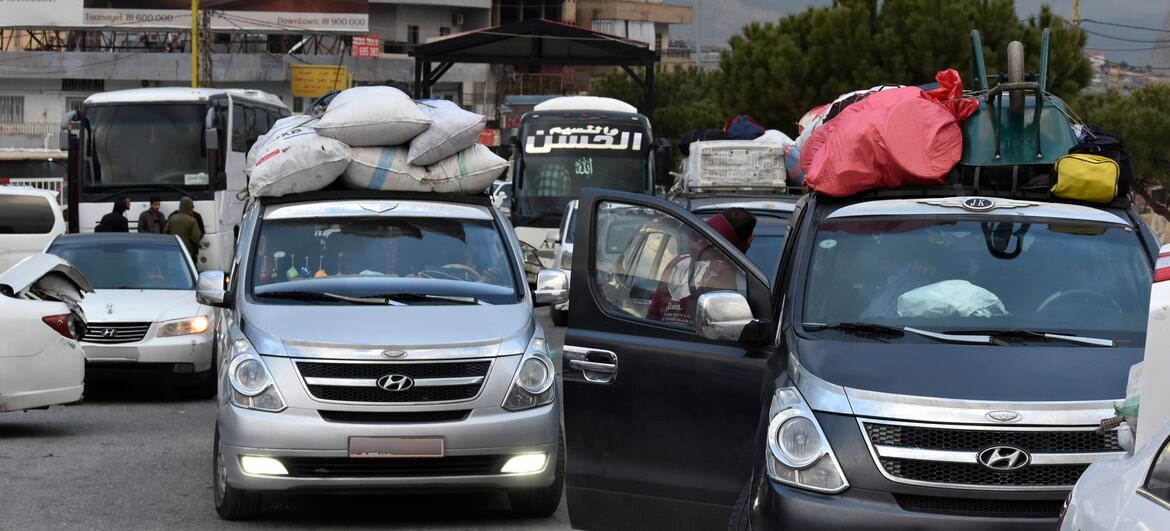
It has been just over a week since the new escalation in conflict started on 2 March, when Israeli evacuation warnings to residents of more than 53 villages and densely populated areas in Lebanon and intensified airstrikes forced families across Lebanon to flee within minutes. Lives have been upended on a massive scale.

According to the authorities, as of today, more than 667,000 people in Lebanon have now registered on the government’s online displacement platform – an increase of over 100,000 in just one day – and numbers continue to rise.

Around 120,000 of the displaced are sheltering in government-designated collective sites, while many others are staying with relatives or friends, or are still searching for accommodation. Many – often displaced for the second time since the hostilities in 2024 – fled in a rush with almost nothing, seeking safety in Beirut, Mount Lebanon, northern districts and parts of the Bekaa.

During a visit yesterday to a shelter in Beirut, I met a woman in her 90s who had lost 11 members of her family during the 2024 attacks. She is now displaced again, staying in the same school that was turned into a shelter. Stories like hers illustrate the fear, uncertainty and repeated trauma families are facing.

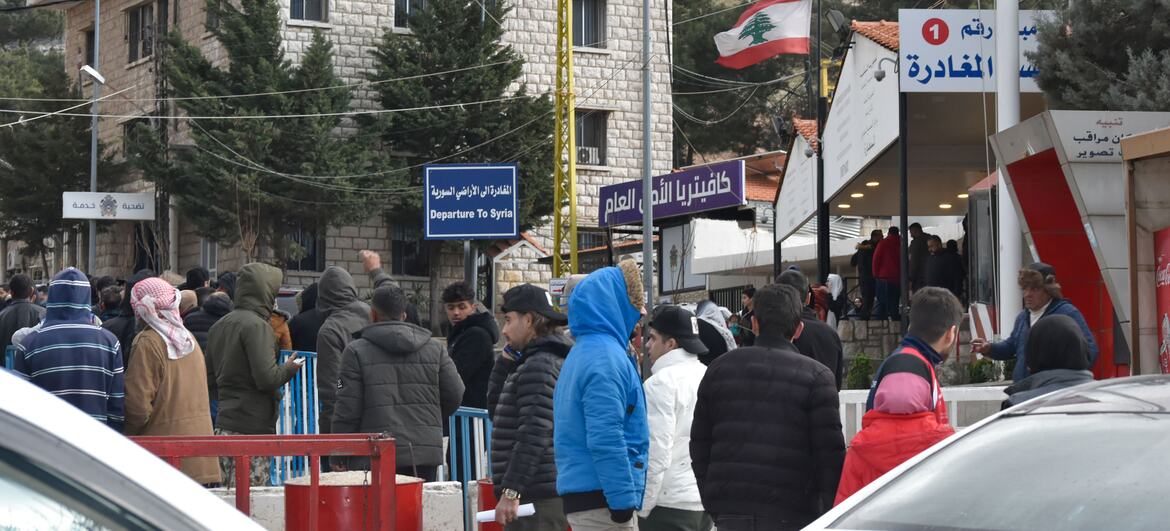
We are also seeing urgent movements into Syria. According to Syrian authorities, more than 78,000 Syrians have entered from Lebanon since the escalation began, and over 7,700 Lebanese. Among them are Syrian refugees who had been planning to return home in the coming months, and others who now rushed to return due to the current escalation. UNHCR teams are present at Syrian border crossings alongside authorities and partners to support those arriving with essential relief.

In Lebanon, since day one, UNHCR has supported the government and local authorities in responding to the crisis. To date, we have delivered around 168,000 emergency items to more than 63,000 displaced people across over 270 government-designated collective shelters. These include mattresses, blankets, sleeping mats, sleeping bags, solar lamps, and jerry cans, helping displaced families meet their most urgent needs.

To ensure this critical assistance reaches as many displaced people as quickly as possible, UNHCR is dispatching relief items from our warehouse to the collective shelters through multiple channels: through national and international NGO partners, as well as through municipal authorities and partners like the Lebanese Red Cross, ensuring fast, coordinated support, even in hard‑to‑access areas where some families remain.

I have seen first-hand over the past week how this volatile situation and displacement also trigger fear and emotional trauma. Children and adults alike, including many older people, are in shock and fear. UNHCR, through community centres, outreach volunteers and protection partners, is providing psychosocial support, identifying people at heightened risk, reuniting separated children with families, and assisting people with disabilities. – Reliefweb

At the current pace of displacement, we are working hard to replenish our country-level stocks of essential items, but UNHCR’s operation in Lebanon is currently only 14 per cent funded. Fast and sustained international solidarity is critical to enable us to support the Lebanese Government and authorities in responding to the emerging needs. Every day this conflict continues, more suffering is inflicted on hundreds of thousands of civilians, while Lebanon and the region are further destabilized.

Civilians must be protected at all times, and safe, unhindered humanitarian access must be guaranteed so aid can reach those who need it most.

For more information, please contact:

Continue reading
Mideast in Tailspin of Destruction

On day 10 of the war engulfing the Middle East, UN agencies on Monday reported massive displacement across the region, along with surging food and fuel prices that risk increasing hunger and suffering for the most vulnerable.

In Lebanon alone, nearly 700,000 people including around 200,000 children have been forced from their homes, “adding to the tens of thousands already uprooted from previous escalations”, the UN Children’s Fund (UNICEFsaid.

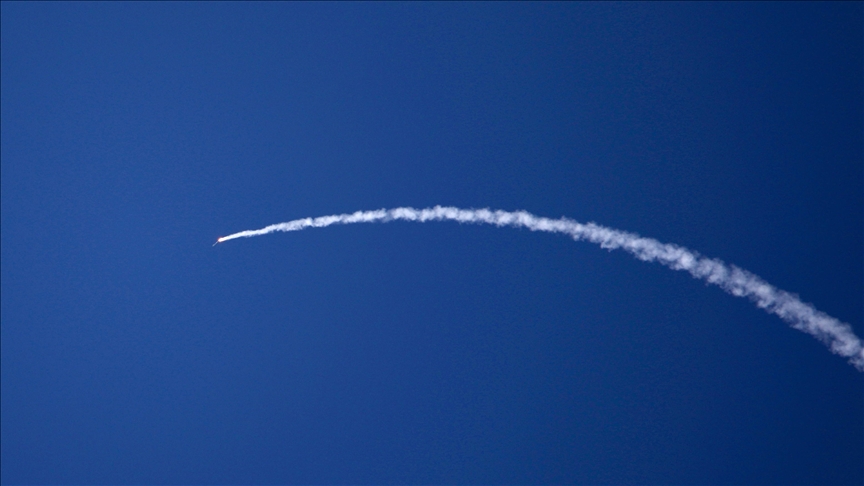
The development follows a weekend of escalating Israeli and U.S. strikes against Iran, counter-strikes by Iranian forces across Israel and explosions in several Gulf States, along with Israeli strikes targeting Hezbollah in Lebanon.

Heavy toll

In its latest update, the UN relief coordination office, OCHA, said that 294 people had been killed in Lebanon and more than 1,000 injured in the first eight days of the war.

On Saturday, 7 March, 41 people were killed in a single operation by Israeli forces in the town of Nabi Sheet in eastern Lebanon that also left dozens wounded, OCHA said, citing the Lebanese authorities.

In addition to “intensified airstrikes across multiple governorates” of Lebanon, the office also noted that Israeli evacuation orders had been reissued for a third time since the war began, covering the entire areas south of the Litani River, and the second time for Beirut’s southern suburbs.

Civilian toll mounts

Over the weekend, the Israeli health authorities reported that around 2,000 people have been injured in Israel since the conflict erupted on Saturday 28 February; one person was also killed when a missile landed in central Israel on Monday.

Iranian authorities have said that at least 1,330 civilians had been killed in the war amid ongoing Israeli and US strikes, while on Monday, the Bahraini authorities said that more than 30 people had been injured by an Iranian drone attack early Monday, as Qatari officials condemned the killing of two civilians in Saudi Arabia.

Ever greater needs

Echoing the deep concerns across the international community at the impact of the ongoing war on civilians, the UN’s top aid official, Tom Fletcher, warned of wider, secondary impacts in countries including Afghanistan and Pakistan “where needs were already great”.

Added to that, the focus on existing crises such as Sudan, South Sudan and Ukraine is slipping “even further down the list”, the emergency relief chief noted, along with continued disregard for international law and institutions including the UN that were created to prevent conflict.

Strait of Hormuz crisis

As rapidly rising fuel prices at the pump on Monday linked to higher oil barrel costs reflected deep economic uncertainty caused by the war, UN agencies also highlighted “severe global supply chain disruptions” affecting shipping, energy and fertilizer markets.

Attacks on shipping in the Strait of Hormuz have practically halted trade along the narrow channel, which carries nearly one-fifth of global oil shipments, along with large volumes of commercial goods.

On Friday, at least four seafarers were killed and three severely injured in the Strait of Hormuz when their vessel was attacked.

Meanwhile, drone attacks on Omani ports have also raised concerns – and costs – of chartered traffic heading there.

According to the International Maritime Organization (IMO), around 20,000 seafarers remained stranded in the Persian Gulf.

The conflict is already having immediate food security impacts in the Middle East,” said the UN World Food Programme (WFP), which explained that a significant share of the global fertilizer supply transits through the Strait of Hormuz.

“Any disruption there risks reduced availability, lower crop yields, and hence higher global food prices,” it said.

Satellite view of the Strait of Hormuz, connecting the Gulf of Oman to the Persian Gulf, separating Iran from Oman, UAE, and Qatar.

© NASA

A satellite photo shows the strategically important shipping route of the Strait of Hormuz.

Food security concerns

The UN agency also underscored already high levels of food insecurity in Lebanon before the war, as well as Iran, where households have “limited capacity to absorb further shocks”.

In Gaza, sharp food price increases were triggered by the closure of key aid crossing points from Israel, WFP continued, adding that although Kerem Shalom/ Karem Abu Salem crossing has since reopened, food prices remain high.

Without consistent access, WFP could be forced to reduce food rations to just 25 percent of daily requirements for approximately 1.3 million people. Fragile gains achieved following the ceasefire risk being reversed without reliable humanitarian corridors,” it said.

Faced with longer transit times and knock-on delays to humanitarian deliveries, the UN agency and partners have increasingly used suppliers and transit corridors through Türkiye, Egypt, Jordan and Pakistan, while making greater use of overland routes between the United Arab Emirates and the eastern Mediterranean coastal region.

WFP also noted that its Dubai humanitarian hub remains operational despite disruption to flights and shipping.

UN News

Continue reading
US-Israel Attacks on Iran Kill 460 People, Injures 4,309

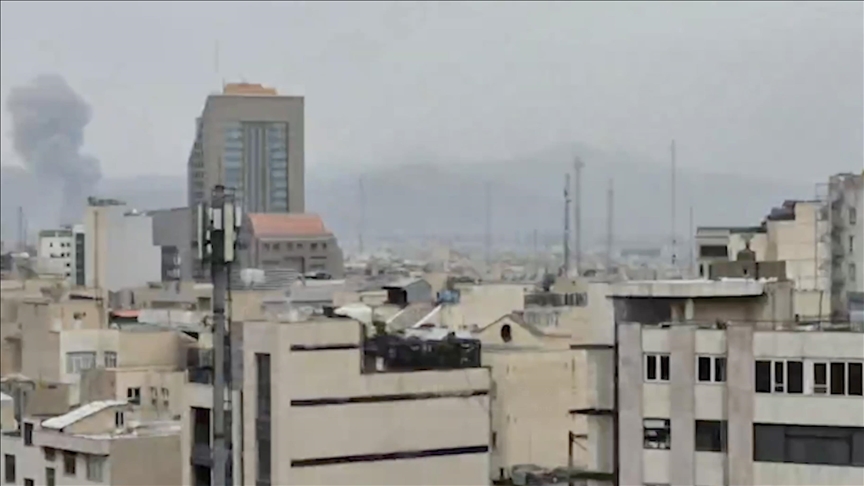
At least 460 people were killed and 4,309 others injured in the Iranian capital Tehran since start of the US-Israeli war on Iran, the deputy head of Tehran Emergency Health Department said Tuesday.

Mehr Soroush told the public broadcaster IRIB News that 18 ambulances and 18 emergency bases were damaged in the capital in attacks since Feb. 28 according to Anadolu.

Israel and the US have continued a joint attack on Iran since Feb. 28, killing more than 1,200 people, and injuring over 10,000 others.

Tehran has retaliated with drone and missile strikes targeting Israel, Jordan, Iraq, and Gulf countries that are home to US military assets.

Continue reading
Defiant: FM Aragchi Says Iran is ‘Fully Prepared’

Iran’s Foreign Minister Abbas Araghchi warned Washington on Monday that Tehran is “fully prepared” for further escalation as tensions continue to shake global markets.

Araghchi said through US social media company X: “Nine days into Operation Epic Mistake, oil prices have doubled while all commodities are skyrocketing.”

He added that “the US is plotting against our oil and nuclear sites in hopes of containing huge inflationary shock,” stressing “Iran is fully prepared.”

Araghchi also issued a warning, saying “we, too, have many surprises in store.”

Regional escalation flared up since Israel and the US launched a joint attack on Iran on Feb. 28, killing more than 1,200 people, including Supreme Leader Ayatollah Ali Khamenei.

According to the Pentagon, more than 50,000 US troops are involved in what it calls Operation Epic Fury.

Tehran has retaliated with drone and missile strikes targeting Israel, Jordan, Iraq, and Gulf countries that are home to US military assets.

Continue reading
First Week of War on Iran Costs The USA $6 Billion

The first week of the US military campaign against Iran has cost roughly $6 billion, Pentagon officials told Congress, with about $4 billion spent on munitions and advanced missile interceptors.

According to the New York Times, about $4 billion of that total alone was spent on munitions expenditures and advanced interceptors designed to shoot down Iranian missiles.

According to the American daily, about 4,000 Iranian targets have been struck, including missile launchers, naval vessels, and air defenses, significantly eroding Tehran’s ability to retaliate.

Adm. Brad Cooper, head of US Central Command (CENTCOM), said Iran’s ballistic missile launches have dropped 90% since the first day of fighting, while drone attacks are down 83% as reported in The figures were disclosed during discussions in Congress this week, where senior defense officials also indicated that further funding will be required to sustain operations and replenish depleted stockpiles according to Anadolu.

Yet the country retains a formidable weapons arsenal, including an estimated 50% of its missile program.

Rising costs and budget concerns

Lawmakers are bracing for a supplemental budget request from the administration in the coming weeks.

The rapid expenditure has drawn scrutiny from both sides of the political aisle.

Critics argued that costly interceptors, some worth millions of dollars each, are being consumed at rates that could strain the US defense industrial base and leave shortfalls in other strategic theaters.

The war erupted with joint US and Israeli strikes against Iranian military targets, but the conflict has since widened across the Middle East, with Iran retaliating via ballistic missiles and drone barrages that require expensive defensive responses.

As debates over war funding intensify in Washington, Pentagon officials emphasized the need to maintain momentum against Iranian capabilities while balancing long‑term national defense priorities.

Tensions in the Middle East have escalated since the United States and Israel launched a large-scale attack on Iran on Feb. 28, killing more than 1,200 people, including Iranian Supreme Leader Ali Khamenei, over 150 schoolgirls, and senior military officials.

Iran has retaliated with sweeping barrages of its own that have targeted US bases, diplomatic facilities, and military personnel across the region, as well as multiple Israeli cities. The attacks have continued to escalate.

The conflict has raised concerns about global energy supplies amid a sharp drop in maritime traffic through the Strait of Hormuz, a key route that carries about 20 million barrels of oil daily.

Continue reading