Israel’s War on Truth

By Ramzy Baroud

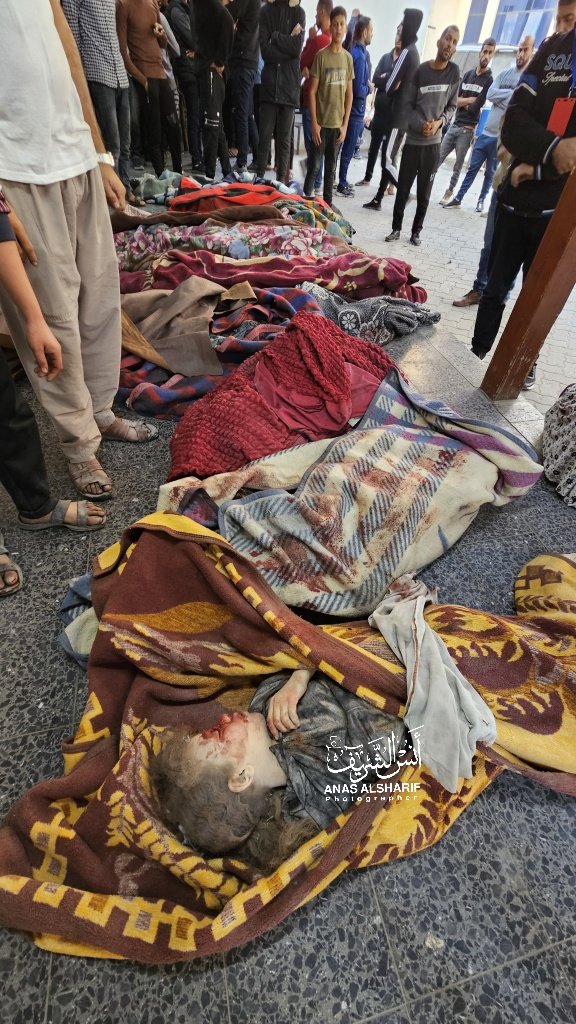
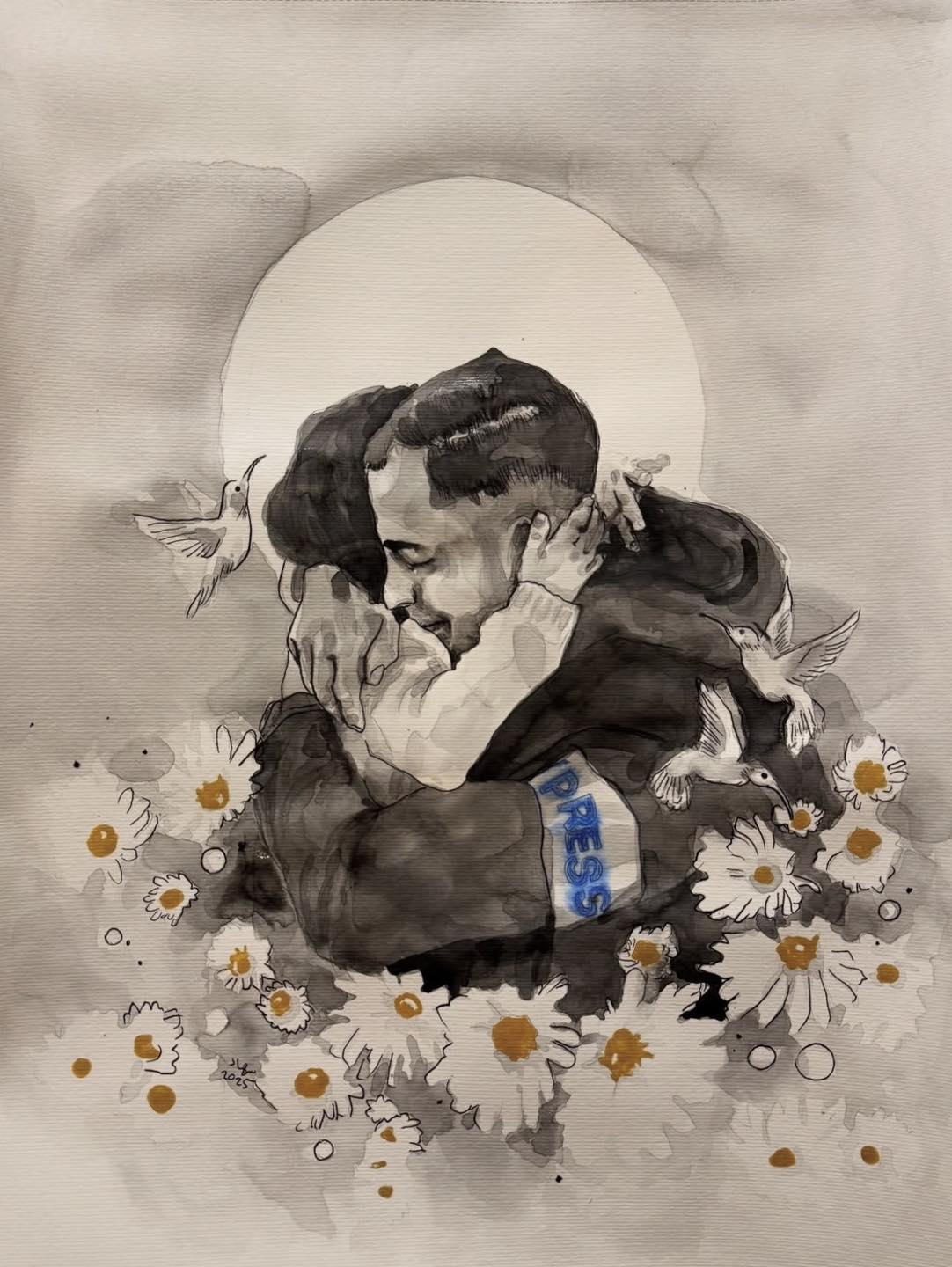
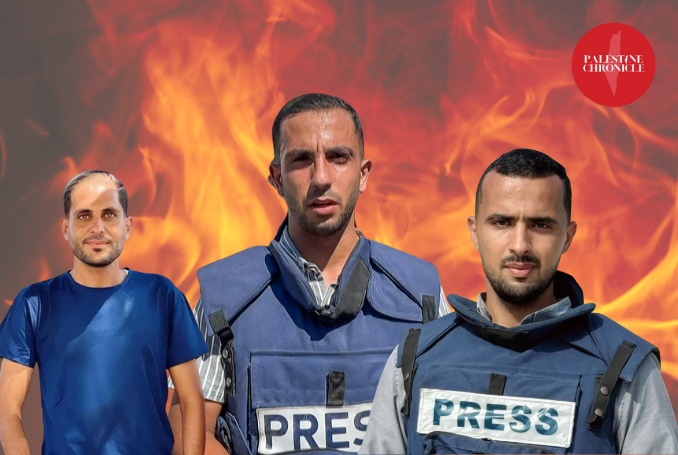
The killing of seven Palestinian journalists and media workers in Gaza on August 10 has prompted verbal condemnations, yet has inspired little to no substantive action. This has become the predictable and horrifying trajectory of the international community’s response to the ongoing Israeli genocide.

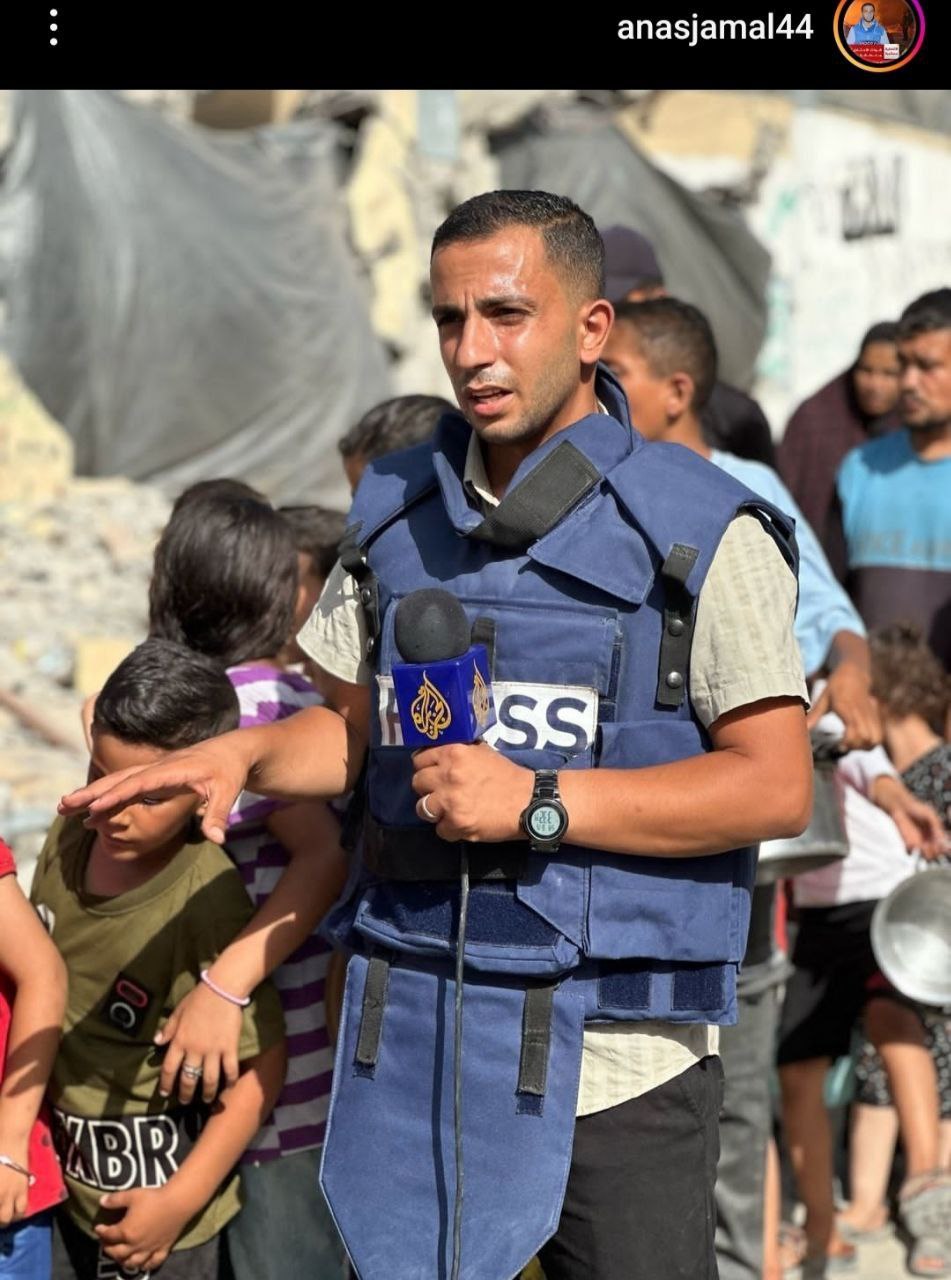
By eliminating Palestinian journalists like Anas al-Sharif and Mohammed Qraiqeh, Israel has made a sinister statement that the genocide will spare no one. According to the monitoring website Shireen.ps, Israel has killed nearly 270 journalists since October 2023.

More journalists are likely to die covering the genocide of their own people in Gaza, especially since Israel has manufactured a convenient and easily deployed narrative that every Gazan journalist is simply a “terrorist”. This is the same cruel logic offered by numerous Israeli officials in the past, including Israeli President Isaac Herzog, who declared that “an entire nation” in Gaza “is responsible” for not having rebelled against Hamas, effectively stating that there are no innocent people in Gaza.

This Israeli discourse, which dehumanizes entire populations based on a vicious logic, is frequently repeated by officials who fear no accountability. Even Israeli diplomats, whose job in theory is to improve their country’s image internationally, frequently engage in this brutal ritual. In comments made in January 2024, Israeli ambassador to the UK, Tzipi Hotovely, callously argued that “every school, every mosque, every second house has access to tunnels,” implying that all of Gaza is a valid military target.

This cruelty of language would be easily dismissed as mere rhetoric, except that Israel has, in fact, according to Euro-Med Human Rights Monitor reports, destroyed over 70 per cent of Gaza’s infrastructure.

While extremist language is often used by politicians around the world, it is rare for the extremism of the language to so precisely mirror the extremism of the action itself. This makes Israeli political discourse a uniquely dangerous phenomenon.

There can be no military justification for the wholesale annihilation of an entire region. Yet again, the Israelis are not shying away from providing the political discourse that explains this unprecedented destruction. Former Knesset member Moshe Feiglin chillingly said, last May, that “Every child, every baby in Gaza is an enemy… not a single Gazan child will be left there.

But for the systematic destruction of a whole nation to succeed, it must include the deliberate targeting of its scientists, doctors, intellectuals, journalists, artists and poets. While children and women remain the largest categories of victims, many of those killed in deliberate assassinations appear to be targeted specifically to disorient Palestinian society, deprive it of societal leadership, and render the process of rebuilding Gaza impossible.

These figures powerfully illustrate this point: according to a report released by the United Nations Office for the Coordination of Humanitarian Affairs, based on the latest satellite damage assessment conducted in July, 97 per cent of Gaza’s educational facilities have been affected, with 91 per cent in need of major repairs or full reconstruction. Additionally, hundreds of teachers and thousands of students have been killed.

But why is Israel so intent on killing those responsible for intellectual production? The answer is twofold: one unique to Gaza, and the other unique to the nature of Israel’s founding ideology, Zionism.

First, regarding Gaza: Since the Nakba in 1948, Palestinian society in Gaza has invested heavily in education, seeing it as a crucial tool for liberation and self-determination. Early footage shows classrooms being held in tents and open spaces, a testament to this community’s tenacious pursuit of knowledge. This focus on education transformed the Strip into a regional hub for intellectual and cultural production, despite poorly funded UNRWA schools. Israel’s campaign of destruction is a deliberate attempt to erase this generational achievement, a practice known as scholasticide, and Gaza is the most deliberate example of this horrific act.

Second, regarding Zionism: For many years, we were led to believe that Zionism was winning the intellectual war due to the cleverness and refinement of Israeli propaganda, or hasbara. The prevailing narrative, particularly in the Arab world, was that Palestinians and Arabs were simply no match for the savvy Israeli and pro-Israeli public relations machine in Western media. This created a sense of intellectual inferiority, masking the true reason for the imbalance.

Israel was able to “win” in mainstream media discourse due to the intentional marginalisation and demonisation of Palestinian and pro-Palestinian voices. The latter had no chance of fighting back simply because they were not allowed to, and were instead labeled as “terrorist sympathizers” and the like. Even the late, world-renowned Palestinian scholar Edward Said was called a “Nazi” by the extremist, now-banned Jewish Defense League, who went so far as to set the beloved professor’s university office on fire.

Gaza, however, represented a major problem. With foreign media forbidden from operating in the Strip per Israeli orders, the Gazan intellectual rose to the occasion and, in the course of two years, managed to reverse most of Zionism’s gains over the past century. This forced Israel into a desperate race against time to remove as many Palestinian journalists, intellectuals, academics, and even social media influencers from the scene as quickly as possible—thus, the war on the Palestinian thinker.

The Israeli logic, however, is destined to fail, as ideas are not tied to specific individuals, and resilience and resistance are a culture, not a job title. Gaza shall once more emerge, not only as the culturally thriving place it has always been, but as the cornerstone of a new liberation discourse that is set to inspire the globe regarding the power of intellect to stand firm, to fight for what is right, and to live with purpose for a higher cause.

Ramzy Baroud is a journalist, author and the Editor of The Palestine Chronicle. He is the author of six books. His forthcoming book, ‘Before the Flood,’ will be published by Seven Stories Press. His other books include ‘Our Vision for Liberation’, ‘My Father was a Freedom Fighter’ and ‘The Last Earth’. Baroud is a Non-resident Senior Research Fellow at the Center for Islam and Global Affairs (CIGA). His website is www.ramzybaroud.net
Jordan Times

Continue reading
Israel Cannot Silence Palestinian Words

By Benay Blend

Palestinian journalists seek to document the truth about the Zionists’ brutal siege, while their detractors are working to erase all evidence of the crime scene.

Shortly after the news broke about the Israeli assassination of Palestinian journalist Anas al-Sharif and his five colleagues in Gaza City, a video appeared on my Facebook feed of chef Yotam Ottolenghi making baked haloumi cheese with fennel syrup.

In real time, the two events have nothing to do with each other. However, delving deeper into the realm of the imagination, both represent long-held Israeli efforts to erase the Palestinian presence on the land.

In a statement on the social media platform X, journalist Ramzy Baroud explained Israel’s motives for the murder of  at least 200 journalists in Gaza since October 7, 2023: “silence the truth by murdering those who report it.”

Afterward, they justify these deaths by claiming that the journalists were members of the resistance movement, a claim that is problematic for several reasons.

In a timely excerpt from Perfect Victims: And the Politics of Appeal (2025), Mohammed El-Kurd contends that allies often unwittingly refute the claim that victims, such as these journalists, were affiliated with Hamas. In this way, the characterization of the civilian as a “neutral figure” has depoliticized the Palestinian cause, rendering it a “humanitarian crisis” where “revolutionaries are not part and parcel of your nation.”

In the U.S., too, police shootings of Black, Brown and poor people are often justified by slandering the victim’s reputation post-mortem. This should come as no surprise, since the institution of policing harks back to its origin as slave catchers, along with its more present-day exchange of training with the Zionist state.

“It is not enough for a Palestinian to be a journalist to be deemed human,” concludes El-Kurd,  “they must be ‘unaffiliated.’”

For “Israelis,” this effort must prove difficult as they are taught to see Hamas everywhere, much like Americans were told to look for communists during the Second Red Scare in the 1950s. The latter were in our bathrooms, under our beds, and if we were not watchful, we might mistakenly marry one.

In “The Hamas are Coming: A View of the Violence from Inside Israel” (2021), Miko Peled writes of this phenomenon that has informed Israeli hasbara (propaganda) for years.

“There are never Palestinians, never people, only ‘The Hamas’ — and ‘The Hamas’ is, by the way, male and singular (in Hebrew),” Peled writes.  “’The Hamas thinks;’ ‘The Hamas believes;’ ‘The Hamas should know;’ ‘When the Hamas understands, he will stop;’ and finally, ‘When The Hamas is hit hard he will never dare to attack Israel again.’”

Not much has changed in Israeli hasbara since Peled wrote that piece nearly four years ago. Indeed, the New York Times, taking its cue, as usual, from Israeli sources, repeated that “Mr. al-Sharif,” whom the Israeli military accused of being a Hamas fighter posing as a reporter, but was really “the head of a terrorist cell,” thus the IDF “had taken steps to mitigate civilian harm,” though which civilians, Palestinians or “Israelis,” it does not say.

Barbs were then thrown back and forth. Al-Jazeera called the killing  “a desperate attempt to silence the voices exposing the impending seizure and occupation of Gaza” while the “Israeli Government” accused “Al Jazeera reporters of serving the interests of Hamas by presenting an exaggerated and distorted picture of conditions in Gaza.”

“The instinct of many defenders of Palestinians is to dispel the connection between the slain Palestinian media workers and their supposed political leanings, as if anywhere in the world these exist in isolation,” El-Kurd explains.

Just as El-Kurd implicates himself in this process, so do I. There have been times when I’ve distanced martyrs from supporting the armed resistance as if this gives us a more legitimate cause to mourn.

When we sanitize the dead in this way, however, “we are inadvertently reifying the colonial rationale that killed them and rendered them killable in the first place,” El-Kurd concludes, so perhaps it is better to just reply “So what?” Indeed, if Zionist soldiers and PR workers can find a place for themselves in global media, why do supporters of Palestine find the need to detach their heroes from armed resistance that occupies a legitimate role in the struggle?

There are many documented reasons as to why Israel targets journalists in the Gaza Strip. Significantly, Palestinian journalists seek to document the truth about the Zionists’ brutal siege, while their detractors are working to erase all evidence of the crime scene.

Moreover, for Western journalists, even those sympathetic to the cause, the only picture they can paint is that of victims who are barely surviving in the rubble.

In an interview with Beacon Press, historian Roxanne Dunbar-Ortiz describes a similar settler colonial narrative that pertains to Indigenous people in the Americas. Asked to explain the most enduring myth pertaining to Native Americans, Dunbar-Ortiz mentions the idea of “eliminationism,” a notion that does away with Native people.

Indeed, at the turn of the 20th century, the myth of the Vanishing Indian was at its zenith, thus allowing the mainstream population to view Native people as noble relics who exist only in the glory days of their past. These same people who at one time they had license to kill Native people are seen now as no longer a threat, subdued as they were in the last Indian massacre at Wounded Knee.

In reality, Native people have survived over 500 years of continual genocide, survival being an “active word,” Dunbar-Ortiz makes clear, involving  “an enormous amount of resistance and cultural continuity.”

On the other hand, “victimry” is a more common version, she concludes, because people can feel sorry about the state of Indian Country but without the requirement that they must do anything about it. “So they’re not really then dealing with the reality that Native people are here,” and like the Palestinians, “they’ve resisted, they’ve survived, they haven’t changed their mind about who they want to be and how they want the future to be.”

In “Sumoud: The Unyielding Heart of the Palestinian Cause in Palestine,” Ramzy Baroud describes a similar trajectory for Palestinians. “The profound and unrelenting struggles endured by Palestinians should, by any rational expectation, have irrevocably concluded the Palestinian cause. Yet, the struggle for freedom in Palestine is at its zenith.”

Like the experience of Native Americans, Zionist attempts to erase the presence of Palestinians goes back many decades. Nevertheless, the Palestinian resistance has endured, Baroud continues, due to the “concept of sumoud,” resilience that is akin to Dunbar-Ortiz’s explanation of “survival,” an active process that involves resistance and cultural endurance.

“Palestinian journalists in Gaza are themselves the story and the storytellers,” writes Ramzy Baroud. “Their success or failure to convey the story with all its factual and emotional details could make the difference between the continuation or the end of the Israeli genocide.”

From Refaat Alareer, the poet/teacher/ journalist who asked before his death that his life become a story to ensure that life goes on, to Anas Al-Sharif’s final testament written shortly before his death, Palestinian journalists have been responsible for conveying the truths of Gaza to the world, but they also leave a legacy that inspires future generations to carry on their work.

“Do not let chains silence you or borders restrain you. Be bridges toward the liberation of the land and its people, until the sun of dignity and freedom rises over our stolen homeland,” Al-Sharif wrote, shortly before his death.

With that last statement, Al-Sharif foretells his own assassination. His message is not one of victimhood, though, but rather a plea that others carry on his work.

On August 11, Dareen Tatour, the Palestinian poet who knew from experience the danger of rebellious words, posted a new poem written to honor the Al-Jazeera team murdered the day before.

Imprisoned for her verse “Resist, My People, Resist Them,” the poet is not so optimistic now that words can stop a bullet. Under the banner Martyrs of the Word and Image—They Left But the Word Remained, Tatour charged that their deaths were the consequence of a world gone silent to their pain.

“They are gone / but the truth remains,” she says, dependent on her to carry it, or “leave it to be bombed again” in the wake of her silence.

Unlike the person that she was ten years ago, Tatour knows now that “the road is longer and harsher,” yet still she is undeterred, for she continues “to write for them [the slain journalists], to be the echo of their voices,” because in this way, the Palestinian narrative will be triumphant.

– Benay Blend earned her doctorate in American Studies from the University of New Mexico. Her scholarly works include Douglas Vakoch and Sam Mickey, Eds. (2017), “’Neither Homeland Nor Exile are Words’: ‘Situated Knowledge’ in the Works of Palestinian and Native American Writers”. She contributed this article to The Palestine Chronicle.

Continue reading
Exterminating a hospital

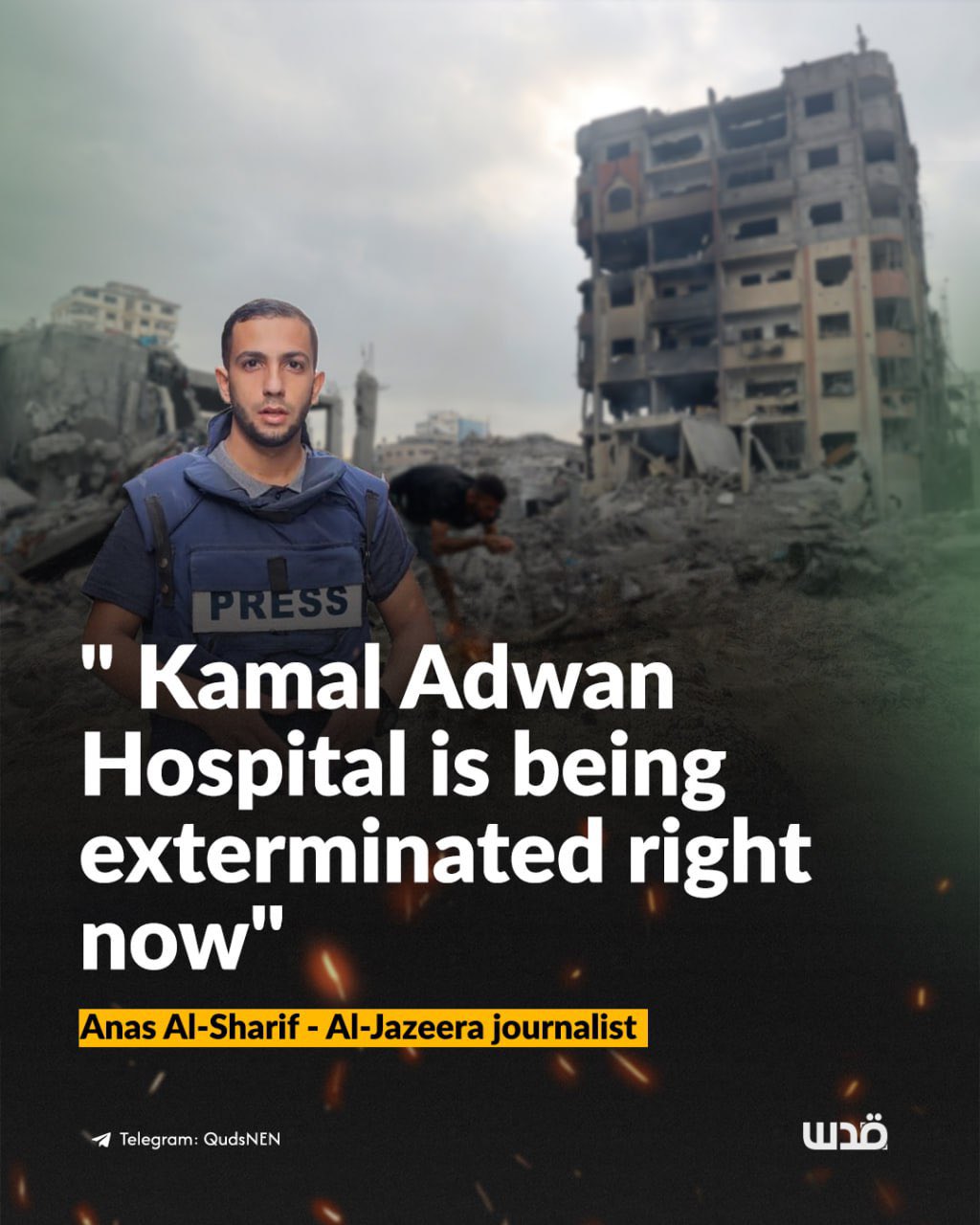
Al-Jazeera correspondent Anas Al-Sharif describes the situation in Kamal Adwan Hospital by saying it is being exterminated now as Israeli occupation forces are intensifying their attacks on the hospital, targeting its buildings directly without a prior warning.

Footage from inside Kamal Adwan Hospital shows the ICU and neonatal ward and patients sheltering in the corridors after the Israeli occupation army ordered the hospital, the only functioning hospital in northern Gaza, to evacuate immediately under the threat of bombing.

The Kamal Adwan Hospital in northern Gaza is under dire circumstances as it’s under constant Israeli bombardment following the occupation order to evacuate the hospital under the threat of bombing, where patients and medical staff are taking shelter in the corridors.

Shrapnel from explosions spread across the departments of Kamal Adwan Hospital after the Israeli occupation detonated the booby-trapped “robot” near the hospital, according to a local journalist.

Director of Kamal Adwan Hospital, Dr. Hussam Abu Safia, shared the last message before contact was lost with the media staff at the hospital after the Israeli military occupation demanded the immediate evacuation of the hospital under threat of bombing.

Relentless Israeli airstrikes caused severe damage to Kamal Adwan Hospital in the northern Gaza Strip and there’s no let up with the Israel army determined to make north Gaza into a wasteland as part of their so-called ‘General’s Plan’ at displacement and changing the geography of the area.

Continue reading