Gaza, Srebrenica: Two Genocides Years Apart

Israel Turns Gaza Into a Death ‘Srebrenica’ Camp

Israel is legitimising and enforcing a systematic pattern of geographic siege on Gaza, extending beyond a comprehensive blockade to include forcible internal confinement. This traps Palestinians within a small, devastated area under conditions more severe and crowded than those in the Srebrenica enclave before its fall in 1995, when genocide occurred according to the Euromedmonitor.

The Srebrenica genocide serves as a clear historical warning about the deadly impact of besieging civilians and depriving them of protection and essentials for life, particularly when these actions are part of systematic behaviour that is a core component of ongoing genocide, as seen in Gaza the Euro-Mediterranean Human Rights Monitor added.

On the eve of Srebrenica’s fall in 1995, nearly 40,000 people were besieged within a roughly 150 km². Meanwhile, for most of Gaza’s approximately 2.1 million residents, the remaining habitable area has shrunk to just about 128 km².

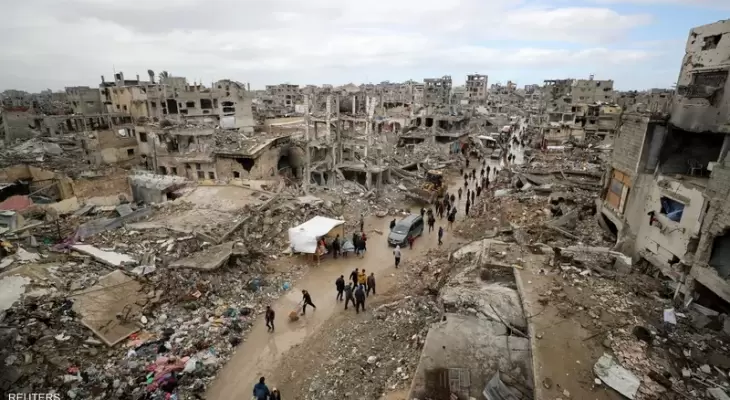
Geographically and demographically, Gaza is now limited to an area about 15 per cent smaller than Srebrenica, but with a population over 50 times larger and a density roughly 60 times higher, all amidst rubble, waste, and a severe lack of basic living conditions.

Changing Gaza’s Landscape

Israel is changing the demographic and military landscape of the Gaza Strip by increasing its de facto control and imposing severe restrictions on roughly 65 per cent of the enclave. This action deprives over two million residents of essential resources, prevents their return to their lands and homes, and makes large parts of Gaza prohibited zones under Israeli military control. These measures effectively amount to an unlawful annexation and seizure of land the Geneva-based organization.

Israeli Prime Minister Benjamin Netanyahu’s announcement to expand military control over 70 percent of Gaza highlights an aim to further settler colonialism and expel the area’s native Palestinians, as this plan would leave only about 109 km² for residents. If this occurs, the per capita share of the remaining space would decrease to approximately 52 m², and the population density would increase to about 19,300 people per km², which is roughly 72 times higher than the density in Srebrenica in 1995.

Although the numerical figures on population density are alarming, they do not fully reflect the harsh reality of the suffocating overcrowding residents face in the Gaza Strip. Much of the remaining land has been intentionally rendered uninhabitable through systematic destruction. This area is overwhelmed with large amounts of rubble from homes and civilian objects. It is filled with destroyed infrastructure and blocked roads, hindering movement, access, and humanitarian efforts. Additionally, waste, war remnants, water source contamination, sewage network collapses, and exposed land devoid of shelter or safe displacement sites further worsen the situation.

In addition to severe overcrowding, most residents live in either worn-out tents, which offer no shelter from summer heat, winter cold, or rain, or in heavily damaged houses that could collapse at any moment. These structures are at risk due to ongoing Israeli bombardments or natural elements like wind and rain the human rights organization goes on to say.

This situation poses numerous risks to hundreds of thousands of families, such as buildings collapsing on residents, fires erupting in overcrowded tent camps, and the spread of diseases due to poor sanitation, ventilation, and lack of clean water. It also deprives them of privacy and safety, particularly affecting women, children, and the elderly, as there are no safe housing options that could help residents escape this extreme overcrowding.

The residents of the Gaza Strip face a reality that deliberately subjects them to conditions intended to undermine the Palestinian population, either partially or entirely. This includes measures such as deportation or forced transfer, with efforts to legitimise and promote this displacement internationally under misleading terms like “freedom of movement” or “voluntary emigration.”

The ongoing killings, military operations, siege, and denial of sufficient food exemplify systematic actions that undermine civilian life. These include widespread destruction of civilian infrastructure, effective denial of return, military seizure of large land areas, restrictions on access to medical, health, and educational services, obstruction of reconstruction, and forcing residents into areas lacking basic survival needs. Collectively, these practices convert any choice into a consequence of physical and psychological coercion by Israeli authorities. Any departure of residents from the Gaza Strip under these conditions therefore cannot be regarded as voluntary but falls under forced displacement, which is prohibited under international law.

The attempts to forcibly transfer the population are a direct continuation of Israel’s settler-colonial approach, which has persisted for decades and is based on policies aimed at erasing Palestinian history, space, and demographics, along with the systematic seizure of land. This phase is characterised by its rapid pace and broad scope, aiming to reach over two million people suffering from ongoing genocide. These individuals have been deprived of legal protection and basic survival means for nearly three years.

These systematic coercive measures, along with the dehumanisation they entail, are deliberately designed to force residents into a stark choice: either face physical extermination or be forced out of their homeland. This is not a voluntary decision, but a compulsory condition for survival, highlighting the Gaza Strip situation as a well-documented example of mass deportation and forcible transfer in modern legal history.

Fourth Geneva Convention

The international community and all states must unequivocally oppose any plans to depopulate Gaza or force residents to leave using misleading terms like “voluntary emigration” or “freedom of movement.” Such population movements, without safe options and under ongoing physical and psychological pressure, are not genuinely voluntary but are crimes of forced displacement. These are prohibited by the Fourth Geneva Convention and the Rome Statute of the International Criminal Court. When this act occurs during an ongoing genocide, it triggers all states’ responsibilities to prevent and stop the crime, avoid recognising any illegal situation resulting from it, abstain from helping or supporting its continuation, and work together to end it and ensure those responsible are held accountable.

All states must implement prompt and effective punitive actions against Israel instead of merely issuing condemnation statements or broad calls. This includes applying diplomatic, economic, and military sanctions; suspending any agreements, privileges, or cooperation that enable ongoing crimes or provide political cover; enforcing a comprehensive embargo on the supply, transfer, purchase, or import of weapons, munitions, equipment, and military and security technology; freezing the assets of involved Israeli officials; and imposing travel bans on them. Maintaining normal relations with a state that commits genocide and forced displacement, or providing it with weapons, political, and economic support, can be seen as contributing to the ongoing unlawful situation. This may also violate states’ obligations to prevent and stop the crime and to avoid aiding or assisting in its commission.

The international community must act swiftly and decisively to dismantle Israel’s illegal system of control, detention, and apartheid over Palestinians, including those in the Gaza Strip. This involves forcing an immediate end to its military presence; removing barriers, buffer zones, and restricted areas that reduce the Strip’s land area and hinder residents’ access; and ensuring the prompt, unconditional return of displaced individuals to their original homes. These steps are essential to prevent de facto annexation, settler colonialism, and the forced displacement of Palestinians.

Euro-Med Human Rights Monitor urges immediate international action to lift the unlawful blockade on Gaza and establish safe, sustainable humanitarian access. This includes opening UN-supervised humanitarian corridors to allow the free flow of food, medicine, fuel, medical supplies, and shelter materials without arbitrary restrictions. The deployment of independent international monitors is crucial to verify compliance and ensure that aid and essential services are not used as tools of genocide.

Additionally, donors, states, and international organisations should move beyond merely managing the disaster through temporary relief. They need to act immediately to offer safe, dignified shelter solutions for residents, including permitting shelter materials and essential supplies to enter without restrictions, and urgently repairing health facilities, water and sewage networks, and critical infrastructure. A genuine path toward reconstruction cannot exist without lifting the blockade, ending Israeli restrictions on materials and equipment entry, ensuring residents can return to their areas, and stopping the ongoing destruction of civilian structures.

Reconstruction efforts should not replace accountability or serve to normalise the consequences of the Israeli crimes. Instead, it must compel Israel to take legal responsibility for the extensive destruction and ensure victims’ rights to reparation, compensation, and the restoration of safe living conditions on their land.

States with universal jurisdiction courts must issue arrest warrants for Israeli political and military leaders involved in the ongoing genocide and initiate legal proceedings to fulfil their international legal obligation to prosecute serious crimes and combat impunity. They must also hold accountable their citizens found to have committed violations against Palestinians, in line with their national and international legal obligations and within their territorial or personal jurisdiction.

Relevant UN agencies should urgently conduct an independent assessment of the Gaza Strip to identify the areas that are truly safe for habitation and human use. This will reveal the Israeli misrepresentation that considers nominal geographic zones as habitable. Euro-Med Monitor emphasises the importance of legally and practically distinguishing between the theoretical geographic regions still available to residents and the zones genuinely suitable for living or for safe displacement centres, which must be free of rubble, environmental and health risks, unexploded ordnance, and war remnants, EuroMed concluded.

Continue reading
How Israel is Destroying a Hospital

The hospital bears the name of one of the leaders of the Palestinian revolution and the most prominent symbols of the Fatah movement

– Since the start of the military operation in northern Gaza on 5 October, the hospital was subjected to dozens of attacks

– The hospital director said the Israeli army treats this health facility as a “military target”

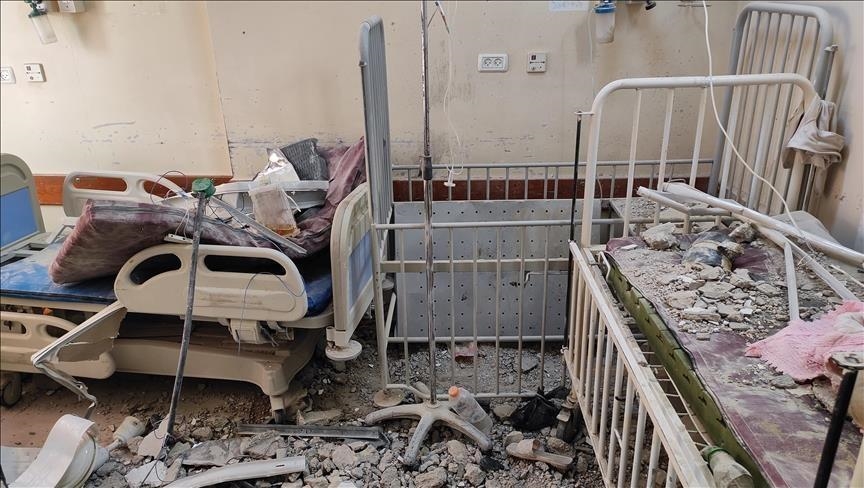
In the heart of the town of Beit Lahia in the northern Gaza Strip, where the Israeli army is committing crimes of genocide and ethnic cleansing, the Kamal Adwan Hospital continues to operate with minimal of capabilities as the last stronghold of steadfastness in the face of the Israeli war machine.

The hospital bears the name of one of the leaders of the Palestinian revolution and the most prominent symbols of the Fatah movement, and constitutes a last resort for patients and the wounded in the north who have not found an alternative that provides them with the minimum of medical and humanitarian services.

Since the Israeli army’s attack on the northern governorate on 5 October, which coincided with a comprehensive military siege, the hospital has been subjected to dozens of targeting operations with missiles and gunfire, as a health official said the Israeli army treats it as a “military target”.

Despite this, the hospital’s medical staff, consisting of two doctors at most and a small number of nurses, continued to perform their humanitarian duty, and refused to obey the army’s multiple orders to evacuate its buildings and leave the governorate despite the ongoing crimes against them.

Beit Lahia, like many other parts of the Gaza Strip, was subjected to a policy of “urban annihilation” of its architectural and cultural fabric through the implementation of comprehensive erasure operations and the complete destruction of homes, residential neighborhoods and infrastructure, and the elimination of the means of survival for Palestinians, according to a statement by the Euro-Mediterranean Human Rights Monitor.

  • Timeline

The Kamal Adwan Hospital, the largest hospital in the Northern Governorate, which used to provide services to more than 400,000 people, is currently operating under conditions and lacking capabilities due to the Israeli targeting of it since October 2023, which Anadolu Agency monitored as follows:

Since the beginning of the war, the Israeli army continued to launch intensive raids on the hospital’s surroundings, in addition to blowing up buildings and residential areas next to it, which resulted in much damage in addition to deaths and injuries inside and outside the hospital.

  • 2023:

– 14 October: An Israeli warning to evacuate the hospital of displaced persons, medical staff and patients.

– 4 December: An Israeli bombardment of the northern gate of the hospital results in the killing of 4 Palestinians

– 6 December: The Gaza Ministry of Health announces the forcible removal of Kamal Adwan Hospital from service and “with tank muzzles”.

– 8 December: Israeli tanks besiege the hospital, and army snipers climb onto surrounding buildings and fire towards the courtyards and patients’ rooms.

– 12 December: The Israeli army stormed the hospital after a tight siege and forced about 2,500 displaced people to evacuate the hospital after two days and arrested a number of medical staff

– 16 December: The army withdrew from the hospital after destroying the southern part of it, displacing the displaced people inside it, abusing its patients and suppressing the medical staff

  • 2024

– Mid-January: Kamal Adwan Hospital partially resumed operations according to human rights reports

– March: Dozens of children died, some of them in Kamal Adwan Hospital due to famine in the north and a shortage of medical supplies and medicines.

– 19 May: The hospital went out of service again after heavy Israeli shelling targeted its surroundings and army vehicles advanced towards it and besieged it for days

– 28 May: Israeli shelling of a building in the hospital and the destruction of the electricity generators inside it.

– June: The hospital partially resumed operations with limited medical facilities and supplies

– 8 October: The Israeli army orders hospitals in the Gaza Strip, including Kamal Adwan, to evacuate within 24 hours, amidst a siege by military vehicles

– 19 October: The Israeli army shells the entrance to the Kamal Adwan Hospital laboratory, killing a Palestinian and wounding others

– 20 October: The Israeli shelling of the hospital resumes, and heavy gunfire is directed at its buildings, targeting its water tanks and electricity network

– 22 October: Israeli warnings to evacuate the hospital are renewed

– 25 October: The Israeli army storms the hospital and detains hundreds of patients, medical staff and displaced persons who have taken refuge inside its buildings

– 26 October: The army withdraws from the hospital, leaving behind Palestinian deaths and widespread destruction inside and outside, a day after storming it

– 31 October: The Israeli army shells the hospital, burning medicines and medical supplies it received from the World Health Organization days earlier

– 3 November: Israeli artillery shelling injures a number of children in the hospital’s nursery and shooting at its generators and water tanks

– 4 November: Israeli shelling of the hospital’s facilities and the injury of a number of Palestinian medical staff and patients

– 6 November: The death of wounded due to the lack of surgical specialties in the hospital, which began operating without electricity due to a lack of fuel

– 11 November: An Israeli drone shelled the hospital’s reception and emergency department, injuring 3 medical staff

– 22 November: Renewed Israeli shelling of Kamal Adwan Hospital, injuring a doctor and patients, and disrupting the electricity generators and the oxygen station

– 3 December: Israeli shelling of the hospital with bombs launched by “Quadcopter” drones, injuring 3 medical staff

– 4 December: The army shelled the hospital four times and the oxygen station stopped, threatening the lives of patients inside it

– 5 December: The Israeli army targeted the hospital several times, killing two Palestinians, one of whom was a child, and injuring two others

– 6 December: The Israeli army stormed the hospital for hours and forced Patients and medical staff evacuated and a number of them were arrested

– 7 December: The Israeli army targeted the hospital with a number of shells, resulting in the injury of medical staff and patients, the destruction of water, oxygen and fuel tanks, a power outage and the outbreak of fires in its facilities

– 14 December: Explosive robots were detonated in the vicinity of the hospital, damaging its buildings and causing panic among patients and displaced persons

– 16 December 16: Israeli Quadcopter drones targeted the hospital

Continue reading
Israel Uses ‘Killer Robots’ to Murder, Flatten Gaza

The Euro-Mediterranean Human Rights Monitor  stated that the Israeli occupation army is using booby-trapped robots loaded with tons of explosives in the widespread destruction and killing operations carried out in northern Gaza.

It explained, in a statement Sunday, it “received numerous testimonies from inside Gaza, about the Israeli army’s use of booby-trapped robots and their detonation remotely, causing widespread damage to surrounding homes and buildings and great loss of life, at a time when the work of ambulance and civil defense crews is almost completely disrupted, except for a narrow range in some neighborhoods,” according to Quds Press.

“Israel’s use of booby-trapped robots is prohibited under international law, as these robots are considered random weapons that cannot be directed or their effects limited to military targets only,” the Euromed Monitor added.

It explained that “due to their nature, they directly hit civilians, or hit military targets, civilians or civilian objects indiscriminately. Therefore, they are prohibited weapons under international law, and their use in residential areas constitutes an international crime in and of itself.”

The statement quoted a Palestinian besieged in the “Al-Qassabi” neighborhood south of the “Jabalia” camp in the northern Gaza Strip, who said, “last Wednesday evening – 9 October – a huge explosion occurred in the Al-Qassabi neighborhood near where we were located.”

He added, “the sound of the explosion was very loud, I had never heard it so loud before, we have become able to distinguish between the sounds of explosions, so we know whether this sound is from bombing by aircraft, artillery or something else.”

He pointed out that “the sound of the explosion was many times louder than the sound of the airstrike, to the point that white dust covered the entire area. We later found out that this explosion was the result of a robot loaded with tons of explosives detonating, and that this robot destroyed about 6 or 7 houses at once. The occupation army detonates the robot in the houses without knowing whether there are civilians inside them or not.”

The Euro-Mediterranean Human Rights Monitor said that it documented the occupation army detonating two other robots in the “Tawam” area and in the “Zahraa” neighborhood adjacent to the Civil Defense west of the “Jabalia” camp, and another robot in the vicinity of the “Abu Ali Mustafa” intersection in “Bir al-Naja” in the western areas of the Jabalia camp.

Using “robots” to relieve pressure on the air force

military expert, engineer Muhammad Magharbeh, indicates that the “Israeli” air force “is going through its weakest stage,” considering that the occupation army’s resort to alternative destructive means to aerial bombardment is an important indicator of the challenges currently facing this weapon.

In an interview with Quds Press, he pointed out that the hundreds of thousands of tons dropped on Gaza during the year “are explosives resulting from bombs received from American ammunition stores, which are no longer able to meet the Israeli Air Force’s demands at the required speed.”

He also pointed out that Israeli Air Force air bases were damaged by the recent Iranian missile attack, in addition to “the great waste in using bombs on the Gaza and southern Lebanon fronts.”

He stressed that the Israeli Air Force faces “difficulty in carrying out full and effective air missions in its war with Hezbollah, difficulty in destroying tunnels at the expense of the scarcity of ammunition that it is forced to economize on, and the choice between using them for Iranian targets or destroying the Lebanese tunnels, or destroying the northern Gaza Strip to force the residents there to move to the south.”

Reports indicate that the Israeli occupation army consumed a large amount of ammunition in the early stages of its war on the Gaza Strip, specifically those used in aerial bombardment. During the first four months of the military operation, the Israeli Air Force bombed approximately 31,000 targets, 29,000 of which were in the Gaza Strip and the rest in other areas, most notably Lebanon.

According to a statement by the Israeli occupation army, the majority of these raids were carried out using fighter jets. The Israeli occupation forces, supported by the United States and Europe, continue to commit the crime of genocide in the Gaza Strip, for the 372nd consecutive day, by launching dozens of airstrikes and artillery shelling, while committing massacres against civilians, amid a catastrophic humanitarian situation resulting from the siege and the displacement of more than 95 percent of the population.

Continue reading
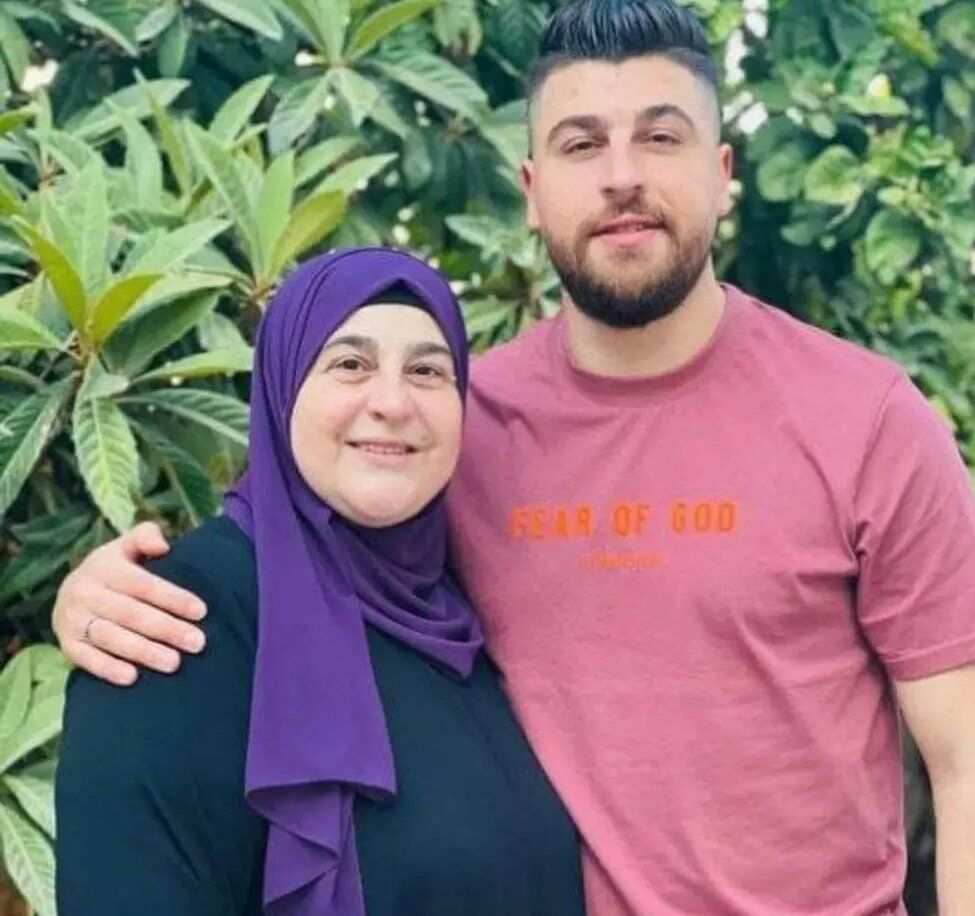
Wafaa Jarrar: ‘Human Shield’ Survivor Succumbs to Her Death

She died a martyr for freedom. Wafaa Jarrar will be remembered for her stiff resistance to Israeli occupation which used her as a human shield that led to the amputation of her two legs and final death.

The 50-year-old wounded and liberated prisoner Wafaa Jarrar died Monday, two months after she was critically injured last May, succumbing to her wounds because of Israeli neglect and deliberate negligence.

 “We mourn the icon of loyalty and giving, our beloved mother, the patient and steadfast prisoner, the wounded and martyr Wafaa Nayef Zahdi Jarrar “Umm Hudhayfah”…as she joins the ranks of martyrs and leaders in the Battle of the Flood of Al-Aqsa,” the Jarar family said in a statement, and as reported in the Palestine Information Center.

“More than two months after her injury and the amputation of both of her legs, the occupation army arrested her from her home in Al-Marah neighborhood Jenin on 05-21-2024,” the statement added.

The Israeli occupation forces arrested Jarrar from her home on 21 May during their aggression on Jenin and its two camps. The occupation later announced she was injured, transferred her to the Israeli Afula Hospital and an four-month administrative detention order was issued against her.

The serious injuries she sustained led to the amputation of her legs above the knee, and other injuries to her body and which lead to many other health problems.

Following the deterioration of her health, the Israeli occupation evaded treating her; they cancelled her administrative detention order, released her, and refused to continue her treatment in Israeli hospitals.

In a previous statement the Euro-Mediterranean Human Rights Monitor held the Israeli occupation army fully responsible for the life and safety of Ms. Wafaa Nayef Jarrar. It noted the Israeli army arrested and detained her for four hours in a dangerous area where clashes were taking place, deliberately exposing her life to direct danger.

The Monitor explained what she was subjected to from the moment of her arrest until her release reflecting the repeated and systematic pattern Palestinians, men and women, face when arrested by the Israeli army in the occupied Palestinian territories.

It includes arbitrary arrests, abuse, their use as human shields, torture, and denial of medical care, and Israeli army’s evasion of responsibility for their harm and suffering resulting from its crimes and violations it inflicted against them.

The Euro-Mediterranean Human Rights Monitor explained it followed up on Israeli army’s arrest of Ms. Jarrar on May 21, from her home in Jenin, north West Bank, and subsequent announcement she had been seriously injured in an explosion inside the Israeli military vehicle she was detained in for four hours and then the administrative detention order issued against her before handing her over to the Palestinian liaison despite her critical health condition and loss of consciousness.

The Monitor confirmed this is an attempt by the Israeli army to evade its responsibility for the serious injuries she sustained during her detention, which led to the amputation of her legs and damage to her lungs and spine, and to evade its legal obligations related to providing her with medical care and necessary treatment.

The Monitor further confirmed Ms. Jarrar’s arrest was arbitrary. It stated there was no reason to justify her arrest, coming within the context of individual and collective arrest campaigns by the Israeli army against Palestinians wherever they are found.

It added the Israeli army made this arrest in a violent manner, storming her house, destroying most of its contents, and looting all the money and jewelry inside the house and which Ms. Jarrar’s family has not recovered up till now.

The Monitor confirmed the Israeli army had not directly taken Ms Jarrar to a detention but instead to a dangerous military area of operations with exchange of fire and where explosive devices were thrown at its vehicles and the jeep she was in.

This indicates the Israeli army deliberately decided to keep her there knowing full well this would expose her to the risk of death and/or injury.

It appears the Israeli army was trying to exploit Ms. Jarrar’s presence in the area of ​​its military attack on Jenin, to facilitate its military operations and shield and fortify its personnel and military vehicles.

Ms. Jarrar is a local activist and coordinator of the Jenin Association of Martyrs and Prisoners, and a mother of four children. Her husband, 58-year-old Abdul Jabbar Muhammad Ahmad Jarrar has been detained since 7 February, 2024, on a sixth-month administrative detention order. He previously spent 16 years in Israeli prisons.

Wafaa Jarar was an active community worker, launching the Mothers of Martyrs Gathering in Jenin and expanding to include other areas in the West Bank. She was also one of the candidates on the Jerusalem is Our Date list for the legislative elections that was scheduled to be held in 2021.

Continue reading