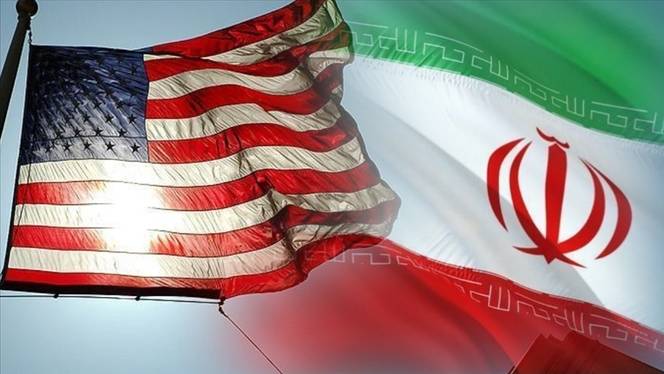
How Will Hawkish Trump Deal With Iran?
 CrossFireArabia
- February 15, 2025

Ata Şahit
Immediately upon his return to the White House for a second stint, a hawkish Donald Trump has put Iran on notice.
In the first week of February, the US President signed a presidential decree reinstating the maximum pressure policy on Iran, saying that though he was not pleased with the decision, he had no choice but to adopt a firm stance.
A few days later, Trump claimed that a very “frightened” Iran was ready for a deal with the US over the Shia-majority nation’s nuclear programme.
The moot point of his assertion was that he would also prefer a deal rather than Israel carrying its threat of attacking Iran’s nuclear facilities. “I’d much rather do a deal that’s not going to hurt them.”
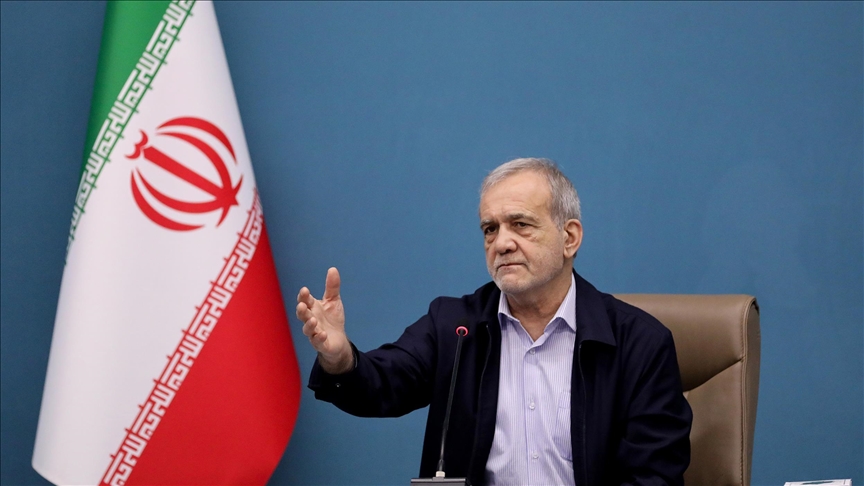
Since Trump assumed office, Iranian officials have consistently voiced their support for dialogue and expressed a willingness to engage in negotiations with the new administration.
On January 14, Iranian President Masoud Pezeshkian reaffirmed this position in an interview with NBC, emphasising Iran’s openness to talks.
However, any potential for a dialogue appeared to have been decisively shut down following a February 7 statement by Iran’s Supreme Leader, Ali Khamenei.
Addressing members of the Iranian military, Khamenei declared that engaging in negotiations with the US was neither a prudent nor an honourable course of action, unequivocally rejecting the prospect of talks between the two countries.
Some analysts have interpreted Trump’s January approval of the sale of 4,700 additional MK-84 bunker-buster bombs to Israel as part of a broader Iran strategy.
This begs the question: How would Iran-US relations evolve under Trump, and how significant is the threat posed by Iran’s potential nuclear capabilities?
Israel likely to attack Iran nuclear facilities by midyear — report
Trump’s first term and Iran
Trump’s re-election marks a critical turning point for Iran. Even during his first presidency, Trump’s policy of maximum pressure had led to significant economic, political, and military challenges for Tehran.
It was during the first Trump administration that some seismic events – such as the US withdrawal from the nuclear deal, the re-imposition of economic sanctions, and the assassination of Quds Force commander Qassem Soleimani—intensified the pressure on Iran.
With Trump’s re-election, the Iranian leadership is concerned about the prospect of further escalation of previous policies.
Recent developments in the region indicate that Iran’s deterrence capabilities have reached a critical low.
An analysis of Iran’s national security and defence doctrine reveals that it rests on three principal strategic pillars: the establishment of a forward defence line via non-state actors under the Quds Force, an extensive missile programme, and efforts to achieve nuclear threshold status.
However, Israel’s attacks in 2023 and 2024 have significantly weakened these pillars. Indeed, the elimination of Hezbollah leaders, the destruction of its command structures, and successful Israeli airstrikes against Iranian territory have complicated Iran’s ability to leverage these elements as an effective deterrent.
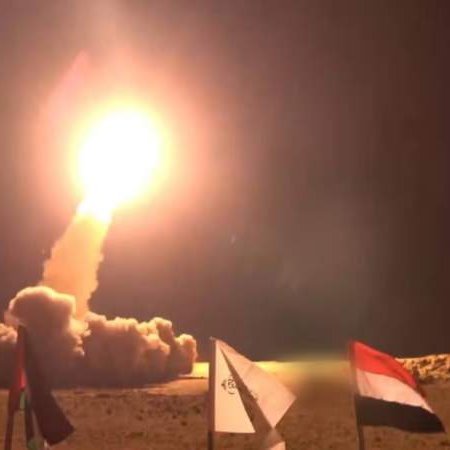
Moreover, although Iran’s missile programme is still impressive in terms of variety and quantity, its effectiveness was found to be limited during the April and October 2024 attacks. The majority of Iran’s missiles either missed their targets or proved ineffective.
The Israeli strikes on October 26 severely damaged Iran’s missile engine production facilities and solid fuel production capabilities.
In particular, the strikes on the Shahroud missile complex have significantly constrained Iran’s ability to develop long-range missiles. As a result of these strikes, Iran’s most advanced air defence systems (S-300 PMU2) were rendered inoperable.
The remaining systems are limited both in range and capability, thereby increasing Iran’s vulnerability to external attacks. These vulnerabilities have prompted Tehran to reconsider the option of developing nuclear weapons.
While Iran has the capability to produce weapons-grade uranium within a week, integrating a nuclear warhead into a missile system is regarded as a time-consuming process.
Iran’s nuclear programme and rising concerns
Trump’s threats and the continuing tensions surrounding Iran’s nuclear programme represent a critical juncture for the country.
Rather than initiating the production of nuclear weapons, Tehran could adopt the more cautious yet effective step of announcing its intention to withdraw from the Nuclear Non-Proliferation Treaty (NPT).
Such a move would underscore Iran’s seriousness while seeking to extract more concessions at the negotiating table.
A notable example is North Korea, which in 1993 employed a similar strategy by announcing its intention to withdraw from the treaty, subsequently suspending its decision before ultimately carrying it out.
Iran’s threat to withdraw from the NPT could be perceived by the international community as a shift toward nuclear weapons production. This, in turn, could escalate regional tensions and potentially encourage Israel to deploy US-made bunker-buster bombs against Iranian nuclear facilities.
Iran’s clandestine nuclear weapons programme, known as the Amad Plan, sought to produce five nuclear weapons between 1999 and 2003.
Under this plan, four warheads for Shahab-3 ballistic missiles and one bomb for an underground test were developed.
According to the Iranian nuclear archive captured by Israel in 2018, Iran has made significant advances in critical technologies, including nuclear warhead design, neutron initiators, and detonation focusing systems. This information is regarded as a contributing factor to Iran’s increased capacity to produce nuclear weapons.
Significant similarities exist between China’s first nuclear bomb (codenamed 596) and Iran’s early designs. The findings indicate that Iran is approaching the status of a nuclear threshold state.
Therefore, Trump’s nuclear policy toward Iran is a critical issue, both in terms of differing perspectives within his administration and the broader international context.
Where can the process evolve?
Iran’s nuclear programme remains a priority concern for both Europe and the US.
With the expiration of the UN Security Council (UNSC) snapback sanctions in October 2025, the US-led West risks losing one of its most powerful tools of diplomatic leverage.
In this context, Europe plans to leverage Iran’s vulnerabilities and time constraints to initiate an effective nuclear diplomacy process.
Indeed, a statement by the E3 – France, Germany and the UK – that it is prepared to utilise all diplomatic tools against Iran indicates that patience is waning.
Simultaneously, Iran’s statements suggesting it may reassess its technical capabilities and political intentions have raised concerns within the international community.
The US might intensify pressure by tightening the enforcement of secondary sanctions on the Iranian economy.
As an initial measure, Trump imposed sanctions on a key international network involved in the sale of Iranian oil, delivering a significant blow to Iran’s oil exports.
Expanding sanctions to target major purchasers of Iranian oil, particularly China, could exacerbate Iran’s economic vulnerabilities.
In other words, the US and Europe may capitalise on this window of opportunity by intensifying pressure on Iran while simultaneously presenting clear diplomatic solutions.
In Iran, contrary to Khamenei’s rhetoric, there are indications that a large section of the leadership and population are generally supportive of negotiations with the US.
Recently, the Center for Islamic World Studies, aligned with Supreme Leader Khamenei, conducted a survey on Iran-US negotiations as part of its advisory role in foreign policy.
The study surveyed 119 academics, senior executives, and current and former officials. The results revealed that 86.5 percent of respondents supported direct negotiations between Iran and the Trump administration, while just 5.8 percent opposed the proposal. A further 7.5 percent of respondents indicated that negotiations would be conditional.
Against the backdrop of Trump’s belligerence against Iran, the risk of Israel attacking Iran’s nuclear facilities has gone up manifold.
How Tehran decides to navigate the choppy waters of uncertainty will determine the future of US-Iran relations. And, perhaps, of the volatile region too.

Ata Şahit
Ata Şahit is an executive producer for TRT.

 Dr Khairi Janbek