The US General Who Swallowed His Own Truth

By Jassem Al-Azzawi

General Dan Kaine, Chairman of the Joint Chiefs of Staff, delivered a confidential warning to President Trump with the utmost candor—the kind of candor that democracies rely on and empires routinely ignore. He said: “We don’t have enough ammunition to win this war. It’s not going to be pretty.” This warning wasn’t born of cowardice; it was the last vestige of institutional integrity that still flickers within the halls of American military power.

Trump’s response was that of a circus clown, not a commander-in-chief. Through his “Truth Social” platform—that distorted mirror of American political life—he dismissed the warning with the arrogance of a street vendor, saying: “Oh, no, no, no. If we do it, we’ll win easily.” Thus, a sober assessment became mere publicity, and caution a lie.

But the biggest lie came later. When Kaine’s warning leaked, Trump not only rejected it but completely reversed it. With the confidence of a man who has never been held accountable for anything, he told the American public the general had said the exact opposite—that the United States had plenty of missiles, munitions, and everything else. “That’s not what he said at all,” Trump declared, putting words of false victory in the mouth of a man who had offered only warnings.

And General Cain remained silent

This silence is not just a footnote in this story; it is the story itself. By remaining silent, Cain allowed the American public to absorb the falsehood as truth. He did not say: “No, Mr. President, that’s not what I said.” He did not invoke his oath, nor the soldiers who would pay with their lives for the gap between political rhetoric and logistical reality. He chose the safety of silence over the danger of truth, and in doing so, he betrayed not only himself but the Republic. This is the rot at the heart of American militarism.

As historian Andrew Bacevich has long warned, the professional military has become more of an instrument of imperial ambition than a defender of democratic values, with senior officers more concerned with their next post than with the Constitution they swore to uphold. Kaine’s silence was not a mere slip of the tongue; it was a symptom of a deeper malaise.

The logistical picture Kaine described in private was not theoretical; the calculations were unforgiving.

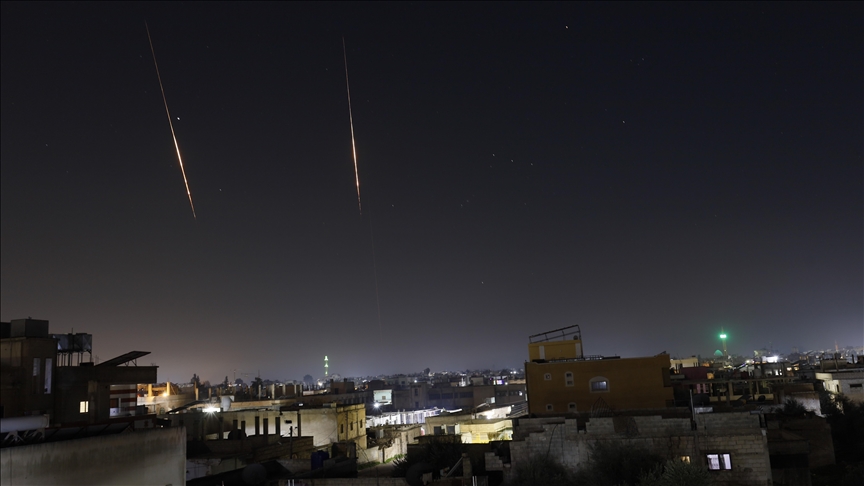
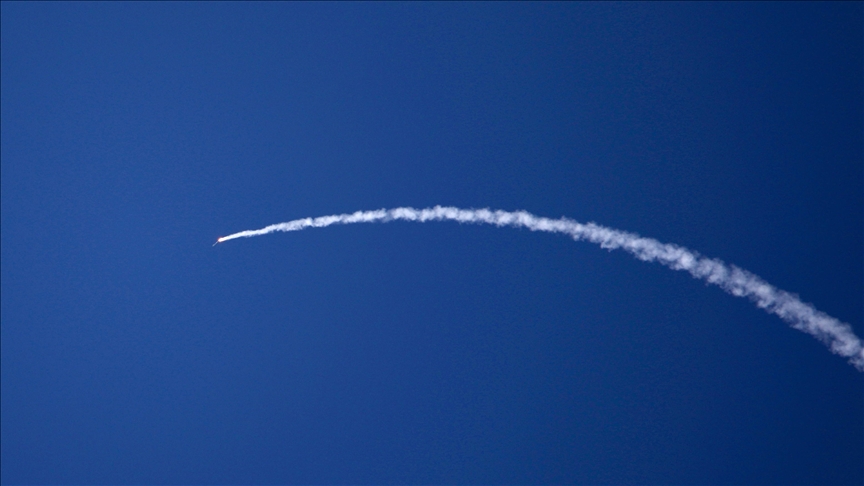
Current stockpiles of interceptor missiles and precision munitions could not sustain a prolonged air campaign against a country three times the size of Iraq. The Wall Street Journal documented a “worrying gap” in U.S. missile stockpiles, noting that reserves were “far below” the requirements of intensive and sustained operations. Pentagon contractors were instructed to “double or even quadruple” production of Patriot, SM-6, and precision-strike missiles—a tacit admission that the arsenal built for Cold War scenarios is inadequate for the war being fought today.

Consider Gaza: Israel, the most heavily armed military power in the Middle East, with complete air and naval dominance, has turned a tiny coastal strip into a moon-like landscape of devastation over two and a half years, yet it has not broken Hamas. Gaza is only 37 kilometers long. Iran, on the other hand, is a nation of 90 million people, with mountainous terrain, strategic depth, fortified infrastructure, and a combat-hardened Revolutionary Guard. The idea that it will collapse under a few weeks of American airstrikes is not strategy; it is wishful thinking. “God help us if this continues, if it gets to four weeks,” Colonel Daniel Davis warned on the Deep Dive podcast. He was speaking in military terms, and the same prayer applies. Politically.

When Trump now raises the prospect of sending ground troops, he is not escalating from a position of strength, but rather improvising from a position of denial. Admitting that air power and missiles alone cannot achieve the political objective is an admission that the original objective was never honestly assessed. This is the pattern of American wars at the end of an empire: Glittering promises, disastrous calculations, and then a grim and horrific reckoning paid in blood by those who had no seat at the table where the lies were told.


The costs are already piling up—not just in the currency of munitions and riches, but in the currency that empires always ultimately spend and regret most: credibility. America’s word, already devalued by two decades of contrived justifications for war, is getting cheaper by the day.

Democracies can tolerate miscalculations, and they can tolerate bad presidents, but what they cannot long tolerate is the institutionalization of a culture where the truth is whispered behind closed doors and swallowed whole in front of cameras. When the chairman of the Joint Chiefs of Staff allows his words to be weaponized for propaganda — when the man in charge of counting missiles refuses to correct a president who pretends they are plentiful — something far greater than military credibility collapses.

What is crumbling is the social contract between the governed and those who send them to their deaths.

Caine’s silence was not cautious; it was complicity. And in an imperial machine suffering from a shortage of ammunition and a shortage of truth, complicity is the only resource that seems inexhaustible, because when the missiles finally run out, slogans won’t replace them.

Reality will.

Al-Azzawi is an Iraqi writer who contributed this piece to Al Rai Al Youm which was translated and appeared in crossfire.com

Continue reading
Trump’s War Drums ‘Dampen’

EDITOR’S NOTE: This editorial is written by Abdul Bari Atwan, chief editor of the Arabic Al Rai Al Youm website, on 2 February 2026, on the eve of increasing US military presence sorrounding Iran.

The fact that the Supreme Leader of the Islamic Revolution Ali Khamenei appeared three times in open and public meetings, chatting to ordinary Iranians recently, sends a shocking message to US President Donald Trump and Israeli Prime Minister Benjamin Netanyahu. It shows Khamenei still has the first and final word in Iran, and is not hiding in an underground bunker for fear of assassination; he has not relinquished his leadership and spiritual powers, as some Arab and Western media outlets have promoted in deliberate leaks part of the psychological warfare against Iran, coinciding with the US military buildup in the region.

In contrast top Israeli politicians and military officials are rushing to Washington fearing that President Trump will back down from his aggression threats and replace the military option for a peaceful, negotiated one and reaching an accord that does not include Israeli demands and conditions. Israeli Chief of Staff General Eyal Zamir made a surprise visit to Washington recently and met with senior US military leaders, accompanied by his own top military commanders, including the Israeli Air Force Commander.

Frankly however Trump may have already lost this war, just as he lost face and credibility by failing to follow up on his threats and translate them into aggressive actions on Iranian soil as he has resorted to sending mediators, with the latest being his friend, Turkish President Recep Tayyip Erdogan, to reopen negotiations with Iran after realizing his naval buildup and aircraft carrier deployments is not yielding results, nor are they intimidating the Iranian leadership into surrendering. Thus, he may be defeated either way, whether he goes to war or resorts to a political and diplomatic solution to the cri

The key to understanding this confusion and perhaps American retreat, and the postponement of military strikes, lies in the threatening message sent by Ayatollah Ali Khamenei to Trump during his meetings with the numerous Iranians on the anniversary of the late Ayatollah Khomeini’s death. The most prominent point was his assertion that “Iran does not initiate wars, but if it is subjected to aggression, it will confront it with all its might and inflict devastating blows on the enemy.” More importantly, he stated “this war will be a broad regional conflict, it will not be swift, decisive, or short-lived,” nor “clean”— meaning, free of casualties.

A “regional war” means all countries, movements, and military factions aligned with the “axis of resistance” will participate, starting with Hezbollah in Lebanon, the Popular Mobilization Forces in Iraq, and Ansar Allah in Yemen. American bases in the region, particularly on the Arabian side of the Gulf, will be legitimate targets, as will all the American soldiers stationed there and whose numbers exceed 70,000.

What terrifies Israel most is not only Trump’s failure to proceed with his aggression against Iran, but also the possibility of reaching an agreement that contradicts all three of Israel’s objectives:

First: Preventing Iran from acquiring nuclear weapons, halting all Iranian uranium enrichment at high levels, and surrendering all its existing stockpile (480 kilograms) to a neutral country. Second: Halting the development and launch of Iranian missiles, and dismantling all long-range missiles, whether hypersonic or multiple-warhead, capable of reaching deep into Israeli territory, particularly Haifa and Tel Aviv, as demonstrated in the 12-day war last June.

Third: Completely ceasing all financial and missile support for resistance movements, especially Hezbollah in Lebanon and its Iraqi counterpart, factions within the Popular Mobilization Forces such as Harakat al-Nujaba, and Ansar Allah in Yemen.

A Reminder

Everyone should be reminded the return of 5,000 American soldiers in coffins to Washington, killed by the Iraqi resistance after the 2003 invasion, forced the then-President Barack Obama to acknowledge defeat and withdraw 160,000 American troops from Iraq in November 2011. This was made to minimize losses. Thus, it is no exaggeration to say that any aggression against Iran today would result in four times that number of American casualties, if not more, in the initial days of the attack. This is due to Iran’s resolve, advanced missiles and drones, and other secret weapons that might be the biggest surprises of this war, should it start.

Perhaps the decline in oil prices, the collapse of gold and silver prices, and the dollar’s shocking depreciation in global financial markets are among the most prominent indicators confirming what was stated above: The diminishing likelihood of war, Trump’s reluctant inclination towards diplomatic solutions and negotiations, and his initial admission of his failure to achieve a military victory to avoid losses and the protracted regional war threatened by the Iranian Supreme Leader, Ayatollah Ali Khamenei. Time will tell.

Continue reading
Donald’s War Bells

By Dr Khairi Janbek

When talking about the stand off between the US and Iran, in fact, anything can happen on the kaleidoscope of endless talks to an endless war. Usually it is possible to predict the reaction of one collective or another with some knowledge, but impossible to predict the reaction of an individual no matter what knowledge is available.

This is especially the case if this individual is Donald Trump. He makes it his business to be unpredictable and depending who tells him what and whether he likes it or not; but at least we can attempt to drive some inference from the situation, a situation which finds the current American president who heavily criticized his predecessors for dragging the United States into protracted wars with dubious results.

In this sense, the operative term is a short and decisive war, which is unclear in terms of what duration in order to be decisive about what? From the term, short and decisive, President Trump seems to know what he wants, which we can pontificate on in a myriad of possibilities, however, and for all intents and purposes, it can only mean a campaign of targeting the current leadership, civilian, military and security, coupled with targeting Iran’s missile and nuclear capabilities.

Alternatively, for a leader obsessed with reality show image, he wishes to drag Iran to the negotiations table, which is not supposed to appear as a negotiations table, rather a table which will show a supposedly humiliated Iran, accepting the terms of the Washington administration: Those terms being a peaceful nuclear programme under close international supervision, no missile development programme, and stopping its support to its current regional proxies.

But the snag in all those plans,seems to be based on the reports indicating that the president has been told, that in order for the war to be decisive, it’s not likely to be a short one, which puts Trump in the conundrum of dragging the US into a protracted war on many other fronts, ranging from Iran to Iraq to Yemen. One is not saying at all that the US military cannot handle it, rather how costly will be the confrontation with Iran and its proxies be to achieve a decisive objective, which Trump desires to achieve in a short war?

In effect, if he does go to war at this point the objective has to change, and the meaning of decisive has also to change, meaning it would have to be regime change, knowing only too well, that there is no viable political alternative to the Mullahs except the Shah of Iran, which Trump doesn’t seem to be too keen on, and no one else in the region; for they are not much qualified to deal with day of regime change in Iran.

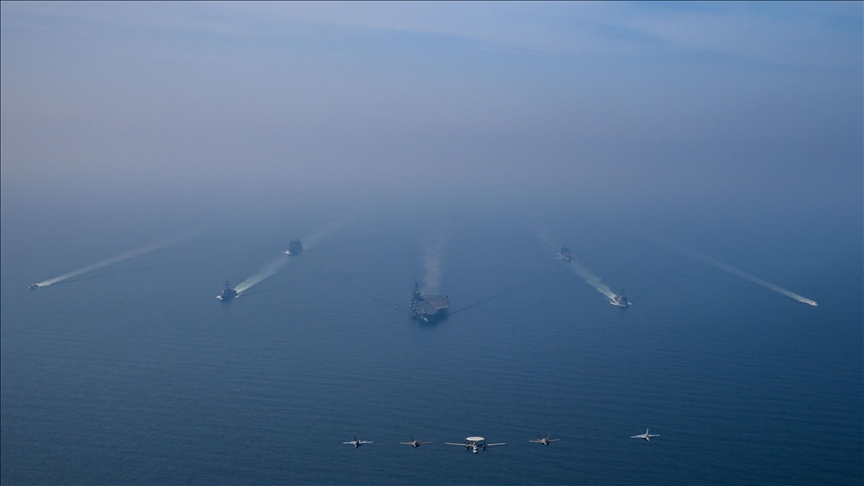
Also from an economic point of view: How long can a standing navy fleet stay on alert for war. The matter is not only psychological, but rather financial, as the moving of such a sizable war machine costs millions of dollars, now, if there are sponsors for this big operation and whom are willing to pay the expenses, then the US navy, similar to its Venezuelan operations, can encircle Iran and confiscate its oil shipments in the high seas , but if the US is paying for this big operation, then it won’t be long before we hear about a war breaking out.

Continue reading
No Solace in Cheney’s Death

By Ismail Al Sharif

I did what I thought was my duty – Dick Cheney.

Because of him, more than five million people were killed, and more than 38 million displaced from their homes in what was falsely called the “War on Terror.” And now, the man, mainly responsible for those crimes has passed away peacefully surrounded by his family, after his heart stopped beating: And I thought he had no heart. If there were any justice in this world, he should have died alone in a cold, empty cell.

Dick Cheney, Vice-President to George W. Bush, who effectively wore the mantle of the President, the true ruler behind the scenes, has passed away. Cheney is considered the chief architect of the expansion of American militarism and one of the most bloodthirsty criminals in modern history. He cast his heavy shadow on one of humanity’s darkest periods, leaving behind an indelible stain of shame on the face of humankind.

Cheney was one of the key architects of the Project for the New American Century (PNAC), which laid the foundation for the idea that the United States should be the sole dominant power in the world, leading a unipolar system through which it would dictate its will to other nations using economic pressure and military force. This approach persists to this day, as America has never ceased waging wars and instigating conflicts since then.

The events of 11 September, 2001, presented him with a golden opportunity to implement his agenda. His influence within the Bush administration soared to unprecedented levels, and he was the one who coined the term “dark side,” which granted intelligence agencies broad powers to spy on citizens and use torture in Afghanistan and Iraq.

He was the first to promote the lie that Iraq possessed weapons of mass destruction to justify the invasion, claiming that the overthrow of President Saddam Hussein was essential for American national security, while his true aim was to seize Iraqi oil. Meanwhile, his company, Halliburton, was reaping enormous profits from the war and securing lucrative contracts, leaving him with a fortune estimated at $150 million.

When one of his top aides, Joseph Wilson, publicly questioned his account of Iraq, Cheney retaliated with a covert act of revenge: Leaking the identity of his wife, Valerie Plame, a CIA operative, effectively ending her career. Lewis Libby was later convicted of obstruction of justice and perjury before receiving a presidential pardon from Donald Trump.

Cheney was also the architect of Paul Bremer’s appointment as President Bush’s special envoy to Iraq after the invasion. Bremer meticulously implemented the neoconservative agenda, privatizing state-owned enterprises and reversing the 1972 nationalization of oil, granting international oil companies sweeping concessions for exploration and investment. Cheney was rewarded by having control of the oil. A 2003 CNN report concluded the war in Iraq was about oil, and that the real winners were the major oil companies.

History later proved that all of Cheney’s justifications for the war were false. No weapons of mass destruction were found, while millions of children and women perished, and thousands of American soldiers were killed defending the interests of the elite and Zionists in a senseless and unjustified war. Thus, Cheney became one of the most controversial figures in modern American history.

Cheney died, but his legacy did not. The ideology of hegemony and militarism that he instilled still governs power politics today. His body is gone, but he left behind a generation of monsters who continue to implement his agendas of murder, tyranny, and greed. Perhaps the recent war on Gaza is the truest testament to the fact that his ideology was not buried with him.

There is no solace in Cheney’s death, for his crimes are too horrific to be contained by fire, just as is the case with Netanyahu and all those who follow in his footsteps.

This article by Ismail Al Sharif was originally written in Arabic for the Addustour daily.

Continue reading
Gaza: Changing The Middle East Face

By Mohammad Abu Rumman

The Al-Aqsa Flood operation marked a turning point in the modern political history of the Middle East. Its repercussions have gone far beyond the Palestinian and regional arenas, extending to the international system and reshaping the foreign policies of global powers toward the region.

The timing of the operation was particularly significant: it came at a transitional moment in the regional order, in the absence of consensus among international and regional actors on the rules of the game. While a fragile balance of deterrence existed between the so-called “Axis of Resistance”—led by Iran (alongside the Syrian regime, Hezbollah, Shiite political forces in Iraq, the Houthis in Yemen, and Hamas and Islamic Jihad)—and Israel, the latter was in the midst of a new phase of regional integration through the Abraham Accords.

Several Arab capitals had already normalized relations, and others were on their way, creating an unprecedented political landscape. This shift coincided with the declining influence of traditional Arab powers such as Egypt, Iraq, and Syria, and the rising centrality of the Gulf states. Many analysts began describing this new configuration as a “New Middle East”: wealthy, economically driven, and detached from historical conflicts—unlike the “Old Middle East,” where entrenched crises defined politics.

Turkey, meanwhile, had entered its own phase of recalibration. Once a champion of the Arab Spring and regional Islamist movements, Ankara sought reconciliation with Arab states, even attempting to restore ties with Bashar al-Assad’s regime (though rebuffed by Damascus), while focusing more narrowly on national security and northern Syria.

On the Palestinian front, Israel had grown complacent toward Gaza, convinced Hamas had no incentive to disrupt the status quo. Tensions, however, were mounting in the West Bank, with small armed groups emerging in places like Nablus, Tulkarm, and Jenin. Within Israeli and Western policy circles, talk was spreading about the prospect of a “mini-state in Gaza” as a substitute for a Palestinian state.

At the international level, President Joe Biden’s administration lacked enthusiasm for either the Abraham Accords or Trump’s “Deal of the Century,” yet it effectively followed the same trajectory: pursuing “regional peace” by integrating Israel into a new economic order and reducing the Palestinian question to daily livelihood concerns—employment, services, and economic relief in Gaza and the West Bank—rather than a political resolution.

The Al-Aqsa Flood and the subsequent two-year genocidal war in Gaza shattered these calculations and fundamentally restructured strategic assumptions. Whether the outcome will ultimately benefit or harm the Palestinian cause remains too complex to assess in simple terms, but what is clear is that the pre-October 7 regional order no longer exists.

From a Palestinian perspective, the conflict has restored international attention to the cause, leading to a renewed recognition of its centrality. In the Gulf, the previously dominant security paradigm—which cast Iran as the chief threat while framing Israel as a potential partner—collapsed entirely. A new consensus has emerged: Gulf security is inseparable from the Palestinian issue, and the notion of Israel as a “strategic friend” has been critically reassessed.

Skeptics may argue that these shifts have not altered the balance of power on the ground, and they are partially correct. Yet the strategic narrative has changed. Before October 7, the trajectory was toward the erasure of the Palestinian cause (closing UNRWA, moving the U.S. embassy to Jerusalem, normalization, and de facto annexation of the West Bank). Today, there is growing recognition—regionally and internationally—that Israeli policies themselves are the root of instability, not Iran or other regional actors. As Emirati political scientist Abdulkhaleq Abdulla put it on X (September 25): “When weighing who poses a greater threat to Gulf security and regional stability—Iran or Israel—the evidence points clearly to Israel. Israel’s brutal behavior has made it more dangerous than an exhausted Iran. The Gulf needs a new defensive and geopolitical strategy for the Middle East beyond Iran.”

Israel, however, now perceives a surplus of power and is pressing for a new political and security order that extends beyond the occupied territories. With the partial unraveling of the Iranian alliance and the breakdown of the “Syrian corridor” that once linked Tehran to the Mediterranean, Israel has set its sights on even more ambitious goals, including the proposed “David Corridor” and establishing buffer zones around its borders in Syria, Lebanon, and Gaza.

In response, a tentative regional coalition has begun to take shape, bringing together Saudi Arabia, Egypt, Jordan, and Qatar, with notable support from Turkey and Pakistan. The latter signed a defense pact with Saudi Arabia following Israel’s strike on Qatar and has since become more engaged in regional diplomacy. While fragile and constrained, this alignment presents a rare historic opportunity to rebuild a regional balance of power and establish a new deterrence framework.

Another striking development is the shift in Europe’s stance toward Israel. For the first time, Israel has lost significant ground in Western public opinion and media narratives, particularly among younger generations and in universities. This has pushed Israel closer to isolation—a position from which former U.S. President Donald Trump had tried to rescue it through his proposed Gaza peace plan, which was largely about securing U.S. and Israeli interests, without offering real guarantees for Palestinian statehood or ending the occupation.

In conclusion, it is still too early to judge the full strategic consequences of the Al-Aqsa Flood and the war in Gaza. Scenarios remain open, and outcomes uncertain. Yet one thing is indisputable: the region today is no longer what it was before October 7.

Abu Rumman is an Academic Advisor of the Politics and Society Institute and Professor of Political Science in The University of Jordan and published this article in The Jordan Times.

Continue reading