Gaza: Changing The Middle East Face

By Mohammad Abu Rumman

The Al-Aqsa Flood operation marked a turning point in the modern political history of the Middle East. Its repercussions have gone far beyond the Palestinian and regional arenas, extending to the international system and reshaping the foreign policies of global powers toward the region.

The timing of the operation was particularly significant: it came at a transitional moment in the regional order, in the absence of consensus among international and regional actors on the rules of the game. While a fragile balance of deterrence existed between the so-called “Axis of Resistance”—led by Iran (alongside the Syrian regime, Hezbollah, Shiite political forces in Iraq, the Houthis in Yemen, and Hamas and Islamic Jihad)—and Israel, the latter was in the midst of a new phase of regional integration through the Abraham Accords.

Several Arab capitals had already normalized relations, and others were on their way, creating an unprecedented political landscape. This shift coincided with the declining influence of traditional Arab powers such as Egypt, Iraq, and Syria, and the rising centrality of the Gulf states. Many analysts began describing this new configuration as a “New Middle East”: wealthy, economically driven, and detached from historical conflicts—unlike the “Old Middle East,” where entrenched crises defined politics.

Turkey, meanwhile, had entered its own phase of recalibration. Once a champion of the Arab Spring and regional Islamist movements, Ankara sought reconciliation with Arab states, even attempting to restore ties with Bashar al-Assad’s regime (though rebuffed by Damascus), while focusing more narrowly on national security and northern Syria.

On the Palestinian front, Israel had grown complacent toward Gaza, convinced Hamas had no incentive to disrupt the status quo. Tensions, however, were mounting in the West Bank, with small armed groups emerging in places like Nablus, Tulkarm, and Jenin. Within Israeli and Western policy circles, talk was spreading about the prospect of a “mini-state in Gaza” as a substitute for a Palestinian state.

At the international level, President Joe Biden’s administration lacked enthusiasm for either the Abraham Accords or Trump’s “Deal of the Century,” yet it effectively followed the same trajectory: pursuing “regional peace” by integrating Israel into a new economic order and reducing the Palestinian question to daily livelihood concerns—employment, services, and economic relief in Gaza and the West Bank—rather than a political resolution.

The Al-Aqsa Flood and the subsequent two-year genocidal war in Gaza shattered these calculations and fundamentally restructured strategic assumptions. Whether the outcome will ultimately benefit or harm the Palestinian cause remains too complex to assess in simple terms, but what is clear is that the pre-October 7 regional order no longer exists.

From a Palestinian perspective, the conflict has restored international attention to the cause, leading to a renewed recognition of its centrality. In the Gulf, the previously dominant security paradigm—which cast Iran as the chief threat while framing Israel as a potential partner—collapsed entirely. A new consensus has emerged: Gulf security is inseparable from the Palestinian issue, and the notion of Israel as a “strategic friend” has been critically reassessed.

Skeptics may argue that these shifts have not altered the balance of power on the ground, and they are partially correct. Yet the strategic narrative has changed. Before October 7, the trajectory was toward the erasure of the Palestinian cause (closing UNRWA, moving the U.S. embassy to Jerusalem, normalization, and de facto annexation of the West Bank). Today, there is growing recognition—regionally and internationally—that Israeli policies themselves are the root of instability, not Iran or other regional actors. As Emirati political scientist Abdulkhaleq Abdulla put it on X (September 25): “When weighing who poses a greater threat to Gulf security and regional stability—Iran or Israel—the evidence points clearly to Israel. Israel’s brutal behavior has made it more dangerous than an exhausted Iran. The Gulf needs a new defensive and geopolitical strategy for the Middle East beyond Iran.”

Israel, however, now perceives a surplus of power and is pressing for a new political and security order that extends beyond the occupied territories. With the partial unraveling of the Iranian alliance and the breakdown of the “Syrian corridor” that once linked Tehran to the Mediterranean, Israel has set its sights on even more ambitious goals, including the proposed “David Corridor” and establishing buffer zones around its borders in Syria, Lebanon, and Gaza.

In response, a tentative regional coalition has begun to take shape, bringing together Saudi Arabia, Egypt, Jordan, and Qatar, with notable support from Turkey and Pakistan. The latter signed a defense pact with Saudi Arabia following Israel’s strike on Qatar and has since become more engaged in regional diplomacy. While fragile and constrained, this alignment presents a rare historic opportunity to rebuild a regional balance of power and establish a new deterrence framework.

Another striking development is the shift in Europe’s stance toward Israel. For the first time, Israel has lost significant ground in Western public opinion and media narratives, particularly among younger generations and in universities. This has pushed Israel closer to isolation—a position from which former U.S. President Donald Trump had tried to rescue it through his proposed Gaza peace plan, which was largely about securing U.S. and Israeli interests, without offering real guarantees for Palestinian statehood or ending the occupation.

In conclusion, it is still too early to judge the full strategic consequences of the Al-Aqsa Flood and the war in Gaza. Scenarios remain open, and outcomes uncertain. Yet one thing is indisputable: the region today is no longer what it was before October 7.

Abu Rumman is an Academic Advisor of the Politics and Society Institute and Professor of Political Science in The University of Jordan and published this article in The Jordan Times.

Continue reading
Iran-Israel War: Cost And Opportunities!

By Mohammad Abu-Rumman

Benjamin Netanyahu has placed the Iranian regime, the Wilayat al-Faqih system, before a fateful challenge through a harsh pre-emptive strike. While extremely risky, the strike was not decisive enough to settle the confrontation. Netanyahu himself did not expect that an ideological-nationalist regime like Iran’s would surrender and offer immediate concessions following the strike, without launching a retaliatory blow against Israel.

Despite Iran’s unprecedented powerful strikes on Tel Aviv, the reformist current in Iran, represented by Foreign Minister Abbas Araghchi, has also demonstrated its continued commitment to “the negotiating table” and to finding a way out of this war. Iran has deliberately avoided using its full missile capabilities against Israel to prevent the battle from reaching the point of no return.

Current indicators suggest that this war will likely not last long, nor will it expand geographically, because the destruction costs—for both sides—are immense. For Iran, this includes damage to its oil facilities, which are the backbone of its economy, as well as the protection of what remains of its nuclear program and infrastructure. For Israel, the fact that Iran managed to breach the Iron Dome and cause major direct damage in the heart of Tel Aviv and Haifa presents a reality that Israelis cannot endure.

In this light, there will likely come a tipping point at which both parties will be willing to end the conflict. The timing of that moment will be decided by the U.S. administration, which will step in to halt the military escalation. But when will this moment arrive? It will come when both sides realise that they can no longer achieve significant additional objectives, and that the cost of continuing the conflict far outweighs the cost of stopping it, especially given that a so-called “knockout blow” is impossible in such existential wars.

On the Israeli side, there are two major areas of superiority: First, Israel’s air force has successfully destroyed much of Iran’s air defense systems, allowing it to operate freely over Tehran and strike targets at will. Second, intelligence penetration, which could lead to further surprises that may force the Iranians to retreat or make subsequent concessions. However, Israel’s major vulnerability lies in its inability to withstand sustained, large-scale missile attacks, especially after a prolonged multi-front military conflict.

As for Iran, it has two primary objectives in the current military confrontation: To preserve the political legitimacy of the Wilayat al-Faqih regime, which is built on religious ideology and propaganda. Failing to respond or retreating now would reflect poorly internally and could erode the regime’s very source of legitimacy. To protect Iran’s deterrence capacity and prevent its regional standing from deteriorating—especially after losing the bulk of its regional influence in the aftermath of “Flood of al-Aqsa” (the Gaza war).

American intervention, whether military or diplomatic, will be decisive in ending this conflict. It is evident that President Donald Trump prefers a negotiated path, aiming for political, military, and economic gains. Netanyahu, however, is betting that a major military defeat for the Iranian regime will lead not only to concessions on its nuclear program (the primary stated objective) but potentially to changing or collapsing the regime itself, thereby neutralizing it within the regional power structure. This would constitute a strategic shift in the regional security equation in Israel’s favour.

Direct US military involvement remains unlikely, except in two scenarios: If Israel were to request assistance after a massive and successful missile strike against its territory. If the U.S. concludes that Iran will not back down unless there is a more dramatic shift in the military balance of power that compels it to return to the negotiating table and offer substantial concessions.

This equation was not the same two years ago. Back then, Iran had greater geopolitical space and extensive tools of influence in the region. However, what has occurred with the fall of Bashar al-Assad’s corridor (the Syrian axis), and the diminished power of Hezbollah and Hamas, has cost Iran critical advantages in the regional balance of power. After this war, there will be significant consequences even for Iran’s remaining influence in Iraq, which may become the final outpost lost by Tehran, ending a twenty-year effort (since the 2003 invasion of Iraq) to weave its intricate carpet of regional influence.

Mohammad Abu Rumman is the Academic Advisor of Politics and Society Institute in Amman and has contributed this article to The Jordan Times.

Continue reading
Iran-Israel: Making of a World War

By Dr Khair Janbek

We became accustomed for a while to the mutual bombardment of Iran and Israel for the first a couple of days. Then Israel started declaring that it had achieved its objectives whilst Iran maintained its own momentum, saying it is also teaching Israel a lesson.

But now the new flaring conflict is lasting longer than expected. We really don’t know for certain what are the objectives as the declared intentions keep changing on daily basis and the hidden objections tend to be irrelevant, at least for the time being because we have no clue about them.

What is certain is that neither Israel nor Iran are naïve to think that, a protracted campaign of mutual bombardment, is in their interest. The reality however, is that a war of attrition is not in their interest of either, and may serve the interests of the two other regional powers: Turkey and Saudi Arabia.

But would both Israel and Iran willingly allow Turkey and Saudi Arabia to replace their influence? This is not very likely, as we can clearly see both sides are trying their best to drag others into the conflict by turning it into a regional conflgeration, by dragging the US and the EU on one side, and the Russians, Chinese, and Pakistanis on the other.

One at this juncture must say that a regional conflict, even by unintended consequences may lead to a wider global conflagration, quickly bringing in world powers and states that will not sit by the sidelines.

On the face of it, anyone cannot miss the fact that bombarding Iran came on the first day of the end of the two-month grace period which the US gave to Tehran to reach an ‘ironclad’ nuclear agreement. So at least on the face of it, the whole issue is related to forcing Iran to come back to the negotiating table with the US albeit with a weakened position.

But then again, the contradictory statement of the administration in Washington could mean anything or nothing, implying for certainty that it had prior knowledge of the Israeli attack on Iran.

Another idea which was thrown into the arena in a flip-flop manner, is that of helping in the process of regime change, but if one can say anything, is that when the Iraq-Iran war erupted, it was still in the early days of the Islamic Revolution and there was strong opposition to the mullahs regime.

And rather than creating a possibility for a regime, the war created a united nationalist response against the then Saddam Hussein regime in Iraq. In a sense what started with a serious possibility of regime change ended up uniting the forces of the country.

Therefore, if the intention of the Israelis is regime change, then they better think twice about. Still, Iran is a country of more than 92 million people, with a territorial space of about 1.6 million kilometers so anything is possible. Just for interest, it is argued that Iran is 75 times the size of Israel.

So where do both parties go from here? One thing is for sure: One doesn’t know the extent of damage the two parties can do to each others’ nuclear arsenals. But if Israel feels it may not be able to destroy the Iranian nuclear infrastructure but can make it costly for them to re-start their programme, that would be naive because the Russians, the Chinese, and Pakistanis would be more than happy to offer their expertise.

One must add here however, that in the Near East, things can change very quickly.

Dr Janbek is a Jordanian writer based in Paris, France. He has contributed this article to crossfirearabia.com.

Continue reading
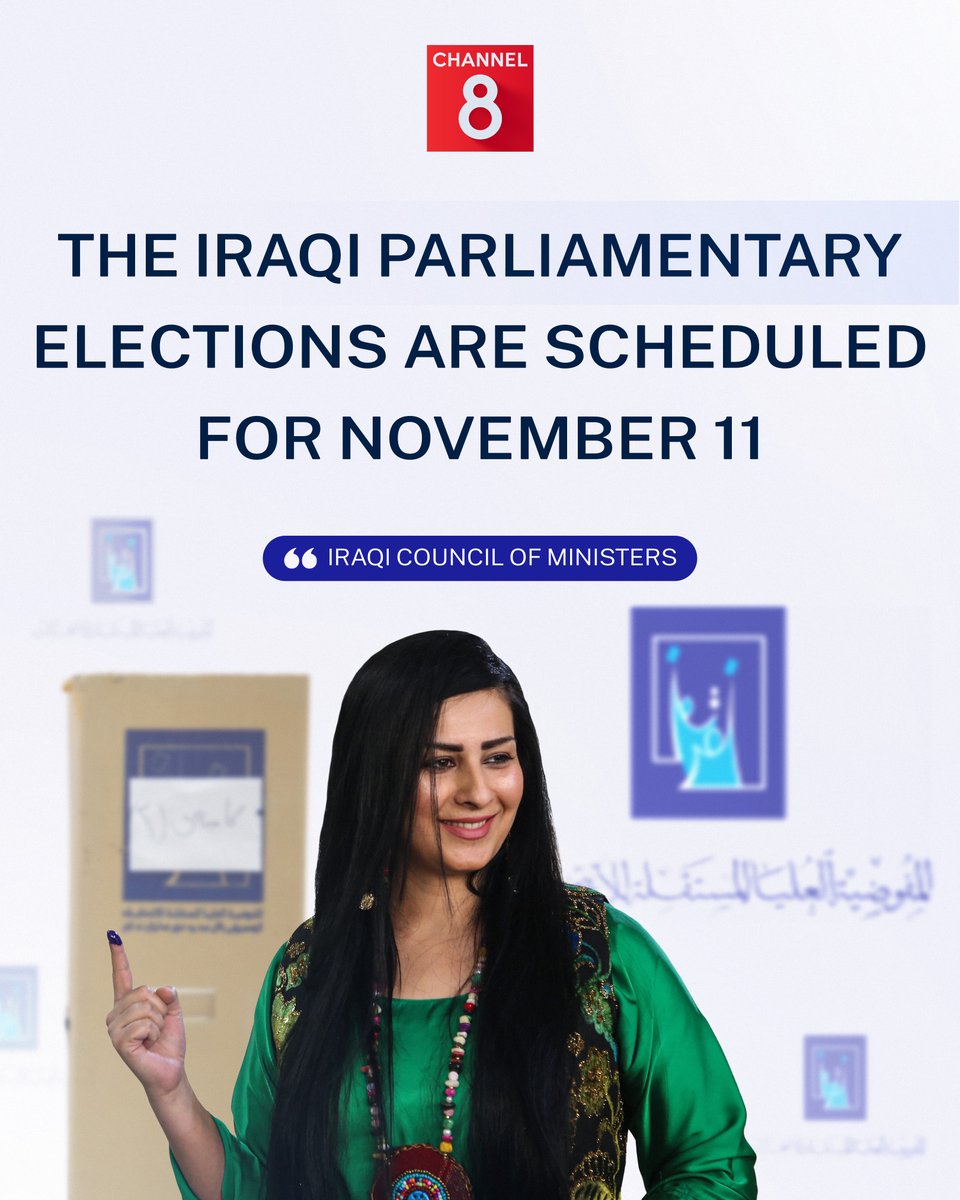
Iraq Announces November Elections

Iraq is going to the polls. In a meeting of the Iraqi Council of Ministers, it set the time table for the country’s parliamentary elections for this coming 11 November 2025.

The announcement is trending on the social media with different images  and with the High Independent Electoral Commission in the country stating the IHEC is ready to hold the general elections on schedule.

Iraqi Prime Minister Mohammed Shia’ al-Sudani’s office said in a statement on Wednesday that “the cabinet voted to set November 11, 2025, as the date for holding the legislative elections.”

The last parliamentary elections was held on 10 October, 2021.

Continue reading
Iraq’s Population Jumps to 46 Million

Iraq announced on Monday that the country’s population has surpassed 46 million, a slight increase from the preliminary figure revealed following the census, which was conducted in November of last year, almost after four decades.

Iraq’s population has increased to 46.118 million, up from the preliminary figure of 45.4 million announced in November 2024, the Iraqi state news agency INA reported, citing the Planning Ministry.

According to the ministry, 70.17% of Iraq’s population lives in cities, while 29.83% live in rural areas. In northern Iraq’s Kurdish Regional Government (KRG), 84.57% of the population live in urban areas, and 15.43% live in rural areas.

The report also showed that the illiteracy rate in Iraq is 15.31%, while in the KRG, it is slightly up 16.23%.

The average marriage age is 22.24 years, with males at 24.06 years and females at 20.7 years, it added.

The November census covered the entire country, including northern Iraq’s Kurdish region, and was the first in 37 years.

Continue reading