Jordan Army Foils Drone Laden With Drugs

The Southern Military Zone on Friday evening thwarted a drug smuggling attempt involving a drone along the western frontier within its area of responsibility.

The Border Guards, in cooperation with military security agencies and the Anti-Narcotics Department, applied the rules of engagement after detecting and tracking the drone and brought it down inside Jordanian territory, according to a military source from the General Command of the Jordan Armed Forces-Arab Army (JAF).

An army statement stressed that JAF remains committed to utilising its various capabilities and resources to prevent all forms of infiltration and smuggling, ensuring the security and stability of the Kingdom.

According to a recent statement to The Jordan Times, the Military Media Directorate said that there has been a noticeable shift in smuggling activities towards the southern borders of the Kingdom.

“The reasons behind this shift are multifaceted, rooted in a combination of rigorous security measures, regional instability, and the ingenuity of the criminal networks involved in drug trafficking,” the directorate added.

“In response to this evolving threat, the JAF has deployed a combination of high-tech solutions and strategic military initiatives, including the use of advanced surveillance technologies such as drones and satellite systems to monitor remote border areas, allowing the military to detect smuggling attempts in real time.”

Continue reading
Gaza: Faith Versus Psychology and Genocide

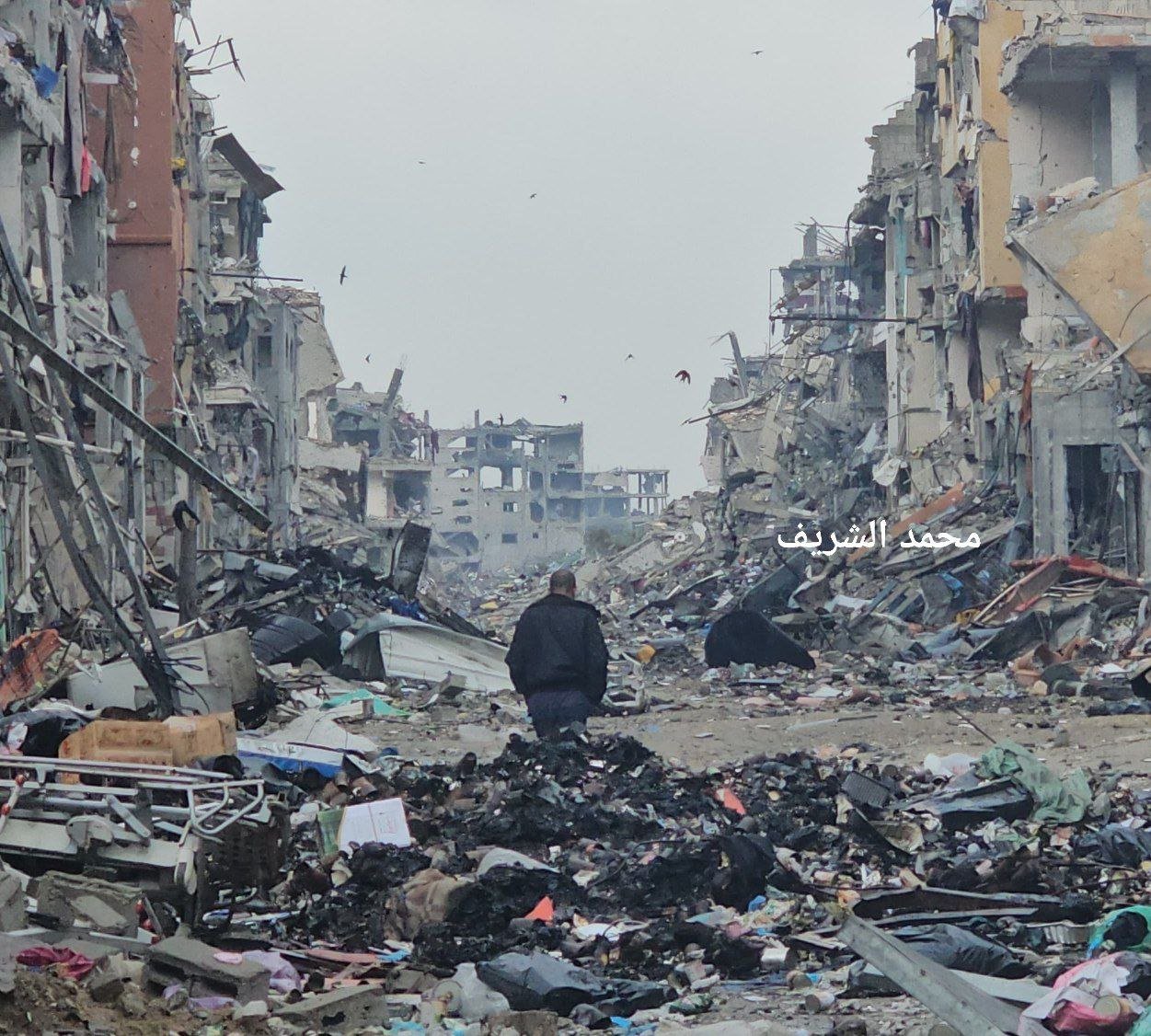
In Gaza, under the noise of planes and the sounds of shells, people stand defenseless except for their faith, defying all forms of oppression and genocide. Psychological warfare, which is considered one of the main tools of the Israeli occupation, aims to break the will of man and plant fear and despair in the hearts of civilians according to Jo24.

But surprising and interesting at the same time is mulling over the fact that this war have not achieved its goals. On the contrary, this slaughter revealed the fragility of traditional psychological theories in the face of the power of faith.

Psychology, as we know it, provides a superficial explanation for human behavior in the face of mounting pressures. It talks about accumulated helplessness, the collapse of the soul under the weight of constant fear, and the inevitability of surrender in the face of the lack of basic needs.

But Gaza provides a model that destroys these assumptions. How can a people living under siege and bombardment continue to cling to their will and dignity? How can a child who lost his family smile and stand in the face of tanks? How can a woman who lost everything become a symbol of defiance and steadfastness?

The answer lies in something deeper than material psychological concepts; it is the power of faith. In Gaza, faith in God is not just an inner feeling or a spiritual practice, but rather it is an integrated system that provides strength and reassurance, and redefines the concept of steadfastness.

When the people of Gaza see their lives, land, and children must be protected, they, their inner beings, become psychological fortresses not to be shaken, no matter how fierce the war on them becomes.

What is Gaza offering is not just resistance to the occupation, but a call to reconsider everything we have learned about the human psyche. Psychology, which assumes that man is a fragile creature that breaks under pressure, finds itself helpless in the face of the Gaza model.

This small, besieged enclave offers a lesson to the world: For faith is not just a belief, it is a force of energy that frees man from his fear, and makes him capable of confronting the most powerful armies.

In the end, Gaza is not just a political or humanitarian issue, but it is a philosophical battle that raises fundamental questions: Do we need to review the foundations on which we built our understanding of the human psyche? Can faith, in all its simplicity and depth, be the most powerful weapon in the face of injustice? Gaza answers without hesitation: Yes.

This piece is written by Professor Hani Al-Damour and published in Jo24.

Continue reading
Syria: A Hot Political Potato

By Dr Khairi Janbek

All eyes are on Syria, simply because the only thing known about how the new Syria will look like is frankly, the unknown. What is prevailing in the new predictions and analysis is at best, and at worst blunt fears.

Of course, this is understandable considering the composition of the groups which are now trying to run the country. What is vey disconcerting however, is how the international media presented the war prior to the fall of Damascus in no more than a side show, giving the impression that, as big Syrian cities fell one after the other in the hands of the rebels, that an agreement was likely to be struck which will solve the concept peaceably. Well, such an agreement was not struck, and the victorious rebellion became the hot potato in the hands of all.

Now, how will the new regime look like in Syria? Frankly your guess is as good as mine. Will they act momentarily in a pluralistic manner, then adopt political Islam as regime ideology? Again, only time will tell, but also that would depend primarily, on the prevailing regional and international actors and players.

For a start, the rapprochement between Russia and Turkey will not greatly depend on the shape of the new regime, so long of course, as the new regime in Damascus continues to protect the Russian interests in warm water bases, and be a wall against Kurdish armed groups threatening Turkish interests.

Then of course there is Israel, which after it destroyed Syrian military capabilities, has no fear of war with Damascus, but does fear the potential presence of a regime adopting political Islamist trappings on its borders, which it will use as an excuse use to expand and probably annex Syrian, and maybe Lebanese territories before the dust settles down.

However, when it comes to the Arab neighbors of Syria, Jordan and Iraq, it’s only natural they would feel concerned but for different reasons. For Jordan, the recent history of Iraqi political instability and the associated acts of terrorism are still fresh in the mind of everyone in the Kingdom, so in no uncertain terms, Jordan would wish to see on its border, a regime adopting political Islam, lest it suffers once more from terror acts that are likely to push for military action and in which it doesn’t wish to be involved in.

As for Iraq, the sectarian troubles are still fresh in the minds of everyone. Certainly the Iraqi government doesn’t wish to see a regime on its borders which has the potential of igniting an unwanted sectarian civil war. As for the rest of the Arab countries, the question remains theoretical – plainly speaking being against political Islam .

As for Syria itself, it’s rather banal to repeat the obvious which is, that it is pluralistic country. But, how can you mange such a country, if indeed this is the intention intention and not shoving it up everyone’s throat ideology by blood and fire.

For a start every community, ethnic and religious, has to feel secure, and secondly they need to know that they have a stake in the future of the country, and that can only happen by establishing a truly functioning parliament freely elected by all of its constituents, then adopt a prime ministerial system of government accountable to the people with a titular president of the republic. No political party should be prohibited to field parliamentary candidates except those associated with armed groups.

At the end of the day, the only thing which will turn the current victorious rebels into extremist islamists is the specter of internal civil conflict which everyone is trying to avoid.

Dr Khairi Janbek is a Jordanian commentator currently based in Paris.

Continue reading
Dysfunctional Netanyahu

If all the criticism directed at Israel’s current prime minister, Benjamin Netanyahu, fails to unseat him, then there is something deeply troubling about Israeli democracy—it is fundamentally dysfunctional.

Netanyahu has been the most influential architect of Israel’s policies and politics since 1996, when he first became prime minister.

He has often been quoted as saying, “Israel has no negotiating partner on the Palestinian side.”

Yet, we should ask: Where is the negotiating partner on the Israeli side?

Since taking office, Netanyahu has waged wars against nearly all of Israel’s neighbours, particularly Lebanon, Gaza, the occupied West Bank, and Syria and the occasional bouts with Iraq and Iran.

If we tally all the conflicts under his leadership, they exceed ten, many of them prolonged and devastating.

The cumulative cost, both in human lives and property, is staggering—over $500 billion lost and at least 100,000 people killed.

Netanyahu has systematically violated agreements, expropriated land for illegal settlements, and sanctioned the destruction and pillaging of homes, hospitals, schools and infrastructure.

His policies have included uprooting trees, destroying livelihoods, and killing tens of thousands of civilians, including children and women.

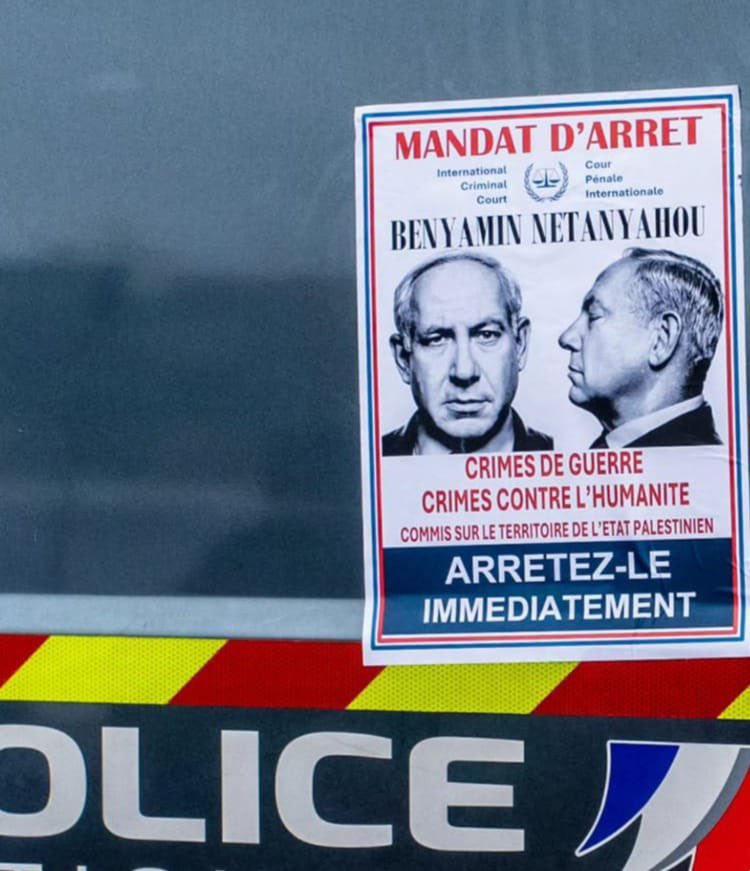
He stands as an indicted war criminal and is currently being tried in Israeli courts on charges of bribery, fraud, and abuse of power.

Many respected Israeli voices—authors, journalists, political analysts, human rights activists, lawyers, peace advocates, as well as his political allies and adversaries—express anger and even sometimes contempt for him, criticising his deceit and betrayal.

Every time Netanyahu insisted on engaging in dialogue with the late King Hussein or King Abdullah II, shortly after his army would commit grave atrocities against Palestinian civilians in the occupied territories.

Thus creating the false impression of a sequitur relationship between the meeting and the atrocities.

He even welcomed the Israeli guard who killed two Jordanians at the Israeli embassy in Amman with open arms, celebrating him instead of subjecting him to trial, despite Jordan’s accepting the murderer’s return to Israel, out of respect for the international diplomatic protocols.

Why does Netanyahu continue to act with such impunity? His actions appear to be deeply influenced by the ideology of his father, Benzion Netanyahu.

Born in Warsaw, Poland, Benzion served as the secretary and close aide to Ze’ev Jabotinsky, who instilled in him—and later his son Benjamin—the principles of revisionist Zionism.

It is exceedingly difficult to make peace with the proponents of the maximalist and revisionist branch of Zionism, which was established by the extremist Abba Ahimeir.

Although Benzion was a historian specializing in the history of Jews In Spain—a history rich with examples of tolerance and coexistence between Muslims and Jews under Islamic rule—he chose to become a disciple and propagator of revisionist Zionism. He became a staunch spokesperson for this ideology in the United States.

To better understand the radicalisation of Netanyahu and his father, one need look no further than the statements made by their mentor, Jabotinsky.

The following quotes are sourced from betarus.org, a well-known Zionist website:

1.“We, the Zionists, all applaud, day and night, the iron wall.”

This is the same iron wall that neo-historian Avi Shlaim described as being created to hammer Arab heads against, until they agree to Zionist claims to their lands.

2.“We hold that Zionism is moral and just, and since it is moral and just, [that means] justice must be done, regardless of whether Joseph, Simon, Ivan, or Ahmet (Ahmad) agree with it or not.”

3.Finally, Jabotinsky declared, “We were not created in order to teach morals and manners to our enemies. We want to hit back at anyone who harms us—only someone who can hate his enemies can be a faithful friend to those who love him.”

With sentiments like these, what chances does a serious, just, and lasting peace—or perhaps any peace at all—have?

Dr Jawad Al Anani, a former Jordanian government minister, contributed this piece to The Jordan Times.


Continue reading
After 42 Years Jordanian Freed From Syria Prisons

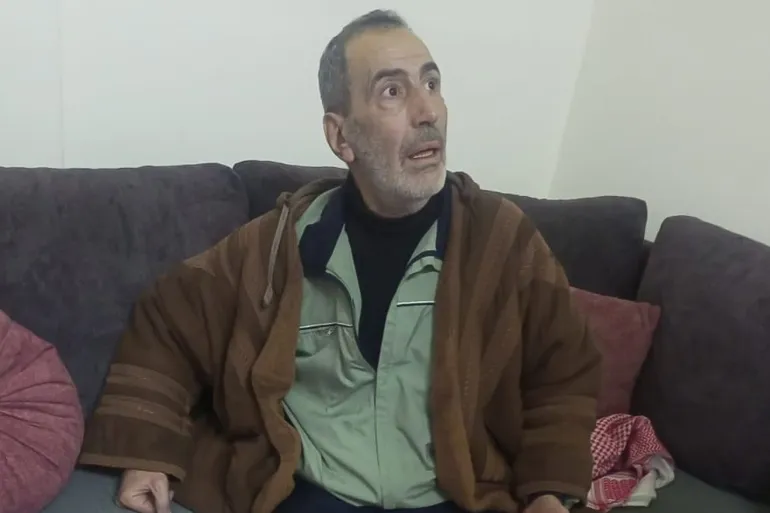
The Jerusalemite Walid Barakat, who hails from the village of Nabi Samouil, northwest of occupied Jerusalem, was released and reunited with his family in Jordan after entering prison life in Syria as a young man at the age of 26.

Barakat said that “life was written for him several times in prison after he was close to death,” and that he learned of his life sentence after 30 years of imprisonment.

Barakat’s nephew pointed out that “his uncle arrived at the border physically exhausted after the opposition forces took him there immediately after he revealed his nationality,” adding “Walid has a large family in Jordan that will embrace him forever after years of forced absence from them.”

He added that “Walid spent 14 years in solitary confinement, and that the family did not know exactly where he was, whether he was detained in Syria, Turkey or Lebanon, until his name was listed in 1996 among the Palestinian detainees in Syrian prisons in a newspaper through the efforts made by international human rights organizations.”

He said, “the family started communicating with him through some Syrians who contact him by phone, and they told him of our news and they conveyed his news to us.”

Walid was arrested by Syrian forces at the Damascus airport on 31 October, 1982, and was subjected to solitary confinement in Tadmur prison for many years, where he experienced the worst forms of torture, before the opposition forces opened the prison doors and freed the prisoners and he immediately headed towards the border with Jordan, according to his family.

The family added that “Walid never saw sunlight during his solitary confinement, and inside the prisons he became a number that was called out like the rest of the prisoners.”

His relatives said, “the only meeting that brought him together with one of his family members was in 2005 when Hatem’s father and sister traveled to Syria and met him in Mezzeh prison in Damascus, and no one was able to visit him after that.”

On 27 November, the Syrian armed opposition factions launched their “Deterrence of Aggression” operation, starting from Idlib and Aleppo, then Hama and Homs, arriving in Damascus, which they entered at dawn last Sunday, announcing the fall of the Assad regime according to the Quds News Network.

Continue reading