Trump Proposes Relocating Gazans to Jordan, Egypt

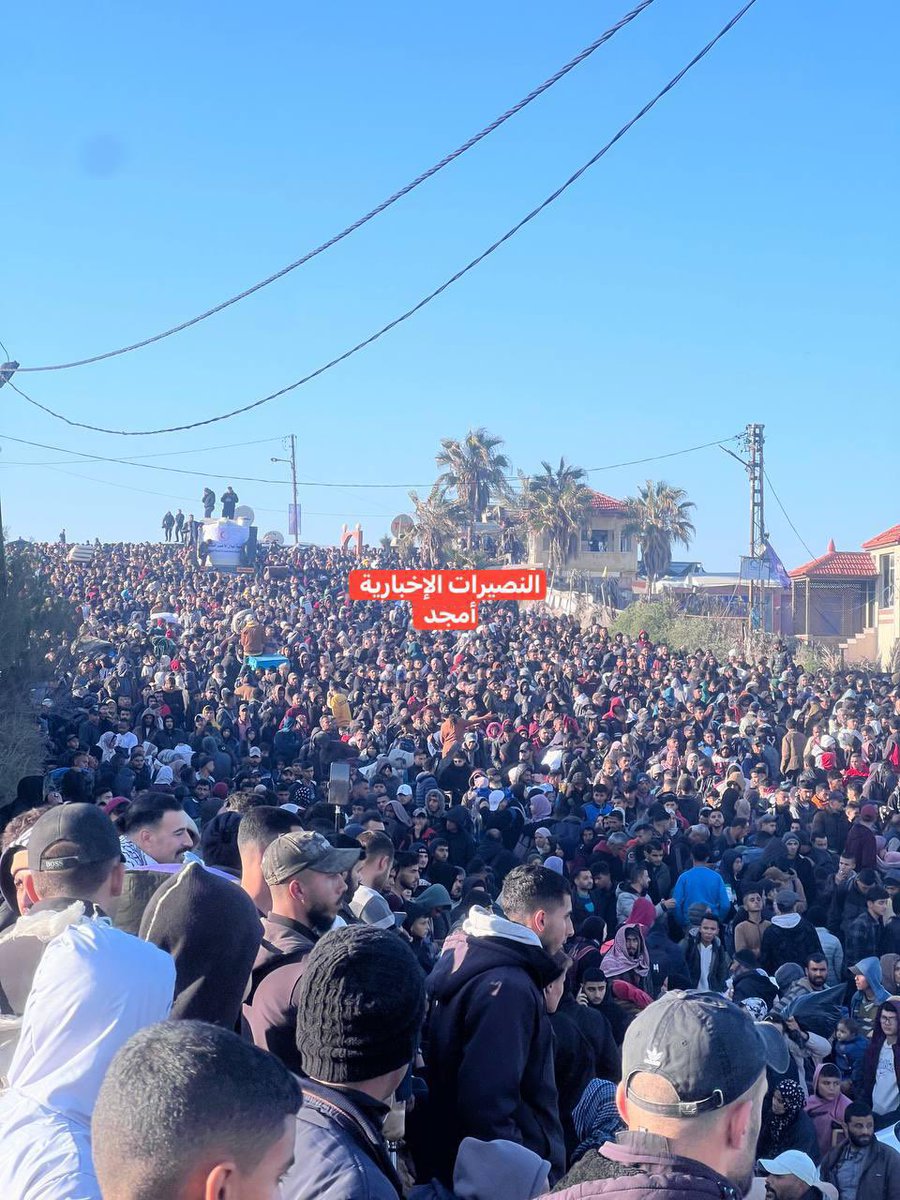
US President Donald Trump, Saturday, proposed relocating Palestinians from Gaza to neighboring countries like Egypt and Jordan. This is an unusual proposal that was opposed by the former administration of Joe Biden.

Speaking to reporters aboard Air Force One towards Miami, the president said he raised the matter during a telephone call with King Abdullah II of Jordan, and he might talk with Egyptian President Abdel-Fattah al-Sisi on Sunday.

“I said to him (Jordan’s king) that I’d love you to take on more because I’m looking at the whole Gaza Strip right now and it’s a mess, it’s a real mess,” said Trump. “I’d like him (Jordan’s king) to take people”.

“I’d like Egypt to take people. I’m talking to Gen. Al Sisi tomorrow sometime I believe. I’d like Egypt to take people. And I’d like Jordan to take people,” Trump continued.

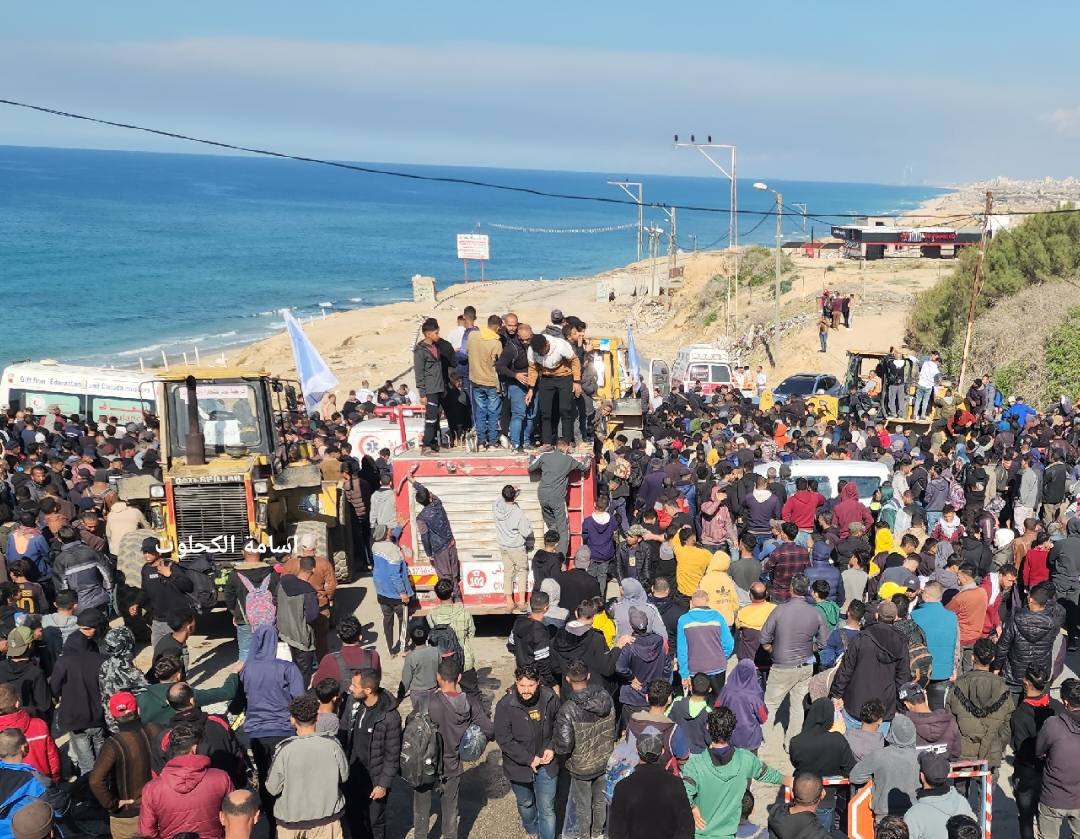
“You’re talking about a million and a half people, and we just clean out that whole thing. You know over the centuries it’s had many, many conflicts. And I don’t know, something has to happen,” he added.

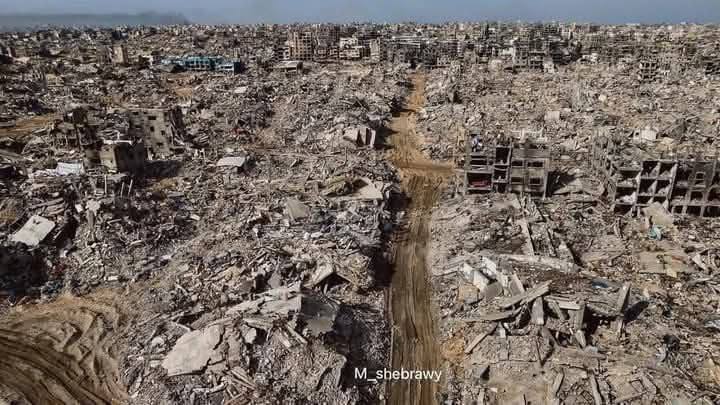
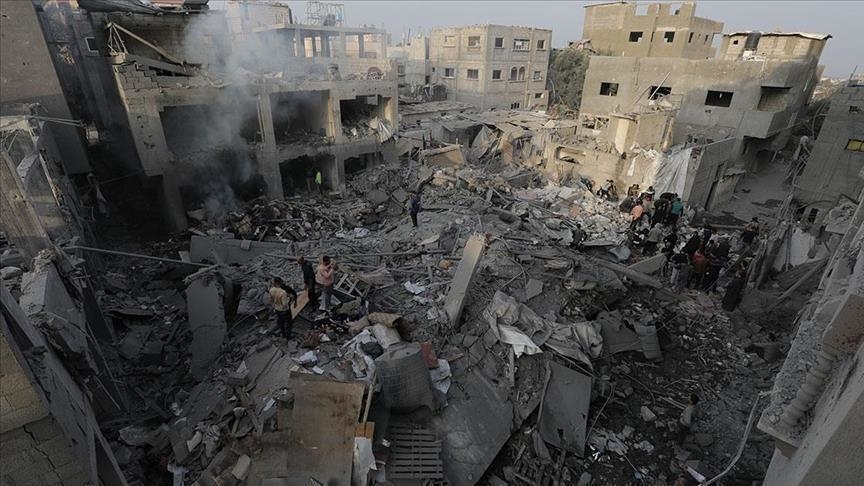
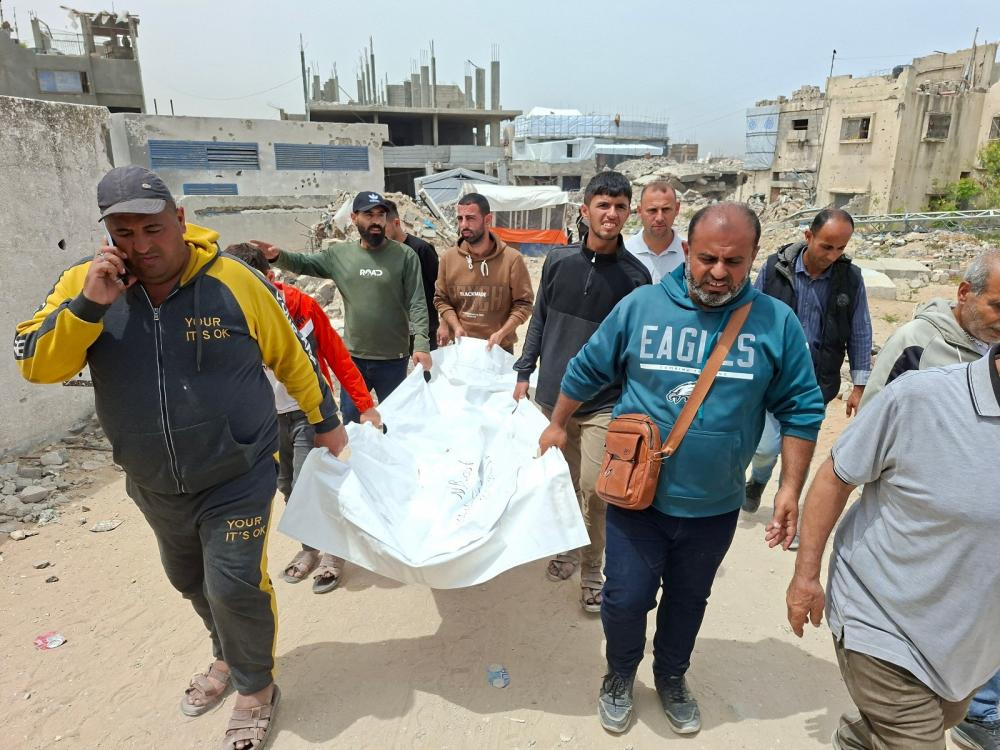
Describing Gaza as “a demolition site,” the US president said: “Almost everything is demolished and people are dying there. So l’d rather get involved with some of the Arab nations and build housing at a different location where they can maybe live in peace for a change.”

He added that the move “could be temporary or could be long-term.”

The Biden administration opposed relocating Gaza residents outside the enclave, advocating a return of Gazans to their homes in the aftermath of a potential peace and a two-state solution.

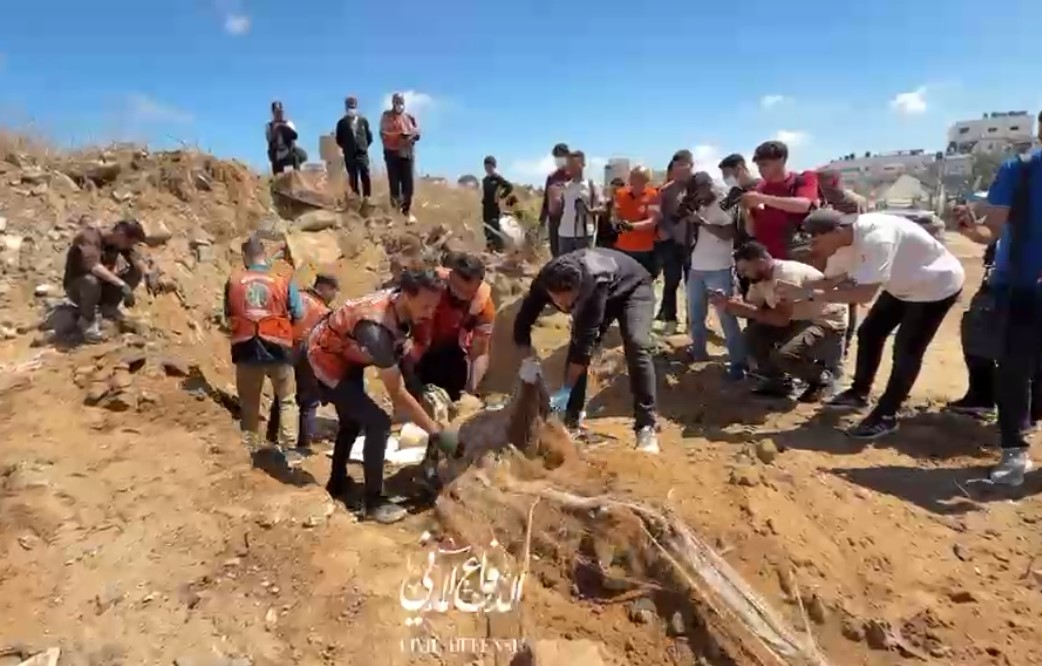
Israel’s genocidal war has killed more than 47,000 Palestinians, most of them women and children, and injured over 111,000 since Oct. 7, 2023.

Since Jan. 19, a ceasefire is in place to bring respite to civilians in the Palestinian enclave, but Trump said last week he is not confident that the truce will hold.

“It’s not our war. It’s their war. I think they are very weakened on the other side,” Trump told reporters in the Oval Office. “I looked at a picture of Gaza. Gaza is like a massive demolition site. That place is. … It’s really got to be rebuilt in a different way,” he said.

“Gaza is interesting. It’s a phenomenal location on the sea, best weather, you know, everything’s good. It’s like some beautiful things could be done with it, but it’s very interesting, but some fantastic things could be done with Gaza,” Trump added according to Anadolu.

Continue reading
Profile: Meet ‘Prince of Shadows’ Abdullah Barghouti

Nicknamed “the Prince of Shadows” Abdullah Barghouti is the Palestinian political prisoner with the most number of life sentences ever given to a single detainee.

A former leader of the Hamas’ al-Qassam brigade’s armed wing, in the West Bank, he now appears to be on the verge of release in the Hamas-Israel prisoner exchange. 

Born in Kuwait in 1972, Abdullah Barghouti grew up outside of occupied Palestine, despite his family having originated from the village of Beit Rima, located near Ramallah. Barghouti attended school, up until high school in Kuwait.

Upon the eruption of the first Intifada in the occupied Palestinian territories, in 1987, Barghouti recounted in his memoir that the uprising had inspired him to seek revenge against the occupiers, especially after Israeli forces murdered one of his cousins and youngest uncle. “Simply put, they threw stones at the Zionist occupation forces that were wreaking havoc, so they were shot and martyred” he stated.

During the first Gulf War (1990-1991), Abdullah Barghouti was reportedly arrested for around a month after being accused of participating in the fight against US forces, later being released after the war. Prior to this, Barghouti had decided to pursue the combat sport of Judo and was trained by a man named Munir Samik who was also Palestinian.

Samik once asked Barghouti: “Aren’t you Palestinian? Don’t you want to liberate your country? If you use it against all those who occupied your homeland, there in Palestine, use what you learned here.” Inspired to make himself physically strong and capable of fighting Israel, he then began training in the use of firearms and explosives in the Kuwaiti desert. During the war, Barghouti’s family was forced to flee to Jordan.

When he traveled to live in Amman, Jordan, he would finish high school there but due to his family being too poor to afford University, so he would borrow money from a relative in order to open up a mechanic shop, continuing to practice Judo as a hobby. However, he wasn’t able to earn enough money to keep his business afloat and pay back his relatives and decided to move abroad in order to pursue higher education instead. 

A friend of Barghouti had recommended he apply for a visa program to travel to South Korea, which ended up leading him there in pursuit of an education. When he arrived, he had no money and little but the clothes on his back.

Barghouti walked from the airport to a location that was supposed to help him secure an education; his journey would take three days during which he went without eating. He recalled that he drank water from public parks until reaching the address he had been given, finding out that it was a wood-cutting factory. 

So, without any money or prospects, he ended up working at the factory for 45 days without having money to buy food, eating only from what the factory would supply him.

In 1991, after a few months in the wood-cutting factory, he moved to work in a mechanical factory and studied in parallel with his work at an engineering institute, specializing in electromechanics. This was also the time during which he would meet his wife, who was of Korean origin.

However, his passion for seeking the liberation of Palestine through armed struggle would not perish while he lived in South Korea, as he would routinely go deep into the forest and practice making improvised explosive devices and refining his craft. In 1998 he would then return to Amman with his wife, before deciding to divorce her due to his desire to have children.

Around this time he started becoming more religious, moved to Jerusalem and then the West Bank, married a Palestinian wife, and settled down in his family’s village of Beit Rima. He later had two daughters, Safaa and Tala, and a son called Osama.

It just so happened that in 2001, Beit Rima would be the first area in the West Bank that would experience a full-scale military invasion during the Second Intifada. Israeli forces deployed tanks, attack helicopters, and a huge military force to the village.

Abdullah Barghouti joined the Qassam Brigades in 2001, seeking out his cousin Bilal Barghouti in order to share his expertise in bomb-making.

After his cousin, who is currently serving 16 life sentences in Israeli military prison, witnessed how skilled he was at engineering explosives, he told his superiors in the Hamas military wing and Abdullah Barghouti would begin military training in the Nablus area, going on to become a commander of the Qassam Brigades in the West Bank.

This entire time, almost nobody close to him knew of his secret ambition to seek revenge against Israel and his bomb-making skills. He would later go on to participate in the manufacturing of explosives that killed 66 Israelis and injured over 500.

When he was eventually tracked down in 2003 and arrested by the Israeli occupation forces, he was interrogated and tortured for over five months, before being handed 67 life sentences, amounting to 5,200 years in prison. In later interviews recorded with Barghouti from inside an Israeli prison, he would confidently state that one day interviewers would come to meet him while he sits inside a hot tub in Ramallah.

If he is to be released during the upcoming Hamas-Israel prisoner exchange, it is likely that Israel will request his deportation outside of occupied Palestine. It is speculated that Barghouti could be useful to Hamas in developing its influence in the armed struggle inside the West Bank, which is currently dominated by Palestinian Islamic Jihad (PIJ) and Fatah-aligned fighters.

(The Palestine Chronicle)

– Robert Inlakesh is a journalist, writer, and documentary filmmaker. He focuses on the Middle East, specializing in Palestine. He contributed this article to The Palestine Chronicle.

Continue reading
Jordan Army Foils Drone Laden With Drugs

The Southern Military Zone on Friday evening thwarted a drug smuggling attempt involving a drone along the western frontier within its area of responsibility.

The Border Guards, in cooperation with military security agencies and the Anti-Narcotics Department, applied the rules of engagement after detecting and tracking the drone and brought it down inside Jordanian territory, according to a military source from the General Command of the Jordan Armed Forces-Arab Army (JAF).

An army statement stressed that JAF remains committed to utilising its various capabilities and resources to prevent all forms of infiltration and smuggling, ensuring the security and stability of the Kingdom.

According to a recent statement to The Jordan Times, the Military Media Directorate said that there has been a noticeable shift in smuggling activities towards the southern borders of the Kingdom.

“The reasons behind this shift are multifaceted, rooted in a combination of rigorous security measures, regional instability, and the ingenuity of the criminal networks involved in drug trafficking,” the directorate added.

“In response to this evolving threat, the JAF has deployed a combination of high-tech solutions and strategic military initiatives, including the use of advanced surveillance technologies such as drones and satellite systems to monitor remote border areas, allowing the military to detect smuggling attempts in real time.”

Continue reading
Gaza: Faith Versus Psychology and Genocide

In Gaza, under the noise of planes and the sounds of shells, people stand defenseless except for their faith, defying all forms of oppression and genocide. Psychological warfare, which is considered one of the main tools of the Israeli occupation, aims to break the will of man and plant fear and despair in the hearts of civilians according to Jo24.

But surprising and interesting at the same time is mulling over the fact that this war have not achieved its goals. On the contrary, this slaughter revealed the fragility of traditional psychological theories in the face of the power of faith.

Psychology, as we know it, provides a superficial explanation for human behavior in the face of mounting pressures. It talks about accumulated helplessness, the collapse of the soul under the weight of constant fear, and the inevitability of surrender in the face of the lack of basic needs.

But Gaza provides a model that destroys these assumptions. How can a people living under siege and bombardment continue to cling to their will and dignity? How can a child who lost his family smile and stand in the face of tanks? How can a woman who lost everything become a symbol of defiance and steadfastness?

The answer lies in something deeper than material psychological concepts; it is the power of faith. In Gaza, faith in God is not just an inner feeling or a spiritual practice, but rather it is an integrated system that provides strength and reassurance, and redefines the concept of steadfastness.

When the people of Gaza see their lives, land, and children must be protected, they, their inner beings, become psychological fortresses not to be shaken, no matter how fierce the war on them becomes.

What is Gaza offering is not just resistance to the occupation, but a call to reconsider everything we have learned about the human psyche. Psychology, which assumes that man is a fragile creature that breaks under pressure, finds itself helpless in the face of the Gaza model.

This small, besieged enclave offers a lesson to the world: For faith is not just a belief, it is a force of energy that frees man from his fear, and makes him capable of confronting the most powerful armies.

In the end, Gaza is not just a political or humanitarian issue, but it is a philosophical battle that raises fundamental questions: Do we need to review the foundations on which we built our understanding of the human psyche? Can faith, in all its simplicity and depth, be the most powerful weapon in the face of injustice? Gaza answers without hesitation: Yes.

This piece is written by Professor Hani Al-Damour and published in Jo24.

Continue reading
Syria: A Hot Political Potato

By Dr Khairi Janbek

All eyes are on Syria, simply because the only thing known about how the new Syria will look like is frankly, the unknown. What is prevailing in the new predictions and analysis is at best, and at worst blunt fears.

Of course, this is understandable considering the composition of the groups which are now trying to run the country. What is vey disconcerting however, is how the international media presented the war prior to the fall of Damascus in no more than a side show, giving the impression that, as big Syrian cities fell one after the other in the hands of the rebels, that an agreement was likely to be struck which will solve the concept peaceably. Well, such an agreement was not struck, and the victorious rebellion became the hot potato in the hands of all.

Now, how will the new regime look like in Syria? Frankly your guess is as good as mine. Will they act momentarily in a pluralistic manner, then adopt political Islam as regime ideology? Again, only time will tell, but also that would depend primarily, on the prevailing regional and international actors and players.

For a start, the rapprochement between Russia and Turkey will not greatly depend on the shape of the new regime, so long of course, as the new regime in Damascus continues to protect the Russian interests in warm water bases, and be a wall against Kurdish armed groups threatening Turkish interests.

Then of course there is Israel, which after it destroyed Syrian military capabilities, has no fear of war with Damascus, but does fear the potential presence of a regime adopting political Islamist trappings on its borders, which it will use as an excuse use to expand and probably annex Syrian, and maybe Lebanese territories before the dust settles down.

However, when it comes to the Arab neighbors of Syria, Jordan and Iraq, it’s only natural they would feel concerned but for different reasons. For Jordan, the recent history of Iraqi political instability and the associated acts of terrorism are still fresh in the mind of everyone in the Kingdom, so in no uncertain terms, Jordan would wish to see on its border, a regime adopting political Islam, lest it suffers once more from terror acts that are likely to push for military action and in which it doesn’t wish to be involved in.

As for Iraq, the sectarian troubles are still fresh in the minds of everyone. Certainly the Iraqi government doesn’t wish to see a regime on its borders which has the potential of igniting an unwanted sectarian civil war. As for the rest of the Arab countries, the question remains theoretical – plainly speaking being against political Islam .

As for Syria itself, it’s rather banal to repeat the obvious which is, that it is pluralistic country. But, how can you mange such a country, if indeed this is the intention intention and not shoving it up everyone’s throat ideology by blood and fire.

For a start every community, ethnic and religious, has to feel secure, and secondly they need to know that they have a stake in the future of the country, and that can only happen by establishing a truly functioning parliament freely elected by all of its constituents, then adopt a prime ministerial system of government accountable to the people with a titular president of the republic. No political party should be prohibited to field parliamentary candidates except those associated with armed groups.

At the end of the day, the only thing which will turn the current victorious rebels into extremist islamists is the specter of internal civil conflict which everyone is trying to avoid.

Dr Khairi Janbek is a Jordanian commentator currently based in Paris.

Continue reading