Israeli Army Uses Civilians as ‘Human Checkers’

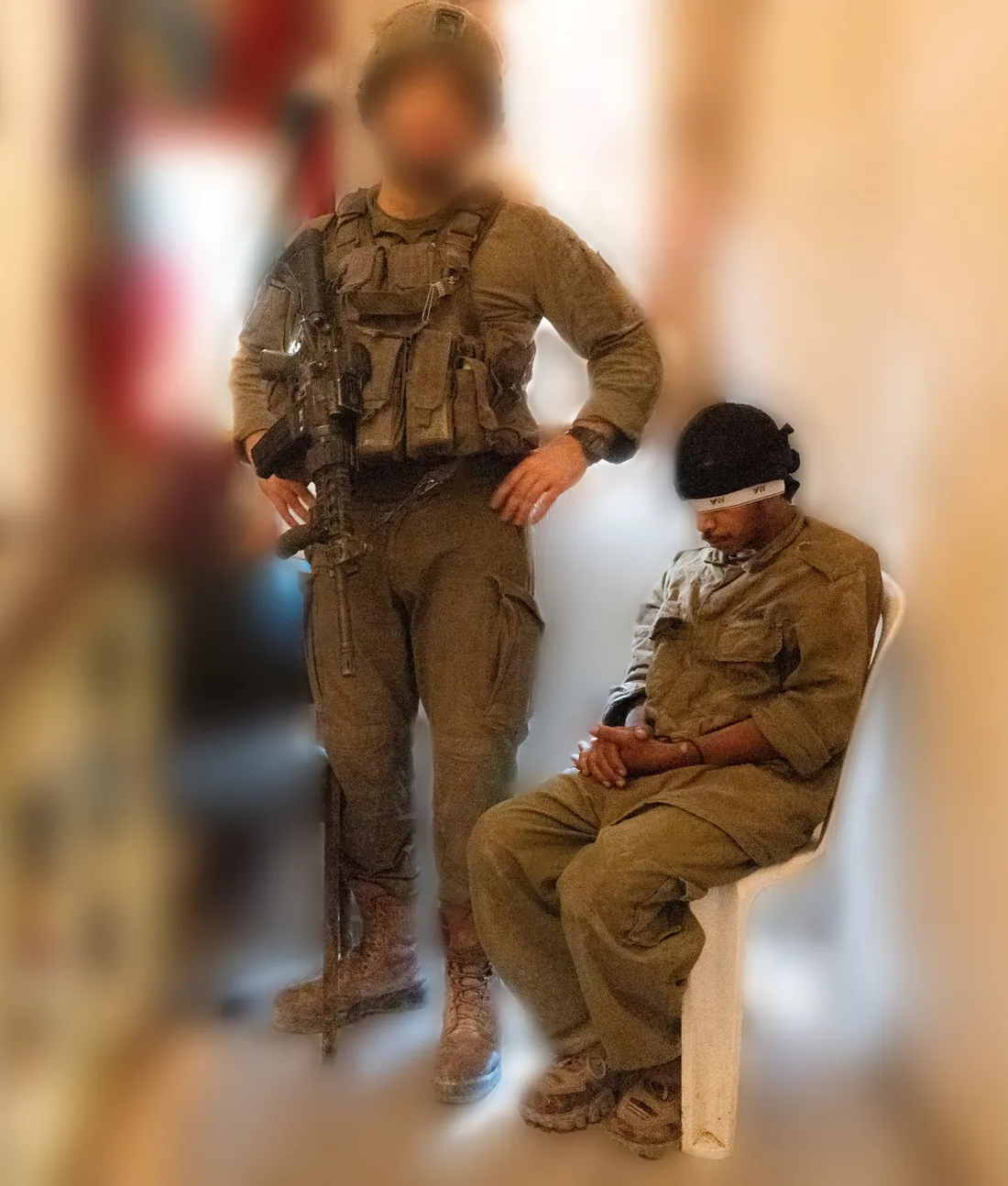
A latest investigation by the Israeli Haaretz daily has revealed that the Israeli military systematically uses Palestinian civilians, including children and elderlies, as human shields, as first line of defense to protect themselves and “checkers” of booby-trapped buildings, tunnels and ambushes.

It stated this is a practice that violates international law and has long been condemned by human rights organizations. The probe confirms that the practice is being carried out with the knowledge of senior military officers, up to the Chief of Staff Herzi Halevi who has knowledge of this practice according to the Quds News Network.

This tactic that includes scanning tunnels and houses, has been used repeatedly in many military operations where soldiers wanted to shield themselves from Palestinian resistance fighters. This practice, known as “human shielding,” has become widely practiced as the Israeli army embroiled themselves over the past months in different cities and towns of Gaza.

It involves forcing ordinary civilians to accompany Israeli officers and soldiers as a first line of defense to shield them from harms way. If there are risks and dangers it is these civilians that would act as “shock absorbers” and be the first to be harmed.

The probe findings confirm numerous other reports including Palestinian eyewitnesses and human rights organizations about such practices.They have long documented the use of such tactics by the Israeli army.

These reports show many incidents where Palestinians, including children and elderly men, who were forced to stand near military vehicles, enter suspicious buildings and/or tunnels ahead of these soldiers during raids across the Gaza Strip in places like Gaza City, Khan Younis, Jabalia and elsewhere.

This systematic use of individuals as “human shields” not only exposes them to great dangers  but also constitutes a clear violation of international humanitarian law, which explicitly prohibits the use of civilians in such a manner.

Despite the widespread condemnation, the Haaretz investigation shows that the vile and pernicious practice remains an integral part of the Israeli military’s operational procedures and soldiers have no qualms of picking ordinary people off the streets and using them to protect themselves.

Palestinian officials and advocacy groups had documented dozens of cases where Israel’s military used Palestinians as human shields and repeatedly called for immediate international intervention and accountability for the Israeli military’s actions but to no avail.

Continue reading
Israel Makes Gaza Battleground of Infectious Disease

The Israeli authorities continue to enforce their ongoing arbitrary blockade of the Gaza Strip, refusing to allow humanitarian aid and necessities that are essential for survival—such as cleaning and personal hygiene supplies—into the Strip. This comes amid the spread of infectious diseases and on top of the precarious living conditions faced by the approximately 2.3 million Palestinians in the enclave, constituting a perpetuation of Israel’s comprehensive crime of genocide, which began on 7 October 2023.

Euro-Med Human Rights Monitor emphasizes that the consequences of Israel’s intentional worsening of the humanitarian situation in the Gaza Strip, by blocking people’s access to cleaning and personal hygiene products, medical equipment, and sterilization supplies, are dire. Nothing justifies subjecting the population to conditions that can cause widespread death, including by causing the spread of serious skin diseases and and infections, including hepatitis. 

https://x.com/EuroMedHR/status/1818950544188227969


Israel continues to systematically and arbitrarily deny hygiene supplies and equipment to all Gaza Strip residents, exacerbating the catastrophic health crisis that Israel has caused there. This crisis has been made worse by the population’s forced, widespread, and repeatedly occurring displacement, as well as the lack of personal hygiene supplies and disinfectants in shelters and camps housing hundreds of thousands of displaced people. Israel continues to prevent and obstruct the entry of the most basic supplies into the Strip, creating conditions that are ripe for the spread of infectious diseases, water pollution, and the absence of sanitation services, as Israeli army forces have destroyed these facilities.

Since the beginning of the genocide nearly, Israel has arbitrarily closed crossings into the Gaza Strip, blocking the entry of humanitarian supplies and the flow of food and water. These actions have resulted in a dangerous accumulation of crises that directly threaten the lives and health of the Gaza Strip’s residents, most notably due to their lack of access to food, clean water, medicines, medical supplies, sanitary tools, and cleaning supplies.

Aya Kamal Ashour Abed, a 20-year-old displaced mother of two at the Deir al-Balah Preparatory School for Girls in the central Gaza Strip, spoke with the Euro-Med Monitor team. “We are more than 30 people living in this classroom for about nine months,” she stated. “A few months ago, we numbered roughly 70, but after some of the displaced individuals relocated to tents outside the school, our numbers dropped somewhat.

“We only receive cleaning and personal hygiene supplies in small quantities every two or three months, despite the fact that our number is very high and we require them constantly,” Abed continued. “Sanitation supplies, like tissues, soap, and shampoo, are extremely expensive [or] even nonexistent in the markets.”

Added Abed: “A bar of soap, for instance, now costs 30 shekels (roughly nine USD) while a bottle of shampoo costs 90 shekels (roughly 25 USD). We do not have anything to eat, so how can we afford these amounts for basic hygiene?”

Abed, who was displaced from her home in the Jabalia refugee camp in the northern Gaza Strip following its bombing last October, said that her two sons had become afflicted with allergies and bacteria, for which she is unable to provide ointments because they are unavailable in UNRWA clinics. “I showed my son to the doctor, and he told me that his entire body is seriously infected with bacteria due to poor hygiene,” Abed told Euro-Med Monitor.

Obtaining sanitary pads—which are pricey and hard to find in local markets—is one of her biggest challenges. “Even though my children’s diapers are completely unusable, I have to cut them into tiny pieces and use them as sanitary pads,” Abed explained. “During my period, I also have to use a single pad for the entire day, which has led to numerous infections and rashes.”

Approximately 680,000 women and girls in the Gaza Strip are of reproductive age. These individuals lack access to menstrual pads and other essentials, and also face other challenges such as inadequate access to water, toilets, various hygiene products, and privacy. Additionally, they must use contaminated or unsterilised materials, which puts them at risk of developing infections that can lead to infertility and uterine cancer.

Since Israel has cut off electricity to the Gaza Strip, there is a growing risk to all residents caused by waste accumulation and sewage flooding of roads and markets due to the inability to drain it. Israel has destroyed most of the Strip’s vital infrastructure, including sewage networks, and forced over two million people—the majority of whom have been displaced more than once—into shelters and tents that lack the basic necessities of life, personal hygiene, and health care.

Forty-two-year-old Mohammed Saad Abu Haitham said that his family of eight, which resides in a tent in the Mawasi neighborhood of Khan Yunis in the southern Gaza Strip, is severely impacted by the lack of cleaning supplies, laundry detergent, and bar soap. Due to its scarcity, soap is unusually expensive and therefore difficult to purchase.

“We do not have the money to buy enough meals for our children, so we cannot buy cleaning materials and soap in light of their high prices and the lack of availability,” Abu Haitham told the Euro-Med Monitor team. “My spouse and kids’ hair has been infected with lice, and we all have skin diseases as a result of not washing and not using enough soap and shampoo.”

Food dyes are used instead of traditional dyes for making liquid soap and sterilisation products, which have not entered the Gaza Strip in months due to the Israeli closure of the crossings and the imposition of an arbitrary siege. These alternative and primitive cleaning products are made locally, are unsafe, and are generally insufficient in both quality and quantity when sold in the markets of the central and southern Gaza Strip.

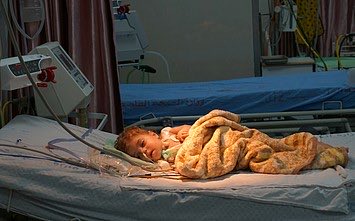
Tens of thousands of cases of skin diseases, including eczema, have been reported to medical facilities as having cropped up in shelters and camps for displaced people living in tents. This is particularly concerning for women, as eczema often appears on the hands of people working to clean food utensils using antiquated and dangerous materials. Meanwhile, reports from the United Nations indicate that skin rashes and skin infections, especially among children, are sharply increasing in the Strip.

The Israeli authorities have placed an arbitrary and oppressive siege on the Palestinian people there, squeezing them into a tiny area with exceedingly limited resources; denying them access to food, clean water, and other necessities; and leaving them exposed to extreme heat.

The right to dignity is an internationally recognised human right that protects people from humiliation, among other forms of unethical treatment. It is meant to ensure fairness by providing the means for people to live in dignity, as well as other fundamental needs and rights, like the right to health and the right to water and sanitation. These rights are essential to maintaining human dignity and preserving the lives of the populace.

The only way to guarantee the rights of Gaza Strip residents is to put an end to Israel’s crime of genocide, lift the arbitrary siege on the Strip, and rescue what remains of the currently uninhabitable region. Delays will either cause the region to irreversibly deteriorate, or incur significant costs in terms of civilian lives and health.

The international community is required to guarantee the entry of humanitarian aid into the Gaza Strip, including the entry of non-food essentials needed to respond to the dire circumstances faced by the Strip’s entire population. Euro-Med Monitor stresses that swift and effective action must be taken to safely deliver aid to civilians across the entire Strip, including the northern section, which is particularly isolated right now. Additionally, the international community must prioritise providing adequate supplies of personal and family hygiene products, as well as products for menstruating individuals, plus sexual and reproductive health care services to prevent and mitigate further harm to women and children in particular, and the entire Palestinian population in general. These actions are mandated by international human rights law and relevant international obligations.

Pressure needs to be put on Israel, as the occupying force, to maintain sanitation facilities and services in the Gaza Strip, as well as to guarantee the safety of the technicians charged with repairing and renovating water lines and their various sources. The main water pipelines that enter the Strip need to be restored, particularly those that enter it from the north.

In addition to ensuring the entry of enough fuel to operate the Gaza Strip’s water and sanitation infrastructure, including desalination plants, water wells, and mobile toilets, it is crucial to exert pressure on Israel to permit the entry of materials required for repair work and rehabilitation of civilian infrastructure. These services are essential to the civilian population’s survival in the Strip, and will protect them from the threat of further health disasters.

Euro-Med Human Rights Monitor

Continue reading
Duwairi: Israel Moves Back to Stage 1 of Gaza War

Military expert Major-General Fayez Al-Duwairi said that developments in Gaza are returning to the first stage of the war. He confirmed what is happening on the ground in terms of targeting hospitals and safe areas points to the fact.

Back to Stage I

He said phase “C” of the Israeli military operations in the Gaza Strip has ended and the return to the first stage is now taking place. He highlighted the occupation army has deployed four divisions including 16 brigades in Gaza.

In the first battle of Khan Yunis in the south, Al-Duwairi added, the 98th Division, 99th Division, 162nd Division, and 252nd Division were deployed there. Now, he added, the occupation has deployed the Sinai Division to the new axis in the south of Deir al-Balah in central Gaza.

Israeli Airstrikes Schools, Hospitals

He pointed out that the current Israeli airstrikes are focusing on hospitals, UNRWA centers, and safe areas, in addition to pressuring displace residents, especially in the eastern Khan Yunis area to move to Mawasi area.

Israel claims moving to the third phase of its war in Gaza requires keeping its forces only in the Netzarim axes – which separates the north of the Gaza Strip from its center and south – and the Philadelphi axes on the border with Egypt, and the buffer zone along the border with the Strip, and this phase is a form of rapid and focused operations in specific areas.

The strategic expert noted returning to the first phase of the war reflects the political and military thinking  in Israel, as the first continues to talk about dismantling and eliminating the Hamas, and freeing the Israeli detainees in Gaza, while the second also talks about the need to keep up the military pressure on the Palestinian resistance.

He referred to Israel Chief of Staff Herzi Halevi as  saying he is in favor of military pressure to force Hamas to make concessions leading to an agreement in accordance with Israeli requirements and not according to what is happening on the ground in Gaza.

Rome Initiative

The Israelis are seeking to pressure Hamas to accept the new Rome Initiative, which Al-Duwairi said may nclude many additions, the most important of which is keeping the Netzarim and Philadelphi axes and controlling the return of displaced Gazans to the northern regions.

Rome, is hosting a four-way meeting to discuss the latest Israeli proposal regarding a possible agreement that includes a ceasefire in Gaza and a prisoner exchange between Israel and the Palestinian resistance.

However, Al-Duwairi  explained – in his military analysis on Al-Jazeera – the Palestinian resistance, although weakened by the ongoing Israeli aggression on the Strip, has the flexibility to rebuild its human and material strength.

In contrast, the occupation army has not been able to recover from the state of exhaustion it is suffering from. Al-Duwairi pointed out this army numbers 635,000 soldiers, 40% of which is in the Gaza Strip, 30% in the West Bank, and about 30 to 35% on the northern front and 10% a strategic reserve as printed in the Jo24.net website.

Continue reading
Why Butcher Khan Younis Again?

The Israeli army continues to slaughter Khan Younis with no mercy after its new air and ground onslaught which it began Monday non-stop.

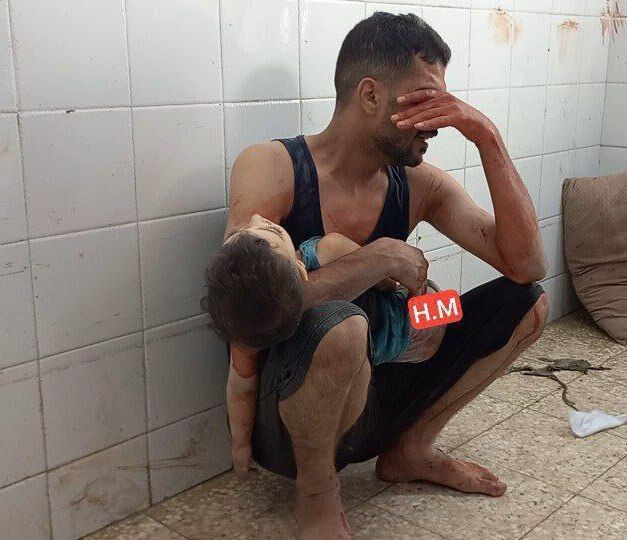
In just 48 hours after its aggression, the Government Media Office in Gaza reported 129 martyrs were killed as a result of the Israeli aggression.

It also reported that 416 injured and more than 100 of these have not reached the already-barely functioning hospitals in the city that had been virtually destroyed by Israeli attacks.

The media office states that 44 persons are currently missing presumed to be under the rubble as a result of the Israeli bombings described as the worst in months that began soon after 7 October, 2023.

The media officers which monitor the ongoing Israeli massacres in the Gaza Strip says that so far only 82 families have been evacuated while stating that appeals are being made by 1,350 besieged families.

It stated as well that the homes of 22 families were bombed while they were living in them – in another words, over their heads. This is in addition to 237 houses and residential buildings that were also bombed.

Through eyewitness accounts the media office states the bombing was extensive with 208 raids and bombardments through Israeli warplanes and tanks firing arbitrarily.

Despite the fact that the Israeli army is forcing new Palestinian displacement with an estimated 150,000 from the city and those towns and villages surrounding it, soldiers are targeting everything that moves on the Salah Al Din Street in Khan Younis.

They are also obstructing any coordination agreement to reach the injured and those that have been killed and martyred in violation of international law.

Israel is forcing Palestinians to move multiple times with repeat displacement and restructuring human geography whilst threatening the lives of hundreds of thousands of injured, sick, pregnant women, the elderly and with special needs and exposing to deaths.

As shown by videos and people on the ground, Israeli is committing horrific massacres in east of Khan Younis

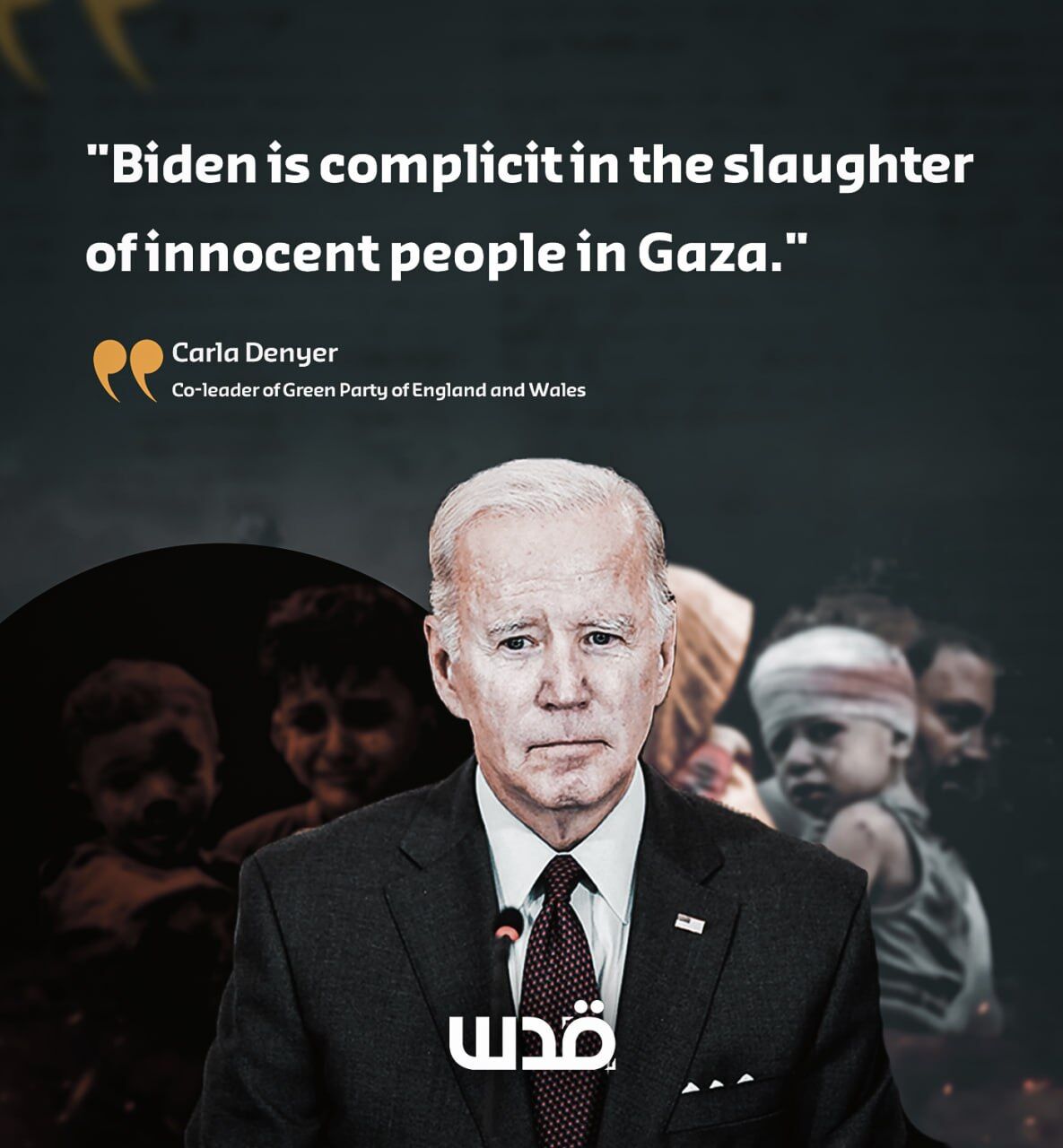
 “We hold the Israeli occupation and the American administration fully responsible for the continuation of these massacres against civilians and the loss of hundreds of lives,” the Government Media Office maintains.

 And ends by saying “we call on the international community and all countries of the free world to stop this shame, these crimes, and these massacres immediately and urgently.”

Khan Yunis is already a woeful and sorry city and has been destroyed by the Israeli army which had waged war on it from early December, 2023, till late March 2024. They literally distroyed everything there that is civilian related yet they couldn’t get to Hamas and the rest of the Palestinian resistance groups.

For more details see the shock its people experienced when they entered the ruined city as the Israeli army first moved out.

Continue reading
Israel Kills 84 Gazans in 24 Hours

The Israeli army killed 84 more Palestinians in attacks in the Gaza Strip, taking the overall death toll to 39,090 since last 7 October, 2023, the Health Ministry in the enclave said on Tuesday as reported by Anadolu.

A ministry statement added that some 90,147 others have been injured in the assault.

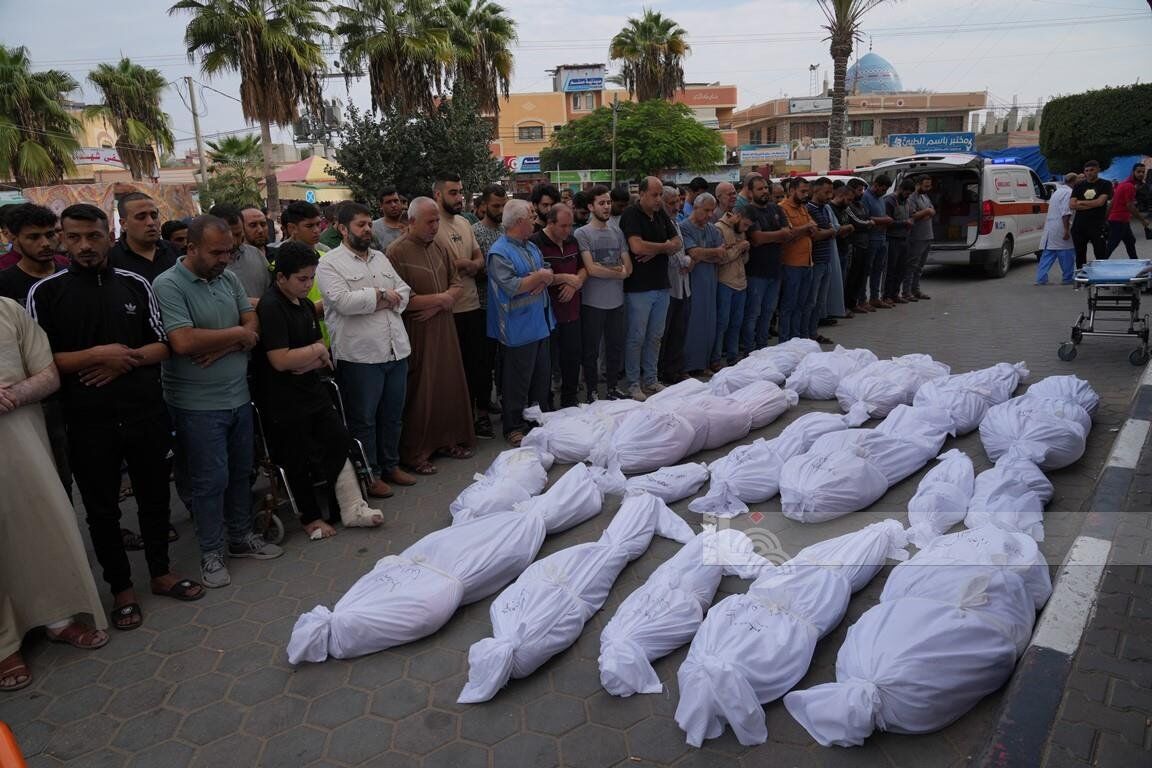
“Israeli forces killed 84 people and injured 329 others in eight ‘massacres’ against families in the last 24 hours,” the ministry said, noting that 73 of them were killed in Khan Younis in the southern Gaza Strip.

“Many people are still trapped under rubble and on the roads as rescuers are unable to reach them,” it added.

Flouting a UN Security Council resolution demanding an immediate cease-fire, Israel has faced international condemnation amid its continued brutal offensive on Gaza since an Oct. 7, 2023 attack by Palestinian group Hamas.

Over nine months into the Israeli war, vast tracts of Gaza lie in ruins amid a crippling blockade of food, clean water, and medicine.

Israel stands accused of genocide at the International Court of Justice, whose latest ruling ordered Tel Aviv to immediately halt its military operation in the southern city of Rafah, where over a million Palestinians had sought refuge from the war before it was invaded on May 6, the Turkish news agency reported.

Continue reading