Bombs And The Pregnant Women of Gaza

When Hanin first sought care for her malnourished daughter in Khan Younis in southern Gaza, Palestine, the clock began ticking on her chances of survival.

“[My] child was in a critical condition. They referred me to the hospital but there was no means of transportation,” explains Hanin.

Finally, they reached the Médecins Sans Frontières (MSF) inpatient therapeutic feeding centre on a cart.

“My child was tired. She was resting her head towards me and not moving,” says Hanin. “She was close to death before we reached the hospital.”

In contexts like Gaza, where the health system has been decimated and has collapsed, late access to care is posing a health risk to pregnant women and their children. – MERCÈ ROCASPANA, MSF EMERGENCY UNIT HEALTH ADVISOR

After nine months of relentless war, people’s access to healthcare in Gaza continues to worsen, particularly for those most vulnerable when healthcare is unavailable, such as pregnant women and children. Their vulnerability has been exacerbated by repeated displacement, inadequate living conditions, insecurity, and poor nutritional conditions. As a result, MSF teams are seeing an increase in pre-term deliveries and malnutrition in children in the south of Gaza.

“The main health risks for pregnant women are blood-pressure related complications such as eclampsia, haemorrhage and sepsis – which can become deadly if not treated in time,” says Mercè Rocaspana, MSF emergency unit health advisor. “In contexts like Gaza, where the health system has been decimated and collapsed, late access to care is posing a health risk to pregnant women and their children.”

Sole option for maternity and paediatric care in southern Gaza

Al-Nasser hospital is the last tertiary hospital providing maternal and paediatric care in Khan Younis. In February, after several weeks of intense fighting with Palestinian armed groups in Khan Younis, Israeli forces stormed the facility, which had been under siege. MSF teams were forced to flee the hospital.

In May 2024, MSF teams returned to the hospital, and in June, together with the Ministry of Health and other organisations, we reopened the maternity and paediatric wards, including an inpatient therapeutic centre. We started providing support to the paediatric intensive care and neonatal intensive care units.

The needs of women and children are skyrocketing, yet MSF teams at Al-Nasser hospital are witnessing a shortage of vital supplies, jeopardising the provision and quality of care. Due to the lack of other functioning healthcare centres, Al-Nasser is facing an overwhelming increase in patients every day. Between 29 June and 5 July, the paediatric emergency department alone recorded more than 2,600 consultations, meaning staff attended to more than 300 children each day. As more and more children are admitted for inpatient care, they are being forced to share beds, pushing the paediatric services beyond their capacity.

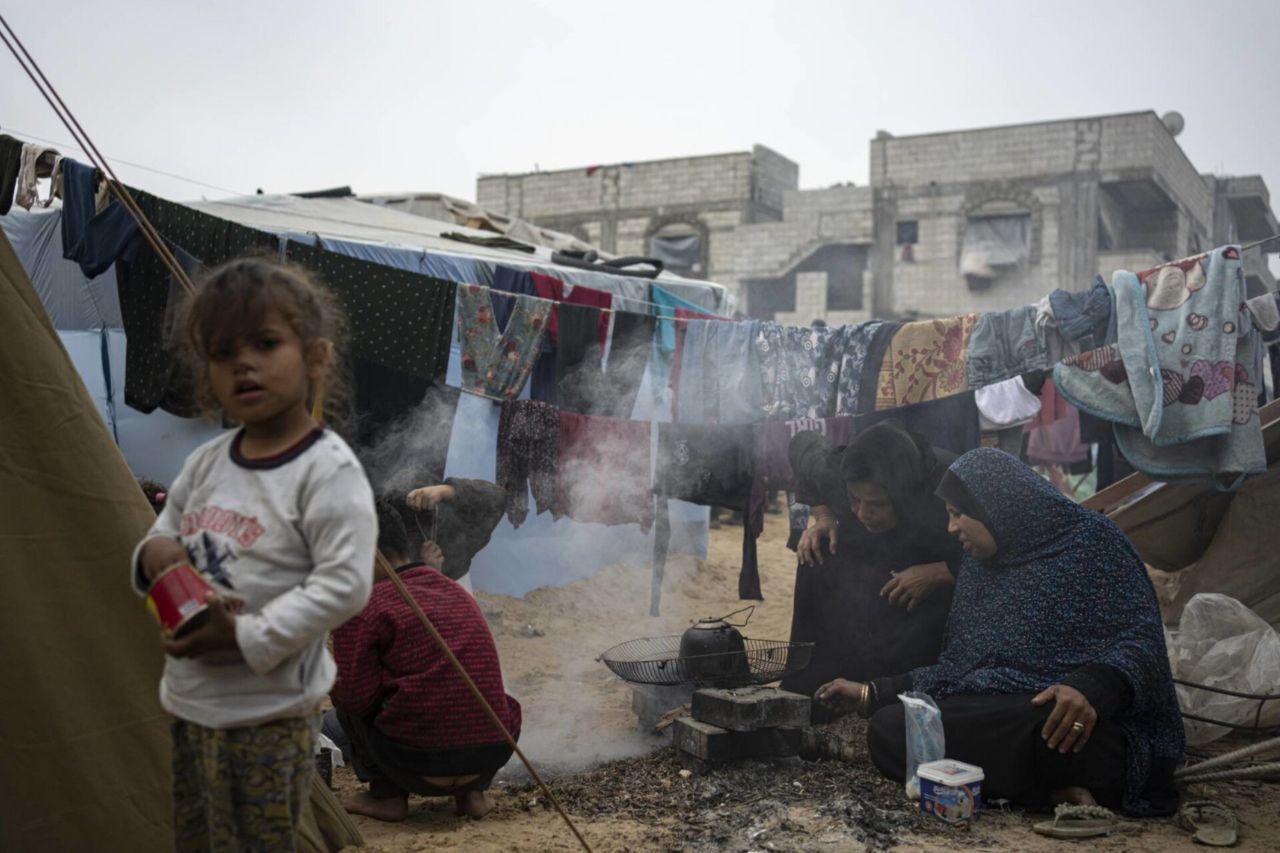
“We are seeing malnourished children, an issue never seen in Gaza before,” says Joanne Perry, MSF project medical adviser, a member of the MSF team working in Al-Nasser hospital. “People are living in tents with minimal access to clean water, and abysmal sanitation. Bombing has devastated the sewage and water systems, resulting in diarrhoea, dehydration, and hepatitis A and skin infections among children.”

Some women are delivering prematurely, often with postpartum complications exacerbated by their living conditions. – MOHAMAD SHIHADA, MSF NURSING TEAM SUPERVISOR

Access to lifesaving maternal care

As the last hospital providing maternity care in Khan Younis, Al-Nasser hospital and its medical team is handling from 25 to 30 deliveries a day. In addition to functioning hospitals being destroyed or closed, the decimation of infrastructure has also created severe obstacles for pregnant women to reach medical facilities. Pregnant women are often forced to navigate unsafe routes amidst the fighting and without safe transportation – often delaying access to healthcare and putting them at higher risk of complications.

“I rode on a donkey-pulled cart to Al-Nasser hospital alone, as my husband couldn’t afford to join me due to financial constraints,” says Najwa, an expectant mother in Gaza.

At the same time, once women have given birth, they must quickly return to unsanitary conditions, often in tents, where lack of food and constant stress put them and their newborns at further health risk.

“Some women are delivering prematurely, often with postpartum complications exacerbated by their living conditions,” says Mohamad Shihada, MSF nursing team supervisor working in the MSF neonatal intensive care unit of Al-Nasser hospital.

In addition to maternity services, MSF is supporting the neonatal intensive care unit, which is equipped with 29 beds and incubators for high-risk newborns.

“There’s no […] diapers, or suitable clothing for my baby,” says Khadra, who gave birth in Al-Nasser hospital’s maternity ward. “Living in a tent exposes them to extreme conditions without even a proper bed.”

As the sole functional maternity unit in southern Gaza, Al-Nasser hospital will continue to face challenges with capacity. Reopening the maternity and paediatric wards is one step forward to providing care, but an immediate and sustained ceasefire in Gaza, alongside unhindered humanitarian aid is the only solution to alleviate the suffering of people trapped in the Gaza Strip, including pregnant women and children.

This article is reprinted from reliefweb

Continue reading
Shattered Dreams of Gaza

In Gaza, where daily life has become a battle for survival, the stories of Palestinians who lost their homes in the midst of the genocidal war waged by Israel on the Strip 10 months ago come as a mirror-image reflecting the suffering of an entire people, carrying with it bitter human details of what it means for someone to lose their home.

The Al-Sayyid family was living in peace until that fateful night. “The night had fallen, and suddenly, we heard the sound of a huge explosion. Then the voices of the remaining neighbors shouted ‘I had to evacuate the area because there was a threat to blow up the residential tower opposite my house,’” Ahmed, the father, tells the Palestinian Information Center.

At first Ahmed’s family of a wife and seven children moved to a shelter school in the Sheikh Radwan neighborhood south of Gaza City, and as the Israeli ground invasion expanded, they moved to Al-Aqsa University in Khan Younis but when the Israeli army withdrew from the city, they went back.

“I did not wait a minute after I learned of the occupation army retreat to the northern parts of Gaza Strip. Me and my brother rushed to inspect our three-story house. As soon as we arrived there, we were shocked by what happened to the place,” Ahmed told the PalestineIn formation Center Tuesday.

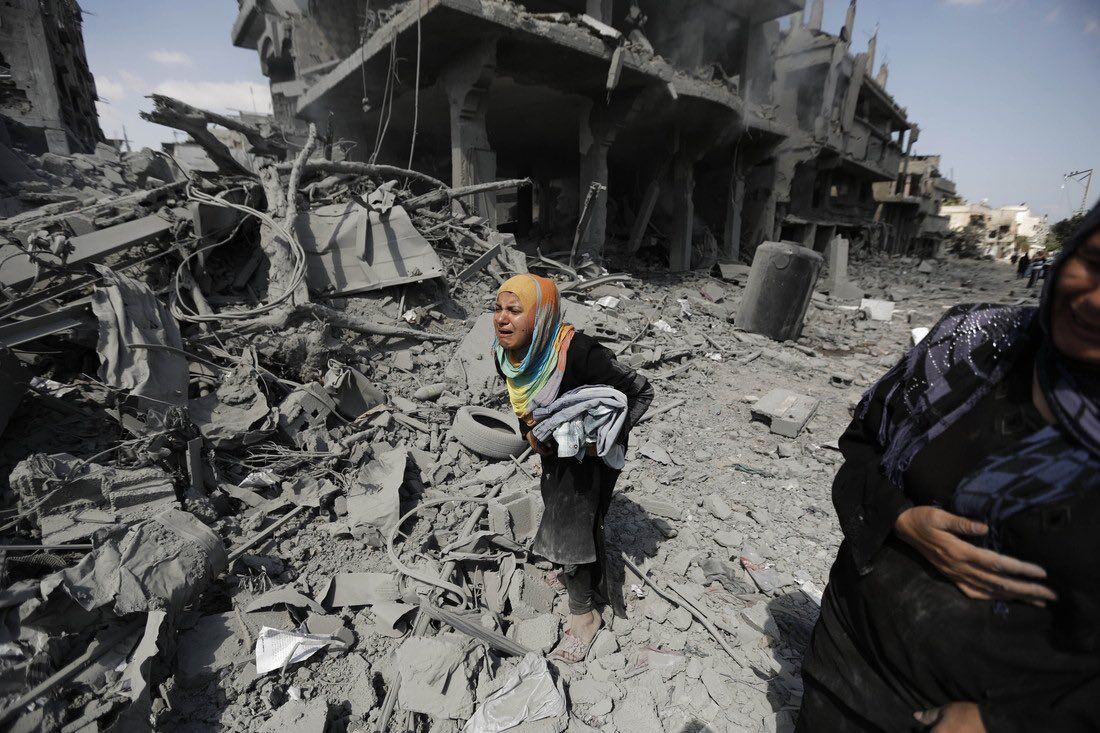
“I found a large part of the house destroyed by artillery shells and burning furniture. It was harsh moments. This is the first time I have faced such an experience like thousands of others who repeatedly lost their homes in previous Israeli wars.”

The man, who is in his 50s, stresses “losing a house is not an easy matter. You are not lose stones here. You feel as if someone has token you to a distant world, erasing a lifetime from your memory. In every corner of the house there are memories, feelings, emotions and life experiences.”

Israel has systematically and extensively destroyed homes in Gaza, completely destroying hundreds of thousands of housing units and in just 283 days,  it has turned their owners and residents into homeless people living in tents and shelters.

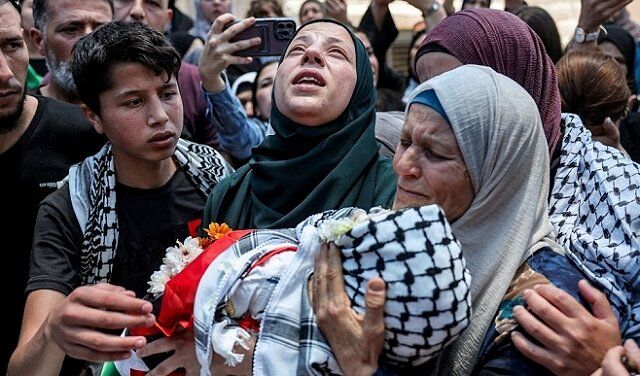
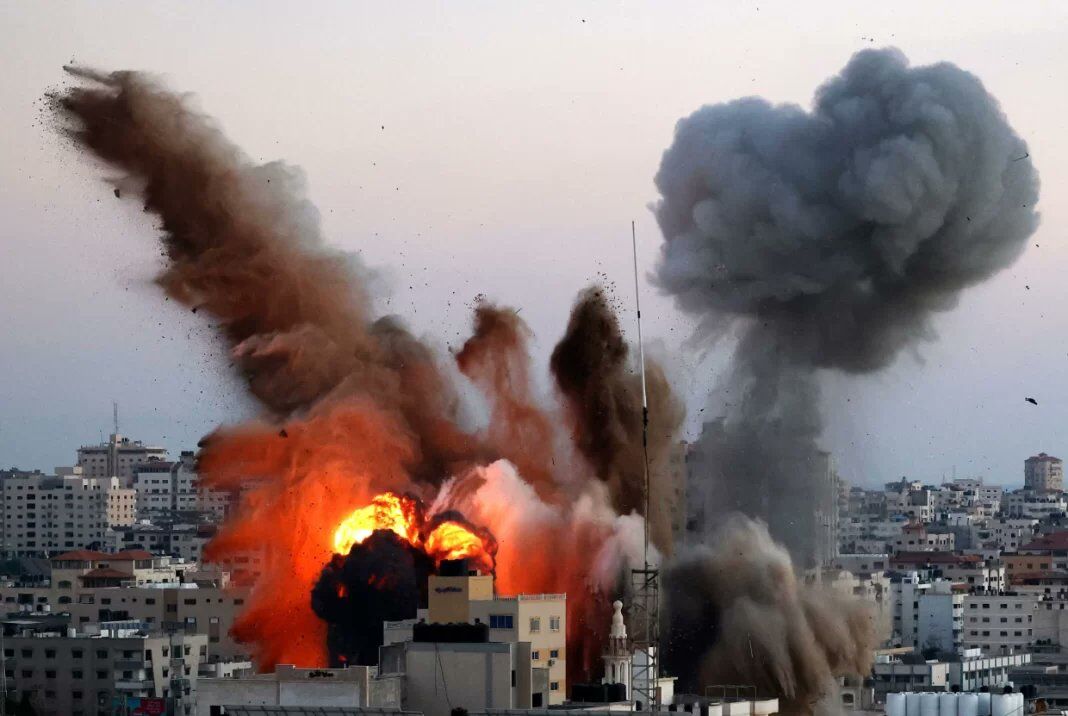
Israel warplanes bomb houses over the heads of their residents resulting in their instant deaths. In many times the people mostly women and children are deeply buried in the rubble of these homes. This is not to forget the aerial bombardment of blowing up residential blocks.

Residents ask why is this happening to us? There is no need for it. International organizations protest and condemn but to no avail.

Ahmed points out the psychological and social pain is more severe than the material loss. “Many a time, my tongue twists and turns when my children ask ‘we are going to get back to our house, how long will it take to repair it, how long do we have to stay here?,” Ahmad waves his hands at a loss.

 “How can children feel safe in a temporary shelter? They have lost everything, even their small toys.”

Satellite images by the United Nations Satellite Center show 35% of all buildings in the Gaza Strip are either completely destroyed or extensively damaged due to this Israeli war of annihilation. This means the number of buildings razed to the ground is 88,868.

In its last March assessment, the center used high-resolution images taken by satellites and collected on 29 February, and compared them with images taken before and after the outbreak of the war.

Dreams crushed

Whenever she remembers her home and her memories there, Aya Ahmad, is reduced to tears.  “I had a private room and/or a suite. All my memories, books, and office are gone now.”

“I am a medical student at the beginning of my third year, and at the beginning of my university studies, my father prepared the second floor of our house, bought me a large collection of medical books, and prepared a special room for me with an office, on the walls of which I wrote my hopes and ambitions,” Aya told the Palestinian Center

The 23-year-old girl lives in the city of Khan Yunis, and she has never been forced to move in previous Israeli wars on Gaza, as in this war.

“This is the first time I have been displaced, and when we were forced to do so at the beginning of December 2023, we cried a lot then. We took a few of the house’s belongings in the hope that we will get back.

But this wasn’t so, its been 10 months now since the war started, it hasn’t stopped, we were not able to return to our house which we lost subsequently due to the bombing, and we lost most of our personal belongings there. We moved between tents, and we lost many loved ones, and then the destruction of the house increased our pain. My certificates, my clothes, and my memories were all crushed, and with them many dreams were lost too.”

The garden of the house was Aya’s refuge after the rigors of a long university day. She had pleasant evenings with her parents under the palm and lemon trees on summer nights. But no more, for all of the family now are sheltering in tents of those that were forcefully displaced.

“My wish was to return home, I even wanted to return to it after the occupation forces retreated from our area. At the time, it was still standing and was only partially damaged, but the occupation army returned months later and bombed.”

Aya is still confident about rebuilding her house and whatever

the occupation destroyed, despite the pain she experiences whenever she looks at pictures of her former home and the social memories of each moment there.

A UN assessment found it would need a fleet of more than 100 trucks working for 15 years to remove the 40 million tons of rubble in Gaza. Such an operation could between $500 and $600 million.

According to the assessment by the UN Environment Programme, last month, 137,297 buildings were damaged in Gaza alone not to say anything about the destroyed buildings.

Not stones!

As for Abeer Abu Salem, resident in the Beit Lahia Project in the north Gaza, the smell of gunpowder still haunts her, as if it had just happened. “I will never forget what I experienced that evening, and it cannot be erased from my memory. I cannot describe the scene because of the horror of what I saw.”

Abeer recounts what happened: “I heard the sound of an explosion and saw the walls collapsing and columns flying. I tried to escape but could not, and with the air closing in, I found myself in the second room. I cannot imagine that I am still alive. It all happened in seconds, turning my life upside down.”

Abeer stayed in the Indonesian hospital for about a month, before the occupation army forced them to flee to the south of the Gaza Strip. When asked about what it means to lose a house, she answers:

“It is not easy to lose your house you grew up in. The house is full of precious memories. We worked hard for many years so that my father could build it for us as an apartment above the family home.”

She points out the fear she experiences is not related to their ability to rebuild the house that was leveled, as much as it is to the emotional feelings of seeing what happened to the family home.

 “We are now displaced. We do not know the fate that awaits us after the end of this cursed war. We cannot think about whether we will truly return to Beit Lahia or whether we will live what our ancestors lived when they forcibly left their homes 76 years ago in the Nakba of 1948 and died on “I hope to return,” she laments.

Continue reading
UNRWA Chief: ‘…Air Filled With The Smell of Blood’

CROOSFIREARABIA – “The air was filled with the smell of blood,” Scott Anderson, deputy humanitarian Coordinator, UNRWA Affairs Director in Gaza said during his visit to the Nasser Medical Complex in Khan Younis.

“Visiting the Nasser Medical Complex in Khan Younis yesterday, I witnessed some of the most horrific scenes I have seen in my nine months in Gaza,” he added.

“This overstretched health facility admitted well over 100 of yesterday’s severe injuries. With not enough beds, hygiene equipment, sheeting, or scrubs, many patients were treated on the ground without disinfectants,” he pointed ot.

“Ventilation systems were switched off due to a lack of electricity and fuel, and the air was filled with the smell of blood,” he said according to the Palestine News Agency WAFA.

“I saw toddlers who are double amputees, children paralyzed and unable to receive treatment and others separated from their parents. I also saw mothers and fathers who were unsure if their children were alive. Parents told me in despair that they had moved into the ‘so-called humanitarian zone’ in the hope that their children would be safe there,” he said.

“My colleagues from the humanitarian community are doing everything possible to increase medical capacity in Gaza, where the health system has long been on the ropes. Yesterday, we provided referral services, as well as additional tents, beds, stretchers, disposables, and medications. But impediments to humanitarian operations prevent us from supporting people anywhere near the scale necessary,” Anderson added.

“Civilians must be protected at all times. We urgently need a ceasefire, the release of all remaining hostages, respite for the people of Gaza, and a meaningful opportunity for healing to begin,” he concluded.

Continue reading
Timeline: Mohammad Al Dief is Israel’s Nemesis

Quds News Network – The Israeli army claimed, Saturday, its attack on Al-Muwasi area in Khan Younis, southern Gaza Strip, targeted Muhammad Al-Deif, overall commander of the Al-Qassam Brigades, the military wing of Hamas, alongside other Hamas leaders. However, Hamas states the Israeli allegations are false.

While the Israeli army claimed today it attempted to assassinate al-Deif, the Palestinian Ministry of Health in Gaza reported an increase in the number of victims from the massacre committed by the Israeli army in Al-Muwasi area to 71 Palestinians, with 289 others injured. Later figures by Al Jazeera put the number of those killed at 91 and injured at 300.

Over the course of about three decades, Muhammad Diab Ibrahim Al-Masri, the overall commander of the Al-Qassam Brigades known as Muhammad Al-Deif, has remained a significant puzzle for Israel, which has failed in at least seven assassination attempts against him.

This detailed timeline provides a comprehensive overview of what we remember about Israel’s real and alleged attempts to assassinate Muhammad Al-Deif.

August 19, 2001

Two Israeli Apache bombarded cars in Gaza, killing a police officer in the Preventive Security Apparatus. Israel claimed that Hamas leaders, including Muhammad Al-Deif were the target but they survived.

September 26, 2002

An Israeli Apache dropped two bombs on a car in Gaza, which Al-Deif was allegedly driving.

September 6, 2003

An Israeli missile missed its target and failed to hit Al-Deif, who was allegedly accompanying Hamas’ founder Ahmad Yaseen.

August 20, 2014
During the Israeli offensive on Gaza in 2014, Israel bombarded Al-Deif’s house in Gaza City using 6 bombs, murdering two women, a man, and a baby, including Al-Deif’s wife and 7-month-old baby with 60 civilians were injured in the attack.

May 19, 2021

During the Israeli offensive on Gaza, Israel’s army said it failed to assassinate Al-Deif twice.

July 13, 2024

Israel targeted a displacement camp, sheltering 80,000 civilians, and claimed that it targeted Al-Deif. At least 79 civilians were killed in the Israeli attack.

Continue reading
Israel Kills Gaza Journalist Number 159

CROSSFIREARABIA – Gaza’s Mohammad Abu Ermana is the latest journalist to be killed in the Mawasi displaced camp outside Khan Younis.

He becomes journalist number 159 to be killed by the Israeli army since 7 October 2023.

His latest death is trending on social media. He is among other 71 Palestinian who were killed in Al Mawasi, not to say anything about the 289 others injured.

Tags include #IsraeliNewNazism #StopArmingIsrael #GazaHolocasut #GenocideJoe #GazaGenocide #Gaza #Israel #IsraeliTerrorists #Palestine.

The death of the latest journalist to have been killed is related to another claim the Israeli army is making through the Israeli daily Hayom which reported and without giving any evidence, that the main goal of the airstrike on Al Mawasi was to eliminate Mohammed Deif, commander-in-chief of the Al-Qassam Brigades, Hamas’ armed wing as reported in Anadolu.

The Gaza government said Saturday that Israel is “spreading fake news” about targeting Hamas leaders to divert attention from its deadly attack on displaced Palestinians’ tents in Al-Mawasi in Khan Younis, in the southern Gaza Strip, the Turkish news agency reported.

Israel has practiced “a policy of deception repeatedly since the start of its offensive, in an attempt to cover up its failures and crimes against civilians and the displaced, especially among children and women,” the Gaza Media Office said in a statement.

This is how one Palestinian put it: “They [Israel] bombed us while praying, they bombed us while eating, they bombed us while fetching water, they bombed us while waiting in line for the bathroom, they bombed us while fleeing, they bombed us while seeking shade from the sun, and they bombed us while searching for a bag of flour.

They keep bombing us, over and over again; and each time they do, the world gets more accustomed to the idea of our death, and we become as though we are ‘nothing’.”

Continue reading