Obliterating Al Zeitoun – Israel’s Appetite For Destruction Boundless

“The situation was terrifying. I clutched my daughter as we walked over shattered glass and rubble, surrounded by smoke, flames, and explosions everywhere. I ran without knowing where to go. God help us. Enough, world, enough.”

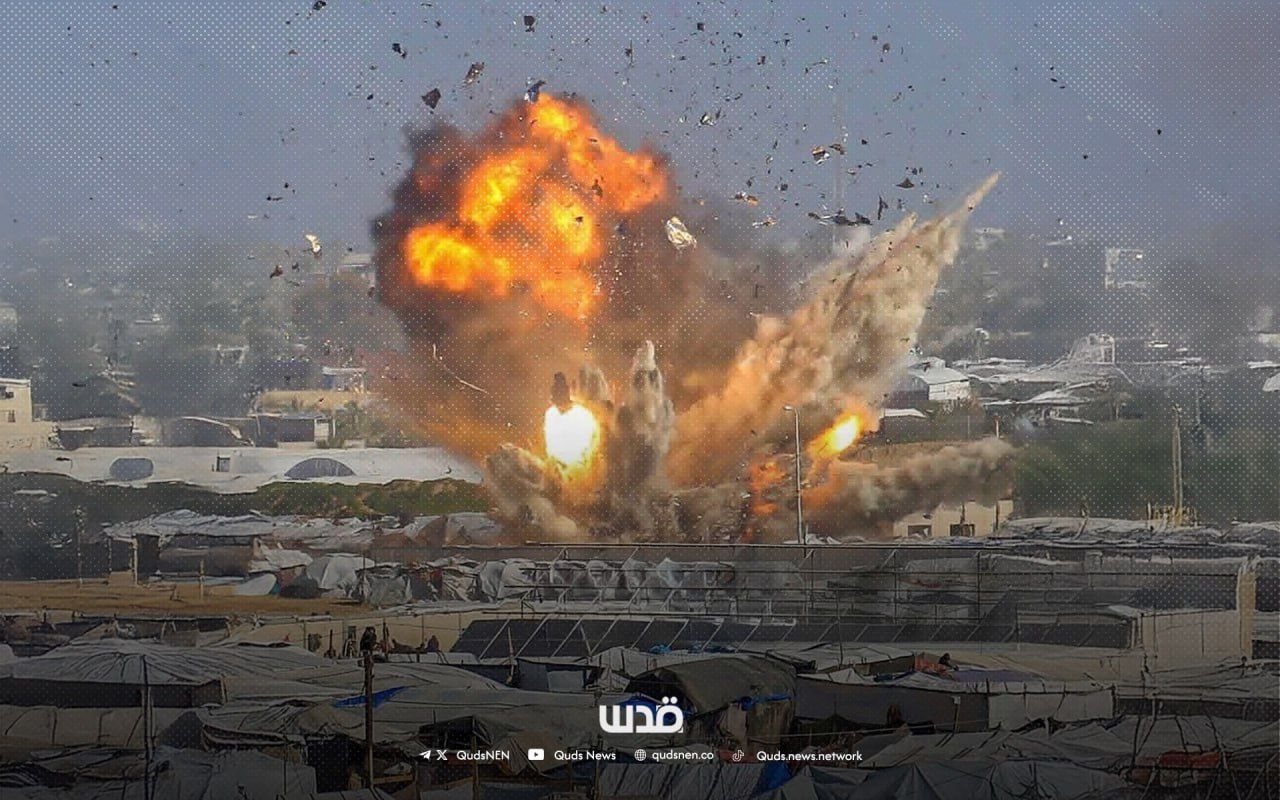
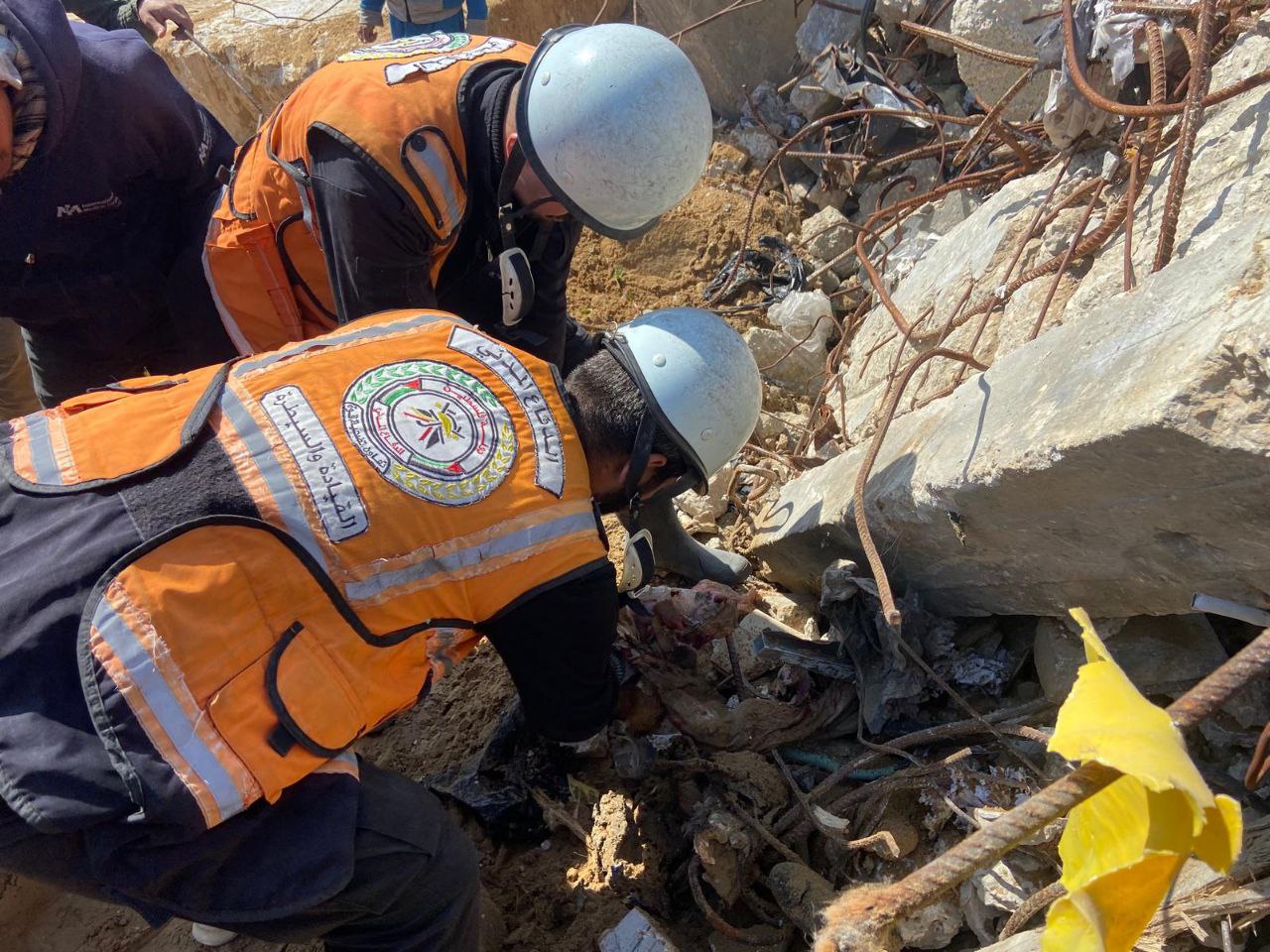
For six days, Israeli occupation forces have been razing the Zeitoun neighbourhood, southeast of Gaza City, flattening approximately 400 homes with explosive-laden robots and aerial bombardment.

This wide-scale military operation mirrors similar assaults in Rafah, Khan Younis, and northern Gaza, aimed at obliterating entire communities and forcibly displacing all who remain. These actions form part of the genocide against Palestinians in the Gaza Strip.

Launched on 11 August, the operation represents Israel’s ongoing push to assume total and unlawful control over Gaza City. The intent is to evacuate long-standing residents and up to one million displaced individuals, most having fled northern Gaza, and confine them to isolated, small areas in the south.

Drones, specifically quadcopters, are being deployed to encircle residential blocks and coerce civilians into fleeing under armed threat. Meanwhile, ground forces advance under heavy cover fire from positions near Street 8, the Dola junction, the Barasi land and the Illiyin areas. This operation has already displaced over 90,000 residents.

Field data from Euro-Med Monitor documents targeted bombings of homes belonging to the Lubbad, al-Aidi, Dader, and Irhayyem families, resulting in nine deaths within the Irhayyem household.

Air raids also hit houses near the Bilal Bin Rabah Mosque, striking the homes of the Dalloul and al-Nassan families, the Bashir Siksik Company premises, and the Kuhail, Shahd, and Siyam residential towers. An attack near Al-Farouq Mosque destroyed the home of the al-Husari family, claiming four lives.

The Israeli forces demolished dozens of homes along Street 8 and at the start of the Hassan al-Banna area. Tents housing displaced members of the Hunaideq family were also bombarded, resulting in seven deaths. Additional structures impacted include those near the University College of Applied Sciences (UCAS), the Al-Falah and Ain Jalut schools, and a charity-run shelter on Albasateen Street, killing eight more civilians. A strike on the Abu Daff family home resulted in 12 fatalities.

Artillery and air strikes continue to pound the areas of Hassan al-Banna, Al-Musalaba, UCAS, Al-Nadeem, and Almadaris Street. Civilians killed near Ain Jalut School and Badr Mosque (not to be confused with the one in Rafah) remain unrecovered due to ongoing bombardment. An airstrike also struck the Al-Huwaiti building in the Old City near Katib al-Wilaya Mosque, killing a mother and her young daughter, and even targeting nearby open ground.

In her testimony to the Euro-Med Monitor, 45-year-old Um Raid said: “We fled before dawn with the children, carrying nothing, as bullets whistled above our heads and bombs shook the ground, leaving behind what remained of our home and all we owned.”

Meanwhile, 33-year-old Mohammad D. described how he had no choice but to flee with his family after a “quadcopter drone” began firing randomly. He said, “I couldn’t even grab my children’s birth certificates. Aircraft roared overhead, armoured vehicles closed in, and I felt we would die if we stayed a minute longer.”

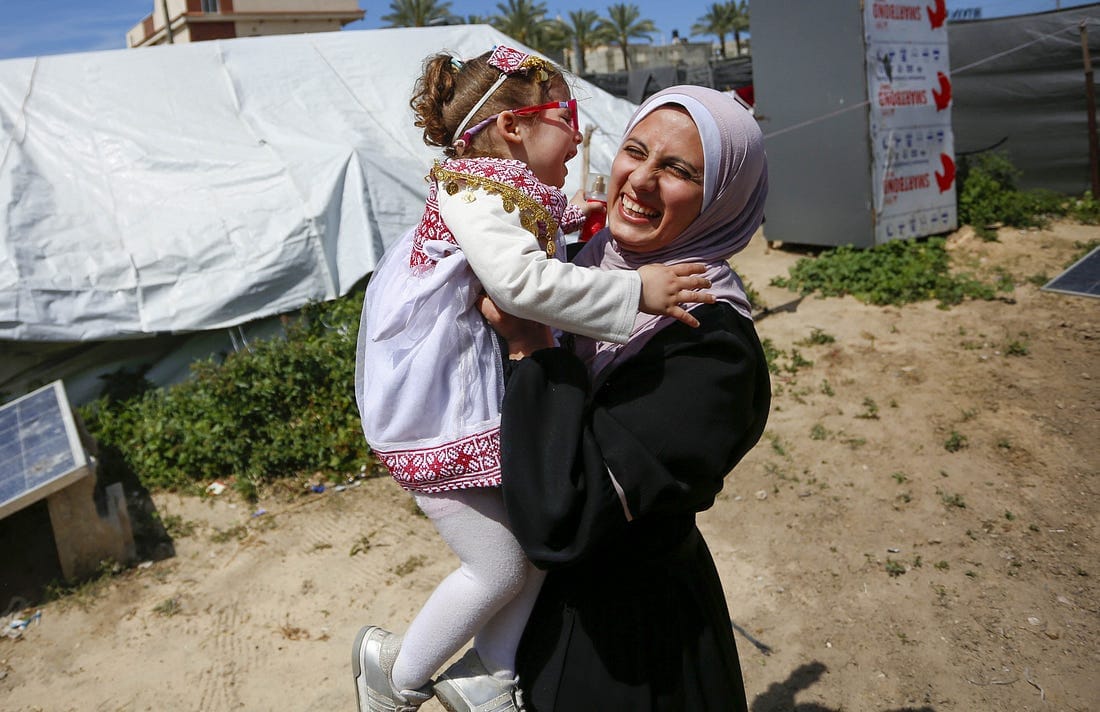
Another resident, 29-year-old Sahar L., who lived near the Bilal Bin Rabah Mosque, recounted, “The situation was terrifying. I clutched my daughter as we walked over shattered glass and rubble, surrounded by smoke, flames, and explosions everywhere. I ran without knowing where to go. God help us. Enough, world, enough.”

Almost half the homes in the Zeitoun neighbourhood were demolished without any documented military necessity, as no fighting had recently taken place there. The destruction was caused by the systematic use of automatic explosives and explosive-laden robots after residents had been forcibly displaced. This pattern shows the intent was not military but to erase infrastructure and force Palestinians into displacement.

The widespread destruction in Zeitoun, the largest neighbourhood in Gaza, is part of a deliberate Israeli policy: completing a campaign of genocide and erasing Palestinian urban life through the total destruction of homes, infrastructure, and access to basic livelihoods.

The international community, including the United Nations and global legal bodies, must intervene urgently to halt the massacres, protect civilians, and hold Israeli leaders accountable for these heinous crimes against the civilian population.

Israel’s ongoing attacks and territorial expansion threaten to unleash unprecedented mass slaughter in Gaza, destroying the already fragile humanitarian response and cementing a new chapter of systemic Israeli genocide. These attacks are not sudden battlefield escalations but calculated policies, and the international community, through its silence, financial backing, and political cover, bears full responsibility for the resulting crimes and tragedies.

States and organisations must exert maximum pressure on Israel to halt the crime of starvation and immediately push for the resumption of humanitarian access by ending the illegal siege of the Gaza Strip. This is the only way to stem the fast-deteriorating humanitarian crisis and ensure the entry of essential aid and supplies amid the looming threat of famine.

Safe humanitarian corridors, under UN supervision, must be established to guarantee the delivery of food, medicine, and fuel to all parts of the Strip, with independent international monitors deployed to ensure compliance. At the same time, rapid rehabilitation of Gaza’s agricultural and livestock sectors must begin as part of both emergency relief and long-term recovery efforts.

All States, individually and collectively, must fulfil their legal obligations and act urgently to stop this genocide in Gaza, taking every feasible measure to protect Palestinian civilians there. They must enforce Israel’s adherence to international law and the rulings of the International Court of Justice and hold Israel accountable for its crimes against Palestinians.

This includes, without waiver, enforcing the arrest warrants issued by the International Criminal Court for the Israeli Prime Minister and former Minister of Defence at the earliest opportunity and surrendering them to international justice, upholding the principle that no one is immune from prosecution for international crimes.

Euromed Human Rights Monitor

Continue reading
Airdrop Box Kills Boy in Gaza

This is the fourth reported killed in as many days as large boxes came crushing down, including that of an 11-year-old boy and a nurse

A 14-year-old Palestinian boy was killed and several people were injured Saturday when an aid box dropped by air fell on them in central Gaza, marking the fourth such fatal accident in recent days, medical sources said.

The sources told Anadolu that Muhannad Eid died after being struck in the head by a box in the Al-Nuwairi Hill area, west of the Nuseirat refugee camp. He was taken to Al-Awda Hospital, where he was pronounced dead. The exact number of injured was not immediately available.

Saturday’s tragedy follows three similar incidents since multiple countries began parachuting aid into Gaza on July 16, amid an Israeli blockade that has pushed the enclave into famine.

In the early hours of the same day, another Palestinian died from injuries sustained a day earlier when a box hit him in Gaza City’s Al-Yarmouk area. On Monday, a nurse was killed when a box crashed onto his tent in Al-Zawaida, while an 11-year-old boy died Wednesday in Khan Younis in the same way.

Palestinian officials and humanitarian groups say air-drops are far less effective than land deliveries and have caused chaos, damage, and deaths.

Israel has kept all Gaza crossings closed since March 2, blocking aid convoys despite hundreds of trucks waiting at the border. Only small amounts have been allowed in, far below the level needed to avert famine.

The World Food Program says one-third of Gaza’s population has gone several days without eating, calling the situation “unprecedented” in its levels of hunger and desperation. The UN estimates hundreds of aid trucks must enter daily to end the famine caused by the Israeli blockade and war.

Israel has been facing mounting outrage over its deadly war on Gaza, where more than 61,300 people have been killed since October 2023. The military campaign has devastated the enclave and brought it to the verge of famine.

Last November, the International Criminal Court issued arrest warrants for Israeli Prime Minister Benjamin Netanyahu and his former Defense Minister Yoav Gallant for war crimes and crimes against humanity in Gaza.

Israel also faces a genocide case at the International Court of Justice for its war on the enclave.

Continue reading
Starvation in The Gaza Genocide

Gaza is starving. There has never been like it in this Israeli-induced and enforced genocide that has now been going on for about 19 months and counting.

People are literally falling in the streets and in front of the television cameras because of the biting hunger that doesn’t seem to end at the hands of a merciless Israeli enemy.

Of the people who manage to get to the dilapidated and destroyed hospitals they are dropping off on the doors of these institutions with many losing consciousness and even shrieking the last breath of death. And people die while the people in the world looks on with lavish feasts.

UNRWA says Israeli is systematically and willfully starving the Palestinian population into submission; they want them either dead or expel from their ancestral homes in the Gaza Strip. The UN refugee organization says that up to 1 million children are threatened with death through starvation. These figures are given as they are the most natural thing in the world.

This is one of the worst periods of the genocide as Arab and Israeli makers meet in Doha and elsewhere try to end this nightmare but to no avail as politics over-rides common sense and decency.

Dr Mohammad Abu Salmiyah, director of the Al Shifa Hospital says that neither patients nor medical staff nor ancillary personnel in the whole of the Gaza hospitals, which number 36 in total, have had anything to eat in the last 24 hours. 

Al Jazeera correspondent Anis Alsharif says neither him nor the other anchors have had a bite to eat since Saturday afternoon because there isn’t any. People around here walk aimless until their last breath of death. Yet people, except for the frail seems to go on, as if their is an ordained hand telling, forcing them to go on.

The Israelis have refused to let  anything into Gaza since last March when they realized that there was a possibility that Palestinians would flourish again; and this is after they threw on them around 100,000 tons of bombs, facilitated by their American benefactors – a situation that begun soon after, 7 October, 2023.

There is simply no food into the strip thanks to Israel. Even animal fodder, which Gazans had been reduced to eating in order to survive in the first period of starvation in 2024 and early 2025, has run out. Then fodder like wheat and barely was eaten to survive, but this appears to be the end game.

In this brave new world of starvation and famine, food has become a scarce, nay, non-existent commodity because of Israeli policies to beat the Palestinians with but they will not win despite the evil intentions.

UNRWA continues to appeal to the international community to force Israel to lift its tight and claustrophobic siege on Gaza and let the aid, food and medicine into the strip. Meanwhile, it says it has its cargoes lying in the Sinai Peninsula waiting to be delivered to the starving people of Gaza. It says in its storehouses, it has three months of supplies but it’s waiting for the might of Israel to upon up the borders.

Meanwhile people are continuing to die starting from Rafah, in Khan Younis in the center of the Strip to the far-northern areas in Jabalia, Biet Lahia and Biet Hanoon where fighting is still going on between Palestinian resistance fighters and the Israeli army. 

In comes the Gaza Humanitarian Foundation which has since last May tried to provide food parcels at distribution centers run by US and Israeli personnel and which is today turning into a “free-shooting killing field” of starving Palestinian that has young been denounced by the United Nations as “weaponizing food” with very sinister connotations that include depopulating Gaza of its original inhabitants.

Seeing is believing. Palestinians, and on a daily basis, and under the eyes of the world are shot fatally on a daily basis. Take Sunday for example, the number of those that have killed is already in the 60s. As they run to get their food parcels they are shot by Israeli soldiers guarding the distribution centers. They are shot with no compunctions but with a sense of hellish deliverance.  

And it is the social media who are narrating, nay “dancing” on the graves of the Palestinians. This war is probably the most documented set of atrocities, but people, the international community, gaze on with a sense of helpless, frustration and complicity. Professor Amos Goldberg, who teaches Holocaust Studies at the Hebrew University, doesn’t mince words. He says this is a “disgusting genocide”.

Continue reading
Tom Fletcher: No ‘Vocabulary’ to Describe The Destruction

Conditions in Gaza have reached an unspeakable level of devastation with children paying the highest price, top UN officials told the Security Council on Wednesday, warning of soaring child deaths, starvation and a shattered health system amid continuing bombardment and displacement.

Tom Fletcher, the UN Emergency Relief Coordinator, said there was no “vocabulary” left to adequately describe conditions on the ground.

Food is running out. Those seeking it risk being shot. People are dying trying to feed their families. Field hospitals receive dead bodies, and medical workers hear stories firsthand from the injured – day after day after day,” he said.

Starvation rates among children reached their highest levels in June, with more than 5,800 girls and boys diagnosed as acutely malnourished.

“Last week, amid this hunger crisis, children and women were killed in a strike while waiting for the food supplements to keep them alive.”

Watermark
UN Emergency Relief Coordinator Tom Fletcher briefs the Security Council

A classroom full of children, lost every day

UNICEF’s Executive Director Catherine Russell told ambassadors that an average of 28 children are killed in Gaza every day – “the equivalent of an entire classroom.”

Over the past 21 months, more than 17,000 children have been killed and 33,000 injured across Gaza.

Many of those children, she said, were struck “as they line up for lifesaving humanitarian aid – further proof that there is no safe place for civilians anywhere in Gaza.”

Children are not political actors. They do not start conflicts, and they are powerless to stop them. But they suffer greatly, and they wonder why the world has failed them,” she added.

“And make no mistake, we have failed them.”

Critical infrastructure collapse

Gaza’s health system “is shattered,” Mr. Fletcher reported – only 17 of 36 hospitals and 63 of 170 primary health centres are even partially functioning; shortages mean up to five babies share one incubator.

Seventy per cent of essential medicines are out of stock, half of all medical equipment is damaged, pregnant women are giving birth without care, women and girls manage their periods without basic supplies.

Meanwhile, water production capacity has plummeted leaving the entire enclave (95 per cent) facing water insecurity.

With clean water increasingly difficult to access, children have little choice but to drink contaminated water,” Ms. Russell said, noting that this is increasing the risk of disease outbreaks.

Watermark
UNICEF Executive Director Catherine Russell briefs the Security Council

Aid impeded, fuel at trickle levels

Mr. Fletcher further described the scale of challenges to moving something as simple as a bag of flour into Gaza.

He noted multiple layers of approvals that Israel requires, scanning, re‑loading, multiple handoffs, damaged roads, delays at holding points, insecurity and desperate civilians grabbing supplies off trucks.

Last week – after almost 130 days – some fuel entered Gaza, as Israeli authorities agreed to allow two trucks in per day, five days a week. However, petrol – fuel for ambulances and other critical services – has not been permitted.

Between 19 May and 14 July, just 1,633 aid trucks – about 62 per cent of loads submitted for clearance – entered Gaza, far below the average of 630 daily truckloads moved during the previous ceasefire, Mr. Fletcher said.

Appeals to Israel, Hamas – and the Council

Both officials pressed for immediate, safe, sustained, demilitarised humanitarian access through all available crossings, consistent fuel flows, protection of civilians at distribution points, and restoration of the UN‑led aid pipeline that briefly functioned during earlier pauses in fighting.

They also reiterated the UN’s call for the immediate and unconditional release of all hostages held in Gaza and called on all parties – including Hamas and other armed groups – to respect international humanitarian law.

Mr. Fletcher asked the Security Council to assess whether Israel, as the occupying power, is meeting its obligations to ensure food and medical supplies reach civilians.

“We hold all parties to the standards of international law in this conflict. We don’t have to choose – and in fact, we must not choose – between demanding the end to the starvation of civilians in Gaza and demanding the unconditional release of all the hostages,” he said.

“We must reject antisemitism – we must fight it with every fibre of our DNA. But we must also hold Israel to the same principles and laws as all other States.”

UN News

Continue reading
‘No More Spaces to Bury Our Dead’ – Gaza

Graves are running out in Gaza. The Ministry of Endowments and Religious Affairs in Gaza announced, Wednesday evening, that graves have run out in most areas of the Strip. It added this is amidst the escalating genocide carried out by Israel over the past 22 months and the rising number of people that are being killed.

The systematic targeting of civilians and the ongoing genocide is resulting in the depletion of graves in most areas of the Gaza Strip, the Ministry stated, explaining that the Israeli army completely or partially destroyed more than 40 grave sites across the Strip since October 2023.

The ministry stated the Israeli army prevents Palestinians from “accessing cemeteries located within its security and military control, which has led to a reduction in burial spaces, the depletion of existing cemeteries, and the exacerbation of the severe shortage of graves for burying martyrs and the dead.”

It explained that this comes at a time when the Israeli army is preventing “the entry of shrouds, building materials, and materials necessary for preparing graves, which prevents the burial of martyrs in accordance with Sharia regulations.”

In addition, Israeli evacuation orders have reduced the available land for burials, transforming it into a shelter for displaced Palestinians, according to the statement.

Consequently, the statement noted the accumulation of bodies of “martyrs” in hospitals and their courtyards, while schoolyards and homes have been converted into emergency burial sites.

It noted that with the worsening grave availability crisis in Gaza, the cost of preparing a single grave has increased from 700-1,000 shekels (one dollar equals 3.37 shekels), “burdening the families of the martyrs.”

The ministry is appealing to Arab and Islamic countries and entrepreneurs to support the “Ikram Campaign” it recently announced, to build free graves to honor the martyrs.

It also called on local and international relief organizations and entrepreneurs “to urgently intervene to provide relief to the families of the martyrs, work to build free graves, and provide urgent burial supplies, including shrouds, building materials, and burial equipment.”

Almost daily, activists circulate images on social media of the dead piling up in hospital courtyards as the death toll rises due to the escalating genocide.

Palestinians complain about the lack of graves to bury their “martyred” relatives, while some resort to opening old graves to bury additional bodies inside.

Since October 7, 2023, Israel has waged a genocidal war in Gaza, including killing, starvation, destruction, and forced displacement, ignoring all international calls and orders from the International Court of Justice to halt it.

The genocide, with American support, has left approximately 191,000 Palestinians dead or wounded, most of them children and women, and more than 11,000 missing, in addition to hundreds of thousands displaced and a famine that has claimed the lives of many, including children as reported by Anadolu.

Continue reading