Iran Condemns Israeli Recognition of Somali Region

Iran strongly condemned on Saturday Israel’s recognition of the breakaway region of Somaliland as a “flagrant violation of Somalia’s sovereignty and territorial integrity.”

Criticizing the Israeli move as “malicious,” Foreign Ministry spokesperson Esmail Baghaei emphasized the importance of “preserving the national sovereignty, unity, and territorial integrity” of Somalia.

Baghaei asserted that the recognition aligns with Israel’s broader policy “to destabilize countries in the region and exacerbate insecurity in the Red Sea and the Horn of Africa.”

Expressing support for the firm condemnation by the Organization of Islamic Cooperation (OIC) and the African Union (AU), Baghaei called on the international community to take “decisive action” to “neutralize this expansionist and threat-creating move by the occupying regime.”

On Friday, Israel became the first country to officially recognize Somaliland, with Prime Minister Benjamin Netanyahu announcing that the two sides had signed a joint declaration establishing full diplomatic relations “in the spirit of the Abraham Accords.”

In response, Somalia’s government denounced the move as an “attack” on its sovereignty and an “unlawful action,” reaffirming Somaliland as an “inseparable” part of its territory.

The Israeli move has been widely condemned by several countries, including Türkiye, Saudi Arabia, Egypt, and Qatar according to Anadolu.

Notably, Somalia was among the countries that severed diplomatic ties with Iran in January 2016 following a mob attack on the Saudi embassy in Tehran.

In March 2024, a year after Iran and Saudi Arabia restored diplomatic relations through a China-brokered deal, Somalia announced its readiness to mend ties with Iran.

In August of the same year, the top diplomats of Somalia and Iran met on the sidelines of the OIC summit in Jeddah and agreed to revive and deepen diplomatic relations.
Continue reading
Cairo Plans to Rebuild Gaza Without Displacing Palestinians

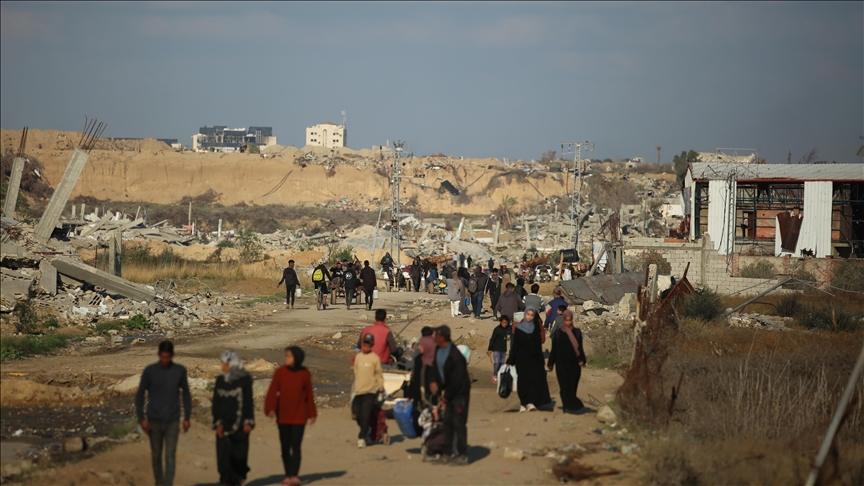
Egypt said Sunday that it has a “clear vision” regarding the reconstruction of the war-torn Gaza Strip without displacing Palestinians from the territory.

“The Egyptian efforts regarding Gaza are ongoing and will not stop with regard to implementing the specific requirements of the ceasefire agreement in its three stages,” Foreign Minister Badr Abdelatty told a news conference in Cairo with his Djiboutian counterpart Mahamoud Ali Youssouf.

“We have a clear vision for rebuilding the Gaza Strip without any citizen leaving his land,” he added.

Trump suggested last weekend that Palestinians in Gaza should be relocated to Egypt and Jordan, calling the enclave a “demolition site” after Israel’s war. His proposal, however, was vehemently rejected by Cairo and Amman.

A six-nation Arab ministerial meeting in Cairo on Saturday firmly rejected Palestinian displacement from Gaza and renewed calls for implementing a two-state solution to the Israeli-Palestinian conflict.

Trump’s proposal came after a ceasefire agreement took effect in Gaza on Jan. 19, suspending Israel’s genocidal war that has killed nearly 47,500 people, most of them women and children, and injured over 111,000 since Oct. 7, 2023.


Red Sea

The top Egyptian diplomat said there is no justification for military escalation in the Red Sea after the Gaza ceasefire.

“We stress the need to enhance the security of the Red Sea and freedom of maritime navigation, and we reject any military presence of any country that does not border the Red Sea,” he added.

Tension has begun to ease in the Red Sea after the Gaza ceasefire deal. During the Gaza war, Yemen’s Houthi group carried out drone and missile attacks on Israeli cargo ships or ones linked with Tel Aviv in the Red Sea in a show of support for the Palestinian enclave.

Egyptian President Abdel Fattah al-Sisi met early Sunday with the Djiboutian foreign minister to discuss bilateral cooperation and the latest developments in Somalia and the Red Sea region, the presidency said in a statement.

Tension escalated between Ethiopia and Somalia originated in January 2024, when Addis Ababa signed an agreement with Somalia’s breakaway region of Somaliland to use the Red Sea port of Berbera. Since then, Türkiye has actively mediated to ease tensions between the two nations.

Egypt and Ethiopia are already locked in a decade-long dispute over the construction of a dam project on the Nile River, which Cairo fears will drastically reduce its share from the Nile water. Ethiopia says that the dam is vital for its development process according to Anadolu.

Continue reading