The Americans, both the Biden and Trump administrations, gave the Israelis two years to destroy Hamas in Gaza. This is what the leader of the Palestinian National Initiative Dr Mustapha Al Barghouti started by saying. So for them the time was up came 7 October, 2025.
He maintained that it was because they couldn’t finish the job, the White House acted swiftly, stating enough is enough, the war on Gaza must end. What he said its true because today, the quest to end the war on the enclave and let the aid trucks in is an American initiative, who are almost dragging Israeli Prime Minister Benjamin Netanyahu forward who doesn’t want to end the war.
In a sharp analysis, the Palestinian politician said the Americans, especially President Donald Trump came to realize that the Israelis were not going to destroy Hamas despite the mass destruction of the Gaza Strip through mass weapons supplied by the United States. And that this is when the Trump administration decided to act and enforce the present, albeit fragile ceasefire between Tel Aviv and Hamas and according to him, ending the bloody, destructive, heinous war on Gaza.
But it was not for the lack of trying. When Trump entered the White House in January 2025, he then tried to sell the Rivieria Gaza idea to the region but he finally realized the Palestinian people of Gaza couldn’t be driven out of their homeland, even if it was just temporarily as he claimed and that there was going to be no way of parcelling them out to other countries.
Dr Barghouti pointed out Trump tried very hard talking to states like Indonesia, in the Arab world and those in Africa, seeking all sorts of pressure to persuade them to take the Gazans. But after much diplomatic chitchat, he realized the Palestinians weren’t for moving despite the fact that 250,000 of them were killed and/or injured at the hands of the Israeli army and the horrific mass destruction of their homeland.
This proves that the idea the Palestinian population can be ethnically cleansed – much talk about that in the past two years of the genocide – was a non-starter and that 1948 when hundreds of thousands of Palestinians were driven off their land by Israeli militias and terror gangs was not going to be repeated. Dr Barghouti added the last onslaught on Gaza has proved that ethnic cleansing has become a “closed chapter”.
And he added Trump and his team led by Steve Witkoff and Gerard Kushner became aware of that, and that is when it was decided to push for a ceasefire to save Israel from itself. Barghouti putted this way: Trump realized many countries of the world were turning against Israel because of its murderous actions on Gaza and its mass displacement and starvation of the people of the enclave and to let Netanyahu have his own way by refusing to stop the war would be detrimental to US interests in the region.
Thus when Israel tried to re-start the war on Gaza last Monday – and a week into the ceasefire – when two of its soldiers were killed in Rafah through lone fighters and which Hamas immediately disavowed, the Trump administration played down the incident in the interest of maintaining the ceasefire accord reached at the beginning of October, 2025.
Trump first dispatched Witkoff and Kushner to Israel with Vice-president JD Vance who followed on a two-day visit in an effort to keep tempers low. Their visit to Israel today is sending a message that the US administration wants the ceasefire to be followed through in the interest of Trump’s 20-point peace plan for the Middle East.
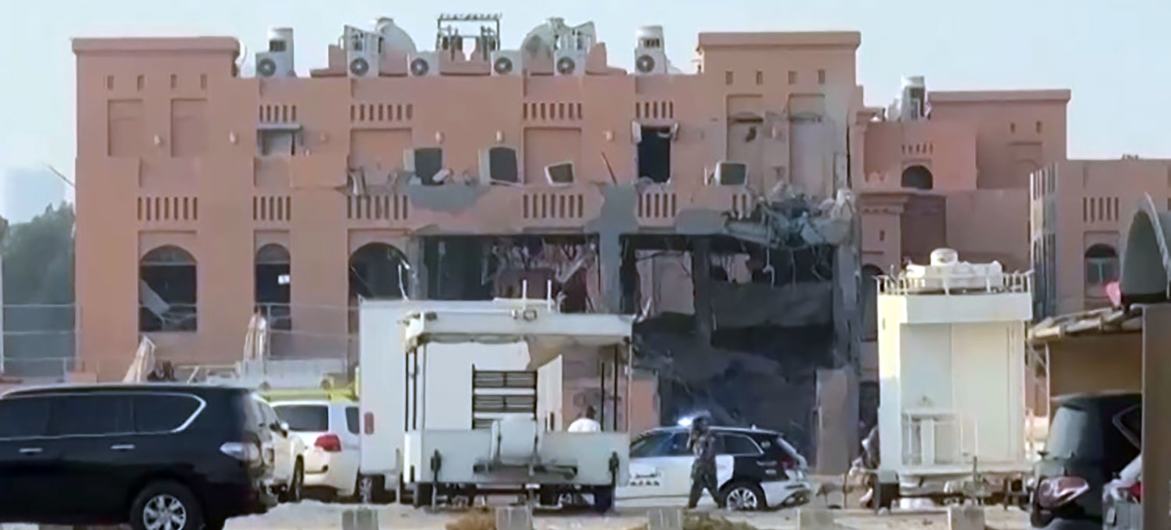
“This is a message to the entire Middle East,” Israeli Knesset Speaker Amir Ohana said in response to the Israeli airstrike that targeted Hamas leaders in the heart of the Qatari capital, Doha.
However, this statement is not merely a comment on the military operation strike into a declared strategic message, telling the entire region, and primarily the Gulf, that Israel, in partnership with Washington, has become the master of the decision-making process in the region.
Ohana’s statement is an explicit and direct threat that leaves no room for interpretation, reflecting the new deterrence doctrine adopted by Tel Aviv: No red lines, no geographical immunities, and no Western allies outside the confines of Israeli dictates. Simply put, anyone who disagrees with us becomes a legitimate target, even if they are in the heart of a friendly capital that hosts the largest American military base.
This makes for a dangerous conclusion: Israel no longer views the Gulf states as partners in stability, but rather as “open arenas for fiery messages.” Washington is blessing the silence, participating in complicity, and mocking the Arabs.
Naked dominance
And don’t forget the Israeli crime in the heart of the Gulf marks the beginning of a new era of naked dominance. It’s not a traditional security operation, but a pivotal turning point in the rules of regional engagement, in which Qatar has been embarrassed both on the Arab level and internationally.
Israel has now publicly placed itself in a circle (no longer concealing its intentions) – through bombing and military strikes – that it no longer sees a distinction between political geography and the theater of operations. More dangerously, the heart of the Gulf today has become openly subject to Tel Aviv’s fire. And who can challenge it?
The strike wasn’t an intelligence leak or a silent targeting, but a direct airstrike in an area teeming with embassies, schools, and residential buildings, in a country that is a major ally of Washington and a pillar of American security in the Middle East.
Thus the message has become clear to everyone: No one is above attack… no state, no sovereignty, no partnership.
The US administration, led by Donald Trump, evaded with a series of conflicting statements about its prior knowledge of the operation. But whether it knew and blessed it, knew and remained silent, knew too late, or did not know at all, the outcome is the same: The American cover was removed, Gulf confidence eroded, and billions perished. The statements of the US embassy in Doha did not go beyond expressions of caution to American citizens, while White House statements swayed between “regret over the location” to “understanding the goal of eliminating terrorism.”
I believe the opposite message was conveyed to the Gulf capitals: Your security is not a priority, and your sovereignty does not equate to a clear position from Washington. The question that now arises however is: Why Qatar? Why now? Why was the strike carried out in Qatar and not in Turkey, or Iran for example? This is despite the fact that the Hamas leaders that were targeted had just returned from Istanbul, suggesting Tel Aviv chose the location not arbitrarily but with deep political awareness. Tel Aviv did not pull the trigger in Istanbul, even though the targeted leaders passed through it only hours earlier.
Turkey, with all its military, political, and international complexity, is not a testing ground for Israeli madness. There are red lines that even Tel Aviv dares not cross… and Turkey is one of them. The potential Turkish military response, the internal Turkish explosion during a highly sensitive election season, and the delicate balance of power within NATO rendered Turkish territory “operationally closed” even to the most violent wings of Israeli decision-making. But when the targeted figures left Istanbul for Doha, everything changed.
Qatar, like other threatened Arab states, in the Israeli security and intelligence mindset, is merely an intermediate gray area, neither neutral nor classified as an “enemy,” potentially a shocking target at a low cost. This is something all Arab decision-makers should be aware of.
From Tel Aviv’s perspective, Qatar is balancing contradictory roles, managing mediation, funding aid, and hosting parties that anger Israel without possessing a genuine deterrent umbrella. There are no international calculations that could prevent a surgical strike carried out within hours. Merely hosting an American base does not make Doha “immune,” but may even further tempt Tel Aviv, proving that decision-making in the region is no longer solely in Washington’s hands but in Tel Aviv as well.
In short, Israel needed a platform to send the biggest message since the Gaza war… so it chose the weakest link, amid the silence of its strongest ally.
Here, we can pause a moment at the Knesset member’s statement that the operation was “a message to the Middle East.” This is not a slip of the tongue, but a strategic doctrine upon which future decisions are based. Israel is telling all countries in the region that whoever harbors Hamas, or even engages in dialogue with it, will be next.
If the Arab states fail to take a firm political stand, the Doha precedent will be repeated elsewhere. It may not be Hamas’s mediation that stands accuse but rather the concepts of neutrality, balance, and even dialogue with parties Tel Aviv disapproves of and which then could become sufficient justification for a strike. It’s a policy of punishment.
This scene is posing existential questions for Arab capitals. If Qatar, Washington’s most important ally, is being bombed over the heads of its own people, after Syria, Lebanon, and Gaza… should we wait for Iraq’s turn? Riyadh? Abu Dhabi? Kuwait? And others? Does the American umbrella truly protect us, or is it used only when our interests intersect with Israel’s?
And what is the point of hosting American bases if they do not prevent airspace violations? Or provide protection?
What happened in Doha is pushing the region to crossroads: Either continuing its position of dependency and timid mediation, or repositioning strategically and developing independent air defenses, which is logistically difficult, or seeking alternative alliances (Ankara, Beijing, Moscow, Tehran?), and establishing red lines that Tel Aviv will not cross.
Qatar now faces difficult choices: Will it withdraw from the Hamas mediation? Will it demand real security guarantees? Will it go further, toward symbolic deterrence or unconventional partnerships? Or will it pay the price of protection once again?
Beware: A war of wills is beginning now. The Israeli airstrike in Doha was not just a blow to Hamas, but also a slap in the face to the sovereignty of the Gulf and the region, an undermining of the prestige of international law and its signed, ratified, and binding agreements, and an insult to the concept of the alleged strategic partnership with America.
This is the beginning of a new era, one in which Israel and Washington declare that the security of the region is no longer an Arab decision. The question now is: Will the Arabs as a whole wake up before “Ohana’s message” reaches other capitals? Perhaps.
The author is a political writer based in Amman Jordan and contributed this article to the Al Rai Alyoum Arabic website
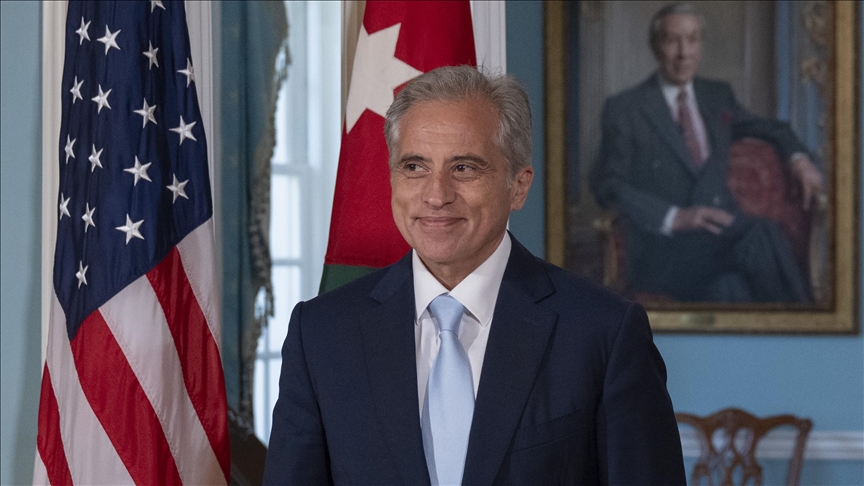
Jordanian Prime Minister Jafar Hassan on Tuesday called the so-called “Greater Israel” vision an “illusion,” stressing that Tel Aviv is “isolated” due to its “extremist” policies.
“We hear about visions and proposals that imply a perpetual war with no end, such as the illusion of Greater Israel entertained by extremist politicians in Israel,” Hassan said during a meeting in Amman with his Lebanese counterpart, Nawaf Salam, who arrived in the Jordanian capital early Tuesday for an unannounced visit.
He said Israel is “isolated and besieged because of its extremist policies.”
“The entire reality points to (Israeli) policies that deepen hatred and resentment as a result of ongoing massacres, and the peoples of the world and the region will not forgive them,” he added in his comments carried by the official Petra news agency.
On Monday, Jordanian government spokesman Mohammad al-Momani accused the far-right in Israel of “threatening the region and undermining prospects for a two-state solution.”
“Greater Israel” is a Biblical term used in Israeli politics to refer to the expansion of Israel’s territory to include the West Bank, Gaza, Syria’s Golan Heights, Egypt’s Sinai Peninsula, and parts of Jordan.
Last week, Israeli Prime Minister Benjamin Netanyahu told a news channel that he feels “very attached” to the vision of a Greater Israel. He said he considers himself “on a historic and spiritual mission” which “generations of Jews that dreamt of coming here and generations of Jews who will come after us,” according to Anadolu.
Israel has killed more than 62,000 Palestinians in Gaza since October 2023. The military campaign has devastated the enclave and brought it to the verge of famine.
Last November, the International Criminal Court issued arrest warrants for Netanyahu and his former Defense Minister Yoav Gallant for war crimes and crimes against humanity in Gaza.
Israel also faces a genocide case at the International Court of Justice for its war on the enclave.
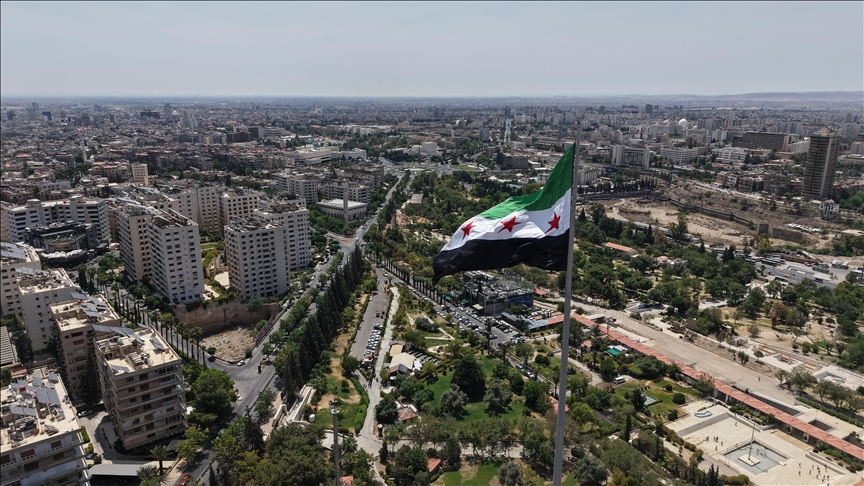
In a scene that reflects its utmost political and military arrogance, Israel, Wednesday, bombed the Syrian General Staff and the Republican Palace in the heart of the capital, Damascus.
This blatant attack crosses all red lines, interfering in Syria’s internal affairs as if it were the world’s superpower, openly defying international law and humiliating some Arab regimes with its silence and suspicious incompetence.
This is not a passing event, nor is it merely a “security message,” as Western media attempts to gloss it over. It is a blatant aggression against the sovereignty of an Arab state, striking its most important symbols of sovereignty in broad daylight.
The military strikes are a declaration of rebellion against international law and an insistence that Israel remains “above the law,” capable of destroying any Arab capital without fear of punishment or even blame.
What does Israel want?
It wants to brazenly say:
“I decide who lives, who is bombed, and whose voice is forcibly silenced.”
It seeks to impose the logic of force and dictate new rules in the region, titled: There is no place for an Arab state with independent decision-making, capable army, or a resistance project.
What is happening in Syria today has happened and is happening in Gaza, in southern Lebanon, in Iraq, in Yemen, and in every region trying to breathe outside the Zionist orbit.
The challenge is not only facing Syria…but all Arabs.
Anyone who thinks that these raids target Syria alone is delusional.
Every Arab country is now on the waiting list.
Today, Damascus is being bombed, and tomorrow… who will be next? Baghdad? Beirut? Yemen, Khartoum? Riyadh, Cairo? No one is immune to this arrogance as long as silence is the only response.
It is the Arab silence that has encouraged Israel to persist. The disagreements, divisions, and humiliating normalization are what have reassured Tel Aviv that no one will hold it accountable, or even condemn it.
What’s needed now: Break the silence and stop the collapse.
It’s time for the Arab nation to wake up from its slumber and realize that what is happening is not a “Syrian crisis” but a “collective Arab setback.”
Overt and gratuitous normalization with Israel must be halted immediately.
The Joint Arab Defense Charter must be activated, even if only verbally at first.
The steadfastness of Syria—its people, army, and institutions—must be supported, because the ultimate target is every Arab state. Everyone’s turn will come if Arab silence continues.
Israel is not destiny… and if the Arabs want to, they can.
Our history is full of moments of steadfastness and victory, but we need an awakening of conscience and a political will to halt this unbearable collapse.
Israel does not respect the weak, nor does it take into account those who remain silent.
Unless it is curbed now, every Arab state will one day find itself in its crosshairs, without support or dignity.
This opinion was written by Awni Al Rjoub in Arabic and published in Jo24.
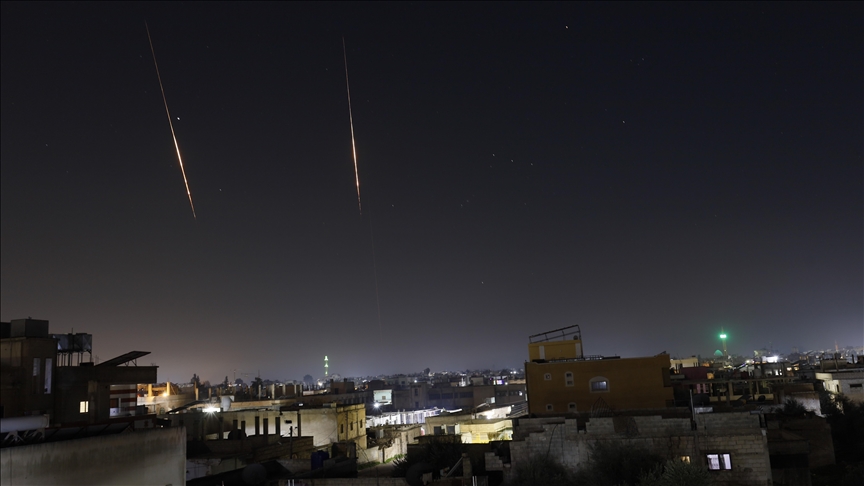
Yemen’s Houthi group announced Wednesday it targeted Israel’s Ben Gurion Airport, Eilat port and a military site in the Negev region in a series of coordinated missile and drone attacks.
“The Houthi missile force launched a ballistic missile of the Zulfiqar type at Lod Airport (Ben Gurion) in the Tel Aviv area,” Houthi military spokesperson Yahya Saree said in a prerecorded statement.
He added that the strike forced “occupying Zionist settlers into shelters and halted airport operations.”
Saree said the group also conducted operations using drones. Two drones targeted an Israeli military site in the Negev region, while others were aimed at Ben Gurion Airport and the port of Eilat according to Anadolu.
Earlier, the Israeli army said it intercepted a missile fired from Yemen, triggering air raid sirens in several southern areas. The army did not mention any drone activity in its statement.
Air raid sirens sounded across multiple towns and settlements in the Negev and Dead Sea areas, according to Israel’s Yedioth Ahronoth daily.
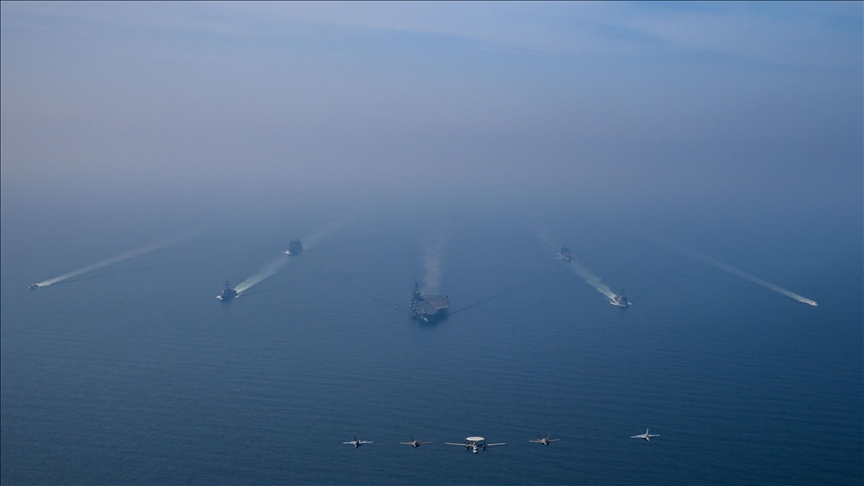
Meanwhile, Israel’s Channel 12 reported that the port of Eilat will suspend operations starting Sunday due to financial distress, largely attributed to a sharp decline in revenue caused by the ongoing Houthi naval blockade in the Red Sea.
According to the report, the port has accumulated roughly 10 million shekels ($2.9 million) in debt, primarily due to unpaid municipal taxes. The network said ships that previously docked at Eilat have diverted to Ashdod and Haifa ports on the Mediterranean, citing “aggressive Houthi activity in the Red Sea.”
The Houthis have intensified missile and drone strikes on Israel since Israeli forces resumed their attacks on the Gaza Strip in March after two months of a shaky ceasefire.
Since November 2023, the group has also targeted commercial shipping in the Red Sea, the Gulf of Aden and the Arabian Sea in support of Palestinians in Gaza, where nearly 58,900 people have been killed in an Israeli onslaught.


 CrossFireArabia