By Michael Jansen
Israeli Prime Minister Benyamin Netanyahu has said, “There is no policy of starvation in Gaza, and there is no starvation in Gaza.” Israel has enabled “humanitarian aid throughout the duration of the war to enter Gaza – otherwise, there would be no Gazans.”
However, Gaza’s government media office told Al-Jazeera that only 674 aid trucks have entered Gaza since Israel eased restrictions on July 27, averaging just 84 laden trucks per day. This is only 14 per cent of needs as humanitarian organisations say at least 600 trucks of water, food, medicine and fuel are required at a minimum.
Echoing Netanyahu, US regional envoy Steve Wikoff proclaimed there is “no starvation” in Gaza after a brief visit to one of the aid delivery hubs in the Strip. “There is hardship but no starvation,” he said. His assessment appeared to contradict his boss Donald Trump who had said there is “real starvation.”
“Once we refute this Hamas claim, we can continue new actions to end the war and bring back all the hostages” held by Hamas, Witkoff said. He added that Trump believes piecemeal deals do not work and so a new arrangement is needed that would free the hostages all at once.
However, Witkoff argued that only Hamas “total surrender” and disarmament would be accepted. Writing in Haaretz daily on 2 August, Amir Tibon decries Netanyahu’s decision to carry on with the war, despite opposition from most Israelis and Israel’s foreign friends. “Israel’s military leadership admits today that the last five months have been a wasted effort, and that it would have been preferable for Israel to continue the January 2025 ceasefire, get the rest of the hostages out of Gaza in an agreement, and conclude the war.”
He is sharply critical of the Trump administration which “gave Netanyahu total backing for this disastrous policy, including his decision to block all aid from coming into Gaza, which caused the humanitarian crisis there. “Consequently, Witkoff’s latest visit has been met with popular Israeli “disappointment over the Trump administration’s failure to rein in Netanyahu and bring the Gaza war to an end.”
This means that there will be no quick fix under pressure from starvation even though Israelis held captive by Hamas are suffering the same lack of nourishment as their captors. The International Committee of the Red Cross has been asked to provide food for the captives but not the 2.3 million hungry Palestinians in Gaza.
Witkoff has been contradicted by the UN-supported Integrated Food Security Phase Classification” (IPC) which has warned that “the worse-case scenario of famine” is unfolding as 60,000 Palestinians died from bombs and bullets and an untold toll, especially among children, is being gripped by hunger and malnourishment. IPC called for a ceasefire to avert further “catastrophic human suffering.” The total number of people who have died from hunger-related causes since the start of the war in October 2023 has risen to more than 181, including 94 children. This does not include the 1,400 who have been killed by Israeli army fire when trying to secure aid at the highly controversial US-Israel Gaza Humanitarian Foundation which has not alleviated starvation but given a false image of US and Israeli efforts to deliver food.
UN Secretary-General Antonio Guterres said the IPC alert “confirms what we have heard. The facts are in and they are undeniable. Palestinians in Gaza are enduring a humanitarian catastrophe of epic proportions. This is not a warning. It is a reality unfolding before our eyes.”
Australian Prime Minister Anthony Albanese declared it was “beyond comprehension” for Israel to claim starvation was not an issue in Gaza and accused Israel of breaching international law by blocking aid.
Netanyahu is personally responsible for torpedoing January’s ceasefire agreement which would have led to the release of Israeli captives in exchange for Palestinian prisoners, Israel military withdrawal from Gaza, and an end to the war. Instead on 2 March, he imposed the blockade and on 18 March, he resumed the war. Tibon summed up, “Netanyahu, for political reasons, chose to blow up the deal, restart the war, and bring us to where we are today: Our hostages are being starved and tortured, our soldiers are dying, and the entire world is turning against us due to the broader humanitarian catastrophe in Gaza.”
As the 15 August 20th anniversary approaches of the beginning of Israel’s withdrawal of settlers and soldiers from Gaza, 600 retired Israeli security officials have written to Trump to ask him to pressure Netanyahu to end the war. This group included former Mossad chief Tamir Pardo, former Shin Bet chief Ami Ayalon, former Prime Minister Ehud Barak, and former Defence Minister Moshe Yaalon.
Ayalon argued: “At first this war was a just war, a defensive war, but when we achieved all military objectives, this war ceased to be a just war…It is our professional judgement that Hamas no longer poses a strategic threat to Israel,” the officials stated. “Your credibility with the vast majority of Israelis augments your ability to steer [Netanyahu] and his government in the right direction: End the war, return the hostages, stop the suffering.”
On the political front, this policy has contributed to decisions by Britain, France, Canada and half a dozen other countries to recognize the state of Palestine during next month’s opening of the 80th UN General Assembly session. Although recognized by 147 of the 193 UN members, many Western countries have delayed recognition. The addition of Britain and France will mean four of the five permanent members of the UN Security Council (which includes China and Russia) will recognize Palestine while the US will remain the outlier as it is on any effort to criticize or rein in Israel.
Michael Jansen is a columnist for The Jordan Times


 CrossFireArabia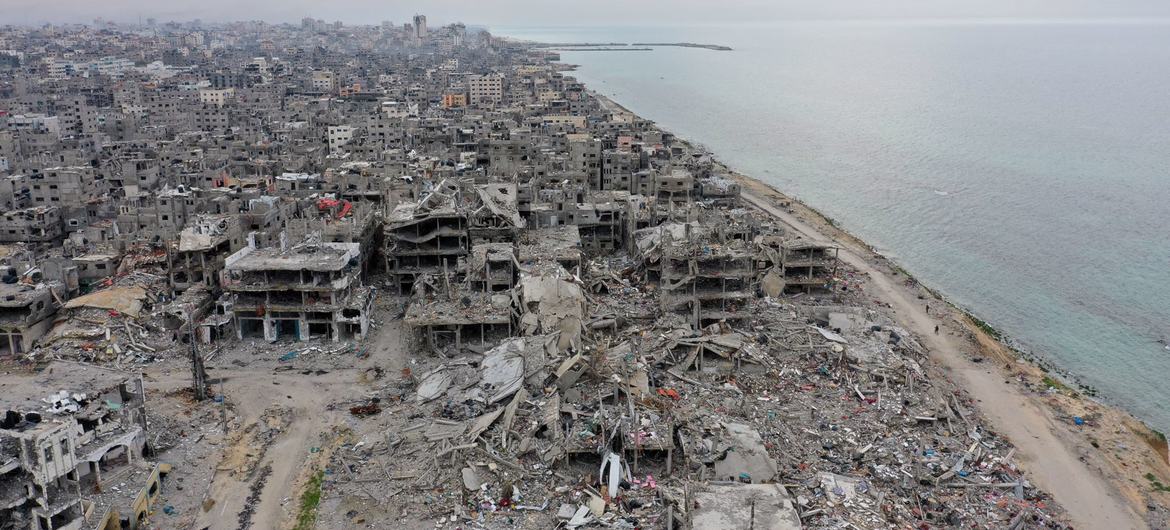

 Dr Khairi Janbek