Arab States Say No to Trump On Gaza

Arab nations and organizations continued to express their firm rejection of US President Donald Trump’s plan to seize Gaza and displace Palestinians.

Egypt, Algeria, Iraq, Libya and the Palestinian group Hamas released statements Thursday.

It followed earlier rejections from Saudi Arabia, the United Arab Emirates, Jordan and Oman, along with several regional and international organizations including the Arab League and the Gulf Cooperation Council.

On Thursday, Trump claimed that Palestinians would have “better lives” under his plan, suggesting they would settle in “safer and more beautiful communities with modern homes.” He said the US would collaborate with development teams to build “one of the greatest projects of its kind.”

Earlier in the day, he claimed that Palestinians would have “a chance to be happy, safe, and free” due to the relocation scheme he proposed.

He added that they “would have already been resettled in far safer and more beautiful communities, with new and modern homes, in the region.”

On Tuesday, Trump told a press conference with Israeli Prime Minister Benjamin Netanyahu that the US will “take over” Gaza and resettle Palestinians elsewhere under an extraordinary redevelopment plan that he said could turn the enclave into “the Riviera of the Middle East.”

Commenting on Trump’s plan, Egypt said it rejects any proposal “that aims to liquidate the Palestinian cause by uprooting the Palestinian people or displacing them from their historical land and seizing it, whether temporarily or permanently.”

King Abdullah II of Jordan reiterated in a call with UN Secretary-General Antonio Guterres that Jordan opposes any attempts to annex land or displace Palestinians from Gaza and the West Bank.

Kuwait’s Ministry of Foreign Affairs reaffirmed its steadfast support for Palestine’s right to establish an independent state, condemning Israeli settlement policies and the displacement of Palestinians.

Algeria condemned any plan to expel Gaza’s residents, warning that such schemes “undermine the core of the Palestinian national project.”

Both Iraq and Libya expressed their strong opposition to any proposals or attempts to forcibly displace Palestinians, calling on the international community to take a firm stand against these actions.

Palestinian President Mahmoud Abbas called Trump’s plan a violation of international law, asserting that Gaza is an integral part of Palestine and rejecting foreign decisions about the future of Palestinians.

Hamas also denounced Trump’s statements, with spokesperson Hazem Qassem calling for an urgent Arab summit to oppose the displacement project, warning that the US is essentially seeking to occupy Gaza.

Saudi Arabia reiterated its unwavering support for Palestinian statehood, while the United Arab Emirates also condemned the displacement efforts, calling for a just solution to the Israeli-Palestinian conflict.

The Arab League and Gulf Cooperation Council both reaffirmed their commitment to the Palestinian cause, rejecting any plans for the forced relocation of Palestinians.

The Houthi movement in Yemen also condemned Trump’s statements as a blatant attack on Palestinian rights and an insult to the Arab and Muslim world.

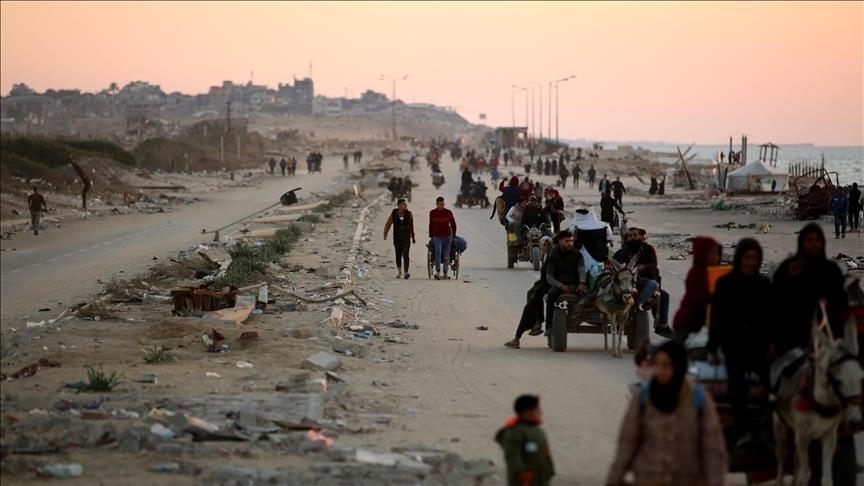
A ceasefire agreement took effect in Gaza on Jan. 19, halting Israel’s genocidal war, which has killed nearly 47,600 Palestinians, most of them women and children, and left the enclave in ruins, according to Anadolu.

The International Criminal Court issued arrest warrants in November last year for Israeli Prime Minister Benjamin Netanyahu and his former Defense Minister Yoav Gallant for war crimes and crimes against humanity in Gaza.

Israel also faces a genocide case at the International Court of Justice for its war on the enclave.
Continue reading
Netanyahu: Ideologue, Pragmatist or a Proxy?

Dr Khairi Janbek

PARIS – When talking about the Israeli prime minister Netanyahu, we must not miss the point that in effect he is a politician, thus, he is both an ideologue and a pragmatist. He is an ideologue when he feels he can go all the way with brinkmanship and get away with it, and he is a pragmatist, when realizes that he should stop and talk. However, by and large that usually depends on the position of the USA primarily, and on the regional situation in the second degree.

He was a pragmatist, when he originally gave his implicit support to Hamas as a guardian of peace in Gaza, and the guarantor of border security with Israel, and he was an ideologue when he demanded that the PNA accepts that Israel is a Jewish state, and accept moreover, that any form of a Palestinian state ought to be demilitarized and just a guardian of the border with Israel.

https://twitter.com/LegitTargets/status/1847287962024747060

He was an ideologue when avenging the 7 October events and a pragmatist in letting the hostage crisis drag on. He chose to head a government in which he can present himself as the only one whom the world can talk to when compared to his extremist colleagues, through his masque of pragmatism, rather than go into a government with partners whom will make him look as the only ideologue among pragmatists.

Again, this Netanyahu dualism, be that the ideologue who has the freedom to do as he sees fit, or the pragmatist who gets to know his boundaries one cannot say is clear, at least for the moment. For all intents and purposes, the red apple of the so-called Abrahamic Accord, Saudi Arabia, remains illusive, as the Saudis have indicted in no uncertain terms, that any prospects of normalization are conditional on at least, reviving the two-state solution. But at the same time, Netanyahu still has working relationships with the UAE and Bahrain in the Gulf as well as Qatar.

As for the older cold peace partners, Jordan and Egypt, Netanyahu is content that at least the situation is stable as it could be.

Now, will Netanyahu be able to pull a rabbit out of the hat when it comes to Trump, or does he really feel that he can take Trump for granted? The current thought in the Middle East fluctuates between those two guesses. But in reality with a paradigm shift, perhaps we can see things clearer. For a start, we are currently living in the age of separation of economics and business from the world of politics, also the separation of interests from principled positions. This age is not created by either Netanyahu or Trump but it certainly suits their relationship fine.

One thing for certain, Netanyahu can rely on Trump’s support as an intransigent ideologue, for Israel is undoubtedly the advanced military post of the USA, but also as a pragmatist, he has to understand to what extent he can be a tool of US foreign interests especially that Trump is very much fond of the concept of proxies and does not like infringements on his business deals.

Dr Khairi Janbek is a Jordanian historian based in Paris and the above opinion is written exclusively for crossfirearabia.com. 

Continue reading
Missing Israeli Found Dead in The UAE

The dead body of Zvi Kogan, thought to be Israeli occupation soldier and settler who has gone missing, has been found by security forces in the UAE according to the Quds News Network.

The story of the missing person has been developing at least since Thursday when Israeli official sources confirmed that the Israeli soldier, deemed to be a rabbi and representative of the Chabad organization, was kidnapped in the UAE, according to the Israeli Kan news channel.

His whereabouts have been unknown for several days but since became at the center of an ongoing investigation. According to Hebrew media sources, Israeli authorities are probing the possibility that he was kidnapped or killed by an Iranian-affiliated cell.

His name is trending on the social media with one website reporting it was a ‘Uzbek cell’ that killed him.

Continue reading
UAE Will Not Back an Israeli Gaza Post-War Plan Without a Palestinian State

The United Arab Emirates said it will not back Israel in its post-war plan in Gaza unless a Palestinian state is established.

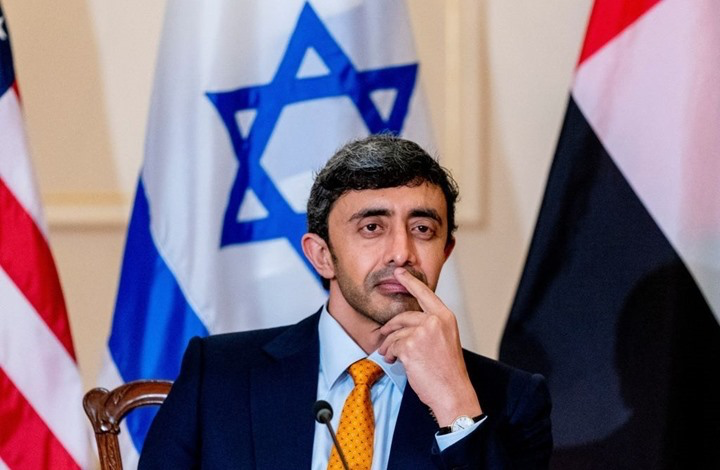
UAE Foreign Minister Abdullah bin Zayed Al Nahyan posted on X , Saturday: “The United Arab Emirates is not ready to support the day after the war in Gaza without the establishment of a Palestinian state.”

Israeli Prime Minister Benjamin Netanyahu published online in May a post-war plan for Gaza, claiming the Palestinians “would enjoy unparalleled prosperity” once it is implemented.

Palestinians in Gaza would run the plan under Israeli occupation, supervised by a coalition of Arab states, including the UAE, Saudi Arabia, Egypt, Bahrain, Jordan and Morocco.

However, the UAE Foreign Minister slammed Netanyahu, saying he “lacked legitimate authority to implement this step or take any similar measures” and making it clear that the UAE was not consulted on the Gaza plans.

“Furthermore, the UAE refuses to be involved in any plan aimed at providing cover for the Israeli presence in the Gaza Strip,” a statement released by the UAE’s Ministry of Foreign Affairs said.

“When a Palestinian government is formed which meets the hopes and aspirations of the brotherly Palestinian people, and is distinguished by integrity, competence and independence, the UAE will be fully prepared to provide all forms of support to that government,” it added.

In late July, the UAE stressed the need for a “temporary international mission” that addresses the enormous humanitarian fallout of the war in Gaza after the war comes to an end.

“Consolidating peace and security and ending the humanitarian suffering should begin by the deployment of a temporary international mission in Gaza with a formal invitation from the Palestinian government,” UAE Minister of State for International Cooperation Reem Al Hashimy told the official WAM news agency.

Al Hashimy added that the mission must put Gaza on a pathway to eventual reunification with the occupied West Bank under the rule of the Palestinian Authority according to the Quds News Network.

Continue reading