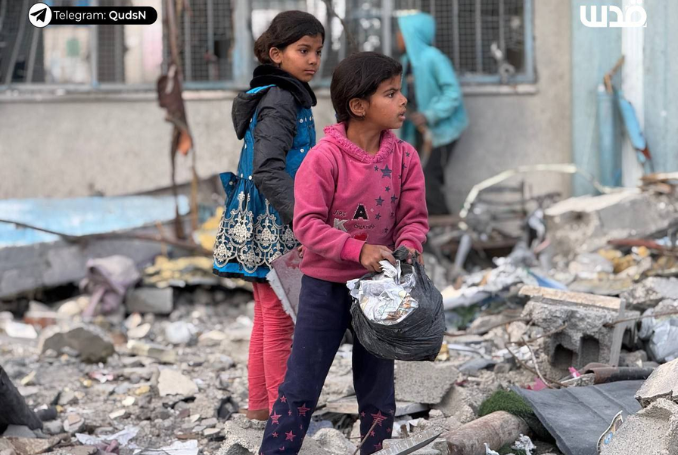
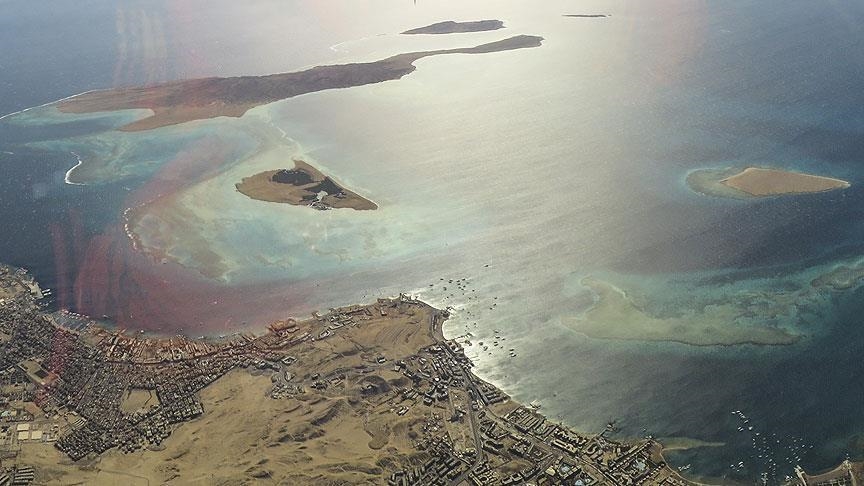
1 in 5 in Gaza Face Starvation

Gazans remain at “critical risk of famine”, UN-backed food security experts warned on Monday, a full 19 months since war began with Israel and 70 days since deliveries stopped of all aid and commercial supplies.

“Goods indispensable for people’s survival are either depleted or expected to run out in the coming weeks…The entire population is facing high levels of acute food insecurity,” said the Integrated Food Security Phase Classification (IPC) platform.

In its latest update, the IPC estimated that one in five people in Gaza – 500,000 – faces starvation.

Prices have soared for basics such as a 25 kilogram sack of wheat flour, which now costs between $235 and $520, representing a 3,000 per cent price spike since February.

“In a scenario of a protracted and large-scale military operation and continuation of the humanitarian and commercial blockade, there would be a critical lack of access to supplies and services that are essential to survival,” the IPC said.

Guterres voices alarm

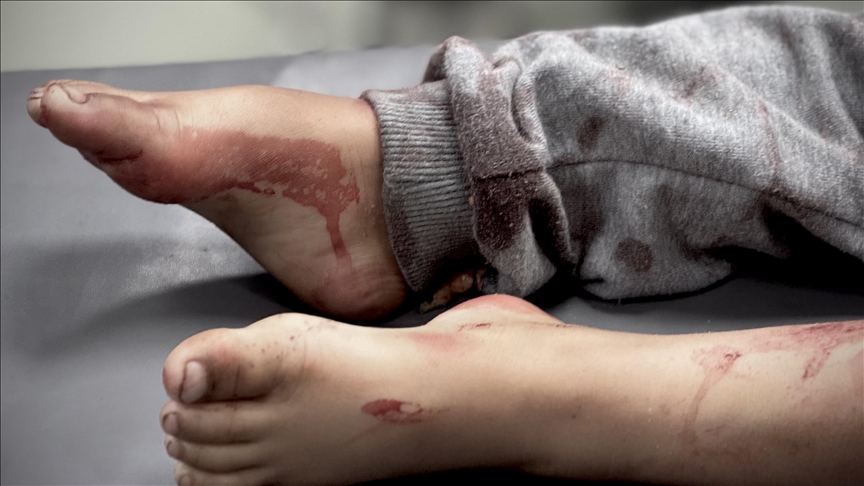
UN Secretary-General António Guterres said he was alarmed by the findings, especially that most children are now facing extreme hunger.

The World Food Programme (WFP) and children’s agency, UNICEFwarned that hunger and malnutrition have intensified sharply since all aid was blocked from entering on 2 March.

WFP chief Cindy McCain said families are starving while the food they need is sitting at the border. “It’s imperative that the international community acts urgently to get aid flowing into Gaza again,” she said. “If we wait until after a famine is confirmed, it will already be too late for many people.”

Aid partners on the ground in Gaza report that the number of hot meals served by those community kitchens that are still operating is declining very quickly. Today, about 260,000 meals have been prepared and delivered across the Gaza Strip. 

That marks a decrease compared to 840,000 meals last Wednesday – a 70 per cent reduction of 580,000 daily meals in just five days.

New strikes on UN shelters

The development comes amid continuing reports of Israeli bombardment across Gaza on Monday. 

On Saturday, another school run by the UN agency for Palestine refugees, UNRWA was hit, this time in Gaza City at around 6.30pm, reportedly killing two people and injuring an unknown number.

All 2.1 million people in Gaza are expected to suffer high levels of acute food insecurity between now and September.

© IPC

A day earlier, four more people were reportedly killed when another UNRWA facility was bombed in Jabalia camp, north Gaza. The agency’s office was “completely destroyed” and three surrounding buildings sustained severe damage, including a distribution centre. There were no supplies in the distribution centre when it was hit, owing to the continuing Israeli blockade, UNRWA said, noting that it ran out of food for Gaza “more than two weeks ago”. 

Echoing the wider aid community’s rejection of the Israeli plan to manage deliveries of food and non-food items across Gaza’s governorates, the IPC deemed it “highly insufficient to meet the population’s essential needs for food, water, shelter and medicine”.

IPC’s assessments help aid agencies decide where needs are greatest around the world. Food insecurity is measured on a scale of one to five, with IPC1 indicating no hunger and IPC5 denoting famine conditions.

According to the latest data, 15 per cent of people in the governorates of Rafah, North Gaza and Gaza are classified as IPC5. Most of the remainder are little better off.

Israel plan scepticism

Amid this disastrous and deteriorating situation, Israel’s proposed distribution plan will likely create “significant access barriers [to aid] for large segments of the population”, the IPC said.

And pointing to Israel’s recently announced large-scale military operation across the Gaza Strip and persistent obstacles impeding the work of aid agencies, it warned that there was “a high risk that ‘Famine (IPC Phase 5)’ will occur” between now and 30 September.

With hunger everywhere, a high number of households have reported having to resort to “extreme coping strategies” such as collecting rubbish to sell for food. But one in four of this number say that “no valuable garbage remains”, while social order “is breaking down” the IPC reported.
UN News

Continue reading
Israel Kills Children as World Looks on

By Luigi Daniele 

Mark these words: South Africa is likely to win the genocide case at the International Court of Justice (ICJ), but by then, it will be too late to save a single civilian life. The time for robust action is now.

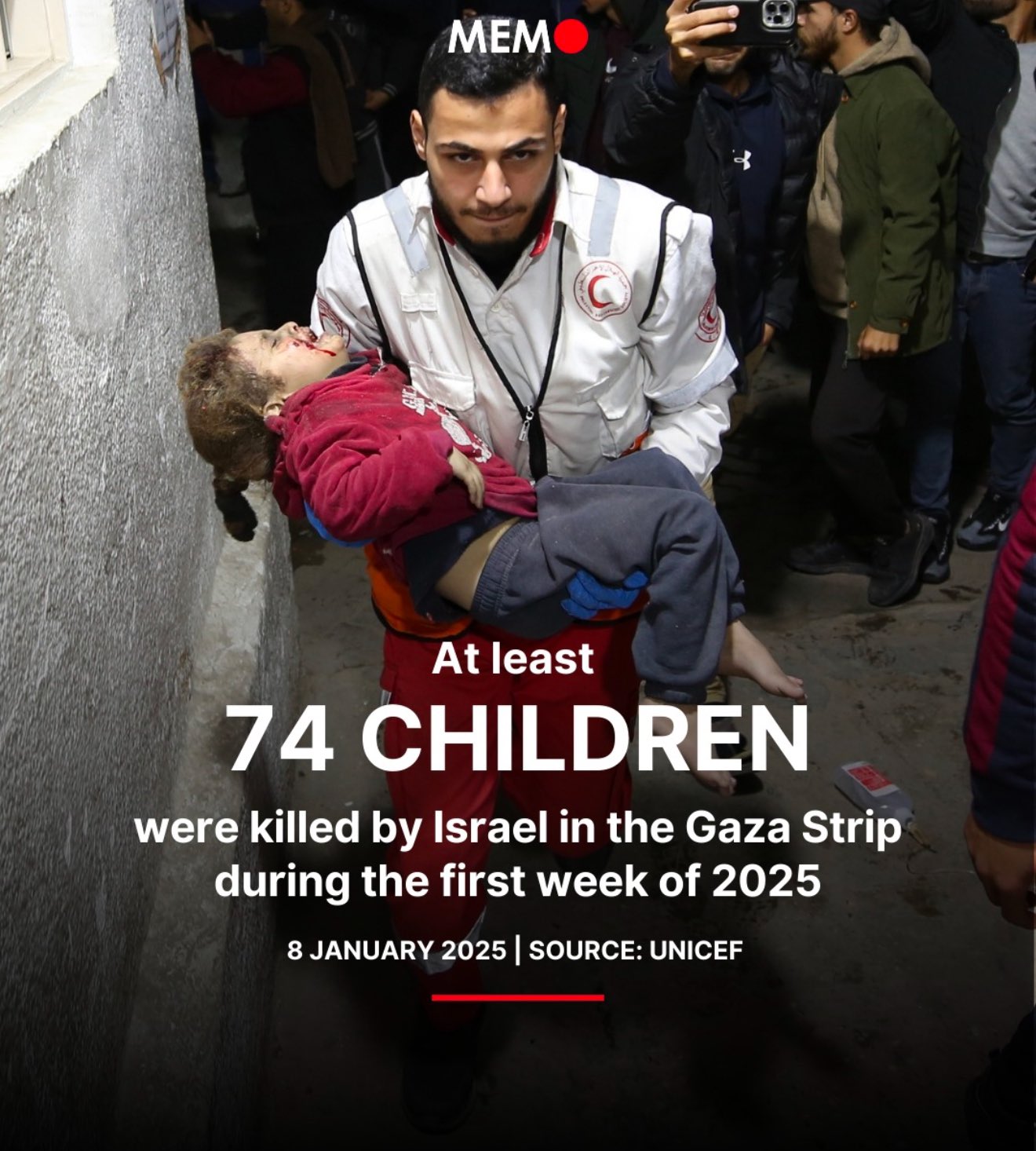
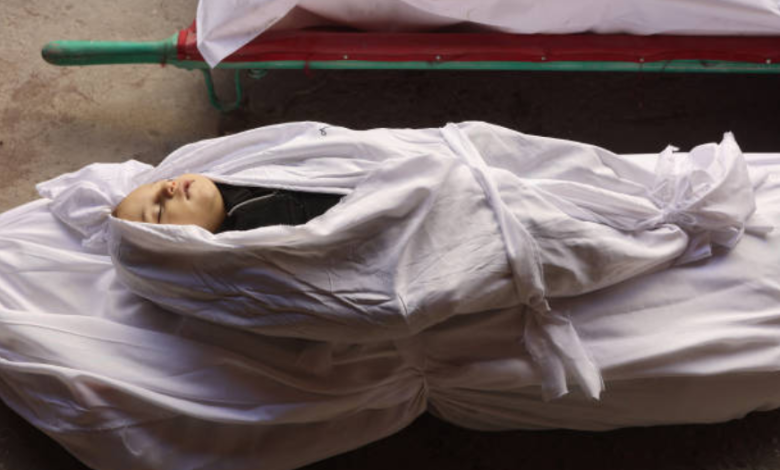
The resumption of the exterminatory Israeli bombardments on Gaza has killed 174 Palestinian children and toddlers in less than 48 hours, according to Defense for Children International. UNICEF has also denounced the killing of more than 130 children in a single day, representing the largest single-day child death toll among Palestinians in years. This may be the deadliest episode in the history of Israeli military actions in Palestine.

Family members of slain Israeli captives, whose names and faces have repeatedly been used to justify further attacks on Palestinians, condemned their government’s actions as another betrayal of the hostages, with Yarden Bibas writing “military pressure endangers the hostages while an agreement brings them home”, and networks of Israeli families declaring Israeli Premier Benjamin Netanyahu chose Ben-Gvir’s return to the government over the return of the hostages from Gaza.

In the midst of this carnage, Israeli ministers declare “a society that tolerates Hamas sympathizers within it has no right to exist,” or ask the very population they are destroying to “return the hostages and remove Hamas” unless they want to pay a “far more severe price” of “total devastation.”

Ideology of destruction

The ideology of the Israeli leadership is becoming increasingly explicit: It promotes the notion that Palestinians deserve elimination and are responsible for their own destruction. It is a paradigmatically genocidal ideology, typical of all the genocides in history, construing the victim group’s existence as undeserved, its survival as an intolerable threat, brutalities against it inherently justified, ‘called for’, and the forcing of the group into inexistence as a way of restoring the natural order of things as they should have always been. After all, key Israeli ministers declared “there is no such thing as a Palestinian people.” Declaring the inexistence of a people equates precisely to posing the premises for its elimination.

The honesty of the genocidal narratives of the Israeli executive, coupled with the use of hunger, thirst, diseases as weapons of war, reinforces crucially the validity of South Africa’s arguments at the ICJ, and of those states intervening in support of those arguments. As an international lawyer, my guess is that South Africa, even more likely after these renewed atrocities, will win the genocide case at the ICJ.

Despite the all-time record of crimes against children, Western states keep refraining from legal action, even those intervening in other ICJ cases to affirm that, in their interpretation of the Genocide Convention, the victimization of children, as the most vulnerable and crucial component of victim groups, should bring special weight in ascertaining the existence of genocidal intent. Beyond hypocrisy and racist double standards, Palestinian children are portrayed as less human and less worthy of protection than other children.

The irresponsibility of political leaders of third states indeed continues to kill. Silent when not complicit, incapable of acting for a single sanction, some are even offering safe harbors from ICC arrest warrants to their political and business partners wanted for war crimes and crimes against humanity, violating their own obligations as state parties of the Rome Statute.

In sum, the lawlessness unleashed on Palestinians is indeed infecting the world (dis)order, and it is evident that Netanyahu has all the interest in descending the entire region into a state of permanent war to stay in power. The global instability deriving from the winds of regional and global wars (in which the EU is diving rather than shifting its disastrous strategic approaches) will inevitably increase authoritarian repressions against dissidents, oppositions, and alternative visions in many of the countries revolving around this tragic abyss of history. War and authoritarianism always nurture each other. It is therefore not only in the interests of the survival of Palestinians, but a political necessity against the oligarchic shifts in our own countries to demand robust action now.

Protecting lives

Palestinians need a humanitarian intervention of a multilateral coalition to protect civilian lives. This presence alone can tackle an alliance of savage powers devaluing the lives of Palestinians as less than human and extracting profits from their massacres now, while preparing to extract more profits from exterminatory wars globally tomorrow. This would offer an immediate opportunity for world powers genuinely committed to reforming the international order towards a new multilateralism based on sovereign equality, self-determination, and peaceful coexistence to prove that their words are not empty slogans.

In other words, the paradox we face is that even the selfish pursuit of national interests—let alone legal or moral obligations—should be enough to trigger decisive action like the one proposed in this reflection.

A multilateral military presence, under UN auspices, to protect Palestinian civilians appears necessary as never before, since none of them will ever be safe under occupation by forces making clear they consider their existence as a people an offense to be redressed by annihilation. Should a coalition of states promote such an action, it would enjoy the support of masses of citizens across the globe, and gain moral leadership in these dark times, marked by the unchecked rise of international criminality.

Luigi Daniele is a senior scholar at Nottingham Trent University

Continue reading
Israel Kills 130 Children in Gaza in a Single-Day – UNICEF

The UN Children’s Fund (UNICEF) chief denounced Israel’s deadly airstrikes against the Gaza Strip on Tuesday, which resulted in “the largest single-day child death toll in the last year.”

“Reports and images emerging from the Gaza Strip following today’s attacks are beyond horrifying. Hundreds of people have reportedly been killed, including more than 130 children, representing the largest single-day child death toll in the last year,” Catherine Russell said in a statement.

Emphasizing that the strikes are not only taking lives, Russell said it is increasing the suffering of already vulnerable populations.

“Some of the strikes reportedly hit makeshift shelters with sleeping children and families, another deadly reminder that nowhere is safe in Gaza,” she said.

Noting the dire humanitarian situation in Gaza, she recalled the Israeli aid blockade. “It has been sixteen days since the last truck delivering humanitarian aid crossed into Gaza. In addition, electricity has been cut to the main desalination plant, significantly reducing the amount of potable water,” she said. “Today, Gaza’s one million children – who have endured more than 15 months of war – have been plunged back into a world of fear and death. The attacks and the violence must stop – now.”

The UNICEF chief called for an immediate cessation of hostilities and urged “all parties to immediately reinstate the ceasefire, and we call on countries with influence to use their leverage to ensure the situation does not further deteriorate.”

“International humanitarian law must be respected by all parties, allowing the immediate provision of humanitarian aid, the protection of civilians, and the release of all hostages,” she said according to Anadolu.

Continue reading
1 Million Kids Need Mental Health Support in Gaza

Meeting a week after a ceasefire paused the war in Gaza, after it raged for almost 470 days, the Security Council discussed the plight of children, with speakers calling for their needs to be prioritized, through the rebuilding of educational infrastructure, the provision of psychosocial support and ensuring a surge of humanitarian aid to the Strip.

“A generation has been traumatized,” Tom Fletcher, Under-Secretary-General for Humanitarian Affairs and Emergency Relief Coordinator, told the Council, pointing to the United Nations Children’s Fund (UNICEF) finding that 1 million children need mental health and psychosocial support for depression, anxiety and suicidal thoughts.

Nonetheless, today’s briefing marks “one of the rare times we are able to highlight positive developments”, he said, with the ceasefire providing a reprieve from relentless hostilities for Palestinians; allowing Israeli hostages and imprisoned Palestinians to be reunited with their families; and allowing a surge in life-saving humanitarian aid into Gaza. “Children have been killed, starved and frozen to death,” he said, adding:

“Some died before their first breath — perishing with their mothers in childbirth.” Citing conservative estimates indicating that over 17,000 children are without their families in Gaza, he stated that an estimated 150,000 pregnant women and new mothers are now in desperate need of health services.

Outlining the UN and its partners’ stepped-up response across the Gaza Strip in recent days to meet the needs of 2 million people across Gaza, he said they were enabled by improved operating conditions, including safe, unobstructed humanitarian access, the absence of hostilities and the almost complete cessation of criminal looting.

Such operations included the provision of life-saving services; delivering food parcels and flour and working to reopen bakeries; and distributing fuel to ensure that critical services, such as healthcare and water pumping, can run on back-up generators, he said, underscoring: “At the centre of this, as always, is United Nations Relief and Works Agency for Palestine Refugees in the Near East (UNRWA).”

He went on to express alarm over the situation in the West Bank, where record-high levels of casualties, displacement and access restrictions witnessed since October 2023 have intensified since the announcement of the ceasefire. Voicing alarm over attacks by Israeli settlers on Palestinian villages and an ongoing military operation in Jenin causing death and displacement, he urged the Council to ensure the ceasefire is maintained and to ensure that international law is respected across the Occupied Palestinian Territory of Gaza and the West Bank, including East Jerusalem.

Restrictions on critical humanitarian items must be lifted, including items considered to be “dual use”, and there must be accountability for atrocities. Underscoring the need to ensure humanitarian operations are well-funded, with the 2025 Flash Appeal in need of $4.07 billion to meet the needs of 3 million people in Gaza and the West Bank, he stressed: “The children of Gaza are not collateral damage”, but deserving of security, education and hope. “They tell us that the world was not there for them through this war. We must be there for them now.”

The Council also heard from Bisan Nateel, from Tamer Institute for Community Education, an organization that helps Palestinian children express themselves through artistic activities, who recounted the “very simple dreams” expressed in drawings by the children she worked with, who “dreamed of going back to school, of playing with friends, and of not hearing constant shelling”.

Instead, she said, they were told to go to the safe place in south Gaza, through a “so-called safe corridor” where their lives were under threat, forced to see bodies along the road, forced to walk as snipers targeted them.

“They arrived unable to say a word about the horrific sights seen in their displacement journey, to a safe area that was targeted,” she said. Displaying a drawing by a child named Gazi when he was in al-Mawasi refugee camp, in which he drew himself feeling well-fed, at home with his father, she said: “But Gazi lost his life, along with his father, when their tent was attacked.”

Also citing the case of a 12-year-old girl in north Gaza, who saw the remains of relatives “torn to pieces” outside her tent, she said that amidst the horror and violence, the children of the Strip forgot “what it means to live, to be human”.

Throughout the conflict, she recalled awaiting news of Security Council meetings on the radio, hoping for a ceasefire that would end the massacres. “Every day we lost our friends, loved ones, our homes and lives,” she said, recalling the death of her friend Mohammed, alongside the children he was drawing and playing with at Al-Maamadani Hospital.

“We used to walk down the streets, not knowing if we would live or die, always waiting for the moment the Council would announce a ceasefire, and end the violations against the Palestinian people, including their right to life, violated during 470 days of continuous attack against Gaza,” she stressed. She voiced hope that Gazans’ “right to life” will he restored, and that children can go back to school, to play, to draw and to sing; to being “normal children in a normal environment, not surrounded by soldiers, and hearing weapons”. In Gaza, “we do not know how life looks like in the outside world,” she said, adding: “We have lost a lot in this war and I hope we will not lose more.”

Reliefweb

Continue reading