‘Sneeze and You Might Well Get Shot’ – UNICEF Man in Gaza

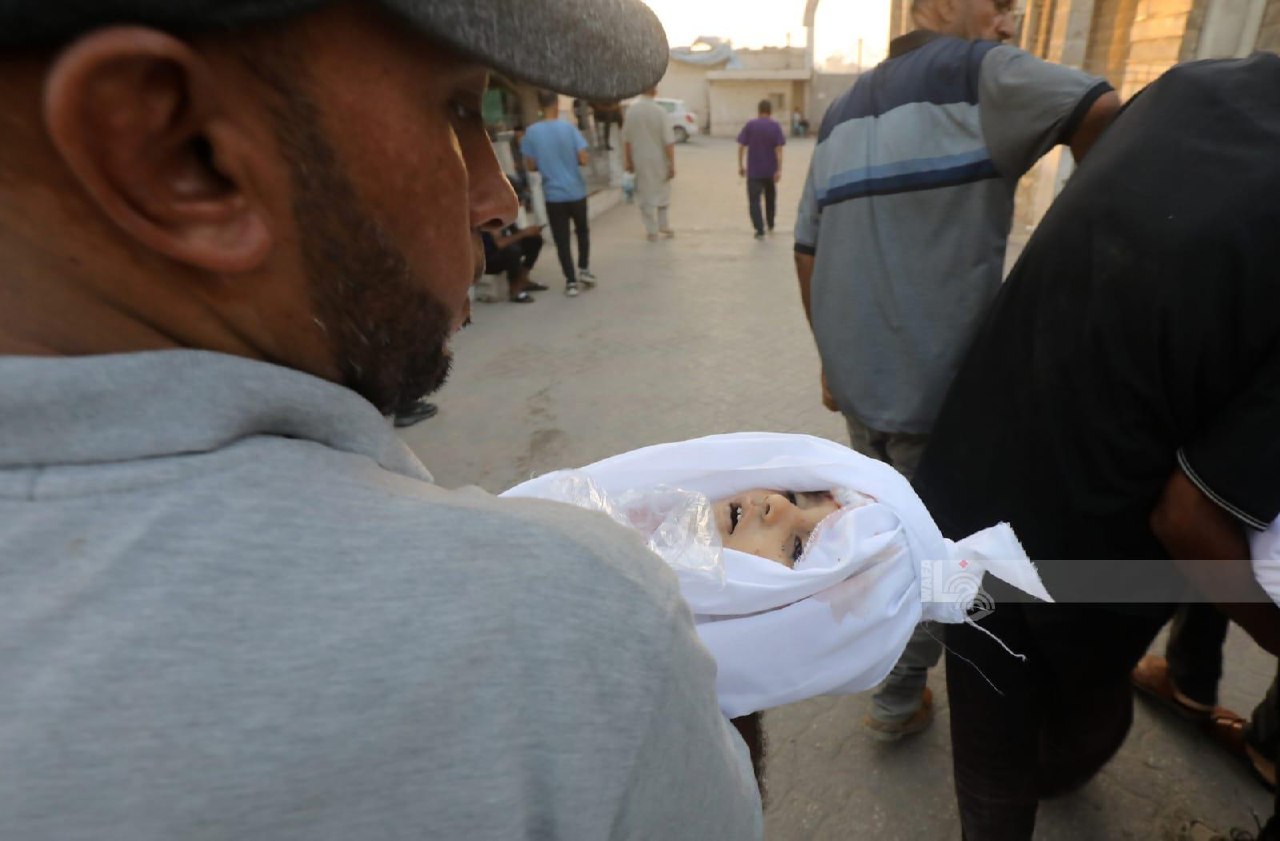
After another deadly night of clashes in Lebanon, aid agencies issued a new alert for Gaza, where 265 Palestinian children have been killed since a ceasefire was announced in October 2025.

During a period supposedly defined by restraint and protection, a child has been killed, on average, every single day for more than eight months,” said UN Children’s Fund (UNICEF) spokesperson James Elder. “That is an absurd and devastating figure.”

Killed while playing

Briefing journalists in Geneva via video from Amman, the UNICEF aid veteran noted that the children “were not killed in a warzone” but rather in their homes, schools while playing football or fishing. 

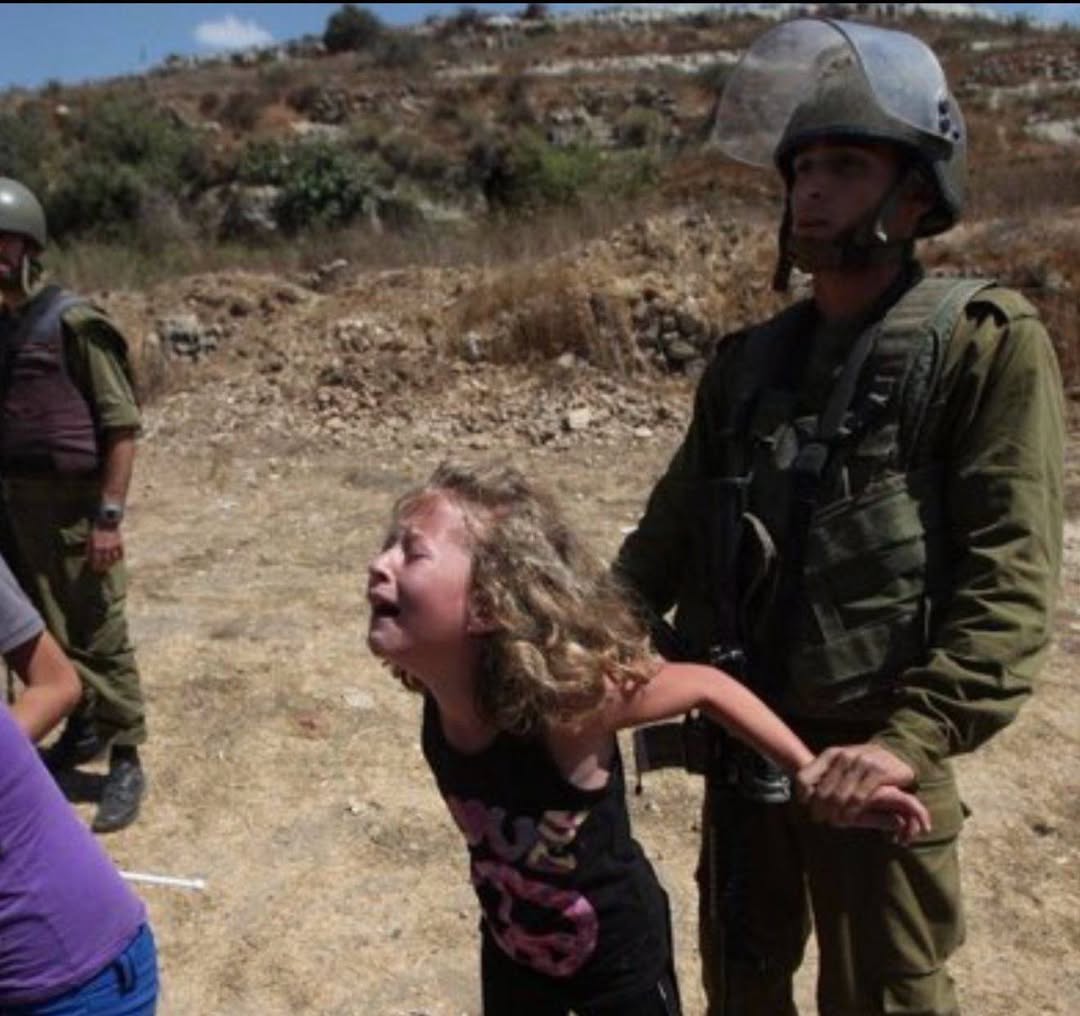
“They were shot, they were bombed, they were struck by quadcopters” operated by the Israeli military, Mr. Elder continued.

The child fatalities are included among the nearly 1,000 Palestinians killed in Gaza and more than 3,100 injured since the ceasefire began, according to the enclave’s health authorities. 

You sneeze near the Orange Line and you may well get shot,” Mr. Elder maintained, referring to the “continual creeping” of Israel’s so-called “Yellow Line” and “Orange Line” boundaries of occupation. 

‘Utter lack of accountability’

The uncertainty of these moving boundaries and “an utter lack of accountability” are the reason for such a high number of killings, with the Israeli forces responsible for “the vast, vast majority – 90 per cent plus”, the UNICEF spokesperson said.

The UN and partners have repeatedly warned that the conflict has had a catastrophic humanitarian impact since war erupted in October 2023, in response to Hamas-led terror attacks on Israel. 

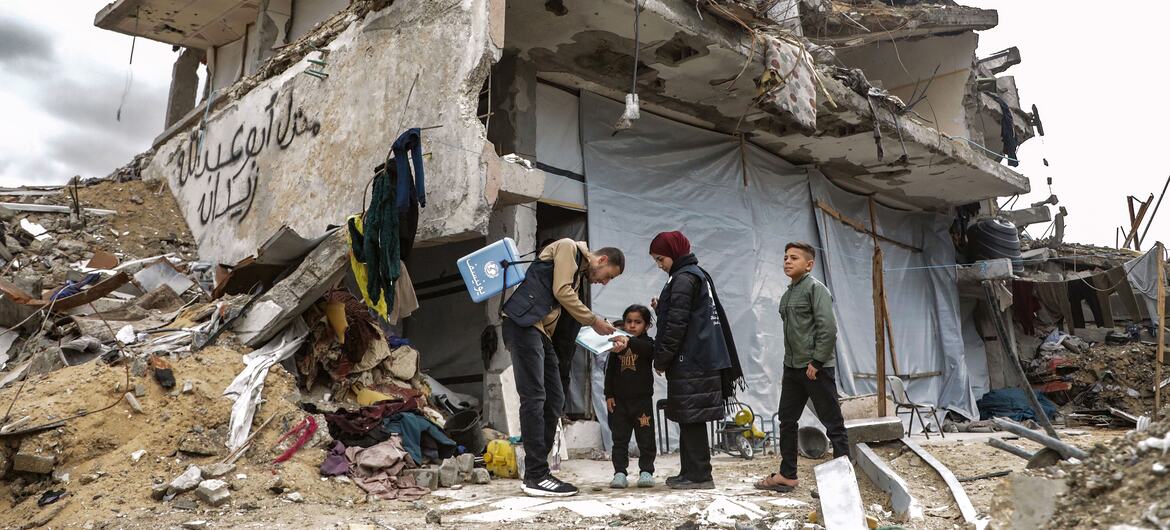
According to the UN World Health Organization (WHO), no hospital is fully operational in Gaza, while UNICEF warns that water remains a daily uncertainty for 1.1 million children.

“I talk to mothers who have children screaming because they don’t have the clean water to wash [their skin]. Imagine a parent unable to fix that night after night,” Mr. Elder said. “The scale of human suffering in Gaza being inflicted upon Gaza and enabled by others on Palestinian children, it’s almost beyond comparison in our lifetime.”

Today, nearly 1.9 million people have been displaced in Gaza, many repeatedly, while more than 1.2 million have lost their homes. 

In an update to the Security Council on Thursday, UN emergency relief chief Tom Fletcher reported that Israeli denial rates for aid missions into Gaza had dropped from 31 per cent before the ceasefire to 11 per cent today. 

Nonetheless, Palestinians in Gaza remain “deprived of the basics that you would all demand for your own families: safety, shelter, clean water, healthcare, education”, he stressed.

Mr. Elder echoed that dire assessment, explaining that although some fuel is reaching generators still in working order, the Israeli authorities are not allowing spare parts into the enclave to fix broken machines, nor the oil needed to keep engines running smoothly. 

“This is the environment my colleagues on the ground work in, keeping children breathing without a semblance of dignity,” he said.

Other major problems continue to go unresolved in Gaza caused by delays and denials of aid deliveries, not least the massive amount of solid waste still piling up, said Jens Laerke, spokesperson for the UN aid coordination office, OCHA.

“We’ve all heard the stories about the rats, the insects, and so on and so forth, that this causes. So, there is an opportunity, there is a possibility to get rid of all that, but we are not getting the access to it,” he told journalists in Geneva.

More killing in Lebanon 

The OCHA spokesperson also condemned the continuing flare-up in Lebanon overnight, with reports of at least 18 people killed in Israeli airstrikes in the south targeting Hezbollah fighters. 

We are seeing the same reports overnight, of course, with enormous concern, frankly…more fighting is not going to help anyone,” Mr. Laerke said, highlighting the high level of humanitarian needs across Lebanon and particularly in the south.

“It is infinitely easier and faster to hurt people and inflict damage than it is to restore people’s livelihoods, get them back to their homes, feed them and so on and so forth. There’s just one or two days of this kind of warfare that translate into months, sometimes years, of humanitarian operations on the ground.”

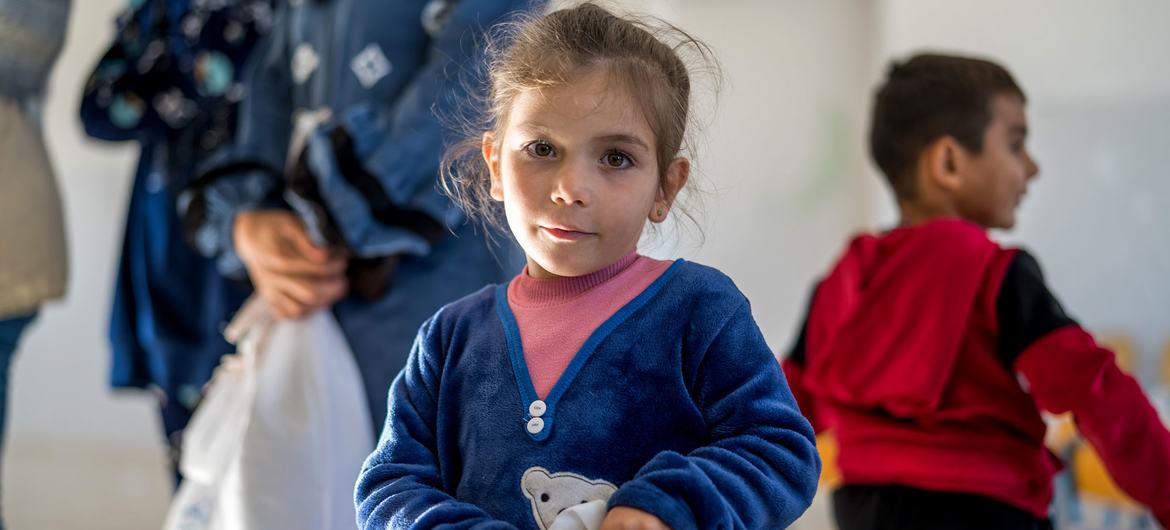
According to UNICEF, more than 770,000 children are experiencing heightened distress after repeated exposure to violence, loss and displacement. UN News

Continue reading
On ‘Average 12 Children Are Killed…Maimed Every Day,’ – UNICEF Chief in Lebanon

“For more than three months, children in Lebanon have lived through experiences no child should ever endure. Many have fled their homes multiple times, witnessed violence first-hand, lost loved ones, and seen their schools, communities, and sense of safety shattered,” said UNICEF’s Country Representative in Lebanon Marcoluigi Corsi.

“After over 100 days of increased hostilities – since 2 March – 247 children have been killed and 992 injured, an average of 12 children killed or maimed every day. Behind these staggering figures are lives cut short or forever changed, and families facing profound loss, trauma, and uncertainty,” he added in a statement released Wednesday.

“The numbers alone cannot convey the full scale of the crisis. Beyond those killed and maimed, an entire generation of children has seen its childhood disrupted. Their sense of safety – one that every child needs to grow and thrive – remains profoundly undermined,” Corsi pointed out.

“With renewed hope for hostilities to halt, children need more than an end to violence – they require protection, sustained support to restore access to essential services, and to be offered a consistent pathway to recovery and a safer future,” he continued.

“Widespread destruction remains across large parts of the country, affecting homes, schools, and essential services – including water, sanitation and hygiene systems – further compounding already severe humanitarian needs,” the UNICEF country representative stressed. 

“More than 770,000 children are experiencing heightened distress from repeated exposure to violence, loss and displacement. Many remain unable to return home because of ongoing fighting and the threat of unexploded ordnance,” Corsi continued.

“The scale of physical and psychological harm we are witnessing is unacceptable, and children continue to pay a terrible price for this conflict. Ending the violence is essential to restore access to education and other basic services and provide children with a pathway to recovery and a safer future. The true cost of this crisis will not only be measured in lives lost today, but in the opportunities missed tomorrow. Without sustained support, many children risk carrying the consequences of this war with them for years to come,” the UNICEF Chief in Beirut believes.

UNICEF reiterates its urgent call for a sustained cessation of hostilities. Children need to be protected from further harm and schools, hospitals, water systems and other civilian infrastructure urgently safeguarded. Humanitarian access must be ensured and international law must be respected.

“Most importantly, Lebanon’s children must be given the chance not only to survive this crisis, but to recover from it and reclaim the future that conflict has placed at risk,” Corsi concluded.

Continue reading
Lebanon: Israel Kills 3,884 Civilians, Injures 11,856

The Lebanese Health Ministry announced the total death toll from the Israeli military offensive, from 2 March to 17 June, 2026, rose to 3,884 martyrs and 11,856 people injured.

The Health Ministry stated, Thursday, these figures are the documented cumulative toll of victims from 2 March to 17 June, 2026, amidst the ongoing Israeli military operations and airstrikes on different Lebanese regions.

Israeli airstrikes and shelling are targeting towns and villages in southern Lebanon. This is whilst there are direct attacks on civilian vehicles, including the targeting of a car in the southern town of Zifta.

On the humanitarian front, reports issued by UNICEF indicate that the Israeli offensive is causing, on average, the death and injury of 11 children every day.

These developments coincide with intensive diplomatic and regional efforts aimed at reaching understandings to halt the fighting and end the military escalation on the Lebanese front.

Diplomatic circles have circulated information about anticipated meetings and negotiations between Lebanon and Israel, directly or indirectly, in Washington between 23-25 June, to discuss withdrawal and the cessation of military operations.

This escalation coincides with discussions and leaks regarding a non-binding memorandum of understanding between the United States and Iran, with Tehran asserting that any progress in the negotiation process requires a complete end to the war in Lebanon.

In the international context, diplomatic sources spoke of American pressure on Israel to adhere to the ceasefire, while France called for the immediate implementation of agreements related to de-escalation and respect for Lebanese sovereignty.

On the other hand, Hezbollah Secretary General Sheikh Naim Qassem affirmed the party’s adherence to its positions and stressing his rejection of the disarmament of the group.

Continue reading
A Child Killed Everyday in Ceasefire Gaza

Airstrikes, drone attacks and hypothermia continue in Gaza despite the ceasefire, with more than 100 youngsters killed since early October, the UN Children’s Fund (UNICEF) said on Tuesday.

“That’s roughly a girl or a boy killed here every day during a ceasefire,” UNICEF spokesperson James Elder told reporters in Geneva.

“These children are killed from airstrikes, drone strikes, including suicide drones,” he said, speaking from Gaza City. “They’re killed from tank shelling, they’re killed from live ammunition, they’re killed from [remote-controlled] quadcopters.”

Mr. Elder pointed out that more children have also died of hypothermia in the last few days, as harsh winter conditions expose the most vulnerable Gazans. 

Sheer cold kills six children

“We’ve now gone to six children who died of hypothermia just this winter,” he said. “I wish I could take a camera and show you 30, 40-kilometre [per hour] winds ripping through tents on the beach. It’s bitterly cold, it’s bitterly wet.”

The UNICEF spokesperson stressed that the ceasefire has allowed “genuine progress” in primary healthcare, with UNICEF and partners setting up the first health clinics in the north of the Strip and expanding immunization services. 

But desperately needed medical evacuations of children remain at a standstill.

Mr. Elder noted “no noticeable improvement” both on approvals to get children with life-threatening injuries out of Gaza and in convincing more host countries take in the young patients.

He said that in his latest mission to the enclave, he spoke to many children and families denied evacuation despite completing an arduous, formal process.

These included a nine-year-old with shrapnel lodged in his eye who “will lose sight in an eye, maybe both”, a girl in Al Shifa hospital in Gaza City who “may well die” and another child whose leg needs amputating. “All three of those are absolute candidates for medical evacuation; all three of those have so far been denied,” Mr. Elder explained.

Before war erupted in Gaza following Hamas-led attacks in Israel on 7 October 2023, between 50 and 100 patients were evacuated from the enclave every day, according to the UN World Health Organization (WHO).

In an alert on Tuesday, the agency warned that extensive clearance procedures by the Israeli authorities continue to cause delays to deliveries of medicine and food. 

“Some essential medical items are classified as ‘dual-use’ and denied entry,” WHO said in a post on X, in reference to goods that are primarily intended for civilian use but which the Israeli authorities believe could be diverted by Hamas or other militant groups for military purposes.

International NGO ban looms

The UNICEF spokesperson also highlighted the dangers of a recent Israeli ban on international NGOs, which will come into effect in the coming month and mean “blocking life-saving assistance”, he alleged. Mr. Elder also stressed the importance of allowing international media into the enclave, which has not been granted despite the ceasefire.

“There needs to be a lot more pressure on allowing international journalists to come in,” he said. “This is my seventh mission [to Gaza] and every time I see the 360-degree devastation, flattening of homes, my jaw drops.”

“It is absolutely as staggering yesterday as it was the first time I saw it more than two years ago,” he insisted.

Mr. Elder warned that two years of war have “left life for Gaza’s children unimaginably hard,” explaining that “the psychological damage remains untreated, and it’s becoming deeper and harder to heal, the longer this goes on”.

“A ceasefire that slows the bombs is progress, but one that still buries children is not enough,” he concluded as reported in UN News.

Continue reading
UNICEF: 82 Kids Killed in Gaza Since Ceasefire

At least 82 children have reportedly been killed in Gaza since a ceasefire took effect in October, UNICEF said on Friday, warning of what it described as a “staggering pattern” of violence.

Speaking to reporters in Geneva, UNICEF spokesperson Ricardo Pires said: “UNICEF knows that reportedly, now, 82 children have been killed in Gaza since the 10th of October, which, again, is a staggering pattern, and it needs to stop.”

According to Gaza’s media office, at least 386 people have been killed and 980 others injured by Israeli army fire since the truce according to Anadolu.

The UN human rights office also reported more than 350 attacks since the ceasefire took effect, saying: “They were all in the vicinity of the so-called ‘yellow line,’ with at least 121 Palestinians killed, including seven women, 30 children and many other injuries.”

Although a ceasefire took effect on Oct. 10, living conditions in Gaza have not improved, as Israel continues to impose strict restrictions on the entry of aid trucks, violating the humanitarian protocol of the agreement.

Israel has killed more than 70,000 people, mostly women and children, and injured over 171,000 others in attacks in Gaza since October 2023, which have continued despite the truce.

Continue reading