Analysts: US Fails on Houthis After Six Weeks of Bombing

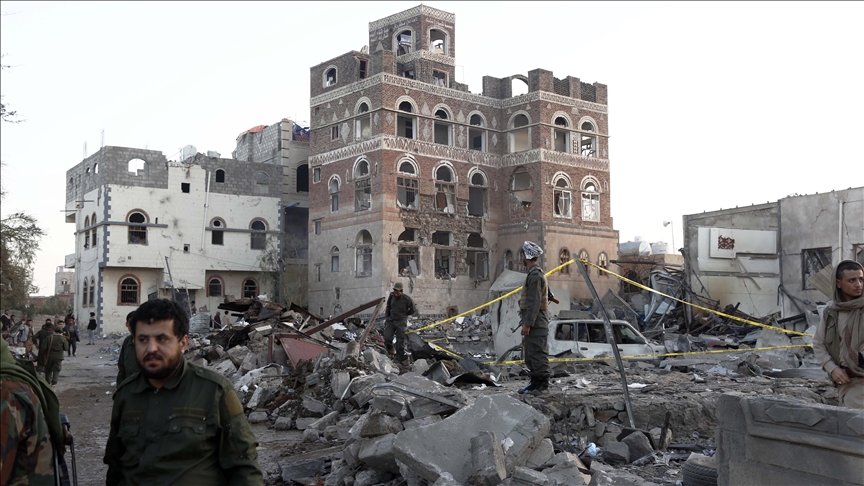
After nearly six weeks of intensive US airstrikes on different areas and cities of Yemen the Houthi Ansar Allah continues to assert that its military operations in the Red Sea and against Israeli targets will not stop until the ongoing Israeli war on the Gaza Strip ends.

Houthi military spokesman Yahya Saree, Saturday, announced the targeting of the Israeli Nevatim Air Base in the Negev with a ballistic missile, as well as two other sites in the Tel Aviv and Ashkelon areas and the targeting of warships on the US aircraft carrier SS Harry Truman in the northern Red Sea are just part of the continuing ongoing military strikes.

However in response to these attacks the US aircraft launched two airstrikes last Friday night on the Ras Isa oil port in the coastal province of Al Hudaydah, which Washington considers a major source of fuel used to finance the Ansar Allah group’s activities.

According to Dr Liqaa Makki, senior researcher at the Al Jazeera Center for Studies, the USA has failed miserably in its strikes against the Houthis because of its inability to move to the second phase. He said that as a result they are  discussing an alternative scenario for this military campaign against the Houthis.

Makki believes that US President Donald Trump has reached a dead end, and that the ceiling he set regarding the Houthis is proven unrealistic, pointing out the United States, despite its military strength, is failing in Yemen because it is fighting a group, not a state.

On the other hand, military and strategic expert Brigadier-General Elias Hanna, believes that both sides are losing, whilst the image of the United States is being damaged, given the scale of the US military campaign and Trump’s engagement with the Houthis, who previously declared that  “we [US] will withdraw from all the world’s wars.”

Reports estimate the cost of the airstrikes carried out by the US military on Houthi positions amounted to approximately $1 billion in the first three weeks of the military campaign alone.

The Associated Press reported the value of the seven downed American drones made by the Houthis exceed $200 million, and the continued loss of American drones makes it difficult for the US leadership to accurately determine the extent of the damage to the Houthis’ weapons stockpiles.

Brigadier-General Hanna said that Washington lacks a comprehensive strategy in its dealings with the Houthis, and that the political goal it announced—restoring deterrence and opening shipping lanes—has not been achieved.

He also pointed out the US military is targeting the centers of gravity within the Houthi military system to disrupt it, a strategy Israel has used with the Palestinian resistance but has failed to achieve.

Appeasing the Houthis

In light of Washington’s inability to achieve its goals against the Houthis, Brigadier-General Hanna believes the pressure being exerted on Israeli Prime Minister Benjamin Netanyahu regarding the entry of aid into the Gaza Strip is part of an effort to appease the Houthis so that they will halt their operations in the Red Sea and against Israeli targets.

Trump’s upcoming visit to the region also requires a de-escalation. According to the military and strategic expert, the US president cannot arrive while the Houthis are launching missiles.

In the same context, the senior Al Jazeera’s Makki expects  that a Gaza ceasefire will soon be reached before Trump’s visit, allowing the Houthis to halt their operations as they have initially linked the cessation of their operations to an end to the war on Gaza and to the cessation of US strikes against them.

American officials have previously revealed to CNN that the US military has struck more than 700 Houthi targets and carried out 300 airstrikes since the campaign began in mid-March, “forcing them underground and creating confusion and chaos within their ranks.”

Continue reading
US Warplanes Makes 1200 Strikes on Yemen Since 15 March

US warplanes launched 1200 airstrikes on Yemen since 15 March the Houthis announced on Friday. The Houthis stated the airstrikes resulted in the killing and wounding hundreds of civilians.

In a statement by the Houthi Foreign Ministry stated the United States ” launched more than 1,200 airstrikes and naval bombardments since mid-March, resulting in the death and injury of hundreds of civilians and the destruction of numerous civilian objects, including residential neighborhoods, ports, health facilities, water tanks, and archaeological sites, in flagrant violation of international law and international humanitarian law.”

It indicated that what the USA is doing in Yemen is “full-fledged aggression and a flagrant violation of the UN Charter and all international norms and conventions.”

The statement considered that Washington is trying, in a “miserable attempt to evade its responsibility for the crimes it is committing in Yemen.”

The group accused Washington of “working to cover up its sinful aggression against Yemen and its crimes against civilians and civilian objects, which are shameful to humanity, as well as its abject failure,” according to Anadolu.

On 15 March, the United States resumed its attacks on Yemen after President Donald Trump ordered his military to launch a “major attack” against the Houthi group, before threatening to “completely eliminate” them.

However, the group ignored Trump’s threat and resumed bombing sites inside Israel and ships in the Red Sea heading to Israel, in response to Tel Aviv’s resumption of its war of extermination against Palestinians in the Gaza Strip, which began on 18 March.

With full American support, Israel has been committing genocide in Gaza since October 7, 2023, leaving more than 168,000 Palestinians dead and wounded, most of them children and women, and more than 11,000 missing.

Continue reading
Houthi Missiles, Trump and The Israeli depth

The Houthis are back firing at the heart of the Israeli depth. The military escalation is increasing despite US President Donald Trump’s warning that the Yemeni group, also called Ansar Allah, are set to be destroyed. But there is no proof of that as yet!

Ever since Israel restarted its military campaign on Gaza on 19 March, exactly two months after it ceased its military operations on the enclave, the Houthis reinitiated its trajectories, drones and hypersonic missiles on Israel. It adopted an eye-for-eye point of view — that is as long as Israel stops humanitarian aid to Gaza, Houthi missiles would continue on the Zionist state. 

The latest Houthi ballistic missiles were fired Wednesday during the day, a first-time shocker for these trajectories are delivered in the middle of the night. It was reported by the Hebrew media that millions hurried to underground shelters where sirens went off in 250 cities, towns, and settlements to the chagrin of many Israelis whose lives were turned upside down in the war on Gaza.

Wednesday will be remembered as a hard day for many as the ballistic missiles, which according to the Israeli army were intercepted and shot down from the air by counter trajectories. Such a series of Israeli military actions sent an intense amount of debris hurling down across a wide area of central and southern Israel including in Jewish settlements in the occupied West Bank.

Analysts are saying it’s back to the old days of attempting to readdress the strategic equilibrium of Houthis and Hezbollah missiles targeting the Israeli depth. While Hezbollah is on the border with Lebanon, the Houthi missiles, and their success in reaching their targets, were fired all the way from Yemen, 2000 kilometers away into Israel.

This time, and like before during the course of 2024 where hundreds of trajectories were fired on the Zionist entity, the hypersonic missile was meant for the Ben-Gurion Airport, a busy hub for international travelers. Because of the timing of the trajectories it was reported that a significant number of the incoming planes had to be diverted and re-routed to Larnaca in Cyprus as a stopover and wait for the calm to set in.

Again this is a first-time development because the disruption usually lasted for no more than 30 minutes whilst this time around it paralyzed the airport and its aviation systems and meant to send a Houthi signal to the Israelis and their American allies especially, that this would be the status quo from now on unless the onslaught on Gaza is stopped and humanitarian aid allowed in the enclave.

Today, the incoming missiles on the different parts of Israel have been almost daily, at least for the last one week. This is seen as a signal that a new and forceful strategic approach is being adopted by the Houthis who are daring the Americans despite their daily military strikes on Yemen that Israel would continue to be a legitimate target.

The American navy through its USS Harry Truman destroyer in the Red Sea is striking Yemen with such force and vehemence whilst assuring the Israelis that they will do the job and end the Houthi presence.

But this is not having the military effect the Americans would like it to have for Yemen is a big country with its harsh setting and difficult geographical terrain that makes such strikes seem like ‘bee stings” rather than painful blows. On Tuesday, the US struck different locations in Yemen 17 times and before that the strikes were carried out with the same level of intensity.

But the Houthis are not being brought to their knees, a proving fact that has cost the preceding Biden administration an estimated $2 billion to attempt to rein in the Houthis but with no apparent success despite the level of destruction inside the country for Yemenis, across-the-board, and not just the Houthis, have proven to be a formidable force over the years.

It’s still too early to see for how long Trump will follow in the footsteps made by former US president Joe Biden. This is bearing in mind that the new man in the White House doesn’t like to spend US money and therefore will likely lose steam as the days pass bye and especially because the Houthis started to target the US destroyer and any other ships going to Israel with the group determined to continue to upset the international trading system unless their is a reprieve on Gaza.

The above-analysis is written by Dr Marwan Asmar, chief editor of the crossfirearabia.com website.

Continue reading
Al-Duwairi: Houthi Missiles on Tel Aviv Confirms Failure of US Airstrikes on Yemen

The missiles launched by the Houthis at Israel do not make a significant military difference, according to military expert Major-General Fayez al-Duwairi. However, he said they confirm the failure of the US airstrikes to destroy the group’s capabilities and reveal the contradictions in Israeli statements regarding the interception of these missiles.

In an analysis of the military situation on Al Jazeera, al-Duwairi asserts that the Israeli military’s statement about the interception of the missile launched, Monday, before it entered Israeli airspace contradicts its statement about interceptor debris falling west of Jerusalem and south of Tel Aviv.

The fact that these debris fell on these areas, in al-Duwairi’s opinion, means that the missile bypassed Israeli air defenses, whilst confirming the Houthis’ possession of sonic missile technology. He added that this is something not many countries possess.

The fact that air raid sirens sounded only in Jerusalem and greater Tel Aviv, but not in the rest of Israel, confirms that the missile was not detected until it reached these specific areas, al-Duwairi said.

Confusion in Israeli Society


Whilst the Houthi missiles will not bring about a military change, according to the strategic expert, they put Israeli society on almost daily alert, disrupting daily life, and proving that the intensive US air campaign has not prevented the Houthis from launching attacks.

The Houthis’ launch of an eighth missile in just a few days demonstrates the failure of intensive US strikes to stop these attacks. The failure of Israeli defenses to detect the missiles before they entered Israeli airspace is a qualitative advantage for this Yemeni group.

As for the missiles that the Palestinian resistance has begun launching in the past few days, they carry more political than military messages, according to al-Duwairi, because it is impossible to compare the resistance’s capabilities today with those of the beginning of the war nearly 18 months ago.

However, the resistance’s ability to bombard greater Tel Aviv, as it did two days ago, confirms that it has a stockpile of missiles capable of causing disruption within Israel.

Yesterday evening, the Israeli Home Front Command announced that air raid sirens sounded in Jerusalem and its suburbs, as well as in more than 200 towns and cities in central Israel, as a result of a missile launched from Yemen.

The Israeli military said it intercepted the missile with its Arrow missile system before it entered airspace. However, sources confirmed to Al Jazeera that explosions were heard in areas of Tel Aviv, Jerusalem, and the coastal region south of Tel Aviv following the launch of a missile from Yemen.

Continue reading
Israel, Trump and the Latest Bombing of Gaza

Israel relaunched its bloody war on Gaza, with vehemence and callousness and with the blessing of the Donald Trump administration in the White House.

Its back to the “good old bloody days” of murder, mayhem and slaughter of mostly innocent women and children who have no part in the current war waged between Israel and Hamas.

Unwilling to quench its thirst for blood, Israel relaunched its war on the 364-kilometer Gaza Strip by killing over 322 people in the first five hours of early morning Tuesday while everyone was fast asleep.

Up until then it has been a “slight” rest bite reached through a ceasefire on 19 January between Hamas and Israel through US, Qatari and Egyptian mediators bringing an end to the daily killing of Gazans that today stands at 48,500 people.

Everyone is asking if the ceasefire is wrecked and stands in ruin on day 525, the total length of the carnage started on the people of Gaza soon after 7 October 2023, when about 1200 Israelis were killed.

Whatever the politics of the recent war, it has become amply clear the Israel slaughter has not been aimed at Hamas fighters, which it couldn’t eradicate even after 15 months of war on the Islamic organization but resulted in the mass killing of the women and children of Gaza.

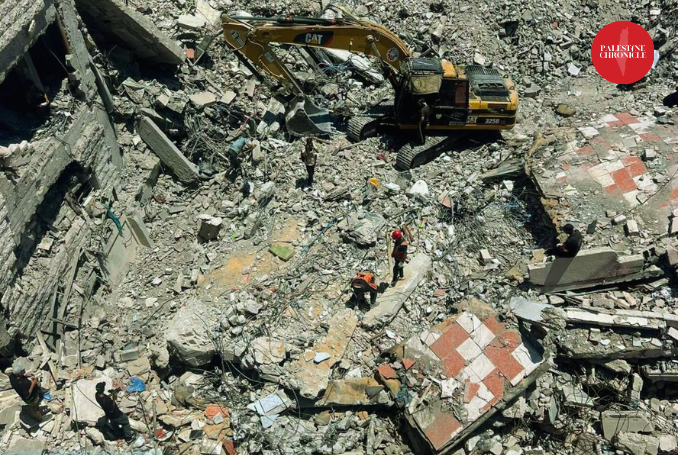
The latest spate of dropping bombs on the people of Gaza, facilitated by the United States which stands as complicit in this genocide, sees no end light, but is seen as just the beginning although Gaza and its infrastructure is already annihilated with its people displaced and living in the wild and under the skies.

The world stands and waits to see, if the genocide will continue from this day onwards, or is it just a pressure tool to get Hamas to release the 59 or so Israeli prisoners it currently holds. If the latter is the case however, Hamas has long shown, it has a long breath and will not release the prisoners that originally were around 250 and now stands at the current number through exchange deals with the fact that the Israeli army has killed around 23 of them in failed rescue operations.

The latest bombings, carried from the air starting from the south of the strip on the southern city of Rafah, Nuseirat, Al Shati and Maghazi camps, and Deir Al Balah in the center of the enclave, including Gaza city and the destroyed northern areas, speaks of dark days are expected ahead.

Hamas are yet to respond militarily. There are couple of issues to consider here. Hamas officials have been talking to the Trump administration officials in the last couple of weeks about different paths.

Will that continue, particularly after this bloody debacle. Prime Minister Benjamin Netanyahu, who long wanted to destroy Hamas, and thus the war to continue, said this time around, the latest military operation in Gaza is being carried out “in consultation” with Trump and his associates.

If this is the case, the latest Israeli deadly spate, may not last long, particularly because Trump is on record of stating that he doesn’t want the war to continue but wants to end it which means he will not continue to supply Israel with weapons indefinitely and there will come a time when he will stop.

But that might be a while before that and he may continue to tolerate the mass bombing of Gaza. However, since he is talking to different parties through his envoy Steve Witkoff, he will likely “manage” what Israel continues to militarily do in the Gaza Strip and be involved in a “stop-go” war process.

The problem with Trump is that also he is looking for different objectives in Gaza. He first wanted to displace its 2.2 million people to neighboring countries like Jordan and Egypt. Now, he appears to be retracting from this position because of Arab and world pressure.  

Will he backdown and order Israel for a quick “fix” and or let the war on Gaza continue by which time Hamas, will once again, start fighting Israel again, both in the Strip and through endlessly targeting its major cities, towns, settlements for the past 15 months.

Despite the fact that Trump said that “all hell will break lose” on Gaza if the war doesn’t stop and Hamas is not brought to heed, the US president is choosing to forget the Houthis, despite mass bombing them in the last couple of days. They promised they will continue to strike Israel if it continues to stand as an obstacle to humanitarian and food delivery to Israel and will not be deterred by US and British bombing of Yemen. And to prove their point, a ballistic missile was fired on the same day, Tuesday, after the Israeli bombing of the Strip.

Hence what Trump wants and what he will get on the ground are two different things. His wish to end the Israel-Hamas war and establish a “new Gaza” will not be achieved through parochial thinking.

The Palestinians are on the ground, they have no wish to go anywhere while Hamas continues to have a formidable fighting capability and have no qualms to going back to war. The fact they are talking to the mediating parties, including the US doesn’t mean they are ready to put their guns down and leave the grounds of Gaza.

Netanyahu must realize that unless he wants the whole Middle East region to be engaged in a perpetual long-term war. The question is Trump and the United States military establishment prepared for that?

The above-analysis is written by Dr Marwan Asmar, chief editor of the crossfirearabia.com website.

Continue reading