Israeli Army Fails in Ground Campaign in Lebanon

On 1 October, Israel announced the start of its ground military operation into Lebanon, which included air strikes, artillery shelling, and assassinations, but the Israeli occupation army has not yet been able to position itself in any village or town its soldiers have entered due to the resistance from Hezbollah fighters.

High Death Toll

According to Hezbollah the toll of Israeli army losses since the start of what it called the “ground maneuver in southern Lebanon” reached more than 100 dead and 1,000 wounded officers and soldiers, in addition to the destruction of 43 Merkava tanks, 8 military bulldozers, 2 Hummer vehicles, 2 armored vehicles, and 2 personnel carriers, and the downing of 4 Hermes 450 drones, and 2 Hermes 900 drones.

Despite talk of an imminent truce, Israel is still continuing its military escalation and announced the start of a second phase of the “ground incursion” targeting Lebanese villages outside the scope of its first operation in the south of the country.

Military experts told Al Jazeera Israel was surprised by the intensity of the resistance it faced during the ground incursion, despite its success in assassinating a large number of military leaders at the first and second levels.

This partial success prompted it to modify its strategy and shift to a new tactic based on entering areas, booby-trapping buildings, then detonating them, and quickly withdrawing to avoid further human losses, especially after the resistance succeeded in setting up ambushes.

Why has the Israeli army not been able to occupy any Lebanese village despite the military buildup on the northern border for more than a month?

Unable to occupy a single village

Military expert Brigadier-General Hassan Jouni confirmed to Al Jazeera the Israeli military buildup. Despite its five divisions with between 50,000 and 60,000 soldiers according to the Hebrew media, the Israeli army was unable to occupy a single village. He explained there is a fundamental difference in military science between the concepts of raid and occupation.

According to Jouni, a raid is defined as an advance towards a specific target with the aim of detonating or booby-trapping it or carrying out a security or military mission, such as arresting or liquidating someone, followed by a rapid withdrawal. Occupation means controlling a specific target and positioning oneself there, while establishing defensive centres to protect it.

Regarding the events in the south, he considered that what happened was advanced raids targeting specific villages with the aim of destroying them and withdrawing without the intention of remaining.

Jouni pointed out the Israeli decision not to station themselves in those locations came as a result of the fierce resistance their forces faced there, as they realized that any attempt to remain would make them vulnerable to continuous attacks by the resistance, which intensified its targeting of their movements towards the border villages and towns with artillery and missiles.

Does this situation reflect the strength of the Lebanese resistance and/or is it a military strategy followed by the occupation army?

According to Jouni the concentrated ground operation aimed to penetrate deep into Lebanese territory to reach the Litani River, especially after the harsh strikes against the Hezbollah leadership. However, Israel, after believing the resistance had been exhausted, was surprised by its intensity and steadfastness, which prompted it to modify its strategies. Therefore, the actual penetration was less than expected and was limited to a depth of no more than three kilometers.

What is the military significance of the strategy of the occupation army entering border villages and booby-trapping them without completely occupying them?

Blowing up cities

Military expert Brigadier-General Ali Abi Raad told Al Jazeera Net the Israelis seek to achieve two basic goals by blowing up cities. They are:

First, to facilitate the movement of their forces during military operations. In areas that contain buildings, progress becomes more difficult due to the risk of the presence of resistance fighters inside them, which forces them to destroy these buildings to open the way for their movements.

Second, to make these areas uninhabitable, especially those that are considered an “environment for resistance”, such as southern Lebanon. By destroying them, the Israelis isolate the environment that supports the resistance, and punish the residents who may be part of it. This strategy is known as “punitive deterrence”.

Abi Raad confirms that this strategy is not new, but part of the Israeli occupation’s approach in all areas it controls, whether in Gaza, West Bank and/or Lebanon. This approach has been witnessed in several wars, including the 2006 war on Lebanon.

Burned areas?

Is the Israeli occupation seeking to impose a new reality by turning the border areas into burned areas instead of being demilitarized?

Military expert Abi Raad points out the Israelis are seeking to impose a fait accompli by using internationally banned weapons, such as phosphorous and vacuum bombs, and stated that MK84 bombs were used in the assassination of Hassan Nasrallah, Secretary-General of Hezbollah, and are currently being used in the bombing of the southern suburbs and a number of Lebanese border villages.

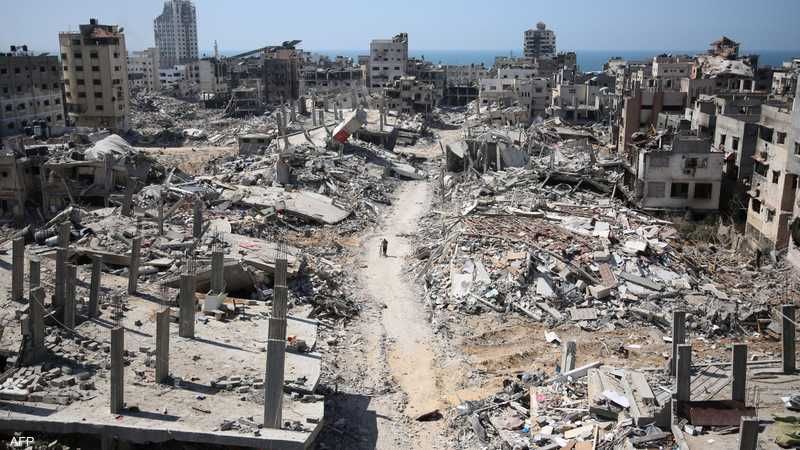
He explained that the effects of these shells are clear, as buildings fall completely to the ground and turn into ash, and that the resulting craters reach a width of 3 meters and a length of 7 to 8 meters, or more in some cases, reflecting the extent of the great destruction.

In his opinion, this problem represents a major threat, as the goal of the destruction is to eliminate life in those areas in the long term. He explained that if the war stops now, the reconstruction process is expected to take at least two years, wondering what the situation will be like if the destruction continues and the war worsens?

Do these tactics form part of a strategy aimed at pushing Hezbollah away from the border areas?

Brigadier-General Abi Raad says Hezbollah is part of the population of the south who are closely connected to their land and this war is “defending their lands”, as the border strip is close to homes that were built at huge costs, making it difficult for people to leave them easily, and they will return to them no matter what. Therefore, the idea of ​​​​removing the party from the south or the area south of the Litani is “unrealistic”.

On the political level, he believes an agreement may be reached on stripping  Hezbollah of its weapons in those areas, but the issue is not limited to a range of only 10 or 20 kilometers.

He explained the issue goes beyond the type of weapons the party possesses and the areas in which it is present. When it possesses missiles with a range of up to 100 or even 250 kilometers, then removing it to the north of the Litani will have little effect.

Continue reading
‘We Are Living a Nightmare of Grief, Bloodshed’

The UN Middle East peace process coordinator warned Monday that the region stands at a “grim crossroads” following more than a year of devastating war and bloodshed.

“After over a year of horrific war and bloodshed, the region is at a grim crossroads,” Tor Wennesland told the UN Security Council. “We are living a nightmare. The trauma and grief that has been unleashed is immeasurable.”

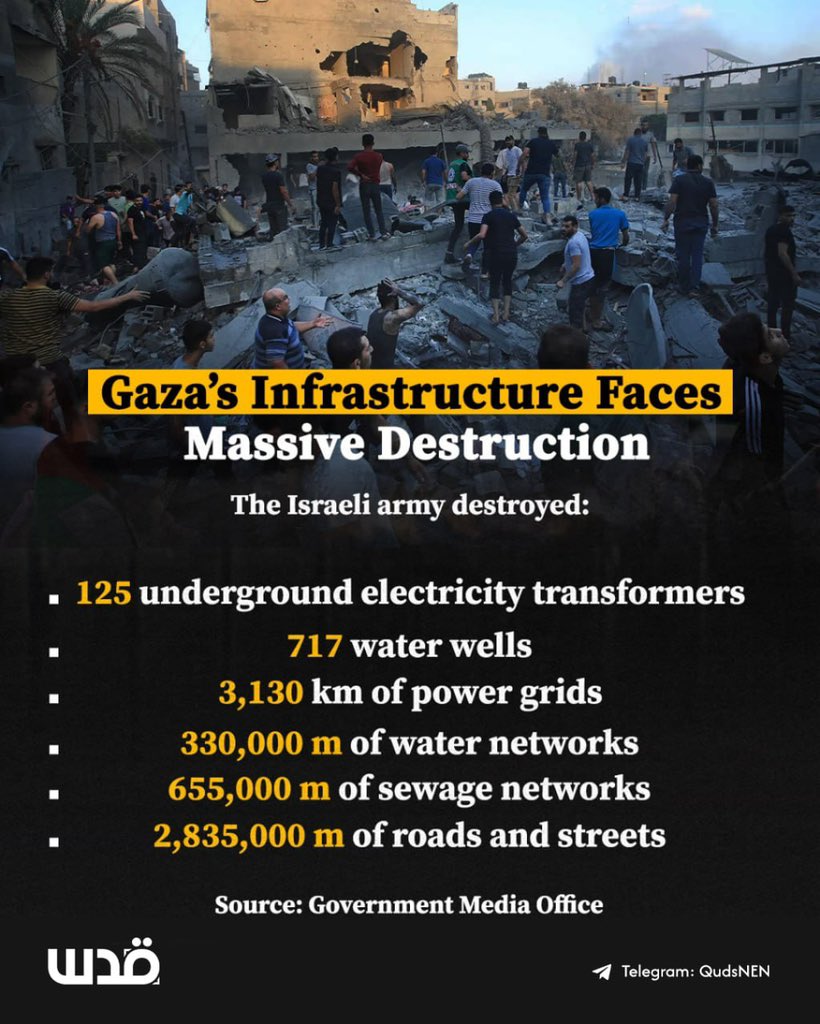
Describing a dire picture of the humanitarian crisis in Gaza, particularly in the northern areas, Wennesland said “humanitarian situation in Gaza, as winter begins, is catastrophic, particularly developments in the north of Gaza with a large-scale and near-total displacement of the population and widespread destruction and clearing of land, amidst what looks like a disturbing disregard for international humanitarian law.”

He stated that conditions in Gaza are among the “worst” seen during the entire conflict, with no signs of improvement.

Expressing grave concern over the escalating violence in the occupied West Bank, he also described it as being trapped in a “destructive spiral of violence and hopelessness.”

The UN envoy further criticized Israel’s continued expansion of settlements, accusing the government of accelerating settlement activity and warning against calls by some ministers for the annexation of the West Bank and the re-establishment of settlements in Gaza.

“These dynamics exact a political toll, further undermining the Palestinian Authority, which continues to face an ongoing fiscal and institutional crisis,” he said.

Wennesland warned that the institutional framework supporting the Palestinian people is “on the brink of dissolution,” which could lead to even greater instability in the region.

“If the parties cannot find a path out of perpetual warfare, then the international community must define the path forward,” he urged.

He stressed that Gaza must remain an integral part of a future Palestinian state, firmly rejecting any calls for long-term Israeli military presence or settlements in the territory.

“There should be no long-term Israeli military presence in Gaza, while at the same time Israel’s legitimate security concerns, particularly in the wake of the acts of terror committed on 7 October, must be addressed. Calls for the reestablishment of Israeli settlements in Gaza must be firmly rejected and clearly opposed,” Wennesland emphasized.

Wennesland called on the international community to act urgently, warning that failing to do so could exacerbate the already dire situation.

Continue reading
Hamas Kills Five Israel Soldiers in Beit Lahia

The Al-Qassam Brigades, the Hamas military wing, announced it sniped five Israeli soldiers in the center of Beit Lahia city, north of the Gaza Strip.

It stated in a military statement, Monday: “Its fighters targeted and killed five Zionist soldiers in the Al-Jawani area in the center of Beit Lahia city, north of the Strip.”

Also, the Al-Qassam fighters targetted an Israeli infantry force of 12 soldiers with an anti-personnel shell in the Islamic Association area in the center of Beit Lahia.

The Brigades announced as well it targeted an Israeli Merkava tank with a Yassin 105 shell in the Islamic Association area.

The Al-Qassam Brigades continue to confront the Israeli occupation’s vehicles and soldiers who have penetrated the Gaza Strip as part of the Al-Aqsa Flood battle and confront the Israeli aggression that has been ongoing for 409 days and counting according to JO24.

Continue reading