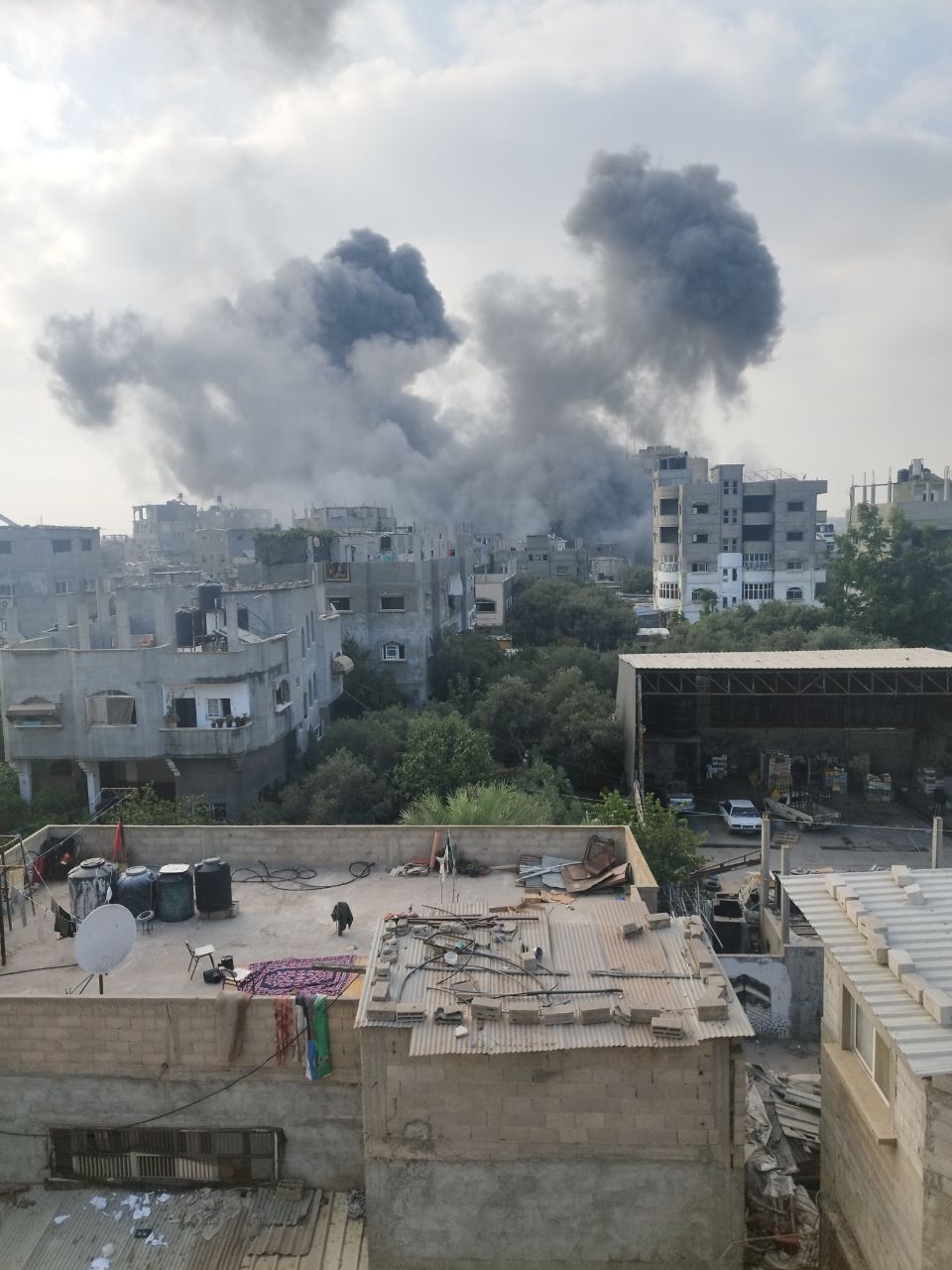
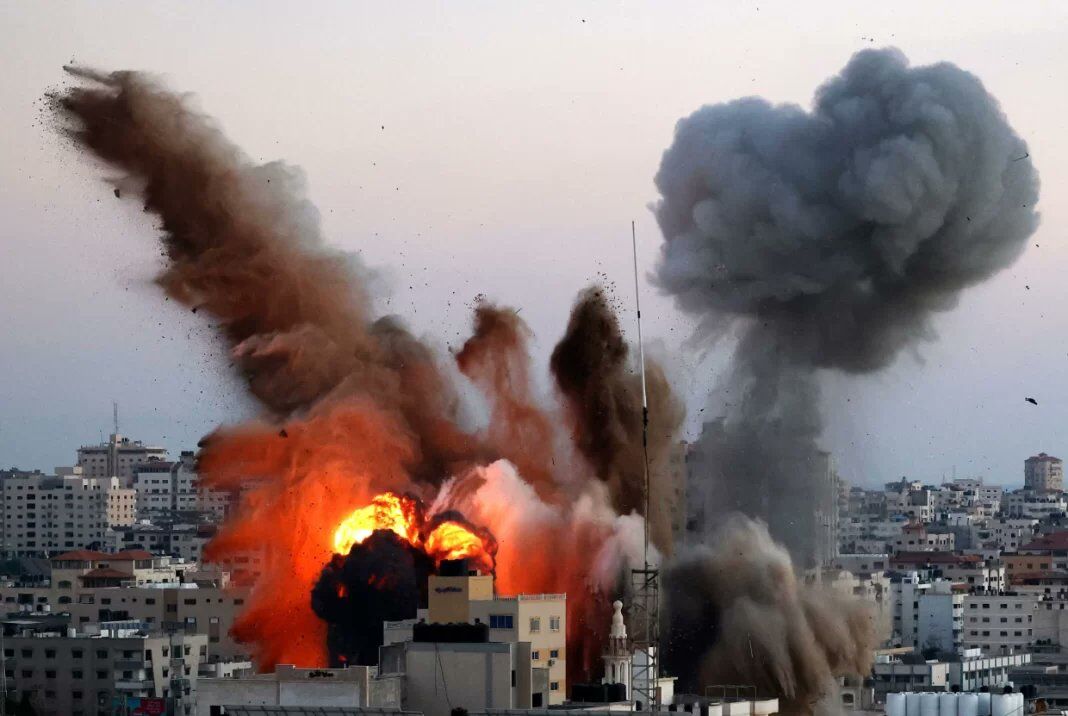
The Israeli army is escalating its targeting of all aspects and basic elements of life in the Gaza and North Gaza governorates, in an attempt to render them uninhabitable and force their citizens to evacuate to the southern governorates according to Euromed Monitors.
In its 10th month of continuing genocide, the Israeli army is intensifying its attacks with mass killings, starvation, deprivation of medical care, intimidation, arbitrary arrests, torture, and forced evacuations.
Israeli airstrikes against the Gaza Strip have expanded to target every basic aspects of daily life. These include direct targeting of vendors at their stands, Internet distribution centers, and areas where people gather, including where women fill water containers or prepare food, in addition to the ongoing targeting of homes and shelters.
Blocking any attempt to restore even the barest necessities of life in Gaza City and North Gaza governorates, the Israeli army appears to aim to force residents to comply with the orders it continues to issue to evacuate all inhabitants of the two governorates.
Israeli fire on women cooking
On Saturday, 20 July, at around 9 a.m., the Israeli army opened fire on several women who were cooking and filling water containers in their home. Noura Al-Sabbagh, 28, was killed, and several others were injured during the attack, one of whom was in critical condition. The incident occurred in the hallway of a home in the Zarqa neighbourhood of northern Gaza.
Saif Ali Al-Sabbagh told Euro-Med Human Rights Monitor: “We suddenly heard the sound of a missile fired by an Israeli drone, targeting the women who were in the house’s corridor working on preparing food without prior notice. Noura Al-Sabbagh was standing close to the stove when the missile’s fragments instantly killed her. The rest of the women were brought to the Baptist Hospital with injuries described by the medical teams as moderate and serious. One of the women suffered a serious injury. This totally unnecessary bombing caught us off guard. The area quickly filled with blood and shrapnel, with women being specifically targeted.”
On Tuesday, 2 July, 10 Palestinians were killed by Israeli artillery shells, including a child and a disabled person, as they gathered to fill water containers in the Al-Zaytoun neighbourhood south of Gaza City.
Thirty-four-year-old Muhammad Khaled Al-Malahi described what happened, saying: “At 11.30 a.m., as I was leaving the house, I saw an artillery shell (fired by Israeli tanks) falling on people, children, and young people, who were lining up to fill and transport water to their homes next to the Al-Shamaa Mosque, which was destroyed by the Israeli army at the onset of the war. After the shell fell, people fell to the ground and left the water gallons empty, and we began transporting the victims on animal-drawn carts to the Baptist Hospital.”
“This is not the first time that people have bottled water in the Shamaa area. Ever since the war started, people of all ages—men, women, and children—have been arriving at the Shamaa area to fill water containers and then carry it back to their homes. Adjacent to the mosque’s debris lies a water filling station with food, candy, and nut stalls. It is a bustling neighbourhood with constant public movement and a high concentration of displaced people, particularly after the ongoing Israeli invasion of the Shujaiya neighbourhood,” he said.
Shooting at vendors
On Tuesday, 26 June, Euro-Med Monitor documented the killing of three Palestinians, Jawad Ali Al-Zabut, 40, his son Ali, 18, and Mahmoud Fouad Zahra in an Israeli attack on a group of vendors in downtown Gaza City. Four other people were injured in the attack.
Speaking to Euro-Med Monitor, Dawoud Al-Zabut provided the following information regarding the targeting of Jawad and his son: “Jawad and his son go out every day to sell in the streets where residents pass by, like the intersection where families congregate west of Gaza City. For the past two months, Jawad has operated a small stand where he sells candies to help support his displaced family. He and his son Ali were on their mat at 8:30 a.m. when a reconnaissance plane fired a missile into the area. The missile fragments killed both of them, while his brother’s sons were injured.”
Days after designating specific routes as safe, to allow people to escape to the south without being subject to inspections, Israeli forces sent voice messages to residents of these two governorates, requesting that they evacuate to the south of the Gaza Valley amid the ongoing airstrikes and artillery shelling.
In testimony provided to Euro-Med Monitor, however, it was revealed that the Israeli army tracks individuals moving through the designated passageways on Salah al-Din Road and Al-Rashid Street in Gaza City using electronic monitoring equipment.
According to an anonymous eyewitness, the Israeli army equipped an escape corridor with monitoring devices. Israeli forces were stationed several metres away, and soldiers controlled who was allowed to pass by illuminating a green light for passage or a red light for no entry and exposure to direct fire.
The witness saw numerous bodies of displaced people who had been shot during their evacuation attempt and had been left to bleed to death. Among them was a man on an animal-drawn cart; a military bulldozer intervened to remove both the man and the cart from the area.
Moving under the bombs
Residents are being directed to relocate to the central Gaza Strip by the Israeli army, which last week intensified aerial bombardment of the area and launched dozens of raids that resulted in the deaths of over 160 people, most of them women and children, including a sizable number of displaced individuals.
Israel plans to exterminate the Gaza Strip’s population by starvation and murder, as well as the destruction of all fundamental elements of existence. This includes attacking the UN headquarters and its shelters and carrying out mass killings there, all of which are unquestionably international crimes.
By targeting UNRWA schools functioning as shelter centers, Israeli bombing tactics demonstrate a deliberate intention to prevent security across the entire Gaza Strip and deny displaced Palestinians stability or shelter, even if that shelter is only temporary.
According to UNRWA, Israel has bombed 190—more than half—of the agency’s facilities in the Gaza Strip, some of them more than once since the genocide began. As a result, thousands of Palestinian civilians have been killed and injured while seeking refuge.
War-ravaged enclave
By UN estimates, 1.9 million people in the war-ravaged enclave are internally displaced, including some individuals who have now been displaced up to nine or 10 times. Israel’s evacuation orders, its widespread damage to both public and private infrastructure, restrictions on access to essential services, and the ongoing Israeli violence constitute the main causes of the mass displacement waves.
Given these facts, all nations must fulfill their international obligations by enacting strong sanctions against Israel and severing all political, financial, and military support and cooperation. This should include immediately halting arms transfers to Israel, including export permits and military aid; otherwise, these nations will be held accountable for the crimes that have been committed in the Gaza Strip, including genocide.
Furthermore, accountability must be established at the local, regional, and global levels. Working diligently and cooperatively to pave the way for universal jurisdiction will enable national courts to hold accountable the perpetrators of crimes against Palestinian civilians.
Additionally, the International Criminal Court must continue to investigate any and all crimes committed by Israel in the Gaza Strip; broaden its investigation into criminal responsibility of all parties, including Israeli Prime Minister Benjamin Netanyahu and Defense Minister Yoav Galant, in order to hold all perpetrators accountable; issue arrest warrants for those responsible; and acknowledge and address Israel’s crimes in the Strip as international crimes that fall under the purview of the International Criminal Court and are clearly crimes of genocide.
This article is reproduced from Euromed Monitors.

 CrossFireArabia